great reads, under 100 pages
great reads, under 100 pages

Mother
Dorothea Lasky’s stunning new collection of poems presents an unfurling, terrifying, and fiercely loving embodiment of motherhood as a force of creation. Inspired by Bernadette Mayer’s The Desires of Mothers to Please Others in Letters, Lasky writes from the inner realm of a third pregnancy and guides us through a suspended timeline taut with anticipation. Mother documents caring for small children, the death of the mother, and the simultaneous anxiety and darkness of impending birth, as Lasky transmits from a deep mythic and biologically immediate space: “And even though I’ve spent / Eight months now / Dreading the sight / Of anything red / Now I long to bleed all over.” Invoking the eternal symbol of the mother, Lasky asks us to consider an expansive understanding of the horror and devotion inherent in the daily practices of existence.

Mirrorstage
A raw and profound novel in verse about mental health, addiction, queerness and shame that explores ideas of hybridity and identity.
Following their discharge from hospital, Mirrorstage follows its narrator on a road trip through the grey, liminal landscapes of modern Britain. As they pass graffitied bus shelters, construction sites and flooded motorways, factories and high-rises, the narrator’s internal and external journeys begin to converge, leading them down paths they have been trying to avoid: the mental illness and substance use that led them to the inpatient ward, the uneasy balance of their own gender identity, their troubled relationship with their estranged father, the perils and pleasures of the queer scene, and the shame that has haunted them throughout their life.
Woven around the psychoanalytic concept of its title, Mirrorstage is an experimental fable exploring the boundaries of selfhood and literary forms, told in fragments of prose and verse that are equal parts heartbreaking, sexy, and witty.

Strangers in Light Coats
Strangers in Light Coats is the third collection of Zaqtan's poetry to appear in English. It brings together poems written between 2014 and 2020 drawn from six volumes of poetry. Catching and holding the smallest particles of observation and experience in their gravity, the poems sprout and grow as though compelled, a trance of process in which fable, myth, and elegy take form only to fall apart and reconfigure, each line picked apart by the next and brought into the new body.
Ghassan Zaqtan is not only one of the most significant Palestinian poets at work today, but one of the most important poets writing in Arabic. Since the publication of his first collection in 1980, Zaqtan's presence as a poet has evolved with the same branching and cumulative complexity as his poems—an invisible system of roots insistently pushing through the impacted soil of political and national narratives.

Nest
Gregory Carlock, Christina Atik
“Ishtar said goodbye to the elephants, goodbye to the clowns, waved to a group of admirers who had gathered on East 43rd Street, and was ushered into a shiny new Escalade, which the NYPD reserved for such occasions. ‘I am the earth,’ she said, as the cops forced her head through the doorframe. The motorcade, fit for heads of state, went 40 down the West Side Highway, past rollerblading homosexuals and New School undergraduates, who held signs with slogans like ‘ISHTAR WE LOVE YOU!’ ‘ARREST ERESHKIGAL AND GILGAMESH,’ and ‘DOWN WITH CAPITALISM.’”
Nest is Gregory Carlock’s vision of Manhattan razed to the ground by Ishtar—Akkadian goddess of love, sex & war—following her liberation from NYPD arrest.
This poem, in 31 sections, combines the 4000-year-old Gilgamesh epic, pre-Islamic poetry, Sufi snippets & Carlock’s own Emily-Dickinsonesque rhymes to vent sulphurous @ New York/Washington’s rape’n plunder of Planetary Mind. Illustrated by the Lebanese artist, Christina Atik.

The fruitfull sence
Titus Lucretius Carus, Lucy Hutchinson
The fruitfull sence is an excerpt from Lucretius’s masterwork De rerum natura, in which the poet marvels at the sensory world. Optical illusions, the drift of smell, the juicy mechanics of taste. All animated by Lucy Hutchinson’s gorgeous 1640 translation, which renders the original Latin into bouncy English pentameter. The first publication in our new series, Sensory Dispatches.

The Romance of Happy Workers
The Romance of Happy Workers swaggers through a world of cowboys, conquistadors, comrades, and housewives with mock-Russian lyric sequences and Keatsian swoon. Political and iconoclastic, Anne Boyer’s poems dally in pastoral camp and a dizzying, delightful array of sights and sounds born from the dust of the Kansas plains where dinner for two is cooked in Fire King and served on depression ware, and where bawdy instructions for a modern “Home on the Range” read:
"Mix a drink of stock lot:
vermouth and the water table.
And the bar will smell of IBP.
And you will lick my Laura Ingalls."
In Boyer’s heartland, “Surfaces should be worn. Lamps should smolder. / Dahlias do bloom like tumors. The birds do rise like bombs.” And the once bright and now crumbling populism of Marxists, poets, and folksingers springs vividly back to life as realism, idealism, and nostalgia do battle amongst the silos and ditchweed.
Training Exercises
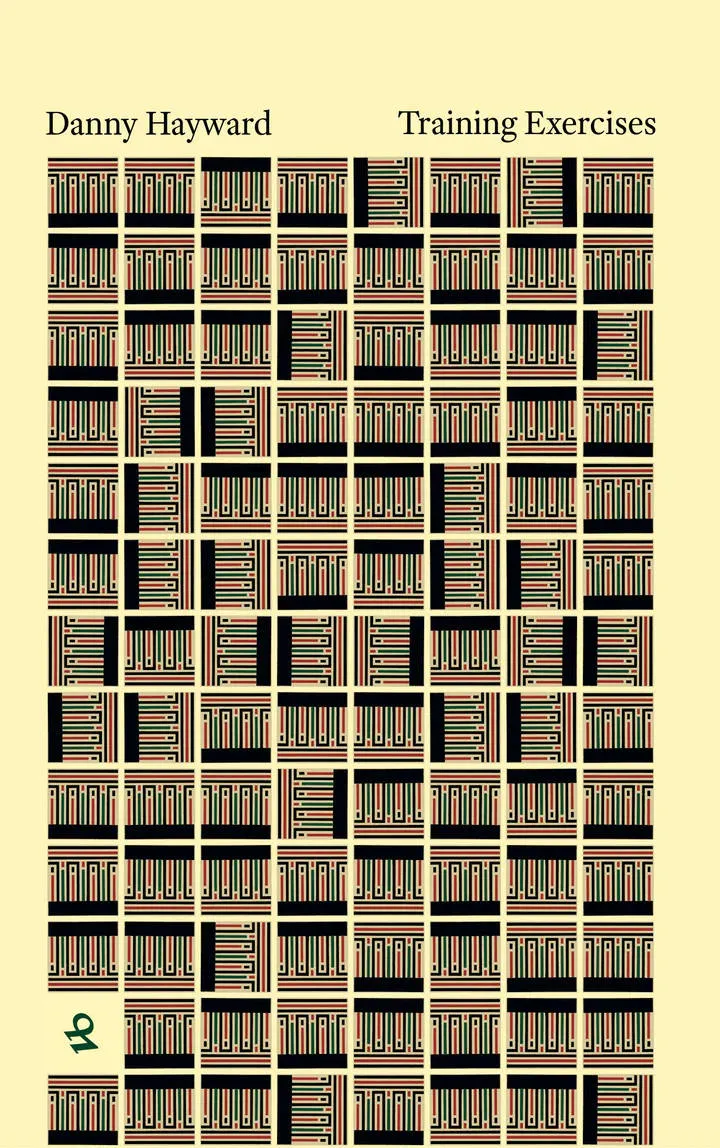
Organized violence committed on ordinary speech’ is therapy for those who don’t believe in literature as value. Training Exercises is an unpacking of that dictum: seven short essays, letters, reports and anti-biographies written to overcome the feeling of resistance to the defacement of what strikes us as true. An anti-purge written out by lipstick or hammer, scrawled over the top of itself and run through a translation program that turns everything upside inside down, its pieces include: a polemic against catharsis; a letter to the poet Dom Hale on his book Seizures; and a series of on-the-spot reports on the UK Illegal Migration Bill, East London poetry readings, the politics of the war in Ukraine, and a conversation about the meaning of damage in contemporary literature.
‘First you learn to write down your ideas, then you learn again how to write all of your lurid political and intellectual and intimate disappointments and all of your childhood hopes over the top of them’. Jack Spicer scrawled the name of his book in pink lipstick on the cover of the academic journal he had published in: Training Exercises scrawls itself on top of that.
Your Life Is Not A (Fucking) Story
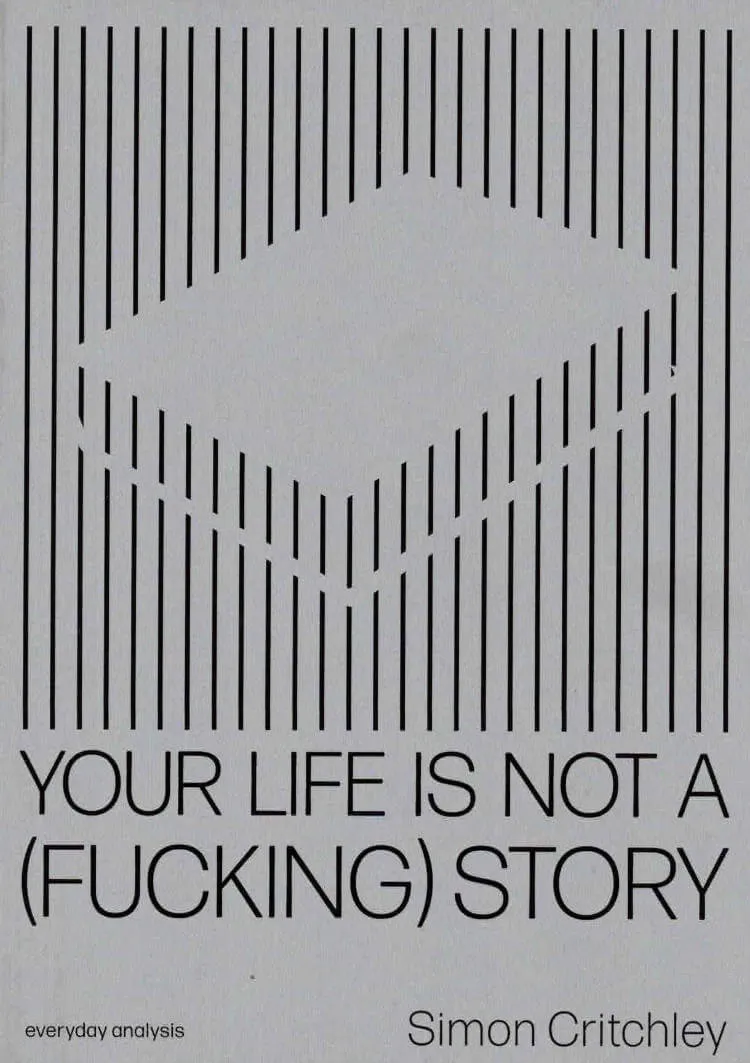
In this new collected edition of his recent articles, Simon Critchley - one of the most important living philosophers - takes us through his reflections on death, questions of doubt and reason, the legacy of David Bowie, the nature of fear and empathy in a broken society and a critique of narrative identity - among other things. YOUR LIFE IS NOT A STORY explores the contemporary world and its psychological impact on us, offering us a way to see our situation different and resist its tricks and contrivances.
Light Of The Dark: Derrida, Barthes, Celan
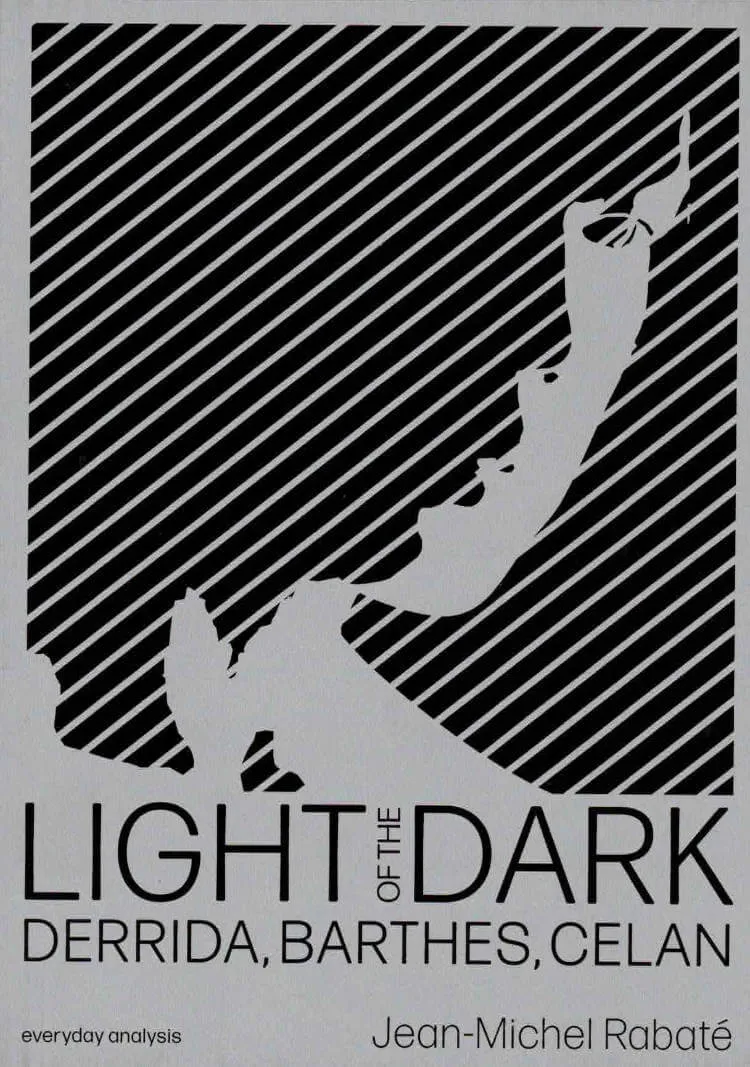
Derrida’s essay “Aletheia” discusses the work of Japanese photographer Kishin Shinoyama. Reading Derrida, Rabaté investigates how, behind the classical concept of truth as a beautiful naked woman, Derrida argues that any photographic image tells the Truth, but a truth obscured as it comes to light: “nothing is more black than the visibility of light.” Staging a critical conversation with Roland Barthes’s theses in Camera Lucida and Paul Celan’s poems from Breathturn to Lightduress, Rabaté argues for a theoretical approach to truth that counters the prevailing truth-discourses of today.
Confessions Of A Class Reductionist
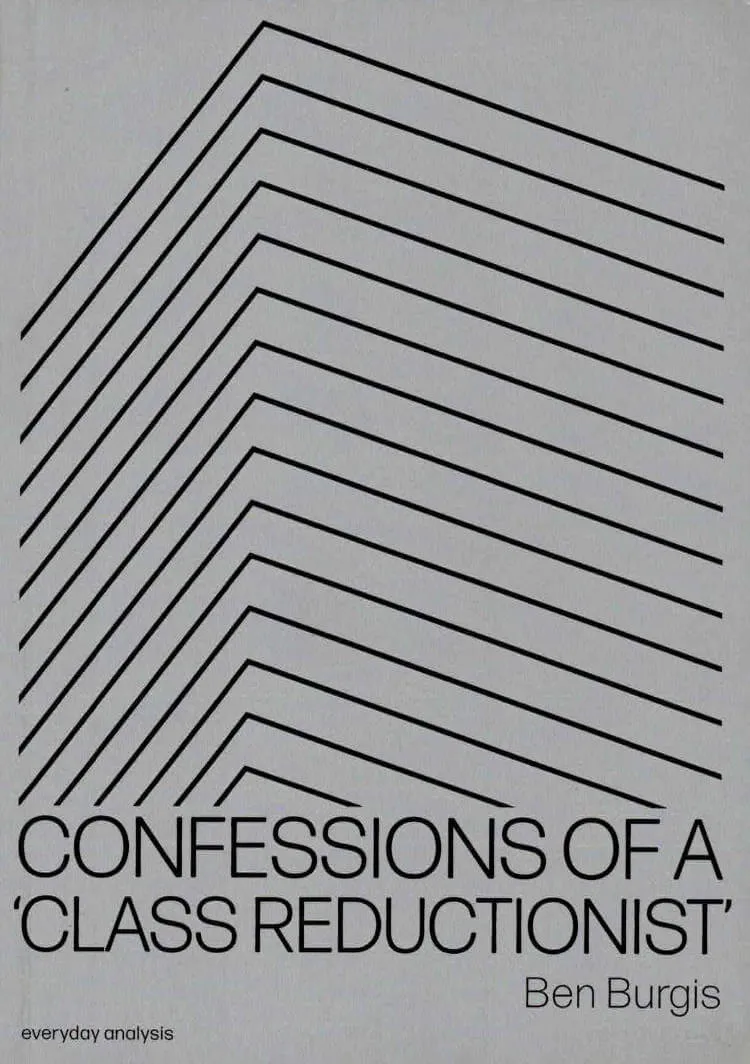
In these essays, Ben Burgis criticizes fashionable radical-liberal identity politics and makes the case for universalism about rights and an unabashedly “class-first” approach to socialist political strategy. This may sound to some ears like a call for abandoning marginalized people. On the contrary, he argues, focusing on economic inequality empowers the victims of bigotry and retrograde social practices the resources and material security to stand up for themselves far more effectively than any diversity trainer or “anti-racism” consultant could represent their interests. As we face a rising tide of reactionary authoritarianism, it’s more important than ever to ditch the identitarian pieties of the recent past and think hard about how the Left can actually win.

The Completion
In The Completion, legendary philosopher Franco 'Bifo' Berardi offers his analysis of cognitive automation and artificial intelligence. Of the possible worlds imagined in Silicon Valley and in the media discourse around tech boosterism, none will likely materialise. Instead, the unpredictable will intervene in the future of predictive technology.
In this new edition, in a new venture for Everyday Analysis, Berardi's essay is accompanied by an introduction by Alfie Bown and a series of artworks and illustrations, new and historic- from Borges's labyrinths to the I-ching - offering a reading experience in the spirit of Berardi's work.
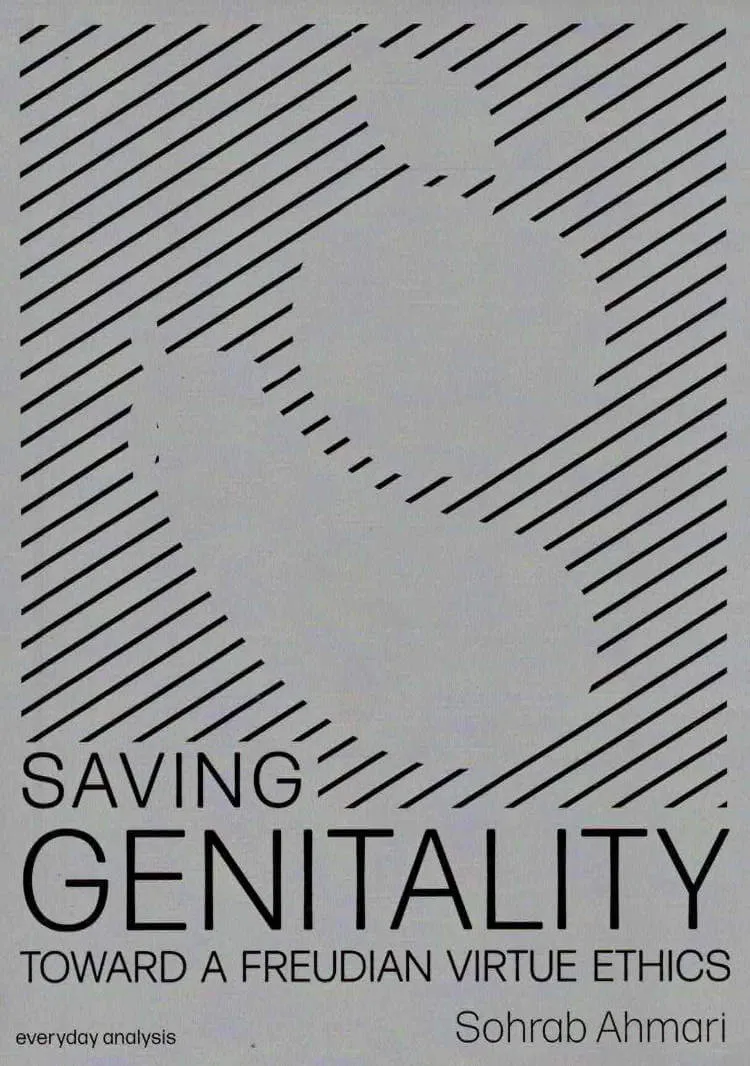
Saving Genitality: Toward A Freudian Virtue Ethics
Western societies have dismantled many of the prohibitions that ringfenced errant sexual drives in Freud’s time. The psychoanalytic project describes people caught between two fundamental and contradictory principles: One a relentless sexual drive, the libido; the other our species’ collective need for social order and harmony. Part of this harmony, for true Freudians, is embedded in the binary mutuality of men’s and women’s bodies, which remains indispensable for society to reproduce itself, even in our sexually liberated age. In this essay, Ahmari revisits the idea of ‘genitality’ arguing that perhaps the "heteronormative" orthodox Freudians were right about some things after all.

CARA Center for Art, Research and Alliances
Judith Namala: A Novella
Judith Namala: A Novella, Serubiri Moses’s fiction debut, is an experiment in adaptation, storytelling, and translation as fictocriticism. Set in Uganda between the late 1970s and early 2000s, the book follows the domestic dramas of Judith Namala, a Black maid, and Esther Nambi, her Black madam.
Unfolding across short vignettes, Moses’s innovative prose attends to the silences and opacities that mark the distances—and forced proximities—between two characters whose tense relationship is defined by class and social hierarchy. Hovering at the surface of these quiet scenes of servitude, the narrator offers an enigmatic model of interiority—grasped only in passing, where psychic geographies confront and sometimes, surprisingly, mirror one another.
Drawing on cultural artifacts, art, film, and his own translation of lyrics from a Luganda popular music songbook, Moses spins a story of housework and labor that reaches across forty years of Ugandan history. Written in a unique style informed by oral tradition, folklore, criticism, and reportage, Judith Namala: A Novella is an intimate, domestic portrait that embraces the poetics of metaphor.
Judith Namala is a cinematic dressing-down of airs and manners: a collision of tradition, ritual, and other social parameters revealed through imperatives or hauntings. In a series of lyric portraits riffing off echoes of Annie John and Sula, poet-writer-curator Serubiri Moses exercises his multitalented explorations of text and artifacts, each image operating almost like a fetish. Here, the elite and extracted, the rural and cosmopolitan, are juxtaposed in suffocations of domesticity.
—Ladan Osman
Through its innovative structure combining rich storytelling, history, and the writer’s own commentary, Judith Namala tells the story of a household in Uganda in which a young woman from the rural areas is employed as a maid. The story reveals the depth of injustice at the household level, where one woman’s child is abandoned, whilst the children of an elite Kampala household are over-mothered.
—Sitawa Namwalie
Serubiri Moses is a Ugandan curator and writer living in New York City. He is the author of two poetry books, THE MOON IS READING US A BOOK and You Who Suffer Because You Love, Love Still More (pântano books, 2023 and 2025). His fiction has appeared in Lolwe and Ursula. Moses is a contributing editor at e-flux journal, and teaches at Hunter College and the Center for Curatorial Studies, Bard College. This is his first novel.
Editor: Rachel Valinsky
Copy Editor: Re’al Christian
Designer: Stoodio Santiago da Silva, Bárbara Acevedo

Afterimage No. 11, Sighting Snow
The independent British film journal Afterimage published thirteen issues between 1970 and 1987. International in scope, it surveyed the many forms of radical cinema during an extraordinary period of film history. Having emerged in the wake of post-1968 cultural and political change, Afterimage charted contemporary developments with special issues on themes such as the avant-garde, Latin American cinema and visionary animation, and also looked back at early film pioneers. It published many of the leading critics of the period and vitally provided a forum for filmmakers’ writings and manifestos.

I presumed possession, my language, my loss
In I presumed possession, my language, my loss, I begin in third person to write about what it means to lose a mother tongue, and about how that loss is never natural but engineered: by state assessments, border conditions, and a free market of articulation. I write about language as transaction—what you gain in the language of power at the cost of becoming inarticulate in the language of origin. I write about the monolingual paradigm as a political demand rather than a natural inheritance, about standardization as a form of border-drawing, and about the grief of hearing the people you love measured as insufficient. The text moves between the personal and the structural, between a grandmother forgetting and a language policy forbidding. It is about what we lose, and about what we have learned to accept as acceptable to lose.
Cecilie Fang is an anti-disciplinary artist and writer from China and Denmark, based in Amsterdam. Generated through writing, her process-oriented work unfolds across performance, publication, material micro-performativity, and installation.

University of California Press
This Connection of Everyone with Lungs
Part planetary love poem, part 24/7 news flash, the hypnotic poems of This Connection of Everyone with Lungs wrap with equal, angular grace around lovers and battleships. These poems hear the tracer fire in a bird's song and capture cell division and troop deployments in the same expansive thought. They move through concentric levels of association and embrace —from the space between the hands to the mesosphere and back again—touching everything in between. The book's focus shifts between local and global, public and private, individual and social. Everything gets in: through all five senses, through windows, between your sheets, under your skin.

University of California Press
Sleeping with the Dictionary
Harryette Mullen's fifth poetry collection, Sleeping with the Dictionary, is the abecedarian offspring of her collaboration with two of the poet's most seductive writing partners, Roget's Thesaurus and The American Heritage Dictionary. In her ménage à trois with these faithful companions, the poet is aware that while Roget seems obsessed with categories and hierarchies, the American Heritage, whatever its faults, was compiled with the assistance of a democratic usage panel that included black poets Langston Hughes and Arna Bontemps, as well as feminist author and editor Gloria Steinem.
With its arbitrary yet determinant alphabetical arrangement, its gleeful pursuit of the ludic pleasure of word games (acrostic, anagram, homophone, parody, pun), as well as its reflections on the politics of language and dialect, Mullen's work is serious play. A number of the poems are inspired or influenced by a technique of the international literary avant-garde group Oulipo, a dictionary game called S+7 or N+7. This method of textual transformation—which is used to compose nonsensical travesties reminiscent of Lewis Carroll's "Jabberwocky"—also creates a kind of automatic poetic discourse.
Mullen's parodies reconceive the African American's relation to the English language and Anglophone writing, through textual reproduction, recombining the genetic structure of texts from the Shakespearean sonnet and the fairy tale to airline safety instructions and unsolicited mail. The poet admits to being "licked all over by the English tongue," and the title of this book may remind readers that an intimate partner who also gives language lessons is called, euphemistically, a "pillow dictionary."

Winter Night Rabbit Worries
Winter Night Rabbit Worries is Yoo Heekyung’s fifth poetry collection, published in Korean in 2023. Structured as a series of stories, the book presents narrative and linguistic architectures that dissolve the opposition between those materials that construct the this and the that side of life—past and future, truth and falsehood, memory and fantasy. As readers move from one story to another, they will encounter a dizzying yet tender experience in which the boundaries between self and other unravel, and new stories begin to take shape.
“The story arrives like an overcoat emerging from a blizzard, its shoulders heavy with worries piled like snow. You shake off the snow, remove your wet coat, and pause to warm yourself by the stove. That pause is where Yoo Heekyung’s poems come into being: a moment when a kind heart stands quietly by the stove with its back turned to us.” —Kim So Yeon
Yoo Heekyung (b. 1980) is an acclaimed Korean poet, playwright, and essayist. He is the author of over ten collections of poetry and prose, including Today’s Morning Vocabulary (『오늘 아침 단어』), Photography and Poetry (『사진과 시』), and And Next Spring We Will (『이다음 봄에 우리는』). He is a playwright with the theater company dock (독) and a member of the poetry collective jaknan (작란). A recipient of Today’s Young Artist Award from the South Korean Ministry of Culture and Hyundae Munhak Literary Award (2020), Yoo lives in Seoul where he runs the poetry bookshop and project space wit n cynical.
Stine An is a poet, translator, and performer in New York City. Her poems and translations appear in Best Literary Translations 2024, Poem-a-Day, Best Experimental Writing 2018, Words Without Borders, Asymptote, and elsewhere. A 2024 NEA Translation Fellow and 2022–2023 Emerge—Surface—Be Fellow, Stine is the author of SMMER CRSH (Sarabande Books) and the translator of Today’s Morning Vocabulary by Yoo Heekyung (Zephyr Press).

Working Museum
"In Spring and All, William Carlos Williams figures imagination as the springing off point to greater connection with the world and its gentle motions. ‘It is spring,’ he writes: ‘life again begins to assume its normal appearance as of “today.” Only the imagination is undeceived.’ Embracing the haecceity of the everyday and allowing the imagination to make silent and surprising connections are ways to withhold the deceptiveness of relying on old habits of thinking and writing.
Ziddy Ibn Sharam’s Working Museum begins with another quotation from Spring and All: ‘There is not confusion – only difficulties’, and the sequence offers delicate, poetical examinations how the confusions and frustrations of interpersonal communication are beneficent difficulties to be embraced and considered in gentle depth. This is a gorgeous sequence of poems, offering generous, gracious and graceful glimpses of a family’s birthday pilgrimage to Amberley Museum and Heritage Centre in Sussex. Working Museum is a tour de force of delicate poetry of feelings and feeling through feelings in a world of wordless connections and contacts, navigating the liminal but intimately understood spaces between two brothers and their family. In these poems,
Sharam is trying to be still in language, as smiles, touches and profound intimacies are exchanged. Observing and being in his brother’s presence during this special time of spring, Sharam re-learns to experience, to become ‘plugged’ in, as he writes, to new ‘switchboards’ of sensation, thought and poetic possibility. The ‘old machines’ of mental expectation and habit are, in the presence of his other-sensing brother, found wanting for the appreciation of his ‘intellect just as it is’. Here, Sharam learns to ‘do things minimally’ and to revel in the ‘seismic proportions’ of the apparently mundane. Sharam and his readers are offered a space to share in a brother’s beautifully vivid world and are privileged to witness a profound, ‘beginning, // again." - Gareth Farmer

And most of all I would miss
Picture a pencil curved, implausibly, parabolically. An implement bending back on itself (core straining) so as to be drawing the surest line, even as its eraser-end is simultaneously rubbing that graphite out. What remains almost never was: mark as memorial to foreclosure. Examined from a certain angle, the un-line flickers in and out of thereness. On registration, it lives, it goes forth. Sub rosa, it knows never to clear its throat. It has learnt to calibrate its signature; it can evade infra-red. Propelling itself through the narrowest channels, it proceeds with resolve, flayingly. Mattar’s And most of all I would miss the shadows of the tree’s own leaves cast upon its trunk by the orange streetlight in the sweet blue darks of spring is taut as writing can be. The tone she makes sound is singular and desperately (gloriously) intent.
- Sarah Hayden
Piercing and lucid in its exposition of atmospheric violence and total erasure, Mira Mattar gets to the grain of how the languages of selfhood, mediated but also inhibited by the force of the ‘un-universal’, become complicit in forming the sovereign imperative to self-determination, ‘oh arrogant ambition / to transform / you & keep myself / plumed’, through the reproduction of a ‘contested field / of meaning’, one both marked by the lure and ruse of psychic stability as the real fantasy of occupation, and immanent to concrete, unknown modes of personal resistance and collective recovery thread like a ‘rope / in a knot in a line / of knots’, an inherited ‘excess of memory / mostly portal.’ Mattar carefully gleans in its undecidability, given over to moments of precarious decision without ties or duplicity.
- James Goodwin

Anarcadia
An epic poem in miniature, Anarcadia attempts to navigate the stark disintegration of the very world from which it’s made, mapping a catastrophe that seems both on its way and already occurring. Offering a collage of collapsing fragments – whirling ‘like bitstreams / in a blizzard’ – this sequence freefalls through a landscape of freak storms and surveillance satellites, ‘bio- / metric insects’ and ‘full- / body scanner[s]’, ‘leaving nothing left / undamned’. Continuing the sleek work of the previous collections, Hand’s command of language generates a livable terrain, humming with echoes of the pastoral tradition – from Sidney to Shelley, from Geoffrey Hill to J.H. Prynne. Hand’s poetry renders ‘an animate / climate’, through which we are forced to face the debris of a system that has failed us and a planet we, in turn, have failed. Nevertheless, the poet shows us a glimpse of the future. At the heart of Anarcadia is something of a love poem, revealing beauty in the art of losing, a way to ‘Re-salvage / sylvan camouflage / out of obscure selvage’, attempting a recovery. ‘Rife with hybrid vigour’, this book confirms Dominic Hand to be a poet of singular, clear-sighted vision, unafraid to see things as they are, ‘risking / bewilderment’.
– Rowland Bagnall

SIXFINGERAFTERWARDS
William Rowe, the poet, and eminent translator of Latin American poetry from Vallejo to Raul Zurita & others presents his latest book of poems, Sixfingersafterwards, in six sections. The title word ‘afterwards’, which refers to a large part of the first section of poems takes inspiration from an Ayahuasca session. According to Freud, Afterwardness or Nachtraglichkeit as originally harmless memory can later be re-experienced as traumatic through the lens of new mature understanding. The Marxists view the capitalist state as inherently connected to a ‘death culture’ where the pursuit of profit overrides the human life, turning the system into a form of a vampirism that consumes the living labour. All the sections are written with a deep commitment, elaborating a painful truth in a remarkable open poetic sensitivity. Our language ravaged by ‘vampirism’ where ‘Language itself seemed to form death communiques.’ Other sections are about love, ‘when my daughter says she loves me very much.’ Or a section of Quechua poems translated by Rowe, which shed light on the extensive range of his writing and interconnectedness of his creativity. The poems in this collection leave nothing out of the traumatic pain from capitalism nor its ‘dark dark shine of money.
I dreamt of Rowe, reading these poems to the track called Walking on the ceiling, by the late Chicago blues guitarist, who played with six fingers. I renamed it to Walking the ceiling toward eternity, to honour the Sixfingersafterwards. A must-read!
- Ulli Freer

LllOovVee - Forbid me my love
It is right and necessary to be speaking with strangers. There are islands, backroads and cliffs of wet inked worded sea ridgelines where aodán McCardle’s work emerges concrete and lyric as a chant of delicately provoking permutations. forbid me my love, the first part of this beautiful book, is poetry as poiesis or making. By means of a series of concrete meditations, McCardle takes us where he, or perhaps the words themselves, unknit, erase, appear and disappear. Wor(l)ds of the size of terrorist and bomb are subject to a system of alterations that end up shooting lovebombs from the page as if love could become an error in the system. The second part of the book, LllOovVee, starts closer to verse. Reading it, one can almost hear aodán’s delicate Irish voice, but any easy reading gets explosively interrupted by the scanned handwritten, scribbled and scratched lines that open another set of permutations, one about what is behind us, how to be there here and what is it to be there then now, in the making, in the ear and in the eye with this revealing poetry.
- Martín Gubbins
Aodán McCardle is a performance poet, artist, & tattooist. In this book he combines all three artistic expressions into a performance. These poems are audacious. A poetic trajectory worthy of reading aloud.

Juvenilia #2
Ludi Juvenales (Latin for "juvenile games') is a poetry, art and games series interested in youth, childhood, play, and immaturity.
Ludi Juvenales is edited by Elise Houcek & Zoe Darsee.
www.ludijuvenales.com
Juvenilia #2 by Willa Smart.
Copyright C Willa Smart 2024. All rights reserved.
Cover art by K. Fabricant.
Design by Elise Houcek & Zoe Darsee.
Risograph printed with BearBear in Milwaukee, Wisconsin.
Edition of 50.