Fiction
Fiction

Phototaxis
Translated from the French, Phototaxis is a fragmentary, darkly-humorous apocalyptic text from a leading young voice from Montréal.
In a city mysteriously overflowing with meat, a museum is bombed, a classical piano player hooked on snuff films throws himself off a building, a charismatic but misled political organizer has disappeared, and a young immigrant navigates a crumbling continent. A dystopic work of hope, Phototaxis dismantles and rebuilds worlds with language at turns surreal, scathingly comic, poetic, and revolutionary.
“Olivia Tapiero’s virtuosic Phototaxis reverses the purgative gesture of necrophoresis: every sentence is shot through with the stench of carrion and the death rattle of capital’s circulation. Reading the text, one feels the vertigo of an interminable fall refracted in an infinity mirror of the commodified image. Tapiero’s haunting lyricism, atmospherically rendered in Kit Schluter’s translation, will ring out in your skull long after reading the book’s final word: music.“
— Jackie Wang

A portrait of a woman and a still life of her burger
Francis Laurie Schaffer—an artist in her mid-40s—has recently separated from her husband after a two-decade long marriage and has fallen in love with a polyamorous young man who doesn’t fully reciprocate her feelings. In an attempt to express her dissatisfaction, she begins writing about the relationships between the people she imagines belong to her polycule. But things begin to shift into a game of mirrors when Francis meets some of the people she’s written about. A series of events will then culminate with Francis and her friends crashing the 40th birthday party of her husband’s new girlfriend. A disastrous outcome serves as a rite of passage, delivering the protagonists onto the other side of that experience with a transformed sense of self.

The Dissenters
Amna, Nimo, Mouna – these are all names for a single Egyptian woman whose life has mirrored that of her country. After her death in 2015, her son, Nour, climbs to the attic of their house where he glimpses her in a series of ever more immersive visions: Amna as a young woman forced into an arranged marriage in the 1950s; as a coquettish student of French known to her confidants as Nimo; a self-made divorcee and a lover; a ‘pious mama’ donning her hijab; and, finally, as a feminist activist during the Arab Spring.
Charged and renewed by these visions of a woman he has always known as Mouna, Nour begins a series of fevered letters to his sister – who has been estranged from Mouna and from Egypt for many years – in an attempt to reconcile what both siblings know about this mercurial woman, their country, and the possibility for true revolution after so much has failed.
Hallucinatory, stylish, and erotic, The Dissenters is a transcendent portrait of a woman and an era that explodes our ideas of faith, gender roles, freedom, and political agency.
YOUSSEF RAKHA is an Egyptian author of fiction and nonfiction working in Arabic and English. He is the author of The Book of the Sultan’s Seal, The Crocodiles, and Paulo, which was long-listed for the International Prize for Arabic Fiction and won the 2017 Sawiris Award.

Terry Dactyl
From a LAMBDA award-winning author, an electric and haunting dive into New York City club culture, the elite art world, the relationships we crave, and the addictions we hold dear, told through one iconoclastic trans girl’s search for connection, from growing up in the midst of the AIDS crisis to the panic of the COVID-19 lockdowns.
Terry Dactyl has lived many lives. Raised by boisterous lesbian mothers in Seattle, she comes of age as a trans girl in the 1980s in a world of dancing queens and late-night house parties just as the AIDS crisis ravages their world. After moving to New York City, Terry finds a new family among gender-bending club kids bonded by pageantry and drugs, fiercely loyal and unapologetic. She lands a job at a Soho gallery, where, after partying all night, she spends her days bringing club culture to the elite art world.
Twenty years later, in a panic during the COVID-19 lockdown, Terry returns to a Seattle stifled by gentrification and pandemic isolation until resistance erupts following the murder of George Floyd, and her search for community ignites once again.
In propulsive, intoxicating prose, Terry Dactyl traces an extraordinary journey from adolescence to adulthood, delivering a vital portrait of queer identity in all its peril and possibility.

Mirrorstage
A raw and profound novel in verse about mental health, addiction, queerness and shame that explores ideas of hybridity and identity.
Following their discharge from hospital, Mirrorstage follows its narrator on a road trip through the grey, liminal landscapes of modern Britain. As they pass graffitied bus shelters, construction sites and flooded motorways, factories and high-rises, the narrator’s internal and external journeys begin to converge, leading them down paths they have been trying to avoid: the mental illness and substance use that led them to the inpatient ward, the uneasy balance of their own gender identity, their troubled relationship with their estranged father, the perils and pleasures of the queer scene, and the shame that has haunted them throughout their life.
Woven around the psychoanalytic concept of its title, Mirrorstage is an experimental fable exploring the boundaries of selfhood and literary forms, told in fragments of prose and verse that are equal parts heartbreaking, sexy, and witty.

Zipper Mouth
Dreamy, bratty and brash, Zipper Mouth is a potent gut-punch of a novel by an icon of 90's queer lit.
In this extraordinary novel, Laurie Weeks captures the exuberance and mortification of a lesbian junkie as she navigates the chaos and horror of everyday life. Through longing monologues to Vivian Leigh, ranting letters to Sylvia Plath and to-do lists that never get done, Zipper Mouth gives us an unforgettable protagonist caught in a spiral of addiction, unrequited love, and mental health crises, and the effortlessly hilarious and strange inner workings of her mind.
A messy and raw depiction of striving to live in a world that doesn’t cater to your brain chemistry, Zipper Mouth is an outstanding work of queer fiction. Come for the exalted nightclub epiphanies, stay for the devastating morning-after hangovers.

Lákíríboto
A twisty thriller about the fate of a sprawling family in Lagos, Lakiriboto is a queer, feminist revenge thriller like no other, in which murder, betrayal, and witchcraft collide – with explosive results.
When her grandmother dies in the night, Moremi’s fate falls to her uncle, the grasping family chief who sends her off to work as a housemaid in Lagos. On arriving there, Moremi finds that the big city is not all she thought it would be. But she’s not alone. After another family death, Kudirat, accused of bringing misfortune to her close family, has also been sent to live as a maid in the same house, scrubbing floors and folding laundry for long-suffering Tola, whose abusive doctor husband refuses to treat. Together, with the help of her queer aunt Morieba, the four women must wrestle back control of their lives as the patriarchal traditions that govern the family push back against their freedoms. When Tola’s condition worsens, someone new emerges, someone with revenge and redemption in mind.
Mixing family saga, mobster pulp, and queer coming-of age, Lakiriboto is a staggeringly original and surprising novel about Nigeria’s queer and feminist communities, the struggles they face, and the lengths they will go to to overcome them.

Ten Bridges I’ve Burnt
In Ten Bridges I’ve Burnt, Brontez Purnell—the bard of the underloved and overlooked—turns his gaze inward. A storyteller with a musical eye for the absurdity of his own existence, he is peerless in his ability to find the levity within the stormiest of crises. Here, in his first collection of genre-defying verse, Purnell reflects on his peripatetic life, whose ups and downs have nothing on the turmoil within. “The most high-risk homosexual behavior I engage in,” Purnell writes, “is simply existing.”
The thirty-eight autobiographical pieces pulsing in Ten Bridges I’ve Burnt find Purnell at his no-holds-barred best. He remembers a vicious brawl he participated in at a poetry conference and reckons with packaging his trauma for TV writers’ rooms; wrestles with the curses, and gifts, passed down from generations of family members; and chronicles, with breathless verve, a list of hell-raising misadventures and sexcapades. Through it all, he muses on everything from love and loneliness to capitalism and Blackness to jogging and the ethics of art, always with unpredictable clarity and movement.
With the same balance of wit and wisdom that made 100 Boyfriends a sensation, Purnell unleashes another collection of boundary-pushing writing with Ten Bridges I’ve Burnt, a book as original and thrilling as the author himself.

Family Lexicon
Natalia Ginzburg, Jenny McPhee
An Italian family, sizable, with its routines and rituals, crazes, pet phrases, and stories, doubtful, comical, indispensable, comes to life in the pages of Natalia Ginzburg’s Family Lexicon. Giuseppe Levi, the father, is a scientist, consumed by his work and a mania for hiking—when he isn’t provoked into angry remonstration by someone misspeaking or misbehaving or wearing the wrong thing. Giuseppe is Jewish, married to Lidia, a Catholic, though neither is religious; they live in the industrial city of Turin where, as the years pass, their children find ways of their own to medicine, marriage, literature, politics. It is all very ordinary, except that the background to the story is Mussolini’s Italy in its steady downward descent to race law and world war. The Levis are, among other things, unshakeable anti-fascists. That will complicate their lives.
Family Lexicon is about a family and language—and about storytelling not only as a form of survival but also as an instrument of deception and domination. The book takes the shape of a novel, yet everything is true. “Every time that I have found myself inventing something in accordance with my old habits as a novelist, I have felt impelled at once to destroy [it],” Ginzburg tells us at the start. “The places, events, and people are all real.”

Bloodchild and Other Stories
A perfect introduction for new readers and a must-have for avid fans, this New York Times Notable Book includes "Bloodchild," winner of both the Hugo and the Nebula awards and "Speech Sounds," winner of the Hugo Award.
Appearing in print for the first time, "Amnesty" is a story of a woman aptly named Noah who works to negotiate the tense and co-dependent relationship between humans and a species of invaders. Also new to this collection is "The Book of Martha" which asks: What would you do if God granted you the ability—and responsibility—to save humanity from itself?
Like all of Octavia Butler's best writing, these works of the imagination are parables of the contemporary world. She proves constant in her vigil, an unblinking pessimist hoping to be proven wrong, and one of contemporary literature's strongest voices.

The pedestrian
Emerging from the dark ecology between lullaby and ghost story, The pedestrian meanders down a labyrinth of divinatory time where crimes demand a more defective detective. To conjure the source of this text’s trauma, the poet becomes a ritual detective, tracing the wound by its shadow. Meaning emerges through distortion and echo—courting what cannot be seen head-on to create a haunted grammar of grief. An ill pastoral of displacement, The pedestrian turns domestic spaces into underworlds, the body of the exiled child into a prophetic threshold—it listens as much as it speaks, attuned to forces beyond itself.
The pedestrian is a map to a terrain of shards and shadows. While reading it, I felt lost only to the land of the normative, a lush fugitivity. I traveled far with, because of, and in this book. Hsiung trusts in the politics of decomposition, making syntaxes that have been distorted by grief, and thus sharpened to what cannot be colonially extracted. Writers like this know that grammar, vocabulary, and the sentence itself are haunted, so they write not to exorcise or cure this condition of its ghosts, but to make a place for them to live, a place they belong.
— Johanna Hedva

The Ultraviolet Catastrophe
Legal-high addict, gaming enthusiast, and principal shareholder of AstroLabs™, Lex Rameses, has recently discovered—and purchased—Proserpina: a planet with a near-identical ecosystem to Earth’s. Yet, although his humanistic, hipster pretensions mean that many people admire him, there is still one thing standing in the way of his space-colonization program: as of yet, there is no way to travel to Proserpina safely.
Enter a cast of mad scientists, Astro–Marxists, a neurorobotic AI hivemind, an extinction anxiety addict, the victims of an interrelated crypto-currency gaming scam, and a seemingly endless succession of ravers and gamers in search of the ultimate hallucinogenic, carcinogenic, neü-space-age high…
The Ultraviolet Catastrophe is raucous, hilarious, irreverent, and wildly smart, taking aim at techno-salvation fantasies, startup culture, and the eternal humiliation of having a body under the ridiculous conditions of late capitalism. Finlay's new novel is as unexpected and unique as all of her work. Read it now.
— Elvia Wilk, author of Oval and Death by Landscape

The Gangsters
Hervé Guibert’s novel The Gangsters opens at the front door of a Paris townhouse inhabited by the narrator’s elderly great-aunts, Suzanne and Louise. The narrator, distracted by a health crisis and his pursuit of an ambivalent lover, arrives to find suspicious renovation work taking place. But even after the great-aunts confess to being intimidated and extorted, neither he nor the incompetent police can stop the ongoing larceny.
Readers of Guibert’s writing may already recognize the narrator (also named Hervé) and his great-aunts from the groundbreaking photo-novel Suzanne and Louise. As Guibert explained in a 1988 interview, “I started The Gangsters three days after discovering the events of which my great-aunts were victims, and I wrote the book in ten days. The story continued while I was writing and after I had finished.”
Like his other books, The Gangsters is a work of autofiction. Here, he uses the crime-novel format to explore universal motifs, such as cruelty, desire, and mortality. “When I disappear,” Guibert continued, “I will have said it all. I will have striven to reduce this distance between the truths of experience and writing.”

Wet
Finn Brown, Lucie Arnoux and 1 more
Wet is an anthology of queer and trans writing about water.
Our contributors swim pools, lakes and oceans, visit islands, coasts and hottubs. The water they describe is soft and hard, it erodes old rocks and old gender, it is a place to fall in wet love, it hides witches.
Contributors: Arlo Kean, Clara Davis, Eliot Walloschek, Finn Brown, Isabella Redmayne, Lizzie Rose, Lucie Arnoux, So Mayer, Tadhg Haran, Tallulah Griffith, Troy Cabida

Time Also Will Make It Interesting: Selected Journals
The selected journals of trans, mixed-race artist and dyke erotica writer Red Jordan Arobateau.
Best known for his erotic lesbian fiction, Red Jordan Arobateau was also a prolific painter who maintained and self-published a journal for roughly twenty years, documenting his experiences at the “abject bottom” of life in the US. Edited and introduced by poet and scholar Cameron Awkward-Rich with a foreword by Michelle Tea and paintings by Arobateau, Time Also Will Make It Interesting captures Arobateau’s life as a young dyke in the criminalized cultures of 1950s-60s gay bars of Chicago and New York; his transition from dyke to trans man in late 1990s San Francisco; and his return to painting and an unfolding spirituality within that rapidly gentrifying city.
Queerly messy, ornery, and stuffed with Arobateau’s wisdom, this volume is what he might have called, “a novel combined with a journal—da novel/journal! Taking all the liberty in the world! A domain where verse can be inserted, dreams recorded, my everyday political rants printed out, combined with my forté—fiction! All under one binding & title!”
Foreword by Michelle Tea.

A Series Of Attempts #3: Loving Women aka Le Poney
"We didn’t have anything & we hadn’t seen much. So, naturally we understood less & felt owed something. We weren’t entirely wrong, though. It was 2011."
Part archival remix, part recruitment manual, this pamphlet’s cast of BAD HORSEY GIRLS will teach you how to neigh, dance and flirt until the vampires come home. A Series of Attempts #3 opens with Jordan/_Hell’s new manifesto ☆ LOVING WOMEN ★, that takes the Nomadic Sisters 1976 publication by the same name as a departure point. From here, ★ LE PONEY ☆ then follows a string of lesbian ponies through a dimensional split. A dimensional split that looks suspiciously like the L.A./Parisian+ queer scene… (͠≖~≖ ͡ )
About the author:
Jordan/_ Hell is a Black trans(2s) artist, writer, & scholar. Hell is the author of CONSTANT VIOLINS (Arcadia Missa, 2021) & AUTOLINGO DIDACTICA (Monitor Press, 2023), amount others. Hell’s writing has been internationally published in multiple languages in press, interdisciplinary projects, & exhibitions by Kunstverein Grafschaft Bentheim (DE), Arcadia Missa Gallery & Publishing (UK), Monitor Books (UK), Real Review (UK), Soft Opening (UK), Mousse Magazine (DE), 032c (DE), Rosie’s Disobedient Press (UK), Sticky Fingers Publishing (UK), The Bittersweet Review (UK), Pratt Institute’s The Felt (US), & others. Hell studied at Hochschule für Bildende Künste–Städelschule (DE) & Cooper Union School of Art (US). Currently, Hell is a doctoral candidate in the School of the Arts at Queen Mary University of London.

Murder
Murder is Danielle Collobert’s first novel. Originally published in 1964 by Éditions Gallimard while Collobert was living as a political exile in Italy, this prose work was written against the backdrop of the Algerian War. Uncompromising in its exposure of the calculated cruelty of the quotidian, Murder’s accusations have photographic precision, inculpating instants of habitual violence.
Born in Rostrenen in 1940, Danielle Collobert left Bretagne for Paris at the age of eighteen where she worked in an art gallery and self-published her first poems in a book entitled Chants des guerres (1961). Both of Collobert’s parents, and her aunt, who survived deportation to Ravensbrück, were members of the Résistance during World War II. Herself a supporter of Algerian independence, Collobert joined the FLN (the Algerian National Liberation Front), precipitating her exile in Italy, during which time she completed work on Meurtre, first published in 1964 by Éditions Gallimard with the unwavering support of Raymond Queneau. She worked for Révolution africaine, a short-lived journal created at the end of the Algerian war. Collobert’s extensive travels, to Czechoslovakia, Indonesia, Bolivia, Ecuador, Venezuela, Mexico, Spain, Greece, Egypt, etc., did not prevent her from becoming a member of the group formed around Jean-Pierre Faye and the journal, Change. Her other works include Dire I et II (1972), a radio play the following year, Polyphonie, aired by France Culture, Il donc (1976) and Survie (1978). Upon her return from a trip to New York, Danielle Collobert took her own life in a hotel in Paris on her thirty-eighth birthday. Her complete works, in two volumes, edited by Françoise Morvan, augmented by several unpublished texts, were published by P.O.L. in 2005. Collobert’s works available in English include In the Environs of a Film (Litmus Press, 2019), Notebooks, 1956-1978 (Litmus Press, 2003) and It Then (O Books, 1989).
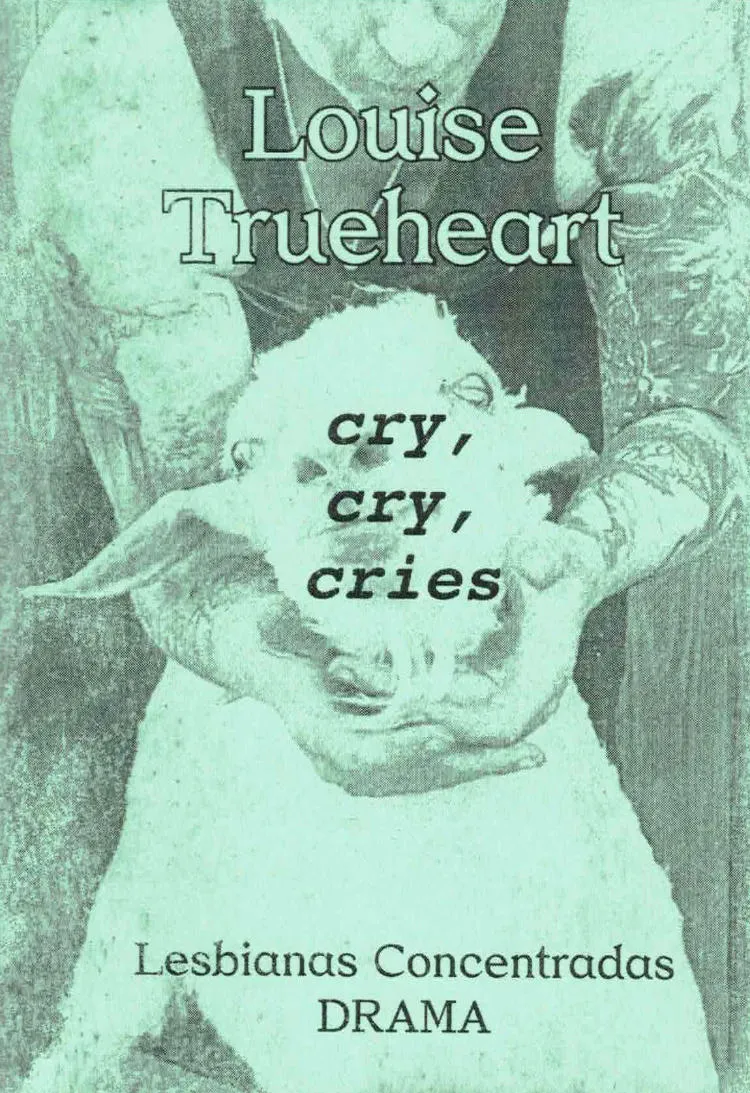
Cry, cry cries
The text is a chapter of a work in progress novel called Lamb. It weaves together the idea of sacrifice in the Bible and pop culture through ‘the liquid gist of sincerity itself’: crying.
Is the third publication of the series " Lesbianas Concentradas DRAMA".
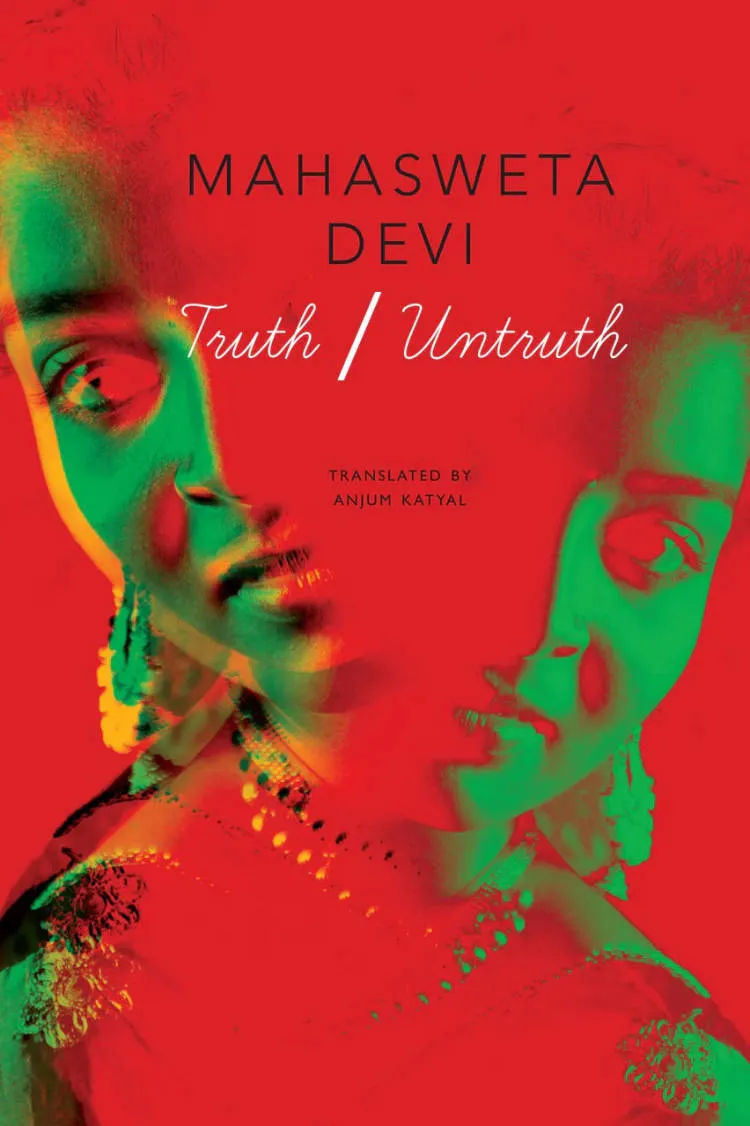
Truth / Untruth
A trenchant, darkly humorous, and unsentimental look at Calcutta society.
Set in Calcutta in the mid-1980s, Truth/Untruth is a fast-paced thriller built around the death of the pregnant Jamuna—a maid in a newly affluent residential apartment complex—and Arjun, the upwardly mobile businessman who seduced her. Packed with a cast of colourful characters, this novel is a trenchant, darkly humorous, and unsentimental look at the different segments of Calcutta society: from the middle-class culture vultures to the unscrupulous ‘promoter’ class and the domestic helpers and slum goons who form an intrinsic part of the city’s life. All are implicated in a complex web of guilt and bizarre twists and turns. Sex, lies, death—the great modernist themes—run like a thread through this book, exposing societal greed, lust, corruption, and moral hypocrisy with a sardonic tone that spares none. An unusual novel by an author who is otherwise known for her hard-hitting activist-feminist stories, Truth/Untruth underlines the exploitative vicious cycle that defines urban relations between the haves and have-nots.
‘Although not of the margins herself, Devi was accomplished in writing from the margins [ . . . ] However, it is indeed worth it if you are looking for an exhilarating social commentary and biting satire that remains relevant today. Devi also reflects the jargon and dialects of the lower classes as deftly as the peculiarities of upper-class speech patterns. A feat of this work is Katyal’s ability to mediate these multiple registers, rewarding the reader with sharp writing that is at once funny, sardonic, and darkly pleasurable to read.‘—Jack Greenbert, Cha: An Asian Literary Journal.

Discomania
A young woman discovers that dancers at a local discotheque are being driven to acts of insane violence.
“The place was full of swarming, pugnacious, dangerous missellneous reptile's… Teenager's everywhere pounded their way on top of each other crazily strangling, biting and slashing each other's with broken glass, smashed records or sharpened blades… ”
16-year-old Jennifer Gibbons (1963–1993) wrote Discomania in 1980, alongside her twin sister June-Alison, who was also writing her own novel, The Pepsi Cola Addict, in the bedroom that they shared.
Jennifer offered Discomania to the same English vanity press who would publish June-Alison's book, but Discomania was turned down for being “too violent, too sexual, and too futuristic.”
Long thought to have been lost or destroyed, June-Alison had in fact preserved the typescript of this unique, furious, funny, and strange novel, which we present with her blessing, alongside additional texts from June-Alison, and editors David Tibet and Ania Goszczyńska.

The Villain’s Dance
Fiston Mwanza Mujila, Roland Glasser
Full of wit, music, and a rollicking cast of characters, The Villain’s Dance shows Fiston Mwanza Mujila is back with a bang.
Zaire. Late nineties. Mobutu’s thirty-year reign is tottering. In Lubumbashi, the stubbornly homeless Sanza has fallen in with a trio of veteran street kids led by the devious Ngungi. A chance encounter with the mysterious Monsieur Guillaume seems to offer a way out . . . Meanwhile in Angola, Molakisi has joined thousands of fellow Zairians hoping to make their fortunes hunting diamonds, while Austrian Franz finds himself roped into writing the memoirs of the charismatic Tshiamuena, the “Madonna of the Cafunfo Mines.” Things are drawing to a head, but at the Mambo de la Fête, they still dance the Villain’s Dance from dusk till dawn.

Season of the Swamp
New Orleans, 1853. A young Zapotec exile from Mexico named Benito Juárez disembarks at a fetid port city at the edge of a swamp. Years later, he will become the first indigenous head of state in the postcolonial Americas, but now he is as anonymous and invisible as any other migrant to the roiling and alluring city.
Accompanied by a small group of fellow exiles who plot their return and hoped-for victory over the Mexican dictatorship, Juárez immerses himself in the city, which absorbs him like a sponge. He and his compatriots work odd jobs, fall victim to the cons and confusions of a strange young nation, succumb to the hallucinations of yellow fever, and fall in love with the music and food all around them. But unavoidable, too, is the stark trade in human beings.
With the extraordinary linguistic play and love of popular forms that have characterized all of Herrera’s fiction, Season of the Swamp is a magnificent work of speculative history, a love letter to the city of New Orleans and its polyglot culture, and a cautionary statement that informs our understanding of the world we live in.

Autobiography of Cotton
Cristina Rivera Garza, Christina MacSweeney
A novel about how cotton workers transformed the Mexico-US borderlands, by a Pulitzer Prize–winning author.
In 1934, a young José Revueltas traveled to Tamaulipas to support the cotton workers’ strike in Estación Camarón, which became the basis of his landmark novel, Human Mourning. In her own groundbreaking novel, Autobiography of Cotton, Cristina Rivera Garza recounts her grandparents’ journey from mining towns to those same cotton fields as it intersects with Revueltas’s life in a vivid and evocative history of cotton cultivation along the Mexico-US border.
Through archival research and personal narrative, Rivera Garza chronicles the way cotton transformed the borderlands by reconstructing the cotton workers’ strike and reveals how cycles of deprivation and ecocide persist across generations. Deeply personal and politically acute, Rivera Garza crafts a new kind of border novel that tells how a brittle land radically altered her grandparents’ lives and the territories they helped develop. An intimate fictionalization, Autobiography of Cotton reveals a rich social history of agricultural colonization, labor activism, environmental degradation, and cross-border migration.

New Infinity
New Infinity is an experimental novella that follows a woman as she lives and dreams her way through the philosophical implications of autoimmune disease. Met by a labyrinth of closing doors, she searches for meaning and connection among fragmented realities and failed relationships, finding infinitude in the healing process of bibliomancy.
Bára Hladík’s New Infinity is a glittering cross-genre debut. Weaving surrealist stories with meditative poetics, Hladík invites you into a dream world of degenerative illness, left disordered by the failures of ableism, medical professionals, and late-stage capitalism. Here, everything runs on sick time. Where physical health and financial resources grow scarce, the restorative possibilities of queer love, divination, and self-reclamation grant a defiant, yet often tenuous, abundance. Alive with Hladík’s boundless insight and wit, New Infinity is a powerful addition to the collective body of disability literature.
“I have been waiting for a book like New Infinity for years: a story of disability that oozes over the edges of ‘personal narrative’ into the surreal logics of bodies that will not be made useful under capitalism. Bára Hladík’s prose delights me with its 21st-century metamorphoses, its waiting-room dream logics, and its mystical invocations of a body in pain. Her poetry is a channel to another dimension, but one that is grounded inside our everyday sensoria—’cracking, pushing, pulsing’ like a spine writhing with snakes. Here, embodiment is never extractable from the institutions and economies whose profits are predicated on the question ‘do I matter if / I am only a pulse’? New Infinity insists upon a different kind of mattering, in which missed connections, improper fusions, and fleeting moments command the careful, caring attention that is too often denied them.” – Liz Bowen, author of Compassion Fountain (Trembling Pillow Press) and Sugarblood (Metatron Press)
“New Infinity is the most incredible fiction. It explodes the boundaries of this form so as to get to the heart of important truths about the phenomenon of physical pain and of human existence itself. While Bára Hladík’s story draws from a personal experience of survival through a struggle unlike any other, it is an entirely universal tale. In taking us into the most intimate spaces of suffering and narrating a story of a woman navigating a true labyrinth, Hladík shows us a way to face life, with the uncertainties it presents to us all. This novel is at once a profoundly moving story, a brilliant act of creativity, and an existential philosophy. It’s a book I will keep close, so as to revisit— for the thrilling inspiration of its liberated uses of form and style, as well as to learn from Hladík’s honest language, her resilient sense of humour, and her ability to capture the surreal beauty of being alive at all. I felt like I was reading Franz Kafka crossed with a fully unconstrained Anne Carson. I haven’t been so impacted by a book in a long time. It has changed my ways of seeing, feeling, and thinking about what it means to be alive.” – Molly Lynch, author of The Forbidden Territory of a Terrifying Woman (Catapult Books, 2023)
“Bára Hladík’s debut book is a blend of poetry and prose that seeks to make sense of a world that is flagrantly hostile and impatient with bodies that neither perform nor conform to the manic impatience of capitalist acceleration. An honest, vibrant, and very real account of a young writer finding a voice.” – Sina Queyras, writer, editor, professor, curator
“Bára Hladík’s New Infinity is a stirring pedagogy, philosophy, and witness. This offering of sick hybridity coils in a long, calm, and exhilarating breath while asking, ‘Do the doctors know how to breathe?’ Yes, Hladík’s prose and poems prompt, pain cosmologies are at once funny and incantatory. Each of New Infinity’s oneiric turns reads the body as an oracle and mirror, reminds us we are atmospheric. I would rather live here in this book, relearn how to breathe, than return to the ‘impossible crank’ of normal.” – Jane Shi, writer, poet, editor, organizer
Bára Hladík is a Czech-Canadian writer, editor and multimedia artist. Born in Ktunaxa Territory, she began her literary studies in the Creative Writing program at Capilano University in 2011. After studying Technical Writing at the British Columbia Institute of Technology, she received her Bachelor of Arts in Literature and Communications from the University of British Columbia in 2016. Her work can be found in Briarpatch Magazine, THIS Magazine, Contemporary Verse 2, Carte Blanche, EVENT Mag, Hamilton Arts and Letters, Bed Zine, Empty Mirror, Cosmonauts Avenue and elsewhere. Bára’s microchapbook Book of Mirrors was selected for the 2019 Ghost City Press Summer Micro-Chap Series and her collaborative artist book Behind the Curtain (Publication Studio, 2018) was an honourable mention for the Scorpion and Felix Prize (2017). New Infinity is Bára’s first book. She is now a guest in Esquimalt, BC.