Books
Books
in random order
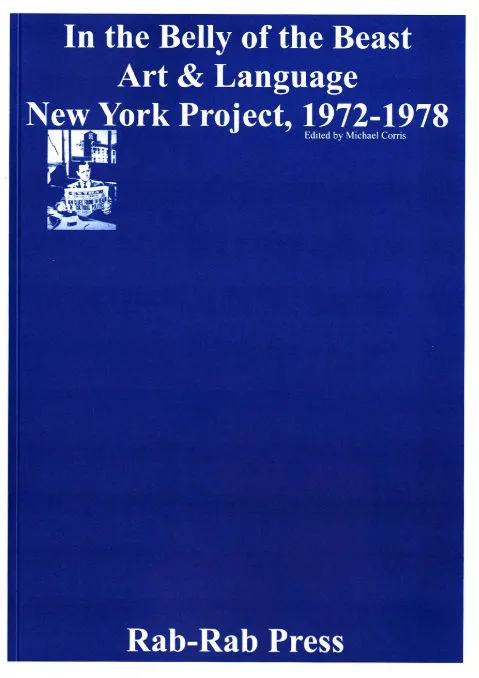
In the Belly of the Beast – Art & Language New York Project 1972-1978
Edited by Michael Corris, the expanded edition of In the Belly of the Beast: Art & Language New York Project 1972-1978 is a survey of the tumultuous years of the political Conceptualism in the mid-seventies New York.
Artists have always experimented with politics, either by organizing themselves or uniting in support of a broader political movement. Today, "activist art" is taught in universities, supported by foundations, and featured in museums and international exhibitions. Is this the only possible way?
In the Belly of the Beast tells a different story, of the work of politically engaged artists and the conflicts they experienced. It is the history of artists wishing to continue working within the boundaries of the artworld and those who were intent on establishing new ideological and class relationships with activists to build a political party.
During the 1970s in New York, the Art & Language collective pioneered institutional critique; published a Marxist-influenced journal; agitated against racism and sexism in museums; challenged the cultural imperialism of international exhibitions; and forged a framework for a socialist organization of artists. This new edition includes previously unpublished documents illuminating the contradictions and disputes that lay at the center of the organization and practices of Art & Language and left-wing groups, such as the Anti-Imperialist Cultural Union and the Artists' Meeting for Cultural Change, mobilizing artists in New York at the time.
The new and expanded edition of In the Belly of the Beast features an extensive interview with Michael Corris, who annotated a collection of previously unavailable documents from the period, including manuscripts, pamphlets, transcripts, and letters.
Art & Language is the name of a group of English artists who choose to work collectively, and the title of a magazine that they founded in 1968. Proposing a critical analysis of the relations between art, society, and politics, Art & Language marks, even in its name, the importance of the “textual turning point” in the 1960s.
Since 1976, Art & Language's project has continued, through Mel Ramsden and Michael Baldwin, with the literary and theoretical collaboration of Charles Harrison. Working with very varied mediums, from painting to rock, these co-founders of Conceptual art remain, even today, attached to observing the consequences of what they themselves call the “depressing collapse of modernism.”

Economy as Intimacy (vol.1)
A series of choreopoems by Eric Peter. Published at the occasion of 'Assemblages of Intimacy' a group exhibition in a Tale of a Tub, Rotterdam in 2018.

Hyperpolitics: Extreme Politicization without Political Consequences
What happens when politics is everywhere, yet nothing seems to change? From the abandoned dance floors of Thatcher’s London to the mass mobilizations of Black Lives Matter, Anton Jäger traces how public life has become infused with protest, spectacle, and moral urgency — while the old infrastructure of parties, unions, and civic solidarity has been hollowed out.
Hyperpolitics revisits the illusions of the “end of history” and dissects the strange energies that replaced them: viral outrage, endless culture wars, and the digital rush of causes that flare and vanish overnight. Jäger shows how the promises of post–Cold War liberalism gave way to a restless, unsteady public sphere where private passions overflow into politics but rarely build enduring power.
Ranging from Guy Debord and Wolfgang Tillmans to Houellebecq’s disenchanted fictions, Hyperpolitics makes sense of a world in which collective action remains fragmented and the social fabric thinner than ever. For anyone trying to grasp why our age feels so charged yet so inconsequential, this book offers a vital map through the new contradictions of our hyperpolitical moment.

Forms Of Life Of Forms
FORMS OF LIFE OF FORMS brings artistic research into form – not merely as an aesthetic question but as a social and political one. Indeed, there are no politics without form! With Forms of Life, Rob Ritzen curated several “Moments” that assembled works, collective readings, and other references into a single installation. This publication reshuffles documentation of these “Moments” as a visual reflection of the trajectory of this research.
Rob Ritzen works as a curator with a background in philosophy. His curatorial practice is focusing on self-organized and cooperative formats. Consciously positioned at the margins of established institutions and outside of market-oriented spaces, his practice is placed in close association with communities of cultural practitioners. His initiatives are attempts to reconfigure the politics of making art and alternative forms of production and presentation.

After Words: Visual and Experimental Poetry in Little Magazines and Small Presses, 1960–2025
This book offers a visual and thematic journey through avant-garde, concrete, visual, and experimental poetics as they appeared in ephemeral little magazines and small press publications from the 1960s onward. This book serves as an exhibition catalog for After Words: Visual and Experimental Poetry in Little Magazines and Small Presses, 1960–2025 from April 23rd to July 26, 2025, at The Grolier Club exhibition in New York City.
Small presses include: 7 Flowers Press, Agentzia, Anabasis, Asylum’s Press, Ayizan Press, Beach Books Texts & Documents, Beau Geste Press, blewointmentpress, Burning Press, C Press, Chax Press, Coach House Press, Edition Hansjörg Mayer, Edizioni Geiger, Expanded Media Editions, Fleye Press, Goliard Press, Grabhorn-Hoyem, Granary Books, Druckwerk, Hawk’s Well Press, Heiner Friedrich, The Hermetic Press, Hermetic Gallery, John Martin, Joseph Melzer Verlag, Kickshaws, Kontexts Publications, Letter Edged in Black Press, Luna Bisonte Productions, Membrane Press, Milano: East 128, New Wilderness Foundation, Nietzsche’s Brolly, Nova News, Open Book, Openings Press, PANic Press, Phenomenon Press, Poltroon Press, Renegade Press, Roaring Fork Press, Scorribanda Productions, Seedorn Verlag, Seripress, Siglio Press, Station Hill, Tarasque Press, Tetrad Press, Visual Poetry Workshop National Poetry Society of London, Wild Hawthorn Press, and Xexoxial Editions.
Little magazines include: “before your very eyes!”, A: An Envelope Magazine of Visual Poetry, Abracadabra, Alcheringa, Anti-Isolation, Approches, AQ, Assembling, Blank Tape, Bulletin From Nothing, Cenizas, Diagonal Cero, E pod, Fruit Cup, Ganglia, Geiger, Gnaoua, Industrial Sabotage, Interstate, Journeyman, Kaldron, Klacto 23, Kontakte, Kontexts, Kroklok, L=A=N=G=U=A=G=E, Libellus, Life Begins with Love, Lines, Lost and Found Times, Lost Paper, Mini, New Wilderness Letter, Pages, Poor.Old.Tired.Horse., Rawz, Revue OU, Rhinozeros, Sammelband Futura, Schmuck, Shi Shi: Concrete & Visual Poetry, Signal, Soft Need, Sondern, Spanish Fleye, Stereo Headphones, Taproot Reviews, The Acts: The Shelf Life, The Difficulties, The Improbable, The Insect Trust Gazette, The Marrahwanna Quarterly, The San Francisco Earthquake, The Subtle Journal of Raw Coinage, Toothpick Lisbon & the Orcas Islands, Unarmed: Adventurous Poetry Journal, UNI/vers(;), WhiteWalls, Xerolage, and xtant.

Matières spectrales: Sociologie des Fantômes
Avery F. Gordon, Julia Burtin Zortea
Dans ce livre unique et fascinant, Avery F. Gordon examine l’expérience sociologique de la « hantise » en s’appuyant sur des références aussi bien littéraires que politiques. La hantise désigne un système qui altère l’expérience d’un vécu linéaire et déforme la façon dont nous séquençons habituellement le passé, le présent et le futur. En prenant pour terrain les romans de Toni Morrison ou Luisa Valenzuela et en les confrontant à des sources plus traditionnelles de la sociologie (articles de presse, comptes rendus judiciaires, rapports d’enquêtes), Matières spectrales démontre que les structures sociales héritées du passé influencent plus la vie présente que ne le présument la plupart des chercheur·ses en sciences humaines.
Afin de montrer comment les fantômes hantent le présent, l’autrice passe au crible une partie de l’histoire de la psychanalyse, avant d’examiner des épisodes de l’histoire tels que l’esclavage aux États-Unis ou les disparitions massives pendant la dictature militaire en Argentine, où des lois interdisaient à la population de parler des disparu·es.
Profondément interdisciplinaire et véritablement innovant par son approche, Matières spectrales est écrit avec une puissance à la hauteur de son sujet, et offre une vision nouvelle des intersections complexes de la race, du genre et de la classe.

Portrait of the Artist as a Writer
"Portrait of the Artist as a Writer" is a collection of short stories, quotes and drawings about dinosaurs, gay lesbians and how to lose a joke at the lake.
Risoprinted in pumpkin and purple, perfect binding with glue, first edition of 300, Berlin 2022.

In Pursuit of Revolutionary Love: Precarity, Power, Communities
Violence is arrayed against us because we’re Black, or female, or queer, or undocumented. There is no rescue team coming for us. With that knowledge, we need a different operational base to recreate the world. It is not going to be a celebrity savior. Never was, never will be. If you’re in a religious tradition that is millennia-old, consider how the last savior went out. It was always going to be bloody. It was always going to be traumatic. But there’s a beauty to facing the reality of our lives. Not our lives as they’re broken apart, written about, and then sold back to us in academic or celebrity discourse. But our lives as we understand them. The most important thing is showing up. Showing up and learning how to live by and with others, learning how to reinvent ourselves in this increasing wasteland. That’s the good life.
Foreword by Da’Shaun L. Harrison.
Afterword by Mumia Abu-Jamal.
"Joy James’s Revolutionary Love is umph-degree love; or love beyond measure. It is anything love. It is love without reckoning. It is love that dares all things, beyond which others may find the spirit-force to survive; to live to fight another day. Such love is also fighting itself, for the sake of ensuring that others may live." — Mumia Abu-Jamal

Égal infini
Égal infini cherche le contact : une crêpe oubliée dans un tram, un tatouage de baiser, une présence derrière un écran. Ici, les algorithmes affectifs côtoient des recettes de consolation, les robots parlants croisent les animaux marins, et la vitesse d’une voiture dans la nuit rejoint le mouvement fragile des relations. Journal éparpillé, galerie de gestes et de paroles collectées, le livre avance comme le refrain « marabout, bout de ficelle… », laissant à chacun·e la liberté de tracer son propre chemin.

touxs mes queers sont des poéte·sses
Car archiver nos écrits et nos paroles n'a jamais été aussi important, car il faut rendre compte de nos existences, de ce moment, pour nous et pour les futurs queers en recherche de repères oui, nous avons écrit, donc oui vous pourrez écrire aussi ! oui, nous avons existé, donc oui, vous existerez aussi ! car oui, nous sommes toustes poéte·sses ! car nos vies sont des poèmes et être queer est de la poésie car touxs mes queers sont des poéte·sses!
Because preserving our writings and our words has never been more important, because we must bear witness to our lives, to this moment, for ourselves and for future queers in search of guidance yes, we have written, so yes, you can write too! yes, we have existed, so yes, you will exist too! because yes, we are all poets! because our lives are poems and being queer is poetry because all my queers are poets!

Ding Dong Bell
Ding Dong Bell is an invitation to cross the threshold into a world that belongs not only to the imagination, but also to the concrete possibility of a different way of inhabiting reality. In this space, details weave together landscapes and reveal characters, hinting at unexpected encounters in a continuous search for shapes and textures, in a chromatic immersion and a sequence of perspectives on a syncretic and archaic world, on an alchemical pictorial practice, where the complex figurative iconography of living beings and cosmic constellations is progressively enriched with tonal stratifications and semantic density.
The collection of paintings outlines universes in which plants, animals, human beings, and subtle presences coexist outside any pre-established hierarchy. The forms cross each other lymphatically and transform without ever being fully accomplished, metamorphically generating a visual ecosystem based on the continuous exchange of substances and the visceral mixture of matter. In this fluid chorus, everything is constantly redefined in the process of becoming, yet without losing its identity. What emerges is a symbolic horizon that becomes a universal hope: an invitation to living beings, witnesses of contemporaneity, to cultivate mutual respect and nurture a providential alliance, where the different planes of existence vibrate in resonance.
The titles of the works, inspired by traditional English nursery rhymes, and the accompanying texts take the form of ancient and surreal chants, capable of evoking both the childhood of the world and its possible future. Their language, closer to illuminated manuscripts than to linear narration, constructs a vivid imaginary world in which whirlwinds and impulses evoke the idea of original totality: at the end of this long succession of worlds, everything seems to tend towards a single, shared substance of being.
Barbara Cammarata (born in 1977) lives and works in Catania (Sicily).

Sudden Wealth with Roy Claire Potter
Chris Evans, Roy Claire Potter
Proposed by Chris Evans, Sudden Wealth is a collaboration with Morten Norbye Halvorsen, Graham Kelly and invited poets and artists who use spoken word as their medium.
Sudden Wealth looks to how the flux of subjectivity in language can be shaped, agitated and re-imagined through a triangulation between written composition, intonation, and extrinsic sound composition. The latter spans analogue and digital instrumentation, foley recordings and algorithmically derived musical patterns. Divergent methods of composition work on and into a voice, modelling intonation, and affecting its sense and intent.
This first iteration has been made with Roy Claire Potter, an artist who tells stories from fragmented, intense images that depict moving bodies or domestic scenes and architectural settings. A rapid vocal delivery, a sense of restricted or partial views of space, complex social and group dynamics and the aftermath of violent events are recurrent strands of Potter’s writing, which are often delivered with a dark and sometimes wilful humour.
Chris Evans was the bassist with the now defunct Life Without Buildings and has previously produced musical compositions with Morten Norbye Halvorsen together with farmers and accountants for his ongoing series ‘Jingle’. Graham Kelly joins Evans and Halvorsen for this present series, Sudden Wealth.
Vocals: Roy Claire Potter.
Electronics: Morten Norbye Halvorsen.
Bass: Chris Evans.
Guitar: Graham Kelly.
Arranged and mixed by Morten Norbye Halvorsen.

Sonic Meditations
Pauline Oliveros (1932-2016) Pauline Oliveros' life as a composer, performer and humanitarian was about opening her own and others' sensibilities to the universe and facets of sounds. Her career spanned fifty years of boundary dissolving music making. In the '50s she was part of a circle of iconoclastic composers, artists, poets gathered together in San Francisco. In the 1960's she influenced American music profoundly through her inclusive work with improvisation, meditation, electronic music, myth and ritual.
She founded 'Deep Listening(R), ' which came from her childhood fascination with sounds and from her works in concert music with composition, improvisation and electro-acoustics. She described Deep Listening as a way of listening in every possible way to everything possible to hear no matter what you are doing. Such intense listening includes the sounds of daily life, of nature, of one's own thoughts as well as musical sounds. 'Deep Listening is my life practice, ' Oliveros explained, simply. Oliveros founded Deep Listening Institute, formerly Pauline Oliveros Foundation, now the Center For Deep Listening at Rensselaer, NY. Her creative work is currently disseminated through Pauline Oliveros Publications and the Ministry of Maåt, Inc

Night Night Fawn
From the author of Confessions of the Fox comes a novel in which a yenta on her deathbed gives an unrepentant account of all her failures—including her child.
“Jordy Rosenberg might be one of our most fearless living novelists. There are no half-measures in his work, just big ideas and living characters and gorgeous sentences and metafictional panache and surprise after heart-stopping surprise. Night Night Fawn is extraordinary.”—Carmen Maria Machado, author of In the Dream House
In a cluttered rent-controlled apartment in the middle of Manhattan, Barbara Rosenberg is terminally ill, high on opioids, and writing the story of her life. She has opinions about her smutty late husband, her career as the receptionist for a disreputable plastic surgeon, her glory days as an accomplished jazzerciser, and her failed aspirations to be a film noir actress. But what she really wants to talk about are unhinged thoughts on gender, Karl Marx, Zionism, and her two great disappointing loves: an estranged trans son and a long-lost best friend whose betrayal haunts Barbara still. As she descends further into delirium and illness, Barbara finds herself in a nightmare from which she cannot escape, and her circumstances put her on a crash course with these intimates—or are they avenging nemeses?—once again.
Part novel, part someone’s mother’s unauthorized memoir—all diatribe, gutter schtick, and deranged manifesto, Night Night Fawn is a ferociously candid account of intergenerational conflict.

Fields
As a stretch of land cultivated for crops to grow, a field evokes sensuous associations of smells, turned soil, exposure to weather. In a sense, fields ground our entire sedentary civilization and the cultures it gave rise to. At the same time, the field is where bodies fall in battle, the site that hosts the perishing of things.
Interweaving strands of autobiography with mythological and cultural tropes, Julien Bruneau explores the field as a metaphor rich with meaning and possibility. How do we inhabit fields and their furrows? How in turn do their history and imagination traverse us? As if it were a dance on the page, Fields invites the reader to encounter, think and feel our entanglement with space and places.
Julien Bruneau is an artist working with dance, presence, drawing and writing. His interest lies in the dynamic interplay between interiority and the collective.
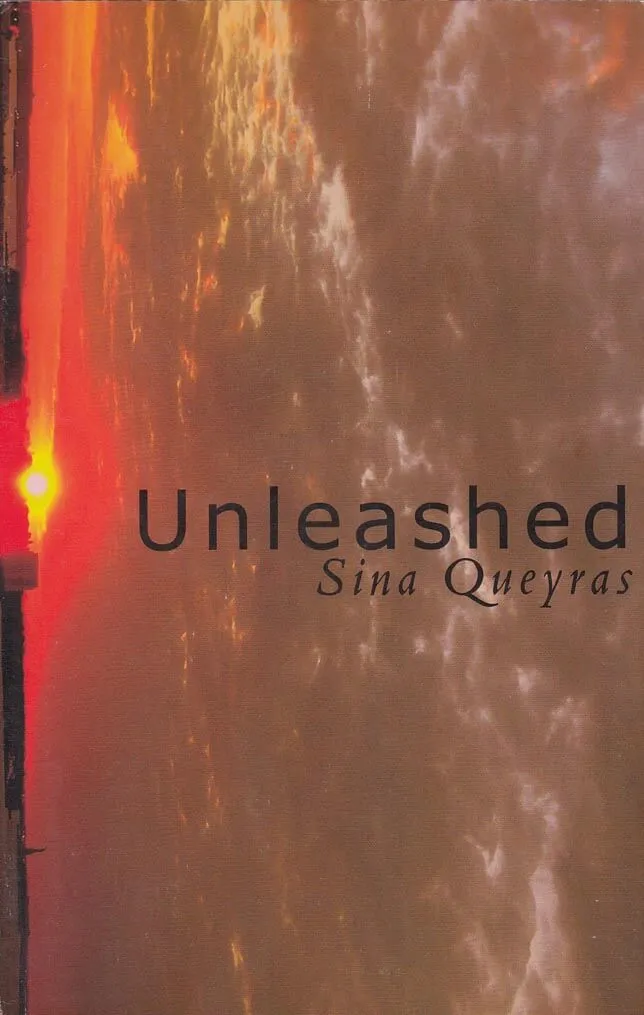
Unleashed
05/09/04 Now she is blogging. Now she is sitting on the black couch listening to the sirens wail and the rain fall. Now she is thinking of oysters. Now she is wondering why this is worth sharing. Now she is thinking, how decipher what is worth reading? Who is to say? Sifters. She thinks we have become a nation of sifters. So began a three-year experiment in blogging. An experiment begun for many reasons—a way for an expat to keep in touch with fellow Canadian writers and artists, a way to come to terms with the increasing relevance of the internet in literary lives, and a way to figure out why, after decades of gains, women writers are still grossly underrepresented in critical dialogues.
With an afterword by Vanessa Place.

Close to Me & Closer...(the Language of Heaven) and Desamere
Alice Notley's two books collected here, CLOSE TO ME & CLOSER... and DESAMERE, are works that are wholly their art, meaning they occur as their language shape measure. She's invented a measure. The text is a rich current crossing, as at the moment of imagining, into being in death and in an expanded life. Notley transgresses conventional contemporary categories of genre; rather than genre, the form of the writing is the mind's inner sense and motion.
"Alice Notley is, I think, the most challenging and engaging of our contemporary radical female poets...infused with uncommon verbal originality, intelligence and joyous playfullness, full of heart, intensity and wonder, provocatively addressing forever unsolved questions of form and identity, life and death, imagination and gender, Notley's poems are unsettling and inspiring"—the San Francisco Chronicle.

Terminal Boundaries and A natural water course diverted reduced or displaced
Made in 1969 but never published, Terminal Boundaries is an artist book by Lawrence Weiner, a sculptor whose medium was language. The manuscript for the publication, which was recently brought to light, contains two related bodies of work represented as typewritten statements on paper that Weiner pasted to the pages of a small composition notebook. The book’s absence from Weiner’s oeuvre plagued him as it marked a terminus of his relationship to the physical construction of his artworks, and illustrated the principle of “specific” and “general” which he applied to his art.
Created from a standard notebook purchased in a stationery store, the manuscript is two books in one: Terminal Boundaries and A natural watercourse diverted reduced or displaced. A tête-bêche with two front covers, the book can begin from either cover by turning it upside down.
Weiner was a traveler by nature and the materials he refers to in these works are those that one can encounter on a road trip. The artist was traveling across Europe when this manuscript was composed. Struck by the tumultuous times and the critical illuminations about the climate from the Club of Rome discussions, the works in this book are in Weiner’s words, “concerned with the relationship of natural resources in relation to human beings.” Distinct from his contemporaries associated with the Land Art movement, in Terminal Boundaries and A natural water course diverted reduced or displaced, Weiner constructs his landscape interventions in language—the specific and/or general act and the location are stated—offering the reader/viewer the opportunity to consider each work’s existence, to build it in their mind’s eye. One can only wonder what Weiner did to divert, reduce, or displace a natural water course in Saltsrumen, Norway, the location of the world’s strongest maelstrom, or in nearby Bodø at the site of Svartisen glacier. A work in Terminal Boundaries titled The joining of France Germany and Switzerland by rope demonstrates the geopolitical perspective of Weiner’s land art. Requiring physical and mental borders to be transgressed in performing this work; how and where could this happen?
Terminal Boundaries finds Weiner just off the cusp of his decision to make art that lived centered in language, emphasizing the viewer’s responsibility to engage with it to make it whole. The book marks a crucial inflection point in the artist’s practice, defining his direction to make work that “attempts to present something to people that is not just about me,” but about materials and the world we find ourselves in here and now.

’Est Pas Une
By way of archiving, digital translation and reproduction, Philip Poppek extracts from Magritte’s word paintings twenty-six letters; segmental symbols of a textual system form an alphabet of a, with a familiar apple punctuating a provisional end to the sequence. A poetic correspondence with the letter a speculates on the prehistory of this alphabet, as though searching for some indication as to how we may have come to where we are now, in this ‘post-factual moment’.
Maybe at some point we fell into the foxes’ den, only to re-surface in a landscape of ruins. This book poses a number of necessary questions, perhaps beginning with: ‘Which feminine noun trails after the title script ‘est pas une?
Pomme? Pipe? Histoire? Communauté?

Contextures
Linda Goode Bryant, Marcy S. Philips
Contextures was originally published in 1978 by New York City’s legendary Just Above Midtown gallery. Edited by gallery founder Linda Goode Bryant and Marcy S. Philips, the publication provides an extensive history of Black artists working in abstraction from 1945 to 1978, while also articulating a newly-emerging movement of Black Conceptual Art in the 1970s.
The publication contains extensive writing by Goode Bryant and Philips drawn from interviews with the featured artists, as well as 58 black-and-white and 16 color images documenting the work of 25 artists: Banerjee, Frank Bowling, Donna Byars, Ed Clark, Houston Conwill, John Dowell, Mel Edwards, Wendy Ward Ehlers, Fred Eversley, Susan Fitzsimmons, Sam Gilliam, Gini Hamilton, David Hammons, Manuel Hughes, Suzanne Jackson, Noah Jemison, James Little, Al Loving, Senga Nengudi, Howardena Pindell, Betye Saar, Raymond Saunders, Sharon Sutton, Randy Williams, and William T. Williams. A newly commissioned afterword by Thomas (T.) Jean Lax, curator of the exhibition Just Above Midtown: Changing Spaces at the Museum of Modern Art, is also included.
Goode Bryant and Philips originally conceived Contextures to accompany The Afro-American Artists in the Abstract Continuum of American Art: 1945–1977. Functioning more like a textbook than a traditional catalog, the book nonetheless realizes a vital mission of their curatorial vision, placing Black artists within the still-prevalent, white-dominated canon of post-war abstract art. Despite its historical importance and visionary scholarship, Contextures was originally produced in a limited run of just a few hundred copies by the gallery and remains rare and largely unknown.
This new edition is produced in facsimile form and is a co-publication with Pacific.

Anatomy of a Refusal
Written after the Beirut Port Explosion on August 4, 2020, when 2,750 tonnes of ammonium nitrate exploded in the commercial and residential port of Beirut after years of warning and mismanagement, Anatomy of a Refusal drifts between lineated and prose poetry, creating a transitional space of mourning. Comprised of three sections, “Mutually Assured Destruction” confronts displacement; “Blast” erases and rescribes bureaucratic documents written about the explosion, and “Deterrence” “return[s] to the place of injury.”
Intertextually poetic, Sahar Khraibani writes in conversation with other writers and philosophers to question, “who owns my language?” and “What does it mean to be in / place?" And yet, between bureaucracy and philosophy, there are moments of intimacy, friendship coexisting in the shared space of the poem—between speaker and addressee, the body and the living world—where belonging carries the weight of grief.
—Blurb written by Clarise Reichley

RUSTIQUE
“RUSTIQUE” is an artist book created by Nicola Godman. This book is sprung out of a residency in September 2021 at Hôtel Chevillon, a former Scandinavian artist colony in Grez-sur-Loing, France. Barbizon, the village where the painter Jean-François Millet (1814–1875) lived and died, is located 20 km away from there. The book interweaves the life and work of Millet with Godman’s photographs, drawings and personal anecdotes.
“RUSTIQUE” wishes to put forward the artistic gaze towards rural life by artists who themselves are born peasants. Nicola Godman (b. 1989, Rute) is an artist working with photography, video, books and stories, currently based in Stockholm, Sweden. Having grown up on an organic dairy farm, she is researching depictions of rural life in art history and contemporary culture.

GABOR
Told through contradicting, unreliable narrators and almost entirely in dialogue, Seyed Qader Hedayati's GABOR fuses the experimentation of George Saunders with the absurdist satire of Joseph Heller to deliver a seldom explored portrait of friendship and boyhood under the anarchy of occupation.
In a Kurdish village under military occupation, a group of boys scrape together their savings and buy a hand-stitched football to prove they aren't losers to the other kids. When it lands inside the opposing military base, Karim sneaks in and takes it back—only for the soldiers to burn the neighborhood to the ground looking for it. Streets are bombed, homes are raided, snipers take aim at pedestrians, residents are dragged off and imprisoned. As the casualty rate skyrockets, Karim and his friends retaliate by firing junkyard scraps from their slingshots while raging bulls escape slaughterhouses to stampede into warfare.

GOAT FOIL
"Marie’s fragrance, smashed out of the bottle for another breath. We should always doubt that the air is pure. We should always doubt that the air is not."
–Alexandre Curlet
Includes an excerpt from Josh Barber's "Omnipotence".
Published as part of Paraphernalia and Addenda 2.2 of Tabloid Publications.