Books
Books
in random order

49 Venezuelan Novels
Sebastian Castillo, Elisa Díaz Castelo
This new bilingual edition of Sebastian Castillo's long-out-of-print first book reintroduces a classic of American microfiction and features a translation into Spanish by acclaimed Mexican author Elisa Díaz Castelo.
Forty-nine pages of unique and surreal micro-fiction, Sebastian Castillo’s 49 Venezuelan Novels is a magical book with a new story on every page. Full of depth and imagination, Castillo uses imagery in a simple yet intense way. From stories of fish markets to spiteful violins, it almost seems that these novels are snippets of family stories long passed down, just now put to paper. With the nature of a born storyteller, Sebastian Castillo provides the readers of this fantastic read with gorgeous stories that define micro-fiction.
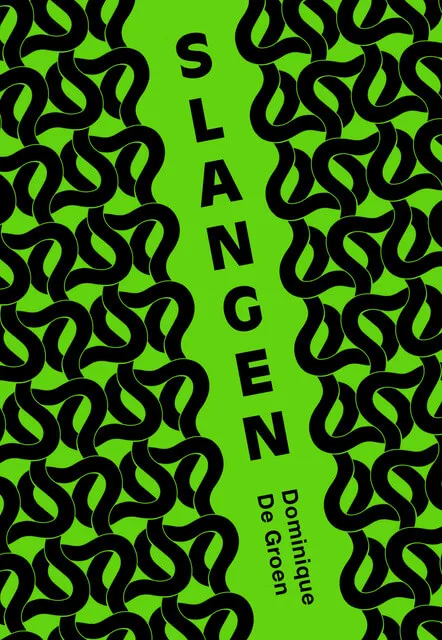
Slangen
Slangen krioelen in de sarcofaag van het heden, in de krochten van de popcultuur, in de mummie van de natuur, in wondes en rot vlees, in artificiële woestijnen en op geoliede dad bods. Ze wentelen zich rond beursgrafieken, raken verstrengeld met wurgende algoritmes, orkestreren een trage ondergrondse revolutie. Een meisje snijdt zich aan een nepdiamanten piramide en werpt haar slangenvel van zich af.
Dominique De Groen is schrijver en beeldend kunstenaar. Ze publiceerde de dichtbundels Shop Girl (2017), Sticky Drama (2019) en offerlam (2020). Ze werd genomineerd voor de Poëziedebuutprijs Aan Zee 2018, de Herman de Coninckprijs 2020 en de Fintroliteratuurprijs 2021 en won de Frans Vogel Poëzieprijs 2019 en de Fintropublieksprijs 2021.

3 Summers
Organs, hormones, toxins, lesions: what is a body? In 3 Summers, Lisa Robertson takes up her earlier concerns with form and literary precedent, and turns toward the timeliness of embodiment. What is form's time? Here the form of life called a poem speaks with the body's mortality, its thickness, its play. The ten poem-sequences in 3 Summers inflect a history of textual voices – Lucretius, Marx, Aby Warburg, Deleuze, the Sogdian Sutras – in a lyricism that insists on analysis and revolt, as well as the pleasures of description. The poet explores the mysterious oddness of the body, its languor and persistence, to test how it shapes the materiality of thinking, which includes rivers and forests. But in these poems' landscapes, the time of nature is inherently political. Now only time is wild, and only time – embodied here in Lisa Robertson’s forceful cadences – can tell.
‘Robertson makes intellect seductive; only her poetry could turn swooning into a critical gesture.' —The Village Voice

Charismatic Spirals
Charismatic Spirals is for an America circa 2024, where poetry—the art of developing new means of speaking—has never been of such artistic, technological and political consequences.
An archetypal outsider, Will Alexander released his first poetry collection aged forty-four while working at the Los Angeles Lakers' ticket office. Three decades on, he has ascended to the legendary status of the city's great living surrealist, existing, as Eliot Weinberger wrote, in a state of "imaginal hyperdrive," with forty such collections to his name.
Operating at the edge of language, Alexander deploys words in a way that feels prophetic—human psyches synthesize with technological artifacts; atoms and archetypes collide; bodies are vacated, voices are newly incarnated. His America—like Glissant's—is multinational and—like Coover and Spiegelman's—multivalent and symbolically unstable. That is to say, he belongs to an America circa 2024, where poetry—the art of developing new means of speaking—has never been of such artistic, technological, and political consequence.
In doing so, Alexander draws from a vast array of influences, from luminaries like Aimé Césaire, Bob Kaufman, Andre Breton, Antonin Artaud, and Philip Lamantia, to holistic visions such as Sri Aurobindo's Integral Yoga, the Mayan numerical system, and Cheikh Anta Diop's perspectives on ancient Egypt. In a preview of Charismatic Spirals in the New York Times, Anne Boyer captured the essence of his work: "visionary poetry [that] achieves its effect through sound, not image...Cadence [that] can shatter us, set the world ablaze."
Read it syllabically, surf it quickly—there is no single way to approach this work.
Will Alexander (born 1948 in Los Angeles) is an African-American artist, philosopher, poet, novelist, essayist and pianist.

DRINK DEEPLY AND DREAM
Drink Deeply and Dream by Elspeth Walker is an ethereal, offbeat short story about wannabe vampires with a Marxist bent and their search for salvation from capitalism via eternal bloodlust.
Paperback, Staple Bound and Offset Printed

Forms Of Life Of Forms
FORMS OF LIFE OF FORMS brings artistic research into form – not merely as an aesthetic question but as a social and political one. Indeed, there are no politics without form! With Forms of Life, Rob Ritzen curated several “Moments” that assembled works, collective readings, and other references into a single installation. This publication reshuffles documentation of these “Moments” as a visual reflection of the trajectory of this research.
Rob Ritzen works as a curator with a background in philosophy. His curatorial practice is focusing on self-organized and cooperative formats. Consciously positioned at the margins of established institutions and outside of market-oriented spaces, his practice is placed in close association with communities of cultural practitioners. His initiatives are attempts to reconfigure the politics of making art and alternative forms of production and presentation.

Nachbilder / Reflection pictures
Caravaggio’s Head of Medusa, 1596/97, painted in two versions, not only reflects light but is a painted reflection. Similarly, these photographs are all reflections in plate glass mirror. They document a relation in the present without content.
First edition of 50

Men in the Off Hours
In Men in the Off Hours, Carson offers further proof of her tantalizing gifts. Reinventing figures as diverse as Oedipus, Emily Dickinson, and Audubon, Carson sets up startling juxtapositions: Lazarus among video paraphernalia, Virginia Woolf and Thucydides discussing war, Edward Hopper paintings illuminated by St. Augustine. And in a final prose poem, she meditates movingly on the recent death of her mother. With its quiet, acute spirituality and its fearless wit and sensuality, Men in the Off Hours shows us a fiercely individual poet at her best.

Iliazda at the Birthday Party – Autobiographical Lecture, 1922
The English translation of Zdanevich's Dadaist autobiographical lecture in Paris in 1922, where he adopts the name Iliazda. In this entertaining lecture, the achievements of the avant-garde is presented as a combination of zaum, polymorphous sexuality, aleatory forms and scatological interpretation of culture.
The second volume of the bie bao series presents a eulogy entitled Iliazda at the Birthday Party, a pseudo-autobiographical lecture delivered by Ilya Zdanevich in Paris in 1922. It reports on Zdanevich's artistic and political adventures up until then. Along with an autobiography full of self-admiration, in this lecture Zdanevich gives an interpretation of his zaum dramas inspired by Freudianism, and humorously describes a colourful image of the Russian microcosm in Montparnasse.
Additionally, this second volume also includes Iliazd's letter to Ardengo Soffici from 1964, where one can read, in the most unambiguous terms, about Zdanevich's positions against war, imperialism, and all forms of nationalism. Subtitled 50 Years of Russian Futurism, the letter to Soffici presents us with an altogether new Zdanevich—a "fellow traveller" in both leftist and avant-garde circles. As well as the extended introduction and extensive annotations, the texts are further contextualised with Johanna Drucker's visual presentation of the birth of the Iliazd cult.
The bie bao series will include eight publications, covering many layers of Zdanevich's rich theoretical and artistic output. Each volume consists of a bio-bibliographical introduction, a commentary, a translation with annotations, and artistic intervention.
Iliazd (Ilya Zdanevich, 1894-1975) was a Russian poet, designer, typographer, theoretician, art critic, and publisher, close to the avant-garde circles and one of the promoters of Futurism in Russia, author of a poetic work, drama written in zaum abstract poetic trans-sense or "transrational" language, and novels.

KAMERA CAHIER N° 10
A special edition issue curated, designed and published by AVARIE, Paris and Labor Neunzehn, Berlin. It accompanies KAMERA SERIES, while it is an independent and valuable object to collect. The central idea that informs and directs the booklets’ montage is the interplay between the concepts of addition and subtraction. This is achieved by unveiling a missing image in the screening or an unreleased second from an artist's film, expanded to 24 pages. Additionally, each booklet contains a piece directly removed from the show.
The editing establishes a dialogue between film frames and performed writings derived from texts, scripts, storyboards, and notes. The KAMERA exhibition is consequently extended into a physical space—the book—allowing for its widespread dissemination, complementing and contrasting with its potential online occurrence.
KAMERA SERIES is a screening program of experimental films, video art works and printed matter taking place in a former GDR building in Berlin. Each event showcases a retrospective of selected films by an artist and a small exhibition of his/her publications or works on paper over a span of 4 days.
KAMERA centers on fostering a critical dialogue between different film formats and artists’ books. Through its regular occurrence, it aspires to create a space for community exchanges about contemporary image-making. KAMERA is a series conceived and curated by Labor Neunzehn and AVARIE.
Fascinated by the intersection of visual art and cinema, Helga Fanderl’s short poetic films evoke intense and sensitive experiences of the real world. Using a small hand-held super 8 camera, she creates filmic responses to her perceptions, weaving together imagery and emotions in dense, rhythmic patterns solely through in-camera editing. She presents silent films in the form of ‘compositions’, crafting unique programs for site-specific personal projections and transforming spaces into temporary cinemas.


Passage to the Plaza
In Bab Al-Saha, a quarter of Nablus, Palestine, sits a house of ill repute. In it lives Nuzha, a young woman ostracized from and shamed by her community. When the Intifada breaks out, Nuzha’s abode unexpectedly becomes a sanctuary for those in the quarter: Hussam, an injured resistance fighter; Samar, a university researcher exploring the impact of the Intifada on women’s lives; and Sitt Zakia, the pious midwife.
In the furnace of conflict at the heart of the 1987 Intifada, notions of freedom, love, respectability, nationhood, the rights of women, and Palestinian identity—both among the reluctant residents of the house and the inhabitants of the quarter at large—will be melted and re-forged. Vividly recounted through the eyes of its female protagonists, Passage to the Plaza is a groundbreaking story that shatters the myth of a uniform gendered experience of conflict.

The Twofold Commitment
At once an artist's book and an interview collection by Vietnamese filmmaker, writer and feminist and postcolonial theorist Trinh T. Minh-ha (born 1952), The Twofold Commitment centers on Trinh's 2015 feature film Forgetting Vietnam, which takes up one of the myths surrounding the creation of Vietnam: a fight between two dragons whose intertwined bodies fell into the South China Sea and formed Vietnam's curving, S-shaped coastline. Commemorating the 40th anniversary of the end of the war, the film draws inspiration from ancient legend to stage an ongoing contemporary conversation between land and water, creating a third space, another way, for historical and cultural re-memory.
This book features the film's lyrical, essayistic script, along with rhythmically distributed movie stills. Expanding on this central focus is a series of conversations between the filmmaker and critics and film and sound studies scholars dating from 2016 to 2022, amplified by an index identifying key concepts and ideas in the artist's work.

Against Morality
A manifesto against the current moralizing trend in the arts.
Should art be determined by political ideals? In recent decades art institutions have sought to embody liberal values of universal equality and social justice. This move toward greater inclusivity has borne witness to a countervailing trend: artworks are increasingly scrutinized for their political implications, and artists must take care not to transgress particular moral fault lines.
Examining contemporary exhibitions as well as works of art and film, and the broader cultural reactions to them, Rosanna McLaughlin investigates the consequences of this moralizing approach to creative work. She invites us to rethink the connection between political values and art—and to ask whether a relationship between them should exist at all. In arguing against morality in the arts, McLaughlin lays the groundwork for a more expansive concept of difference in twenty-first-century art making.
"What if ambivalences were seen as productive, and not a danger to erase? Would we not begin to know ourselves better? What is it that we are so afraid of finding out? Art is a testing ground for ideas, a means of reaching. What a shame, if we use the space it offers to destroy it entirely."
Rosanna McLaughlin is a writer based in East Sussex and the author of Double-Tracking: Studies in Duplicity (2019) and Sinkhole (2023). Her writing on art and culture has featured in ArtReview, Frieze, Granta, The Guardian, and The White Review, among other publications. Between 2021 and 2023 she was co-editor of The White Review.

Affiliation
Mira Mattar, Judith Abensour and 1 more
Affiliation, de Mira Mattar, autrice londonienne issue de la diaspora palestinienne, explore des thèmes tels que le genre, la famille, la religion, la guerre, l’écologie, le colonialisme et l’amour, en lien avec des lieux comme la Jordanie, le Liban, la Palestine et le Royaume-Uni. Interrogeant nos affiliations personnelles et collectives, et la manière dont les systèmes de pouvoir influencent nos désirs et nos identités, le livre s’ouvre sur quatre Lettres d’Amman qui propulsent le texte poétique dans le mouvement du monde et attestent de la dynamique de l’exil palestinien, où l’éclatement, l’effacement et l’appropriation se mêlent avec les effets contemporains de la mondialisation.
La deuxième partie du livre, intitulée Affiliation (pour mon père) est un long poème rétrospectif qui court sur une trentaine de pages. L’écriture à la première personne de Mira Mattar met en tension des contextes politiques, domestiques, intimes, économiques où se déploient des affiliations coloniales, capitalistes, patriarcales, nationalistes. Elle en restitue les violents processus internes, passant du refus de se soumettre à l’impossible échappée. Dans Affiliation, on fait l’expérience d’être en dehors: en dehors de son corps, en dehors d’un pays, en dehors d’une pièce. Il n’y a aucune position stable, et le sujet se construit dans un éclatement constant. Peu de livres articulent aussi finement expérimentation formelle et nécessité de l’expression verbale. Affiliation est un flux de langage dont on peut sentir l’urgence à chaque vers.

Dreaming Water
Dreaming Water is the most thorough monograph dedicated to the work of Chilean artist Cecilia Vicuña to date. Vicuña coined the term “Arte Precario” in the mid-1960s as a new category for her works composed of debris and structures that disappear in the landscape, and which also include her quipus (“knot” in Quechua), envisioned as poems in space.
Dreaming Water brings together over 200 works—including paintings, drawings, screenprints, collages, textiles, videos, photographs, installations, poetry, artist books and performances—created throughout the artist’s remarkable career. It also features several stimulating texts—a lengthy epistolary piece by curator and editor Miguel A. López as well as new essays by anthropologist Elizabeth A. Povinelli, curator Catherine de Zegher and art historian José de Nordenflycht. Vicuña herself contributes two texts, reflecting on her drawings from the “Palabrarmas” project and the activism of the group Artists for Democracy, which she cofounded in 1974. A rousing conversation between Vicuña, anthropologist Marisol de la Cadena and curator Camila Marambio also figures in the book, blending the artist’s voice with those who are experts in fields pertinent to her practice.

The Alphabet Book
In 1971, Michael Morris and Vincent Tarsov—founders of the Vancouver-based artist network Image Bank—invited Eric Metcalfe, Gary Lee Nova, Glenn Lewis and Paul Oberst to create their own, unique alphabet. NowForty years later, with the permission of the participating artists and the help of Image Bank, these historic silk-screened alphabets have finally been published together. The Alphabet Book is designed by Marc Hollenstein, who was inspired to reinitiate the alphabet publication project after having a conversation with Glenn Lewis during the opening of Lewis’ retrospective exhibition at Kunstverein back in 2014.

Água Viva
In Água Viva Clarice Lispector aims to 'capture the present'. Her direct, confessional and unfiltered meditations on everything from life and time to perfume and sleep are strange and hypnotic in their emotional power and have been a huge influence on many artists and writers, including one Brazilian musician who read it one hundred and eleven times. Despite its apparent spontaneity, this is a masterly work of art, which rearranges language and plays in the gaps between reality and fiction.
Clarice Lispector (December 10, 1920 – December 9, 1977) was a Brazilian writer acclaimed internationally for her innovative novels and short stories. Born to a Jewish family in Podolia in Western Ukraine, as an infant she moved to Brazil with her family, amidst the disasters engulfing her native land following the First World War.

A Psalm for the Third Wind
Book: 11.7 × 18 cm
Book and Glove: 13.5 × 31.5 cm
Presented in a monster glove
Three broken halves of one god walk a city that wants them dead
Their bodies speak in static hunger and rust
Something follows breathing through their mouths
Read it Bleed from it
In A Psalm for the Third Wind, a film script written from 3 perspectives, Damien Troadec is aiming to address in parallel narrative the struggle of having multiples inner voices and the danger of following their distinct desires. One question is raised without any light at the end of the tunnel, confronting the reader to a conflict : THE COMFORT OF MISERY OR THE PAIN OF CHANGE ?

Faux Ice
James Goodwin’s Faux Ice contains six poems: ‘Roman Street Sweeper’, ‘Technomarine’, ‘Meridian Walk’, ‘Astroturf’, ‘Star Bright Ice’, and ‘Faux Ice, or The Same as Fantasy?’ Goodwin writes:
“A constrained economy of expression is the formative approach I’ve taken with these poems. I was motivated, in my early attempts, to reproduce, as a crystallised element of black lyric expressivity, the condensed form of the grime lyric, and its invocations of blackness as a poetic description of being immersed in and by indistinction. Or aspects of the black life of poetry which do not derive their origins, causes, or relations from communicative modes of clarification in language. And so the poems in Faux Ice are oblique expressions and articulations of the ways reality is refracted by [the] questions of what is real, informing, say, the experience of seeing without being seen on the one hand and having no others on the other.”
Inheriting from eskibeat and drill and from other sources of experimental Black sociopoetics, these poems, with their dispersed and insistently plural voices, aren’t interested in building up, but in dismantling a stable subject, their icy conditions always displaced and subject to change.
“shot of this glean of jewel with the
force of a technomarine to
connect the more looks around the
pressure-encrusted, iced out skip and
lack of any protection”
JAMES GOODWIN is the author of Fleshed out For All the Corners of the Slip (the87press, 2021), and Aspects Caught in The Headspace We’re In: Composition for Friends (Face Press, 2020). He is currently completing a PhD at Birkbeck College, University of London.

Intifadas
A subversive collection about Palestinian resistance, liberation and art.
Written across Palestine and its diaspora—from Gaza and the West Bank to the United States—Intifadas is a subtly transgressive poetry collection about uprising in its many forms—in art, politics, and in our most personal relationships. Whether by dumping black paint on a park where a tank and fighter jet commemorate a war, or by trying to rescue a moth trapped in a garage, the defiant and resilient voices in this collection subvert traditional narratives of loss. Furious, tender, and darkly funny, Intifadas asks what art can do in the face of catastrophe, and answers with poems that refuse easy consolations.

Broken Villas
Written in response to three “physical” photographs, ‘Broken Villas’ contains and considers how a vessel might clasp tightly to known volumetric identities, but also loom with a set of accentuated clues towards otherness: the excavated seams in the earth and what we fill those holes with, imaginary or otherwise; the glacial erraticism of the boulder; the queer crimping of a hotel pillowcase; the modes via which objects are housed as display, but also packaged away, with sorrow, with fear, with erotism etc.

Mystic Transport
Mystic Transport is an exhibition project initiated through a chance encounter between two artists, Koen Theys and Gülsün Karamustafa. Both are very much intertwined with the city they live in; Brussels and Istanbul and integrate visible and invisible materials and remnants from their immediate surroundings within their practice.
Intrigued by religious parades, the hamam, war propaganda, gender issues and the entertainment industry, Theys and Karamustafa use these phenomena as starting points for their video work, installations and performances. In doing so, both artists sketch a critical portrait of the society and culture in which we live and reside, reflecting on cultural canons and differing socio-economic realities. Mystic Transport thus results in unique crossovers.

Là
Laszlo Umbreit, Sirah Foighel Brutmann and 1 more
Là is an immersive, politically charged sound journey – a lament for the Al Naqab desert in Palestine. It is the result of a collaboration between Sirah Foighel Brutmann, Eitan Efrat, Laszlo Umbreit, and Ot Lemmens. The album combines acoustic instruments like flute and cymbals with processed electronics and mechanical sounds.
The track Ensemble is made from sound recordings of eleven 16mm film projectors, playing simultaneously and in intervals, creating a texture centered around a single pitch – La/A.
The tracks For Her, There, and No are recordings of live sessions played by Laszlo Umbreit and Eitan Efrat.
The album also features an extended text by Rose Higham-Stainton titled Strategies for Survival, spread across a 12-page booklet.