rile*books

Search books

Search books by title, author, publisher, keywords...

Cover of  Là

Futura Resistenza

Laszlo Umbreit, Sirah Foighel Brutmann, Eitan Efrat

€30.00

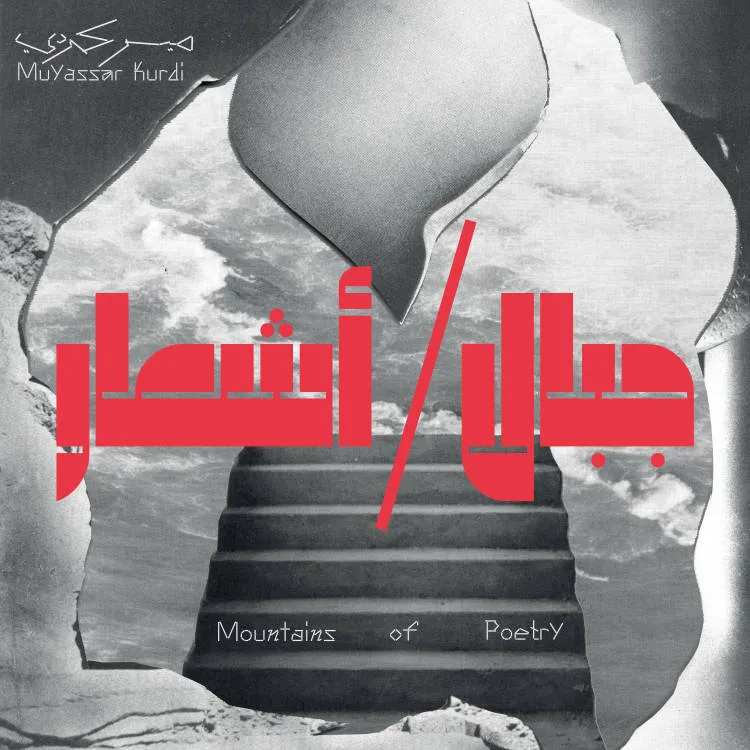
Là is an immersive, politically charged sound journey – a lament for the Al Naqab desert in Palestine. It is the result of a collaboration between Sirah Foighel Brutmann, Eitan Efrat, Laszlo Umbreit, and Ot Lemmens. The album combines acoustic instruments like flute and cymbals with processed electronics and mechanical sounds. 

The track Ensemble is made from sound recordings of eleven 16mm film projectors, playing simultaneously and in intervals, creating a texture centered around a single pitch – La/A. 

The tracks For Her, There, and No are recordings of live sessions played by Laszlo Umbreit and Eitan Efrat.  

The album also features an extended text by Rose Higham-Stainton titled Strategies for Survival, spread across a 12-page booklet.

Published in 2025

recommendations

Cover of Ten Non-Binary Hertz – Going Virile

Nadine

Ten Non-Binary Hertz – Going Virile

Dagmar Dirkx, Ot Lemmens

This publication brings together a text by Dagmar Dirkx and reproductions of Ot Lemmens' installation Going Virile

Prior to starting to work on their public installation Going Virile, two of the eight display windows were vandalized and cracked. Having intended to work around the idea of passing in a trans-masculine context, Ot turned their gaze to the relationship of masculinity to violence, questioning the reproduction of ideas around masculinity through transmasculine embodiment. They designed and screenprinted 6 patterns of which a few are reproduced in this publication. 

During that process they invited Dagmar Dirkx to experiment with writing a text in parallel to their work. The text Ten Non-Binary Hertz arose from a conversation between the Dagmar and Ot about trans-masculinity in relation to desire, violence and the idea of passing.

Text by Dagmar Dirkx
Translation by Titane Michiels
Design by Ot Lemmens
Made possible by VGC Brussel and Nadine vzw

Cover of Worms #8 'The Elements Issue'

Worms Magazine

Worms #8 'The Elements Issue'

Clem Macleod

In this special edition, double-cover issue of Worms, we bring you not one, but two cover stars. The  indelible Tyson Yunkaporta and the iconic Anne Waldman adorn both sides of Worms 8 which can also be thought of as ‘The Elements Issue’. It was dreamt up in a dreary and grey August in London, while the rest of the world suffered through the hottest days on record. As we witnessed, and continue to witness, such climate catastrophe, we turned to the literature we love to help us understand, to challenge us, and to offer us some comfort. 

The issue is split into four sections—earth, fire, air and water—but its roots and webs push beyond what we typically think of as ‘the natural’: tales from the kitchen from Rebecca May Johnson and Slutty Cheff, reflections on gardening and colonialism, writer's block and clogged pipes, how to blow up pipelines with Andreas Malm, grief and writing, recovery and nature with Octavia Bright, social mobility with Isabel Waidner, the wide range of issues raised by the underrepresentation of First Nations people in literature with Evelyn Araluen and much, much more. 

We hope that this issue can be a flame of hope, inspiration, or something that simply sustains in such turbulent times.

Featuring 
Tyson Yunkaporta, Isabel Waidner , Jamaica Kincaid, Melissa Broder , Evelyn Araluen, Bruce Pascoe, Octavia Bright, Nora Treatbaby , Nerea Calvillo , Anne Waldman , Alexis Pauline Gumbs , Léuli Eshrāghi, Madeline Cash , Andreas Malm, Rebecca May Johnson 

Contributors
Stella Murphy , Ben Redhead, Phoenix Yemi, Sam Moore, Devils Claws, Pierce Eldridge, Manon Mikolaitis, Caitlin McLoughlin, Isabel MacCarthy, Elodie Saint-Louis , Nettle Grellier, Amelia Abraham, Ryan Pfluger, Rose Higham-Stainton , Emma Crabtree, Ignota, Lydia Luke, Chloe Sheppard , Clem MacLeod , Carolyne Loreé Teston , Emma Cohen, Olive Couri, Raheela Suleman , No Land , Jacqueline Ennis-Cole , Sufia Ikbal-Doucet, Rhett Hammerton, Zara Joan Miller , Kate Morgan , Bug Shepherd-Barron, Zoe Freilich , Slutty Cheff , Clemmie Bache , Violet Conroy , Sarah White , Jemima Skala , Stephanie Francis-Shanahan

Cover of BFTK #6: Tentative — Incomplete — Inconsistent

Bricks from the Kiln

BFTK #6: Tentative — Incomplete — Inconsistent

Andrew Walsh‐Lister, Matthew Stuart

This instalment of Bricks from the Kiln doubles as issue #6 of the journal and as an exhibition catalogue for the thematic show ‘BFTK#6: Tentative — Incomplete — Inconsistent: A Catalogue of the Disappeared, Destroyed, Lost or Otherwise Inaccessible’. Presenting objects, artworks, artefacts, models, events and animals that no-longer — or never did — exist in physical form, the exhibition explores themes of death, destruction and reincarnation, examining persisting interests in notions of ephemerality and permanence, memory and record, preservation and erasure, creation and reconstruction.

How do we remember and memorialise? How is space given to the unrecorded? How do we experience the out of reach, concealed, unseen, undiscovered? How can the dematerialised be materialised again, through the mediation of writing, image and sound?

THE ALMOST HORSE
Helen Marten
(inside front / back cover)

‘STILL IN ALL HEARTS, IN ALL BELLIES, IN ALL TOES’:
A BELATED REVIEW OF FESTIVAL DE FORT BOYARD
Matthew Stuart & Andrew Walsh-Lister
(pp.6–8)

EDDYSTONE
Rachael Allen
(pp.11–18)

TO MAKE THE STONE STONY
Emily LaBarge
(pp.21–26)

WHEREFORE AM I NOW?
Lucy Mercer
(pp.29–40)

WESTON: THE TOWN THAT WAS, AND THEN WASN’T
Crystal Bennes
(pp.43–52)

NOTES TO ACCOMPANY VIOLENT INNOCENCE (2019)
Will Harris
(pp.55–64)

GHOST, POCKETS, TRACES, NECESSARY CLOUDS
Matthew Stuart
(pp.66–69)

CONNECTIVITY OF TOUCHING
Ali Na & Mindy Seu in conversation
(pp.71–76)

PEARL
Rose Higham-Stainton
(pp.79–84)

NOTES FROM NEW MEXICO
Jennifer Hodgson
(pp.87–98)

THE MOOG OF AHMEDABAD
Paul Purgas
(pp.101–108)

IN WHICH DECIBELLA ESCAPES AUDITION
Sarah Hayden
(pp.111–122)

D.C.B.: A PARTIAL RETROSPECTIVE
Juliet Jacques
(pp.125–136)

PINBALL REMAINS: ON THE PINBALL ISSUE OF THE SITUATIONIST TIMES
Ellef Prestsæter
(pp.139–150)

TOMB III – CADMIUM (2021)
Gilbert Again
(pp.152–154)

NON-DESCRIPT ANIMAL
David Hering
(pp.157–161)

Cover & Bookmark artwork by Helen Marten

Cover of Audible Heat

Tenement Press

Audible Heat

Milo Thesiger-Meacham

Ecology €25.00

A manuscript shortlisted for the inaugural edition of the Prototype Prize, 2024, a eulogy to the sonic influence and cultural inferences of the sound of the cicada. A train of thought on the multiform significations and significance of the cicada’s buzz and hum; a dissection and deconstruction of the insect as emblem; a wild and associative suite of fragments on the evocations of background noise when brought to the fore.

Milo Thesiger Meacham’s Audible Heat is a rich, meditative ecotone of ideas; a nimble and associative work of essayism that aims to map a reticulated cultural biography of the sound of the cicada. Equal parts academic argument, travelogue, and critical collage, this synthesis of ideas pulls upon a wide-ranging bibliography of materials to examine the omnipresent sound of the cicada as ‘audible heat’ throughout human history and culture. Herein, this climatic sound acts as a conduit between ecology, identity and mortality, and the cicada’s sonic inference emerges as a codification of the unknown and unfamiliar—as a spiritual weathervane in desert settings—and as a means of teasing out the sensorial limits of human understanding.

Thesiger-Meacham sits himself in a field of enquiry and in dialogue with voices various, ancient, and modern, such as Douglas Yanega of the University of California, folk musician Matthias Loibner, and Gene Kritsky, developer of Cicada Safari, a public app which tracks the mass emergence of periodical cicadas across North America, in a transversal network of interlinked, informational nodes.

Herein, we’ve the sonic-induced anxieties of 17th, 18th and 19th-century colonists in Northeastern America—notably the largely unknown career of entomologist Margaretta Morris—and the apocalyptic premonitions of the indigenous Wampanoag; Greek tongue twisters; the poetry of Ibn Quzmān and Harry Crosby; African American mathematician Benjamin Banneker’s lost wooden clock; Socrates' fear of dehydration; the geopolitical tensions embedded in Southern Spain as Al-Andalus (سُلَدْنَألا); Plato’s Phaedrus; a history of the hurdy-gurdy; Geronimo’s hatred of telegraphy; contemporary and historical entomologies; the slurred, slow body language of Clint Eastwood; insects on the film sets of Sergio Leone's Spanish Westerns; squinting; tanning; metamorphosis; acts of violence in Once Upon a Time in the West (1968); military reenactments of the Battle of Marathon (490 BCE); the botanist Donald C. Peattie’s existential dread; ancient cooking implements; riverside trees hills, and their symmetric reflections in still water…

All ideas emanating from the acoustical atmospherics inherent to the cicada’s song.

Cover of Black Ark

Edition Patrick Frey

Black Ark

Lee Scratch Perry

The point of departure for the book «Black Ark» with Lee “Scratch” Perry (1936–2021), a Jamaican musical and visual artist who was based in Switzerland, is a detailed inventory of photographs and writings (Spring 2021) from the Black Ark Studios in Kingston, Jamaica, where Lee produced his music from 1973 on. He was a seminal pioneer of dub, an electronic subgenre of reggae that uses sampling, looping, remixing, reverb and echoes to create new songs as well as rework  and appropriate pre-recorded songs and tracks.

Black Ark Studios was one of the cradles of dub. It’s also where Lee “Scratch” Perry’s musical approach found an enduring visual counterpart in the form of continuously evolving mural paintings and drawings  as well as shape-shifting assemblages of records, instruments, found objects, posters, newspaper and magazine clippings, and appropriated books. The artworks form actual layers upon layers that are rhizomatically intertwined with the studio building itself  as well as with the furniture inside—and with Perry’s biography and persona.

Perry created his very own, dense and eclectic world—a world that is documented in «Black Ark», before it disappears for good: the premises have recently been sold. The photographic documentation of the studio was supplemented by efforts to secure and preserve Perry’s cultural objects as part of a joint project with various cultural institutions.

«Black Ark» which reflects the rhythm and layering effects of collage both in its content and the materials used to craft the book. Perry was involved in the conception of the book in its early stages. It also interweaves various media and chronologies. The new photographs of the Black Ark Studios will be juxtaposed with stills from old documentaries and archival photos.

The idea of a “house” serves as both a working hypothesis and a metaphor. It will be the starting point and endpoint of various thematic strands, both visual and textual: for example, the book will explore the Black Ark as a “spiritual yard” in the context of African diaspora, as well as looking into archeomusicological aspects. Furthermore, extended captions by Perry’s biographer will provide the backdrop for a kaleidoscopic panorama of Perry’s eclectic and ingenious work.

Cover of Silence: Lectures and Writings

Wesleyan

Silence: Lectures and Writings

John Cage

Essays €27.00

Silence: Lectures and Writings is a book by American experimental composer John Cage (1912–1992), first published in 1961 by Wesleyan University Press. Silence is a collection of essays and lectures Cage wrote during the period from 1939 to 1961.

Most of the works are preceded by a short commentary on their origins, some have an afterword provided. Several works feature unorthodox methods of presentation and/or composition. "The Future of Music: Credo" juxtaposes paragraphs of two different texts. The text of the first part of "Composition as Process" is presented in four columns, the text of "Erik Satie" in two. "45' for a Speaker" is similar to Cage's "time length" compositions: it provides detailed instructions for the speaker as to exactly when a particular sentence or a phrase should be said. "Where Are We Going? and What Are We Doing?" is presented in several types of typeface to better reflect the concept of the lecture, which was originally presented as four tapes running simultaneously. "Indeterminacy" is a collection of various anecdotes and short stories taken from life or books Cage read: the concept is to tell one story per minute, and to achieve the speaker has to either speed up or slow down, depending on the length of the story.

Cover of Stalled Death Train

Spunk Editions

Stalled Death Train

Evan Kennedy

LGBTQI+ €20.00

A dark-humored poet’s novel of cruising, contempt, and database crawling, Stalled Death Train rumbles through the death of David Bowie in 2016 to shake apart its narrator’s sense of self. Nick, a burned out office worker and late-Bowie fanatic, spends his days mourning his fallen star, left to decipher the legacy and lyrics of a singular pop icon whose excesses did not cease, even after his greatest moments had passed. Meanwhile, Nick must solve the mystery of why his boyfriend has begun to self-amputate as a form of autonomously upgrading his dimensions—or at least call tech support before he uploads himself to the cloud.

Cover of Someone Who Isn't Me

Rose Books

Someone Who Isn't Me

Geoff Rickly

Fiction €22.00

Geoff Rickly’s debut novel Someone Who Isn’t Me is a feverish journey through the psyche of someone who no longer recognizes himself. 

When Geoff hears that a drug called ibogaine might be able to save him from his heroin addiction, he goes to a clinic in Mexico to confront the darkest and most destructive versions of himself. In this modern reimagining of the Divine Comedy, survival lurks in the darkest corners of Geoff’s brain, asking, will he make it? Can anyone?