Books
Books
in random order

Civilization #7
Richard Turley, Lucas Mascatello
The occasionally-published broadsheet Civilization was founded in New York in 2018 by Richard Turley, Lucas Mascatello, and Mia Kerin. Its origin was as a response to New York City life, but has now transformed into an art project that gathers language, overheard conversations, secret recordings transcribed by rapid-capture software to produce a dense, rhythmic assemblage of texts from both public and private spaces alike. As a result, Civilization’s design texture has found fans in the fashion world, leading to collaborations with Calvin Klein and Junya Watanabe.
The publication has also enjoyed contributions from a wide array of artists, writers and personalities including: Aaron Maine, Alis Atwell, Amos Poe, Amalia Ulman, Aria Dean, Alicia Novella Vasquez, Bill Drummond, Biz Sherbert, Babak Radboy, Carly Busta, Darcie Wilder, Echo Wu, Ella Plevin, Eric Johnson, Honor Levy, Iris Luz, Mel Ottenberg, Isabelle Rea, Joey LaBeija, Jordan Barse, Lovefoxx, Maddie Quinn, Patrick McMullan, Rachel Rabbit White, Sybil Prentice, Thom Bettridge, and Zans Brady Krohn.

A Drink of Red Mirror
A landmark feminist poet and critic in her native South Korea, Kim Hyesoon’s surreal, dagger-sharp poetry has spread from hemisphere to hemisphere in the past ten years, her works translated to Chinese, Swedish, English, French, German, Dutch, and beyond. In A Drink of Red Mirror, Kim Hyesoon raises a glass to the reader in the form of a series of riddles, poems conjuring the you inside the me, the night inside the day, the outside inside the inside, the ocean inside the tear. Kim’s radical, paradoxical intimacies entail sites of pain as well as wonder, opening onto impossible—which is to say, visionary—vistas. Again and again, in these poems as across her career, Kim unlocks a horizon inside the vanishing point.

Fiction Non Fiction – Volume 2
Fiction Non Fiction is a series of readers that pairs voices in literary criticism with the material histories of labor, gender, and race. Each volume proposes a close-reading of fictitious and theoretical works to explore how identity politics have been narrativized by liberal institutions across space and time.
Volume II, published on the occasion of Belas Artes, Bruno Zhu’s exhibition at CAM – Centro de Arte Moderna Gulbenkian, Lisbon, is anchored by the centrality of how one looks. Ranging from domestic scenes in the female-owned prazos of Zambezi Valley, the trade of Indian calico, the 19th century British Nonconformist campaign in Southern Tswana, and accounts of Chinese workers by writer Eça de Queiroz, this reader surveys the role of dress in colonial and postcolonial contexts.
Featuring contributions by Jean Comaroff, Simon Gikandi, Stuart Hall, Kate Haulman, Eugénia Rodrigues, Regina A. Root, Victoria L. Rovine, and José Carvalho Vanzelli, Volume II addresses how fashion facilitated idealized images of the Other to serve the unity of the colonial topos.

Notes of a Crocodile
Set in the post-martial-law era of late-1980s Taipei, Notes of a Crocodile is a coming-of-age story of queer misfits discovering love, friendship, and artistic affinity while hardly studying at Taiwan’s most prestigious university. Told through the eyes of an anonymous lesbian narrator nicknamed Lazi, this cult classic is a postmodern pastiche of diaries, vignettes, mash notes, aphorisms, exegesis, and satire by an incisive prose stylist and major countercultural figure.
Afflicted by her fatalistic attraction to Shui Ling, an older woman, Lazi turns for support to a circle of friends that includes a rich kid turned criminal and his troubled, self-destructive gay lover, as well as a bored, mischievous overachiever and her alluring slacker artist girlfriend.
Illustrating a process of liberation from the strictures of gender through radical self-inquiry, Notes of a Crocodile is a poignant masterpiece of social defiance by a singular voice in contemporary Chinese literature.
Winner of the 2018 Lucien Stryk Asian Translation Prize.

Affiliation
Mira Mattar, Judith Abensour and 1 more
Affiliation, de Mira Mattar, autrice londonienne issue de la diaspora palestinienne, explore des thèmes tels que le genre, la famille, la religion, la guerre, l’écologie, le colonialisme et l’amour, en lien avec des lieux comme la Jordanie, le Liban, la Palestine et le Royaume-Uni. Interrogeant nos affiliations personnelles et collectives, et la manière dont les systèmes de pouvoir influencent nos désirs et nos identités, le livre s’ouvre sur quatre Lettres d’Amman qui propulsent le texte poétique dans le mouvement du monde et attestent de la dynamique de l’exil palestinien, où l’éclatement, l’effacement et l’appropriation se mêlent avec les effets contemporains de la mondialisation.
La deuxième partie du livre, intitulée Affiliation (pour mon père) est un long poème rétrospectif qui court sur une trentaine de pages. L’écriture à la première personne de Mira Mattar met en tension des contextes politiques, domestiques, intimes, économiques où se déploient des affiliations coloniales, capitalistes, patriarcales, nationalistes. Elle en restitue les violents processus internes, passant du refus de se soumettre à l’impossible échappée. Dans Affiliation, on fait l’expérience d’être en dehors: en dehors de son corps, en dehors d’un pays, en dehors d’une pièce. Il n’y a aucune position stable, et le sujet se construit dans un éclatement constant. Peu de livres articulent aussi finement expérimentation formelle et nécessité de l’expression verbale. Affiliation est un flux de langage dont on peut sentir l’urgence à chaque vers.

Choquer le monde à mort – Elles sont de sortie – Pascal Doury – Bruno Richard
Bruno Richard, Pascal Doury and 1 more
"Elles sont de sortie" is the title of a periodic publication launched in 1977 by Pascal Doury and Bruno Richard. The plural and feminine form of the enigmatic phrase "elles sont de sortie," chosen almost by chance, announces a protean work and often collective experience. From its origins to the most recent iterations, including Doury's more confidential individual trajectory after "Elles sont de sortie," Choquer le Monde à Mort traces five decades of a corpus of nearly three hundred publications. It addresses some of the most emblematic editorial works, as well as others that remain unpublished, alongside ambitious and sometimes scandalous exhibitions, few of which are documented.
This work is the result of several years of research, enriched by numerous firsthand interviews, and unfolds in three parts: a chronology and analysis of a singular and marginal artistic history, works and iconographic documents, and an anthology bibliography. Together, these elements reveal the complexity of an editorial object with porous boundaries, both in its forms and its contents, oscillating between graphzine, artist book, poetry collection, and personal journal. Its ramifications, status, and legacy retrospectively reveal the importance of a discreet yet seminal work.
Thus, "Elles Sont de Sortie" also serves as an opportunity to revisit the paths of two aesthetic and provocative artists, deeply devoted to their art and true free spirits in an art world often too narrow for them. It immerses us in a plethora of works that are intimate and raw, as well as subtle and refined, all in service of a project that, in Doury's words, aims to "shock the world to death."
Edited by Tiphanie Blanc, Jonas Delaborde, Anna Lejemmetel.
Contribution by Anna Lejemmetel.

In Abeyance
With this new book of sedimented lyric, John Wilkinson’s poetry enters a terrain of creatures flattened in shale, in flat screen and in digital code. If Silicon Valley would repopulate Jurassic Park and defeat death, Wilkinson’s poetry would make actual what slides past in the disregarded day, whether the flattening of a city or the return of seasonal blossom. This poetry swells dry roots; it breaches the total coverage that flatlines the heart’s response, through its urgent and generous rhythms.
Designed and typeset by Phil Baber.

If UR Reading This It's 2 Late
The first monograph on the work of artist Tony Cokes, creating a visual cartography of a body of moving image work that spans twenty years.
Tony Cokes's video works are eviscerating critiques and affective art works, bringing together color theory, sound, music, and texts, and quoting a polyphony of voices including Aretha Franklin, Mark Fisher, David Bowie, Public Enemy, and Donald Trump. Combining political and social commentary with cultural theory and a critique of capitalism, Cokes's works viscerally confront the social condition, particularly the prejudices and threats suffered by black subjects. This book is the first monograph on his practice, creating a visual cartography of a body of work that spans twenty years.
It features four critical pathways into Cokes's decades-long practice, with essays contributed by notable academics, and conversations between Cokes and artist Kerry Tribe. Cokes's work deals with mediation and distribution, and the book itself becomes another conduit for the dissemination of theory, critique, and counter-narrative—a process that Cokes so powerfully engages in as an artist.
This book accompanies Cokes's solo exhibition, If UR Reading This It's 2 Late: Vol. 1–3, across three international art institutions: Goldsmiths Centre for Contemporary Art, London; Carpenter Center for the Visual Arts, Harvard University; and ARGOS centre for audiovisual arts, Brussels.

Bargain Witch: Essays in Self-Initiation
An occult history that grounds the sacred yearning for magic in real life.
In these essays by scholar and self-initiated witch Brooke Palmieri, occult history, the eternal now, and our magickal queer futures align, connecting us to an enchantment both contemporary and classic. Drawing upon the knowledge and influence of practitioners from Rachel Pollack to Tituba, Palmieri grounds the sacred yearning for magic in real life, whether exploring the gossip of feuding Salem witches, paying the rent by playing "wizard" for news cameras, or detailing the psychic ups and downs of working in an occult bookshop. Written in a voice electrified with love for the craft and its lineage of eccentrics, Bargain Witch shows us witch life in all its quotidian humor and splendor, taking its place amongst the magickal classics that inspired it, a literary ouroboros.
Brooke Palmieri is a writer and artist based in Joshua Tree. His writing considers the past as a supernatural encounter, spanning hundreds of years of queer and trans history, and the magic, mystery, and erotics of working in archives. Bargain Witch: Essays on Self-Initiation is his first book.

Not A Cookbook
TBW Books is proud to announce the release of Not a Cookbook, the debut book by Canadian filmmaker and artist Robby Reis.
At first glance, Not a Cookbook appears to be just what its title implies—but beneath the surface lies a layered, collage-style portrait of a restaurant and the family that holds it together. Centered on Resto Palme, a Caribbean restaurant in Montreal run by married duo Lee-Anne Millaire Lafleur and Ralph Alerte, the book offers a deeply personal and provocative exploration of kitchen culture, where food becomes a lens through which to examine family, friendship, labor, and resistance.
A longtime friend of the family, Reis takes an embedded, nonlinear approach to storytelling. Through photographs, texts, and contributions from customers and staff, Not a Cookbook captures not just the daily challenges of running a family business, but also the peripheral stories—of racism, activism, and the emotional labor required to build and protect something shared and sacred.
Despite its name, Not a Cookbook does offer some treasured family recipes—however, when it comes to a few key ingredients that make a certain sauce so special, Alerte leaves us simply with, “sorry blood, I can’t give it away.” The result is a new model for the cookbook: a radical kitchen guide rooted in community, resilience, and love. Less about what’s on the plate, and more about everything that makes the plate possible.

Aftershow
A monograph / artists' book that engages with the recent film installations of Pauline Boudry / Renate Lorenz. Installation shots, research material, scripts, and film stills give an insight into the artists' investigation of performance in film and their dense net of references to experimental film, the history of photography, sound, and underground (drag) performances.
The book's title alludes to an interest in opaque events that are belated, left backstage or off-screen. A number of (fictitious) letters to friends and collaborators such as Sharon Hayes, Yvonne Rainer, Ginger Brooks-Takahashi, and Jack Smith place the work of Boudry & Lorenz in a context of debates around temporalities, activism, the archival, decolonizing practices, and queer histories. Published following the exhibition “Patriarchal Poetry” at the Badischer Kunstverein, September 27– November 24, 2013.

Stop Thief!: Anarchism and Philosophy
Many contemporary philosophers – including Michel Foucault, Jacques Derrida, and Giorgio Agamben – ascribe an ethical or political value to anarchy, but none ever called themselves an “anarchist.” It is as if anarchism were unmentionable and had to be concealed, even though its critique of domination and of government is poached by the philosophers.
Stop Thief! calls out the plundering of anarchism by philosophy. It’s a call that is all the more resonant today as the planetary demand for an alternative political realm raises a deafening cry. It also alerts us to a new philosophical awakening. Catherine Malabou proposes to answer the cry by re-elaborating a concept of anarchy articulated around a notion of the “non-governable” far beyond an inciting of disobedience or common critiques of capitalism. Anarchism is the only way out, the only pathway that allows us to question the legitimacy of political domination and thereby wfree up the confidence that we need if we are to survive.

Kish, An Island Indecisive by Design
Babak Afrassiabi, Nasrin Tabatabai
In Kish, An Island Indecisive by Design, artists Nasrin Tabatabai and Babak Afrassiabi explore the modern development of an Iranian island in the Persian Gulf. Removed from mainland Iran, Kish is a place where extremes in politics, ideology and urban design intersect. The island's many years of infrastructural indecision is distinctly evident in its architecture, which lacks any trace of coherence or feel for locale. This volume gives an often moving account of the chaos of middle-eastern modernity.

“If It's For The People, It Needs To Be Beautiful,” She Said
Accompanying a series of solo collaborations in 2020, this publication offers the first comprehensive and global perspective on Jeremiah Day's work as an artist, performer, researcher and teacher. As it details Day's specific works and evolution between visual and performing arts and between political reflection and engagement the result also serves as sourcebook for the legacy of the intersection between dance and the visual arts of the 1960s and 70's and the models of cultural practice emerging from the work of Hannah Arendt.
In his work, the Berlin-based American artist Jeremiah Day (born 1974 in Plymouth) re-examines recent political struggles and conflicts, revealing their subjective contexts and traces. To do this, he has developed a narrative and choreographic form in which personal and political realities intermingle, thus offering a thoroughly singular vision of these at times forgotten moments of history.
The distinctive feature of his method lies in a transversal approach. As a student of and regular collaborator with Simone Forti, one of the pioneers of Post-Modern Dance, he has turned performance into a now central and structure-providing practice. Since 2014, Jeremiah Day has in effect presented many performances, which contain movement, improvisation, photography and the spoken word, in order to broach universal historical and political subjects, but within an intimate and incarnated context.

Tis of Thee
With figures X, Y, and Z, Fanny Howe constructs "a repressed but emotional history" of encounters and unions between races, classes, genders, and epochs. Considering race as "the most random quality assigned to a soul," Howe has undertaken an (American) history of a racially mixed population. The work bears evidence to many creative unions as well: with Ben Watkins, who provided the photographs; with graphic artist Maceo Senna, who illustrated the text; with Nya Patrinos, set designer, video artist, and director of the original production; as well as with composers Miles Anderson and Erica Sharp, whose score adds another voice to the spoken three. The book includes a link to an audio recording of the work, originally performed at the Porter Troupe gallery in San Diego, 1997, with Paul Miles (X), Stephanie French (Y), and Andre Canty (Z). "So whiteness is what is dependent on a witness. / The moon's opaque and egg-like sheen is the kind of zero / that wants to be more than air and negativity."
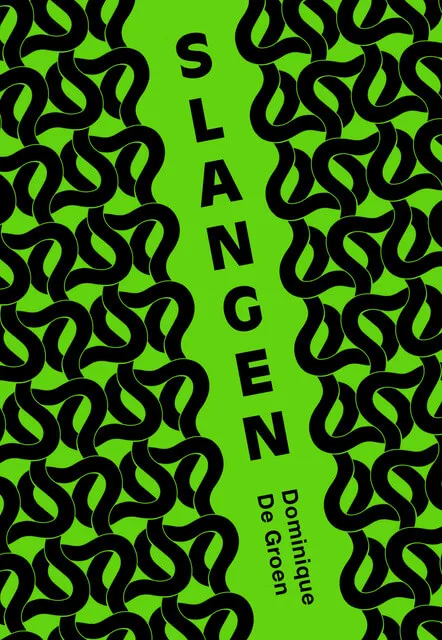
Slangen
Slangen krioelen in de sarcofaag van het heden, in de krochten van de popcultuur, in de mummie van de natuur, in wondes en rot vlees, in artificiële woestijnen en op geoliede dad bods. Ze wentelen zich rond beursgrafieken, raken verstrengeld met wurgende algoritmes, orkestreren een trage ondergrondse revolutie. Een meisje snijdt zich aan een nepdiamanten piramide en werpt haar slangenvel van zich af.
Dominique De Groen is schrijver en beeldend kunstenaar. Ze publiceerde de dichtbundels Shop Girl (2017), Sticky Drama (2019) en offerlam (2020). Ze werd genomineerd voor de Poëziedebuutprijs Aan Zee 2018, de Herman de Coninckprijs 2020 en de Fintroliteratuurprijs 2021 en won de Frans Vogel Poëzieprijs 2019 en de Fintropublieksprijs 2021.

Goblinhood - en mode gobelin !
Enfin la traduction en français du best-seller de Jen Calleja, qui sera présente pour une lecture croisée. Repassez vos capes et astiquez vos chaînettes.
La figure du gobelin est espiègle, marginale, répugnante et fascinante et le mode gobelin peut être envisagé comme un mode de vie à part entière.
Jen Calleja, depuis son obsession pour les objets verts et les marionettes, ses souvenirs familiaux, son rapport au corps et au dégoût de soi, au chagrin, au sexe et au deuil, propose avec malice une pensée hybride entre essai, auto-fiction, poésie et théorie de la gobelinité.
En chacunx de nous, suggère-t-elle, sommeille un gobelin qu’il est temps de libérer.

Monument Zero
Niloufar Nematollahi, Jose Rosales
Monument Zero emerges from International Women’s Day on 8 March 1979 in Iran. The archival materials that form the starting point depict six days of protests, sit-ins, and conferences that began on this day in Tehran. These historical objects have been preserved by the mercy of their creators, who were present during the 1979 protests, and are scattered across personal and public holdings worldwide. By bringing together the materials that depict this forgotten history, Monument Zero counters historical erasure and explores the preservation of political struggles through collective artistic practice.

Mud … and the Earth System
Mud … and the Earth System explores groundbreaking research in Earth system sciences and highlights the challenges of communicating these findings to the public.
As once-stable “mudscapes” transform, they become both symptoms and symbols of a rapidly warming planet. This book delves into humanity’s connection to these changes through the study of ancient organic and inorganic compounds that have come alive after millennia. It poses essential questions about what these evolving ‘mud’ compounds reveal about Earth’s deep past and our imminent future.
Born from collaborative research led by artist Rikke Luther at the Interdisciplinary Research of Ocean, Climate and Society (ROCS) at the University of Copenhagen in collaboration with Earth scientist, Professor Katherine Richardson, this publication showcases how artistic practices – such as image-making, conceptual mapping, and filmmaking – enhance scientific representation.
Mud… and the Earth System features commissioned essays from experts in Earth Science, Political Aesthetics, and Molecular Geobiology. The book pairs their insights with compelling artwork, including large-scale maps of emerging ‘mudscapes’ in Svalbard, Iceland, Greenland, and Gotland.
The essays give perspectives on the DNA that is collected and stored in mud, which connects life across timescales as an evolutionary resource framing the interactions of human societies with the extreme complexities of the Earth system. Esther Leslie’s “Mud Crystal and Polar Thinking” sets the scene, followed by Karina K. Sand’s “Death and Life: in Mud: Two Million Years in a Split Second,” and Earth scientist Katherine Richardson’s contribution “A Muddy Diary.”
As Richardson sums up, “Mud is an important medium for storing the archives that describe the history of both life and climate on Earth, and we are only just beginning to understand the fantastic stories that mud can tell.”
Contributions by Esther Leslie, Rikke Luther, Katherine Richardson, Karina Sand

Information Age
The narrator of Information Age is a journalist at an online news site reporting on technology, the economy, and politics in the late 2010s. The rate of increasingly short news cycles shapes her working life and her personal life, as she assumes the role of reporter while talking with engineers, analysts, wonks, artists, writers, musicians, friends, family, and lovers. Told in vignettes and dialogue—overheard and divulged—Information Age is spare, funny, and attentive, a playful blurring of public and private life.
Cora Lewis is a writer and reporter whose fiction has appeared at The Yale Review, Joyland Magazine, Epiphany, and elsewhere. She currently works at the Associated Press in New York, and she previously worked at BuzzFeed News. She lives in Brooklyn near Sunset Park.

Confidences / Production
Acting like an academic endpoint, cuneiform everything.
Conlan Eliseu is a vampire and an out-of-vogue fashion stylist who takes a job as an advisor at the Gatlin Finishing School, a three-year vocational program for talented teens in a theatre town. Human teen Doeke Schreyer wants to be a star and isn’t afraid of hard work. He just can’t seem to get it. Will his corporeal charms help him exceed the curse on his name, inherited from his adoptive parents?
Confidences / Production deals with the process of keeping the past alive, whether as image or restaging. It is the fourth instalment in Ivan Cheng’s Confidences series, which uses the figure of the vampire as shorthand for cultural movement. Following Confidences / Baseline, Confidences / Majority, and Confidences / Oracle, this new episode contains excerpts or elements from scripts by the artist, as well as documents and reflections on the tradition and transmission of theatre.
Ivan Cheng (b. 1991, Sydney) produces films, objects, paintings and publications as anchors for the staging of complex and precarious spectacles. His background as a performer and musician form the basis for his using performance as a critical medium and questioning publics and accessibility. He holds an MFA in Critical Studies from Sandberg Instituut. His performances, works and writings have been recently presented at Hartwig Art Foundation, Amsterdam; Lafayette Anticipations, Paris; galerie Édouard Montassut, Paris; Villa Imperiale, Pesaro; OCTO, Marseille; Volksbühne Roter Salon, Berlin; gta Exhibitions, Zurich; and Mind Eater Festival, Oslo. In 2017 he initiated the project space bologna.cc in Amsterdam.
Confidences / Production is published in collaboration with Monash University Museum of Art | MUMA, Naarm/Melbourne, in conjunction with the presentation of the project, Ivan Cheng: NP in September 2024.

On Breathing
A beautiful, expansive essay about care, dependence, and what it means to breathe in an age of environmental catastrophe.
A few moments after birth we begin to use our lungs for the first time. From then on, we must continue breathing for as long as we are alive. And although this mostly happens unconsciously, in a society plagued by anxiety, climate change, environmental racism, and illness, there are more and more instances that ‘teach us about the privilege that is breathing.’
Why do we so easily forget the air that we breathe in common? What does it mean to breathe when the environment that sustains life now threatens it? And how can life continue to flourish under conditions that are increasingly toxic?
To approach these questions, Jamieson Webster draws on psychoanalytic theory and reflects on her own experiences as an asthmatic teenager, a deep-sea diver, a palliative psychologist during covid, a psychoanalyst attentive to the somatic, and a new mother. The result is a compassionate and timely exploration of air and breathing as a way to undo the pervasive myth of the individual by considering our dependence on invisible systems, on one another, and the way we have violently neglected this important aspect of life.

The Nancy Reagan Collection
THE NANCY REAGAN COLLECTION is a response to growing up queer and trans under the rise of HIV-AIDS. Crossing genres and generations, this performance novel remixes the AIDS archive through an ever-spiraling politics and aesthetics of mourning. Alternating chapters offer up a narrative throughline composed of hallucinogenic episodes from the perspective of a nameless, grieving protagonist in the midst of the global carnage of the Reagan dynasty. Part revenge, part fantasy, the book experiments with poetic practices that challenge conceptions of memory and morality, activism and escapism, grief and beauty.
Maxe Crandall is a poet, playwright, and director. He is the author of the chapbooks Emoji for Cher Heart (Belladonna*, 2015) and Together Men Make Paradigms (Portable Press @ Yo-Yo Labs, 2014), and is the founder of the theater company Beautiful Moments in Popular Culture, which produces a poets theater series at the Stud in San Francisco. He has received fellowships from the Poetry Project, Poets House, Lambda Literary, and the Millay Colony for the Arts. Maxe is a lecturer in the Feminist, Gender, and Sexuality Studies Program at Stanford University.

Fuel
Traversing multivalent intimacies from the underworld of California’s Central Valley oil fields to the quotidian domestic and love’s painful retraction, Stockton’s poems articulate the blurry modes of extraction, fantasy, loss, gender, and labor as they interact and overlap in the shadow of environmental and personal collapse. Between gas station gifts, Venmo requests, and nocturnal love letters, Fuel unravels the self and violent systems of domination, longing for a togetherness that transcends its own ending.
In these poems, Stockton plunges into petrologic, long drives, the beginnings of ends—whatever enters into love between people and makes it so abstract, or common. In other words, its great subject is the edge, and Fuel is a book of horizons. - Benjamin Krusling
Rosie Stockton is the author of Permanent Volta (Nightboat Books 2021) which was the recipient of the Sawtooth Prize as well as being a finalist for the California Book Awards in Poetry and the Publishing Triangle’s Audre Lorde Award for Lesbian Poetry. Their poems have been published by Social Text Journal, VOLT, Jubilat, Apogee, Mask Magazine, Tripwire and WONDER PRESS. They hold an M.A. in Creative Writing from Eastern Michigan University and are currently a Ph.D. Candidate in the Gender Studies Department at UCLA. Rosie lives and works in Los Angeles.