rile*books

Search books

Search books by title, author, publisher, keywords...

Explore

Categories
Visit
Collections
Publishers
Back in stock
Any books
Cover of If UR Reading This It's 2 Late

Argos Arts

If UR Reading This It's 2 Late

Tony Cokes

€30.00

The first monograph on the work of artist Tony Cokes, creating a visual cartography of a body of moving image work that spans twenty years.

Tony Cokes's video works are eviscerating critiques and affective art works, bringing together color theory, sound, music, and texts, and quoting a polyphony of voices including Aretha Franklin, Mark Fisher, David Bowie, Public Enemy, and Donald Trump. Combining political and social commentary with cultural theory and a critique of capitalism, Cokes's works viscerally confront the social condition, particularly the prejudices and threats suffered by black subjects. This book is the first monograph on his practice, creating a visual cartography of a body of work that spans twenty years.

It features four critical pathways into Cokes's decades-long practice, with essays contributed by notable academics, and conversations between Cokes and artist Kerry Tribe. Cokes's work deals with mediation and distribution, and the book itself becomes another conduit for the dissemination of theory, critique, and counter-narrative—a process that Cokes so powerfully engages in as an artist.

This book accompanies Cokes's solo exhibition, If UR Reading This It's 2 Late: Vol. 1–3, across three international art institutions: Goldsmiths Centre for Contemporary Art, London; Carpenter Center for the Visual Arts, Harvard University; and ARGOS centre for audiovisual arts, Brussels.

Published in 2020 ┊ 160 pages ┊ Paperback ┊ Language: English

recommendations

Cover of For a Time

Argos Arts

For a Time

Lina Selander, Oscar Mangione

Published in conjunction with the exhibition For a Time Light Must Be Called Darkness. Lina Selander in collaboration with Oscar Mangione held at Argos, Centre for Art & Media, Brussels, 24.09.2017 - 17.12.2017.

About the exhibition:
For a Time Light Must Be Called Darkness features six video installations, most of them made in collaboration with Oscar Mangione. These works take us to Bredäng (a suburb in south-west Stockholm), Berlin, the West Bank, Pripyat and Chernobyl. All of these places are the occasion and the starting point for broader reflections about our present in relation to historical facts. Selander visits these sites and like an archaeologist digs in their past, their monuments, museums and archives. She looks for visual documents, focuses on details and analytically sketches new hypothesis. In this way, she tries to retrace hidden links between distant imageries, correspondences and analogies, in order to create new narratives. In her essayistic approach, Selander combines her own texts and footage along with still images, quotes and archive material. In this way a constant tension springs within these multiple-layered audiovisual works and reminds us that seeing is never an innocent act.

Cover of Actors and Extras

Argos Arts

Actors and Extras

Thomas Trummer, Paul Willemsen

The publication Actors & Extras appears following the exhibition of the same name at Argos. Five authors highlight the theme of characterisation from various angles. Georges Didi-Huberman’s contribution People exposed, People as Extras explores how cinema represents the masses. Sven Lütticken highlights the performance tradition in the visual arts in relation to the producing of subjectivity. On the basis of the classic cinema, in Figures of the Extra, Paul Willemsen composes a typology of the extra and subsequently gives attention to the aberrant status of the extra in modern cinema and contemporary art.

Thomas Trummer’s Volonté Générale. Extras in Film and Democracy questions the responsibility of the anonymous individual. With The Passing Actor: Sketch of a Renaissance Jean-Louis Comolli analyses how the concept of acting in a documentary has a different interpretation than in a fiction film. The last part of the publication describes the selected works in the exhibition.

Texts by: Clemens von Wedemeyer, João Onofre, Mark Lewis, Mike Figgis, Jeremy Deller, Irina Botea, Christian Jankowski, Aernout Mik, Krassimir Terziev, Julika Rudelius

Cover of Mystic Transport

Argos Arts

Mystic Transport

Koen Thys, Güslün Karamustafa

Mystic Transport is an exhibition project initiated through a chance encounter between two artists, Koen Theys and Gülsün Karamustafa. Both are very much intertwined with the city they live in; Brussels and Istanbul and integrate visible and invisible materials and remnants from their immediate surroundings within their practice.

Intrigued by religious parades, the hamam, war propaganda, gender issues and the entertainment industry, Theys and Karamustafa use these phenomena as starting points for their video work, installations and performances. In doing so, both artists sketch a critical portrait of the society and culture in which we live and reside, reflecting on cultural canons and differing socio-economic realities. Mystic Transport thus results in unique crossovers.

Cover of Els Dietvorst E.D. (2010–2014)

Argos Arts

Els Dietvorst E.D. (2010–2014)

Els Dietvorst

This publication presents a survey of the work of Els Dietvorst from 2010 to 2014. This is also the period in which she left Brussels to live in a village on the south-east coast of Ireland, where she focused on projects such as The Black Lamb. The audio piece One was killed for beauty, another one was shot, the two others died naturally is included on an audio CD.

Els Dietvorst E.D. (2010–2014), Rolf Quaghebeur, Eva Wittocx, Katleen Weyts, Els Dietvorst, Brussels, 2014.

Cover of Tony Cokes Edition

Argos Arts

Tony Cokes Edition

Argos, Tony Cokes

€30.00

On the occasion of Tony Cokes' solo-exhibition, ARGOS produced a unique purple t-shirt with silver lettering. 100% cotton; 180 grams. Silkscreen by Bootlegz in Brussels.

Available in XL (XS, S, M and L are sold out)
Edition of 100

Cover of Par-delà étrange et familier

Éditions Sans Soleil

Par-delà étrange et familier

Mark Fisher

Essays €16.00

Dans cet ouvrage, malheureusement son dernier, Mark Fisher revisite des artefacts culturels familiers afin de cartographier les variétés de l’étrange dont ils sont porteurs. Longtemps sensible aux dimensions bizarre et omineuse qu’il devinait, sans les nommer, entre autres dans les œuvres de Lovecraft, les films de David Lynch ou les albums de The Fall, M. Fisher tente ici la synthèse essentielle d’un questionnement qui l’avait hanté, jusqu’à ce livre.

Avec son regard si particulier, celui du critique culturel tout à la fois pop et moderniste, puisant aux sources de la psychanalyse et du marxisme, Fisher se penche sur des objets sensibles pour y saisir les rapports entre présence et absence, entre ce qui devrait être mais n’est pas, ce qui ne devrait pas se présenter mais survient. C’est en compagnie de ces spectres — du titre d’un autre ouvrage — que nous sommes invités à voyager, pour questionner les formes mêmes de nos existences sociales, jusqu’aux frontières de l’étrange.

Cover of Semiotics of the End: Essays on Capitalism and the Apocalypse

becoming press

Semiotics of the End: Essays on Capitalism and the Apocalypse

Alessandro Sbordoni

Philosophy €12.00

The apocalypse as such will not take place, as it is already finished. Today, there is no longer any difference between the end of the world and capitalism itself: from Britney Spears’ Till the World Ends to The Caretaker’s Everywhere at the End of Time, from Avenger’s Endgame to Donnie Darko, and all the way down to the internet’s Backrooms, the world never ends but is reproduced again and again according to the semio-logic of capital. 

In contrast with Mark Fisher’s Capitalist Realism, Semiotics of the End is a manifesto for the imagination of another relationship with the end. If it is easier to imagine the end of the world than the end of capitalism, as Slavoj Žižek, Fredric Jameson, and Mark Fisher put it, it is only because we have not imagined anything yet. The end is just the beginning.

With an Afterword by Matt Bluemink 

Cover of The Future is not Lost: On Music, Technology, and the Creation of New Worlds

becoming press

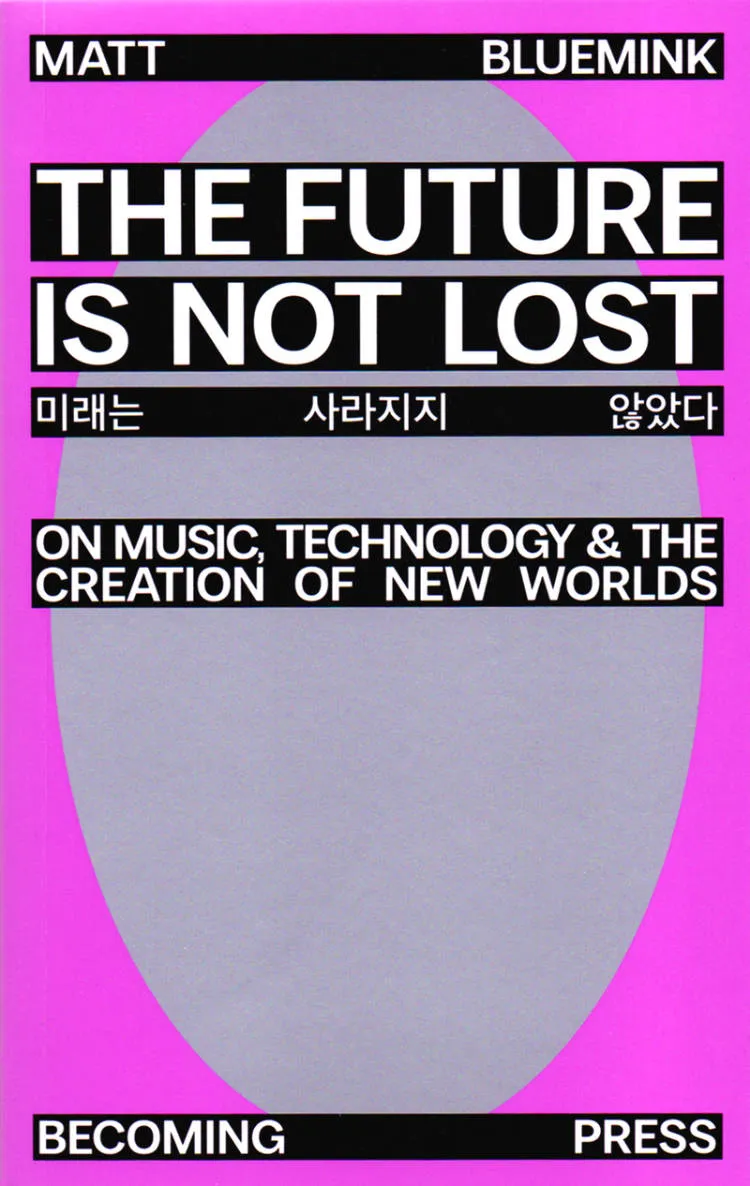
The Future is not Lost: On Music, Technology, and the Creation of New Worlds

Matt Bluemink, Alessandro Sbordoni

Mark Fisher taught a generation to hear the future's disappearance in contemporary music, as if the rhythm of the world was synchronised to the periodic flowering of new creative forms. His diagnosis was devastating: stagnation in music was akin to a venous insufficiency, or worse, some kind of nuclear winter that would ward off the spring for endless generations to come. 

Drawing on musicians like SOPHIE, Arca and Iglooghost, Matt Bluemink declares that the future is not lost; it still speaks to us through music. If Fisher’s Hauntology — dwelling on ghosts of the past — is the logic of depression, then Bluemink’s Anti-Hauntology posits a logic of hope where voices from the future continue to guide the development of the present. 

Island-hopping through Stiegler's philosophy of technics, Simondon's theory of individuation, and the spatial imaginaries of cyberpunk and solarpunk, Bluemink builds a theoretical framework equal to the times — one that takes seriously our capacity to, not only diagnose the world, but remake it. In order to create a new future we must re-imagine our relationship with music, with technology, and with culture. The world of tomorrow is a blank canvas; an open book. New beginnings are always possible. 

Matt Bluemink is the founder and editor-in-chief of Blue Labyrinths online magazine. His research is focused on the relationship between the philosophy of technology, media theory and urbanism. He also writes on contemporary music, literature, and digital culture. 

Cover of Two Revolutions a Day

Occasional Papers

Two Revolutions a Day

Sophie Nys

Monograph €35.00

Two Revolutions a Day marks the first in-depth publication devoted to the work of Sophie Nys, whose artistic practice over the past two decades has unfolded through an enterprising interplay of research, observation, and formal experimentation. Moving between exhibition-making, design, and subtle acts of re-framing, Nys has developed an oeuvre that resists fixed categories while remaining acutely attentive to the structures – historical, linguistic, psychological – that shape how meaning is produced and circulated.

Rather than presenting a linear retrospective, Two Revolutions a Day is organised as an extended conversation between Nys and critic Christophe Van Gerrewey that mirrors the artist’s own methods. Together, they revisit key works and exhibitions from the early 2000s to today, tracing recurring motifs and questions while allowing contradictions and shifts in perspective to remain visible.

Throughout the book, Nys’s fascination with systems of power and authority intersects with a sensitivity to intimacy, subjectivity, and the everyday, engaging with feminist perspectives that examine the politics of representation. Historical figures, marginal anecdotes, and overlooked documents appear alongside reflections on resistance, collaboration, design, and the conditions under which artworks –and the social roles they inhabit – come into being. Language, in particular, emerges as both material and problem: a tool that promises clarity while constantly slipping, misfiring, or revealing its own limits.

Cover of Foundlings

Argos Arts

Foundlings

Orla Barry

Foundlings, a video film, was shot near Wexford, in the south east of Ireland where she grew up. This visual poem without a particular narrative and full of autobiographical elements is set at a very slowed down pace. Floating images and heavy voices are central to the associative strategy that is at work here. The images allow one to listen to a hypnotic voice, while at the same time allowing the eyes to wander... to daydream... to travel over drawn out time. The images are country images, images of repetitive calm, the kind of calm one finds between awake and asleep. The speed of the sea sets the pace, regular yet irregular. The images are inhabited by people who cannot speak. Who are busy doing nothing, except passing time. Silent brothers and sisters of the sea.

The soundsculpture Unsaid, a joint work by Orla Barry and Portuguese artist Rui Chafes (1964), is very opposite to the film. The film is full of open spaces and bright colours. The sculpture is black, closed and claustrophobic and on top of that it is housed in a narrow tower five meters tall. The visitor has to take place on a rather unconventional chair and put his head in a closed off sphere, surrounding himself by darkness and leaving him with his own heartbeat. A voice addresses the visitor directly on highly intimate terms. The seating is hard and uncomfortable. One has to be strong to experience this piece that is a perpetual struggle between body and mind.

At the occassion of Barry’s show argos editions published Foundlings, a combined artist book and catalogue that can be ordered through argos. The book includes a DVD.

Orla Barry (1969) is an artist who centres her practice on language, written and spoken. Her work is strongly poetic and lyrical, crossing a wide variety of media. Barry was born in Ireland, and the rhythm of her phraseology, the pictorial and narrative vernacular on which she draws, somehow evokes her homeland’s topography, climate and literary heritage. At argos the artist presented two new works.

Cover of That's Me!

Goswell Road

That's Me!

David Hoyle

Painting €35.00

David Hoyle (b.1962, Blackpool, United Kingdom) is a performance and visual artist. His work over the last 30+ years has referenced gender, politics, identity, mental health issues and the ongoing fight for equality.

Hoyle came to prominence in the ‘90s as The Divine David, a kind of anti-drag queen whose lacerating social commentary – targeting both bourgeois Britain and the materialistic-hedonistic gay scene, which he called, “the biggest suicide cult in history” – was offset by breathtaking instances of self-recrimination and even self-harm. Following a couple of outré late-night Channel 4 TV shows and a part in the movie Velvet Goldmine, directed by Todd Haynes, Hoyle killed off The Divine David, during a spectacular show at the Streatham International Ice Arena in 2000 and retreated to Manchester for “a period of reflection”.

He returned to television screens in 2005 in Chris Morris’ Nathan Barley, then began performing live again, under his own name. Hoyle’s biting satire, bravura costumes, wicked comic timing, and compelling charisma remained intact.

Hoyle is also a prolific painter often painting in his live shows. His paintings are deeply personal, and tackle the same themes as his performances, incorporating domestic waste, flyers, newspapers, magazines, wrapping paper, and more, which reinforce his disdain for the ruling-class bourgeoisie.

This is the first book dedicated to Hoyle’s paintings, offering an edited selection of works made between 2010 and 2022. At Hoyle’s request, all of the works are published undated: thus, emphasising their timelessness, timeliness, relevance, and urgency to the desperate age in which we now find ourselves!

Cover of Disobedience

JRP Editions

Disobedience

Jacqueline de Jong

Monograph €42.00

Published to accompany the artist's retrospective at the Kunstmuseum St. Gallen (September 2025–March 2026), this comprehensive monograph offers a detailed overview of the work of Dutch artist Jacqueline de Jong. Designed by Sabo Day and edited by Melanie Bühler, curator of the exhibition, this publication spans De Jong's entire artistic journey of from her editorial activities and bold figurative paintings of the 1960s to her "Billiards" series in the 1970s, and her latest series of the 2020s that reflect the current state of the world. 

It features new essays by Karen Kurczynski (Professor of History of Art and Architecture at the University of Massachusetts Amherst), Emily LaBarge (writer and critic), Tiana Reid (Assistant Professor of English at York University), Paul Bernard (Director of Kunsthaus Biel), as well as an as-yet-unpublished conversation with the artist and McKenzie Wark (writer and theoretician). 

Organized through six sections entitled "Disobedience," "Publishing," "Chaos," "Pop," "Play," and "Politics," all lavishly illustrated, it underlines the challenging approach to art and life developed by De Jong formally, visually, and conceptually from the early 1960s until 2024.

Edited by Melanie Bühler
Texts by Emily LaBarge, Gianni Jetzer, Jacqueline de Jong, Karen Kurczynski, McKenzie Wark, Melanie Bühler, Paul Bernard, Tiana Reid.