New in translation
New in translation

To the friend who did not save my life
A novel that describes, with devastating, darkly comic clarity, its narrator's experience of being diagnosed with AIDS. First published by Gallimard in 1990, To the Friend Who Did Not Save My Life describes, with devastating, darkly comic clarity, its narrator's experience of being diagnosed with AIDS. Guibert chronicles three months in the penultimate year of the narrator's life as, in the wake of his friend Muzil's death, he goes from one quack doctor to another, describing the progression of the disease and recording the reactions of his many friends.
The novel scandalized the French media, which quickly identified Muzil as Guibert's close friend Michel Foucault. To the Friend became a bestseller, and Guibert a celebrity. Guibert continued to document the daily experiences of his body in a series of novels and diaries, mostly published posthumously. To the Friend has since attained a cult following for its intimate and candid tone, its fragmented and slippery form. As Edmund White observed, "[Guibert's] very taste for the grotesque, this compulsion to offend, finally affords him the necessary rhetorical panache to convey the full, exhilarating horror of his predicament." In his struggle to piece together a language suited to his suffering, Hervé Guibert catapulted himself into notoriety and sealed his reputation for uncompromising, transgressive prose.
Translated from French by Linda Coverdale
Introduction by Andrew Durbin
Afterword by Edmund White
Published May 2020

Written in Invisible Ink
Written in Invisible Ink maps the writer's artistic development, from his earliest texts—fragmented stories of queer desire—to the unnervingly photorealistic descriptions in Vice and the autobiographical sojourns of Singular Adventures. Propaganda Death, his harsh, visceral debut, is included in its entirety. The volume concludes with a series of short, jewel-like stories composed at the end of his life. These anarchic and lyrical pieces are translated into English for the first time by Jeffrey Zuckerman.
From midnight encounters with strangers to tormented relationships with friends, from a blistering sequence written for Roland Barthes to a tender summoning of Michel Foucault upon his death, these texts lay bare Guibert's relentless obsessions in miniature.
Hervé Guibert published twenty-five books before dying of AIDS in 1991 at age 36. An originator of French autofiction of the 1990s, Guibert wrote with aggressive candor, detachment, and passion, mixing diary writing, memoir, and fiction. Best known for the series of books he wrote during the last years of his life, chronicling his coexistence with illness, he has been a powerful influence on many contemporary writers.
Edited and Translated by Jeffrey Zuckerman
Published May 2020

Blood
Six years in the making, 'BLOOD' is the first comprehensive English translation of the poems of Danish art historian, communist activist, and writer R. Broby-Johansen.
Translated, edited, and designed by Line-Gry Hørup, Broby-Johansen’s poems are accompanied by a series of full colour photographs by Amsterdam photographer Johannes Schwartz, which document the pair’s trip to Brody-Johansen’s recently established archive. So recent, that they were in fact the first to view it. 'BLOOD' was made possible with the support of Stimuleringsfonds and the Danish Arts Foundation.

Love with Obstacles (Amor Rojo)
This is Spanish artist Dora García’s collaborative research on the life and legacy of Alexandra Kollontai (1872–1952), a socialist, activist, feminist, and intellectual. As a Soviet ambassador from 1922 to 1945, she advocated the sexual and social emancipation of women, and implemented many measures women continue to fight for today, such as legalising abortion and protecting women’s rights. Her writings found special resonance in Latin America, where her influence is still felt in contemporary feminist struggles.
The essays “On the Dragon” and “White Bird” are translated into English here for the first time, and are published alongside a selection of poems by Anna Akhmatova.

Alma Matériau
Émilie Notéris focuses her analysis on artworks created by women in the twentieth and twenty-first centuries, in a book that is at once literary, aesthetic and political.
On the occasion of its tenth anniversary, Paraguay creates a collection of essays and book-length interviews, published in, or translated into French. The books in this series are commissioned ones, books developed independently and freely, without a deadline. They articulate thoughts on art and political positions in the present through situated and experimental literary writing.
Émilie Notéris (born 1978) is an essayist, science fiction author, and translator.

Tropisms
Nathalie Sarraute, Maria Jolas
Nathalie Sarraute's Tropisms is considered one of the defining texts of the nouveau roman movement. Tropisms was championed as a masterpiece by Jean Genet, Marguerite Duras, and Jean-Paul Sartre, who hailed Sarraute as his favorite "anti-novelist." Sarraute defined her Tropisms as the "movements that are hidden under the commonplace, seemingly harmless instances of our everyday lives." Like figures in a grainy and shadowy photo, the characters in Tropisms are barely defined, the narrative never developed beyond a stressed moment. Instead, Sarraute brilliantly highlights the shift in tone through remarks or subtle details when a relationship changes, when we fall slightly deeper into or begin to emerge out of love or trust, or when something innocent tilts by the smallest degree toward suspicion.
Tropisms—something like 'prose poems'—as Sarraute calls them that— this is her form! Her texture is anti-novelistic, though she's decided to write 'novels' and launched an important critique of the novel on the basis of her method.—Susan Sontag
Translated by Maria Jolas.
Published 2015.

Vernon Subutex 2
Virginie Despentes, Frank Wynne
Part social epic, part punk-rock thriller, writer/filmmaker Virginie Despentes's Vernon Subutex trilogy continues the Man Booker International Prize shortlisted sprawling tale of an ex-record shop clerk's celebrity fortunes and misfortunes. Rock star Alex Bleach might be dead, but he has a secret. It's a secret that concerns several people, but the only person who can unlock it is Vernon Subutex, former record shop proprietor turned homeless messiah and guru, last seen hallucinating and feverish on a bench. He has tapes of Alex that will shake the world. The hunt is on, and the wolves are closing in.
Meanwhile, the cast of lovers and killers in Vernon's orbit is in violent disarray. Aïcha wants to know the truth behind the death of her mother, the porn star Vodka Satana. And if she finds the bastards responsible, she wants to make them pay, whatever Céleste thinks of her plan. Céleste wants Aïcha to get a grip and stop hanging around with Subutex's gang of disciples. The Hyena wants to find the Bleach tapes. She wants to untangle her complicated feelings about Anaïs, her boss's assistant. And speaking of her boss, she does not want Laurent Dopalet to discover how badly she has double-crossed him.
Big-shot producer Laurent Dopalet wants the Hyena to find and destroy the Bleach tapes. He wants to forget he ever knew Vodka Satana. He wants people to stop graffitiing his apartment with ludicrous allegations. Above all, he wants people to understand: NONE OF THIS IS HIS FAULT.
"Virginie Despentes's Vernon Subutex trilogy is the zeitgeistiest thing I ever read . . . [It] has dupes and assholes and racists and the people they hate and a stunning diversity of internal monologues and trans true love. Like the last decade, it searches for a happy ending that isn't merely personal and can't find it . . . These novels with their depth and detail kick TV's sorry ass." Nell Zink
Virginie Despentes is a writer and filmmaker. She worked in an independent record store in the early '90s, was a sex worker, and published her first novel, Baise Moi, when she was twenty-three. She adapted the novel for the screen in 2000, codirecting with the porn star Coralie Trinh Thi. Upon release, it became the first film to be banned in France in twenty-eight years. Despentes is the author of more than fifteen other works, including Apocalypse Baby, Bye Bye Blondie, Pretty Things, and the essay collection King Kong Theory.
Translated from french by: Frank Wynne
Published July 2020

Vava Dudu
The first anthology of poetry by fashion designer, musician, painter, and Paris icon Vava Dudu. Vava’s poems are culled from language she prints and publishes on garments, as well as song lyrics from her electro-punk band La Chatte. Here her texts are translated from French to English by New York artist, musician and educator Geo Wyeth, and edited by Castilian writer and curator Alberto García del Castillo.
The book was completed in residency at the Centre for Fine Arts, Brussels (BOZAR), as part of the public program accompanying a retrospective exhibition of Keith Haring.
The edition comes in both blue and black prints.

Detour/Détours (Hotel Cordel No. 1)
Cécile Menon, Dominic Jaeckle and 1 more
Detour/Détours imagines debt as a language game: as a broken pun; a break in a journey; a play on value and the meaning of money as it changes hands. Or in terms of Guy Debord’s détournement — as a debt reimagined through the integration of old works into something new.
The word debtor owes etymologically to the old French deteur. But — moving into English — its first appearance dates back to the early 13th century and — sounded out as dettur, dettour or detour — debt can be read as an elaboration on the mottled intimations of a detour with a little poetic license. A detour is a deviation, a digression; a play on our various senses of direction. Exploring the will, want or need to take the long way around — and seeking to bastardize and scrutinize our relationship with (and conceptualization of) a statement of debt — here we have a set of searching works that critique all our methods of repayment. Participating authors were given free rein to produce a piece of writing in response to these ideas, and the works included herein — five first English-language translations and five original texts — wind their way around the weight of the word ‘debt’ in ten attempts to reroute its meaning.
Questions of Worth by Noémi Lefebvre, translated by Natascha Lasorak and Sophie Lewis
Silent B by Lauren Elkin
A Problem of the Greek Type by Mathieu Larnaudie, translated by Adrian Nathan West
Emotional Debt/Speed of Recovery Matrix by Selma Dabbagh
Debt Night by Preti Taneja
The Pastoral Calculation by Sandra Lucbert, translated by Jessica Spivey
The Debt Collector by Jen Calleja
Unknown Soldier by Nicolas Bouyssi, translated by Amanda DeMarco
Good Relations by Joanna Walsh
Out of Debt by Thomas Clerc, translated by Jeffrey Zuckerman
Edited by Emmanuel Bouju, Dominic Jaeckle & Cécile Menon
Limited Edition of 300 copies
180 x 120, paperback, 78 pages

Poetic Intention
This is the first English-language translation of Poetic Intention, Glissant’s classic meditation on poetry and art. In this wide-ranging book, Glissant discusses poets, including Stéphane Mallarmé and Saint-John Perse, and visual artists, such as the Surrealist painters Matta and Wilfredo Lam, arguing for the importance of the global position of art. He states that a poem, in its intention, must never deny the “way of the world.” Capacious, inventive, and unique, Glissant’s Poetic Intention creates a new landscape for understanding the relationship between aesthetics and politics.

The Mausoleum of Lovers: Journals 1976 - 1991
The Mausoleum of Lovers comprises Guibert's journals, kept from 1976-1991. Functioning as an atelier, it forecasts the writing of a novel, which does not materialize as such; the journal itself — a mausoleum of lovers — comes to take its place. The sensual exigencies and untempered forms of address in this epistolary work, often compared to Barthes' A Lover's Discourse, use the letter and the photograph in a work that hovers between forms, in anticipation of its own disintegration.
HERVÉ GUIBERT (1955-1991) was a French writer and photographer. A critic for Le Monde, he was the author of some thirty books, most notably To the Friend Who Did Not Save My Life, which presents an intimate portrait of Michel Foucault and played a significant role in changing public attitudes in France towards AIDS. NATHANAËL is the author of a score of books written in English or French, including Sisyphus, Outdone. Her translations include books by Édouard Glissant and Danielle Collobert, among others. Nathanaël lives in Chicago.

Zones Mortes
First French translation of Shulamith Firestone's first novel.
Originally published by Semiotext(e) in 1998, Airless Spaces is Shulamith Firestone's first novel. She writes this short stories gradually moving away from a career as a feminist activist; while finding herself increasingly close to a state of breathlessness. The stories center around people in the grip of a seemingly endemic poverty in New York, worn out by the back and forth of psychiatric hospitals and a sclerotic daily life. On the back cover of the original edition, we read the words of the poet Eileen Myles: “In the century I'm most familiar with, the 20th, the explosion was never-ending, the pieces tinier and tinier. Shulamith Firestone, in her radical insider's tale, informs us repeatedly like lightly pelting rain that all of us are vanishing in a century of institutions that take and take until everyone has gone away and there's no one left to shut the door.”
The French edition that we offer here, in a translation by Émilie Notéris, is accompanied by a text by Chris Kraus, author and first editor of the book.
Shulamith Firestone (1945 - 2012) is a feminist writer, activist and artist. After studying painting at the Art Institute of Chicago, she moved to New York where she co-founded the feminist groups New York Radical Women (1967), Redstockings (1969) and New York Radical Feminists (1969). In 1970, when she was only 25 years old, she publieshed the book The Dialectic of Sex: The Case for a Feminist Revolution. Firestone theorizes cybernetic communism as a system that enables the liberation of women, while at the same time putting an end to biological and social inequalities linked to reproduction and the education of children, in particular through technological emancipation.
published in May 2020
French edition
12,5 x 19,5 cm (softcover)
154 pages

Diana's Tree
Alejandra Pizarnik, Yvette Siegert
In 1962, Pizarnik published her fourth collection, Diana's Tree, the book that would both change and establish her poetic voice, and it contained the slimmest verses the poet would ever write. It also carried a glowing introduction by Octavio Paz, who by that point served as a prominent Mexican diplomat in Paris and had become a leader of the city's expatriate literary circles. Diana'a Tree, wrote Paz, was a feat of alchemical prowess, a work of precocious linguistic transparency that let off "a luminous heat that could burn, smelt or even vaporize its skeptics."
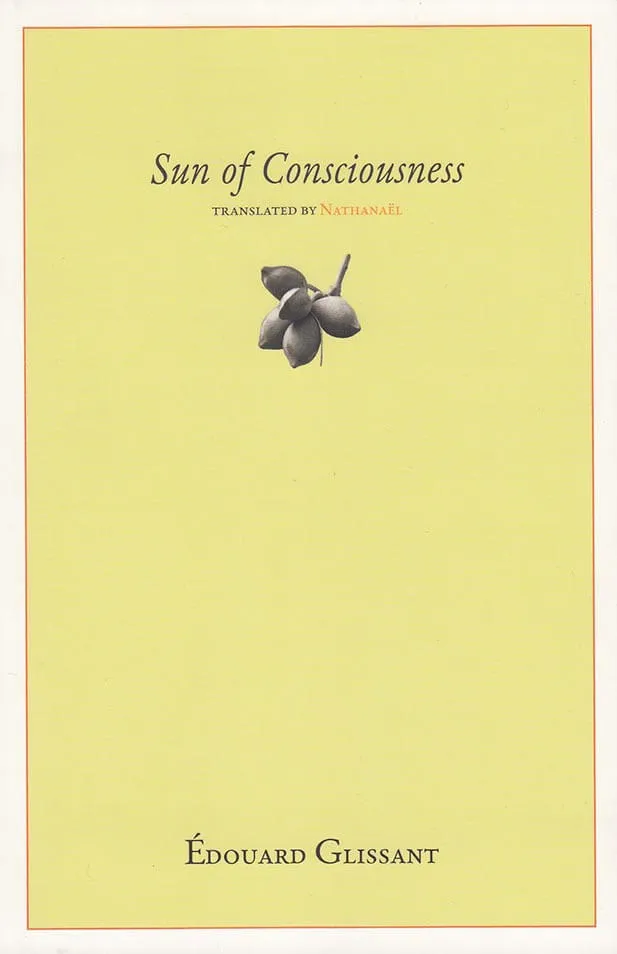
Sun of Consciousness
Soleil de la Conscience (Sun of Consciousness) was Martinican philosopher Édouard Glissant's first published work, and opened the Poétique (Poetics) strain of his oeuvre. This book-length essay, which is characterized by its exploratory, intimate character, announces Glissants concerns with créolisation (creolization), mondialité (worldliness, as against globalization), or opacité (opacity) and inscribes in this work a refusal of colonialism and of inverted exoticism. The sense of estrangement experienced by the author who arrives as a "foreigner" in a country to which he is bound by "the first page of his passport" is the author's principal preoccupation. By positioning himself as both different and same, Glissant opens a space for the writing of a(nother) history: that of the Caribbean.

Playing Monogamy
Simon(e) Van Saarloos, Liz Waters
Love is love, but not really. To recognise love as love we need comprehensible images. What are those contemporary images that help us identify love and how could we identify love differently, figuring it as less defined by safety procedures, measured commitment and feelings of ownership and entitlement? Playing Monogamy refuses to see personal relationships as safe havens where people can hide from the precarities of society, and instead proposes to make public life more intimate and romantic.
Through a contemporary rereading of the cult of monogamy, van Saarloos playfully queers the way in which the structure of monogamy is upheld through social convention within Western contexts. Written for more of a lay audience, the book proposes an expanded and polyamorous engagement with intimacy and sexuality as a possible alternative. Originally written in Dutch and published by De Bezige Bij, Publication Studio is excited to bring this book to an English speaking audience for the very first time.
Translated by Liz Waters, it includes a foreword by Leni Zumas, author of the US bestseller Red Clocks, and a revised preface by Simon(e) herself, addressing how she might approach writing about nonmonogamy differently four years after the book's first publication—and after many experiences in between.

Why Different
Luce Irigaray, Camille Collins
A collection of interviews that deal explicitly with the relationship between daughter and mother, the sexuation of language, the symbolic order, and the importance of both history and philosophy for the liberation of the feminine subject.
For Luce Irigaray, one of the most original French feminist theorists, deconstructing the patriarchal tradition is not enough. She admits that it is not an easy task, but she believes that it is necessary to also define new values directly or indirectly suitable to feminine subjectivity and to feminine identity. She begins this project by analyzing and interpreting the absence of the feminine subject in the definition of dominant cultural values. She then wonders how these new values can be constructed without simply reversing the roles. Far from implying a hierarchy, difference affirms the coexistence and fruitful encounter of two different identities. These two heterogeneous identities, masculine and feminine, are not socially but ontologically constructed and describing the feminine requires establishing methods other than those already used by the masculine subject. Why Different? is a collection of interviews, conducted in both France and Italy, that deal explicitly with the relationship between daughter and mother, the sexuation of language, the symbolic order, and the importance of both history and philosophy for the liberation of the feminine subject. In Why Different? Irigaray elaborates on issues brought up in her other books, Speaking is Never Neutral, I Love to You, Thinking the Difference, and To Be Two and brings them to fruition.
Edited by Sylvère Lotringer.
Translated by Camille Collins.

Le geste mineur
In this book Erin Manning extends her previous inquiries into the politics of movement to the concept of the minor gesture. The minor gesture, although it may pass almost unperceived, transforms the field of relations. More than a chance variation, less than a volition, it requires rethinking common assumptions about human agency and political action. To embrace the minor gesture's power to fashion relations, its capacity to open new modes of experience and manners of expression, is to challenge the ways in which the neurotypical image of the human devalues alternative ways of being moved by and moving through the world—in particular what Manning terms "autistic perception." Drawing on Deleuze and Guattari's schizoanalysis and Whitehead's speculative pragmatism, Manning's far-reaching analyses range from fashion to depression to the writings of autistics, in each case affirming the neurodiversity of the minor and the alternative politics it gestures toward. (The texts in this book are in French only.)
Translated from English by Aline Wiame (original title: The Minor Gesture, Duke University Press, 2016).

The seven most exciting hours of Mr. Trier's life in twenty-four chapters
An adventure novel based on a true story told in a televised interview by the Danish filmmaker Lars von Trier, describing seven hours in the life of Tibor Klaus Trier—Lars von Trier's father—from the moment that his wife goes into labor early in the morning until Lars is born.
The setting is Copenhagen, dominated by a hospital that recalls von Trier's television series “The Kingdom.” The plot is thick: Tibor arrives with his wife Margaret at the Maternity Ward of Mercy General Hospital, only to realize that he must return home to retrieve a forgotten mobile—his only link to a sister in distress. On the way, he stops to get gas and gets involved in a car robbery. A cancer takes root in his body. Back at home, he sneaks a peak at Margaret's e-mail and a great secret is revealed that makes him rush back to the hospital to kill her and her son. En route he crashes his new car and his body breaks into pieces and he loses his memory. Mercy General is haunted by a great ghost and the day is Armageddon when the ghost needs to challenge the living with an army of zombie children—all born within its walls. Who is this great ghost? What does Margaret hold in her body? Will Tibor survive his one day old cancer? All and more will be revealed…
Translated from the Hebrew by Hillel Roman.
Co-published with Witte de With.
Keren Cytter (born 1977 in Tel Aviv, lives and works in Amsterdam and Berlin) is an Israeli visual artist and filmaker.

Fétichisme et curiosité
French edition of Laura Mulvey's writings which range from analyses of Xala, Citizen Kane and Blue Velvet, to an extended engagement with the creations of Native American artist Jimmie Durham and the feminist photographer Cindy Sherman. Essays explore the concept of fetishism as developed by Marx and Freud, and how it relates to the ways in which artistic texts work.
Translated from the English by Guillaume Mélère.
Preface by Clara Schulmann.

Vampyroteuthis Infernalis
Vilem Flusser, Rodrigo Maltez Novaes
Flusser introduces an infernal creature from the oceanic abysses, who slowly emerges, not from the oceans, but from man's own depths to gaze spitefully into his eyes and reflect back at his own existence.
Originally published only in German in 1987, this version has been edited and translated by Rodrigo Maltez Novaes, Ph.D. candidate at the European Graduate School, Saas-Fee, under the supervision of Prof. Dr. Siegfried Zielinski, from the original, unpublished and extended Brazilian-Portuguese version of the manuscript recently found at the Vilém Flusser Archive at the Universität der Kunst, Berlin. This edition is also accompanied by a selection of previously unpublished excerpts from Flusser's correspondence with Milton Vargas and Dora Ferreira da Silva, with whom he discussed the development of the present text.

My Mother Laughs
Chantal Akerman, Daniella Shreir
In 2013, the filmmaker Chantal Akerman's mother was dying. She flew back from New York to Brussels to care for her, and between dressing her, feeding her and putting her to bed, she wrote. She wrote about her childhood, the escape her mother made from Auschwitz but didn't talk about, the difficulty of loving her girlfriend, C., her fear of what she would do when her mother did die. Among these imperfectly perfect fragments of writing about her life, she placed stills from her films. My Mother Laughs is both the distillation of the themes Akerman pursued throughout her creative life, and a version of the simplest and most complicated love story of all: that between a mother and a daughter.
With an introduction by Eileen Myles and afterword by Frances Morgan.

Grenade in mouth
Miyo Vestrini, Anne Boyer and 1 more

Writing Out Loud
Writing Out Loud is a publication that brings together the transcriptions of eight lectures by the artist Jon Mikel Euba that were live translated from Spanish to English during the course Action unites, words divide (On praxis, an unstated theory) at the DAI. The lectures were delivered across the academic year 2014 – 2015 at the invitation of If I Can’t Dance. They sit within a larger writing-centred project by the artist that he has pursued for almost a decade, through which he aims to define a form of praxis that could evolve into a technical theory.

Belladonna Chaplets 2018
241. Laura Buccieri: Songbook for a Boy Inside
240. K. Lorraine Graham: from Feed
239. Marta López-Luaces: Reminiscences of Echoes
238. Montana Ray: Mirroring
237. Yumi Dineen Shiroma: A Novel Depicting “The” “Asian” “American” “Experience”
236. Anaïs Duplan: 9 Poems/The Lovers
235. Serena J. Fox: Night Landing
234. Orchid Tierney: Blue Doors
233. Aditi Machado: This Touch
232. Iman Mersal: الصوت في غير مكانه (The Displaced Voice); translated by Lisa White
231. Abdellah Taïa: 99 Names
230. Javier Zamora: Revising into the Right? Form…Hopefully?
229. Aracelis Girmay: MOTHER MOTHER YOU ARE WHO I LOVE
228. Christina Barreiro, Lindsey Hoover, Fatima Lundy, Rupert McCranor, Kayla Park, Chrissy Ramkarran, Asiya Wadud, Rachael Guynn Wilson: Out-Of-Office
227. Baseera Khan: Be Careful What You Wish
226. Maryam Monalisa Gharavi: Alphabet of an Unknown City
225. Göksu Kunak: I thought this would
Please specify which edition you would like. You can reach out to confirm availability of specific chaplets.