Books
Books
in random order

Death Industrial Complex
Candice Wuehle’s Death Industrial Complex is a meditation on the cultural obsession with the bodies of dead women and an occult invocation of the artist Francesca Woodman. Like Woodman’s photographs with their long exposures and blurred lenses, this book is haunted and haunting, hazy yet devastatingly precise. These are poems as possessions, gothic ekphrases, dialogues with the dead, biography and anti-biography, a stunning act of “cryptobeauty.”

Fanta For The Ghosts
fanta for the ghosts by Elisabeth Molin
120mm x 210mm
edition of 500
Co-published with OneThousandBooks and Elisabeth Molin

Ban En Banlieue
Bhanu Kapil's 'Ban en Banlieue' follows a brown (black) girl as she walks home from school in the first moments of a riot. An April night in London, in 1979, is the axis of this startling work of overlapping arcs and varying approaches. By the end of the night, Ban moves into an incarnate and untethered presence, becoming all matter - soot, meat, diesel oil and force - as she loops the city with the energy of global weather. Derived from performances in India, England and throughout the U.S., 'Ban en Banlieue' is written at the limit of somatic and civic aims.

Sustaining the Otherwise
Sustaining the Otherwise is a collaborative research and artistic project about restitution, reparation and transformation taking place in multiple locations over several years. Initiated and conceptualized by researchers and curators Amal Alhaag & Selene Wendt, it offers a space for artists, activists, scholars and writers to be in dialogue and to explore the topic of restitution in relation to both material and immaterial culture, through a program that frames restitution within the context of contemporary art practice.
Edited by Amal Alhaag & Selene Wendt
Featuring an introduction by Amal Alhaag & Selene Wendt as well as provocations, reflections, and essays by Barby Asante, Michael Barrett, Quinsy Gario, Sana Ginwalla, Aude Christel Mgba, Lennon Mhsishi, Ogutu Muraya, in addition to a sonic contribution by Robert Machiri.

The Hundreds
Kathleen Stewart, Laurent Berlant
In The Hundreds Lauren Berlant and Kathleen Stewart speculate on writing, affect, politics, and attention to processes of world-making.
The experiment of the one hundred word constraint, each piece is one hundred or multiples of one hundred words long, amplifies the resonance of things that are happening in atmospheres, rhythms of encounter, and scenes that shift the social and conceptual ground.
What's an encounter with anything once it's seen as an incitement to composition? What's a concept or a theory if they're no longer seen as a truth effect, but a training in absorption, attention, and framing?
The Hundreds includes four indexes in which Andrew Causey, Susan Lepselter, Fred Moten, and Stephen Muecke each respond with their own compositional, conceptual, and formal staging of the worlds of the book.

Artificial Gut Feeling
If winning can only occur in a competition between equal opponents, someone who isn’t equal will need to adopt a different strategy and let go of the promise, or the curse, of victory. Anna Zett takes up the challenge in this collection of personal science fiction, registering the traces systems of power leave in the body, in its locomotory, nervous and digestive systems. Zett’s voice appears in several textual guises, addressing authority, resistance, trauma and the physicality of language. Dedicated to the feminist revolution, the post-socialist subject of Artificial Gut Feeling questions logocentric and capitalist beliefs about the economy of meaning. This book gathers together fists, guts and brains to gain a deeper understanding of the non-verbal roots of dialogue.
"This being is able to transform movement into speech. It winds itself about inside me like a thick snake and I have to use all my strength to let it spin and do what it does. When I wilfully try to stop it, it begins to whisper words to me and that is even more unpleasant. If I were to associate this gut feeling with an emotion, I would say disgust. But this disgust is not directly linked to your name."—Anna Zett

Still Life 4
STILL LIFE is an online and printed zine about relationships and configurations in which one person is still while others are not. Or where one person is passive and others are active. It’s about how we put ourselves in other people’s hands. Or how we are put in other people’s hands. It’s about care and power and vulnerability and agency. And other things not so clearly named. It’s about the different kinds of knowledge that people have about their own and other people’s bodies. And the kind of philosophical and political understandings woven into that knowledge.

Chile Chico et le quartier Versailles
Chile Chico et le quartier Versailles, c'est une exploration qui inventorie, interroge et révèle les mémoires invisibles en listes et en collections. Une mémoire qui ne soffre pas en bloc, qui résiste, se fragmente, se transforme. A travers cette archive collaborative, nous avons voulu capter ces va-et-vient ď'un passé qui dialogue avec le présent, des images qui oscillent entre Vintime et le collectif.
Le point de départ de cette fabrique visuelle, c'est lexil des Chilien.nes, débarqué.es dans les années 70, qui se tissent une nouvelle vie sur le sol de Neder-Over-Heembeek, dans le quartier Versailles à Bruxelles. Ces trajectoires, arrachées à un ailleurs, s'ancrent dans des espaces rêvés comme de transit pour devenir des lieux d 'appartenance, où lexil se mue et les racines finissent par se déployer. A ces récits se greffent d'autres histoires, d'autres trajectoires. Un quartier comme un carrefour, ou les individualités se rencontrent, où les vies se croisent et s'allient.

A Map to the Door of No Return: Notes to Belonging
A Map to the Door of No Return is a timely book that explores the relevance and nature of identity and belonging in a culturally diverse and rapidly changing world. It is an insightful, sensitive and poetic book of discovery. Drawing on cartography, travels, narratives of childhood in the Caribbean, journeys across the Canadian landscape, African ancestry, histories, politics, philosophies and literature, Dionne Brand sketches the shifting borders of home and nation, the connection to place in Canada and the world beyond.
The title, A Map to the Door of No Return, refers to both a place in imagination and a point in history — the Middle Passage. The quest for identity and place has profound meaning and resonance in an age of heterogenous identities. In this exquisitely written and thought-provoking new work, Dionne Brand creates a map of her own art.

The Poeticians

I Remember Nightfall
Marosa di Giorgio, Jeannine Marie Pitas
I Remember Nightfall, the first comprehensive collection of Uruguayan poet Marosa di Giorgio’s work to be published in English translation, is made up of her first four book-length poems: The History of Violets (1965); Magnolia (1968); The War of the Orchards (1971); and The Native Garden is in Flames (1975). Di Giorgio’s writing transforms everything it touches—a lily, a head, a hare, a ghost, a porcelain cup. All becomes beautifully and violently intertwined, dead and alive. Boundaries are blurred: an eagle drinks tea with a mother, a flower puts on the longest pearl necklace or kills you. Di Giorgio’s obsessive, magical gardens serve as a stage for the ongoing encounter of nature and the supernatural. These serial prose poems explore memory, family relationships, erotic desire, and war, animating a world that is always on the verge of explosion.
Marosa di Giorgio was born in Salto, Uruguay, and raised on her family’s farm. Di Giorgio (1932-2004) is one of the most prominent Uruguayan poets of the twentieth century. She began writing in her childhood and published her first book of poems at the age of twenty-two. She then went on to publish a total of fourteen books of poetry, three collections of short stories, and one novel. While some critics have categorized her as a surrealist, she herself denied membership in any literary movement or school. Although she was relatively unknown outside the Southern Cone during her lifetime, she is now becoming more and more widely read throughout Latin America and Europe.
This is a bilingual edition, with cover art by Basil King.

How to see rivers in cracks
How to See Rivers in Cracks, an invitation to read through softness rather than certainty. It begins where attention loosens, where listening lingers, and where small cracks let the world in.
Written as a shifting sequence of notes, exercises, and reflections, the publication moves through Moerwijk, The Hague, Antwerp, and in-between spaces, tracing how soil, sound, and urban surfaces remain porous and in constant transformation. Cracks are not treated as damage but as openings where relation becomes visible~ where matter, bodies, and environments co-compose one another.
The text resists a fixed interpretation. Instead, it unfolds as an instruction that can be followed, misread, or left open. In this sense, it does not hold itself steady. Without the reader, it does not fully take place, remaining dependent on attention, proximity, and the act of reading itself.

One Big Bang
One Big Bang brings together 78 charcoal and pastel drawings from Adel Abdessemed's recent series Nature Morte and Politics of Drawing, where everyday objects, animals, and flowers are subtly charged with tension. Through these works, Abdessemed explores the intersections of beauty, fragility, and unrest. With texts by Hélène Cixous and David Elliott, One Big Bang offers a thoughtful entry into an artist's visual language shaped by memory, myth, and political urgency.
Published following the eponymous exhibition at Projeckt Brussels in 2024.
Adel Abdessemed (born 1971 in Constantine, Algeria, lives and works in Paris and Berlin) deconstructs identity codes, tackling head-on the tensions that permeate our society. His works, with their typical simplicity—sculptural installations, drawings, photographs, videos and performances—echo precise facts and familiar situations, but go beyond narrative commentary and militant criticism. Adel Abdessemed questions, among other things, the social and economic status of the artist in a system where his foothold is slight, by shrewdly keeping a distance in a gesture of subversive and committed resignation.
Abdessemed refuses to be limited to a single ideology. In his early works he passionately tackled religious, sexual, and taboos subjects and his later exhibitions have often focused on the theme of global violence. In an interview with Elisabeth Lebovici he stated, "I do not live between two cultures. I am not a postcolonial artist. I am not working on the scar and am not mending anything. I am just a detector … In the public sphere, I use passion and rage. Nothing else. I don't do illusions."
Sometimes reduced to a simple word, as in "Mohammedkarlpolpot" (1999), a condensation of names evoking totalitarism and religion, and sometimes complex and monumental installations such as "Habibi" (2004), a suspended skeleton of 17 meters propelled by a jet engine, Abdessemed's practice belongs to a new generation of artists who appeared recently on the French art scene, looking to offer another perspective on culture and identity.

How to make female action heroes
M was exasperated by her friend's frivolous attitude toward the tragedy of losing a role. She was not trained to read the potential in R's wild imagination. Was it a commitment to realism, trained by the ideological morality of activism, that made her unresposive to the fantasy genre and vigilante characters? R's instinct was to court the unfamiliar, whereas M's training was to engage with criticality. Both these attributes could have interfaced in interesting and colourful ways, with sparks and currents, if and only if the social conditions of the time had been conducive to the arrival of a vigilante.
Madhusree Dutta is a filmmaker, curator and author based in Mumbai and Berlin. She has been the executive director of Majlis Culture, a centre for rights discourse and art initiatives in Mumbai, 1998-2016; and artistic director of Academy of the Arts of the World in Cologne, 2018-2021. Her areas of interest are documentary practices, urban cultures, migration movements, transient identities, and lived-in hybridity.

Burn & Gloom! Glow & Moon!
Retrospective monograph: a journey through over two decades of intersectional and queering practices in film, performance, sculpture, community work, and textiles.
In Daschner's textile-based works, threads are minimal yet highly visible, akin to the pinch needed to wake up from a dream. These works—as well as her collages—merge with her confronting yet inviting image politics: she cuts and pastes stories of love and pleasure, violence and resilience, death and rebirth.
The written contributions reflect on Katrina Daschner as part of a hardworking generation of queer artists and makers who have been responding to the major conceptual shifts and gender upheavals happening in contemporary art since the 1990s, especially in New York and London. They highlight Katrina Daschner's longstanding line of intersectional queer interest that continues to undermine (neo-)liberal, heteropatriarchal conceptions of sexuality, gender, subjectivity, and relationships
Edited by Övül Ö. Durmuşoğlu.
Texts by Amelia Groom, Tim Stüttgen; foreword by Övül Ö. Durmuşoğlu; interviews by Rike Frank.

If They Come in the Morning...
One of America's most historic political trials is undoubtedly that of Angela Davis. Opening with a letter from James Baldwin to Davis, and including contributions from numerous radicals such as Black Panthers George Jackson, Huey P. Newton, Bobby Seale and Erica Huggins, this book is not only an account of Davis's incarceration and the struggles surrounding it, but also perhaps the most comprehensive and thorough analysis of the prison system of the United State.
Since the book was written, the carceral system in the US has seen unprecedented growth, with more of America's black population behind bars than ever before. The scathing analysis of the role of prison and the policing of black populations offered by Davis and her comrades in this astonishing volume remains as pertinent today as the day it was first published.
Featuring contributions from George Jackson, Bettina Aptheker, Bobby Seale, James Baldwin, Ruchell Magee, Julian Bond, Huey P. Newton, Erika Huggins, Fleeta Drumgo, John Clutchette, and others.

Nachbilder / Reflection pictures
Caravaggio’s Head of Medusa, 1596/97, painted in two versions, not only reflects light but is a painted reflection. Similarly, these photographs are all reflections in plate glass mirror. They document a relation in the present without content.
First edition of 50

Lava Lines
Lava Lines explores the life forms, contemporary myths and geopolitical powers that shape volcanic landscapes. It gathers poetry, role play's transcription, film scripts and visual works of several artists, to touch on collective memory, non-human agency and myth-making.
The art works presented in the publication are by Leïla Arenou, Francisca Khamis, Naïmé Perrette, Camille Picquot, Rachel Pimm, Francisca Khamis, Juliette Lizotte, Riar Rizaldi and Arif Kornweitz
It also archives live performances/screenings by Francisca Khamis, Arif Kornweitz, Mika Oki, Chooc Ly Tan, Adán Ruiz, Ana Vaz, and Rieko Whitfield.

Schizo-Culture: The Event, The Book
Sylvère Lotringer, David Morris
The legendary 1975 "Schizo-Culture" conference, conceived by the early Semiotext(e) collective, began as an attempt to introduce the then-unknown radical philosophies of post-'68 France to the American avant-garde. The event featured a series of seminal papers, from Deleuze's first presentation of the concept of the "rhizome" to Foucault's introduction of his History of Sexuality project. The conference was equally important on a political level, and brought together a diverse group of activists, thinkers, patients, and ex-cons in order to address the challenge of penal and psychiatric institutions. The combination proved to be explosive, but amid the fighting and confusion "Schizo-Culture" revealed deep ruptures in left politics, French thought, and American culture.
The "Schizo-Culture" issue of the Semiotext(e) journal came three years later. Designed by a group of artists and filmmakers including Kathryn Bigelow and Denise Green, it documented the chaotic creativity of an emerging downtown New York scene, and offered interviews with artists, theorists, writers, and No Wave and pre-punk musicians together with new texts from Deleuze, Foucault, R. D. Laing, and other conference participants.
This slip-cased edition includes The Book: 1978, a facsimile reproduction of the original Schizo-Culture publication; and The Event: 1975, a previously unpublished and comprehensive record of the conference that set it all off. It assembles many previously unpublished texts, including a detailed selection of interviews reconstructing the events, and features Félix Guattari, William Burroughs, Kathy Acker, Michel Foucault, Sylvère Lotringer, Guy Hocquenghem, Gilles Deleuze, John Rajchman, Robert Wilson, Joel Kovel, Jack Smith, Jean-François Lyotard, Ti-Grace Atkinson, François Peraldi, and John Cage.

Grab Bag
Cult novelist Dennis Cooper launches the third title of Little House on the Bowery, the Akashic series he is editing and promoting.
Grab Bag is comprised of two interrelated novels, Dark Rides and Wish Book, from one of Canada’s most important young writers. Both books are set in the same small rural city, in different eras (1950s, 1930s), each characterized by McCormack’s spare and elliptical prose.

Person with the last name Universe
This book has been self-published for Latvian artist and poet Jelena Glazova's solo exhibition “Person with the last name Universe” at Riga contemporary art space (July - August 2026). The exhibition is the artist’s act of feminist guerrilla resistance within the symbolic territory of contemporary phallocracy. The source and central figure of the post-gender universe conjured by Glazova is the Person with the last name Universe, whose creative strategy the artist unpretentiously calls Glazovism.
Jelena Glazova (Belgium/Latvia) is a poet and multimedia artist who combines visual elements, experimental sound, installation and poetic text in her projects. As an artist, she has participated in international festivals and projects in Latvia, Estonia, Lithuania, Sweden, Austria, Belgium, Germany, the Netherlands, Turkey and other countries. Among the most notable exhibitions are "Identification of a Woman" at the Latvian Museum of Photography (2010) and "Elements of a Puzzle" at the Latvian Centre for Contemporary Art (2011). She is the author of four poetry collections. Glazova's poetry has been translated into 12 languages. Since 2012, she has given more than 200 performances in 18 countries. She is the co-founder of two poetry festivals in Riga: "Blood of a Poet" (2014–2016) and "Poetry without Borders" (2017–2022). https://www.jelena-glazova.com/
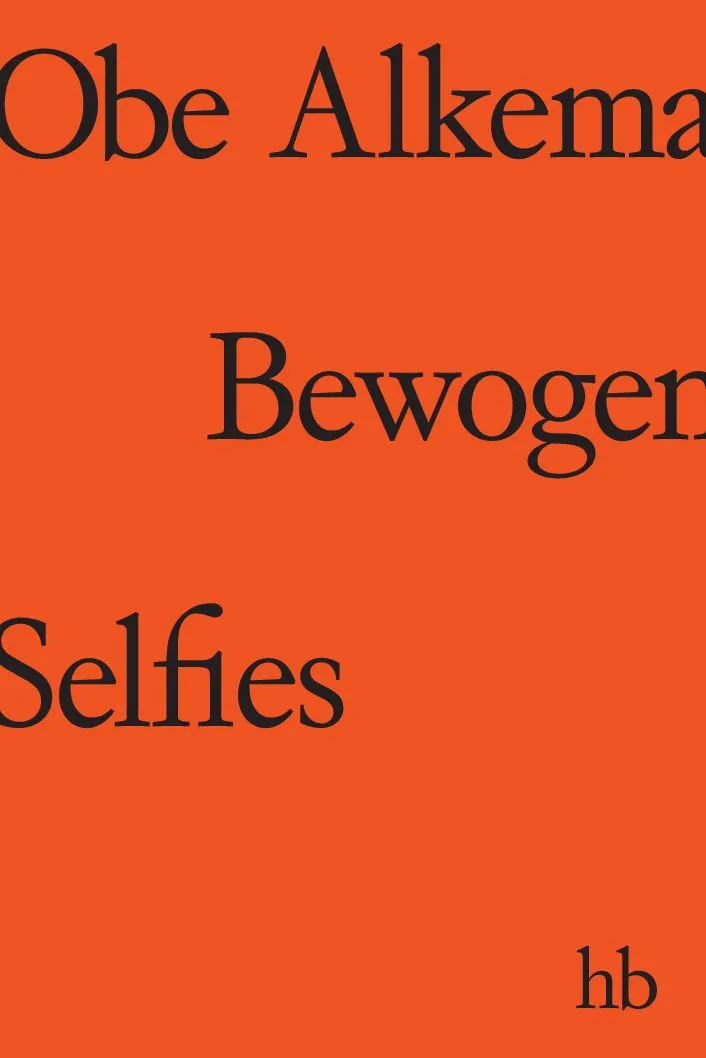
Bewogen selfies
In Bewogen selfies onderzoekt Obe Alkema de verhouding tussen landschap en herinnering. Wat treft hij aan bij terugkeer naar belangrijke plaatsen uit zijn geheugen? Wat herinnert hij zich niet, maar Google wel? Is er een gedenkschrift te puren uit zijn metadata?
Memoires, rechtstreeks verteld en met omwegen, uit eerste hand en van horen zeggen. Archieven en herinneringen eisen spreektijd, houden het niet meer droog of worden tot spreken gebracht. Wat hebben ze eigenlijk te melden? Ze lopen helemaal leeg, net als Alkema zelf. Een leven zoals zovele, poedelnaakt en geretoucheerd, vol zin en onzin.

The New Fascist Body
The success of new far-right movements cannot be explained by fear or rage alone – the pleasures of aggression and violence are just as essential. As such, racism is particularly intense when it is erotically charged, migration presenting as a sexual threat to white women being one of many examples. Germany’s strikingly successful right-wing political party Alternative für Deutschland is, according to the historian Dagmar Herzog, characterized by this “sexy racism,” with its second main feature being that of an obsessive antidisability hostility—both elements resonating strongly with Nazism. In The New Fascist Body, Herzog connects her analysis of fascism’s libidinous energy with its animus against bodies perceived as imperfect. Only by studying the emotional and intellectual worlds of past fascisms can we understand and combat their current manifestations.
The book features an afterword by Alberto Toscano, author of Late Fascism: Race, Capitalism and the Politics of Crisis (Verso 2023).

Égal infini
Égal infini cherche le contact : une crêpe oubliée dans un tram, un tatouage de baiser, une présence derrière un écran. Ici, les algorithmes affectifs côtoient des recettes de consolation, les robots parlants croisent les animaux marins, et la vitesse d’une voiture dans la nuit rejoint le mouvement fragile des relations. Journal éparpillé, galerie de gestes et de paroles collectées, le livre avance comme le refrain « marabout, bout de ficelle… », laissant à chacun·e la liberté de tracer son propre chemin.