rile*books

Search books

Search books by title, author, publisher, keywords...

Explore

Categories
Visit
Collections
Publishers
Back in stock
Any books
Cover of Movement Notation

Verlag der Buchhandlung Walther König

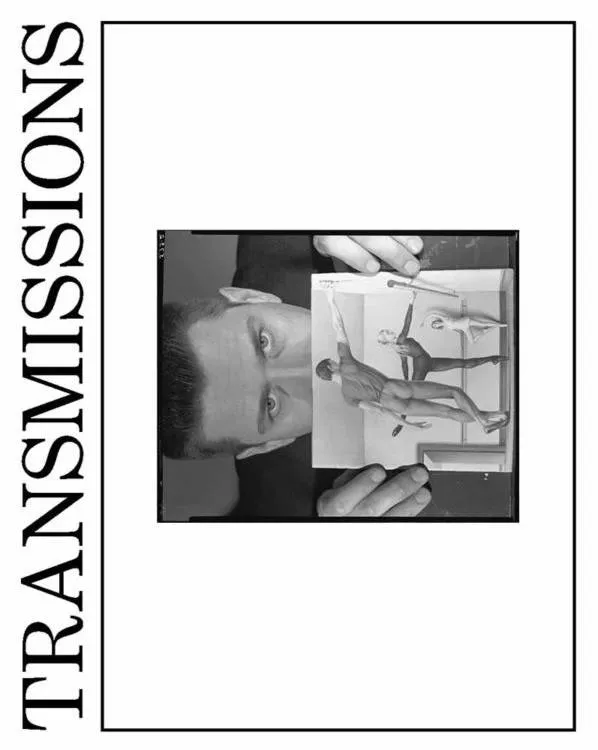
Movement Notation

Noa Eshkol, Abraham Wachmann

€35.00

Eshkol and Wachmann focused dance on its basic element: the movement of the human body. They treated the different parts of the body as separate instruments, similar to the musical instruments of an orchestra–each with its own rules for the movements to be performed. This new edition of the 1958 publication is supplemented by contributions from Eshkol’s companions and further archive material, which contextualizes and supplements the history of the 'EWMN’s‘ origins and embeds it in contemporary discourses on dance and movement. 

The publication is published in the context of the performance 'Pause: The Noa Eshkol Chamber Dance Group‘ at KW Institute for Contemporary Art (August 2023), as well as the exhibition 'Noa Eshkol: No Time to Dance‘ at the Georg Kolbe Museum (15 March–25 August 2024). The new edition was developed together with the 'Noa Eshkol Foundation for Movement Notation‘.

Published in 2024 ┊ 203 pages ┊ Hardcover ┊ Language: English

recommendations

Cover of Past Words

Verlag der Buchhandlung Walther König

Past Words

Prem Krishnamurthy

Design €30.00

Past Words is three books in one: a collection of previously published texts and two exhibition-like experiments: A Year with Prem Krishnamurthy at the KW Institute for Contemporary Art, Berlin, and Endless Exhibition at the Kunsthal Gent. These parts are iinterconnected but distinct, not least because each is designed by a different designer—Ann Richter, David Knowles, Mark Foss & Valentijn Goethals. Together, they chart the past—and future—of a peripatetic performance of a practice, taking stock of a fifteen-year period through writing, a medium that 1s both primary and secondary. This writing is about design, about curating, about exhibition-making, and about how all three are themselves forms of storytelling. They allow us to draft narratives that stand just to the side of accepted realities, to sneak wild ideas into the world with the hope they may—with time—turn into facts. 

Based in Berlin and New York, designer and curator Prem Krishnamurthy (born 1977) is head of the artist group Department of Transformation and of the design consultancy Wkshps. In 2015 he was the recipient of the Cooper Hewitt’s National Design Award for Communication essDesign. As both creator and curator, Krishnamurthy aims to discover “how art & design can be agents of transformation for individuals, communities and institutions.” 

With an introduction by Krist Gruijthuijsen.

Cover of Cologne art fair 1977

Verlag der Buchhandlung Walther König

Cologne art fair 1977

Michael Krebber, Jack Smith

Performance €20.00

Jack Smith presented his performance Irrational Landlordism of Bagdad as part of the Cologne Art Fair fringe in the summer of 1977. Many other events were documented photographically and can now be found in the Cologne Art Fair archives - not so Smith's performance.

This book shows him in his fair stall and during his performance for the first time. The pictures are perfect documents of a completely eccentric transaction by this pioneering director and performance artist.

Cover of Ian Burn: Collected Writings 1966–1993

Verlag der Buchhandlung Walther König

Ian Burn: Collected Writings 1966–1993

Ian Burn

Anthology €40.00

Ian Burn has been described as many things: an activist, a trade-unionist, a journalist, an art critic, a curator and an art historian—or, as he once described himself in a moment of self-deprecating alienation, ‘an ex-conceptual artist’. Born in Geelong in 1939, Burn studied painting in Melbourne and went on to live and work in London and New York. Burn moved back to Australia in 1977 and passed away in 1993 at the age of 53. Burn sought to grapple with how art history intersects and engages with contemporary art and political debate, arguing for a decentred view of the world. 

His legacy is international and can be seen in retrospective exhibitions as recent as 2022, and his work remains a key touchstone in art history. Edited by Burn’s friend, frequent collaborator and eminent art historian, Dr Ann Stephen, this volume brings together 49 pieces of Burn’s own agile and expansive writings alongside a vast collection of his artworks. The collection concludes with reflections on Burn’s life and work from prominent figures and past collaborators in the form of memorial lectures.

Ian Burn: COLLECTED WRITINGS 1966–1993 is edited by Ann Stephen and designed by Robert Milne, with contributions by Art & Language, Adrian Piper, Paul Wood, Allan Sekula, and Mel Ramsden.

Cover of in the coherence, we weep

Verlag der Buchhandlung Walther König

in the coherence, we weep

Kameelah Janan Rasheed

“in the coherence, we weep is both an artist book and an exhibition. The project is about the critical potential of incoherencies. It is an attempt to map methodology across media, while welcoming glitches that allow for moments of critical self-reflection and knowledge production. Developed in parallel, the book and exhibition critically reflect on each other’s approaches. It looks at strategies for how text can be alive and vibrant across various architectural contexts as well as those used in the artist’s family archive, particularly annotation, redaction, indexing, blurring, and learning through reading and writing.” - KW Institute for Contemporary Art

“Multilayering was in that sense an important aspect, which got translated with the material and the design by choosing papers with differents gradients of transparency, as well as interfering and overlapping text layouts. We also designed the cover with a blue scratch off drawing on top of another artwork, so every book might change a bit over time depending on the use. This reflects the artist‘s idea of including the audience and an ever changing oeuvre, where the relation between pieces become important too.” - Studio Pandan

Texts by Dr. Christina Landbrecht, Krist Gruijthuijsen, Sofie Krogh Christensen, Chang Yuchen, Ladi'Sasha Jones

This artist book is published on the occasion of Kameelah Janan Rasheed’s Schering Stiftung Award for Artistic Research 2022 solo exhibition at KW Institute for Contemporary Art (2023).

Cover of sex and place vol 2

Self-Published

sex and place vol 2

Adriano Wilfert Jensen, Andrea Zavala Folache

sex and place is a series of workshops and publications exploring score-based and semi-anonymous writing as a tool for articulating shared concerns.

Vol 2 ‘discores’ is written by Kexin Hao, Luca Soudant, HaYoung, Andrea Zavala Folache & Adriano Wilfert Jensen. Five strangers are stuck in changing boots next to each other and decide to embark on an intimate conversation starting from the question: “What is troubling your sexuality at the moment?”.

The ‘sex and place’ series is part Domestic Anarchism, a project devoted to coalition-building beyond biological, chosen, or national conceptions of family. Dance serves as a set of tools and knowledge that can be applied beyond “the spectacle” to collectively study, write, and move. 

Andrea Zavala Folache and Adriano Wilfert Jensen are choreographers and they co-parent three-year-old Penélope Cleo. Andrea and Adriano use dance and choreography to think about the distribution of care and solidarity beyond ‘the family’, and in turn consider how such a distribution could inform their dance practice. Inevitably themes like sex, economy, gender, and class get activated. But also notions such as prefiguration, anarchism, clitoridian* thinking, zones of non-domination and coalition building. They see dance as a knowledge that can be applied to different practices. Some of these include: co-habitations, score based writing and dancing, self-organised study groups and publications, workshops and dance performances. 

Cover of Appendix #3: Orality

Time has fallen asleep in the afternoon sunshine

Appendix #3: Orality

Victoria Pérez Royo, Léa Poiré and 1 more

Performance €15.00

Time has fallen asleep in the afternoon sunshine Appendix #3 Orality includes contributions by Simon Asencio, Bruno De Wachter, Peter Szendy, Clara Amaral, Itziar Okariz, Jude Joseph, Léa Poiré and Mette Edvardsen.

Time has The Appendixes #1–4 is an editorial series by Mette Edvardsen, Léa Poiré and Victoria Pérez Royo that developed out of the project Time has fallen asleep in the afternoon sunshine. For a two-year residency at Les Laboratoires d’Aubervilliers* (2022–23), they came together as a small work group, shaping the work process, hosting presentation formats and making this publication series on paper as four cahiers.

The cahiers comprise a collection of commissioned texts and contributions created for this context, selected documents and traces from work sessions and encounters organized during their residency, texts read together and republished for this occasion, a collection of references, notes in progress, unfinished thoughts and loose fragments – on paper, between pages.

The Appendixes are organized around four themes: (1) The gesture of writing, (2) How to organize a library, (3) Orality and (4) Translation. In addition to being published on paper, the editorial series also consisted of other formats of presentations, exchanges and meetings organized as workshops, fieldwork, performances, conferences, collective readings and oral publications, taking place during their residency at Les Laboratoires d’Aubervilliers and in the vicinity.

The Appendixes is the work that continues, material that adds on, some of it perhaps too long or too detailed, unfit or unfinished. The four themes that their research is formulated around originate in specific experiences and questions from the practices of Time has fallen asleep in the afternoon sunshine (2010 – ongoing), and also the large publication on the project ‘A book on reading, writing, memory and forgetting in a library of living books’ (2019). The research was both a means of exploring these themes in greater depth and also of bringing them into contact with other artists and researchers working on similar or related subjects. The Appendixes offered them both the contexts and the pretexts for things to happen (in time, in space, on paper).

The Appendixes #1–4, published in these cahiers, do not present an overview or a summary of all of the activities and presentations that took place during the two years at Les Laboratoires d’Aubervilliers. What these cahiers offer is a space in which to hold some thoughts together and to share them in this form. It is one more step along the way, extending the research and work already begun and that will now continue.

Cover of Vampyroteuthis Infernalis

Les Presses du Reel

Vampyroteuthis Infernalis

Vilem Flusser

Philosophy €17.00

L'édition inédite et définitive (établie à partir des tapuscrits originaux en français) du traité fabuleux du philosophe tchéco-brésilien Vilém Flusser (1920-1991), une fiction philosophique et poétique qui, par des chemins détournés, nous confronte à la violence et à l'impasse des sociétés contemporaines.

Un monstre venu des profondeurs de l'océan, un poulpe vampire. Sa violence rappelle les nazis, ses mœurs sont libertaires et libidineuses. C'est une créature infernale, cannibale et brutale, pouvant changer de couleur à volonté, et dotée de trois pénis.
Et c'est notre cousin.

Dans cette fable fantastique, Vampyroteuthis infernalis émerge, non des abysses de l'océan, mais du plus profond de nous-mêmes pour nous tendre un miroir, nous montrer à quel point nous, les hommes, sommes ses proches parents et que nos histoires, nos sociétés, nos modes de vie ne sont, au fond, pas si différents.
Ce texte délibérément provocateur du philosophe tchéco-brésilien Vilém Flusser (1920-1991) n'est ni scientifique, ni objectif : c'est une fiction philosophique et poétique qui, par des chemins détournés, nous confronte à la violence et à l'impasse des sociétés contemporaines.

Flusser avait écrit ce texte en français (outre des versions en allemand et en portugais), et ce livre est la première édition du texte original en français. Il est accompagné des fantastiques dessins de son ami l'artiste et « zoosystémicien » français Louis Bec (1936-2018), co-auteur du livre, traduisant en images pseudo-scientifiques les chimères vampyroteuthiques.

Des essais de Marc Lenot, Élise Rigot et Florent Barrère éclairent la démarche de Flusser et de Bec.

Cover of Publiek Park

Grenswerk vzw

Publiek Park

Jef Declercq, Anna Laganovska and 2 more

The third Publiek Park publication – Walking Guide – combines essays, archival fragments, and artistic voices to trace both the exhibition route at Plantentuin Meise and the historical path that led from the creation of the Jardin Botanique in the heart of Brussels to its relocation outside the city. Following the logic of a quilt, layering different perspectives, textures, and timelines, the book connects artistic narratives with history and reflections on urban gardens, public space, and botanical imaginaries. Just like the exhibition, the publication offers not merely a portrait of a place, but a reflection on the multiplicity that defines it.

Alongside documentation of the exhibition and contributions from the participating artists, this year’s Walking Guide features writings by Nikolaos Akritidis, Denis Diagre-Vanderpelen, Koen Es, Lana Jones, François Makanga, Noam Youngrak Son, and Jean Watt. The two parks are portrayed in photographs by Michiel de Cleene, with book design by Victor Verhelst and Corbin Mahieu bringing all of these elements together.

This publication is made with the generous support of Plantentuin Meise and all partners.

Cover of Metal Works

Lenz Press

Metal Works

Sidsel Meineche Hansen

Sculpture €20.00

A complete survey of the cast, forged, and fabricated metal sculptures made by Danish artist Sidsel Meineche Hansen since 2017.

The artist's practice addresses the industrial complex of virtual and robotic bodies and their relationship to labor in tech, pornography and gaming. While some sculptures were conceived as individual pieces, others were created with digital counterparts within installations that typically include CGI animation, documentary video, drawing and prints.

By presenting the metal works as stand-alone pieces, this book adheres to Meineche Hansen's concern with the material means of production, highlighting their concrete yet elusive nature. Several pieces in the publication are accompanied by poems written by artist Diego Marcon in response to the works. As an artist's project and an archival document, the publication echoes the tradition of documentary photography devoted to sculpture.

Sidsel Meineche Hansen (born 1981 in Denmark, lives and works in London) is a Danish artist. She produces exhibitions, interdisciplinary seminars and publications that foreground the body and its industrial complex, in what she refers to as a "techno-somatic variant of institutional critique". Meineche Hansen questions the body in the field of industrial representations: robotic or virtual bodies, and their relationship with the working world of industries of gaming, pornography, and new technologies. Her research-led practice has taken the form of woodcut prints, sculptures and CGI animations, often made by combining her own low-tech manual craft with outsourced, skilled digital labour.

Edited by Fredi Fischli and Niels Olsen.
Poems by Diego Marcon.