Books
Books
published in 2024

Almond Blossoms and Beyond
Mahmoud Darwish, Mohammad Shaheen
The first English translation of recent poetry by the late Mahmoud Darwish, the most important Palestinian contemporary poet.
Almond Blossoms and Beyond is one of the last collections of poetry that Mahmoud Darwish left to the world. Composed of brief lyric poems and the magnificent sustained Exile cycle, Almond Blossoms holds an important place in Darwish’s unparalleled oeuvre. It distills his late style, in which, though the specter of death looms and weddings turn to funerals, he threads the pulses and fragilities and beauties of life into the lines of his poems. Their liveliness is his own response to the collection’s final call to bid “Farewell / Farewell, to the poetry of pain.”
Mahmoud Darwish, born in 1941 in the village of al-Birweh, Palestine, was the author of over two dozen volumes of poetry and prose. When he died in the summer of 2008, he was mourned throughout the world as a voice of the Palestinian people—author of their official declaration of independence and, most importantly, a poet of the highest invention and beauty. Mohammad Shaheen is a professor of English at the University of Jordan. Amro Naddy has worked as an editor at the Virginia Quarterly Review. He teaches at the King’s Academy in Amman, Jordan.

Les liens qui empêchent: L'homophobie familiale et ses conséquences
Dans Les liens qui empêchent, Sarah Schulman analyse la reproduction de l’homophobie au sein du cercle familial, quand bien même ce dernier devrait être le lieu du développement et de l’épanouissement de chacun·e.
En s’appuyant aussi bien sur des théories sociologiques que sur des témoignages individuels, l’autrice décortique les mécanismes qui conduisent les familles à exclure certains de leurs membres. Bien que l’homosexualité soit de plus en plus représentée dans les médias et dans la culture populaire, Sarah Schulman montre en quoi celle-ci est souvent caricaturée et pathologisée. Ainsi, cette visibilisation ne s’accompagne pas nécessairement d’une meilleure acceptation des personnes homosexuelles dans le cercle familial.
Virulent plaidoyer visant à faire de l’homophobie une question de société qui ne serait plus uniquement reléguée à la sphère privée, Sarah Schulman offre ici des pistes permettant de mettre un terme à la souffrance endurée par de nombreux·ses homosexuel·les au sein du foyer familial.

Matières spectrales: Sociologie des Fantômes
Avery F. Gordon, Julia Burtin Zortea
Dans ce livre unique et fascinant, Avery F. Gordon examine l’expérience sociologique de la « hantise » en s’appuyant sur des références aussi bien littéraires que politiques. La hantise désigne un système qui altère l’expérience d’un vécu linéaire et déforme la façon dont nous séquençons habituellement le passé, le présent et le futur. En prenant pour terrain les romans de Toni Morrison ou Luisa Valenzuela et en les confrontant à des sources plus traditionnelles de la sociologie (articles de presse, comptes rendus judiciaires, rapports d’enquêtes), Matières spectrales démontre que les structures sociales héritées du passé influencent plus la vie présente que ne le présument la plupart des chercheur·ses en sciences humaines.
Afin de montrer comment les fantômes hantent le présent, l’autrice passe au crible une partie de l’histoire de la psychanalyse, avant d’examiner des épisodes de l’histoire tels que l’esclavage aux États-Unis ou les disparitions massives pendant la dictature militaire en Argentine, où des lois interdisaient à la population de parler des disparu·es.
Profondément interdisciplinaire et véritablement innovant par son approche, Matières spectrales est écrit avec une puissance à la hauteur de son sujet, et offre une vision nouvelle des intersections complexes de la race, du genre et de la classe.

Bonheur d'exister
Sébastien Sans-Arcidet, Magali Brueder
"Bonheur d’exister" est une bande-dessinée présentant cinq histoires d’auto-fiction. Au travers de ces récits balançants entre écriture de journal intime et prose littéraire, Sébastien explore les questions de dépression contemporaine, des pressions mélangées des réseaux sociaux, d’incohérence de l’amour filiale, et plus largement des questions autour de sa psychanalyse.

Laminaire
Laminaire est un livre de poésie sur la représentation, c’est-à-dire sur les manières contemporaines de montrer et de percevoir. Le pouvoir, qu’il émane de l’Etat ou bien des grandes entreprises de la Tech, se diffuse sur internet sous la forme de contenus préformatés, et ce dans un environnement médiatique où la production d’images (et notamment de mèmes) est presque infinie. C’est à partir de ce constat que la poétique d’Elsa Boyer, avec beaucoup de virtuosité et d’humour, se déploie. Par leur richesse lexicale, leur capacité à rapprocher des éléments pourtant hétéroclites et le baroque de certaines images, ces poèmes offrent au lectorat un horizon critique renouvelé.
Laminaire est composé de dix-sept longs poèmes dans lesquels sont tressés vers et fragments de prose. On y rencontre, entre autres choses, un sénateur américain, des contrats de propriété et de location, les dessins de corps féminins et d’organes dans les traités d’anatomie, les vidéos Tiktok d’un président, la vidéo de présentation du robot Optimus de Tesla par Elon Musk, le texte du Schéma national du maintien de l’ordre, ou encore des projets et propositions de loi.
Elsa Boyer est l’autrice d’une oeuvre littéraire remarquable. Elle a publié, aux éditions P.O.L et aux éditions MF, des récits, des essais, des traductions salués par la critique autant pour leurs inventions formelles que pour la pertinence de leurs sujets. Laminaire est son premier livre de poésie. Comme les autres titres de sa bibliographie, c’est un ouvrage fortement imprégné d’une fréquentation du numérique, des images qui circulent sur les réseaux et de leurs formats.

Ten Bridges I’ve Burnt
In Ten Bridges I’ve Burnt, Brontez Purnell—the bard of the underloved and overlooked—turns his gaze inward. A storyteller with a musical eye for the absurdity of his own existence, he is peerless in his ability to find the levity within the stormiest of crises. Here, in his first collection of genre-defying verse, Purnell reflects on his peripatetic life, whose ups and downs have nothing on the turmoil within. “The most high-risk homosexual behavior I engage in,” Purnell writes, “is simply existing.”
The thirty-eight autobiographical pieces pulsing in Ten Bridges I’ve Burnt find Purnell at his no-holds-barred best. He remembers a vicious brawl he participated in at a poetry conference and reckons with packaging his trauma for TV writers’ rooms; wrestles with the curses, and gifts, passed down from generations of family members; and chronicles, with breathless verve, a list of hell-raising misadventures and sexcapades. Through it all, he muses on everything from love and loneliness to capitalism and Blackness to jogging and the ethics of art, always with unpredictable clarity and movement.
With the same balance of wit and wisdom that made 100 Boyfriends a sensation, Purnell unleashes another collection of boundary-pushing writing with Ten Bridges I’ve Burnt, a book as original and thrilling as the author himself.

Art Monsters: Unruly Bodies in Feminist Art
In this dazzlingly original reassessment of women’s stories, bodies, and art, Lauren Elkin—the celebrated author of Flâneuse—explores the ways in which feminist artists have taken up the challenge of their work and how they not only react against the patriarchy but redefine their own aesthetic aims. How do we tell the truth about our experiences as bodies? What is the language, what are the materials, that we need to transcribe them? And what are the unique questions facing those engaged with female bodies, queer bodies, sick bodies, racialized bodies?
Encompassing a rich genealogy of work across the literary and artistic landscape, Elkin makes daring links between disparate points of reference—among them Julia Margaret Cameron’s photography, Kara Walker’s silhouettes, Vanessa Bell’s portraits, Eva Hesse’s rope sculptures, Carolee Schneemann’s body art, Theresa Hak Kyung Cha’s trilingual masterpiece DICTEE—and steps into the tradition of cultural criticism established by Susan Sontag, Hélène Cixous, and Maggie Nelson.
An erudite, potent examination of beauty and excess, sentiment and touch, the personal and the political, the ambiguous and the opaque, Art Monsters is a radical intervention that forces us to consider how the idea of the art monster might transform the way we imagine—and enact—our lives.
Destined to become a new classic . . . Elkin shatters the truisms that have evolved around feminist thought.
—Chris Kraus

Hopscotch
Fatemeh Shams, Armen Davoudian
In Hopscotch, Fatemeh Shams crafts a vivid liminal world of Berlin-based poems, a canvas where home and exile blur into an intimate middle ground. Her work, geographically and metaphorically situated between her birthplace in Iran and her current life in exile, evokes a “third space”—a realm of creative liberation and a sanctuary for the play of memories, language, and place. Shams frames this space with tangible metaphors—airports, suitcases, the thresholds of nightclubs. Her poems, like the game of hopscotch itself, leap over borders with a childlike agility, contrasting against the harsh reality of exile. They invite us to consider our own places of belonging and the potential spaces we inhabit—those rich intersections of language and lived experience.
Fatemeh Shams is the author of 88 (Gardoon, Berlin), Writing in the Mist (H&S Media, London), and When They Broke Down the Door (Mage, Washington D.C). Her poems and translations have been published in Poetry magazine, the Michigan Quarterly Review, The Penguin Book of Feminist Writing, and elsewhere. Fatemeh grew up in Mashhad, Iran and is an Associate Professor of Persian Literature at the University of Pennsylvania.
Armen Davoudian is the author of The Palace of Forty Pillars, published by Tin House (US) and Corsair (UK). His poems and translations from Persian appear in Poetry magazine, the Hopkins Review, the Yale Review, and elsewhere. Armen grew up in Isfahan, Iran, and is a PhD candidate in English at Stanford University.
CUNY Center for the Humanities
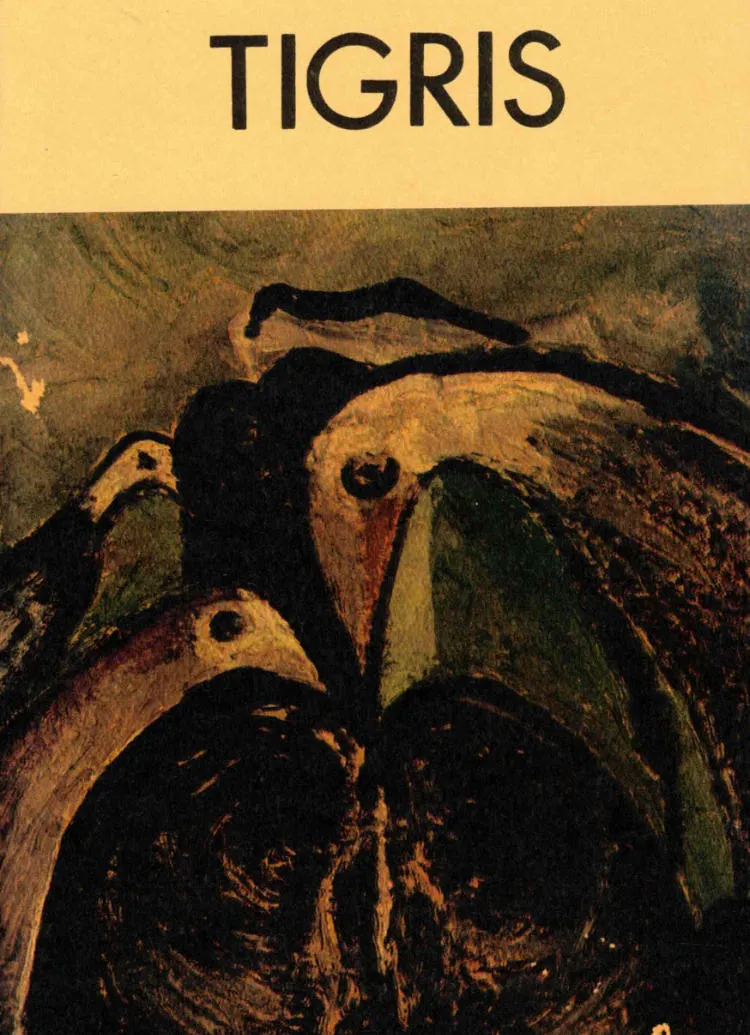
Tigris Vol. 1
In 1971, the great Iraqi poet Sargon Boulus (1944-2007) published a single issue of an English-language literary anthology that he called Tigris. The magazine—a whisper on the literary landscape that appeared three years after Boulus’s arrival in the US—brings together work by Boulus and several of his literary friends, in translation by Boulus and Etel Adnan.
Tigris was not an end in itself, but rather a temporary solution to the lifelong problem of how to devote oneself to poetry across different countries, eras, and styles: how to live poetry. Yet, in so doing, the small anthology includes significant work: Etel Adnan’s “Jebu,” translated by Adnan, and poetry by Boulus, Fouad Rifkah, Yusuf al-Khal, Mouayad al-Rawi, and Riadh Fakhouri, all in Boulus’s translations, as well as a work by Ankido, a “street-activist poet-café worker of importance to the Palestinian Liberation Movement.”
Training Exercises
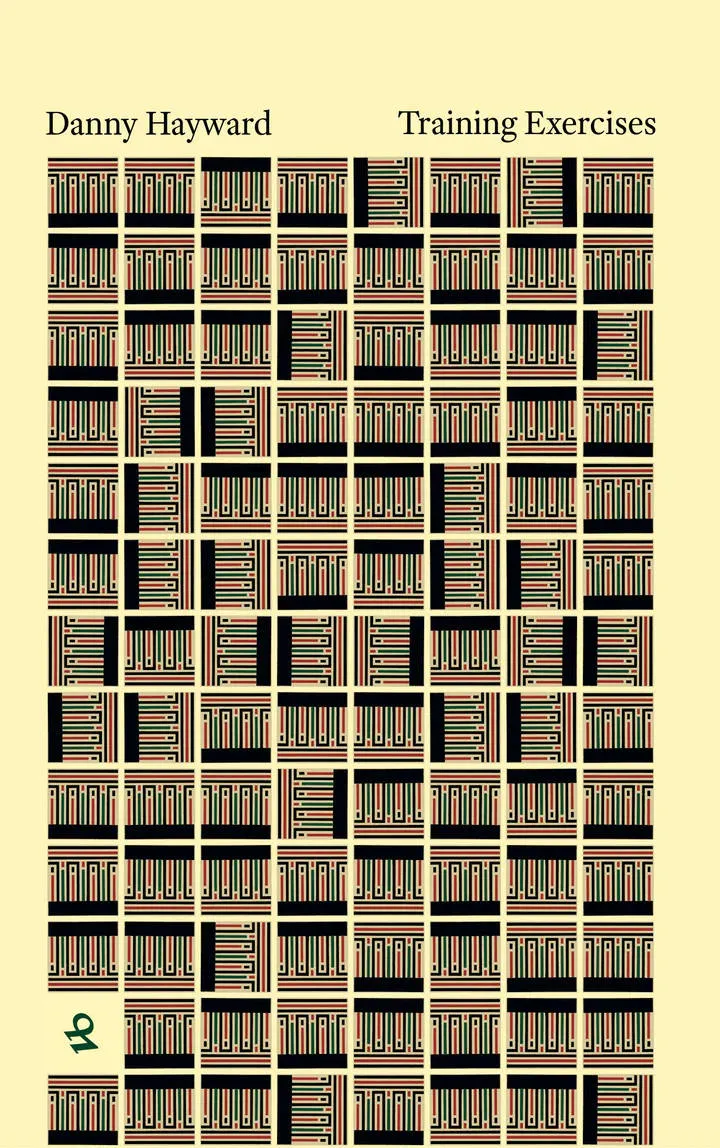
Organized violence committed on ordinary speech’ is therapy for those who don’t believe in literature as value. Training Exercises is an unpacking of that dictum: seven short essays, letters, reports and anti-biographies written to overcome the feeling of resistance to the defacement of what strikes us as true. An anti-purge written out by lipstick or hammer, scrawled over the top of itself and run through a translation program that turns everything upside inside down, its pieces include: a polemic against catharsis; a letter to the poet Dom Hale on his book Seizures; and a series of on-the-spot reports on the UK Illegal Migration Bill, East London poetry readings, the politics of the war in Ukraine, and a conversation about the meaning of damage in contemporary literature.
‘First you learn to write down your ideas, then you learn again how to write all of your lurid political and intellectual and intimate disappointments and all of your childhood hopes over the top of them’. Jack Spicer scrawled the name of his book in pink lipstick on the cover of the academic journal he had published in: Training Exercises scrawls itself on top of that.
Your Life Is Not A (Fucking) Story
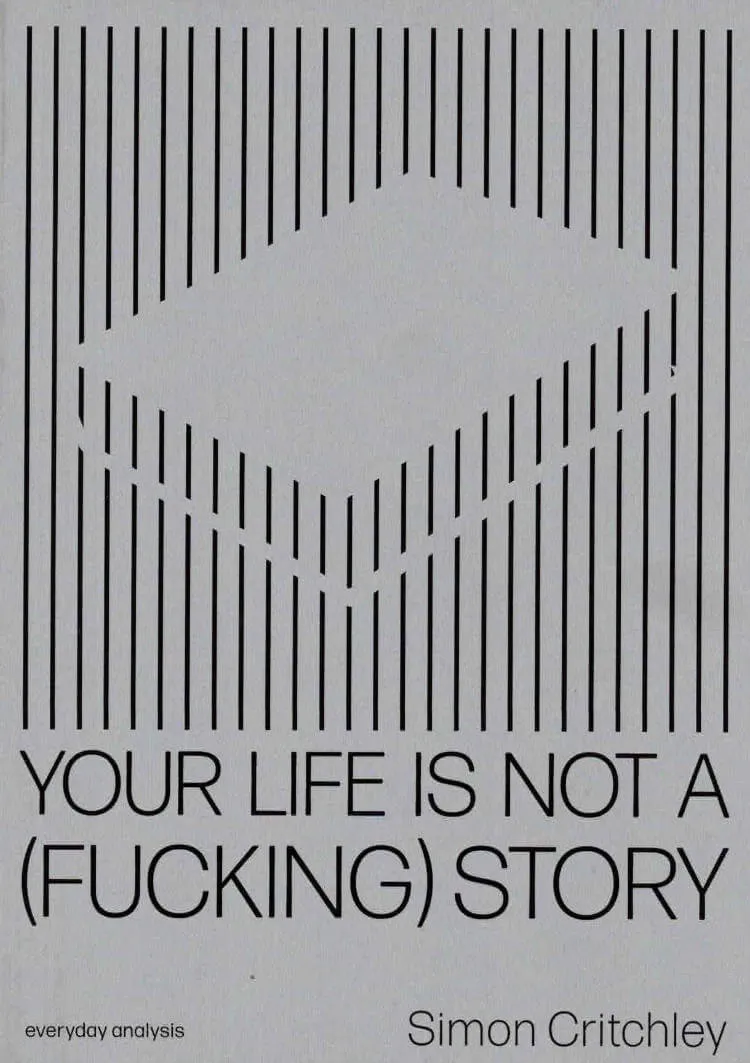
In this new collected edition of his recent articles, Simon Critchley - one of the most important living philosophers - takes us through his reflections on death, questions of doubt and reason, the legacy of David Bowie, the nature of fear and empathy in a broken society and a critique of narrative identity - among other things. YOUR LIFE IS NOT A STORY explores the contemporary world and its psychological impact on us, offering us a way to see our situation different and resist its tricks and contrivances.

Whitney Museum of American Art
Edges of Ailey
Alvin Ailey is one of the most celebrated choreographers of the twentieth century. The creator of iconic works such as Blues Suite, Revelations, and Cry, he is widely recognized for the dance company he founded in 1958 when he was just twenty-seven years old. Ailey imagined and cultivated a platform for modern dance through his innovative repertoire, interdisciplinary sensibility, and support of dancers and choreographers. This expansive volume situates Ailey within a broader social, creative, and cultural context, looking at the artists who influenced and collaborated with him, the spaces and scenes he frequented, the dynamic themes within his dances, and how his vision and work changed contemporary dance.
Essays by artists, scholars, and critics cover topics ranging from the Black church, the South, and the Great Migration to nightclubs, musical influences, and queerness. With more than four hundred images including photographs of works Ailey choreographed, archival materials such as notebooks, sketches, letters, and never-before-published behind-the-scenes photos, and conversations about the legacy of the company with Sylvia Waters, Judith Jamison, and Masazumi Chaya as well as several contemporary dancers and scholars, this study offers an unprecedented full picture of one of the twentieth century’s leading artists and the way his work continues to inspire today’s generation of dancers.
Contributions by Horace D. Ballard, Harmony Bench, Kate Elswit, Aimee Meredith Cox, Thomas F. DeFrantz, Malik Gaines, Jasmine Johnson, Joshua Lubin-Levy, Uri McMillan, Ariel Osterweis, J Wortham, CJ Salapare, Kyle Abraham, Claire Bishop, Masazumi Chaya, Brenda Dixon-Gottschild, Jennifer Homans, Judith Jamison, Sylvia Waters, Jamila Wignot and Jawole Willa Jo Zollar

Eselsohren Dog Ears
"The impossible takes a little longer. [pen scribbling]"
Presented at Kransen in Borgerhout, 1—3 March 2024, with an exhibition titled Dog Ears and a remote reading by fellow-Stockholmian artist Dave Allen.

Calculations
Ines Cox is an artist living between the Nièvre department in central-eastern France and Antwerp. This book consists of some 300 obsessive pages of her handwritten calculations—76% of which are actually true.
Cover by Bonni Cox, back cover by Toni Matthé. Printed in Borgerhout, bound by Gazelle in Deurne. Supported by Centre de la Paresse and Flanders—State of the Art. First presented at Kransen, 23.11.2024. Edition of 100.

Season of the Swamp
New Orleans, 1853. A young Zapotec exile from Mexico named Benito Juárez disembarks at a fetid port city at the edge of a swamp. Years later, he will become the first indigenous head of state in the postcolonial Americas, but now he is as anonymous and invisible as any other migrant to the roiling and alluring city.
Accompanied by a small group of fellow exiles who plot their return and hoped-for victory over the Mexican dictatorship, Juárez immerses himself in the city, which absorbs him like a sponge. He and his compatriots work odd jobs, fall victim to the cons and confusions of a strange young nation, succumb to the hallucinations of yellow fever, and fall in love with the music and food all around them. But unavoidable, too, is the stark trade in human beings.
With the extraordinary linguistic play and love of popular forms that have characterized all of Herrera’s fiction, Season of the Swamp is a magnificent work of speculative history, a love letter to the city of New Orleans and its polyglot culture, and a cautionary statement that informs our understanding of the world we live in.

Wanderlust
Soufiane Ababri's sketchbooks.
Soufiane Ababri (b. 1985, Rabat) is a Moroccan artist based in France. His protean work (drawings, installations, performances) explores questions of gender, homosexuality, racism and colonialism.

Revolutionary Tofu
Revolutionary Tofu. Transnational Flows in the Making of Chinese Anarchism, through the clue of soy, attempts to resurface the historical threads of Chinese anarchy in the early 20th century and the transnational flow in the making of it, weaves between France and China, from Manchukuo to São Paulo. Revolutionaries from different regions encountered one another in various historical moments, quietly opening up an alternative path that history might have taken.
The story was first published in 44 Monthly (September 2022) in China , revised, translated and printed in Berlin in 2024.
Written by Wu Qin
Designed by IfA
Published by Tofu Stand (Tofulogy 001)

Efemmera Reissue #3: Saving Seeds: Metaphors of Lesbian Growth
Originally published in 1987, Saving Seeds: Metaphors of Lesbian Growth, a special issue of Maize: A Lesbian Country Magazine, was created by artist and writer Jenna Weston as a tribute to "magical female-oriented gardens."
From her Introduction: "I have found that, generally speaking, lesbian gardens are works of art. We make intricate designs with twine between sapling posts. Later, these weavings support tomato vines. Bright colored ribbons flutter from the tops of tall bean poles. Raised vegetable beds are sculpted into various graceful shapes. The winding paths are edged in pieces of broken pottery and stones we've found. We build altars in the centers of our gardens, and hold rituals between the onions and the lettuce."
"I asked wimmin to send me drawings and photos and descriptions of their magical female-oriented gardens. The replies came from near and far, and make up a part of this book. The rest of the book contains poems and prose that came directly from my experiences as a gardener and a lesbian."
This reissue reimagines the black and white stapled original in a bounty of earth tones: different colored French Papers are risograph printed in green, brown, and orange ink. The book is handsewn with gradient thread. Also included is a recent interview with Jenna Weston printed as an 11x17 leaflet, reversed with a poster of one of the garden diagrams in the book.

SABR N°01 - Trois dattes et une dent
« [...] la stratégie de la terre brûlée c’est aussi un héritage mais adaptation 2024 on brûle désormais des arrêts de bus et des commissariats et si à la télé iels disent ces jeunes sont complètements cons détruire leur propre ville c’est que Bolloré a rien compris [...] »
Fanny Souade Sow est artiste plasticienne, son travail est habité par des questionnements d’ordre sociopolitique et historique et évoque en outre la violence latente des structures urbaines qui excluent, séparent, condamnent et contraignent un certain nombre de corps et d’existences minorisées.
SABR/Collection est une série de publications qui rassemble des œuvres littéraires de format court et de genres variés. Dirigée par Nesrine Salem, la collection souhaite mettre en avant les macro-réalités des auteur·ices choisi·es pour rendre visible le caractère intersectionnel des luttes.

Lassie, Des amis pour la vie
Ce que je vois, c’est comment un animal se détermine à créer une relation avec un garçon malheureux.
Fiction vu en boucle gamine, que je superposais à ma chienne, une colley comme Lassie.
Suivi par Émilie Ferrat.

Goblinhood: Goblin As A Mode
As formally inventive as readers have come to expect from one of the most daring writers around, and as wild and tricky as its subject matter requires, Goblinhood: Goblin as a Mode presents us with a series of essays and poems that playfully, artfully propound JEN CALLEJA'S theory of ‘goblin hood’—a theory that takes in all aspects of pop culture from film, literature and art as well as the author’s personal and original examinations of grief, lust, family histories and the physical fact of living in the world as it is.
Obsessed with green objects, strange pop culture films, and puppets, and haunted by her family memories, Jen Calleja explores in Goblinhood her relationship with her body and self-loathing, desire, sex, food, and grief. She mischievously develops a hybrid thought process that combines essay, autofiction, poetry, and goblin theory.
Goblinhood is a perpetually and variously curious, visceral addition to Calleja’s remarkable oeuvre.

Juvenilia #2
Ludi Juvenales (Latin for "juvenile games') is a poetry, art and games series interested in youth, childhood, play, and immaturity.
Ludi Juvenales is edited by Elise Houcek & Zoe Darsee.
www.ludijuvenales.com
Juvenilia #2 by Willa Smart.
Copyright C Willa Smart 2024. All rights reserved.
Cover art by K. Fabricant.
Design by Elise Houcek & Zoe Darsee.
Risograph printed with BearBear in Milwaukee, Wisconsin.
Edition of 50.

Centrefold 1974. A Memoir
Following the publication of Centrefold in Artforum, November 1974, Benglis says that Penthouse wanted to use the image, but instead she proposed ‘a take-off on a traditional pieta, depicting a beautiful girl as the Madonna with a nude man on her lap’. They refused, ‘we cannot do that, we cannot allow artists to make a centrefold.’
Published to coincide with the fiftieth anniversary of that Centrefold, and shifting between 1970s New York and Los Angeles and the Corbyn years in Tower Hamlets, London, this Centrefold enacts an ambivalent ‘full accounting’ of Lynda Benglis’s Artforum spread, as well as her gender ‘mockeries’ and Secrets series. Taking in nursery privatisation, artworld silencing and censorship, maintenance art, muddled Marxism, performances of motherhood, and masturbation, Louise O’Hare weighs up the various impacts and forms of disciplining at play in both column and dildo inches.

Dance History(s): Imagination as a Form of Study
Annie-B Parson, Thomas F. DeFrantz
Authored by twelve diverse American dance artists in the form of twelve small booklets, Dance History(s): Imagination as a Form of Studyapproaches and celebrates dance history as a subjective, artistic inquiry. It reimagines and radicalizes our understanding of dance throughout human history through the voices of working choreographers. Simultaneously, the project is dedicated to the power of an artist-centric view of history itself, thus placing the dance history back into the body, where it began. Here, history occurs in vertical layers of time and space and moves into the street, the football field, the yard, the screen, the memory, the womb, the sky, and the future.
Text by mayfield brooks, thomas f. defrantz, maura nguyễn donohue, Keith Hennessy, Bebe Miller, Okwui Okpokwasili, Eiko Otake, Annie-B Parson, Javier Stell-Frésquez, Ogemdi Ude, Mariana Valencia, and Andros Zins-Browne