rile*books

Search books

Search books by title, author, publisher, keywords...

Explore

Categories
Visit
Collections
Publishers
Back in stock
Any books
Cover of Bezdorijia, chroniques d’un voyage en Ukraine

éditions Burn~Août

Bezdorijia, chroniques d’un voyage en Ukraine

Ouvrage collectif

€13.00

Bezdorijia, chroniques d'un voyage en Ukraine est un recueil de textes écrits en 2022 en Ukraine. Un mois après le déclenchement de la guerre, une bande d'ami·es décident de se rendre sur place, animées à la fois par l'envie de mieux comprendre ce qu'il se passe et par celle d'apporter du soutien matériel au peuple ukrainien en lutte contre l'envahisseur. Sur un blog à destination de leurs proches, iels témoignent de la complexité de la situation, des rencontres que ce voyage les amène à faire et iels rendent compte, par le prisme de l'internationalisme, du quotidien d'un peuple qui résiste à la guerre grâce à des pratiques d'auto-organisation.

216 pages ┊ Paperback ┊ Language: French

recommendations

Cover of On ne bombardera jamais ma voix

éditions Burn~Août

On ne bombardera jamais ma voix

Yahya AL Hamarna, Elissa Kayal and 1 more

Poetry €9.00

« On ne bombardera jamais ma voix » est un recueil de poèmes écrits depuis le génocide en cours à Gaza. Yahya AL Hamarna y documente les brutalités de la guerre ainsi que les rituels fragiles de la vie quotidienne : étudier, se promener dans le parc, lire de la poésie, préparer du thé, pleurer, survivre. De l’intimité exiguë des tentes de déplacés à la sérénité imaginaire des cours universitaires et des matchs du Réal Madrid, AL Hamarna élabore une poétique de la survie : une poétique qui refuse le désespoir et insiste sur la dignité invincible du peuple palestinien. 

Préface : Elissa Kayal
Postface : Alycia Dufour

Cover of La même en pire

éditions Burn~Août

La même en pire

Eugénie Zély

Fiction €12.00

La même en pire est un roman d’amour enchâssé dans un roman noir, un huis clos dans lequel les confessions de chacune deviennent le procès des autres. Elles sont toutes coupables, toutes victimes, toutes témoins, toutes innocentes de ce qui est arrivé à Madison. Et qu’est-ce qui est arrivé ?

Madison a disparu, Madison a été assassinée, Madison s’est suicidée. Huit femmes se retrouvent dans un appartement et reviennent sur ce qui les avait rassemblées des années auparavant : une maison délabrée que Madison louait et dans laquelle elle avait installé des caméras pour streamer H24 et monétiser son existence. Elles avaient toutes vécu dans cette maison et avaient toutes fini par la déserter. Sophie la poète mariée au terroriste, Cécile la détective privée, Hilary la bourgeoise militante, Lola l’adolescente tiktokeuse muette, Alexandra l’entrepreneuse, Eva la mauvaise mère, Kamila la mère aimante, et la narratrice.

Préface : Lou-Andréa Benzacar

Cover of Sarahland

éditions Burn~Août

Sarahland

Sam Cohen, Sarah Netter

LGBTQI+ €14.00

Sarahland est un ouvrage de fiction américain contemporain qui se découpe en dix nouvelles, toutes reliées par les personnages de Sarahs et leurs parcours initiatiques à la fin de l’adolescence. Sam Cohen, autrice queer et juive, déploie un univers drôle et piquant autour des notions d’identité, de transition, de transformation, d’émancipation et d’apprentissage. Au fil d’histoires inventives, l’autrice explore la manière dont les narratifs qui nous sont assignés, les récits traditionnels, les identités qui nous pré-existent, sont dépassables. Elle construit alors avec ses personnages — presque toutes prénommées Sarah — de nouvelles histoires pour leurs passés ou leurs futurs, de nouvelles façon d’aimer la terre et ceux qui la peuplent, de nouvelles possibilités de vie en soi. Dans le refus pour chaque Sarah d’adhérer à un récit unique et uniformisant, l’autrice propose un lieu potentiellement meilleur pour nous toustes, un espace narratif qui n’exige aucune fixation de soi, aucune injonction consumériste, aucun compromis corporel: un lieu appelé Sarahland.

Née à Detroit aux États-unis, Sam Cohen vit et travaille actuellement à Los Angeles. Elle est une autrice de fiction dont les romans explorent des thèmes à l’intersection du féminisme, des études queers, et des pensées juives. Après avoir publié dans différentes anthologies et revues littéraires (Queer Flora, Fauna, and Funga, Weird Sister Collection, etc.), elle publie en 2021 Sarahland, un recueil de nouvelles. Elle enseigne l’écriture à l’université en tant que professeur d’écriture créative. Elle a été nommée et à gagné à de nombreux prix littéraires, notamment le ALMA Award (Best Jewish Story Collection of 2021), le Jewish Women’s Archive Book List, le Golden Poppy Award in Fiction (finaliste) ou encore le Chautauqua Janus Prize. Elle est en cours d’écriture de son prochain livre.

Cover of Vrai travail

éditions Burn~Août

Vrai travail

Non-fiction €19.00

Le Collectif Occasionnel a organisé en Suisse deux expositions qui présentaient les oeuvres de personnes à la fois artistes et travailleureuses du sexe. Cet ouvrage prolonge leur travail en proposant des textes et des entretiens avec des Tds ou des alliéxes. Permettant l’auto-représentation des personnes interrogées, les entretiens mettent en lumière la pluralité des pratique du travail du sexe, mais aussi l’importance de construire des solidarités travailleuses, des outils pour défaire les stigmates et des perspectives de luttes intersectionnelles.

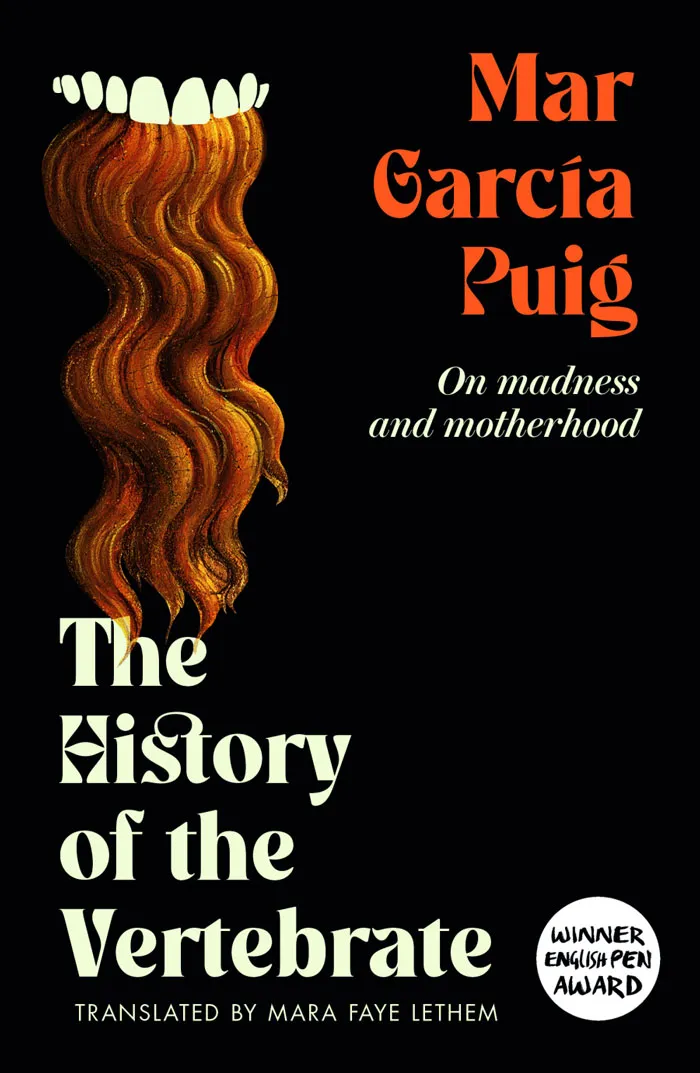
Cover of The History of the Vertebrate

Peninsula Press

The History of the Vertebrate

Mar García Puig, Mara Faye Lethem

Non-fiction €19.00

‘On 20 December 2015 I became a mother and I went mad.’ 

On a single day, Mar García Puig gives birth to twins and becomes elected to the Spanish Parliament as a member of the insurgent left-wing party Podemos. What might have been the best day of her life becomes the start of a terrifying ordeal; García Puig’s grip on reality begins to slip as she grapples with uncertainty, the weight of expectation, and misogyny in both of her new roles. 

In defiance of a culture that tells her the problem lies within, García Puig chooses to look outwards, examining the imbrication of madness and motherhood across centuries of science, myth, and politics while dissecting the ways in which women have been pathologized and banished from public life. 

At once intimate and epic, The History of the Vertebrate is a searing account of postpartum madness. Moving between memory, culture, and the history of medicine, García Puig transforms her experience into a story about the countless women who have felt that sanity was leaving them, and about the patriarchal forces that have silenced them. 

MAR GARCÍA PUIG is an editor and author. From 2015 to 2023 she was a member of the Spanish Congress of Deputies for Podemos, where she served on the Culture Committee and the Equality Committee. Her books include The History of the Vertebrate and This Thing of Darkness.

Cover of Last Movies

Tenement Press

Last Movies

Stanley Schtinter

A publication, durational artwork, and moving-image experience, Schtinter’s debut collection, Last Movies, is an alternative account of the first century of cinema according to the films watched by  a constellation of its most notable stars shortly  before (or at the time of) their deaths.

An extensive and exhaustive research project—a holy book of celluloid spiritualism and old canards—Schtinter questions and reconfigures common knowledge to recast the historic column inches of cinema’s mythological hearsay into a thousand-yard stare. 

Via a series of interlinked vignettes, here we’ve a book in which Manhattan Melodrama, directed by W.S. Van Dyke and George Cukor, is seen by American gangster John Dillinger, only for him to be gunned down by federal agents upon leaving the cinema. In which George Cukor watches The Graduate and dies thereafter. In which Bette Davis—given her break by Cukor—watches herself in Waterloo Bridge (the 1940 remake Cukor had been meant to direct), before travelling to France and failing to make it back to Hollywood. In which Rainer Werner Fassbinder watches Bette Davis in Michael Curtiz’s 20,000 Years in Sing Sing, and suffers the stroke that kills him. In which John F. Kennedy watches From Russia with Love at a private ‘casa-blanca’ screening prior to the presidential motorcade reaching Dealey Plaza; in which Burt Topper’s War is Hell exists only in a fifteen-minute cut, considering this is as much as Lee Harvey Oswald would have seen at the Texas Theatre in the wake of JFK’s killing.

Cover of Juggling (Practices)

Duke University Press

Juggling (Practices)

Stewart Lawrence Sinclair

Performance €16.00

In Juggling , Stewart Lawrence Sinclair explores the four-thousand-year history and practice of juggling as seen through his life as a juggler. Sinclair—who learned to juggle as a child and paid his way through college by busking—shares his experiences of taking up juggling after an episode of suicidal ideation, his time juggling on the streets, and ultimately finding comfort in juggling during the COVID-19 pandemic. In many ways, this is a book about loss and recovery. From his own juggling story to clowns braving military checkpoints in Bosnia and Rwanda to perform in refugee camps to contemporary avant-garde performances, Sinclair shows how the universal language of juggling provides joy as well as a respite from difficulties during hard times.

Cover of Art Monsters: Unruly Bodies in Feminist Art

Picador

Art Monsters: Unruly Bodies in Feminist Art

Lauren Elkin

Non-fiction €22.00

In this dazzlingly original reassessment of women’s stories, bodies, and art, Lauren Elkin—the celebrated author of Flâneuse—explores the ways in which feminist artists have taken up the challenge of their work and how they not only react against the patriarchy but redefine their own aesthetic aims. How do we tell the truth about our experiences as bodies? What is the language, what are the materials, that we need to transcribe them? And what are the unique questions facing those engaged with female bodies, queer bodies, sick bodies, racialized bodies?  

Encompassing a rich genealogy of work across the literary and artistic landscape, Elkin makes daring links between disparate points of reference—among them Julia Margaret Cameron’s photography, Kara Walker’s silhouettes, Vanessa Bell’s portraits, Eva Hesse’s rope sculptures, Carolee Schneemann’s body art, Theresa Hak Kyung Cha’s trilingual masterpiece DICTEE—and steps into the tradition of cultural criticism established by Susan Sontag, Hélène Cixous, and Maggie Nelson.  

An erudite, potent examination of beauty and excess, sentiment and touch, the personal and the political, the ambiguous and the opaque, Art Monsters is a radical intervention that forces us to consider how the idea of the art monster might transform the way we imagine—and enact—our lives.

Destined to become a new classic . . . Elkin shatters the truisms that have evolved around feminist thought.
—Chris Kraus

Cover of Radical Intimacy

Pluto Press

Radical Intimacy

Sophie K Rosa

Non-fiction €20.00

An impassioned discussion about the alternative ways to form relationships and resist capitalism.

Capitalist ideology wants us to believe that there is an optimal way to live. 'Making connections' means networking for work. Our emotional needs are to be fulfilled by a single romantic partner, and self-care equates to taking personal responsibility for our suffering. We must be productive and heterosexual, we must have babies and buy a house. But the kicker is most people cannot and do not want to achieve all, or any of these life goals. Instead we are left feeling atomised, exhausted and disempowered.

Radical Intimacy shows that it doesn't need to be this way. A punchy and impassioned account of inspiring ideas about alternative ways to live, Sophie K Rosa demands we use our radical imagination to discover a new form of intimacy and to transform our personal lives and in turn society as a whole.

Including critiques of the 'wellness' industry that ignores rising poverty rates, the mental health crisis and racist and misogynist state violence; transcending love and sex under capitalism to move towards feminist, decolonial and queer thinking; asking whether we should abolish the family; interrogating the framing of ageing and death and much more, Radical Intimacy is the compassionate antidote to a callous society.