rile*books

Search books

Search books by title, author, publisher, keywords...

Explore

Categories
Visit
Collections
Publishers
Back in stock
Any books
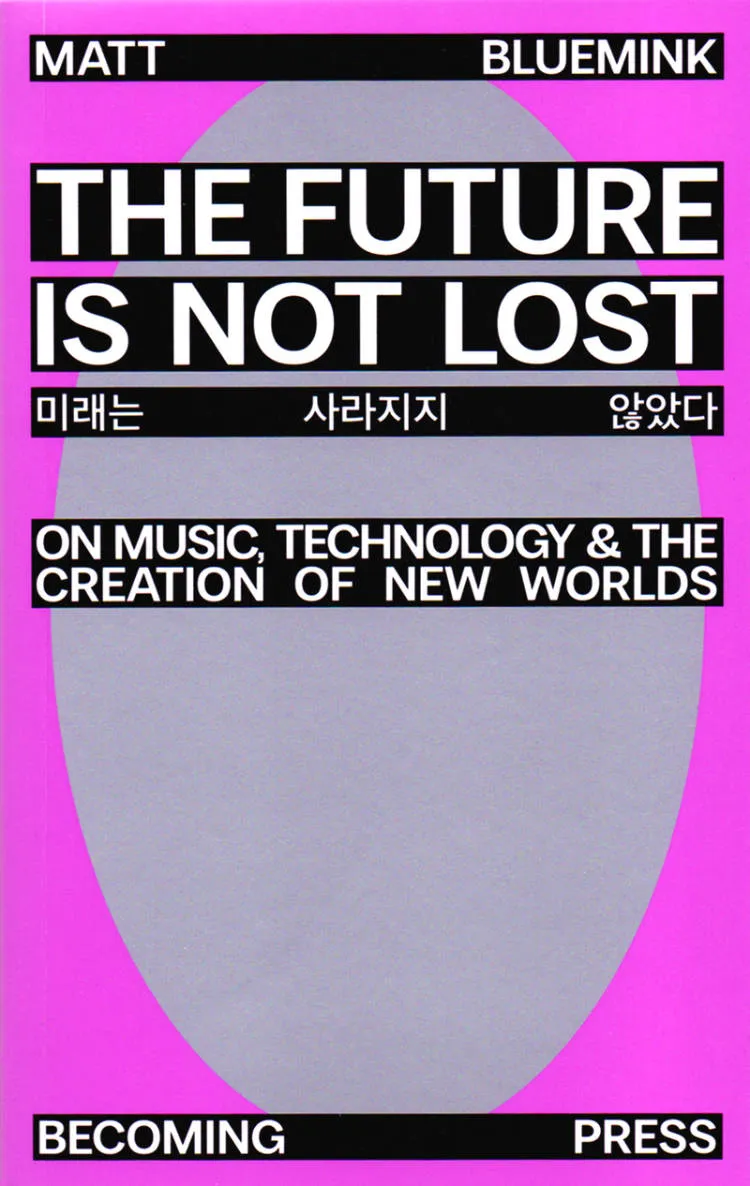
Cover of The Future is not Lost: On Music, Technology, and the Creation of New Worlds

becoming press

The Future is not Lost: On Music, Technology, and the Creation of New Worlds

Matt Bluemink, Alessandro Sbordoni ed.

€16.00

Mark Fisher taught a generation to hear the future's disappearance in contemporary music, as if the rhythm of the world was synchronised to the periodic flowering of new creative forms. His diagnosis was devastating: stagnation in music was akin to a venous insufficiency, or worse, some kind of nuclear winter that would ward off the spring for endless generations to come. 

Drawing on musicians like SOPHIE, Arca and Iglooghost, Matt Bluemink declares that the future is not lost; it still speaks to us through music. If Fisher’s Hauntology — dwelling on ghosts of the past — is the logic of depression, then Bluemink’s Anti-Hauntology posits a logic of hope where voices from the future continue to guide the development of the present. 

Island-hopping through Stiegler's philosophy of technics, Simondon's theory of individuation, and the spatial imaginaries of cyberpunk and solarpunk, Bluemink builds a theoretical framework equal to the times — one that takes seriously our capacity to, not only diagnose the world, but remake it. In order to create a new future we must re-imagine our relationship with music, with technology, and with culture. The world of tomorrow is a blank canvas; an open book. New beginnings are always possible. 

Matt Bluemink is the founder and editor-in-chief of Blue Labyrinths online magazine. His research is focused on the relationship between the philosophy of technology, media theory and urbanism. He also writes on contemporary music, literature, and digital culture. 

Published in 2026 ┊ 192 pages ┊ Paperback ┊ Language: English

recommendations

Cover of Exocapitalism – Economies with absolutely no limits

becoming press

Exocapitalism – Economies with absolutely no limits

Roberto Alonso Trillo, Marek Poliks

Essays €16.00

A rigorous and mind-blowing account of the dynamics of capitalism today through an in-depth exposition of software, speculative finance, and the highest scales of arbitrage.

At the centre of Marek Poliks and Roberto Alonso Trillo's argument is the idea that capital does not belong to humans, it belongs to—and is governed by—itself. Traditional economic theory struggles to keep up with the rapid rate of acceleration, and this book steps in to address this:

"The critical orthodoxy is slowing; it's tired, it's not especially good at the internet, it's probably never manned a Starbucks counter or an anonymous cubicle. Its younger adepts—though digitally native—are chronically underemployed, unavailable, drowning in the student debt (or student opportunity cost) required for entry into the critical apparatus. Few have any patience for the numbing slop-speak of the LinkedIn economy, the libertarian enclave of forex and HFT and memecoins, the quarter-zip depravity of employment at the charnel houses of McKinsey or Deloitte or Accenture, the blazingly random mood-swings of venture capital that lubricate all of the above. This impatience is—in the parlance of the above—a blocker: it means that the critical apparatus underestimates the power of the software economy, struggles to articulate the morphological density of digitally-realized capitalism, comprehensively ignores the functional death of labor, and doesn't understand scale."

Introduction by Charles Mudede.
Afterword by Alex Quicho.

"A masterpiece... Nick Land for adults."
— 0nty

Cover of Where does a Body begin? Biology's function in contemporary capitalism

becoming press

Where does a Body begin? Biology's function in contemporary capitalism

MYB

Non-fiction €12.00

While presented as a contiguous work, the book is formed of different essays that have been dissected, recomposed with artificial connective tissue. The result lies somewhere between the rhizomatic continuity of a Body-without-Organs, and the disjointed assemblage of roadkill; either way, the question of where to even begin remains the same. 

These essays each grow out of a particular resentment that developed through years of experience as a working-student of biology, but the task of the book was to transform this into something productive, something that sticks granular propositions into Biology like acupuncture needles. Inherent sexism within Biological research is, after all, not entirely disconnected to Pharmaceutical giants flooding the streets with opiates—and it is simply a writer’s hope that some well positioned words can remind enough people of how its all connected. 

In what could be perceived as a philosophical turn, the importance of talking about science, as much as doing it, is re-entering the popular scientific consciousness, and it is high time, too. What was already getting bad under Biden, became catastrophic under Trump, and the infiltration into public research by private institutions and capitalist enterprises, which this book highlights, is proving dire. The capitalisation of all things bio, whether -yoghurt, -metric data or -logical institutions, is necrotic—MeltdownYourBooks didn’t flinch, they just grabbed the scalpel, dowsed the flesh in ethanol, and asked the question we all forget needs answering: where first, Doc? 

Meltdown Your Books (M.Y.B.), the pen name, was made as a portmanteau of the seminal essay Meltdown by Nick Land, and the landmark film Throw Away Your Books, Rally in the Streets by Shuji Terayama. I chose the name, almost 3 years ago now, to reflect the political and digital black hole I saw hovering at the edge of contemporary media experience, and to present my work without the muddy veneer of personal identity. It has remained, since its inception, an anonymous project in only the loosest terms. The dedicated could always find my real identity, and some have, and so its anonymous character existed primarily as an element of presentation. Its anonymity existed to emphasize its deindividuated character. The things I discuss and emphasize under the M.Y.B. label are not items with definitive characteristics, they are collective experiences. M.Y.B. is something I cherish beyond self.

Cover of Semiotics of the End: Essays on Capitalism and the Apocalypse

becoming press

Semiotics of the End: Essays on Capitalism and the Apocalypse

Alessandro Sbordoni

Philosophy €12.00

The apocalypse as such will not take place, as it is already finished. Today, there is no longer any difference between the end of the world and capitalism itself: from Britney Spears’ Till the World Ends to The Caretaker’s Everywhere at the End of Time, from Avenger’s Endgame to Donnie Darko, and all the way down to the internet’s Backrooms, the world never ends but is reproduced again and again according to the semio-logic of capital. 

In contrast with Mark Fisher’s Capitalist Realism, Semiotics of the End is a manifesto for the imagination of another relationship with the end. If it is easier to imagine the end of the world than the end of capitalism, as Slavoj Žižek, Fredric Jameson, and Mark Fisher put it, it is only because we have not imagined anything yet. The end is just the beginning.

With an Afterword by Matt Bluemink 

Cover of Multiplication of Organs (Manifesto) – Body, Technology, Identity, Desire

becoming press

Multiplication of Organs (Manifesto) – Body, Technology, Identity, Desire

Christian Nirvana Damato

Philosophy €13.00

A queering of psychoanalysis put together by the forerunner of Inactual Magazine. 

Organ Multiplication Manifesto is an essay that delves into the transformations of sociality and sexuality in the context of digital technologies. Using an interdisciplinary approach that blends philosophy, erotic literature, media theory, psychoanalysis, gender studies, and neuroscience, the text explores how devices, platforms, and technologies shape and produce normative systems that influence our perceptions, desires, and relationships with others. By examining the interplay between desire and digital mediation and drawing comparisons with authors such as Deleuze, Ballard, Žižek, Butler, Preciado, Bataille, and others, this book aims to present a new theoretical, critical, and philosophical perspective in the contemporary discourse on the relationship between humans, technology, and society.

This book begins with an analysis of three iconic erotic texts from Masoch, Ballard and Bataille, and uses this analysis as the departure point for its main theoretical work on the four topics listed in the subtitle. The book passes through a lot of interesting phases, including an analysis of Phenomenology and Gucci, class struggle and OnlyFans and much more, until eventually arriving at the actual manifesto for Organ Multiplication and the beautifully named notion of the "Caged Sun". 

Foreword by Vincenzo Estremo.
Afterword by Franco "Bifo" Berardi.

"One may think that the history of the human culture is going to be enormously impoverished by the disappearance of the body, one may think that, on the contrary, human culture has been enriched by the renounce to presence and physical contact. It is not the intention of Damato to save this dilemma, His intention is rather to open a new field of investigation, and possibly to start a reflection on a more advanced dilemma: will the change of perception make possible the emergence of a new ontology, or is the disappearance of the body going to mark the final dissolution of human life itself?" — Franco "Bifo" Berardi

Christian Nirvana Damato is a writer, curator, and independent researcher working in the fields of philosophy, technology, psychoanalysis, and visual culture. He teaches media theory at the IED in Turin and runs various workshops on publishing and writing. He writes for and collaborates with various magazines and publishing houses. He is the founder and editorial director of Inactual. He has also published Medial Disorders. Interpretive and Non-statistical Compendium of Technological Disorders. Vol I, with contributions by Geert Lovink, Alfie Bown, Isabel Millar, Eyal Weizman (Forensic Architecture) et al. (ed. by, Inactual, 2024), Wearable Statistical Desires. Re-programming the performativity of the body through digisexuality (Mimesis 2025; Everyday Analysis, 2025) and Medial Disorders Vol II.

Cover of Of Enemies & Venison: First Materials for an Aztec Cosmotechnic

becoming press

Of Enemies & Venison: First Materials for an Aztec Cosmotechnic

Lou Manuel Arsenault

Philosophy €15.00

A new future for Mexico depends upon unearthing what colonialism has buried below the ground.

Situated deep within the ontological turn, this book brings together the philosophical anthropology of Descola and Viveiros de Castro, with the discourse that runs, through Heidegger, towards the world-building technics of Yuk Hui. Through a detailed study of the sacrificial and symbolic practices of Warfare & Hunting, Lou Manuel Arsenault uses these philosophies as tools to uncover a Cosmotechnic of the Aztecs.

In the cosmology and way of life of Nahuatl-speaking populations of the Valley of Mexico and the surrounding regions during the post-classical period, Warfare & Hunting were inseparable ritual practices within which the distinction between beings—Human, Jaguar, and Deer, or Aztec, Mimixcoa, or Mother and Enemy—became blurred. Articulated here as an Aztec Cosmo-Technique of identification, it is argued that these ritual practices enacted a world with its own destiny, one which was trampled by colonial violence. Yet this destiny—Batalla’s “Deep Mexico”—lies dormant, buried underground, buried in the literature, and in the archaeological record; this book works to unearth it.

Cover of Par-delà étrange et familier

Éditions Sans Soleil

Par-delà étrange et familier

Mark Fisher

Essays €16.00

Dans cet ouvrage, malheureusement son dernier, Mark Fisher revisite des artefacts culturels familiers afin de cartographier les variétés de l’étrange dont ils sont porteurs. Longtemps sensible aux dimensions bizarre et omineuse qu’il devinait, sans les nommer, entre autres dans les œuvres de Lovecraft, les films de David Lynch ou les albums de The Fall, M. Fisher tente ici la synthèse essentielle d’un questionnement qui l’avait hanté, jusqu’à ce livre.

Avec son regard si particulier, celui du critique culturel tout à la fois pop et moderniste, puisant aux sources de la psychanalyse et du marxisme, Fisher se penche sur des objets sensibles pour y saisir les rapports entre présence et absence, entre ce qui devrait être mais n’est pas, ce qui ne devrait pas se présenter mais survient. C’est en compagnie de ces spectres — du titre d’un autre ouvrage — que nous sommes invités à voyager, pour questionner les formes mêmes de nos existences sociales, jusqu’aux frontières de l’étrange.

Cover of If UR Reading This It's 2 Late

Argos Arts

If UR Reading This It's 2 Late

Tony Cokes

The first monograph on the work of artist Tony Cokes, creating a visual cartography of a body of moving image work that spans twenty years.

Tony Cokes's video works are eviscerating critiques and affective art works, bringing together color theory, sound, music, and texts, and quoting a polyphony of voices including Aretha Franklin, Mark Fisher, David Bowie, Public Enemy, and Donald Trump. Combining political and social commentary with cultural theory and a critique of capitalism, Cokes's works viscerally confront the social condition, particularly the prejudices and threats suffered by black subjects. This book is the first monograph on his practice, creating a visual cartography of a body of work that spans twenty years.

It features four critical pathways into Cokes's decades-long practice, with essays contributed by notable academics, and conversations between Cokes and artist Kerry Tribe. Cokes's work deals with mediation and distribution, and the book itself becomes another conduit for the dissemination of theory, critique, and counter-narrative—a process that Cokes so powerfully engages in as an artist.

This book accompanies Cokes's solo exhibition, If UR Reading This It's 2 Late: Vol. 1–3, across three international art institutions: Goldsmiths Centre for Contemporary Art, London; Carpenter Center for the Visual Arts, Harvard University; and ARGOS centre for audiovisual arts, Brussels.

Cover of In the Delirium of the Simulation: Baudrillard Revisited

becoming press

In the Delirium of the Simulation: Baudrillard Revisited

Achim Szepanski

Philosophy €15.00

Third edition featuring afterword by Alessandro Sbordoni & several appendices, including a new translation & edit of “Taylor Swift Does Not Exist”. 

This is a monumental and extensive work from someone who is arguably the most well-versed scholar of Baudrillard, Deleuze & Laruelle in the German-speaking world, Achim Szepanski, the original founder of Mille Plateaux, Force Inc Music Works and NON. This book is dedicated to Jean Baudrillard, who would be described by Achim as the most radical and advanced stimmung in Philosophy. Through this comprehensive and devouring analysis of Baudrillard’s work, the author presents a gripping account of their own philosophy; alongside his magnum opus Die Ekstasie der Spekulation, this book, In the Delirium of the Simulation, provides the strongest case for what might be called, in light of his passing, Szepanskism or Szepanskian Economics. 

From Finance, to non-philosophy and radical experimental music, Szepanski is an anomalous and unique theoretician with one hell of a history. 

CONTENTS:

  • Metabox of Terms: Simulation, Code, Hyperreality, Fractal, Seduction and Implosion 
  • Baudrillard's Maximisation Hypothesis: the System and the Other
  • Baudrillard & Marxism: Signs, Production and Money
  • Distinguishing the Consumer System (or Shopping Mall) from the Landfill
  • Baudrillard & the Financial Simulacrum
  • Excursus on Jonathan Beller's World Computer 
  • Hyperreality & Artificial Intelligence
  • Baudrillard & Quantum Theory
  • Afterword: Hyperculture by Alessandro Sbordoni
  • Appendix 1: Taylor Swift Does Not Exist
  • Appendix 2: Baudrillard: After the Orgy
  • Appendix 3: Imagination & Reality: Psychoanalysis vs Baudrillard
Cover of Gaza, un génocide annoncé

Éditions La Dispute

Gaza, un génocide annoncé

Gilbert Achcar

Non-fiction €20.00

La nouvelle catastrophe subie par le peuple palestinien est pire que la Nakba de 1948. C'est le premier génocide perpétré par un État industriel avancé depuis 1945, avec la participation des États-Unis et la soutien de l'Occident, France incluse. Chercheur franco-libanais spécialiste du Moyen-Orient, auteur de nombreux ouvrages traduit en vingt langues et contributeur régulier au Monde diplomatique, Gilbert Achcar dévoile le processus historique qui a mené à ce génocide et mène une réflexion rigoureuse et documentée sur ses conséquences pour le peuple palestinien, les peuples de la région et pour l'ensemble des relations internationales.

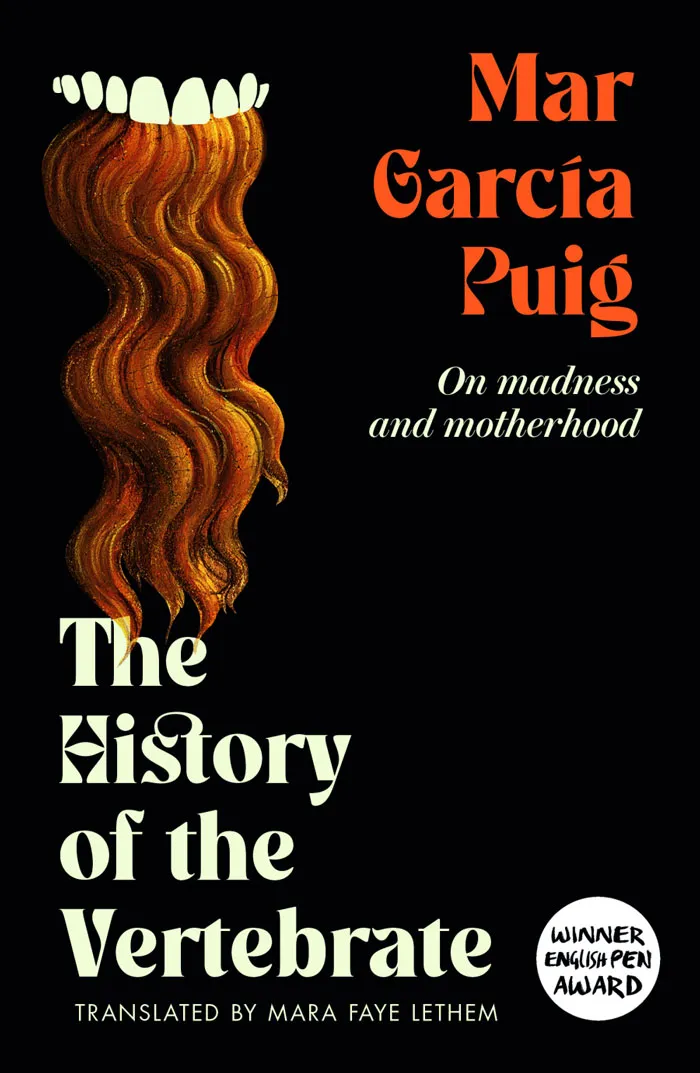
Cover of The History of the Vertebrate

Peninsula Press

The History of the Vertebrate

Mar García Puig, Mara Faye Lethem

Memoir €19.00

‘On 20 December 2015 I became a mother and I went mad.’ 

On a single day, Mar García Puig gives birth to twins and becomes elected to the Spanish Parliament as a member of the insurgent left-wing party Podemos. What might have been the best day of her life becomes the start of a terrifying ordeal; García Puig’s grip on reality begins to slip as she grapples with uncertainty, the weight of expectation, and misogyny in both of her new roles. 

In defiance of a culture that tells her the problem lies within, García Puig chooses to look outwards, examining the imbrication of madness and motherhood across centuries of science, myth, and politics while dissecting the ways in which women have been pathologized and banished from public life. 

At once intimate and epic, The History of the Vertebrate is a searing account of postpartum madness. Moving between memory, culture, and the history of medicine, García Puig transforms her experience into a story about the countless women who have felt that sanity was leaving them, and about the patriarchal forces that have silenced them. 

MAR GARCÍA PUIG is an editor and author. From 2015 to 2023 she was a member of the Spanish Congress of Deputies for Podemos, where she served on the Culture Committee and the Equality Committee. Her books include The History of the Vertebrate and This Thing of Darkness.

Cover of Theory, A Sunday

Belladonna* Collaborative

Theory, A Sunday

Louky Bersianik, Nicole Brossard and 8 more

Collectively authored by Louky Bersianik, Nicole Brossard, France Théoret, Gail Scott, Louise Cotnoir, Louise Dupré, Lisa Robertson, and Rachel Levitsky. Twenty-five years after its first French language publication, Theory, A Sunday (2013), a collaborative feminist poetics text, marks the first in Belladonna’s new Germinal Texts series. Written through Sunday meetings in Montreal, this volume gathers six women’s theoretical feminist texts, with a new introduction by Lisa Robertson and afterword by Gail Scott and Rachel Levitsky. Translators of this text include Erica Weitzman, Luise von Flotow, Popahna Brandes, and Nicole Peyrafitte.

Germinal Texts trace feminist avant-garde histories and the poetic lineages they produce. Focused on authors and texts that provide generative grounds for other writers and their work, Germinal Texts gesture to networks of affiliation, whether explicit or subterranean; to kinships and inheritances; to the unfolding of a text through its readership; and to always provisional origins without endings. Germinal Texts are works that gather dense histories and, for this reason, the series is designed to hold a space for critical discussion, with contextualizing front and back matter that launches new conversations.

Louky Bersianik (1930-2011) is the author of twelve books of poetry and prose. Essayist, novelist and poet, her much admired novel L’Eugélionne is considered Québec’s first feminist novel (translated by Howard Scott as The Eugélionne (1996). Her novel Permafrost, 1937-38, won the Governor General’s award in 1997. Louky was born in Montréal and studied at Université de Montréal, the Sorbonne, and Centre d’études de radio et de television.

Nicole Brossard was born in Montréal. Poet, novelist and essayist, she has published more than forty books. Her work has been influential on a generation of poets and feminists. Her work has been widely acknowledged and translated in many languages. Her most recent book, translated into English by Erin Mouré and Robert Majzels, is WHITE PIANO (Coach House Books, 2013). Nicole Brossard lives in Montréal.

Louise Cotnoir has published seventeen books of poetry, fiction and drama. She was twice nominated for the Governor General’s Award for Poetry, most recently for Les îles (2005). Dis-moi que j’imagine was a finalist for the prestigious Académie des lettres du Québec poetry prize (1996). She has participated in numerous conferences on women and writing, notably “Women and Words” (Vancouver, 1983), “L’écriture des femmes au Québec” (Sweden, 1992), “L’originalité de l’écriture au féminin au Québec” (New Jersey, 1995). She has contributed to or served on the editorial boards of Sorcières (Paris), Estuaire, Arcade, Tessera, Matrix, Moebius, Room of One’s Own, Ellipse, Trivia (USA), Silencíada Festada Palabra (Barcelona), El Ciervo (Barcelona) and Cahiers internationaux du symbolisme (Brussels). Her work has been translated into English, Spanish, Catalan, Finnish and Chinese. Her last collection of poetry, Les soeurs de, appeared with Éditions du Noroît (2011), with a stage adaptation in Ottawa (2012) and Montréal (2013). Les îles, translated by Oana Avasilichioaei, appeared as The Islands in 2011. She lives in Montréal.

Poet, novelist and essayist, Louise Dupré has published twenty books. Her work has received numerous awards and has been translated in various languages. She has collaborated with artists of visual arts, cinema, video and dance. Her play Tout comme elle was produced on stage and directed by Brigitte Haentjens in Montréal in 2006 and in Toronto in 2011, during the Luminato Festival. Plus haut que les flammes won the Governor General’s Award for poetry as well as the Grand Prix du Festival international de la poésie de Trois- Rivières in 2011. She is a member of the Académie des lettres du Québec and the Royal Society of Canada. She was professor of creative writing and women’s writing in Université du Québec à Montréal for twenty years.

Gail Scott’s fourth novel, THE OBITUARY (Nightboat Books, 2012), was a finalist for the 2011 Montréal Book of the Year (Grand prix du livre de Montréal). Scott’s other experimental novels include My Paris (Dalkey Archive), HEROINE (Talonbooks, 1999), and Main Brides. She has published collections of essays, stories, manifestos, and collaborations with Robert Glück et al BITING THE ERROR (Coach House Books, 2004), shortlisted for a Lambda award (2005). Scott’s translation of Michael Delisle’s Le Déasarroi du matelot was a finalist for the Canadian Governor General’s award in translation. The Canadian journal Open Letter devoted its autumn 2012 edition to Scott’s work. She lives, mostly, in Montréal and teaches Creative Writing at Université de Montréal.

France Théoret is a Montreal poet, novelist and essayist. She holds a doctorate in French studies from the University of Sherbrooke, and taught literary studies from 1968 to 1987. She was a member of the editorial board of the journal La Barre du jour from 1967 to 1969, and is the author of one of the monologues in the 1976 theatre piece La Nef des sorcières. In that same year she co-founded the feminist journal Les Têtes de pioche and in 1979, the cultural magazine Spirale, which she directed from 1981 to 1984. She has published over twenty books and been nominated for many prizes. Most of her work has been translated into English. Her poetry is available in Italian, Spanish, and Portuguese and has appeared in anthologies in Quebec and abroad. In 2012, she was awarded the Athanase-David Prix du Québec for her entire oeuvre. She lives in Montreal.
Cover of Something Medieval

Lingua Press

Something Medieval

J.K. Randall

James Kirtland Randall (1929 - ) was born in Cleveland, Ohio. He studied at the Cleveland Institute of Music from 1934 to 1947, and subsequently attended Columbia University (B.A., 1955), Harvard (M.A., 1956) and Princeton (M.F.A., 1958). He studied piano with Leonard Shure and composition with Herbert Elwell, Thad Jones, Roger Sessions and Milton Babbitt. From 1958 to 1991 he taught at Princeton, where he was professor of music. He was a founding member of the American Society of University Composers and has written articles on composing and music theory for several journals, notably Perspectives of New Music (some of these were collected in the monograph Compose Yourself: A Manual for the Young (Open Space, 1995)). He also collaborated with Benjamin Boretz on the book Being About Music: Textworks 1960-2003 (Open Space, 2003).

From the early 1960s into the 1970s, Randall engaged principally in computer synthesis of sound and, with Godfrey Winham, developed facilities for this at Princeton University. His tape compositions were generated by the MUSIC IV B program, a version of MUSIC IV introduced at Princeton. He designed his own software "instruments," which enabled him to specify every aspect of every sound and structure developments within single notes in ways that reflect principles of development used in whole compositions as, for example in Lyric Variations for Violin and Computer (1966-1968).

In 1980 he turned his attention to improvised musical performance and began a series of explorations of spontaneous group performance, or "real-time co-creation," involving many kinds of musicians and other artists (painters, dancers) as well. The ongoing efforts, preserved on hundreds of sound recordings and videotapes (under the project name Inter/Play), document the emergence of idiosyncratic group styles and performing conventions. Randall is himself a regular participant in these performances. In 1990, Randall, along with Elaine Barkin and Benjamin Boretz, started the publications series Open Space.