Books
Books
in random order

New Forms of Art and Contagious Mental Illness
Over the years 1919–20, the celebrated medical scientist and doctor Carl Julius Salomonsen began giving public lectures and publishing pamphlets regarding a new “epidemic” that had begun to affect the European populace: the increasing ubiquity of modernist art.
In a 1919 pamphlet titled New Forms of Art and Contagious Mental Illness, he wrote: “We stand, at this moment, before a movement in art which is psychopathic in character, and whose victorious journey through all countries is probably caused by the same spiritual disease that gave the older, religious spiritual epidemic such a powerful spread.” This pamphlet and the accompanying talks were countered by a retaliatory pamphlet published by members of Grønningen, a Copenhagen modernist painters group, to which Salomonsen responded with a further pamphlet.
Translated into English for the first time by literary theorist Andrew Hodgson, the entire altercation is gathered in this book, documenting one of the earliest rejections of modernist art.
Edited & Translated by Andrew Hodgson.

The Carrier Bag Theory of Fiction
In The Carrier Bag Theory of Fiction, visionary author Ursula K. Le Guin tells the story of human origin by redefining technology as a cultural carrier bag rather than a weapon of domination.
Hacking the linear, progressive mode of the Techno-Heroic, the Carrier Bag Theory of human evolution proposes: ‘before the tool that forces energy outward, we made the tool that brings energy home.’ Prior to the preeminence of sticks, swords and the Hero’s killing tools, our ancestors’ greatest invention was the container: the basket of wild oats, the medicine bundle, the net made of your own hair, the home, the shrine, the place that contains whatever is sacred. The recipient, the holder, the story. The bag of stars.
This influential essay opens a portal to terra ignota, where the possibilities of human experience and knowledge can be discovered anew.

Hemisferio Cuir: an anthology of young Queer Latin American Poetry.
Edited and selected by the brilliant Leo Boix and with poems in Spanish and English from across Latin America. There’s more than 30 poets featured, covering poems about what it is to be queer in contemporary Latin America. These poems cover gender, sexuality, politics, nature, and everything in between.

Vesicapiscis
Vesicapiscis details a poetics of self-reflection / self-projection. What cannot be defined is pulled into the body, examined, dissected, regurgitated. Its form is prodded and rearranged. Every word / phrase / sentence is suseptible to mutation. And these mutations inevtiably proliferate onto the speaker's tongues, their throat, deep into their nervous system. Language is a virus, and as such, it must be studied.
Here we are, at the abyss.

Not a Force of Nature
If capital makes life a seething, complex nightmare for most people on the planet's surface, if "words do cleave the producer from the land," then what does all this dispossession feel like? Amy De'Ath turns poetry into a hot, potent, and highly funny form of criticism, in which social force is felt intimately, and voiced in the acid niceness of a work email. Amy's poems move like pieces of machinery in a cognitive amusement park, which spit you a thousand feet into the air but keep your viewpoint fixed on the same spot as before—what's different? "Land in Saskatchewan, land in Delhi," or "everything…that you want from women and gays." Not a Force of Nature makes me want to change everything. "Behold me I'm you now," Amy writes—we should be so lucky, to be thus transformed. — Kay Gabriel
Not a Force of Nature's expertly crafted poems explore the catastrophe we live among and speak through. They form a sort of feminist manifesto addressed to all forms of resistance. But also: here are love sonnets! This book is angrily precise and always a lot of fun. "No, you're a Canadianist!" — Kevin Davies
Not a Force of Nature is the kind of book that becomes possible only after rejecting the "we" evoked so often in contemporary literary culture—sometimes said to need poetry now more than ever, sometimes called community. Amy De'Ath's motley vision of solidarity, of "actual emboldened people," is way weirder, more lively, and possible. Nor do these poems content themselves, like the ghost of Marxist theory past, with pointing towards the contradictions that surround them. Do you remember email? Sonnets? Not a Force of Nature is like that, thrashing inside generic forms and always coming next: after the tendency of the rate of profit to fall, after Jane's abortion service, after the 1970s, 80s, and 90s, after Creeley, after Raworth, after Mayer, after the Xenofeminist Manifesto, after Pluto enters Aquarius. "There are still tactics like this roaming free," De'Ath writes. There are still these fervent lyric parries. Be with Not a Force of Nature now. — Stephanie Young
Through slips of verbal acuity, Amy De'Ath scrapes her way out of determinism to a world "made by hands," where our material relations are ours to make and break. History is long and history is short. History is translucent. De'Ath presents the Ferris wheel of capitalist production, where the subject lives once as worker, twice as commodity. Here, in these "concrete trousers," is a "totally liberated" working class poem turning everything into nothing as praxis. — Anahita Jamali Rad

Suckcess Magazine 1 — Winter 2021-22
Drama, careers, sabotage, compromises... The first issue of Suckcess Magazine begins with a selection of poems by the flamboyant Rene Ricard, edited with the help of Editions Lutanie, and continues with contributions from Miriam Laura Leonardi, Fabienne Audéoud, Camille Aleña, Gabi Losoncy, David Lieske, Sylvie Fanchon, Won Jin Choi, Estelle Hoy, and Bunny Rogers. Cartoons and tennis players are also on the program.

Traces of Enayat
Cairo, 1963: Enayat al-Zayyat’s suicide becomes a byword for talent tragically cut down, even as Love and Silence, her only novel, languishes unpublished. Four years after al-Zayyat’s death, the novel will be brought out, adapted for film and radio, praised, and then, cursorily, forgotten. For the next three decades it’s as if al-Zayyat never existed.
Yet when poet Iman Mersal stumbles across Love and Silence in the nineties, she is immediately hooked. Who was Enayat? Did the thought of her novel’s rejection really lead to her suicide? Where did this startling voice come from? And why did Love and Silence disappear from literary history? To answer these questions, Mersal traces Enayat’s life, interviews family members and friends, reconstructs the afterlife of Enayat in the media, and tracks down the flats, schools, archaeological institutes, and sanatoriums among which Enayat divided her days. Touching on everything from dubious antidepressants to domestic abuse and divorce law, from rubbish-strewn squats in the City of the Dead to the glamour of golden-age Egyptian cinema, this wide-ranging, unclassifiable masterpiece gives us a remarkable portrait of a woman artist striving to live on her own terms.
Winner of the 2024 James Tait Black Prize – Biography
Longlisted for the 2024 Jan Michalski Prize

This is NOT what i want to tell you
In This is NOT what I want to tell you: she looks at the many attacks carried out by teenagers in Palestine in 2015 and 2016. The teens, all children aged between 10 and 15, were shot dead or sentenced to years in prison. The series of almost daily knife attacks by these lone wolves reflected the hopelessness and despair among the young people of Palestine. They wanted to send a message to the world, but were unable to convey this in ordinary language.
In Two Ladybugs the fates of three characters, a Belgian woman, a Palestinian girl and an Israeli soldier, are closely intertwined. The players don't feel comfortable in this new, strange world and they don't hide that from the public.
Broken Shapes: A young woman in a city that has been occupied for decades, on the day of her father’s funeral, discovers his architectural drawings. Overcome with grief, she slips into the dream worlds and imagined places that he created.
Rimah Jabr Rimah Jabr (Nablus, Palestine, 1980) is a theatre director, playwright, screenwriter and Ph.D. candidate in Theatre and Performance Studies at York University. She completed a master’s degree in theatre-making from the RITCS in Brussels. She wrote and directed several plays produced in Belgium, Canada, and Palestine. She actively collaborates with visual artists to craft unique performances. Her doctoral research is a performance ethnography research-creation with Palestinian Designers from Hebron, examining the impact of confinement on the creative process involved in set design. Broken Shapes is a collaborative project co-created by Toronto-based theatremaker Rimah Jabr and Brussels-based visual artist Dareen Abbas.

The Interpreter Dis/Appears
Virginie Bobin, Achim Lengerer
An artistic exploration of the political and emotional stakes of translation in the context of asylum law, through the lens of rarely heard testimonies: those of interpreters.
The Interpreter Dis/appears stems from an investigation conducted between 2019 and 2023 by curator, editor, and translator Virginie Bobin, focusing on both professional and volunteer interpreters and translators, as well as representatives from the state and organizations working with exiled individuals navigating asylum application procedures in France. By redirecting attention to the voices of interpreters—rarely visible figures in this ecosystem—the project delves into the ambiguous role of translation at the intersection of those who govern and those governed by asylum law. Within such a controlled environment, can the act of translation, with all its complexities, still express fleeting gestures of solidarity or even resistance? Through the exchanges prompted by these questions, the book seeks to reframe the prevailing public and political discourse on asylum, harnessing the embodied experiences of a small group of interpreters as an alternative lens to reveal the underlying power dynamics at play. It also probes the ethical and political potential of translation. The Interpreter Dis/appears unfolds across a variety of theatrical, artistic, and theoretical writing, alongside insightful contributions from artists and researchers who open up different perspectives for understanding and activating these issues.
The reader series Scriptings: Political Scenarios, edited by Achim Lengerer, publishes carefully selected scripts and texts by artists that refer neither to academic forms nor to purely literary forms of writing, but rather embed "text" as a fully integral part of contemporary political and visual art practice.
Contributions by Alix Eynaudi, Vir Andres Hera, Mihret Kebede, Franck Leibovici, Serena Lee, Marianne Mispelaëre, Eliana Otta, Rester. Étranger, Olia Sosnovskaya, Myriam Suchet, TOGETHER UNTIL _ __ (what)* ?
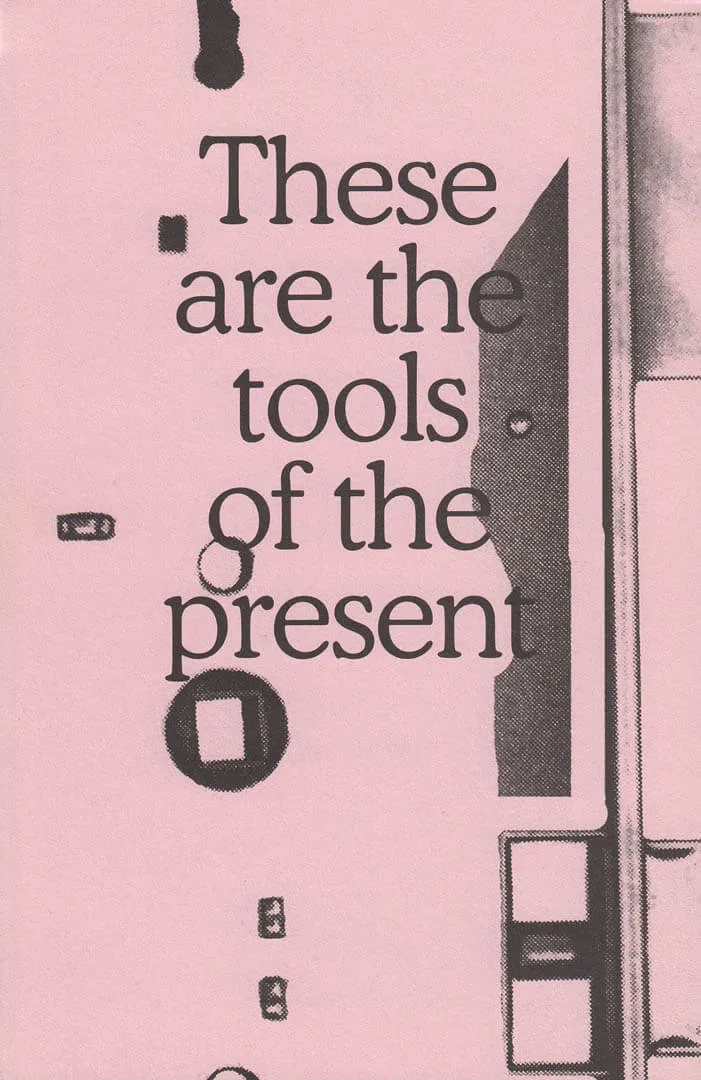
These are the tools of the present
Mai Abu ElDahab, November Paynter and 1 more
This publication comprises a series of interviews with contemporary artists, musicians, and writers who are in dialogue with Beirut and Cairo. While not purporting to be an overview of the art scenes in these cities, this book begins to draw a picture of how artists think about what it means to be active in the contexts of these cities. It offers insight into the circumstances that structured these artists’ stories, and the often accidental influences that have shaped how their practices have developed.

University of California Press
The Wedding Dress
In times of great uncertainty, the urgency of the artist's task is only surpassed by its difficulty. Ours is such a time, and rising to the challenge, novelist and poet Fanny Howe suggests new and fruitful ways of thinking about both the artist's role and the condition of doubt. In these original meditations on bewilderment, motherhood, imagination, and art-making, Howe takes on conventional systems of belief and argues for another, brave way of proceeding. In the essays "Immanence" and "Work and Love" and those on writers such as Carmelite nun Edith Stein, French mystic Simone Weil, Thomas Hardy, and Ilona Karmel—who were particularly affected by political, philosophical, and existential events in the twentieth century—she directly engages questions of race, gender, religion, faith, language, and political thought and, in doing so, expands the field of the literary essay. A richly evocative memoir, "Seeing Is Believing," situates Howe's own domestic and political life in Boston in the late '60s and early '70s within the broader movement for survival and social justice in the face of that city's racism.
Whether discussing Simone Weil, Gertrude Stein, Meister Eckhart, Saint Teresa, Samuel Beckett, or Lady Wilde, Howe writes with consummate authority and grace, turning bewilderment into a lens and a light for finding our way.

Howdunnit 2 - Panorama
Navina Sundaram is sitting in the editing room in Hamburg. She has managed to reduce the complexity of the Kemal Altun case to the required 2 minutes and 40 seconds for the political magazine; a journalistic feat considering the legal terminology and the international political situation, which must be presented in simple terms. She places her interview with the judge at the back. The audience therefore first gets an impression of perhaps the best-known deportation prisoner of the republic on trial here. The phone rings. I imagine she is displeased about the disturbance. It’s the day of the broadcast; the report still needs to be approved. It rings again. She answers. Peter Boultwood is on the phone and says, “Did you hear? Kemal jumped out of the window in the courtroom. He’s dead.”
Merle Kröger lives in Berlin where she works as a novelist, screenwriter and dramaturg. She was a member of the Berlin film collective dog film (1992–1999) and founded pong lm in 2001. Kröger is the co-author of Philip Scheffner’s internationally awarded films Revision (2012), Havarie (2016) and Europe (2022). Kröger has published five novels to date, including Grenzfall (2012), Havarie/ Collision (2015) and Die Experten/ The Experts (2021). Her novels have received numerous awards, including Best Crime Novel of the Year, the Radio Bremen Prize for Crime Fiction and the German Crime Fiction Prize.
Translated by Rubaica Jaliwala

Wind & De wilgen - Wind & The Willows
Wind & De Wilgen (English/Dutch) was designed by Lawrence Weiner and published on the occasion of the execution of his work Wind & The Willows in the Openluchtmuseum voor beeldhouwkunst Middelheim, Antwerp.
Lawrence Weiner was an American artist and one of the central figures in the formation of conceptual art in de 60s. His work was strongly language-based and often took form in typographic texts, also visible in this artist book.
Edition of 1000 copies

My Life and My Life in the Nineties
New edition of one of the founding works of Language writing.
Lyn Hejinian is among the most prominent of contemporary American poets. Her poem My Life has garnered accolades and fans inside and outside academia. First published in 1980, and revised in 1987 and 2002, My Life is now firmly established in the postmodern canon. This Wesleyan edition includes the 45-part prose poem sequence along with a closely related ten-part work titled My Life in the Nineties. An experimental intervention into the autobiographical genre, My Life explores the many ways in which language — — the things people say and the ways they say them — shapes not only their identity, but also the very world around them.

Borderlands / La Frontera: The New Mestiza 5th Edition
A new edition of Anzaldúa's classic text.
Borderlands/La Frontera: The New Mestiza is a 1987 semi-autobiographical work by Gloria E. Anzaldúa that examines the Chicano and Latino experience through the lens of issues such as gender, identity, race, and colonialism. Borderlands is considered to be Anzaldúa’s most well-known work and a pioneering piece of Chicana literature.
Rooted in Gloria Anzaldúa's experience as a Chicana, a lesbian, an activist, and a writer, the essays and poems in Borderlands/La Frontera: The New Mestiza profoundly challenged, and continue to challenge, how we think about identity. Borderlands/La Frontera remaps our understanding of what a border' is, presenting it not as a simple divide between here and there, us and them, but as a psychic, social, and cultural terrain that we inhabit, and that inhabits all of us.

WatchPeopleDie.TV: Trans Death and Embodiment
In a time of widespread conservatism, watchpeople die.TV: Trans Death and Embodiment is not only unapologetically trans but challenges and transcends transphobic vitriol to create urgent and powerful work.
“This written portion was made from performing an erasure poem on the text of the sourced transphobic comments and then commenting on the erased words. The text is intended as a performance text. What this means is that I think of the text as not just a documentation of a performance but a performance itself.”
watchpeopledie.tv contains writing from watchpeopledie.TV (2025), performed as part of the 2025 VCUarts MFA Thesis exhibition that was on view April 11, 2025, to May 11, 2025, at The Anderson Gallery in Richmond, VA.

The Faggots and Their Friends Between Revolutions
The Faggots and Their Friends Between Revolutions is a beloved queer utopian text written by Larry Mitchell with lush illustrations by Ned Asta, published by Calamus Press in 1977. Part-fable, part-manifesto, the book takes place in Ramrod, an empire in decline, and introduces us to the communities of the faggots, the women, the queens, the queer men, and the women who love women who are surviving the ways and world of men.
This new edition will feature essays from performance artist Morgan Bassichis, who adapted the book to music with TM Davy in 2017 for a performance at the New Museum, and activist filmmaker Tourmaline.

Responses to Untitled (eye with comet) By Paul Thek
Responses to Untitled (eye with comet) (c.1985) by Paul Thek is the sixth and final anthology in a series that gathered responses to works of art made during a period of the ongoing AIDS Crisis, from the identification of the virus in 1981 to the introduction of life-saving drugs in 1996.
In this sixth iteration, responses were sought to the painting Untitled (eye with comet) by Paul Thek. The work was found in his storage after his death from AIDS in 1988.
List of contributors in order of appearance:
E.R. De Siqueira
Ben Estes
João Motta Guedes
Lucy Swan
Jon Rainford
Louis Shankar
Amy Evans Bauer
Hattie Morrison
Sammy Paloma
AN Grace
James Horton
Nick Wood
Sophie Paul
Jae Vail
Elizabeth Zvonar
Lars Meijer
Clay AD
Michel Kessler
Pablo Miguel Martínez
Emma Harris
Dylan McNulty-Holmes
Kitya Mark
Katherine Franco
Ainslie Templeton
Alistair McCartney
John Brooks
Jesse Howarth
jimmy cooper
Felix Pilgrim
Nicholas Chittenden Morgan
Murphy O’Neir
Rachel Cattle
Isabel Nolan
Susan Finlay
Ted Simonds
Brooke Palmieri
Kate Morgan
Ashleigh A. Allen
Diogo Gama
JP Seabright
Hugo Hagger
Amanda Kraley
Brendan Cook
Matt Bailey
Charlotte Flint
Rodney Schreiner
Lucy Price
Morgan Melhuish
Jordan Weitzman
Jaakko Pallasvuo
Alex Fiorentino
Harald Smart
Marguerite Carson
loll jung
Richard Porter
Nicholas Kalinoski
Hedi El Kholti
Edmund Francis English
Ted Bonin

PARANOID CITI
"Desperate and playful. This iterative poetic series cries through the panic of now to bestill an ecstatic people. Paranoid Citi finds no doubt that if understanding is a matter of form, survival necessitates transformation." - Crystal Odelle, author of Trans Studies
"Who doesn't like to post ethereal lightly? Who isn't a citizenry draped in lilac ethics? Are you a froth? In Shannon Hearn's PARANOID CITI, an interrogative story is shaping up. She's uploading music for grace in crisis. She's writing poems for you, citizen, and kindly so." - Nick Sturm
Includes a bag tag and drawing by Elise Houcek.
Published as part of Paraphernalia and Addenda 2.2 of Tabloid Publications.

Decolonizing Art Book Fairs – Pratiques de l'édition indépendante dans les Sud(s)
Parfait Tabapsi, Michalis Pichler and 3 more
A manifesto for the decolonization of art book fairs and publishing.
Can we decolonize art book fairs? Can we decentralize knowledge and deconstruct privilege in our contexts? Decolonizing Art Book Fairs aims to rethink through the existing and speculative frameworks of organizational practice in the art book fairs. This workbook attempts to introduce new narratives and help deconstruct the frontiers between north(s) and south(s), putting an emphasis on practitioners and initiatives from the African continent and diaspora. A workbook with (primarily newly commissioned) texts and interviews.
Contributions by Jean-Claude Awono, Yaiza Camps, Chayet Chiénin, Chimurenga, Renata Felinto, Wanjeri Gakuru, Moritz Grünke, Aryan Kaganof, Sharlene Khan, Grada Kilomba, Carla Lever, Fouad Asfour, Dzekashu MacViban, Gladys Mendía, James Murua, Tinashe Mushakavanhu, Simon Njami, Bonaventure Soh Bejeng Ndikung, Monica Nkodo, O Menelick 2Ato, Pascale Obolo, Michalis Pichler, Mario Pissarra, Sergio Raimundo, Djimeli Raoul, Flurina Rothenberger, Bienvenu Sene, Bisi Silva, Kwanele Sosibo, Parfait Tabapsi, Louise Umutoni, Zamân Books & Curating.

Female Masculinity
In this quintessential work of queer theory, Jack Halberstam takes aim at the protected status of male masculinity and shows that female masculinity has offered a distinct alternative to it for well over two centuries. Demonstrating how female masculinity is not some bad imitation of virility, but a lively and dramatic staging of hybrid and minority genders, Halberstam catalogs the diversity of gender expressions among masculine women from nineteenth-century pre-lesbian practices to contemporary drag king performances.
Through detailed textual readings as well as empirical research, Halberstam uncovers a hidden history of female masculinities while arguing for a more nuanced understanding of gender categories that would incorporate rather than pathologize them. He rereads Anne Lister's diaries and Radclyffe Hall's The Well of Loneliness as foundational assertions of female masculine identity; considers the enigma of the stone butch and the politics surrounding butch/femme roles within lesbian communities; and explores issues of transsexuality among “transgender dykes”—lesbians who pass as men—and female-to-male transsexuals who may find the label of “lesbian” a temporary refuge. Halberstam also tackles such topics as women and boxing, butches in Hollywood and independent cinema, and the phenomenon of male impersonators.
Featuring a new preface by the author, this twentieth anniversary edition of Female Masculinity remains as insightful, timely, and necessary as ever.

Telling is Listening: Selected Essays 1973-2014
Ursula K. Le Guin, Conner Bouchard-Roberts
An essential collection of essays on language, the imagination, and the art of words by one of the great literary masters of the last century.
This book traces a long sweep (1973-2014) through Ursula K. Le Guin's career; offering both a portrait of the author as a philosopher and a reference text for new generations of wordworkers and bookmakers.

Forgetful Secretary
After diagnosis, the fact was that Austin Gross lived in his home country. He sat on the porch squinting like a potato and it was a comforting thing to imagine: rock-climbing with a blindfold. ‘Can swim, eyes open,’ he jotted and covered his eyes again. Sun, centrifuge, prognosis, bird-listening. The collision shaped genres like tectonic ripples. Windows open, a story while forgetting. ‘I am a memory eater.’
Aras was furloughed from prison that summer. Five years before, she’d missed their movie plan, and the fact was that since then, she lived in her home country. Furlough, Aras wrote, was ‘no-time.’ They investigated the situation together.
Austin Gross is an essayist and collaborator in elliptical orbit. His home discipline is philosophy and language English, on one condition: having left home. Trans-disciplinarity gives us a chance to be hosts and guests.

Murder
Murder is Danielle Collobert’s first novel. Originally published in 1964 by Éditions Gallimard while Collobert was living as a political exile in Italy, this prose work was written against the backdrop of the Algerian War. Uncompromising in its exposure of the calculated cruelty of the quotidian, Murder’s accusations have photographic precision, inculpating instants of habitual violence.
Born in Rostrenen in 1940, Danielle Collobert left Bretagne for Paris at the age of eighteen where she worked in an art gallery and self-published her first poems in a book entitled Chants des guerres (1961). Both of Collobert’s parents, and her aunt, who survived deportation to Ravensbrück, were members of the Résistance during World War II. Herself a supporter of Algerian independence, Collobert joined the FLN (the Algerian National Liberation Front), precipitating her exile in Italy, during which time she completed work on Meurtre, first published in 1964 by Éditions Gallimard with the unwavering support of Raymond Queneau. She worked for Révolution africaine, a short-lived journal created at the end of the Algerian war. Collobert’s extensive travels, to Czechoslovakia, Indonesia, Bolivia, Ecuador, Venezuela, Mexico, Spain, Greece, Egypt, etc., did not prevent her from becoming a member of the group formed around Jean-Pierre Faye and the journal, Change. Her other works include Dire I et II (1972), a radio play the following year, Polyphonie, aired by France Culture, Il donc (1976) and Survie (1978). Upon her return from a trip to New York, Danielle Collobert took her own life in a hotel in Paris on her thirty-eighth birthday. Her complete works, in two volumes, edited by Françoise Morvan, augmented by several unpublished texts, were published by P.O.L. in 2005. Collobert’s works available in English include In the Environs of a Film (Litmus Press, 2019), Notebooks, 1956-1978 (Litmus Press, 2003) and It Then (O Books, 1989).