Books
Books
in random order

Els Dietvorst E.D. (2010–2014)
This publication presents a survey of the work of Els Dietvorst from 2010 to 2014. This is also the period in which she left Brussels to live in a village on the south-east coast of Ireland, where she focused on projects such as The Black Lamb. The audio piece One was killed for beauty, another one was shot, the two others died naturally is included on an audio CD.
Els Dietvorst E.D. (2010–2014), Rolf Quaghebeur, Eva Wittocx, Katleen Weyts, Els Dietvorst, Brussels, 2014.

Theory of the Voice and Dream
Liliana Ponce , Michael Martin Shea
Obsessing on the relationship between creation and absence, Argentine poet Liliana Ponce presents an unsettling meditation on body, language, and self. For the first time in English, this edition brings together Ponce’s serial poems from the closing years of the twentieth century, the widely anthologized Theory of the Voice and Dream and Fudekara, a shorter sequence written in response to a Japanese calligraphy course. In these major works, Ponce questions the nature of writing itself, of how to write when to write today is an emptiness, or when mouth and voice cannot find each other. Breaking with Argentine poetic conventions, Ponce charts a new model for poesis—oneiric, embodied, and urgent. As she says, I write so I don’t have to speak, so I don’t have to watch.

The Essential Jill Johnston Reader
Jill Johnston began the 1960s as an influential dance columnist for the Village Voice and by the start of the next decade she was known as a keen observer of postmodern art and lesbian feminist life who challenged how dance, art, and women can and should be seen. The Essential Jill Johnston Reader collects dozens of pieces of her writing from across her career. These writings—many of which appeared in the Village Voice and the New York Times—survey the breadth of her work, braiding together her thinking, writing, and activism.
From personal essays, travel writing, and artist profiles to dance and visual art reviews as well as her infamous series of columns for the Voice in which she came out as a lesbian, these pieces demonstrate the evolution of her philosophies and writing style. Illustrating how Johnston drew on lessons from dance to reconsider what it means to be a woman, this collection brings a fascinating and brilliant voice of American arts criticism, radical feminism, and gay liberation back to contemporary audiences.

Mount Horeb Palestine
In 1962 at the age of 71, Joseph Elmer Yoakum (circa 1891–1972) reported having a dream that inspired him to draw. Thereafter the retired veteran began a daily practice and over the next 10 years produced some 2,000 works.
Yoakum was born into poverty, had very little schooling, and at an early age left home to join a circus. He wound up working with several circuses, traveling across the United States as well as abroad and becoming intimately familiar with the world's various landscapes. These experiences would provide the foundational memories that fueled his deeply spiritual vision decades later.
When he began to put that vision to paper in his apartment on Chicago's South Side in the early 1960s, Yoakum quickly developed a unique visual language, independent and distinct from other artists in the city, such as those involved in the flourishing Black Arts Movement or the up-and-coming Chicago Imagist group. His drawings—predominantly landscapes in ballpoint pen, colored pencil, pastel, and watercolor and inscribed with locations from all seven continents—reflect the scope of his national and international travels as well as his idiosyncratic and poetic vision of the natural world.

Nilling
NILLING: PROSE is a sequence of five loosely linked prose essays about noise, pornography, the codex, melancholy, Lucretius, folds, cities and related aporias: in short, these are essays on reading.
"I have tried to make a sketch or a model in several dimensions of the potency of Arendt's idea of invisibility, the necessary inconspicuousness of thinking and reading, and the ambivalently joyous and knotted agency to be found there. Just beneath the surface of the phonemes, a gendered name rhythmically explodes into a founding variousness. And then the strictures of the text assert again themselves. I want to claim for this inconspicuousness a transformational agency that runs counter to the teleology of readerly intention. Syllables might call to gods who do and don't exist. That is, they appear in the text's absences and densities as a motile graphic and phonemic force that abnegates its own necessity. Overwhelmingly in my submission to reading's supple snare, I feel love."

Ruins and Resilience: The Longevity of Experimental Film
Experimental film practice from an international and transdisciplinary perspective.
Karel Doing is an experimental filmmaker and researcher who has worked across the globe with fellow artists and filmmakers, creating a body of work that is difficult to pinpoint with a simple catchphrase. In Ruins and Resilience he weaves autobiographical elements and critical reviews together with his wide ranging interdisciplinary approach, reflecting on his own practice by positioning key works within the context of a vibrant experimental film scene in Europe, North and South America, and Asia. Doing demonstrates how experimental filmmakers have continued to renew their practice despite the almost total demise of analog motion picture film and the constant neglect of this art form by institutions and critics. Written in a fluent and accessible style, the book looks into the connections between the work of groundbreaking artists within the field and subjects such as transgression, improvisation, collectivity, materiality, phenomenology, and perception. Specifically, intersections with music and sound are investigated, appealing to the idea of the cross-modal brain, the ability to perceive sounds and images in an integrated way. Instead of looking again at the "golden era" of experimental film, the book starts in the 1980s, showing how this art form has never ceased to surprise and inspire. The author's hands-on engagement with the medium is formational for his more theoretical approach and writing, making the book a highly original contribution in the field that is informative and inspiring for academic and practitioners alike.

Klosterruinenzines
Anna M. Szaflarski, Christopher Weickenmeier
Four zines, documenting and continuing a series of four exhibitions that took place last summer, also known as the summer of 2021 at Klosterruine Berlin. Digging up what’s always already left behind, this series reframes the exhibition as an excavation site and engages archeology as a speculative and aesthetic procedure. A map, a notebook, a calendar and a dream diary, these four zines allow you to become your own archeologist.
Texts: Simone Fattal, Bassem Saad, Anna M. Szaflarski, Christopher Weickenmeier
Designer: Studio Manuel Raeder

KAMERA CAHIER N° 10
A special edition issue curated, designed and published by AVARIE, Paris and Labor Neunzehn, Berlin. It accompanies KAMERA SERIES, while it is an independent and valuable object to collect. The central idea that informs and directs the booklets’ montage is the interplay between the concepts of addition and subtraction. This is achieved by unveiling a missing image in the screening or an unreleased second from an artist's film, expanded to 24 pages. Additionally, each booklet contains a piece directly removed from the show.
The editing establishes a dialogue between film frames and performed writings derived from texts, scripts, storyboards, and notes. The KAMERA exhibition is consequently extended into a physical space—the book—allowing for its widespread dissemination, complementing and contrasting with its potential online occurrence.
KAMERA SERIES is a screening program of experimental films, video art works and printed matter taking place in a former GDR building in Berlin. Each event showcases a retrospective of selected films by an artist and a small exhibition of his/her publications or works on paper over a span of 4 days.
KAMERA centers on fostering a critical dialogue between different film formats and artists’ books. Through its regular occurrence, it aspires to create a space for community exchanges about contemporary image-making. KAMERA is a series conceived and curated by Labor Neunzehn and AVARIE.
Fascinated by the intersection of visual art and cinema, Helga Fanderl’s short poetic films evoke intense and sensitive experiences of the real world. Using a small hand-held super 8 camera, she creates filmic responses to her perceptions, weaving together imagery and emotions in dense, rhythmic patterns solely through in-camera editing. She presents silent films in the form of ‘compositions’, crafting unique programs for site-specific personal projections and transforming spaces into temporary cinemas.

Glove Money
A hymn to perversity, a lyric pledge to desire and risk, Glove Money pages through the canon to “seed its sugar in your dreams.”
In this joyful and irreverent exploration of the role of poet-as lover, Sophia Dahlin plays Sappho, O’Hara, romantics and troubadours, assembling a self seaworthy of romance. With humor and a light touch, Glove Money dismisses bioessentialist gatekeeping and expands the lesbian imaginary.

Archive Dora Diamant #08
A collection of photographs from the archives of the icon of underground and alternative Parisian nights Dora Diamant.
A self-taught photographer, Dora Diamant has left thousands of photos. The Dora Diamant Association, custodian of this archive, and Éditions L'Amazone have joined forces to bring them to life by devoting a series of publications to them. Each volume of the Dora Diamant Archive was created by a different person and is the result of a subjective selection and arrangement specific to its author.
Figurehead of the Parisian underground and queer nights, photographer, DJ, multimedia and polymorphic artist, Dora Diamant was the daughter of Pascal Doury.
Selected by Sivan Medioni.

Amanda
The artist book Amanda is greatly inspired by “Tradeswomen” quarterly magazine for women in blue-collar work, published in the 1980’s and 1990’s in the United States. Amanda is similarly thought as a periodical dealing with the subjects of technology and industry from a feminist (not solely female) angle. The first issue contains fiction stories of an emancipatory character, citing trade associations, oil industry in Iran and ghosts of the printer feeders.
The publication is made in the framework of The Building Institute, an experimental organisation aiming to strengthen the position of femmes builders in the domain of technical construction work. Amanda brings together literary texts by Maria Toumazou, Samantha McCulloch, Sepideh Karami and Madeleine Morley, combining fiction stories with visual artwork.
Olga Micińska is a visual artist currently living in Amsterdam. Graduated from the MA Art Praxis program at the Dutch Art Institute and holds an MFA in Sculpture from the Academy of Fine Arts in Warsaw. Also trained as a woodworker, collaborates with craft studios of various domains. Recently she has initiated The Building Institute.
The Building Institute (TBI) is an experimental platform aiming to emancipate the undermined knowledges dwelling in the craft domains, and to unpack diverse questions related to technology and the means of production. TBI combines art’s speculative competences with the grounded practice of manual labor, manifesting its objectives through educational activities, exhibitions, and publications.

TIME
TIME by Spencer Longo is a collection of printed work depicting government raids, religious visions, environmental catastrophe, and extremist fundamentalism tangled together in a narrative web of salvation, annihilation, and transcendence. Using pen plotter graphics directly on uncollated pages of Time magazine, Longo explores the conspiratorial trope that messages are secretly embedded in mass media, coaxing our millenarian anxieties out through an additive printing process using graphics from survivalist publications, end-times evangelical cartoons, and marginalia from the borders of underground occult material, all sprinkled with ecstatic bursts of star-spangled clipart. A must-have for your fallout shelter's library.

The Tenant
The Tenant is a monographic critical essay by Marie Canet. It is the first text to directly address the connections between McKenzie’s work, pornography, and special effects. The title refers to the way the artist moves through different periods and aesthetic spaces, appropriating their codes in order to construct new visual fictions. The book is infused with post-#MeToo feminist thinking, alternative uses of biography, reflections on the art world, and contemporary debates surrounding appropriation, embodiment, and the status of the artwork.
McKenzie and Canet worked with each other for over eight years, on projects like Atelier E.B: Passer-by catalogue, published on the occasion of the Fondation Galeries Lafayette exhibition, or the book Pervert or Detective, a conversation between Lucy McKenzie and artist Reba Maybury. This collaboration now culminated in an exhibition and a book: Plastic Newspaper (presented at CRAC Sète in March 2026) and Lucy McKenzie, The Tenant.
Texts by Marie Canet and Lucy McKenzie
Translations: Catherine Petit & Paul Buck (Marie Canet), Juliette Desorgues (Lucy McKenzie)
Published in connection with the exhibition Lucy McKenzie, Plastic Newspaper, at Crac Occitanie, Centre régional d‘art contemporain Occitanie/Pyrénées-Méditerranée à Sète, 21.03.-06.09.26
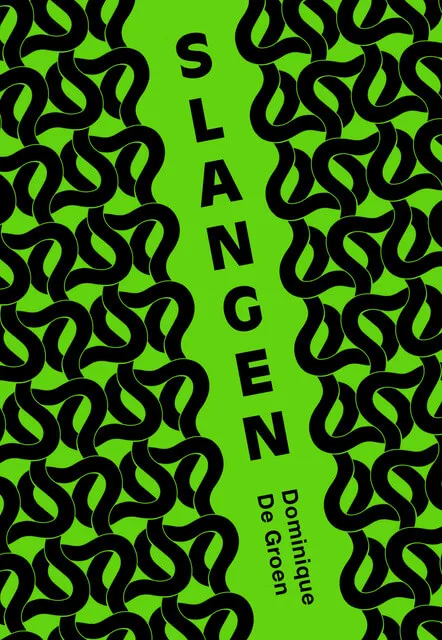
Slangen
Slangen krioelen in de sarcofaag van het heden, in de krochten van de popcultuur, in de mummie van de natuur, in wondes en rot vlees, in artificiële woestijnen en op geoliede dad bods. Ze wentelen zich rond beursgrafieken, raken verstrengeld met wurgende algoritmes, orkestreren een trage ondergrondse revolutie. Een meisje snijdt zich aan een nepdiamanten piramide en werpt haar slangenvel van zich af.
Dominique De Groen is schrijver en beeldend kunstenaar. Ze publiceerde de dichtbundels Shop Girl (2017), Sticky Drama (2019) en offerlam (2020). Ze werd genomineerd voor de Poëziedebuutprijs Aan Zee 2018, de Herman de Coninckprijs 2020 en de Fintroliteratuurprijs 2021 en won de Frans Vogel Poëzieprijs 2019 en de Fintropublieksprijs 2021.

The Trial
The Trial is an extensive publication chronicling the decade-plus-long evolution of one of Rossella Biscotti's seminal works, focusing on the trials of members of the revolutionary left-wing movement Autonomia Operaia in the early 1980s, an emblematic judicial drama of Italy's Years of Lead.
The core of the book is the English transcription of a six-hour audio piece, originally composed from hundreds of hours of the trial's archival recordings broadcast by Radio Radicale. Edited like a theatrical script, The Trial becomes a polyphonic narrative that foregrounds the political voices of defendants in opposition to the structure and language of the legal machine: prosecutors, judges, lawyers. The transcript is accompanied by critical texts by Michael Hardt, Daniel Blanga Gubbay, and Giovanna Zapperi, as well as a conversation between the artist and philosopher Antonio Negri, one of the trial's key defendants. It investigates how political memory is carried, translated, and embodied across time.
Featuring visual documentation and multilingual excerpts from performances staged across various institutions and countries, this publication traces the work's ongoing reactivation through translation, collaboration, and context-specific interventions.

Desire/Love
In this small theoretical novella-cum-dictionary entry, Lauren Berlant engages love and desire in separate entries. In the first entry, Desire mainly describes the feeling one person has for something else: it is organized by psychoanalytic accounts of attachment, and tells briefly the history of their importance in critical theory and practice. The second entry, on Love, begins with an excursion into fantasy, moving away from the parent-child structure so central to psychoanalysis and looking instead at the centrality of context, environment, and history. The entry on Love describes some workings of romance across personal life and commodity culture, the place where subjects start to think about fantasy on behalf of their actual lives.
Whether viewed psychoanalytically, institutionally, or ideologically, love is deemed always an outcome of fantasy. Without fantasy, there would be no love. Desire/Love takes us on a tour of all of the things that sentence might mean.

Lákíríboto
A twisty thriller about the fate of a sprawling family in Lagos, Lakiriboto is a queer, feminist revenge thriller like no other, in which murder, betrayal, and witchcraft collide – with explosive results.
When her grandmother dies in the night, Moremi’s fate falls to her uncle, the grasping family chief who sends her off to work as a housemaid in Lagos. On arriving there, Moremi finds that the big city is not all she thought it would be. But she’s not alone. After another family death, Kudirat, accused of bringing misfortune to her close family, has also been sent to live as a maid in the same house, scrubbing floors and folding laundry for long-suffering Tola, whose abusive doctor husband refuses to treat. Together, with the help of her queer aunt Morieba, the four women must wrestle back control of their lives as the patriarchal traditions that govern the family push back against their freedoms. When Tola’s condition worsens, someone new emerges, someone with revenge and redemption in mind.
Mixing family saga, mobster pulp, and queer coming-of age, Lakiriboto is a staggeringly original and surprising novel about Nigeria’s queer and feminist communities, the struggles they face, and the lengths they will go to to overcome them.

The Undying (paperback)
Blending memoir with critique, an award-winning poet and essayist's devastating exploration of sickness and health, cancer and the cancer industry, in the modern world
A week after her 41st birthday, Anne Boyer was diagnosed with highly aggressive triple-negative breast cancer. For a single mother living payslip to payslip, the condition was both a crisis and an initiation into new ideas about mortality and the gendered politics of illness.
In The Undying - at once her harrowing memoir of survival, and a 21st-century Illness as Metaphor - Boyer draws on sources from ancient Roman dream diarists to cancer vloggers to explore the experience of illness. She investigates the quackeries, casualties and ecological costs of cancer under capitalism, and dives into the long line of women writing about their own illnesses and deaths, among them Audre Lorde, Kathy Acker and Susan Sontag.
Genre-bending, devastating and profoundly humane, The Undying is an unmissably insightful meditation on cancer, the cancer industry and the sicknesses and glories of contemporary life.
Winner of The Pulitzer Prize for Nonfiction 2020; Windham Campbell Prize for Nonfiction 2020

Wages For Wages Against – Volume 1 – We are not where we need to be, but we ain't where we were
Ramaya Tegegne, Lili Reynaud-Dewar and 1 more
We are not where we need to be but, we ain't where we were is the first volume of a new series of publications by the collective Wages For Wages Against that reports on active research engaged within the artistic professions and institutions since 2017. Its aim is to question the underlying neoliberal logics in the contemporary art world, by orienting our object of study towards the struggles that impact it. With this publication, our hope is to put into practice various values specific to the campaign: the existence of a systematic and fair remuneration, a desire for transparency, the sharing of knowledge, and the visibilization of demands proper to the field of the visual arts and concomitant struggles. It is the result of militant experiences, at the convergence of our individual experiences and collective questionings.
With texts by Tiphanie Blanc, Antonella Corsani, Fanny Lallart, Lili Reynaud-Dewar, Ramaya Tegegne and an interview with Outrage Collectif.

Working Museum
"In Spring and All, William Carlos Williams figures imagination as the springing off point to greater connection with the world and its gentle motions. ‘It is spring,’ he writes: ‘life again begins to assume its normal appearance as of “today.” Only the imagination is undeceived.’ Embracing the haecceity of the everyday and allowing the imagination to make silent and surprising connections are ways to withhold the deceptiveness of relying on old habits of thinking and writing.
Ziddy Ibn Sharam’s Working Museum begins with another quotation from Spring and All: ‘There is not confusion – only difficulties’, and the sequence offers delicate, poetical examinations how the confusions and frustrations of interpersonal communication are beneficent difficulties to be embraced and considered in gentle depth. This is a gorgeous sequence of poems, offering generous, gracious and graceful glimpses of a family’s birthday pilgrimage to Amberley Museum and Heritage Centre in Sussex. Working Museum is a tour de force of delicate poetry of feelings and feeling through feelings in a world of wordless connections and contacts, navigating the liminal but intimately understood spaces between two brothers and their family. In these poems,
Sharam is trying to be still in language, as smiles, touches and profound intimacies are exchanged. Observing and being in his brother’s presence during this special time of spring, Sharam re-learns to experience, to become ‘plugged’ in, as he writes, to new ‘switchboards’ of sensation, thought and poetic possibility. The ‘old machines’ of mental expectation and habit are, in the presence of his other-sensing brother, found wanting for the appreciation of his ‘intellect just as it is’. Here, Sharam learns to ‘do things minimally’ and to revel in the ‘seismic proportions’ of the apparently mundane. Sharam and his readers are offered a space to share in a brother’s beautifully vivid world and are privileged to witness a profound, ‘beginning, // again." - Gareth Farmer

The Twofold Commitment
At once an artist's book and an interview collection by Vietnamese filmmaker, writer and feminist and postcolonial theorist Trinh T. Minh-ha (born 1952), The Twofold Commitment centers on Trinh's 2015 feature film Forgetting Vietnam, which takes up one of the myths surrounding the creation of Vietnam: a fight between two dragons whose intertwined bodies fell into the South China Sea and formed Vietnam's curving, S-shaped coastline. Commemorating the 40th anniversary of the end of the war, the film draws inspiration from ancient legend to stage an ongoing contemporary conversation between land and water, creating a third space, another way, for historical and cultural re-memory.
This book features the film's lyrical, essayistic script, along with rhythmically distributed movie stills. Expanding on this central focus is a series of conversations between the filmmaker and critics and film and sound studies scholars dating from 2016 to 2022, amplified by an index identifying key concepts and ideas in the artist's work.

Yellow Songs 1: Voiced-Voiceless
Fifty years after the fall of Saigon, Dao Strom’s Yellow Songs vibrates with the ramifications and ripples of Empire. Each of the four Yellow Songs books reckons with the intimate consequences of the colonial project, reconfiguring them into complex and lucid, literal and figurative songs of selfhood. Embodied, critical, wholehearted, collective, personal, genre-defying—Yellow Songs renders the brute force of history with tender precision. Art book quality printing in full color with felt paper inserts.
Yellow Songs 1: Voiced-Voiceless unearths, unwinds, un-bodies the violence of stigma, reclaiming the ventriloquized voice of David Bowie's "China Girl” through a lyric-critical essaying (assaying) of cultural tropes, racialized and gendered power plays, and memory.

Pourquoi les chats sont dans la rue?
Manuel d’actions et réactions adaptées aux différentes situations, dessiné à partir de l’expérience d’Edwige Ehlinger.
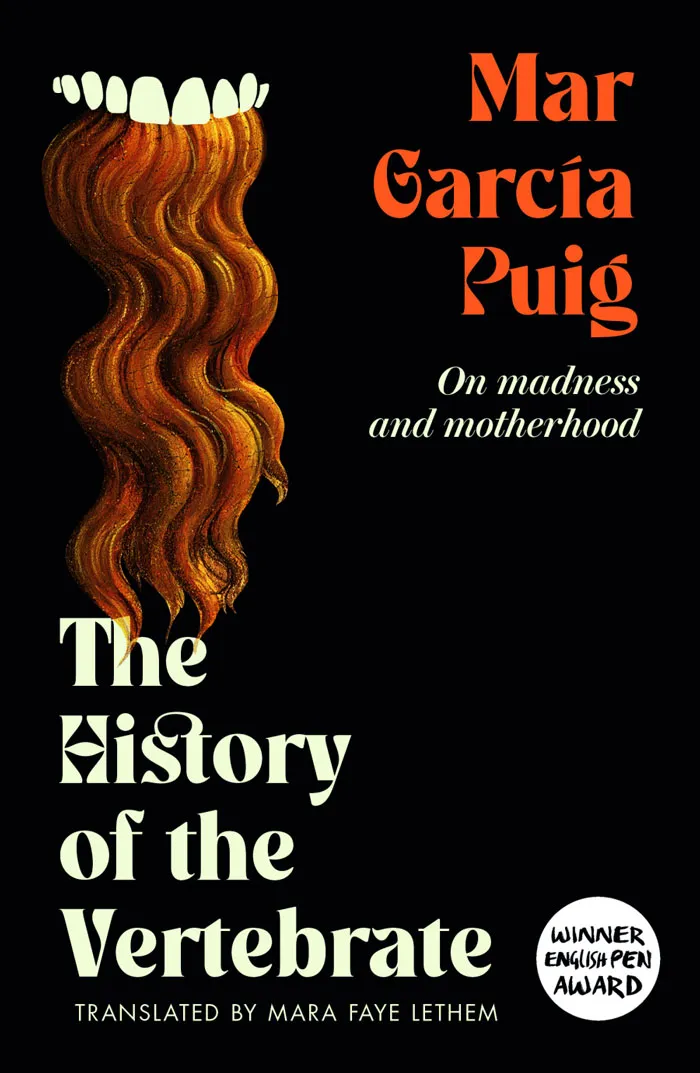
The History of the Vertebrate
Mar García Puig, Mara Faye Lethem
‘On 20 December 2015 I became a mother and I went mad.’
On a single day, Mar García Puig gives birth to twins and becomes elected to the Spanish Parliament as a member of the insurgent left-wing party Podemos. What might have been the best day of her life becomes the start of a terrifying ordeal; García Puig’s grip on reality begins to slip as she grapples with uncertainty, the weight of expectation, and misogyny in both of her new roles.
In defiance of a culture that tells her the problem lies within, García Puig chooses to look outwards, examining the imbrication of madness and motherhood across centuries of science, myth, and politics while dissecting the ways in which women have been pathologized and banished from public life.
At once intimate and epic, The History of the Vertebrate is a searing account of postpartum madness. Moving between memory, culture, and the history of medicine, García Puig transforms her experience into a story about the countless women who have felt that sanity was leaving them, and about the patriarchal forces that have silenced them.
MAR GARCÍA PUIG is an editor and author. From 2015 to 2023 she was a member of the Spanish Congress of Deputies for Podemos, where she served on the Culture Committee and the Equality Committee. Her books include The History of the Vertebrate and This Thing of Darkness.