rile*books

Search books

Search books by title, author, publisher, keywords...

Cover of  The Book of Sleep

Seagull Books

The Book of Sleep

Haytham El-Wardany, Robin Moger trans.

€17.00

What is sleep? How can this most unproductive of human states—metaphorically called death's shadow or considered the very pinnacle of indolence—be envisioned as action and agency? And what do we become in sleep? What happens to the waking selves we understand ourselves to be?

Written in the spring of 2013, as the Egyptian government of President Mohammed Morsi was unraveling in the face of widespread protests, The Book of Sleep is a landmark in contemporary Arabic literature. Drawing on the devices and forms of poetry, philosophical reflection, political analysis, and storytelling, this genre-defying work presents us with an assemblage of fragments that combine and recombine, circling around their central theme but refusing to fall into its gravity.  

"My concern was not to create a literary product in the conventional sense, but to try and use literature as a methodology for thinking," El Wardany explains. In this volume, sleep shapes sentences and distorts conventions. Its protean instability throws out memoir and memory, dreams and hallucinatory reverie, Sufi fables and capitalist parables, in the quest to shape a question. The Book of Sleep is a generous and generative attempt to reimagine possibility and hope in a world of stifling dualities and constrictions.

Published in 2021 ┊ 168 pages ┊ Language: English

recommendations

Cover of Passage to the Plaza

Seagull Books

Passage to the Plaza

Sahar Khalifeh

Fiction €24.50

In Bab Al-Saha, a quarter of Nablus, Palestine, sits a house of ill repute. In it lives Nuzha, a young woman ostracized from and shamed by her community. When the Intifada breaks out, Nuzha’s abode unexpectedly becomes a sanctuary for those in the quarter: Hussam, an injured resistance fighter; Samar, a university researcher exploring the impact of the Intifada on women’s lives; and Sitt Zakia, the pious midwife.

In the furnace of conflict at the heart of the 1987 Intifada, notions of freedom, love, respectability, nationhood, the rights of women, and Palestinian identity—both among the reluctant residents of the house and the inhabitants of the quarter at large—will be melted and re-forged. Vividly recounted through the eyes of its female protagonists, Passage to the Plaza is a groundbreaking story that shatters the myth of a uniform gendered experience of conflict.

Cover of Living Translation

Seagull Books

Living Translation

Gayatri Chakravorty Spivak

Living Translation offers a powerful perspective on the work of distinguished thinker and writer Gayatri Chakravorty Spivak, revealing how, throughout her long career, she has made translation a central concern of the comparative humanities.

Starting with her landmark "Translator's Preface" to Jacques Derrida's Of Grammatology in 1976, and continuing with her foreword to Mahasweta Devi's Draupadi and afterword to Devi's Chotti Munda and His Arrow, Spivak has tackled questions of translatability. She has been interested in interrogating the act of translation from the ground up and at the political limit. She sees at play at border checkpoints, at sites of colonial pedagogy, in acts of resistance to monolingual regimes of national language, at the borders of minor literature and schizo-analysis, in the deficits of cultural debt and linguistic expropriation, and, more generally, at theory's edge, which is to say, where practical criticism yields to theorizing in untranslatables.

This volume also addresses how Spivak's institution-building as director of comparative literature at the University of Iowa—and in her subsequent places of employment—began at the same time. From this perspective, Spivak takes her place within a distinguished line-up of translator-theorists who have been particularly attuned to the processes of cognizing in languages, all of them alive to the coproductivity of thinking, translating, writing.

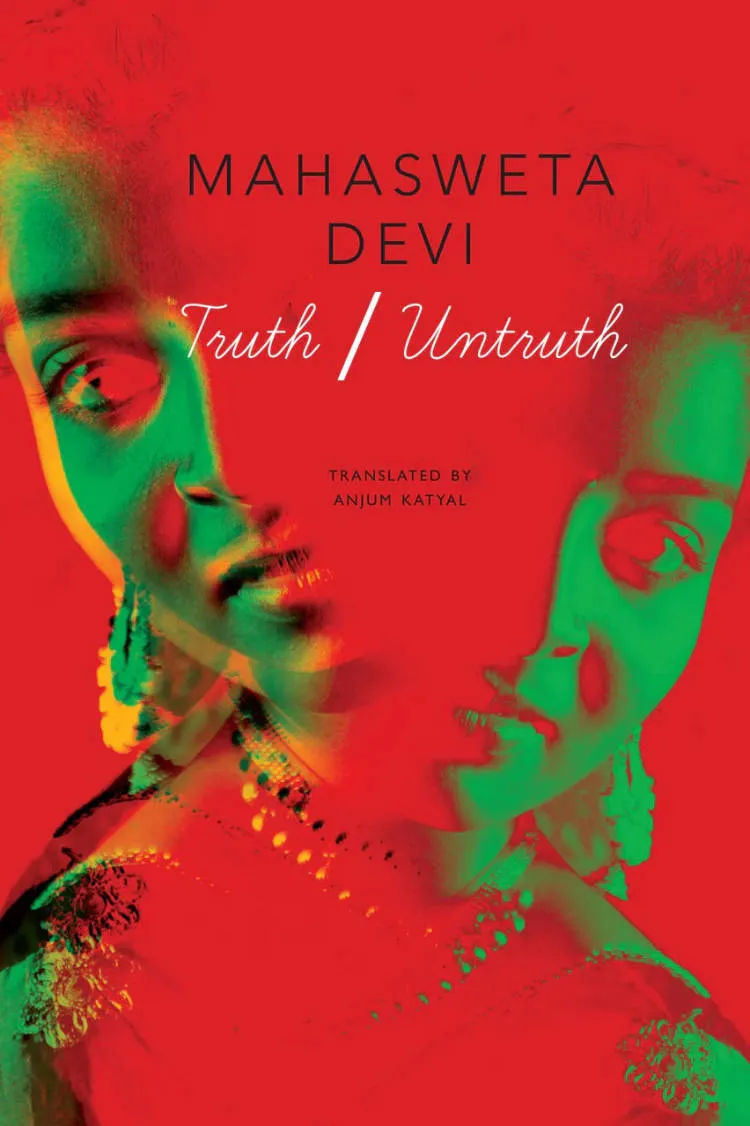
Cover of Truth / Untruth

Seagull Books

Truth / Untruth

mahasweta devi, Anjum Katyal

Fiction €22.00

A trenchant, darkly humorous, and unsentimental look at Calcutta society. 

Set in Calcutta in the mid-1980s, Truth/Untruth is a fast-paced thriller built around the death of the pregnant Jamuna—a maid in a newly affluent residential apartment complex—and Arjun, the upwardly mobile businessman who seduced her. Packed with a cast of colourful characters, this novel is a trenchant, darkly humorous, and unsentimental look at the different segments of Calcutta society: from the middle-class culture vultures to the unscrupulous ‘promoter’ class and the domestic helpers and slum goons who form an intrinsic part of the city’s life. All are implicated in a complex web of guilt and bizarre twists and turns. Sex, lies, death—the great modernist themes—run like a thread through this book, exposing societal greed, lust, corruption, and moral hypocrisy with a sardonic tone that spares none. An unusual novel by an author who is otherwise known for her hard-hitting activist-feminist stories, Truth/Untruth underlines the exploitative vicious cycle that defines urban relations between the haves and have-nots.

‘Although not of the margins herself, Devi was accomplished in writing from the margins [ . . . ] However, it is indeed worth it if you are looking for an exhilarating social commentary and biting satire that remains relevant today. Devi also reflects the jargon and dialects of the lower classes as deftly as the peculiarities of upper-class speech patterns. A feat of this work is Katyal’s ability to mediate these multiple registers, rewarding the reader with sharp writing that is at once funny, sardonic, and darkly pleasurable to read.‘—Jack Greenbert, Cha: An Asian Literary Journal.

Cover of The Difficulties

Tripwire Journal

The Difficulties

Haytham El-Wardany

Essays €10.00

If there is a centre around which the language of this pamphlet circulates, then it is Palestine. As this centre, Palestine enables a transformative power that persistently and steadfastly turns repression and silencing into solidarity. Essay-fiction, prose poetry, radical philosophy, speculative nonfiction — this uncategorizable collection of texts brings militant inquiry to each utterance, each narrative turn, in acts of transnational and transhistorical becoming.

Cover of Walking from Scores

Les Presses du Reel

Walking from Scores

Elena Biserna

An anthology of text and graphic scores to be used while walking, from Fluxus to the critical works of current artists, through the tradition of experimental musicand performance, gathered and presented by Elena Biserna.

Walking from Scores is a hundred or so collection of non site-specific protocols, instructions and textual and graphic scores centred on walking, listening and playing sound in urban environment. It explores the relationship between art and the everyday, the dynamics of sound and listening in various environments and the (porous) frontiers between artists and audiences. It starts with two premises: an interest in walking envisaged as a relational practice and tactic enabling us to read and rewrite space; an interpretation of scores understood as open invitations and catalysers of action in the tradition of Fluxus event scores.

With scores and texts by Peter Ablinger, Milan Adamčiak, G. Douglas Barrett, Elena Biserna, Blank Noise, George Brecht, Cornelius Cardew, Stephen Chase, Giuseppe Chiari, Seth Cluett, Philip Corner, Viv Corringham, Bill Dietz, Amy Dignam, David Dunn, Haytham El-Wardany, Esther Ferrer, Simone Forti, Francesco Gagliardi, Jérôme Giller, Oliver Ginger, Anna & Lawrence Halprin, David Helbich, Dick Higgins, Christopher Hobbs, Jérôme Joy, katrinem, Debbie Kent, Bengt af Klintberg, James Klopfleisch, Milan Knížák, Alison Knowles, Takehisa Kosugi, Jirí Kovanda, Anne Leilehua Lanzilotti, Bob Lens, Ligia Lewis, Alvin Lucier, Walter Marchetti, Larry Miller, iLAND/Jennifer Monson, Max Neuhaus, Alisa Oleva, Pauline Oliveros, Yoko Ono, Open City & Emma Cocker, Nam June Paik, Michael Parsons, Ben Patterson, Cesare Pietroiusti, Mathias Poisson, Anna Raimondo, Pheobe riley Law, Jez riley French, Paul Sharits, Mieko Shiomi, Mark So, Standards, Nicolas Tardy, Davide Tidoni, Ultra-red, Isolde Venrooy, Carole Weber, Manfred Werder, Franziska Windisch, Ben Vautier, La Monte Young.

Elena Biserna is a scholar and independent curator based in Marseille, France. She is associate researcher at PRI SM (AMU / CNRS) and TEAMeD (Université Paris 8). Her interests are focused on listening and on contextual, "situated" art practices in relationship with urban dynamics, sociocultural processes, the public and political sphere. Her writings have appeared in several publications. As a curator, she has collaborated with different organisations and presented her projects internationally.

Cover of Agitated Air: Poems After Ibn Arabi

Tenement Press

Agitated Air: Poems After Ibn Arabi

Robin Moger, Yasmine Seale

Poetry €24.00

Born in Murcia in 1165, Ibn Arabi was a prolific Muslim philosopher and poet. He travelled extensively before settling in Damascus, where he died in 1240. Tarjuman al-Ashwaq, or The Interpreter of Desires, is a cycle of sixty-one Arabic poems. They speak of loss and bewilderment, a spiritual and sensual yearning for the divine, and a hunger for communion in which near and far collapse.

Agitated Air is a correspondence in poems between Istanbul and Cape Town, following the wake of The Interpreter of Desires. Collaborating at a distance, Yasmine Seale and Robin Moger work in close counterpoint, making separate translations of each poem, exchanging them, then writing new poems in response to what they receive. The process continues until they are exhausted, and then a new chain begins.

Translated and re-translated, these poems fray and eddy and, their themes of intimacy across distance made various, sing back and forth, circling and never landing. Absence and approach, knowing and unknowing, failure and repetition: Ibn Arabi’s cycle of ecstatic love shimmers with turbulence. Seale and Moger move into and against these contending drifts, finding in the play of dissatisfaction and endurance a prompt for new poetry. 

Cover of How to disappear

Kayfa ta

How to disappear

Haytham El-Wardany

Essays €10.00

This publication proposes a set of aural exercises that show readers how to disappear, reappear, join a group, or leave a group. Its annex is a lexicon of some of the sounds that dwell in or are banished from the middle-class household. 

Text: Haytham El-Wardany
Editors: Maha Maamoun and Ala Younis
Translated from Arabic by Jennifer Peterson (Preliminary Exercises) and Robin Moger (Sounds of the Middle Classes)

Cover of == #2 (edition)

Capricious

== #2 (edition)

Matt Keegan

First launched in 2012, and published by mfc michèle didier (micheledidier.com), == is a small-run arts publication, edited by Matt Keegan. ==#2, 2015, is designed by Su Barber and published in an edition of 500 by Capricious Publishing. Barber and Keegan worked together on North Drive Press (northdrivepress.com) between 2005-2010, and this publication shares a variety of traits with NDP.

==#2 is a non-thematic arts publication contained in a box with a 96-page bound volume featuring artist-to-artist interviews, texts, and transcriptions. Six loose multiples are also included.

Contributors include: Sam Anderson, Uri Aran, Fia Backström, Darren Bader, Judith Barry, Stefania Bortolami, Daniel Bozhkov, Milano Chow, Anna Craycroft, Lucky DeBellevue, Cristina Delgado, Haytham El-Wardany, Jake Ewert, Vincent Fecteau, Corrine Fitzpatrick, Harrell Fletcher, Rachel Foullon, Aurélien Froment, Kenny Greenberg, Calla Henkel, Leslie Hewitt, Jaya Howey, Adelita Husni-Bey, Iman Issa, Ruba Katrib, Jill Magid, Jo Nigoghossian, Aaron Peck, Max Pitegoff, David Placek, Olivia Plender, Lisa Robertson, Andrew Russeth, Amy Sillman, Diane Simpson, Greg Parma Smith, Jessica Stockholder, Martine Syms, and Anicka Yi.

Cover of Wrap, History and Syncope

Varamo Press

Wrap, History and Syncope

Isabel de Naverán

Non-fiction €12.00

18 July 1936, Bayonne. After hearing the news of the Fascist uprising, the Spanish dancer and bailaora Antonia Mercé y Luque, known as La Argentina, suffers a syncope and dies in fateful synchrony with the Second Republic. History, and the artist’s body, have been seized and broken by the event.

In close dialogue with images and historical documents, Isabel de Naverán pursues the reverberations of that shock and how it resonates with collective pain and artistic translations (by Federico García Lorca, Gertrude Stein, Kazuo Ohno and others). How does history affect and move through bodies? How do living bodies carry and pass on cultural legacy and collective memory? What do these complex movements reveal about the present? Wrap, History and Syncope is an affective journey that invites the reader into tracing and revisiting other bodies, to ultimately dance their difference and multiplicity for oneself.

Isabel de Naverán is a writer and researcher. Concern with the passage and use of time is the backbone of her work, which focuses on bodily transmission and the examination of the concept of historical time by way of ephemeral and fugitive practices. She holds a PhD in art from the University of the Basque Country.  

Translation from Spanish: Toni Crabb
Graphic design: Michaël Bussaer

Cover of Love in a F*cked-Up World

Algonquin Books

Love in a F*cked-Up World

Dean Spade

Non-fiction €20.00

Around the globe, people are faced with a spiraling succession of crises, from the pandemic and climate change-induced disasters to the ongoing horrors of mass incarceration, racist policing, endemic gender violence, and severe wealth inequality. Many of us feel mobilized to organize and collectively combat these issues on both a personal and political level, often dedicating our lives to the forwarding of progressive ideas and the daunting goal of trying to bend the world toward justice.

But even those of us who long for change seem to have trouble when it comes to interpersonal relationships. Too often we think of our political values as outward-facing positions again dominant systems of power. Rarely, if ever, do we pursue the same kind of justice close to home, in our personal connections. Many activist projects and resistance groups fall apart because people treat each other poorly, trying desperately to live out the cultural myths about dating and relationships that we are fed from an early age.

How do we divest from the idea that one romantic partner will be the solution to all our problems? How do we separate our expectations of love from the troubling dynamics left to us by our parents? How do we bring our best thinking about freedom and justice into step with our desires for healing and connection?

Lifelong activist and educator Dean Spade dares us to decide that our interpersonal actions are not separate from our politics of liberation and resistance. Love in a F*cked-Up World is a resounding call to action and a practical manifesto for how to combat cultural scripts and take our relationships into our own hands, preparing us for the work of changing the world.

Cover of Shifting the Angle of Shine

yáo collaborative

Shifting the Angle of Shine

Quinn Chen, Kira Simon-Kennedy and 1 more

Non-fiction €26.00

This publication spans a decade of resilient artists and collectives in, around, and about China and the greater Sinosphere. Composed of essays, images, conversations, and projects, Shifting the Angle of Shine documents innovative tactics of artists and collectives as they weave relationships of mutuality and solidarity to thrive through the cracks.

Shifting the Angle of Shine explores how artists experiment with practices ranging from idiosyncratic business models to counterfeit and mimicry as tools for cultural change, from DIY collectives searching for stability to artists developing new ways to dance around the restrictive pressures of a capitalistic mainstream, and much more. In bringing these artists together to speak and lay compiled in this book, we ask ourselves: what kind of spaces are necessary to incubate productive conversations in an art world prone to creating destabilizing conditions?

Spanning the art nonprofit's decade of existence, a lot of the work has been documented in fragmented ways over the internet, on social media accounts, and in the memories of those there in person. Through materializing this project, this publication hopes to not only shine light on the work of some artists and collectives we admire, but also to archive their stories, processes, and methodologies that should be passed on.

Cover of Exophony

New Directions Publishing

Exophony

Yoko Tawada

Non-fiction €17.00

Yoko Tawada's first essay collection in English presents and electrifying new side of the National Book Award-winner as she dives deep into her lifelong fascination with cross-hybridizing languages. The accent here, as in her fiction, is on the art of drawing closer to the world through defamiliarization. Tawada famously writes in both Japanese and German, but her interest in language reached beyond any mere dichotomy. 

The term "exophonic," which she first heard in Senegal, has a special allure for the author: "I was already familiar with similar terms. 'immigrant literature,' or 'creole literature,' but 'exophonic' had a much broader meaning, referring to the general experience of existing outside of one's mother tongue." Exophony opens a new vista into Yoko Tawada's world and delivers more of her signature erudite wit—at once cross-grained and generous, laser-focused and multidimensional, slyly ironic and warmly companionable.

A New Yorker Best Book of 2025. Translated from Japanese by Lisa Hofmann-Kuroda.