rile*books

Search books

Search books by title, author, publisher, keywords...

Cover of Transmissions

Dancing Foxes Press

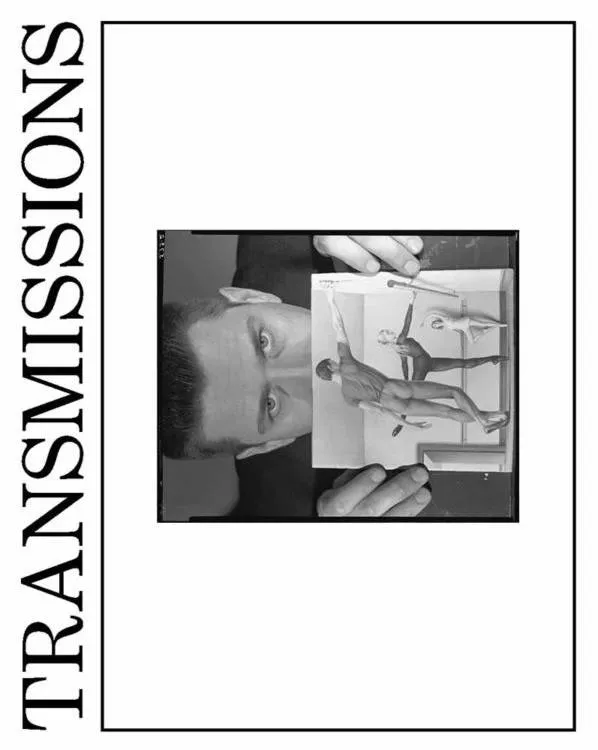
Transmissions

Nick Mauss

€35.00

An aesthetic and social history of art and dance in mid-20th-century New York interpreted by contemporary artist Nick Mauss. 

Over the past decade, Nick Mauss (b. 1980) has pursued a hybrid mode of working that melds the roles of curator, artist, and scholar. This catalogue leans heavily into the scholarship side of his practice, building on his 2018 Whitney Museum exhibition with a closer look at the relationship between modernist ballet and the New York avant-garde. In the 1930s through 1950s, ballet was introduced to a popular audience in New York and was simultaneously influenced by developments in Europe in painting, photography, fashion, music, and poetry. Mauss reflects on this period of rich cross-media production and synergy, ultimately arguing for the inseparability of dance and art history.

Published in 2019 ┊ 190 pages ┊ Language: English

recommendations

Cover of Les Goddesses/Hemlock Forest

Dancing Foxes Press

Les Goddesses/Hemlock Forest

Moyra Davey

This book is based on two related projects that take form as text, photography and film. Les Goddesses (2011) collapses the lives of Davey and her five sisters with those of the daughters of Mary Wollstonecraft, the 18th-century feminist writer and activist. Hemlock Forest (2016) weaves references to Wollstonecraft, Chantal Akerman and Karl Ove Knausgaard with her own family stories. During the making of Hemlock Forest, Akerman took her own life. Her death soon engulfed Davey's awareness, prompting a broader exploration of Akerman's and her own biographies, amid more universal themes of compulsion, artistic production, life and its passing.

Texts by Moyra Davey and an introduction by Aveek Sen
Design by Filiep Tacq

Cover of Tina Girouard: Sign-In

Dancing Foxes Press

Tina Girouard: Sign-In

Tina Girouard

From the 1970s until her death, Louisiana-born artist Tina Girouard (1946–2020) was a dedicated experimental artist, collaborator and art worker. Alongside her individual creative endeavors, she nurtured and was a part of numerous influential artist communities and organizations in New York, Louisiana and Haiti, including the Anarchitecture Group, the interdisciplinary cohort of 112 Greene Street, the restaurant Food, the Kitchen, P.S. 1 and the Festival International de la Louisiane. Her acts of upkeep, including domestic labor traditionally associated with “women’s work,” blurred the boundaries between artmaking and what she called life-making. Sign-In is the first comprehensive monograph on her interdisciplinary oeuvre. It gathers documentation of her work in video, performance, drawing, textile, wall works and installation, tracing Girouard’s practice and legacy across genres and geographies.

Edited by Andrea Andersson with Jordan Amirkhani
With new essays by Andrea Andersson, Jordan Amirkhani, Anaïs Duplan, Pamela M. Lee, Aruna D’Souza, and Lumi Tan

Cover of Andrea Geyer: Dance in a Future with All Present

Dancing Foxes Press

Andrea Geyer: Dance in a Future with All Present

Andrea Geyer

Monograph €30.00

This most substantive monograph yet published on the work of German-born, New York–based multimedia artist Andrea Geyer focuses on her recent explorations of the marginalized yet pivotal role that women have played in the formulation of American modernism, tracing and honoring the ephemeral acts, initiatives, and stories that shaped it. Featuring full-color images of Geyer’s artworks and research materials, including documents, found photographs, and previously unpublished photographs by the artist, Dance in a Future with All Present offers insight into Geyer’s art and the multiple histories of modernism.

Includes texts by Matthew Jeffrey Abrams, Andrianna Campbell, Juli Carson, Barbara Clausen, Lynne Cooke, Dean Daderko, Saisha Grayson, Sharon Hayes, Megan Heuer, Danielle A. Jackson, Alhena Katsof, Kristan Kennedy, Thomas J. Lax, Ralph Lemon, André Lepecki, Renate Lorenz, Josiah McElheny, Fred Moten, Kristin Poor, Yvonne Rainer, Gabriela Rangel, Jeannine Tang, and Soyoung Yoon.

Copublished with Portland Institute of Contemporary Art in 2019.
Edited by Alhena Katsof, Karen Kelly, and Barbara Schroeder. 
Design by Dante Carlos.

Cover of Remembering a Dance – Part of Some Sextets 1965/2019

Lenz Press

Remembering a Dance – Part of Some Sextets 1965/2019

Yvonne Rainer

A re-examination of Yvonne Rainer's Parts of Some Sextets, a radical performance and pivotal piece in the American choreographer's career, which led her to theorize her conception of dance in the 1960s, before being revived in 2019.

Parts of Some Sextets, Yvonne Rainer's 1965 performance for ten people and twelve mattresses, represents a turning point in the American choreographer's oeuvre. "My mattress monster," as Rainer calls it, was built in her formative years with the experimental downtown New York group Judson Dance Theater. In this work, she asserted her exploration of "ordinary" actions as well as her disregard for narrative constructions to create an intricate choreography that unfolded with a new scene every thirty seconds.

More than half a century after its premiere, Rainer, in collaboration with choreographer and dancer Emily Coates, directed the 2019 revival of the piece for the Performa 19 Biennial in New York, grappling with the changing contexts of a new presentation of her radical performance. Remembering a Dance: Parts of Some Sextets, 1965/2019 delves into every aspect of this dance, from its original manifestation to its reconstitution.

This book, designed by visual artist Nick Mauss, includes previously unpublished archival images and documents from the 1965 stagings at the Judson Memorial Church in New York and the Wadsworth Atheneum in Hartford, Connecticut. Texts by Emily Coates, RoseLee Goldberg, Jill Johnston, Kathy Noble, Yvonne Rainer, David Thomson, Lynne Tillman, and Soyoung Yoon, as well as a new interview with Rainer, pose questions about the trajectories of artworks, performers, and audiences, all while tracing the life—and afterlife—of a dance.

Edited by Emily Coates. 
Texts and contributions by Emily Coates, RoseLee Goldberg, Jill Johnston, Kathy Noble, Yvonne Rainer, David Thomson, Lynne Tillman and Soyoung Yoon; conversation between Yvonne Rainer, Emily Coates and Nick Mauss.
Cover of Writing Dance

Varamo Press

Writing Dance

Jonathan Burrows

‘Human beings embody whatever they meet, and it’s all there when you work whether you want it there or not.’ Practice is like the dust that accumulates, and revisiting fragments of essays and talks on choreography Jonathan Burrows ended up embracing the haphazard and the mess, moments of unfocus and focus, harnessing them in pithy formulations and scores, adding room and punctuation and line breaks in the process so readers can hear the rhythm as he writes his dance on writing dance.

Jonathan Burrows is a choreographer, who has worked for many years in collaboration with the composer Matteo Fargion, with whom he continues to create and perform work. He is the author of A Choreographer’s Handbook (Routledge, 2010) and is currently an Associate Professor at the Centre for Dance Research, Coventry University.

Published by Varamo Press in the essay series Gestures
Graphic design by Michaël Bussaer

Cover of sex and place vol 1

Self-Published

sex and place vol 1

Adriano Wilfert Jensen, Andrea Zavala Folache

sex and place is a series of workshops and publications exploring score-based and semi-anonymous writing as a tool for articulating shared concerns.

Vol. 1 ‘preliminiaries’ is written by Andrea Zavala Folache and Adriano Wilfert Jensen. In the midst of (learning) child care, (unlearning) performance and (experimenting with) sex, the publication interweaves three registers of writing as analogies and interruptions of each other.

The ‘sex and place’ series is part Domestic Anarchism, a project devoted to coalition-building beyond biological, chosen, or national conceptions of family. Dance serves as a set of tools and knowledge that can be applied beyond “the spectacle” to collectively study, write, and move. 

Andrea Zavala Folache and Adriano Wilfert Jensen are choreographers and they co-parent three-year-old Penélope Cleo. Andrea and Adriano use dance and choreography to think about the distribution of care and solidarity beyond ‘the family’, and in turn consider how such a distribution could inform their dance practice. Inevitably themes like sex, economy, gender, and class get activated. But also notions such as prefiguration, anarchism, clitoridian* thinking, zones of non-domination and coalition building. They see dance as a knowledge that can be applied to different practices. Some of these include: co-habitations, score based writing and dancing, self-organised study groups and publications, workshops and dance performances. 

Cover of Issue #60 - Gender Disarray

Movement Research Performance Journal

Issue #60 - Gender Disarray

Kay Gabriel, Amalle Dublon and 2 more

Periodicals €17.00

Under the direction of four contributing editors—Amalle Dublon, Kay Gabriel, Keioui Keijaun Thomas, and Anh Vo— we’ve assembled a new body of work by mostly trans and queer artists reflecting on the keyword “gender” and its relation to contemporary performance. Their work moves across multiple genres of writing, from analytic essays to poetry to performance scripts. 

“Read My Lips” is a phrase that will be familiar to longtime readers of the Movement Research Performance Journal—so familiar that the mere reference will bring to mind an image posted by the artist collective GANG, an image that lies at the heart of one of the journal’s most spectacular moments. Issue #3, with its focus “Gender Performance,” was published in 1991 amid that era’s Culture Wars, receiving almost immediately negative reception from government officials (the NEA threatened to withdraw funding from Movement Research) and many members of the dance community (who considered Issue #3 to be deliberately provoking the so-called “war,” intentionally taking a political position that some worried might comprise future funding of the field). In the thirty-three years since its publication, Issue #3 has developed a patina familiar to many artist-activist histories that are looked upon with romance and nostalgia, often by those for whom that history is only a fantasy (rather than a lived experience). 

Cover of Still Life 4

Self-Published

Still Life 4

Hamish MacPherson

STILL LIFE is an online and printed zine about relationships and configurations in which one person is still while others are not. Or where one person is passive and others are active. It’s about how we put ourselves in other people’s hands. Or how we are put in other people’s hands. It’s about care and power and vulnerability and agency. And other things not so clearly named. It’s about the different kinds of knowledge that people have about their own and other people’s bodies. And the kind of philosophical and political understandings woven into that knowledge.

Cover of Dance History(s): Imagination as a Form of Study

Dancing Foxes Press

Dance History(s): Imagination as a Form of Study

Annie-B Parson, Thomas F. DeFrantz

Authored by twelve diverse American dance artists in the form of twelve small booklets, Dance History(s): Imagination as a Form of Studyapproaches and celebrates dance history as a subjective, artistic inquiry. It reimagines and radicalizes our understanding of dance throughout human history through the voices of working choreographers. Simultaneously, the project is dedicated to the power of an artist-centric view of history itself, thus placing the dance history back into the body, where it began. Here, history occurs in vertical layers of time and space and moves into the street, the football field, the yard, the screen, the memory, the womb, the sky, and the future.

Text by mayfield brooks, thomas f. defrantz, maura nguyễn donohue, Keith Hennessy, Bebe Miller, Okwui Okpokwasili, Eiko Otake, Annie-B Parson, Javier Stell-Frésquez, Ogemdi Ude, Mariana Valencia, and Andros Zins-Browne