rile*books

Search books

Search books by title, author, publisher, keywords...

Cover of The Loveliest Vowel Empties: Collected Poems

World Poetry Books

The Loveliest Vowel Empties: Collected Poems

Meret Oppenheim

€20.00

The Loveliest Vowel Empties presents for the first time in English the collected poems of legendary Swiss Surrealist Meret Oppenheim, printed with facing-page originals in German and French.

Oppenheim's poetry, 49 poems written between 1933 and 1980, moves beyond Surrealism to inhabit a voice all her own, with imagery and sound that, as the Herald Tribune wrote, 'express witty and poetic responses to the surprises of life.' A key figure of the Paris art scene in the 1930s, Oppenheim moved in a circle that included Andér Breton, Man Ray, Marcel Duchamp, Max Ernst, and Elsa Schiaparelli. Writing for the Village Voice about her work, Gary Indiana noted that 'the singularity of Meret Oppenheim's work is such that nothing seems dated... the range of the work and its quirky self-assurance are striking.' The publication of her collected poems coincides with a major retrospective exhibition of her artwork at the Museum of Modern Art in New York.

Published in 2023 ┊ 125 pages ┊ Language: English

recommendations

Cover of Theory of the Voice and Dream

World Poetry Books

Theory of the Voice and Dream

Liliana Ponce , Michael Martin Shea

Poetry €22.00

Obsessing on the relationship between creation and absence, Argentine poet Liliana Ponce presents an unsettling meditation on body, language, and self. For the first time in English, this edition brings together Ponce’s serial poems from the closing years of the twentieth century, the widely anthologized Theory of the Voice and Dream and Fudekara, a shorter sequence written in response to a Japanese calligraphy course. In these major works, Ponce questions the nature of writing itself, of how to write when to write today is an emptiness, or when mouth and voice cannot find each other. Breaking with Argentine poetic conventions, Ponce charts a new model for poesis—oneiric, embodied, and urgent. As she says, I write so I don’t have to speak, so I don’t have to watch.

Cover of Document

World Poetry Books

Document

Amelia Rosselli, Roberta Antognini and 1 more

Poetry €24.00

The pivotal 1976 work of one of Italy's most significant post-war voices asks how poetry can document lived experience while dialoguing with the Petrarchan sonnet tradition. Long fascinated by the classical sonnet as an ideal model, Rosselli took on the Petrarchan structure of a canzoniere—a text in which meaning is generated by sequence—to contain the flood of 175 poems for her third collection. Speaking of Document, Rosselli said: “It was hard work; those who do not write poetry cannot imagine to what lengths poets go in order to compose, even if they barely scrape by, and even if it’s still the case that poetry is either inspired or worthless.” This “hard work” conveyed the pain, intensity, and turmoil of her existence and of our own violent chaotic times. Originally published in 1976, Document is the last of her major collections to be translated into English.

I think the great anti-fascist poet Amelia Rosselli has always been in a "lockdown" mode of existence. Document documents Rosselli's internal well, an echo chamber-she orchestrates the signals of global turmoil of war, violence, class struggle, religion, consumerism, financial capitalism. Nothing goes amiss inside her chamber. Rosselli’s oblique, taut, and mocking entries pile up relentlessly—they make up an anti-fascist soliloquy that also echoes the "lockdown" of our current troubled era. — DON MEE CHOI

Amelia Rosselli is one of the towering poets of the twentieth century, so we owe immense gratitude to Roberta Antognini & Deborah Woodard for bringing Documento, Rosselli’s third book, to an anglophone public in full for the first time, in a sharp translation with helpful notes. Less overtly biting and difficult than Rosselli’s previous work-at least at first-these barbed lyrics will initiate new readers into her mind-bending oeuvre. As she writes at the start, "in the end I wrote beautiful things, all of them / for you." Yes: that means you. — BARRY SCHWABSKY

Cover of Girl With a Bullet

World Poetry Books

Girl With a Bullet

Anna Malihon, Olena Jennings

Poetry €20.00

Ukrainian poet Anna Malihon’s English-language debut gathers daring, resilient, open-eyed poems written before and after Russia’s full-scale invasion. The difficult fates voiced by the protagonists of Malihon’s poems intertwine with her own experience, weaving an alarming but beautiful world where the young grow old and love is met with war. This world, at first shocking, holds the reader in suspension, compelling a desire to rethink and reread. With deft allegory and startling metaphor, Malihon crafts a poetry that seeks to influence the course of events, to reroute history.

Cover of Elegies of the Earth

World Poetry Books

Elegies of the Earth

Ahmad Shamlou, Niloufar Talebi

Poetry €24.00

A sweeping centennial edition of Iran’s iconic twentieth-century poet of liberty, whose work shaped modern Persian poetry. Known for his political engagement and deep humanism, and his pivotal role in Persian poetry’s modernist turn toward free verse, Ahmad Shamlou (1925–2000) crafted poems that carried both lyrical intimacy and cultural force. A central, defiant voice in Iran’s modern literary history, Shamlou championed the power of poetry as an instrument of liberation. His work, long suppressed in his homeland, remains urgent for readers everywhere confronting censorship, exile, and erasure. This bilingual edition honors Shamlou’s centennial with the most expansive selection of his poetry to date in English, encompassing his wide thematic range: from fierce protest to intimate love, mythic storytelling to existential reflection. Niloufar Talebi’s vibrant translations and deeply researched commentary shine new light on Shamlou’s legacy and his relevance today.

Cover of Smoke Drifts

World Poetry Books

Smoke Drifts

Nadia Anjuman, Diana Arterian and 1 more

Poetry €20.00

Afghan poet Nadia Anjuman (1980-2005) drew on the lineage of Persian and Sufi writing and her life under Taliban rule, attending to love, oppression, myth, and devotion through lyrics that both embrace and resist tradition. Anjuman grew up in the Herat, Afghanistan, a city known for centuries for its poetry. While the Taliban was in power, Anjuman met with other women in what appeared to be a needlepoint school, one of the few sanctioned pastimes for women, to secretly discuss literature and poetry. After the fall of the Taliban, Anjuman was finally able to attend university. She wrote and published a celebrated volume of poetry and was set to publish another before her early death due to domestic violence. Selections from both of Anjuman’s collections are presented here for the first time in English.

Cover of Do Everything in the Dark (2023)

Semiotext(e)

Do Everything in the Dark (2023)

Gary Indiana

Fiction €17.00

Faced with photos of a once-tumultuous New York art world, the narrator's mind in this scathing, darkly funny novel begins to erupt. Memories jostle for center stage, just as those that they are about always did. These brilliant but broken survivors of the '80s and '90s have now reached the brink of middle age and are facing the challenge of continuing to feel authentic. Luminous with imagery, cackling with bitter humor, and with a new foreword by the author, this roman a cle spares no one.

First published in 2003, Gary Indiana's turn-of-the-millennium novel traces the lives of a loosely connected group of New York artists and the dissolution of their scene.  

During the summer of 2001, the narrator of Do Everything in the Dark, a gallery curator, receives intermittent dispatches from his far-flung friends, many of whom resemble well-known figures in the art and intellectual worlds, who are spread out across the globe, from Istanbul to Provincetown to Santa Fe. Seeking various reprieves from a changed New York, the long-festering, glossed-over incompatibilities of these aging bohemians blossom into exotic and unbearable relief. Beneath the contemporary excesses Indiana chronicles, we can see the outlines of the earlier New York bohemia captured by Dawn Powell.  

Arguably Indiana's most intimate, internal, and compassionate work to date, Do Everything in the Dark is a chilling chronicle of madness and failure, success and disappointment, and the many ways love dies in a world people find increasingly unlivable.

Cover of Thing

Primary Information

Thing

Robert Ford, Trent Adkins and 1 more

Started in 1989 by designer and writer Robert Ford, THING magazine was the voice of the Queer Black music and art scene in the early 1990s. Ford and his editors were part of the burgeoning House music scene, which originated in Chicago’s Queer underground, and some of the top DJs and musicians from that time were featured in the magazine, including Frankie Knuckles, Gemini, Larry Heard, Rupaul, and Deee-Lite. THING published ten issues from 1989-1993, before it was cut short by Ford’s death from AIDS-related illness. All ten issues of THING are collected and published here for the first time.

As House music thrived, THING captured the multidisciplinary nature of the scene, opening its pages to a wide range of subjects: poetry and gossip, fiction and art, interviews and polemics. The HIV/AIDS crisis loomed large in its contents, particularly in the personal reflections and vital treatment resources that it published. An essay by poet Essex Hemphill was published alongside the gossip columnist Michael Musto and Rupaul dished wisdom alongside a diary from the March on Washington for Lesbian, Gay, and Bi Equal Rights and Liberation. Joan Jett Blakk’s revolutionary presidential campaign is contained in these pages, as are some of the most underground, influential literary voices of the time, such as Dennis Cooper, Vaginal Davis, Gary Indiana, Marlon Riggs, David Wojnarowicz, and even David Sedaris.

THING was very much in dialogue with the club kids in New York and other Queer publishing ventures, but in many ways, it fostered an entirely unique perspective—one with more serious ambitions. In a moment when the gay community was besieged by the HIV/AIDS crisis and a wantonly cruel government, the influence and significance of this cheaply-produced newsprint magazine vastly exceeded its humble means, presenting a beautiful portrait of the ball and club culture that existed in Chicago with deep intellectual reflections. THING was a publication by and for its community and understood the fleetingness of its moment. To reencounter this work today, is to reinstate the Black voices who were so central to the history of HIV/AIDS activism and Queer and club culture, but which were often sidelined by white Queer discourse. In many ways, THING offered a blueprint for the fundamental role a magazine plays in bringing together a community, its tagline summing up the bold stakes of this important venture: “She Knows Who She Is.”

The magazine included contributions from Trent D. Adkins, Joey Arias, Aaron Avant Garde, Ed Bailey, Freddie Bain, Basscut, Belasco, Joan Jett Blakk, Simone Bouyer, Lady Bunny, Bunny & Pussy, Derrick Carter, Fire Chick, Chicklet, Stephanie Coleman, Bill Coleman, Lee Collins, Gregory Conerly, Mark Contratto, Dennis Cooper, Dorian Corey, Ed Crosby, The Darva, Vaginal Davis, Deee-Lite, Tor Dettwiler, Riley Evans, Evil, The Fabulous Pop Tarts, Mark Farina, Larry Flick, Robert Ford, Scott Free, David Gandy, Gemini, Gabriel Gomez, Roy Gonsalves, Chuck Gonzales, Tony Greene, André Halmon, Lyle Ashton Harris, Larry Heard, Essex Hemphill, Kathryn Hixson, Sterling Houston, Ishmael Houston-Jones, Gary Indiana, Candy J, Jamoo, Jazzmun, Gant Johnson, Owen Keehnen, Lady Miss Kier, Spencer Kincy, Iris Kit, Erin Krystle, Steve LaFreniere, Larvetta Larvon, Marc Loveless, Lypsinka, Malone, Marjorie Marginal, Terry A. Martin, Rodney McCoy Jr., Alan Miller, Bobby Miller, Michael Musto, Ultra Naté, Willi Ninja, Scott “Spunk” O’Hara, DeAundra Peek, Earl Pleasure, Marlon Riggs, Robert Rodi, Todd Roulette, RuPaul, Chantay Savage, David Sedaris, Rosser Shymanski, Larry Tee, Voice Farm, Lawrence D. Warren, Martha Wash, LeRoy Whitfield, Stephen Winter, David Wojnarowicz, and Hector Xtravaganza.

Cover of Women in Concrete Poetry: 1959-1979

Primary Information

Women in Concrete Poetry: 1959-1979

Mónica de la Torre, Alex Balgiu

Poetry €30.00

An expansive anthology focused on concrete poetry written by women in the groundbreaking movement’s early history. It features 50 writers and artists from Europe, Japan, Latin America, and the United States selected by editors Alex Balgiu and Mónica de la Torre.

Women in Concrete Poetry: 1959-1979 takes as its point of departure Materializzazione del linguaggio—the groundbreaking exhibition of visual and concrete poetry by women curated by Italian feminist artist Mirella Bentivoglio for the Venice Biennale in 1978. Through this exhibition and others she curated, Bentivoglio traced constellations of women artists working at the intersection of the verbal and visual who sought to “reactivate the atrophied tools of communication” and liberate words from the conventions of genre, gender, and the strictures of the patriarchy and normative syntax.

The works in this volume evolved from previous manifestations of concrete poetry as defined in foundational manifestos by Öyvind Fahlström, Eugen Gomringer, and the Brazilian Noigandres Group. While some works are easily recognized as concrete poetry, as documented in canonical anthologies edited by Mary Ellen Solt and Emmett Williams in the late ’60s, it also features expansive, serial works that are overtly feminist and often trouble legibility. Women in Concrete Poetry: 1959-1979 revisits the figures in Bentivoglio’s orbit and includes works by women practicing in other milieus in the United States, Eastern Europe, and South America who were similarly concerned with activating the visual and sonic properties of language and experimenting with poetry’s spatial syntax.

Artists and writers include Lenora de Barros, Ana Bella Geiger, and Mira Schendel from Brazil; Mirella Bentivoglio, Tomaso Binga, Liliana Landi, Anna Oberto, and Giovanna Sandri from Italy; Amanda Berenguer from Uruguay; Suzanne Bernard and Ilse Garnier from France; Blanca Calparsoro from Spain; Paula Claire and Jennifer Pike from the UK; Betty Danon from Turkey; Mirtha Dermisache from Argentina; Bohumila Grögerová from the Czech Republic; Ana Hatherly and Salette Tavares from Portugal; Madeline Gins, Mary Ellen Solt, Susan Howe, Liliane Lijn, and Rosmarie Waldrop from the US; Irma Blank and Ruth Wolf-Rehfeldt from Germany; Chima Sunada from Japan; and Katalin Ladik and Bogdanka Poznanović from the former Yugoslavia.

Cover of Spill: scenes of black feminist fugitivity

Duke University Press

Spill: scenes of black feminist fugitivity

Alexis Pauline Gumbs

Poetry €23.00

In Spill, self-described queer Black troublemaker and Black feminist love evangelist Alexis Pauline Gumbs presents a commanding collection of scenes depicting fugitive Black women and girls seeking freedom from gendered violence and racism. In this poetic work inspired by Hortense Spillers, Gumbs offers an alternative approach to Black feminist literary criticism, historiography, and the interactive practice of relating to the words of Black feminist thinkers. Gumbs not only speaks to the spiritual, bodily, and otherworldly experience of Black women but also allows readers to imagine new possibilities for poetry as a portal for understanding and deepening feminist theory.

Alexis Pauline Gumbs is a poet, independent scholar, and activist. She is coeditor of Revolutionary Mothering: Love on the Front Lines and the Founder and Director of Eternal Summer of the Black Feminist Mind, an educational program based in Durham, North Carolina.

Cover of Ovid's Metamorphoses

University of California Press

Ovid's Metamorphoses

Ovid, C. Luke Soucy

Poetry €20.00

This fresh translation revives the politics and power at play in classical mythology’s foremost source

Centuries of conservative translators have robbed the Metamorphoses of its subversive force. In this boldly lyrical translation, C. Luke Soucy revives the magnum opus of Rome’s most clever and creative poet, faithfully matching the epic’s wit and style while confronting the sexuality, violence, and politics so many previous translations have glossed over.

Soucy’s powerful version breathes new life into Ovid's mythic world, where canonical power dynamics are challenged from below to drain heroes of their heroism, give victims their say, and reveal an earth holier than heaven. Incorporating the latest scholarship alongside annotations, illustrations, and glossary, this edition brings fresh insights to both returning and new readers.

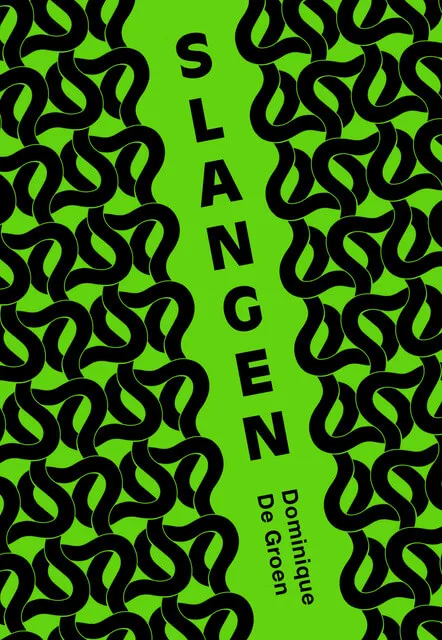
Cover of Slangen

het balanseer

Slangen

Dominique De Groen

Poetry €19.50

Slangen krioelen in de sarcofaag van het heden, in de krochten van de popcultuur, in de mummie van de natuur, in wondes en rot vlees, in artificiële woestijnen en op geoliede dad bods. Ze wentelen zich rond beursgrafieken, raken verstrengeld met wurgende algoritmes, orkestreren een trage ondergrondse revolutie. Een meisje snijdt zich aan een nepdiamanten piramide en werpt haar slangenvel van zich af.

Dominique De Groen is schrijver en beeldend kunstenaar. Ze publiceerde de dichtbundels Shop Girl (2017), Sticky Drama (2019) en offerlam (2020). Ze werd genomineerd voor de Poëziedebuutprijs Aan Zee 2018, de Herman de Coninckprijs 2020 en de Fintroliteratuurprijs 2021 en won de Frans Vogel Poëzieprijs 2019 en de Fintropublieksprijs 2021.

Cover of Language Arts

Wendy's Subway

Language Arts

Justin Allen

Poetry €18.00

Justin Allen’s Language Arts takes up writing as an integral part of an interdisciplinary art practice. Across poems, essays, lyrics, screenwriting, and drawings, works touch on themes of music and subculture, African diasporic language, visual art, and more, bringing together Allen's numerous influences into one collection.

Justin Allen's Language Arts is the 2022 Open Reading Period Editors' Pick.

About the author
Justin Allen is a writer and performer from Northern Virginia. With a background in tap dancing and creative writing, his work often combines a variety of art forms. He has been commissioned by The Chocolate Factory Theater and The Shed and has held residencies at ISSUE Project Room and the Center for Afrofuturist Studies. He has received support from Franklin Furnace, Foundation for Contemporary Arts, and the Jerome Foundation, and shared his work both stateside and abroad.

"In Hatnaha, Justin Allen has reinvented the myth of Atlantis for our postlapsarian age. His art of language cannibalizes the American grammar book, spawning gorgeous new idiolects. Through the buzz and rumble of Afro-diasporic sound clash, Allen hears the frequency of bodies becoming ungovernable. Set to a soundtrack of punk phonotactics, Language Arts is just the book to toss over the barbed wire fences that cordon us off from our post-Reparations future." —Tavia Nyong’o

"Language Arts shares a name with an elementary school class I always wished was more “art” and less rote memorization, and it fully delivers on that desire with its spellbinding assortment of prose poetry, screamo lyricism, screenplay, conlang, and Black political fiction as vibrant as any comp on physical media or stream. nunats nen-tuk nutaks dipa. Justin Allen creates an executable file, one that's bound to spread like Soulja Boy's "Crank That" renamed “britney_spears-hitmebabyonemoretimeremix.mp3," but without the need for tricknology." —Devin Kenny