rile*books

Search books

Search books by title, author, publisher, keywords...

Cover of Fieldnotes Issue 3

Fieldnotes Journal

Fieldnotes Issue 3

Bella Marin ed.

€15.00

Fieldnotes is a biannual print journal publishing new writing and artworks with a focus on practices that work between disciplines and against type. There is always a third thing between two things that are known; we are interested in whatever there is between translations/transitions, things-in-progress, converging genres, methods of excavation and formal innovation. The purpose of the journal is to provide a test site for ideas and research; a space for experimental modes and new prototypes. 

The third issue of FIELDNOTES contains new work by:

CAConrad & George Finlay Ramsay
Charlie Hawksfield
Yvonne
Angus McCrum
Peter Gizzi
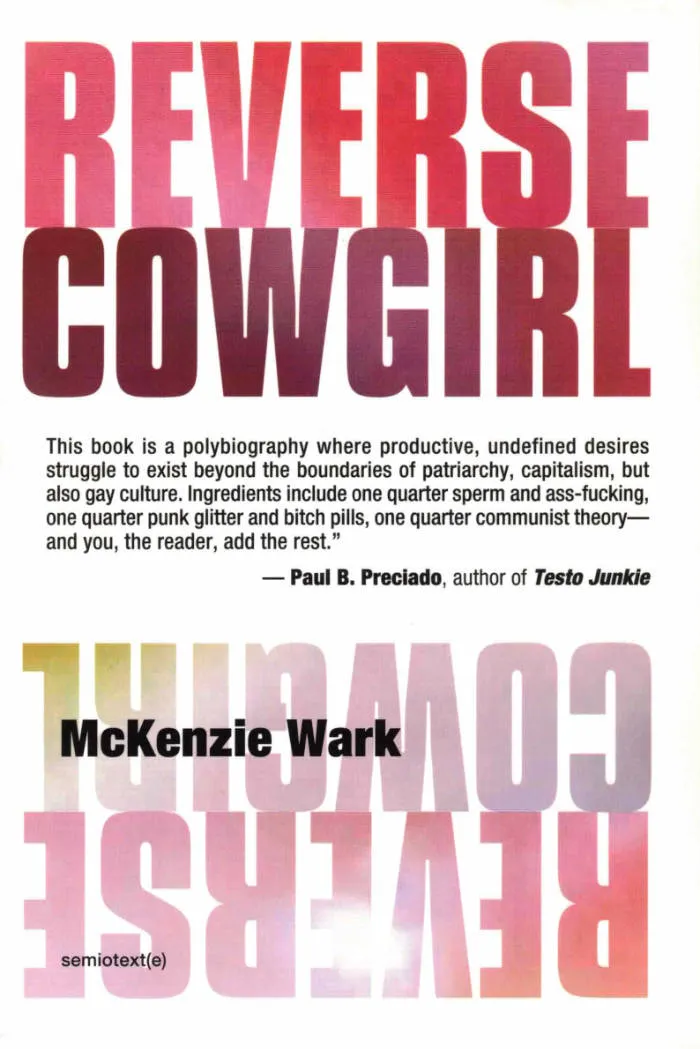
McKenzie Wark
Kate Paul
Michelle Williams Gamaker
Georges Bataille & Rachelle Rahmé
Declan Wiffen
Rosa Barba
Travis Jeppesen
Robert Glück & Arnold Kemp
Cecilia Pavón & Jacob Steinberg 
George Lynch 
Yuhan Shen

Published in 2022 ┊ Language: English

recommendations

Cover of Ezio Gribaudo - The Weight of the Concrete

Grazer Kunstverein

Ezio Gribaudo - The Weight of the Concrete

Lilou Vidal, Tom Engels and 1 more

The Weight of the Concrete explores the legacy of the Turinese artist and publisher Ezio Gribaudo (1929–2022), examining his multifaceted oeuvre at the confluence of image and language. This publication, named after Il Peso del Concreto (1968)—a seminal work that featured Gribaudo’s early graphic creations alongside an anthology of concrete poetry edited by the poet Adriano Spatola (1941–88)—places Gribaudo’s work in conversation with approximately forty artists and poets from different generations, all of whom similarly engage with explorations of text, form, and visual expression.

Reflecting the editorial premise of Il Peso del Concreto, The Weight of the Concrete revisits the influential anthology, including archive material that documents its production, and reimagines it, pairing Gribaudo’s graphic work with a new selection of historical and contemporary concrete and experimental poetry.

At the heart of the volume is Gribaudo’s emblematic Logogrifi series, developed from the 1960s onward. The Logogrifi reveal his deep engagement with the art of bookmaking and fascination with industrial printing processes, relief matrices, typefaces, and language games.

In this new edition, the editors take the opportunity to revisit Gribaudo’s pioneering work, examining previously overlooked dimensions—gendered, geographical, and technological—and exploring contemporary associations beyond the original context. The book also includes essays that elucidate the poetic and political interplay between image, language, and materiality.

This publication is released following Ezio Gribaudo – The Weight of the Concrete, an exhibition held at the Grazer Kunstverein in Graz, Austria (2023–24), and at the Museion—Museum of Modern and Contemporary Art in Bolzano-Bozen, Italy (2024).

Edited by Tom Engels and Lilou Vidal
Published by Axis Axis and Grazer Kunstverein

Contributions by Anni Albers, Mirella Bentivoglio, Tomaso Binga, Irma Blank, Al Cartio, Paula Claire, CAConrad, Natalie Czech, Betty Danon, Constance DeJong, Mirtha Dermisache, Johanna Drucker, Bryana Fritz, Ilse Garnier, Liliane Giraudon, Susan Howe, Alison Knowles, Katalin Ladik, Liliane Lijn, Hanne Lippard, Sara Magenheimer, Françoise Mairey, Nadia Marcus, Giulia Niccolai, Alice Notley, Ewa Partum, sadé powell, N. H. Pritchard, Cia Rinne, Neide Dias de Sá, Giovanna Sandri, Mary Ellen Solt, Alice Theobald, Colleen Thibaudeau, Patrizia Vicinelli, Pascal Vonlanthen, Hannah Weiner, and Ruth Wolf-Rehfeldt

Essays by Alex Balgiu, Tom Engels, Nadia Marcus, Luca Lo Pinto, Mónica de la Torre, and Lilou Vidal

Cover of Jack the Modernist

New York Review of Books

Jack the Modernist

Robert Glück

Fiction €17.00

A classic of postmodern fiction, Robert Glück’s Jack the Modernist portrays the slow disintegration of a love affair set in the early 1980s. Bob is excited and lonely. He meets and pursues the elusive Jack, a director who is able to transform others without altering himself. Bob goes to the baths, gossips on the phone, goes to a bar, thinks about werewolves, has an orgasm, and discovers a number of truths about Jack. Out of print for decades, Glück’s paean to desire and obsession explores the everyday in an idiom both intimate and lush. Sensual as well as sensational, self-conscious, but never self-serious, Jack the Modernist is a candid and heartfelt lover’s discourse unlike any other.

Cover of Tripwire 15 - Narrative/Prose

Tripwire Journal

Tripwire 15 - Narrative/Prose

Renee Gladman, David Buuck

Poetry €20.00

Narrative/Prose issue, featuring a special section: I was writing, but it was drawing: a Renee Gladman mini-feature with work by Renee Gladman * Earl Jackson, Jr. * Bruna Mori * Alexis Almeida on Renee Gladman & Julie Carr * Lewis Freedman & Vanessa Thill on Renee Gladman & Mirtha Dermisache. as well as work by Isabel Waidner * sissi tax (translated by Joel Scott & Charlotte Theißen) * Susan Hefuna * Mira Mattar * Lital Khaikin * Maryam Madjidi (translated by Ruth Diver) * Omer Wasim & Saira Sheikh * Ilse Aichinger (translated by Christian Hawkey & Uljana Wolf) * Bronka Nowicka (translated by Katarzyna Szuster) * Maude Pilon (translated by Simon Brown) * Mehmet Dere * Syd Staiti * Jena Osman * Germán Sierra * Natani Notah * Julia Bloch on Bernadette Mayer * Robert Glück on Clarice Lispector * Rob Halpern on Bruce Boone & Dennis Cooper *Dylan Byron on/after Bruce Boone * Linda Bakke on Communal Presence: New Narrative Writing Today * Anna Fidler * Corey Zielinski on Bob Glück & Writers Who Love Too Much: New Narrative 1977-97 * Jackie Kirby on From Our Hearts to Yours: New Narrative as Contemporary Practice * David W. Pritchard on Kevin Killian * Dale Enggass on Simone White * Allison Cardon on Anne Boyer * Robert Balun on Leslie Kaplan * Marco Antonio Huerta on Omar Pimienta * Allison Grimaldi Donahue on Josué Guébo * Sara Florian on Lasana Sekou * Louis Bury on Allison Cobb * Hugo Gibson on Annie Ernaux.

Cover of Theory, A Sunday

Belladonna* Collaborative

Theory, A Sunday

Louky Bersianik, Nicole Brossard and 4 more

Collectively authored by Louky Bersianik, Nicole Brossard, France Théoret, Gail Scott, Louise Cotnoir, Louise Dupré, Lisa Robertson, and Rachel Levitsky. Twenty-five years after its first French language publication, Theory, A Sunday (2013), a collaborative feminist poetics text, marks the first in Belladonna’s new Germinal Texts series. Written through Sunday meetings in Montreal, this volume gathers six women’s theoretical feminist texts, with a new introduction by Lisa Robertson and afterword by Gail Scott and Rachel Levitsky. Translators of this text include Erica Weitzman, Luise von Flotow, Popahna Brandes, and Nicole Peyrafitte.

Germinal Texts trace feminist avant-garde histories and the poetic lineages they produce. Focused on authors and texts that provide generative grounds for other writers and their work, Germinal Texts gesture to networks of affiliation, whether explicit or subterranean; to kinships and inheritances; to the unfolding of a text through its readership; and to always provisional origins without endings. Germinal Texts are works that gather dense histories and, for this reason, the series is designed to hold a space for critical discussion, with contextualizing front and back matter that launches new conversations.

Louky Bersianik (1930-2011) is the author of twelve books of poetry and prose. Essayist, novelist and poet, her much admired novel L’Eugélionne is considered Québec’s first feminist novel (translated by Howard Scott as The Eugélionne (1996). Her novel Permafrost, 1937-38, won the Governor General’s award in 1997. Louky was born in Montréal and studied at Université de Montréal, the Sorbonne, and Centre d’études de radio et de television.

Nicole Brossard was born in Montréal. Poet, novelist and essayist, she has published more than forty books. Her work has been influential on a generation of poets and feminists. Her work has been widely acknowledged and translated in many languages. Her most recent book, translated into English by Erin Mouré and Robert Majzels, is WHITE PIANO (Coach House Books, 2013). Nicole Brossard lives in Montréal.

Louise Cotnoir has published seventeen books of poetry, fiction and drama. She was twice nominated for the Governor General’s Award for Poetry, most recently for Les îles (2005). Dis-moi que j’imagine was a finalist for the prestigious Académie des lettres du Québec poetry prize (1996). She has participated in numerous conferences on women and writing, notably “Women and Words” (Vancouver, 1983), “L’écriture des femmes au Québec” (Sweden, 1992), “L’originalité de l’écriture au féminin au Québec” (New Jersey, 1995). She has contributed to or served on the editorial boards of Sorcières (Paris), Estuaire, Arcade, Tessera, Matrix, Moebius, Room of One’s Own, Ellipse, Trivia (USA), Silencíada Festada Palabra (Barcelona), El Ciervo (Barcelona) and Cahiers internationaux du symbolisme (Brussels). Her work has been translated into English, Spanish, Catalan, Finnish and Chinese. Her last collection of poetry, Les soeurs de, appeared with Éditions du Noroît (2011), with a stage adaptation in Ottawa (2012) and Montréal (2013). Les îles, translated by Oana Avasilichioaei, appeared as The Islands in 2011. She lives in Montréal.

Poet, novelist and essayist, Louise Dupré has published twenty books. Her work has received numerous awards and has been translated in various languages. She has collaborated with artists of visual arts, cinema, video and dance. Her play Tout comme elle was produced on stage and directed by Brigitte Haentjens in Montréal in 2006 and in Toronto in 2011, during the Luminato Festival. Plus haut que les flammes won the Governor General’s Award for poetry as well as the Grand Prix du Festival international de la poésie de Trois- Rivières in 2011. She is a member of the Académie des lettres du Québec and the Royal Society of Canada. She was professor of creative writing and women’s writing in Université du Québec à Montréal for twenty years.

Gail Scott’s fourth novel, THE OBITUARY (Nightboat Books, 2012), was a finalist for the 2011 Montréal Book of the Year (Grand prix du livre de Montréal). Scott’s other experimental novels include My Paris (Dalkey Archive), HEROINE (Talonbooks, 1999), and Main Brides. She has published collections of essays, stories, manifestos, and collaborations with Robert Glück et al BITING THE ERROR (Coach House Books, 2004), shortlisted for a Lambda award (2005). Scott’s translation of Michael Delisle’s Le Déasarroi du matelot was a finalist for the Canadian Governor General’s award in translation. The Canadian journal Open Letter devoted its autumn 2012 edition to Scott’s work. She lives, mostly, in Montréal and teaches Creative Writing at Université de Montréal.

France Théoret is a Montreal poet, novelist and essayist. She holds a doctorate in French studies from the University of Sherbrooke, and taught literary studies from 1968 to 1987. She was a member of the editorial board of the journal La Barre du jour from 1967 to 1969, and is the author of one of the monologues in the 1976 theatre piece La Nef des sorcières. In that same year she co-founded the feminist journal Les Têtes de pioche and in 1979, the cultural magazine Spirale, which she directed from 1981 to 1984. She has published over twenty books and been nominated for many prizes. Most of her work has been translated into English. Her poetry is available in Italian, Spanish, and Portuguese and has appeared in anthologies in Quebec and abroad. In 2012, she was awarded the Athanase-David Prix du Québec for her entire oeuvre. She lives in Montreal.

Cover of Margery Kempe

New York Review of Books

Margery Kempe

Robert Glück

Fiction €17.00

First published in 1994, Robert Glück’s Margery Kempe is one of the most provocative, poignant, and inventive American novels of the last quarter century.

The book tells two stories of romantic obsession. One, based on the first autobiography in English, the medieval Book of Margery Kempe, is about a fifteenth-century woman from East Anglia, a visionary, a troublemaker, a pilgrim to the Holy Land, and an aspiring saint, and her love affair with Jesus. It is complicated. The other is about the author’s own love for an alluring and elusive young American, L. It is complicated. Between these two Margery Kempe, the novel, emerges as an unprecedented exploration of desire, devotion, abjection, and sexual obsession in the form of a novel like no other novel.

Robert Glück’s masterpiece bears comparison with the finest work of such writers as Kathy Acker and Chris Kraus. This edition includes an essay by Glück about the creation of the book titled "My Margery, Margery's Bob."

Cover of Semi-Nomadic Debt-Ridden Bedouins

Lenz Press

Semi-Nomadic Debt-Ridden Bedouins

Basma al-Sharif

Essays €35.00

Semi-Nomadic Debt-Ridden Bedouins offers an in-depth look at nearly two decades of artistic output by the Palestinian artist and filmmaker Basma al-Sharif. Retracing her practice from recent works back to her earliest experiments, the book provides an original overview of how her visual language and conceptual concerns have evolved over time.

Basma al-Sharif's films and installations navigate the unstable terrains of displacement, colonialism, and representation—often shaped by the ongoing reality of the occupation of Palestine. Through a rich selection of images and curatorial essays, the monograph highlights the layered political and cinematic frameworks within which her works are embedded.

Also included are two newly commissioned literary contributions: a fictional piece by Karim Kattan that resonates with the themes of place and estrangement, and a conversation between al-Sharif and the artist Diego Marcon, in which they reflect on shared affinities, artistic processes, and their long-standing dialogue. Blurring the personal and the political, the real and the imagined, Semi-Nomadic Debt-Ridden Bedouins captures the complexity and urgency of al-Sharif's artistic journey.

Texts by Basma al-Sharif, Karim Kattan, Diego Marcon, et al.

Basma al-Sharif (born 1983 in Koweit) is a Palestinian artist working in cinema and installation. She developed her practice nomadically between the Middle East, Europe, and North America and is currently based in Berlin. Her practice looks at cyclical political conflicts and confronts the legacy of colonialism through satirical, immersive, and lyrical works.

Cover of Superior and Inferior

Crackers

Superior and Inferior

Carla Accardi

Superior and Inferior presents a facsimile reprint of Italian abstract artist and feminist Carla Accardi's provocatory publication Superiore e Inferiore and the first ever English translation of the full text.

"In this book, I have bought together the transcripts of dialogues I recorded on tape in three girls' classes from the first, second and third year of a state middle school. For having proposed this unauthorised activity, I was dismissed from teaching in the light of a formal complaint". – Carla Accardi introducing her book Superiore e Inferiore, 1972.

First published in 1972 by Carla Accardi, the book Superiore e Inferiore features discussions among girls at a middle school—all between 10 and 13—about society's discriminatory behaviour towards women. They also commented the Manifesto of the revolutionary feminist group Rivolta Femminile—collectively written by Accardi, art critic and feminist activist Carla Lonzi, and Elvira Banotti—which first appeared posted on city walls in Rome in July 1970. For having discussed sex-related issues with pupils, Accardi was fired and permanently suspended from teaching. (Her letter of dismissal issued by the Italian Ministry of Education forms part of the introduction to the book.) Along the lines of Pasolini's Comizi d'Amore (Love Meetings), Accardi's own voice is secondary in the book, giving way to the thoughts, narratives, opinions, and debates expressed among girls on the role of women and girls, family conflicts and intimate relations.

Carla Accardi (1924–2014) was an Italian abstract painter associated with the Arte Informale and Arte Povera movements, and a founding member of the Italian art groups Forma (1947) and Continuità (1961). She experimented with different forms of art, such as black and white painting and Sicofoil. During the late 1970s, she became part of the feminist movement with critic Carla Lonzi. Together, they founded Rivolta femminile in 1970, one of Italy's first feminist groups. Accardi's first solo exhibition in the United States was in 2001 at MoMA PS1.

Cover of How To Sleep Faster 9

Arcadia Missa

How To Sleep Faster 9

Various

Periodicals €10.00

The platform, free speech and contempt