rile*books

Search books

Search books by title, author, publisher, keywords...

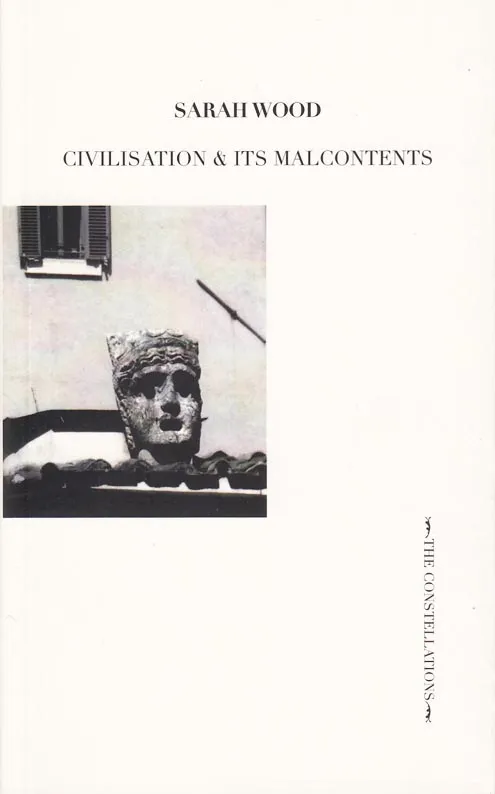
Cover of Civilisation & its Malcontents

Ma Bibliotheque

Civilisation & its Malcontents

Sarah Wood

€11.00

Caught up in the vortex of this bellicose age, adrift on the sea of digital information and misinformation, without perspective enough to glimpse the future that is actually forming, I am finding it hard to think. Here is a book about thought right now and about how to think in a world that asks us at every level not to. Discontent? Malcontent? Sarah Wood looks at the world through Freud and fraud.

Language: English

recommendations

Cover of Hand That Touch This Fortune Will

Ma Bibliotheque

Hand That Touch This Fortune Will

Sam Dolbear

Enchanted €18.00

Take my hand. Trace the lines on my palm with your fingers. What size and shape are they? Take note of their form: are they forked, tasselled, wavy, chained, broken? Now examine my fingers. Tell me my disposition; tell me what beholds me.

Mapping the hand as cosmos as clinic as history as biography, hand reading is a technique suspended between medical and mystical judgement, empirical diagnosis and speculative divination. This book weaves the lives and work of the ‘reader’ and the ‘read’ together in an intricate fabric. The central ‘reader’ is Charlotte Wolff (1897–1986), a friend of Walter Benjamin, Helen Grund, and Ernst Schoen, who after fleeing from Germany’s new regime in 1933, took up hand reading in Paris to make ends meet. The ‘read’ are anonymous acrobats, dancers, and department-store managers, and members of the avant-gardes of Paris and London, from Antonin Artaud to Romola Nijinsky, Marcel Duchamp to Virginia Woolf. Arranged as an index, this book is both a guide to the techniques of hand reading and a critical theory of its history and practice, mixed with Wolff’s later work as a theorist of gender and sexuality.

"Hand That Touch This Fortune Will is a study devoted to friendship, refracted through the portal of the upturned palm. Charlotte Wolff met the world by examining what was written on the hands of the times.  What did she read in the landscapes of this intimate organ of touch, and what, through reading, was she fatally unable to see?  Through a gentle fragmentation reminiscent of The Arcades Project, Dolbear acts as a thoughtful guide through fascinating and nearly forgotten passages in the European history of palmistry under late capitalism—along with all the political uncertainties and faggy gestures that formed its nimbus.  With extraordinary attention to the peculiar experiments in living that have scarcely left a trace in the archive, Hand That Touch gathers the reader around those bars, clinics, and drawn curtains, where, under the shadow of fascist diagnosis, the occult comes palm to palm with the queer past." — M. Ty

Each book holds a very lovely insert of a hand reading chart, designed by Ana Cecilia Breña and Sam Dolbear. Printed on tracing paper, it allows the reader to read their hand as they read the book.

Sam Dolbear was a Fellow at the ICI Berlin Institute for Cultural Inquiry in Berlin from 2020 to 2024. His research addresses the life and work of Walter Benjamin and those around him. He has taught and published widely, including, with Esther Leslie, Dissonant Waves: Ernst Schoen and Experimental Sound in the 20th Century (2023). He is a co-founder of the sound and radio collective MayDay Radio.
Cover of Unable To Achieve Broad Recognition In My Lifetime, I Laboured In Obscurity Until My Death Last Year

Ma Bibliotheque

Unable To Achieve Broad Recognition In My Lifetime, I Laboured In Obscurity Until My Death Last Year

Sharon Kivland

Fiction €13.00

For nearly two years the author collected phrases from the exhibition press releases she received through email, posting certain of them on Facebook in a rather unsystematic way (that is to say, when she felt like it), with only one change, that of the personal pronoun, so each statement appeared vainglorious, absurd, even tragic. She supposes the measure was if they made her laugh or gasp or used words she deplores when thinking or writing about art. The posts gathered quite a following. Some people still mention them to her, and others have asked her to look at their own press releases before circulation.

These extracts have provoked laughter, disbelief (especially when performed as public readings, when she has  been obliged to swear to their veracity), self-recognition, and yes, shame.

She had only three rules: 1) She would not quote the press release of anyone she knows (certainly she could have done—she must admit that both a friend and someone she dislikes intensely have slipped in, and she fervently hopes neither ever reads this book); 2) She would not alter anything except the pronoun (this is largely true; however, for this book, she corrected some errors of punctuation and spelling, changed spellings to their English form, and employed her beloved Oxford comma); and 3) She would not use anything the artist had written (this, too, is true, save for one exception that was too wonderful not to include).

Finally, she  gathered a collection of endorsements, some along the way, others when she indicated this work was done. She is still alive and she continues to labour in obscurity. 

Cover of Day Book

Ma Bibliotheque

Day Book

Gill Houghton

Non-fiction €17.00

Looking at pictures, she was reminded of the lack of time. And anyway, where did all the time go?

In Day Book a woman artist looks at time in an address to quotidian events and their unfolding. Exploring motherhood, unpaid labour, childcare, and the time of the artist, she reads the work of contemporary women filmmakers through the earlier works of filmmakers, writers, and photographers, including Chantal Akerman and Marguerite Duras, Natalia Ginzburg and Christa Wolf, Bertien van Manen and Bernadette Mayer. The inability to capture the accumulation of days emerges—a form without form, day after day after day.

Cover of Shapes found for living

Ma Bibliotheque

Shapes found for living

Nick Norton

Fiction €15.00

Books in dreams were once made of scrolls and parchments. Once, books in dreams could only manifest themselves as clay. Scratches became meaningful. Books still tumble down. Most rooms are flooded; the waters are generally at ankle height.

Shapes Found for Living offers short tales—rumours and fables coalescing  from the uneven experience of living in this century and vivifying the reader’s imagined memory theatre. The collection moves from rude immediacy via questioning forms of language depicting unstable mental states, the near madness of trying to live or love,  to the absurd remnants of an (envisioned) ancestral recall. 

Cover of Centrefold 1974. A Memoir

Ma Bibliotheque

Centrefold 1974. A Memoir

Louise O'Hare

Memoir €20.00

Following the publication of Centrefold in Artforum, November 1974, Benglis says that Penthouse wanted to use the image, but instead she proposed ‘a take-off on a traditional pieta, depicting a beautiful girl as the Madonna with a nude man on her lap’. They refused, ‘we cannot do that, we cannot allow artists to make a centrefold.’

Published to coincide with the fiftieth anniversary of that Centrefold, and shifting between 1970s New York and Los Angeles and the Corbyn years in Tower Hamlets, London, this Centrefold enacts an ambivalent ‘full accounting’ of Lynda Benglis’s Artforum spread, as well as her gender ‘mockeries’ and Secrets series. Taking in nursery privatisation, artworld silencing and censorship, maintenance art, muddled Marxism, performances of motherhood, and masturbation, Louise O’Hare weighs up the various impacts and forms of disciplining at play in both column and dildo inches.

Cover of Smoke Drifts

World Poetry Books

Smoke Drifts

Nadia Anjuman, Diana Arterian and 1 more

Poetry €20.00

Afghan poet Nadia Anjuman (1980-2005) drew on the lineage of Persian and Sufi writing and her life under Taliban rule, attending to love, oppression, myth, and devotion through lyrics that both embrace and resist tradition. Anjuman grew up in the Herat, Afghanistan, a city known for centuries for its poetry. While the Taliban was in power, Anjuman met with other women in what appeared to be a needlepoint school, one of the few sanctioned pastimes for women, to secretly discuss literature and poetry. After the fall of the Taliban, Anjuman was finally able to attend university. She wrote and published a celebrated volume of poetry and was set to publish another before her early death due to domestic violence. Selections from both of Anjuman’s collections are presented here for the first time in English.

Cover of Miam 09 : Les oiseaux ne chantent pas : ils crient de douleur

Miam Editions

Miam 09 : Les oiseaux ne chantent pas : ils crient de douleur

Various

4SPIKE & howawfulallanis, Alex Less, Alice Royer, Alligataure, Amelie Clicquot, Anjol, Arañada, Axel Fievet , Axelle Bourguignon, Baron & Tosma, Charlie Cooper, Charlotte Sallan Gémard, Délora Abbal, Elliott Sanchez, Erimoczi, femo, Fleur Douglas, Gaia Bergelin & Inès Camrla, Justine Bouvet, Kara, Kiara Patry, Lilian Magardeau & Elisa Grondin, Loreleï, Lucile Moreau, Manon Souza, Marie Martin Design, Mira, Migraine, Nathan Peron, Nathanael Brelin, Nomaison, Ema Tomas, Othilie Jourde Ledoux, Piquico , Rémy Bellariva, Séraphin Degroote Ferrera et Arthur Diguet, Syan Fischer, Tanikawa Sari, Vanessa Kintzel, Virginie Contier, Viviane Le Borgne, Zoé Vincent. 

Cover of Kamer I - Oesters

Self-Published

Kamer I - Oesters

Katinka van Gorkum

‘Kamer I - Oesters’ is een kort verhaal geschreven in het kader van het kunstproject Beste Anna,. Hierin fungeert de figuur van de openlijk lesbische Rotterdamse schrijfster Anna Blaman als motor voor vragen, gesprekken en correspondenties rondom feminisme, schrijvende vrouwen en de canon, anders zijn, eenzaamheid en vriendschap.

Ook verkent Katinka met dit onderzoek Anna Blaman als personage voor een toekomstige roman. In ‘Kamer I - Oesters’ betreedt de hoofdpersoon Anna’s met een rolkoffer vol boeken van andere schrijvers, fluistert ze hun woorden in de kieren in Anna’s muren en verleidt ze Anna met een pauwendans.

Anna Blaman (1905-1960) was openlijk lesbisch, in die tijd een groot taboe, maar zag zichzelf niet als voorvechter van een beweging. Een belangrijk thema in haar werk is de vraag of we een ander werkelijk kunnen kennen. De personages in haar romans zijn vaak alleen en verlangen naar een ander, die altijd onbereikbaar blijft. In 1948 publiceerde Blaman de roman Eenzaam Avontuur, die erg veel stof op deed waaien vanwege enkele (homo-)erotische personages die in het boek voorkomen.