Theory & Criticism
Theory & Criticism

The Skin of the Film
Memories that evoke the physical awareness of touch, smell, and bodily presence can be vital links to home for people living in diaspora from their culture of origin. How can filmmakers working between cultures use cinema, a visual medium, to transmit that physical sense of place and culture? In The Skin of the Film Laura U. Marks offers an answer, building on the theories of Gilles Deleuze and others to explain how and why intercultural cinema represents embodied experience in a postcolonial, transnational world.
Much of intercultural cinema, Marks argues, has its origin in silence, in the gaps left by recorded history. Filmmakers seeking to represent their native cultures have had to develop new forms of cinematic expression. Marks offers a theory of “haptic visuality”—a visuality that functions like the sense of touch by triggering physical memories of smell, touch, and taste—to explain the newfound ways in which intercultural cinema engages the viewer bodily to convey cultural experience and memory. Using close to two hundred examples of intercultural film and video, she shows how the image allows viewers to experience cinema as a physical and multisensory embodiment of culture, not just as a visual representation of experience. Finally, this book offers a guide to many hard-to-find works of independent film and video made by Third World diasporic filmmakers now living in the United States, Great Britain, and Canada.
The Skin of the Film draws on phenomenology, postcolonial and feminist theory, anthropology, and cognitive science. It will be essential reading for those interested in film theory, experimental cinema, the experience of diaspora, and the role of the sensuous in culture.
(Jan 2000)

The Force of Non-Violence
Situating non-violence at the cross-roads of the ethical and political, The Force of Non-Violence brings into focus the ethical binds that emerge within the force field of violence. Non-violence is very often misunderstood as a passive practice that emanates from a calm region of the soul, or as an individualist ethic with an unrealistic relation to existing forms of power.
This book argues for an aggressive form of non-violence that struggles with psychic ambivalence and seeks to embody social ideals of inter-dependency and equality. Only through a critique of individualism can the ethical and political ideal of non-violence be understood in relation to the ideal of equality and the demand for grievability. In this psychosocial and philosophical reflection that draws upon Foucault, Fanon, Freud, and Benjamin, Butler argues that to oppose violence now requires understanding its different modalities, including the regulation of the grievability of lives.
The book shows how "racial and demographic phantasms" enter into the rationale for inflicting state violence and other modes of "letting die" by investing violence in those who are most severely exposed to its effects and subjugated to its lethal power. The struggle for non-violence is found in modes of resistance and movements for social transformation that separate off aggression from its destructive aims to affirm the living potentials of radical egalitarian politics

Necropolitics
In Necropolitics Achille Mbembe, a leader in the new wave of francophone critical theory, theorizes the genealogy of the contemporary world, a world plagued by ever-increasing inequality, militarization, enmity, and terror as well as by a resurgence of racist, fascist, and nationalist forces determined to exclude and kill. He outlines how democracy has begun to embrace its dark side—-what he calls its “nocturnal body”—-which is based on the desires, fears, affects, relations, and violence that drove colonialism. This shift has hollowed out democracy, thereby eroding the very values, rights, and freedoms liberal democracy routinely celebrates. As a result, war has become the sacrament of our times in a conception of sovereignty that operates by annihilating all those considered enemies of the state. Despite his dire diagnosis, Mbembe draws on post-Foucauldian debates on biopolitics, war, and race as well as Fanon's notion of care as a shared vulnerability to explore how new conceptions of the human that transcend humanism might come to pass. These new conceptions would allow us to encounter the Other not as a thing to exclude but as a person with whom to build a more just world.
(October 2019)

Sex, or the Unbearable
Sex, or the Unbearable is a dialogue between Lauren Berlant and Lee Edelman, two of our leading theorists of sexuality, politics, and culture. In juxtaposing sex and the unbearable they don't propose that sex is unbearable, only that it unleashes unbearable contradictions that we nonetheless struggle to bear. In Berlant and Edelman's exchange, those terms invoke disturbances produced in encounters with others, ourselves, and the world, disturbances that tap into threats induced by fears of loss or rupture as well as by our hopes for repair.
Through virtuoso interpretations of works of cinema, photography, critical theory, and literature, including Lydia Davis's story "Break It Down" (reprinted in full here), Berlant and Edelman explore what it means to live with negativity, with those divisions that may be irreparable. Together, they consider how such negativity affects politics, theory, and intimately felt encounters. But where their critical approaches differ, neither hesitates to voice disagreement. Their very discussion—punctuated with moments of frustration, misconstruction, anxiety, aggression, recognition, exhilaration, and inspiration—enacts both the difficulty and the potential of encounter, the subject of this unusual exchange between two eminent critics and close friends.

The Mushroom at the End of the World
What a rare mushroom can teach us about sustaining life on a fragile planet. Matsutake is the most valuable mushroom in the world,vand a weed that grows in human-disturbed forests across the northern hemisphere. Through its ability to nurture trees, matsutake helps forests to grow in daunting places. It is also an edible delicacy in Japan, where it sometimes commands astronomical prices. In all its contradictions, matsutake offers insights into areas far beyond just mushrooms and addresses a crucial question: what manages to live in the ruins we have made?
A tale of diversity within our damaged landscapes, The Mushroom at the End of the World follows one of the strangest commodity chains of our times to explore the unexpected corners of capitalism. Here, we witness the varied and peculiar worlds of matsutake commerce: the worlds of Japanese gourmets, capitalist traders, Hmong jungle fighters, industrial forests, Yi Chinese goat herders, Finnish nature guides, and more. These companions also lead us into fungal ecologies and forest histories to better understand the promise of cohabitation in a time of massive human destruction.
By investigating one of the world's most sought-after fungi, The Mushroom at the End of the World presents an original examination into the relation between capitalist destruction and collaborative survival within multispecies landscapes, the prerequisite for continuing life on earth.
"Scientists and artists know that the way to handle an immense topic is often through close attention to a small aspect of it, revealing the whole through the part. In the shape of a finch's beak we can see all of evolution. So through close, indeed loving, attention to a certain fascinating mushroom, the matsutake, Anna Lowenhaupt Tsing discusses how the whole immense crisis of ecology came about and why it continues. Critical of simplistic reductionism, she offers clear analysis, and in place of panicked reaction considers possibilities of rational, humane, resourceful behavior. In a situation where urgency and enormity can overwhelm the mind, she gives us a real way to think about it. I'm very grateful to have this book as a guide through the coming years." - Ursula K. Le Guin

Light in the Dark/Luz En Lo Oscuro: Rewriting Identity, Spirituality, Reality
Light in the Dark is the culmination of Gloria E. Anzaldua's mature thought and the most comprehensive presentation of her philosophy. Focusing on aesthetics, ontology, epistemology, and ethics, it contains several developments in her many important theoretical contributions.

Geontologies: A Requiem to Late Liberalism
In Geontologies Elizabeth A. Povinelli continues her project of mapping the current conditions of late liberalism by offering a bold retheorization of power. Finding Foucauldian biopolitics unable to adequately reveal contemporary mechanisms of power and governance, Povinelli describes a mode of power she calls geontopower, which operates through the regulation of the distinction between Life and Nonlife and the figures of the Desert, the Animist, and the Virus. Geontologies examines this formation of power from the perspective of Indigenous Australian maneuvers against the settler state.
And it probes how our contemporary critical languages—anthropogenic climate change, plasticity, new materialism, antinormativity—often unwittingly transform their struggles against geontopower into a deeper entwinement within it. A woman who became a river, a snakelike entity who spawns the fog, plesiosaurus fossils and vast networks of rock weirs: in asking how these different forms of existence refuse incorporation into the vocabularies of Western theory Povinelli provides a revelatory new way to understand a form of power long self-evident in certain regimes of settler late liberalism but now becoming visible much further beyond.

The Female Complaint
The Female Complaint is part of Lauren Berlant’s groundbreaking “national sentimentality” project charting the emergence of the U.S. political sphere as an affective space of attachment and identification. In this book, Berlant chronicles the origins and conventions of the first mass-cultural “intimate public” in the United States, a “women’s culture” distinguished by a view that women inevitably have something in common and are in need of a conversation that feels intimate and revelatory. As Berlant explains, “women’s” books, films, and television shows enact a fantasy that a woman’s life is not just her own, but an experience understood by other women, no matter how dissimilar they are. The commodified genres of intimacy, such as “chick lit,” circulate among strangers, enabling insider self-help talk to flourish in an intimate public. Sentimentality and complaint are central to this commercial convention of critique; their relation to the political realm is ambivalent, as politics seems both to threaten sentimental values and to provide certain opportunities for their extension.
Pairing literary criticism and historical analysis, Berlant explores the territory of this intimate public sphere through close readings of U.S. women’s literary works and their stage and film adaptations. Her interpretation of Uncle Tom’s Cabin and its literary descendants reaches from Harriet Beecher Stowe to Toni Morrison’s Beloved, touching on Shirley Temple, James Baldwin, and The Bridges of Madison County along the way. Berlant illuminates different permutations of the women’s intimate public through her readings of Edna Ferber’s Show Boat; Fannie Hurst’s Imitation of Life; Olive Higgins Prouty’s feminist melodrama Now, Voyager; Dorothy Parker’s poetry, prose, and Academy Award–winning screenplay for A Star Is Born; the Fay Weldon novel and Roseanne Barr film The Life and Loves of a She-Devil; and the queer, avant-garde film Showboat 1988–The Remake. The Female Complaint is a major contribution from a leading Americanist.

What The Fire Sees
A collection of anti-capitalist poetry, philosophy, cultural analysis, legal studies, manifesto and critique spanning 1996 to the present by Alenka Zupančič, Alexander Kluge, Amy Ireland, Anne Boyer, Aurelia Guo, Bini Adamczak, Carolyn Lazard, Chi Chi Shi, Denis Ekpo, Feminist Judgments Project, Gili Tal, Houria Bouteldja, Huw Lemmey, Keziah Craven, Marina Vishmidt, Nat Raha, Sarah Lamble, Teflon and Vanessa Place.
Divided we fall, but where do we land? This collection explores some of the grounds on which thinking and writing can begin again.
– Sadie Plant

Spinal Catastrophism: A Secret History
Drawing on cryptic intimations in the work of J. G. Ballard, Georges Bataille, William Burroughs, André Leroi-Gourhan, Elaine Morgan, and Friedrich Nietzsche, in the late twentieth century Daniel Barker formulated the axioms of spinal catastrophism: If human morphology, upright posture, and the possibility of language are the ramified accidents of natural history, then psychic ailments are ultimately afflictions of the spine, which itself is a scale model of biogenetic trauma, a portable map of the catastrophic events that shaped that atrocity exhibition of evolutionary traumata, the sick orthograde talking mammal.
Tracing its provenance through the biological notions of phylogeny and "organic memory" that fueled early psychoanalysis, back into idealism, nature philosophy, and romanticism, and across multiform encounters between philosophy, psychology, biology, and geology, Thomas Moynihan reveals the historical continuity of spinal catastrophism. From psychoanalysis and myth to geology and neuroanatomy, from bioanalysis to chronopathy, from spinal colonies of proto-minds to the retroparasitism of the CNS, from "railway spine" to Elizabeth Taylor's lost gill-slits, this extravagantly comprehensive philosophical adventure uses the spinal cord as a guiding thread to rediscover forgotten pathways in modern thought.
Moynihan demonstrates that, far from being an fanciful notion rendered obsolete by advances in biology, spinal catastrophism dramatizes fundamental philosophical problematics of time, identity, continuity, and the transcendental that remain central to any attempt to reconcile human experience with natural history.

Zones Mortes
First French translation of Shulamith Firestone's first novel.
Originally published by Semiotext(e) in 1998, Airless Spaces is Shulamith Firestone's first novel. She writes this short stories gradually moving away from a career as a feminist activist; while finding herself increasingly close to a state of breathlessness. The stories center around people in the grip of a seemingly endemic poverty in New York, worn out by the back and forth of psychiatric hospitals and a sclerotic daily life. On the back cover of the original edition, we read the words of the poet Eileen Myles: “In the century I'm most familiar with, the 20th, the explosion was never-ending, the pieces tinier and tinier. Shulamith Firestone, in her radical insider's tale, informs us repeatedly like lightly pelting rain that all of us are vanishing in a century of institutions that take and take until everyone has gone away and there's no one left to shut the door.”
The French edition that we offer here, in a translation by Émilie Notéris, is accompanied by a text by Chris Kraus, author and first editor of the book.
Shulamith Firestone (1945 - 2012) is a feminist writer, activist and artist. After studying painting at the Art Institute of Chicago, she moved to New York where she co-founded the feminist groups New York Radical Women (1967), Redstockings (1969) and New York Radical Feminists (1969). In 1970, when she was only 25 years old, she publieshed the book The Dialectic of Sex: The Case for a Feminist Revolution. Firestone theorizes cybernetic communism as a system that enables the liberation of women, while at the same time putting an end to biological and social inequalities linked to reproduction and the education of children, in particular through technological emancipation.
published in May 2020
French edition
12,5 x 19,5 cm (softcover)
154 pages

Nuisance
Nuisance compiles articles, essays, lecture transcripts, album annotations and other texts written by queer audio producer and writer Terre Thaemlitz between 1996 and 2015.
The overall theme uniting the texts is a defense of pessimism and a critical rejection of the incessant optimism lurking at the core of virtually all media – even in the “critical fields” themselves, where it reflects our conformity to those First World humanist and capitalist practices we wish to critique.
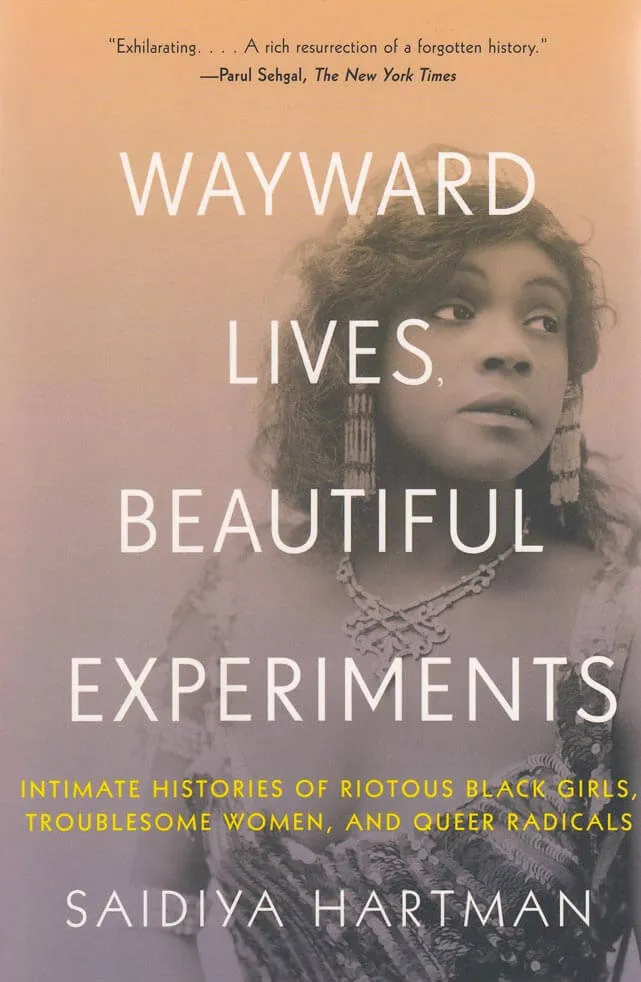
Wayward Lives, Beautiful Experiments
Wayward Lives, Beautiful Experiments examines the revolution of black intimate life that unfolded in Philadelphia and New York at the beginning of the twentieth century. In wrestling with the question of what a free life is, many young black women created forms of intimacy and kinship indifferent to the dictates of respectability and outside the bounds of law. They cleaved to and cast off lovers, exchanged sex to subsist, and revised the meaning of marriage. Longing and desire fueled their experiments in how to live. They refused to labor like slaves or to accept degrading conditions of work. Here, for the first time, these women are credited with shaping a cultural movement that transformed the urban landscape. Through a melding of history and literary imagination, Wayward Lives, Beautiful Experiments recovers these women's radical aspirations and insurgent desires.
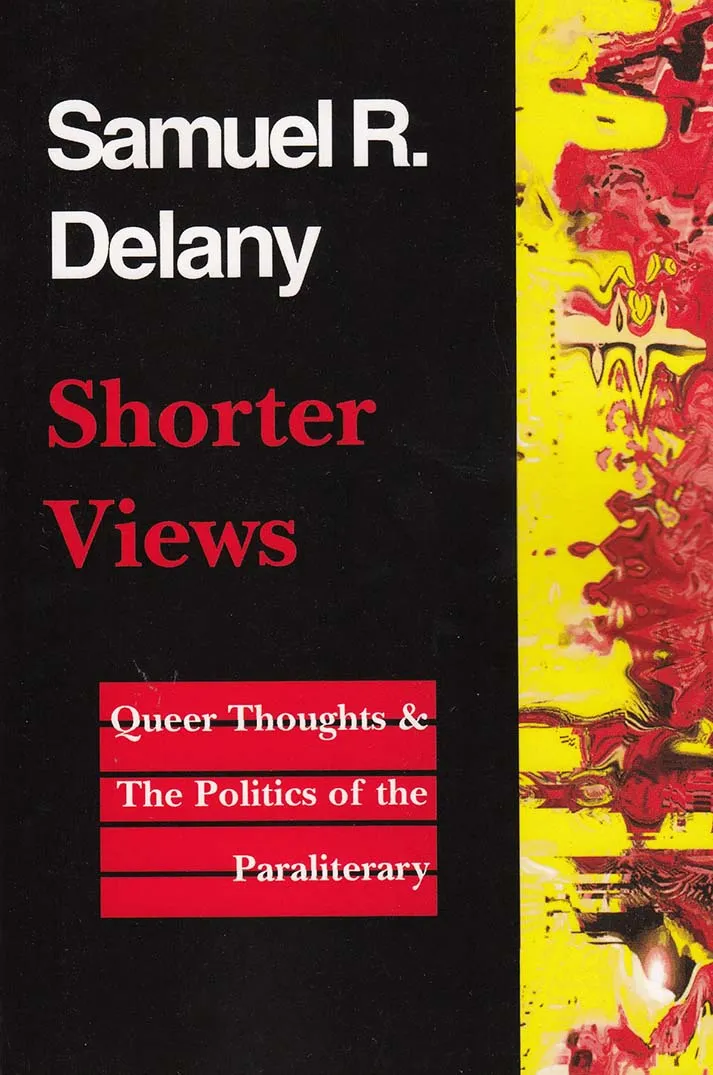
Shorter Views: Queer Thoughts & the Politics of the Paraliterary
In Shorter Views, Hugo and Nebula award-winning author Samuel R. Delany explores the closely felt issues of identity, race, and sexuality; the untangling of the intricacies of literary theory, and the writing process itself. The essays cluster around topics related to queer theory on the one hand, and on the other, questions concerning the paraliterary genres: science fiction, pornography, comics, and more.
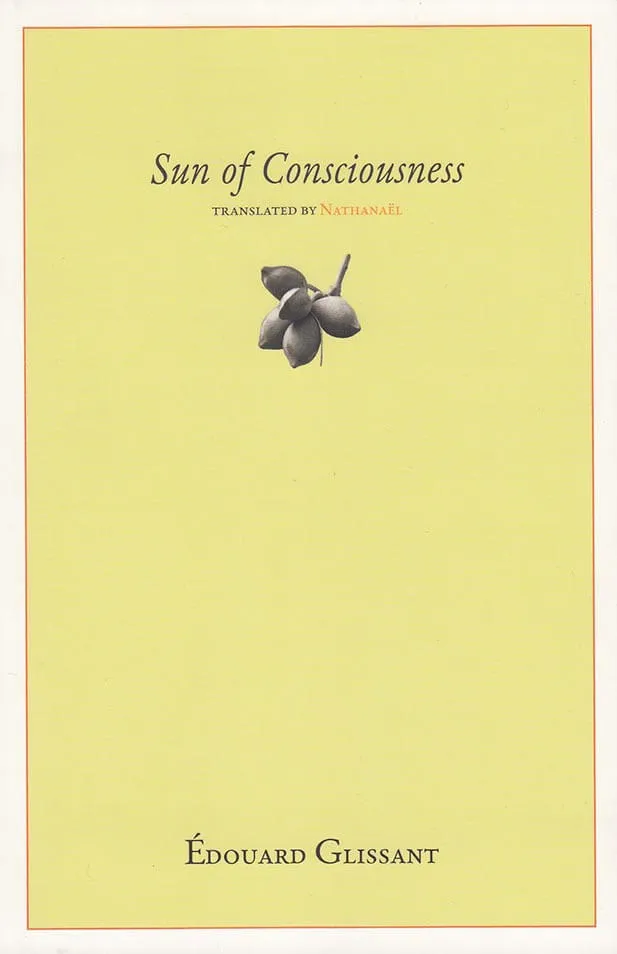
Sun of Consciousness
Soleil de la Conscience (Sun of Consciousness) was Martinican philosopher Édouard Glissant's first published work, and opened the Poétique (Poetics) strain of his oeuvre. This book-length essay, which is characterized by its exploratory, intimate character, announces Glissants concerns with créolisation (creolization), mondialité (worldliness, as against globalization), or opacité (opacity) and inscribes in this work a refusal of colonialism and of inverted exoticism. The sense of estrangement experienced by the author who arrives as a "foreigner" in a country to which he is bound by "the first page of his passport" is the author's principal preoccupation. By positioning himself as both different and same, Glissant opens a space for the writing of a(nother) history: that of the Caribbean.

Volatile Bodies
Volatile Bodies demonstrates that the sexually specific body is socially constructed: biology or nature is not opposed to or in conflict with culture. Human biology is inherently social and has no pure or natural "origin" outside of culture. Being the raw material of social and cultural organization, it is "incomplete" and thus subject to the endless rewriting and social inscription that constitute all sign systems.
Examining the theories of Freud, Lacan, Merleau-Ponty, Foucault, Deleuze, Derrida, etc. on the subject of the body, Elizabeth Grosz concludes that the body they theorize is male. These thinkers are not providing an account of "human" corporeality but of male corporeality. Grosz then turns to corporeal experiences unique to women-menstruation, pregnancy, childbirth, lactation, menopause. Her examination of female experience lays the groundwork for developing theories of sexed corporeality rather than merely rectifying flawed models of male theorists.
"This is a text of rare erudition and intellectual force. It will not only introduce feminists to an enriching set of theoretical perspectives but sets a high critical standard for feminist dialogues on the status of the body." -Judith Butler

Matters of Feminist Practice
Matters of Feminist Practice, edited by Poupeh Missaghi and Karla Kelsey, brings together scholars, writers, poets, and artists of different identities and backgrounds to confer on the urgent topic of “feminist practice” through seven topics: the body, the quotidian, hybridity, language, documentation, environment, and conflict.
In the twenty-five scholarly and creative-critical pieces included in our introductory volume, each contributor brings unique visions, insights, approaches, voices, and forms to launch the conversation, which will continue to unfold online at mfpjournal.com.
Contributors to the inaugural issue include: Alexis Almeida, Mary-Kim Arnold, Mildred Barya, Teresa Carmody, Julie Carr, Serena Chopra, Caroline Crumpacker, Lynne DeSilva-Johnson, Marcella Durand, Jennifer Firestone, Yanara Friedland, Carla Harryman, Madhu Kaza, Petra Kuppers, Jean Lee, Rachel Levitsky, Megan Madden, Saretta Morgan, Lida Nosrati, Adrienne Perry, Frances Richard, Kat Savino, Celina Su, and Rachael Guynn Wilson.

Zoological Vandalism
ZOOLOGICAL VANDALISM by Sina Seifee in collaboration with editor Renan Lauran and designer Foad Farahani, is immersion in the compiling and composing of Seifee’s notes on medieval bestiaries, and placing them in sequential order. It is the first chapter of a series that creates context and opens small descriptive steps towards (what Latour might call) “knowing interestingly” about bestiaries. It is a speculative adventure in bio-techno tales and old styles of knowing. As an “ecology of obligation” with Iranian sensuality and its ardent materiality, somewhere in the menagerie of found and feral animal videos on Whatsapp and Telegram, is Seifee’s undisciplined grounding in visual crafts.
Sina Seifee researches as an artist in the fields of narrative, performance, and knowledge production. He has been working on the question of technology and storytelling in the arts and sciences of the middle ages and the past-present of material reading practices in collective life. He studied Applied Mathematics in Tehran, received his MA in Media Arts in KHM Cologne. In 2017 he finished an advanced research program in performance studies in a.pass.

How to Suppress Women's Writing
Written in the style of a sarcastic and irreverent guidebook, How to Suppress Women's Writing explains how women are prevented from producing written works, not given credit when such works are produced, or dismissed or belittled for those contributions they are acknowledged to have made. Although primarily focusing on texts written in English, the author also includes examples from non-English works and other media, like paintings. Citing authors and critics like Suzy McKee Charnas, Margaret Cavendish, and Vonda McIntyre, Russ aims to describe the systematic social forces that impede widespread recognition of the work of female authors.

A Billion Black Anthropocenes or None
Tracing the color line of the Anthropocene, A Billion Black Anthropocenes or None examines how the grammar of geology is foundational to establishing the extractive economies of subjective life and the earth under colonialism and slavery. Yusoff initiates a transdisciplinary conversation between feminist black theory, geography, and the earth sciences, addressing the politics of the Anthropocene within the context of race, materiality, deep time, and the afterlives of geology.

Perhaps It Is High Time for a Xeno-architecture to Match
Armen Avanessian, Lietje Bauwens and 3 more
“Xeno” speaks to the turn away from “what is” toward “what could be”: the (as yet) unknown, the alien—having been employed in recent years through such speculative-political approaches as xenofeminism and xenopoetics. Perhaps It Is High Time for a Xeno-architecture to Match documents a conversation series from January to March 2017 that explored what an intervention of the xeno might bring to bear on contemporary and future (infra)structure.
This book aims to unpack the prefix, probing what it entails—not merely rhetorically but also as a means of practice, in an attempt to bring the ideas it contains more concretely into the domain of architecture. It proposes to link the more philosophical discussions on the notion of xeno with questions of instrumentalization and governance that are necessarily involved in the praxis of architecture. And it relates the significance of legal architecture and technologically driven transformation in the metaphysics of law back to the agenda of xeno-architecture. By researching how architects, artists, thinkers, and activists operating in the spatial field might endorse a process of “alienation” to confront global issues, this project attempts to re-radicalize spatial practice.
Contributions by ARMEN AVANESSIAN, BENJAMIN BRATTON, KATHLEEN DITZIG, DANIEL FALB, ANKE HENNING, VICTORIA IVANOVA, MARKUS MIESSEN, LUCIANA PARISI, PATRICIA REED.

Beyond The Periphery Of The Skin
Feminist, antiracist, trans, ecological movements: all look at the body as a ground of confrontation with the state and a vehicle for transformative social practices. Concurrently, the body has become a signifier for the reproduction crisis generated by the neoliberal turn in capitalist development and for the international surge in institutional repression and public violence. In Beyond the Periphery of the Skin, lifelong activist and bestselling author Silvia Federici examines these complex processes, placing them in the context of the history of the capitalist transformation of the body into a work-machine, expanding on one of the main subjects of her first book, Caliban and the Witch. In this process she confronts some of the most important questions for contemporary radical political projects.

The Hundreds
Kathleen Stewart, Laurent Berlant
In The Hundreds Lauren Berlant and Kathleen Stewart speculate on writing, affect, politics, and attention to processes of world-making.
The experiment of the one hundred word constraint, each piece is one hundred or multiples of one hundred words long, amplifies the resonance of things that are happening in atmospheres, rhythms of encounter, and scenes that shift the social and conceptual ground.
What's an encounter with anything once it's seen as an incitement to composition? What's a concept or a theory if they're no longer seen as a truth effect, but a training in absorption, attention, and framing?
The Hundreds includes four indexes in which Andrew Causey, Susan Lepselter, Fred Moten, and Stephen Muecke each respond with their own compositional, conceptual, and formal staging of the worlds of the book.

Woman, Native, Other
Woman, Native, Other is located at the juncture of a number of different fields and disciplines, and it genuinely succeeds in pushing the boundaries of these disciplines further. It is one of the very few theoretical attempts to grapple with the writings of women of color. - Chandra Talpade Mohanty