Art
Art

Spike #88 – Spirituality
For our Summer 2026 issue, amid the latest revival of SPIRITUALITY in culture, Spike asked: what are people reaching for beyond what can be measured? The answers are eclectic, emphatic, and most of all personal: Johanna Hedva’s essay about the human voice’s part in the divine; portraits of mystic artists Lee “Scratch” Perry, Natasha Tontey, and Santiago Yahuarcani by Isis Semaj-Hall, Riar Rizaldi, and Miguel A. López; Jamieson Webster’s psychoanalytic look at Renaissance painting’s body of Christ; a spiritual history of perfumes by Élisabeth de Feydeau; Patrick McGraw’s soulful reading of America’s (perhaps) greatest living author, Joy Williams; queries of Gen Z’s search for God by Lamorna Ash, the disappearance of atheism by Steven Phillips-Horst, and a new form of contemplation by Aodhan Madden; and LIFEMAXXING recommendations to purge the soul, sometimes devilishly. Plus, some backpage words of wisdom from Tea Hačić-Vlahović: “Devotion and humiliation are holy.”

Abstract Coloring Book
A coloring book conceived as an artist book. Coumba Samba’s publication prompts you to explore geometric forms and structures with a small set of colored pencils. Using those simple materials one realises how interaction and experimentation challenge again and again the relationship between color, abstraction and internalised form systems.
Published in connection with the exhibitions deutschland at Kunstverein in Hamburg and Coumba Samba at MauMaus in Lisbon.

WatchPeopleDie.TV: Trans Death and Embodiment
In a time of widespread conservatism, watchpeople die.TV: Trans Death and Embodiment is not only unapologetically trans but challenges and transcends transphobic vitriol to create urgent and powerful work.
“This written portion was made from performing an erasure poem on the text of the sourced transphobic comments and then commenting on the erased words. The text is intended as a performance text. What this means is that I think of the text as not just a documentation of a performance but a performance itself.”
watchpeopledie.tv contains writing from watchpeopledie.TV (2025), performed as part of the 2025 VCUarts MFA Thesis exhibition that was on view April 11, 2025, to May 11, 2025, at The Anderson Gallery in Richmond, VA.

Small Prints
This artist’s publication contains a sequence of unique letterpress monoprints, made by Dutch graphic designer Karel Martens between 2014 and 2022. The prints, which are both highly geometric and brightly coloured, are reproduced in the book at their actual size. Textual elements accent the various abstract shapes and repetitions on almost every page. ‘Small Prints’ is available in two different cover versions, which itself is the result of a printing experiment. By printing the contents of the book in three layers on a single print sheet, which was then cut and folded, variations in the cover emerged.

Person with the last name Universe
This book has been self-published for Latvian artist and poet Jelena Glazova's solo exhibition “Person with the last name Universe” at Riga contemporary art space (July - August 2026). The exhibition is the artist’s act of feminist guerrilla resistance within the symbolic territory of contemporary phallocracy. The source and central figure of the post-gender universe conjured by Glazova is the Person with the last name Universe, whose creative strategy the artist unpretentiously calls Glazovism.
Jelena Glazova (Belgium/Latvia) is a poet and multimedia artist who combines visual elements, experimental sound, installation and poetic text in her projects. As an artist, she has participated in international festivals and projects in Latvia, Estonia, Lithuania, Sweden, Austria, Belgium, Germany, the Netherlands, Turkey and other countries. Among the most notable exhibitions are "Identification of a Woman" at the Latvian Museum of Photography (2010) and "Elements of a Puzzle" at the Latvian Centre for Contemporary Art (2011). She is the author of four poetry collections. Glazova's poetry has been translated into 12 languages. Since 2012, she has given more than 200 performances in 18 countries. She is the co-founder of two poetry festivals in Riga: "Blood of a Poet" (2014–2016) and "Poetry without Borders" (2017–2022). https://www.jelena-glazova.com/
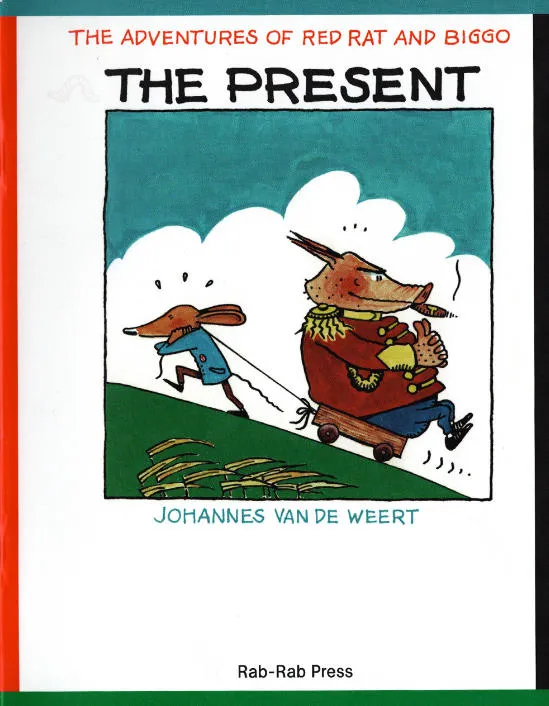
The Adventures of Red Rat and BIGGO – The Present
A children's book by Johannes van de Weert, a veteran of the punk underground (Rondos, The Ex, Red Rat, Raket).
The Adventures of Red Rat and BIGGO – The Present is a remake of Bram konijn en Piet de muis [Bram the Rabbit and Piet the Mouse], a 1982 children's book by Johannes van de Weert, a veteran of the Dutch punk underground who played with Rondos and The Ex, and who was the force behind Red Rat and Raket editions.
The Present is a 2010 remake telling the story of a bully pig who terrifies a poor rat on a daily basis. After a while, the rat falls ill with fear and has to stay in bed. The lonely, evil pig has no one to play with and becomes depressed. The pig gives the rat a present—a bunch of beautiful flowers—and all is well. Now the two can play together.
The 2010 remake, featuring different characters and intended for a North Korean audience, was never published. The 2025 English version opens with an introduction by Van de Weert, telling a bizarre story of a failed political career and an absurd vaudeville class struggle behind the seemingly harmless educational children's book.
Johannes van de Weert was a cartoonist active in the Rotterdam punk and squatter's movements of the 1980s. He was a singer with the punk band De Rondos and he started self-publishing small comic booklets in the late 1970s. He created his character "Redrat" for the fanzine Raket in 1980. The character soon became an icon for the squatter's movement.
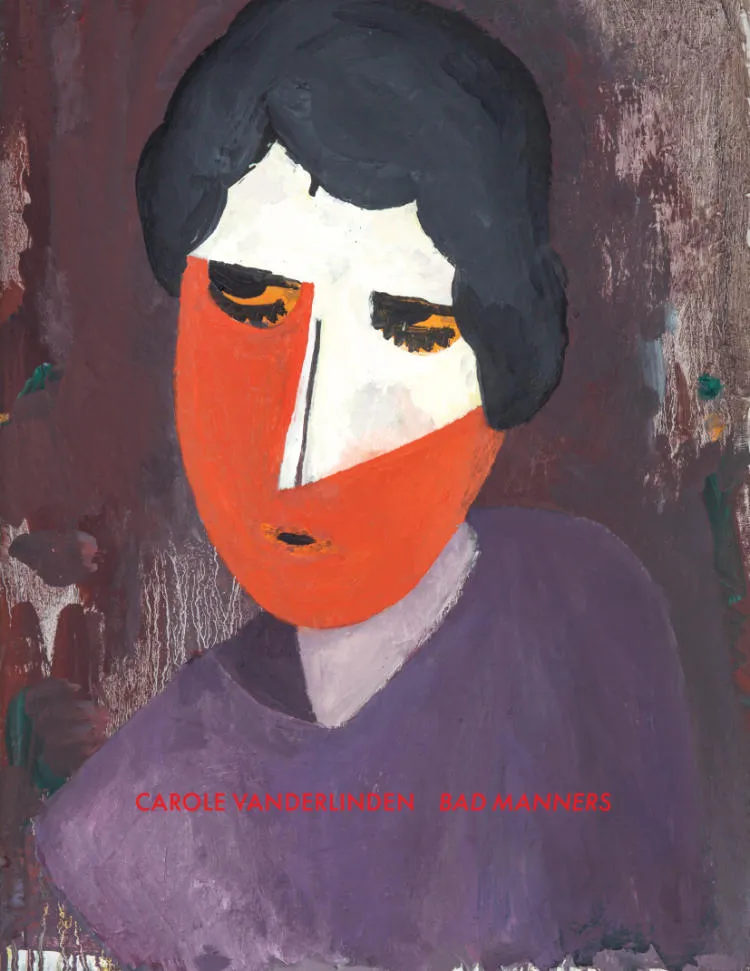
Bad Manners
Carole Vanderlinden's first monograp covers over a decade of the artist's practice. It gathers close to 200 paintings and works on paper, alongside texts by Belgian novelist Jean-Philippe Toussaint, essays by curators Ann Hoste, Ory Dessau, and Hans den Hartog Jager, as well as a conversation between musician and composer Joëlle Léandre and Vanderlinden.
Born 1973 in Brussels, Carole Vanderlinden has been developing a highly improvisational, rich artistic practice since the mid-1990s. While her work is primarily focused on painting (often using thick, hand-mixed oil paints), it regularly encompasses drawing, watercolor, collage, and small objects. Vanderlinden's practice is famously unhampered by the constraints of a single style. Her work nimbly blurs the line between figuration and abstraction, reacting intuitively to the rhythm, color, and possibilities of her medium rather than adhering to a single signature aesthetic.
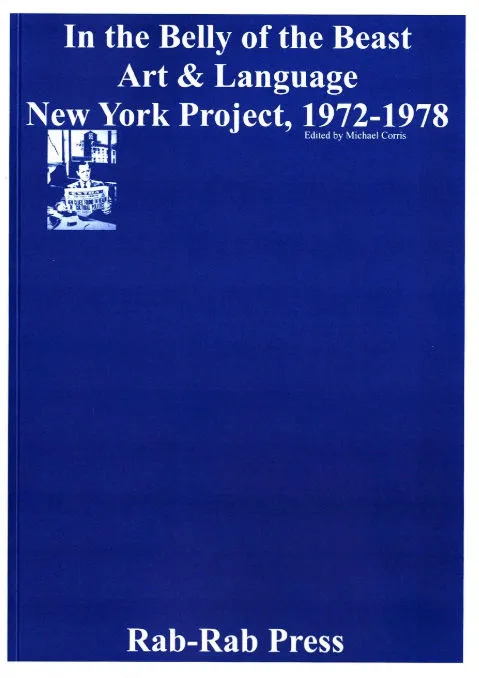
In the Belly of the Beast – Art & Language New York Project 1972-1978
Edited by Michael Corris, the expanded edition of In the Belly of the Beast: Art & Language New York Project 1972-1978 is a survey of the tumultuous years of the political Conceptualism in the mid-seventies New York.
Artists have always experimented with politics, either by organizing themselves or uniting in support of a broader political movement. Today, "activist art" is taught in universities, supported by foundations, and featured in museums and international exhibitions. Is this the only possible way?
In the Belly of the Beast tells a different story, of the work of politically engaged artists and the conflicts they experienced. It is the history of artists wishing to continue working within the boundaries of the artworld and those who were intent on establishing new ideological and class relationships with activists to build a political party.
During the 1970s in New York, the Art & Language collective pioneered institutional critique; published a Marxist-influenced journal; agitated against racism and sexism in museums; challenged the cultural imperialism of international exhibitions; and forged a framework for a socialist organization of artists. This new edition includes previously unpublished documents illuminating the contradictions and disputes that lay at the center of the organization and practices of Art & Language and left-wing groups, such as the Anti-Imperialist Cultural Union and the Artists' Meeting for Cultural Change, mobilizing artists in New York at the time.
The new and expanded edition of In the Belly of the Beast features an extensive interview with Michael Corris, who annotated a collection of previously unavailable documents from the period, including manuscripts, pamphlets, transcripts, and letters.
Art & Language is the name of a group of English artists who choose to work collectively, and the title of a magazine that they founded in 1968. Proposing a critical analysis of the relations between art, society, and politics, Art & Language marks, even in its name, the importance of the “textual turning point” in the 1960s.
Since 1976, Art & Language's project has continued, through Mel Ramsden and Michael Baldwin, with the literary and theoretical collaboration of Charles Harrison. Working with very varied mediums, from painting to rock, these co-founders of Conceptual art remain, even today, attached to observing the consequences of what they themselves call the “depressing collapse of modernism.”
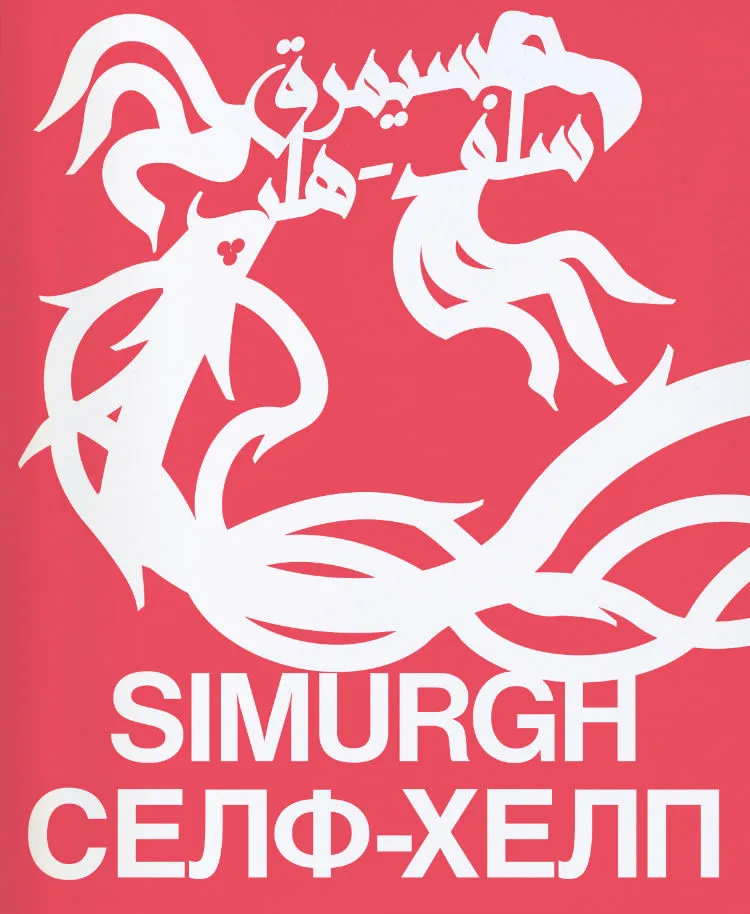
Simurgh Self-Help
The 2025 Ringier annual report (artist's book).
Since 1998, Ringier, the Swiss-based global media company, has traditionally commissioned an artist to design its annual report. Publisher Michael Ringier and curator Beatrix Ruf initiated this series as a means of reinforcing the links between art and the activities of the company.
For the 2025 edition, Slavs and Tatars' Simurgh Self-Help revisits Marcel Broodthaers' seminal work Musée d'Art Moderne: Département des Aigles (1968–1972), replacing or "translating" the eagle—a symbol of power and empire that is used to challenge our understanding of authority and value—with the Simurgh, a mythical bird found across the Turkic-Persianate world. Whilst the eagle is often associated with nation-states and masculinity, the Simurgh is decidedly transnational, metaphysical, and flamboyant, if not gender-fluid.
Much like the collective's geographic remit—between the former Berlin Wall and the Great Wall of China—this publication attempts to shift our focus elsewhere, eastwards, to regions which too often fall through the cracks of historiography and art history. If modern and contemporary art institutions in Broodthaers' time were largely situated between the Rhineland and Northeast United States, the multipolarity of today's art world is a fait accompli: with biennials in Uzbekistan and museums in Kazakhstan, amongst others, rivalling the traditional centers of power.
Once too a sacred bird—accompanying Zeus, for example—the eagle has, over the past two millennia, undergone a thorough profanation: a brawny, secular flex of nationalism. It would be remiss not to see the parallels in the world of media: print itself and the act of reading, once an activity for the few and anointed, has undergone a similar dynamic of democratization over the past several centuries and, especially in recent years with the internet, a vulgarization which would make medieval Church elders wag their shriveled fingers at us in an I-told-you-so meme meant for the ages. This profanation has challenged the very institution of media and the narratives it disseminates, much as important works of institutional critique challenged contemporary art in the 1970s and beyond—akin to Slavs and Tatars' genre-bending mix of high and low, East and West, sacred and profane does today.
Slavs and Tatars' (founded 2006) extensive publishing activity—some 15 books in 20 years—has treated subjects as diverse as alphabet politics, Uighur literary culture, political satire in the Muslim world, and German anti-Enlightenment thinkers. Alongside sculptures, textile works, installations, sound pieces, and even a brick-and-mortar Pickle Bar in Berlin, the collective's books have cleared new paths for contemporary discourse via a wholly idiosyncratic form of knowledge production that draws on popular culture, spiritual and esoteric traditions, oral histories, modern myths, as well as scholarly research.
Slavs and Tatars is a faction of polemics and intimacies devoted to an area east of the former Berlin Wall and west of the Great Wall of China known as Eurasia. The collective's work spans several media, disciplines, and a broad spectrum of cultural registers (high and low) focusing on an oft-forgotten sphere of influence between Slavs, Caucasians and Central Asians.
Slavs and Tatars has published Kidnapping Mountains (Book Works, 2009), a celebration of complexity in the Caucasus, Love Me, Love Me Not: Changed Names (onestar press, 2010) and are currently preparing solo engagements at Vienna's Secession, Museum of Modern Art, New York and Künstlerhaus Stuttgart.
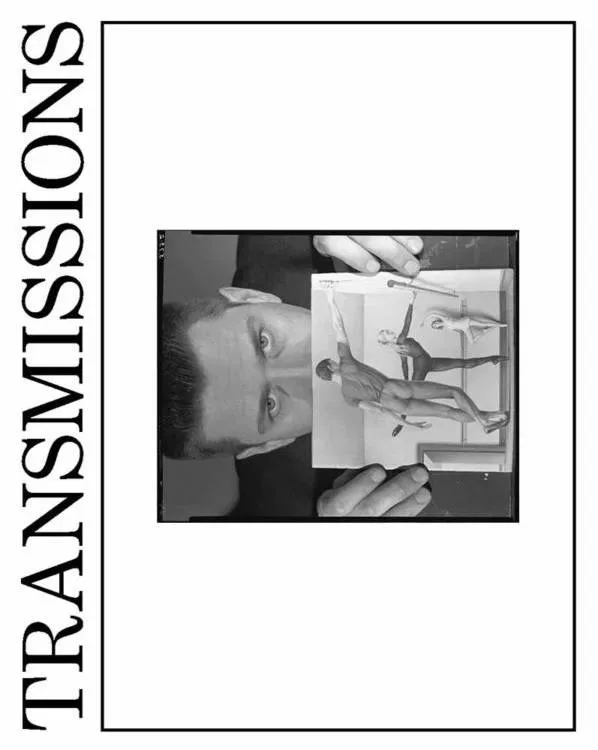
Transmissions
An aesthetic and social history of art and dance in mid-20th-century New York interpreted by contemporary artist Nick Mauss.
Over the past decade, Nick Mauss (b. 1980) has pursued a hybrid mode of working that melds the roles of curator, artist, and scholar. This catalogue leans heavily into the scholarship side of his practice, building on his 2018 Whitney Museum exhibition with a closer look at the relationship between modernist ballet and the New York avant-garde. In the 1930s through 1950s, ballet was introduced to a popular audience in New York and was simultaneously influenced by developments in Europe in painting, photography, fashion, music, and poetry. Mauss reflects on this period of rich cross-media production and synergy, ultimately arguing for the inseparability of dance and art history.

Eselsohren Dog Ears
"The impossible takes a little longer. [pen scribbling]"
Presented at Kransen in Borgerhout, 1—3 March 2024, with an exhibition titled Dog Ears and a remote reading by fellow-Stockholmian artist Dave Allen.

Calculations
Ines Cox is an artist living between the Nièvre department in central-eastern France and Antwerp. This book consists of some 300 obsessive pages of her handwritten calculations—76% of which are actually true.
Cover by Bonni Cox, back cover by Toni Matthé. Printed in Borgerhout, bound by Gazelle in Deurne. Supported by Centre de la Paresse and Flanders—State of the Art. First presented at Kransen, 23.11.2024. Edition of 100.

Postmortem issue 1
Marina Mardas, François Peyroux and 1 more
How can we define and document our present?
Postmortem is a sensitive yet critical metaphor for a world suspended between collapse and reinvention—a diary of the now. Drawing together writers and artists from Europe and the SWANA region, this issue locates areas of tension that define our era. Far from a mere dialogue between regions, it exposes the inner and outer fractures of Western hegemony, unearthing shared emotions.
From reclaiming histories and narratives in the Arab world to deconstructing digital spaces as arenas of control and resistance—even exposing systemic exclusions embedded in blood donation policies—contributors reveal these tensions as a fertile terrain for dialogue and reflection.
Through critical essays, narrative writing, poetry, interviews, and contemporary art, the concept of Postmortem unfolds an in-between state where death and rebirth occur simultaneously. Across three interwoven chapters—Metaconnexion, Dissociation, and Fragmentation—the issue engages radically with body politics, othering, post-orientalism, surveillance, decoloniality, freedom, and resistance.
Both a chronicle and a hybrid object where text, design, and image interact, Postmortem archives a world in flux. Rather than prognosticate, it dissects the present as the essential site for reimagining our future.
Contributors : Sara El-Jazara, François Peyroux, Nadine Makarem, Soukaina Melhaoui, Louise Mervelet, Manon Schaefle, Marina Mardas, Irina Breitenstein, Amer Al-Dakar

Marlie Mul
Marlie Mul (b. 1980 in Utrecht, the Netherlands; lives and works in Brussels) is characterized by a strong material awareness, spatial thinking, and an ongoing engagement with conditions of labor, systems of value, and forms of collectivity. Her practice foregrounds a sustained interest in sculptural concerns, direct engagement with materials, and processes of layering, transformation, meaning and re-meaning across multiple levels of articulation. Central to this is a continuous process of familiarizing herself and working with new materials and practices, which are repeatedly extracted from their conventional contexts and expanded into new bodies of work. These are, in turn, accompanied and reframed by other materials as well as by more social formats of production and presentation.
The first comprehensive monograph on Marlie Mul’s work is published on the occasion of her solo exhibition Das Budget (2025) at Kunsthaus Glarus. It offers a comprehensive chronological overview of key bodies of work from the early 2000s to the present and, through a richly illustrated index, unfolds a complex structure of contexts, collaborations, and modes of production. The publication includes new contributions by Annie Goodner, Lili Reynaud-Dewar and Frank Wasser, a dialogue between the artist and the editor, as well as numerous reprints of texts that have accompanied Mul’s work over the years, including writings by the artist herself.

Wanderlust
Soufiane Ababri's sketchbooks.
Soufiane Ababri (b. 1985, Rabat) is a Moroccan artist based in France. His protean work (drawings, installations, performances) explores questions of gender, homosexuality, racism and colonialism.

Carroll Dunham: Drawing Sculpture
Drawing has long been foundational to American painter Carroll Dunham's (born 1949) practice. In this collection of recent, never-before-shown works, we witness Dunham thinking about sculpture through a series of drawings produced over the course of a year. A sampling of his drawings across time offers a chart of his artistic evolution; the 80 drawings presented here are distinctive to a new page within that history. Spurred by a desire to explore the saggy, open-frame cubic boxes that he found himself doodling along the edges of a new series of paintings, Dunham began drawing fantasies of sculpture as a respite whenever he needed a break from working on the paintings. This turned into an ongoing practice that lasted until it unexpectedly segued into a material investigation with the making of sculpture in real space. Offering intimate access to Dunham's process, this book is the first to document his thinking about spatial relationships, presentation and materials for sculptures that don't exist.
Carroll Dunham has developed an extensive oeuvre since the late 1970s in painting, drawing, and printmaking. His work has been the subject of numerous solo exhibitions, most recently a drawing retrospective at the Art Institute of Chicago (2026), and presented in group exhibitions at institutions in the United States and abroad. He lives and works in Connecticut.

Stay away from nothing
Stay away from nothing shines a spotlight on the deep relationship between Paul Thek and Peter Hujar through the artists’ letters and photographs. Beginning in 1956 and spanning two decades, the publication opens a window into their intimate, complex, and beautiful lives, starting with a sequence of images by Hujar that showcases the two of them in innocent moments of pensive and haunting play in Coral Gables and beyond.
These early portraits of their budding relationship are followed by several playful postcards from Thek in 1960 and his first letter to Hujar in 1962, written while the artist is in the Philadelphia harbor aboard a containership bound for Europe. In the letter, Thek is brimming with joy and new discoveries and exclaims that the world “seems bigger and more gloriously strange than ever before in my entire life.” The two eventually meet in Rome, where they both begin to evolve into the icons we know them as today, and the remaining letters trace Thek’s travels and adventures, romantic dalliances, work, and financial ups and downs through 1975. More than fifty letters and postcards, along with drawings and other ephemera, are reproduced in Stay away from nothing and their poetic, quotidian, and melancholic tone provide a rare glimpse into Thek and Hujar’s relationship as it wavers with seduction, glamor, tumult, and mischievousness.
Throughout this period, Hujar was photographing Thek in his now-iconic style, capturing him in Italy, in various studios, and on the beaches of Fire Island. Included are the artist’s classic images of Thek in the catacombs in Palermo, as well as his studio portraits of the artist creating The Tomb. Among these well-known works are dozens of other photographs, many unpublished until now, including candid portraits of Thek, as well as images of the two artists goofing around or posing for passport photos. Collectively, these images demonstrate not only the complex emotional interiority of Thek but the tender, dark, and hopeful connection between the two artists, lovers, and friends.
An afterword is provided by Andrew Durbin, author of The Wonderful World That Almost Was, a biography of Peter Hujar and Paul Thek. Edited by Francis Schichtel.
Paul Thek is among the most legendary and elusive artists of the post-1960s generation. He burst onto the New York scene with his Technological Reliquaries series, then known as “meat pieces,” which challenged Pop and Minimalism with an idiosyncratic approach that merged earnest posthuman embodiment and a critique of contemporary art trends. In Europe in the 1970s, he created new modes of exhibition-making that involved the creation of elaborate, ephemeral installations composed of sand, candles, newspaper, chicken-wire, Polaroids, and discarded furniture. Upon returning to New York in the later years of his career, he produced his deliberately “bad paintings” while continuing his longest-running series of paintings executed on newspaper, works that poignantly underscore his sustained engagement with themes of ephemerality and the passage of time. Thek died of AIDS in 1988.
Peter Hujar died of AIDS in 1987, leaving behind a complex and profound body of photographs. Hujar was a leading figure in the group of artists, musicians, writers, and performers at the forefront of the cultural scene in downtown New York in the 1970s and early 80s, and he was enormously admired for his completely uncompromising attitude towards work and life. He was a consummate technician, and his portraits of people, animals, and landscapes, with their exquisite black-and-white tonalities, were extremely influential. Highly emotional yet stripped of excess, Hujar’s photographs are always beautiful, although rarely in a conventional way. His extraordinary first book, Portraits in Life and Death, with an introduction by Susan Sontag, was published in 1976, but his “difficult” personality and refusal to pander to the marketplace ensured that it was one of the last publications during his lifetime.

Crassiers, une chronologie des luttes stéphanoises
"Ces deux collines jumelles sont pour moi des contre-monuments : un héritage industriel délaissé, en friche, conservant une puissance symbolique et politique. Les messages et les crassiers sont indissociables."
La première partie de cette édition est une collecte d'images intégrant des messages sur les crassiers (1948-2024). Ces images ont été récupérées principalement sur internet, complétées par un appel à collecte public sur les réseaux sociaux, ainsi que par la distribution de flyers et le collage d'affiches. Les images sont rassemblées chronologiquement et chaque message est recontextualisé dans son événement politique. La seconde partie présente les crassiers jumeaux en croisant plusieurs perspectives ; historique, géologique, urbaine, écologique et politique. Enfin je définis les crassiers en tant qu'outils et supports tactiques d'affichage public. Ce travail a abouti à cette première impression en janvier 2025.
Cette édition continuera à se développer au fil du temps grâce à des rééditions régulières, intégrant des messages découverts ou récemment apparus.

Terminal Boundaries and A natural water course diverted reduced or displaced
Made in 1969 but never published, Terminal Boundaries is an artist book by Lawrence Weiner, a sculptor whose medium was language. The manuscript for the publication, which was recently brought to light, contains two related bodies of work represented as typewritten statements on paper that Weiner pasted to the pages of a small composition notebook. The book’s absence from Weiner’s oeuvre plagued him as it marked a terminus of his relationship to the physical construction of his artworks, and illustrated the principle of “specific” and “general” which he applied to his art.
Created from a standard notebook purchased in a stationery store, the manuscript is two books in one: Terminal Boundaries and A natural watercourse diverted reduced or displaced. A tête-bêche with two front covers, the book can begin from either cover by turning it upside down.
Weiner was a traveler by nature and the materials he refers to in these works are those that one can encounter on a road trip. The artist was traveling across Europe when this manuscript was composed. Struck by the tumultuous times and the critical illuminations about the climate from the Club of Rome discussions, the works in this book are in Weiner’s words, “concerned with the relationship of natural resources in relation to human beings.” Distinct from his contemporaries associated with the Land Art movement, in Terminal Boundaries and A natural water course diverted reduced or displaced, Weiner constructs his landscape interventions in language—the specific and/or general act and the location are stated—offering the reader/viewer the opportunity to consider each work’s existence, to build it in their mind’s eye. One can only wonder what Weiner did to divert, reduce, or displace a natural water course in Saltsrumen, Norway, the location of the world’s strongest maelstrom, or in nearby Bodø at the site of Svartisen glacier. A work in Terminal Boundaries titled The joining of France Germany and Switzerland by rope demonstrates the geopolitical perspective of Weiner’s land art. Requiring physical and mental borders to be transgressed in performing this work; how and where could this happen?
Terminal Boundaries finds Weiner just off the cusp of his decision to make art that lived centered in language, emphasizing the viewer’s responsibility to engage with it to make it whole. The book marks a crucial inflection point in the artist’s practice, defining his direction to make work that “attempts to present something to people that is not just about me,” but about materials and the world we find ourselves in here and now.

Les Goddesses/Hemlock Forest
This book is based on two related projects that take form as text, photography and film. Les Goddesses (2011) collapses the lives of Davey and her five sisters with those of the daughters of Mary Wollstonecraft, the 18th-century feminist writer and activist. Hemlock Forest (2016) weaves references to Wollstonecraft, Chantal Akerman and Karl Ove Knausgaard with her own family stories. During the making of Hemlock Forest, Akerman took her own life. Her death soon engulfed Davey's awareness, prompting a broader exploration of Akerman's and her own biographies, amid more universal themes of compulsion, artistic production, life and its passing.
Texts by Moyra Davey and an introduction by Aveek Sen
Design by Filiep Tacq

fierce pussy
This eponymously titled publication by fierce pussy brings together thirty-nine of the legendary art collective’s posters, from works made in the urgent early days of the AIDS crisis to present-day advocacy for Queer and Trans rights. In keeping with fierce pussy’s activism in public spaces, the publication is designed to allow readers to tear out any of the posters to share, wheatpaste, scan, photocopy, and distribute or to easily open the book to any page to hang it on a wall. Combining calls for political and social action, proud reclamations of derogatory language, and pointed questions, the posters in fierce pussy address pressing sociopolitical issues in the group’s distinctive voice.
Emerging during a decade steeped in the AIDS crisis and LGBTQ+ activism, fierce pussy brought Queer identity directly into the streets in a manner characterized by the urgency of those years. In recent years they have expanded to also present their work in galleries and museums, while continuing to intervene in the public space, always working with an economy of means and a collective ethos of inclusion and solidarity.
This publication was originally published by Printed Matter in 2008 to coincide with a retrospective exhibition of the collective’s work. This new expanded edition includes twenty-five additional posters.
fierce pussy is an art collective formed in New York City in 1991. Originally composed of a fluid and often-shifting cadre of dykes, the collective was active through 1994. In 2008, the four core founding members Nancy Brooks Brody (1962–2023), Joy Episalla, Zoe Leonard, and Carrie Yamaoka began working together again. Adamantly low-tech and low-budget, fierce pussy has always relied on modest resources: old typewriters, found photographs, and their own baby pictures. In the early days, much of the work was produced using materials and resources they had on hand and the equipment at their day jobs. This publication exemplifies the ethos of the group—to share their work and messaging with the masses.
Managing Editor: Jules Spector
Designers: Garrick Gott and Bryce Wilner

Andrea Geyer: Dance in a Future with All Present
This most substantive monograph yet published on the work of German-born, New York–based multimedia artist Andrea Geyer focuses on her recent explorations of the marginalized yet pivotal role that women have played in the formulation of American modernism, tracing and honoring the ephemeral acts, initiatives, and stories that shaped it. Featuring full-color images of Geyer’s artworks and research materials, including documents, found photographs, and previously unpublished photographs by the artist, Dance in a Future with All Present offers insight into Geyer’s art and the multiple histories of modernism.
Includes texts by Matthew Jeffrey Abrams, Andrianna Campbell, Juli Carson, Barbara Clausen, Lynne Cooke, Dean Daderko, Saisha Grayson, Sharon Hayes, Megan Heuer, Danielle A. Jackson, Alhena Katsof, Kristan Kennedy, Thomas J. Lax, Ralph Lemon, André Lepecki, Renate Lorenz, Josiah McElheny, Fred Moten, Kristin Poor, Yvonne Rainer, Gabriela Rangel, Jeannine Tang, and Soyoung Yoon.
Copublished with Portland Institute of Contemporary Art in 2019.
Edited by Alhena Katsof, Karen Kelly, and Barbara Schroeder.
Design by Dante Carlos.

Hosted by Red Dust
Partie sur les sites de la dernière briqueterie artisanale de Riemst et de la recyclerie de briques d'Alexander van Mosselaer, Juliet Mérie en ramène un récit poétique qui explore notre rapport à la matière vivante et questonne le cours de la vie.
Loin d'être un documentaire, ses photographies créent un rapport ambigu entre la perception des espaces visités et l'allégorie qui s'installe. La possière se soulève pour dévoiler les lieux de vie et de mort des briques qui dessinent le paysage belge.

Art Law, and Artists' Rights: for Creators, Authors and Artists
Art Law draws on forty years of practice to empower and encourage creators, authors, and artists to understand, protect, and exercise their rights. It illustrates key aspects of art law by expanding on specific legal cases. Whenever an artist brings a case to court, that case has the potential to clarify and expand the rights of all artists. Each legal decision not only educates the public and the judiciary about the challenges faced by artists but also highlights the importance of applying the law to safeguard their rights.
In examining the role of justice in artistic activities, we must acknowledge that justice is achieved through legislation and individual case rulings. These are the mechanisms that artists can activate. Favorable judicial decisions can have a wide-reaching impact on both artists and society. However, the court remains a passive entity until an artist brings a case to stimulate a decision. Thus, litigation can serve as a form of activism that prompts a ruling. Although it can be difficult and expensive, it is an effective tool that is accessible and potentially beneficial to all. This compendium provides the knowledge necessary for creatives to work freely and securely, understand their rights, and avoid self-censorship and exploitation.
Contributors: Jenna Jordan, Esq., Bara Diokhane, Esq., Timothy Caron, Esq., and Kevia McComb