Books
Books
in random order

Pfeil Magazine #18 – Body
From its anatomy and autonomy to its death and diet, this issue focuses on the motif Body and all its meanings, direct and indirect, for instance as in relation to human and non-human bearers of bodies, its inhabitants like bacteria and organs, its social, medical and juridical conditions, its intoxications, chemical processes, traumas, transitions, well-being, replacements, weaknesses, and its opposites.
Contributors: Adam Dickinson, Andrea Éva Győri, A.L. Steiner, Alexandra Ivanciu, Barak Zemer, Bernhard Willhelm, Clara Lena Langenbach, Clémentine Bedos, Constance DeJong, Daisy Hildyard, Fanny Howe, Hanne Loreck, Hasti, Holly Hunter, Ingrid Jäger, Jannis Marwitz, Jess Arndt, Johannes Kuczera, Jolanta Nowaczyk, Henriette Maier, Mag Gabbert, Maja Smrekar, Manuel Vason, R.I.P. Germain, Rebekka Endler, Sonja Yakovleva
Within the format of a magazine, each page of Pfeil represents the floor, walls, or ceiling which together create an imagined room displaying a printed exhibition. Each issue is dedicated to a specific word, and artists are invited and given space to work on and with this term, and to construct or deconstruct the architecture around it. Combined, the contributions transform into an organic display surrounding the leitmotif.

How to Tell When We Will Die: On Pain, Disability, and Doom
The long-awaited essay collection from one of the most influential voices in disability activism that detonates a bomb in our collective understanding of care and illness, showing us that sickness is a fact of life.
In the wake of the 2014 Ferguson riots, and sick with a chronic condition that rendered them housebound, Johanna Hedva turned to the page to How do you throw a brick through the window of a bank if you can’t get out of bed? It was not long before this essay, “Sick Woman Theory”, became a seminal work on disability, because in reframing illness as not just a biological experience but a social one, Hedva argues that under capitalism—a system that limits our worth to the productivity of our bodies—we must reach for the revolutionary act of caring for ourselves and others.
How to Tell When We Will Die expands upon Hedva’s paradigm-shifting perspective in a series of slyly subversive and razor-sharp essays that range from the theoretical to the personal—from Deborah Levy and Susan Sontag to wrestling, kink, mysticism, death, and the color yellow. Drawing from their experiences with America’s byzantine healthcare system, and considering archetypes they call The Psychotic Woman, The Freak, and The Hag in Charge, Hedva offers a bracing indictment of the politics that exploit sickness—relying on and fueling ableism—to the detriment of us all.
With the insight of Anne Boyer’s The Undying and Leslie Jamison’s The Empathy Exams, and the wit of Samantha Irby, Hedva’s debut collection upends our collective understanding of disability. In their radical reimagining of a world where care and pain are symbiotic, and our bodies are allowed to live free and well, Hedva implores us to remember that illness is neither an inconvenience or inevitability, but an enlivening and elemental part of being alive.

My Death
A widowed writer begins to work on a biography of a novelist and artist—and soon uncovers bizarre parallels between her life and her subject’s—in this chilling and singularly strange novella by a contemporary master of horror and fantasy.
The narrator of Lisa Tuttle’s uncanny novella is a recent widow, a writer adrift. Not only has she lost her husband, but her muse seems to have deserted her altogether. Her agent summons her to Edinburgh to discuss her next book. What will she tell him? At once the answer comes to she will write the biography of Helen Ralston, best known, if at all, as the subject of W.E. Logan’s much-reproduced painting Circe , and the inspiration for his classic children’s book.
But Ralston was a novelist and artist in her own right, though her writing is no longer in print and her most storied painting too shocking, too powerful—malevolent even—to be shown in public. Over the months that follow, Ralston proves a reluctantly cooperative subject, even as her biographer uncovers eerie resonances between the older woman’s life and her own. Whose biography is she writing, really?

Christian Eschatology of Artificial Intelligence: Pastoral Technologies of Cybernetic Flesh
The book tracks the overlap of various “regimes of truth” from the Greco- Roman period through to the AI and cybernetic period, in order to present a continuity that ties together Christian Pastoralism and Neoliberal Self-Governance. The result is a fascinating and detailed examination of western hegemonial doctrines and signs, such as the Logos, the Flesh, and the Fall.
Vachnadze leaves us with no conclusion besides a certain feeling in our stomachs, a feeling that often comes when someone makes you aware of something fascinating, but deeply unnerving. The author weaves scripture and theory together in a way which can be as exciting as conspiratorial fictions, but it is executed without compromising the respectable position he has established at the point where non meets sense.

Female Loneliness Epidemic
Soundcloud rapper boyfriends. AA rendezvous.
Singer-songwriter sweethearts. Toxic e-boys.
Suicide pacts. NYU poets.
Flirty coworkers. ASMR girls.
Porn-addicted paramours.
Catholic cliques. Imaginary simps.
Welcome to the world of
FEMALE LONELINESS EPIDEMIC.
CUNY Center for the Humanities
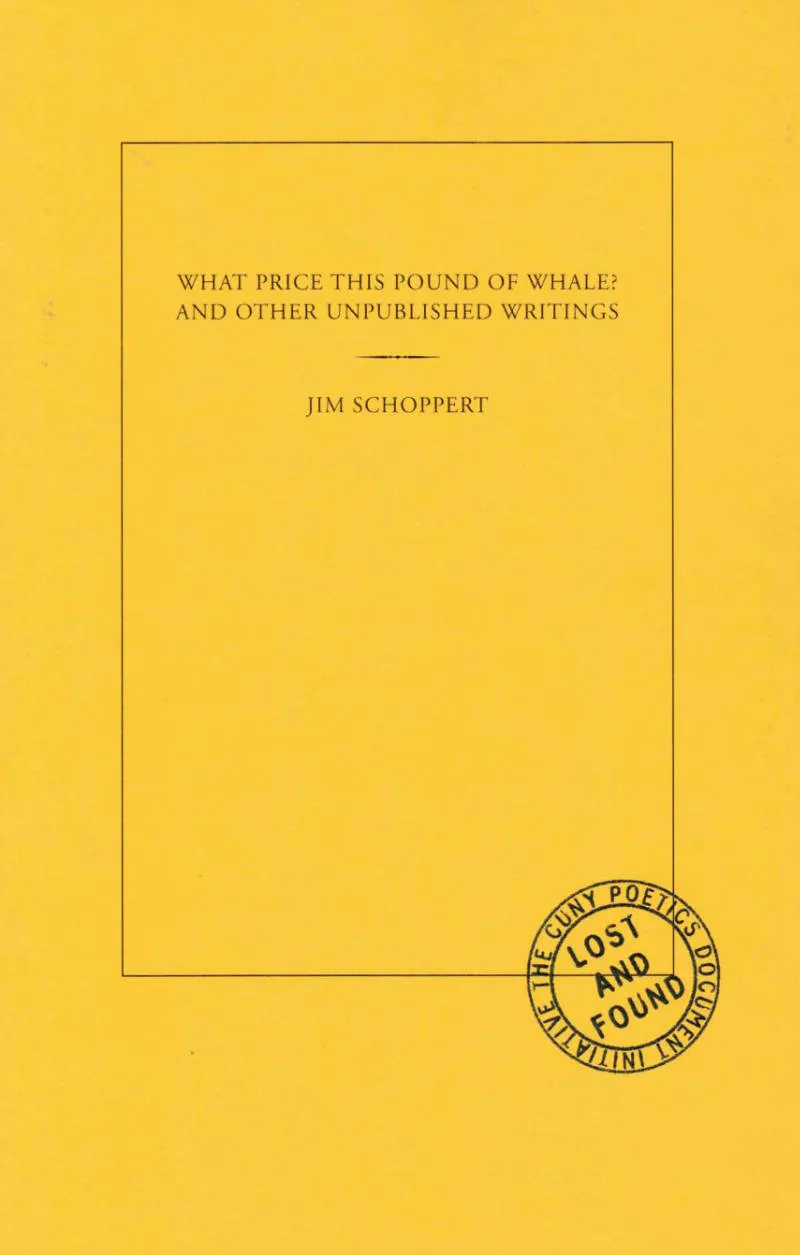
What Price This Pound of Whale? and Other Unpublished Writings
The Tlingit artist Jim Schoppert (1947-1992) was among the most accomplished, innovative, and prolific Alaska Native artists of the twentieth century. His whimsical sculptures and large scale painted wooden carvings reconfigure Tlingit visual motifs, and he challenged the binary categories against which Indigenous artists are so often defined, such as traditional and contemporary, historic and innovative, and artist or craftsperson. While known primarily for his modernist interventions in Tlingit visual traditions, Schoppert was also a prolific writer, an eloquent speaker, and an ardent advocate for Alaska Native artists. This publication brings together a selection of his unpublished poetry and writings from the artist’s personal papers. Presented alongside never before seen sketches and studies, this selection bridges Schoppert’s written and artistic practices in a deeply personal portrait of the artist and Alaska Native life that upsets preconceptions about Native art and unsettles the established narrative of Euro-American and Indigenous aesthetic relations.
Jim Schoppert (1947-1992) was a Tlingit multidisciplinary artist and writer. He was a Taku Tlingit Raven of the Ishkahittaan (Inland Frog) clan from his Tlingit mother and half-German from his father and carried the Łingit name Dom-Yetz. Born in Juneau, Alaska, he earned a BFA in Sculpture and Printmaking from the University of Alaska—Anchorage and an MFA from the University of Washington. In addition to his artistic career, Schoppert was instrumental in promoting Alaska Native arts and organizations. He was Director of Arts and Crafts at the Cook Inlet Native Association, Director of the Alaska Arts in Prisons Program for the University of Alaska Juneau, and organized exhibitions and workshops across Alaska and the Pacific Northwest. He was visiting professor in visual art at the University of Alaska, Fairbanks and directed its Native Art Center. He sat on the Washington State Arts Commission and on the boards of the Alaska State Council on the Arts and the Institute of Alaska Native Arts. His work is held in public and private collections across the United States, including the Smithsonian National Museum of the American Indian, the Anchorage Museum, the Heard Museum, and the Newark Museum, among others. His writing and poetry has appeared in The Greenfield Review and Journal of Alaska Native Arts, among other publications.

Let the Record Show: A Political History of ACT UP New York, 1987-1993
In just six years, ACT UP, New York, a broad and unlikely coalition of activists from all races, genders, sexualities, and backgrounds, changed the world. Armed with rancor, desperation, intelligence, and creativity, it took on the AIDS crisis with an indefatigable, ingenious, and multifaceted attack on the corporations, institutions, governments, and individuals who stood in the way of AIDS treatment for all. They stormed the FDA and NIH in Washington, DC, and started needle exchange programs in New York; they took over Grand Central Terminal and fought to change the legal definition of AIDS to include women; they transformed the American insurance industry, weaponized art and advertising to push their agenda, and battled, and beat, The New York Times, the Catholic Church, and the pharmaceutical industry. Their activism, in its complex and intersectional power, transformed the lives of people with AIDS and the bigoted society that had abandoned them.
Based on more than two hundred interviews with ACT UP members and rich with lessons for today's activists, Let the Record Show is a revelatory exploration, and long-overdue reassessment, of the coalition's inner workings, conflicts, achievements, and ultimate fracture. Schulman, one of the most revered queer writers and thinkers of her generation, explores the how and the why, examining, with her characteristic rigor and bite, how a group of desperate outcasts changed America forever, and in the process created a livable future for generations of people across the world.
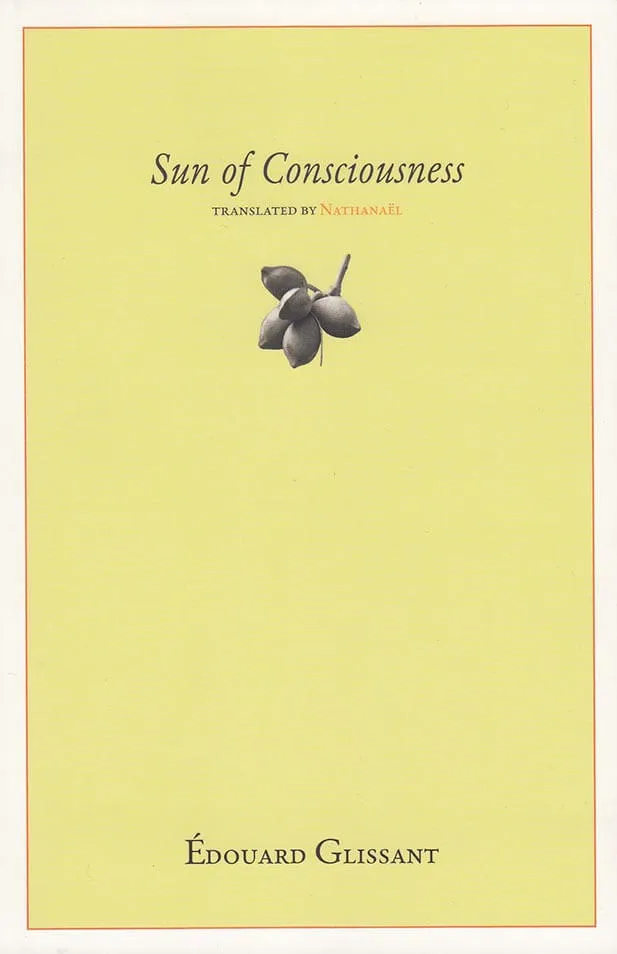
Sun of Consciousness
Soleil de la Conscience (Sun of Consciousness) was Martinican philosopher Édouard Glissant's first published work, and opened the Poétique (Poetics) strain of his oeuvre. This book-length essay, which is characterized by its exploratory, intimate character, announces Glissants concerns with créolisation (creolization), mondialité (worldliness, as against globalization), or opacité (opacity) and inscribes in this work a refusal of colonialism and of inverted exoticism. The sense of estrangement experienced by the author who arrives as a "foreigner" in a country to which he is bound by "the first page of his passport" is the author's principal preoccupation. By positioning himself as both different and same, Glissant opens a space for the writing of a(nother) history: that of the Caribbean.

A Dance Mag - Issue 04: Structure
Issue 04, Structure, traces the scaffolding of our lives, seen and unseen. We travel from the palaces of Versailles to the basements of Russian resistance, from origami folds to mechanized labor, from cosmic geometry to the twitch of a stimming hand. These are the choreographies that hold us, train us, divide us, and sometimes set us free. This issue moves through power's choreography with Vinícius Portella tracing repression from TikTok algorithms to Candomblé persecution, Sasha Portyannikova documenting dance as survival under Russian authoritarianism, and Ellen Jeffrey revealing how stimming becomes its own radical dance practice. Mariam Ala-Rashi finds cosmic alignment in contortion while Michael O'Connor explores the body as origami, structure folded into self. Katja Vaghi contrasts baroque precision with contemporary chaos, and Nathaniel Moore exposes the market forces shaping European dance. Cover and insert artist, Maria Harfouche, captures structure through double-exposed analog photography and layered compositions that reveal how moments build upon each other.
A Dance Mag is an independent magazine that looks at the world through the lens of dance. It transcends differences, distances, and disciplines to tell the stories of people from all over the world, who are dancing their lives and giving their bodies a voice.

My Manservant and Me
My Manservant and Me is a story about the trials and tribulations of having a live-in valet. Written from the uneasy perspective of an aging, incontinent author of extremely successful middlebrow plays, we learn about his manservant, a young film actor who is easily moved to both delicate gestures and terrible tantrums; who's been authorized to handle his master's finances, who orders stock buys, dictates his master's wardrobe, sleeps in his master's bed, and yet won't let him watch variety television. My Manservant and Me reveals the rude specificities of this relationship with provocative humor and stylistic abjection. This manservant won't be going anywhere.
Hervé Guibert (1955-1991) was a French writer and photographer. A critic for Le Monde, he was the author of some thirty books, most notably To the Friend Who Did Not Save My Life, which presents an intimate portrait of Michel Foucault and played a significant role in changing public attitudes in France towards AIDS.

The Prime Times Vol.1
Dans « The Prime Times, Volume 1 », Sophie T. Lvoff met en scène sa pratique quotidienne d’atelier. Au travers de poèmes en haïku, de gros titres et de photographies de son atelier traversé par la lumière du jour au milieu de l’après-midi, le journal chronique la torpeur des longues journées de travail mêlées d’attente, de glimpses et de glances.
En attendant the prime time, Sophie lit les nouvelles sur son téléphone, parcourt paresseusement sa bibliothèque, écrit des emails à des amix éloigné·es et parfois à elle-même. Elle note des blagues et des poèmes dans son cahier, mange des snacks, doute d’elle-même, fume, jette des regards autour d’elle, jusqu’au moment précis où la photo doit être prise.
In « The Prime Times, Volume 1 », Sophie T. Lvoff dramatizes her daily studio practice. Through haiku poems, headlines, doodles and photographs of her studio pierced by mid-afternoon daylight, the journal chronicles the torpor of long workdays mixed with waiting, glimpses, and glances.
While waiting for the prime time, Sophie reads the news on her phone and lazily reads her collection of books, writes emails to far-away friends and sometimes to herself. She notes things in notebooks and writes jokes and poems, stretches, eats snacks, doubts herself, smokes, glances around, until the precise moment when the picture has to be taken.

Greer Lankton: Sketchbook, September 1977
A fascinating account of Lankton's inquisitive, sociological and emotional ruminations in advance of her gender-affirming surgery.
This is one of the earliest of Greer Lankton's (1958-96) journals, sketchbooks and daybooks to appear in the artist's archives, and the first to be published in facsimile form. Written during her time as an art student at the School of the Art Institute of Chicago, the journal offers key insights into Lankton's mind at work before her career-defining move to New York in 1978, where she would become an important figure of the East Village art scene in the 1980s and early '90s with her lifelike dolls and theatrical sets.
Containing drawings, behavioral diagrams and aspirational, occasionally confessional writing, the journal is a record of imagining the body and mind reconciled through transformation. In these pages, the 19-year-old turns an inquisitive, sociological eye toward the emotional landscape and somatic effects of the days recorded here; days leading up to her decision to undergo hormone treatment and gender-affirming surgery in 1979. Lankton reflects with raw vulnerability and keen self-awareness on critical questions of self-image, social perception, gender normativity and human behavior.

EURO—VISION: Undergrounding the Critical Mineral
'EURO—VISION: Undergrounding the Critical Material' explores extraction beyond the removal of minerals, delving into their financialization, management, and policy-driven circulation through the lens of the EU’s Critical Raw Materials Act. This volume examines resource extraction’s genealogies, valuation paradigms, and structural entanglements, offering a critical reassessment of extractive practices. Part of K. Verlag’s Processing Process series, the book features interviews with scholars, activists, and journalists, alongside commissioned texts and visual essays from FRAUD’s research. By interrogating the “extractive gaze” embedded in EUpolicies, it unveils the material poetics and transformative potential of minerals, fostering reflections on their complex entanglements.
Lithium, copper, uranium, child labor, and the bed of the deep sea—the mining sector is one of the most contested and problematic arenas of consumer complicity today. EURO—VISION: Undergrounding the Critical Mineral begins not with a location or a specific resource, but with a fundamental question: what counts as extraction today? While we might picture drills and quarries, the deeper story unfolds across financial markets, trade policies, legal frameworks, and the metrics used to define what is “critical” in the first place. Taking the EU’s Critical Raw Materials Act as a point of departure, this richly layered volume traces the hidden infrastructures and governing logics that shape how the mining industry moves substances from and across the Earth—and what these minerals, in turn, move with them.
Developed by the artist duo FRAUD (Francisco Gallardo & Audrey Samson) in close collaboration with environmental humanities scholar Michaela Büsse, the book gathers a wide range of voices—artists, scholars, economists, activists, lawyers, and journalists—to reflect on the long genealogies of resource extraction, the valuation paradigms that uphold them, and the terminologies that give them legitimacy. But the story doesn’t stop there. In the context of EURO–VISION, “undergrounding” becomes a tactic: a means of unsettling the structural violence concealed behind seemingly neutral data, and of turning toward the mineral itself—its material presence, its histories, its speculative potential.
Published in K. Verlag’s Processing Process series, EURO—VISION draws on FRAUD’s ongoing, research-led inquiry into critical mineral governance. Combining interviews, visual essays, and commissioned texts, it opens new pathways for thinking about the entanglements between geology, economy, and power. At once analytical and imaginative, the book invites us to see the subterranean anew—not simply as a resource, but as a site of resistance, relation, and possible futures.
Edited by Francisco Gallardo & Audrey Samson (FRAUD) in collaboration with Michaela Büsse. With essays and visual contributions by Adekeye Adebajo, Michaela Büsse, Liam Campling, Stephen Cornford, Jeff Diamanti, FRAUD, Matthew Fuller, Iman Ganji, Peo Hansen, Stefan Jonsson, Bahar Noorizadeh, Sophia Pickles, Ndongo Samba Sylla, Jennifer Telesca, Aleksandra Wojewska, and Mi You. Design by K. Verlag with Wolfgang Hückel & Katharina Tauer. Processing Process series editors: Anna-Sophie Springer & Etienne Turpin.

Laminaire
Laminaire est un livre de poésie sur la représentation, c’est-à-dire sur les manières contemporaines de montrer et de percevoir. Le pouvoir, qu’il émane de l’Etat ou bien des grandes entreprises de la Tech, se diffuse sur internet sous la forme de contenus préformatés, et ce dans un environnement médiatique où la production d’images (et notamment de mèmes) est presque infinie. C’est à partir de ce constat que la poétique d’Elsa Boyer, avec beaucoup de virtuosité et d’humour, se déploie. Par leur richesse lexicale, leur capacité à rapprocher des éléments pourtant hétéroclites et le baroque de certaines images, ces poèmes offrent au lectorat un horizon critique renouvelé.
Laminaire est composé de dix-sept longs poèmes dans lesquels sont tressés vers et fragments de prose. On y rencontre, entre autres choses, un sénateur américain, des contrats de propriété et de location, les dessins de corps féminins et d’organes dans les traités d’anatomie, les vidéos Tiktok d’un président, la vidéo de présentation du robot Optimus de Tesla par Elon Musk, le texte du Schéma national du maintien de l’ordre, ou encore des projets et propositions de loi.
Elsa Boyer est l’autrice d’une oeuvre littéraire remarquable. Elle a publié, aux éditions P.O.L et aux éditions MF, des récits, des essais, des traductions salués par la critique autant pour leurs inventions formelles que pour la pertinence de leurs sujets. Laminaire est son premier livre de poésie. Comme les autres titres de sa bibliographie, c’est un ouvrage fortement imprégné d’une fréquentation du numérique, des images qui circulent sur les réseaux et de leurs formats.

Le Chauffage — Issue #1
Le Chauffage (french for “The Heater”) is an artist-run publication based in Brussels. It is conceived as a cross-continental, community oriented platform. Bringing together the work and writing of artists / friends from different cities, Le Chauffage intends to spark discussions and fuel casual forms of critical discourse.

Bonbons à l'anis
Un fabuleux recueil – le premier publié en français – de poèmes et récits de l'autrice argentine Cecilia Pavón, préfacé par Chris Kraus (écrivaine dont Pavón a par ailleurs traduit des livres en espagnol).
« Cette traduction n'aurait pu voir le jour si je n'avais pas développé pendant quelques temps une obsession quasi malsaine pour l'Argentine. Cherchant à Buenos Aires les traces de lieux proches de Shanaynay que j'avais co-dirigé à Paris, je découvris au hasard sur internet l'existence d'un espace nommé Belleza y Felicidad et dirigé par Fernanda Laguna et Cecilia Pavón. Bien avant l'émergence de l'artist-run space en Europe, les deux femmes créèrent un lieu associant art et littérature. Lors d'un voyage à Buenos Aires, j'eus l'opportunité de rencontrer Cecilia Pavón qui lors d'une conversation sur l'écriture et la poésie, me proposa de traduire Licorice Candies en français. Sa poésie fut autant révélatrice qu'émancipatrice, à la fois par sa singularité et sa simplicité. Elle écrit ce qu'elle voit et ce qu'elle vit. Elle parle de certains quartiers de Buenos Aires, de ses amis, d'elle, d'un vélo qu'elle a perdu, de Timo. Il me semble qu'elle écrit comme elle parle d'amour, d'erreurs et de sexe ». Marion Vasseur Raluy, traductrice
The first collection of texts published in French by the Argentinian artist and poet.
Preface by Chris Kraus.
Translated from the English and Spanish by Marion Vasseur Raluy, Rosanna Puyol Boralevi and Mona Varichon.

Three moments of a script that never was written but might have happened
This publication departs from three video works by the artist Hu Wei, exploring the possibilities of devising new scripts within the manifold connections between materials for creative works, images, and texts.
The first part of the publication transcribes and recompiles the narrations in his videos into three sets of juxtaposed scripts. Each of these textual fragments showcases an “anatomical section of an era” from disparate geopolitical contexts: a family letter from Sabah, a set of Rashomonian testimony, and an anecdote about the anonymous.
The second part is a notebook-like atlas that unfolds following the clues of three keywords: “Fabrication,” “Anonymity,” and “Boundary.” Within this section, different types of images and texts, including factual materials, embodied research and survey records, as well as fabricated documents, interlace with each other. They serve as an interrogation, extension, reconstruction, and reassemblage of three muted histories or events.

Steak Zine
Steak Zine is the new issue of Cake Zine. Cake Zine is a literary print magazine exploring art, history, and pop culture through food.
For this pocket-sized special issue, Cake Zine is setting off into carnivorous territory. Serving up 208 pages of non-fiction and fiction exploring the cultural impact of red meat, including:
The last days of Acropolis, Portland’s beloved strip club-steakhouse, by Sophia June
A profile on the women going viral by eating raw meat online by Ella Quittner
A night at a fictionalized steakhouse kaleidoscoped through the roles of maître d’, bartender, server, chef, and guest, by Leah Abrams, Isle McElroy, Lillian Fishman, Stephanie Wambugu, and Hannah Kingsley-Ma
Examinations of the enduring escapism of Outback Steakhouse and Fogo de Chão by Ruby Robina Saha and Adam Dalva
A trip through Nebraska to trace how historic stockyard closures in the late 1990s have affected those serving up beef in the Beef State, by Jamal Dauda
A wistful look back at a romance fueled by ribeye and red leather booths, by Emma Specter
NDA-risking testimony from a lab tech at a plant-based food start up who went from vegetarian to carnivore in the noble name of research, by AUTHOR REDACTED
Tracing the roots and uncertain future of Hong Kong’s sizzling steak by Madeline Leung Coleman
Plus the steak heists prompting retailers to put meat behind lock and key, the body horror of cannibalist cinema, revisiting molecular gastronomy’s embrace of meat glue, the social tensions behind ordering well-done meat, the trauma of growing up on an Australian cattle ranch, and much more.

I have brought you a severed hand
Ghayath Almadhoun, Catherine Cobham
Fluid and unselfconscious, Ghayath Almadhoun writes love poems in the shape of nightmares: I have brought you a severed hand is a surreal mix of absurd humour, heteroerotic lust and dead seriousness. Caught between two exiles, the one inherited from his Palestinian father and the one he chose and lives, Almadhoun attempts to explain water and tame hope.
This book never misses the defiant beat of an exile’s haunted footing across wars, seas and memory. Almadhoun turns the genocidal logic of colonialism upside down, emptying out the crumbs of humanity and civilisation. —Don Mee Choi
Almadhoun uses every possible means of silence to make the total devastation palpable. —Alfred Schaffer
Many poets attempt to traverse the gulf between the experience of tragedy and the ability to relay its magnitude to anyone else. But few living have done it with such flourish, such sustained passion and formal precision as Ghayath Almadhoun. —Kaveh Akbar
Ghayath Almadhoun (born 1979, Damascus) is a Syrian-Palestinian poet who moved to Sweden in 2008. He has published five collections of poetry in Arabic, the latest being Adrenalin (Almutawassit, 2017) and I have brought you a severed hand (Almutawassit, 2024). In 2017, Adrenalin was translated into English by Catherine Cobham and published by Action Books. In 2023, Almadhoun curated, edited and translated the poetry anthology Kontinentaldrift: Das Arabische Europa (Verlag Das Wunderhorn and Haus für Poesie), which includes thirty-one Arabic poets living in Europe. The English translation of I have brought you a severed hand is published simultaneously by Divided in the UK and Europe and by Action Books in the USA. Almadhoun currently lives between Berlin and Stockholm. His work has been translated into nearly thirty languages.
Catherine Cobham taught Arabic language and literature at the University of St Andrews, Scotland, for many years and was head of the department of Arabic and Persian from 2011 until 2021. She has translated the work of a number of Arab writers, including poetry by Adonis, Mahmoud Darwish, Ghayath Almadhoun, Tammam Hunaidy and Nouri al-Jarrah, and novels and short stories by Yusuf Idris, Naguib Mahfouz, Hanan al-Shaykh, Fuad al-Takarli and Jamal Saeed. She has written articles in academic journals and co-written with Fabio Caiani The Iraqi Novel: Key Writers, Key Texts (Edinburgh University Press, 2013).
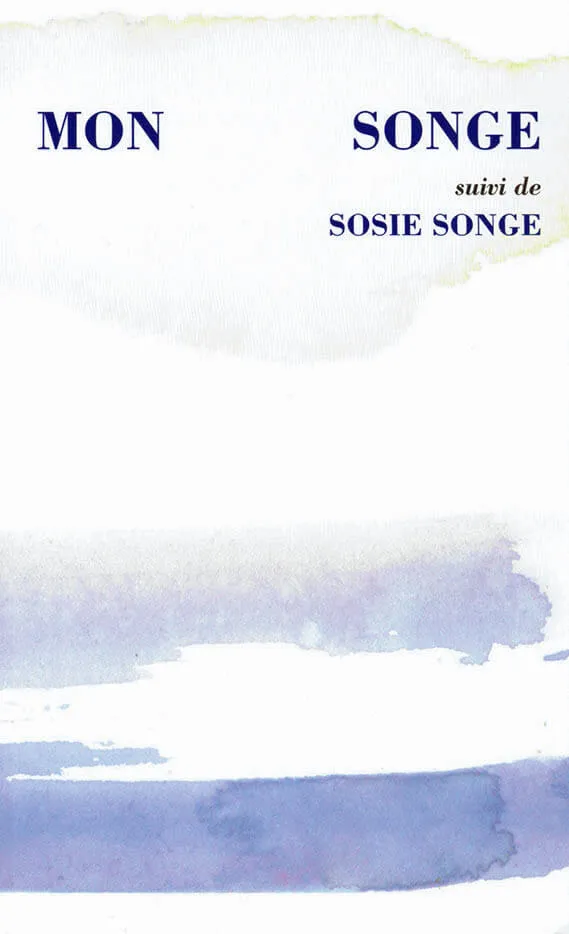
Time has fallen asleep in the afternoon sunshine
Mon Songe
For the project Time has fallen asleep in the afternoon sunshine a group of people/ performers memorize a book of their choice. Together they form a library collection consisting of living books. After years of learning by heart and reciting for readers, some of the books have now been written down from memory to create new editions, versions resulting from this process. This book is one of those books, chosen by one person, learned by heart and recited many times, and now written down again from memory. This edition is not a re-edition of the original text. It is a re-writing of the text after the process of reading, memorizing and reciting, with all the alterations that might have occured in the course of this process.

Firespitter
Like the jazz rhythms that inspired and punctuated her practice, Jayne Cortez improvised her way through and across disciplines, bridging poetry and performance with music and the visual arts to create a unique body of work. Consciously rupturing the boundaries between art and politics, Cortez’s practice uneasily fits within literary movements of the 20th century, residing everywhere and nowhere between the Black Arts Movement, Surrealism, feminism, and early performance art. As intersectional as it is interdisciplinary, her work is consistently visceral and fearless, acting as a powerful expression of collective rage on behalf of the disenfranchised and dispossessed. In the words of historian Robin D.G. Kelley, “her poetry was never ‘protest’ but a complete revolt, a clarion call for a new way of life.”
The appearance of Firespitter (Nightboat, 2025), a 600-page-plus collected poems, is immensely valuable and long overdue . . . Hers [Jayne Cortez’s] is a voice—both on and off the page—that speaks with authority, curiosity, and an unshakeable faith in the power of poetry to change consciousness and change lives. - David Grundy, Poetry Foundation

Close Writing: Kathy Acker, Cookie Mueller & Love-in-Pieces
In Close Writing, Alice Butler reflects on the diaries, letters, publications, performances, lives, and afterlives of her most beloved queer feminist writers: Kathy Acker and Cookie Mueller. While the transgressive avant-garde writer Kathy Acker has developed a cult following in the decades since her death in the late-90s, the actress and writer Cookie Mueller has remained relatively obscure. In this creative-critical study, Butler participates and responds to the lives and writings of her shared “beloved," reimagining the scene of the archive as a scene of triangulated and bittersweet love that traverses the boundaries of life and death. She draws on the autofictional strategies that Acker and Mueller pioneered in their own experimental writings and performances, encountering the women in intimate theoretical spaces of sensuality, sexuality, and sickness that slip between life and text. By encountering Acker and Mueller as transgressors and innovators, but also as beloved figures in her writing life whom she addresses in love letters, Butler brings readers to new, reparative textures of understanding, embodiment, and affection through close writing.

Wanderlust
Soufiane Ababri's sketchbooks.
Soufiane Ababri (b. 1985, Rabat) is a Moroccan artist based in France. His protean work (drawings, installations, performances) explores questions of gender, homosexuality, racism and colonialism.

In the Presence of Absence
By one of the most transcendent poets of this generation, a remarkable collection of prose poems that explores themes of love, pain, isolation, and connection. In this self-eulogy written in the final years of Mahmoud Darwish's life, Palestine becomes a metaphor for the injustice and pain of our contemporary moment.
Mahmoud Darwish (1941-2008) was one of the most acclaimed poets in the Arab world. His poetry collections include Why Did You Leave the Horse Alone? and A River Dies of Thirst (Archipelago Books). In 2001 Darwish was awarded the Lannan Cultural Freedom Prize.