Books
Books
in random order

Civilization #7
Richard Turley, Lucas Mascatello
The occasionally-published broadsheet Civilization was founded in New York in 2018 by Richard Turley, Lucas Mascatello, and Mia Kerin. Its origin was as a response to New York City life, but has now transformed into an art project that gathers language, overheard conversations, secret recordings transcribed by rapid-capture software to produce a dense, rhythmic assemblage of texts from both public and private spaces alike. As a result, Civilization’s design texture has found fans in the fashion world, leading to collaborations with Calvin Klein and Junya Watanabe.
The publication has also enjoyed contributions from a wide array of artists, writers and personalities including: Aaron Maine, Alis Atwell, Amos Poe, Amalia Ulman, Aria Dean, Alicia Novella Vasquez, Bill Drummond, Biz Sherbert, Babak Radboy, Carly Busta, Darcie Wilder, Echo Wu, Ella Plevin, Eric Johnson, Honor Levy, Iris Luz, Mel Ottenberg, Isabelle Rea, Joey LaBeija, Jordan Barse, Lovefoxx, Maddie Quinn, Patrick McMullan, Rachel Rabbit White, Sybil Prentice, Thom Bettridge, and Zans Brady Krohn.

Barking Up the Wrong Tree
How To Become est une maison d'édition autogérée basée à Paris. Nous publions les textes d'auteuces engagés dans des pratiques féministes et peu diffusés par le réseau des grandes maisons d'édition françaises.
Créée en 2016, elle est composée d'artistes et écrivaires en majorité gouines, HTB publie de la litterature expérimentale née d'influences post-post- sapphiques ainsi qu'un choix de tradu d'auteuices non traduites en langue française. HTB s'articule autour d'ateliers d'écriture: How to Become a Lesbian, et d'une revue annuelle publiant les choses issues de l'atelier.
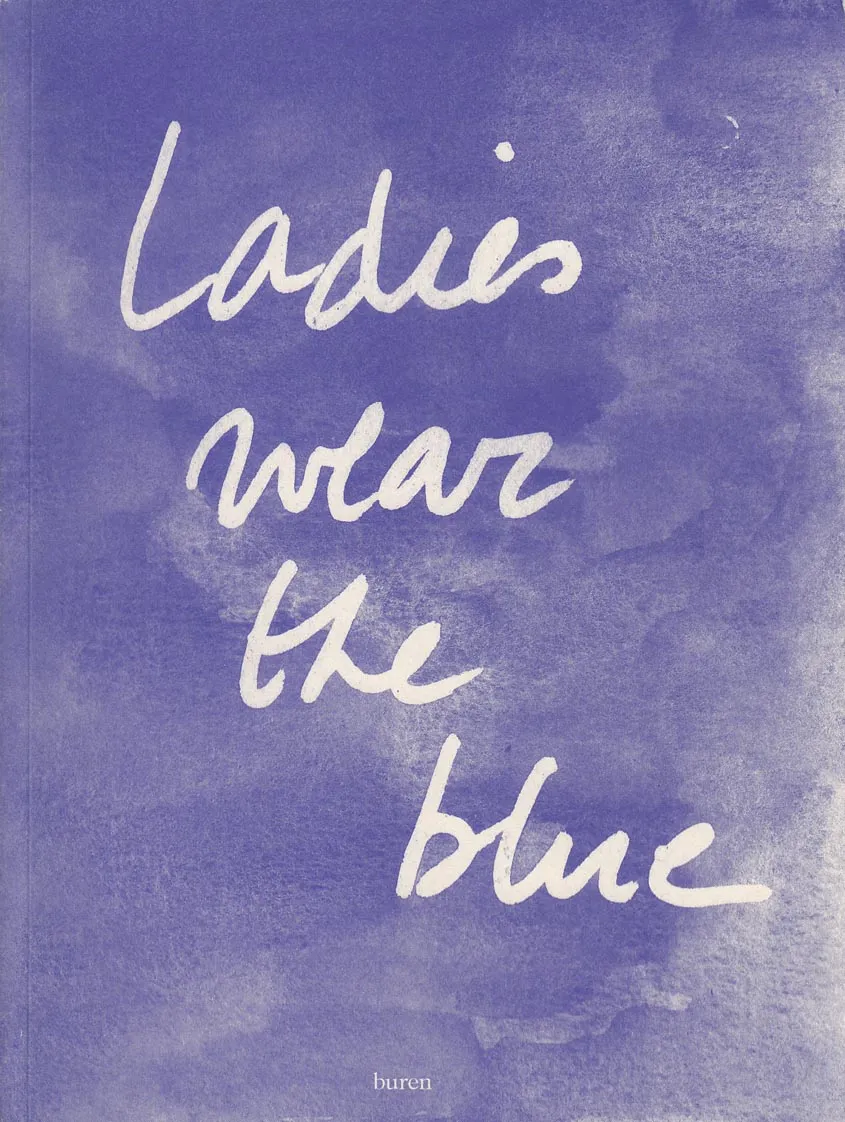
Ladies Wear the Blue
Ladies wear the blue is a collection of watercolour drawings by the hand of Melissa Mabesoone and Oshin Albrecht. The blue watercolours portray women from different moments in time. The adjacent texts describe these women's existence, roles, desires or ideosyncrasies deriving from the 'blue' in their lives. From the first female police officers and Alices all around, to Courtney Love's blue baby dolls and the girl with the blue tattoo Olive Oatman, this publication is an ode to women venturing into the world, and a way to continue telling their herstories.
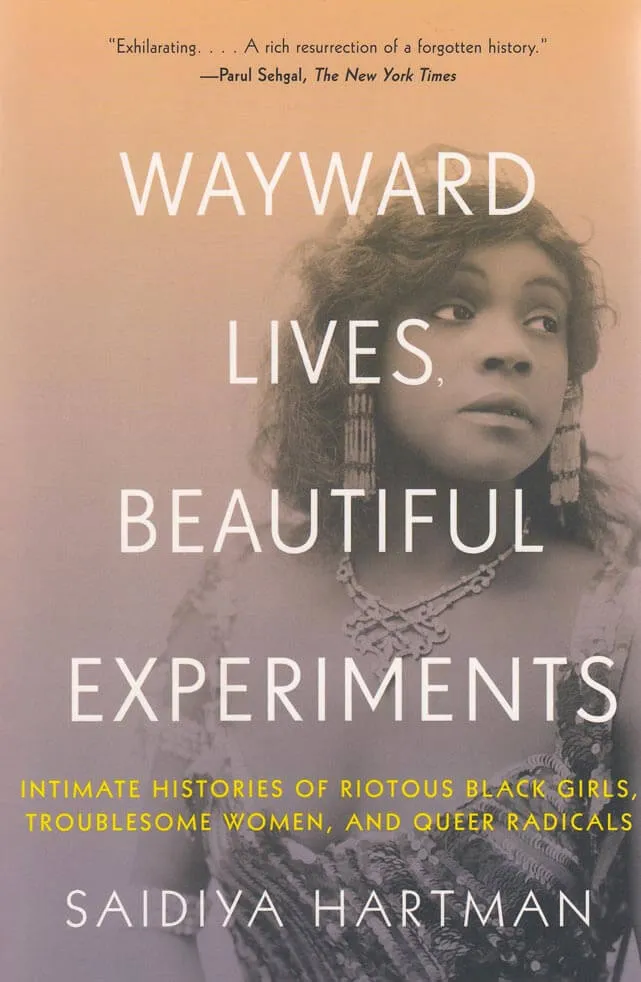
Wayward Lives, Beautiful Experiments
Wayward Lives, Beautiful Experiments examines the revolution of black intimate life that unfolded in Philadelphia and New York at the beginning of the twentieth century. In wrestling with the question of what a free life is, many young black women created forms of intimacy and kinship indifferent to the dictates of respectability and outside the bounds of law. They cleaved to and cast off lovers, exchanged sex to subsist, and revised the meaning of marriage. Longing and desire fueled their experiments in how to live. They refused to labor like slaves or to accept degrading conditions of work. Here, for the first time, these women are credited with shaping a cultural movement that transformed the urban landscape. Through a melding of history and literary imagination, Wayward Lives, Beautiful Experiments recovers these women's radical aspirations and insurgent desires.

There Are No Homosexuals in Iran
There Are No Homosexuals in Iran is a short book of encounters by an Iranian man who meets men like himself and asks how such a life is carried across Iran. A teacher prays to be freed from his own desire. A husband keeps parallel lives from touching. A young man walks the Karun River at night, asking why no one will hold him. Circulated online in Persian since 2021, this cracked dossier shows up here in English, in print for the first time as itself: broken and exact.
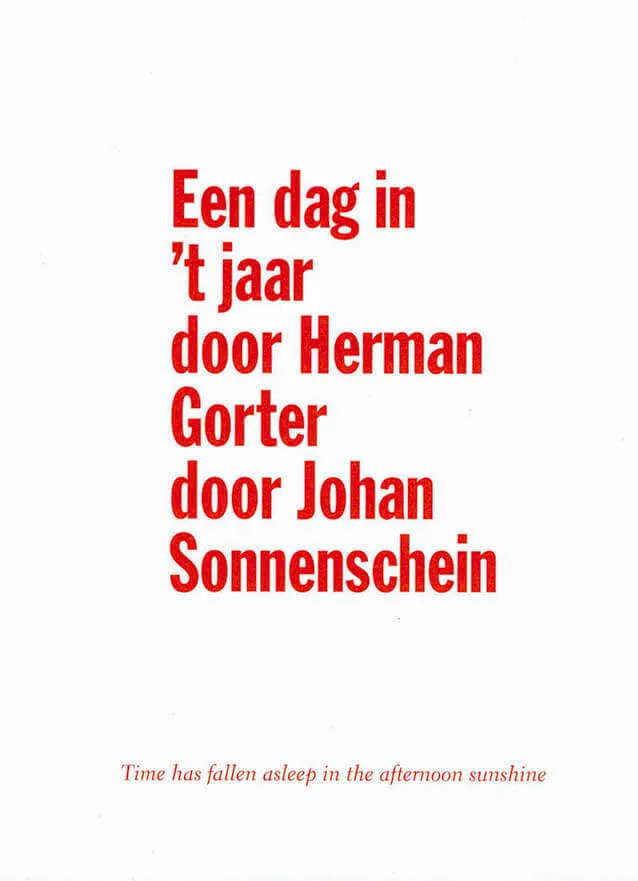
Time has fallen asleep in the afternoon sunshine
Een dag in 't jaar door Herman Gorter
For the project Time has fallen asleep in the afternoon sunshine a group of people/ performers memorize a book of their choice. Together they form a library collection consisting of living books. After years of learning by heart and reciting for readers, some of the books have now been written down from memory to create new editions, versions resulting from this process. This book is one of those books, chosen by one person, learned by heart and recited many times, and now written down again from memory. This edition is not a re-edition of the original text. It is a re-writing of the text after the process of reading, memorizing and reciting, with all the alterations that might have occured in the course of this process.
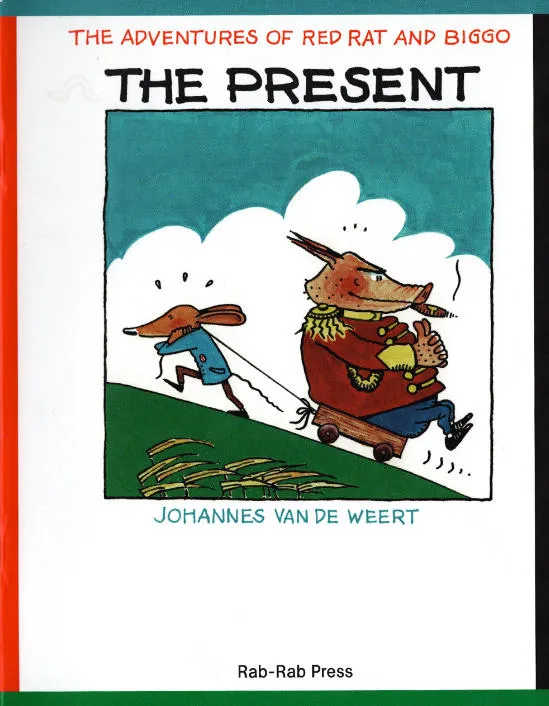
The Adventures of Red Rat and BIGGO – The Present
A children's book by Johannes van de Weert, a veteran of the punk underground (Rondos, The Ex, Red Rat, Raket).
The Adventures of Red Rat and BIGGO – The Present is a remake of Bram konijn en Piet de muis [Bram the Rabbit and Piet the Mouse], a 1982 children's book by Johannes van de Weert, a veteran of the Dutch punk underground who played with Rondos and The Ex, and who was the force behind Red Rat and Raket editions.
The Present is a 2010 remake telling the story of a bully pig who terrifies a poor rat on a daily basis. After a while, the rat falls ill with fear and has to stay in bed. The lonely, evil pig has no one to play with and becomes depressed. The pig gives the rat a present—a bunch of beautiful flowers—and all is well. Now the two can play together.
The 2010 remake, featuring different characters and intended for a North Korean audience, was never published. The 2025 English version opens with an introduction by Van de Weert, telling a bizarre story of a failed political career and an absurd vaudeville class struggle behind the seemingly harmless educational children's book.
Johannes van de Weert was a cartoonist active in the Rotterdam punk and squatter's movements of the 1980s. He was a singer with the punk band De Rondos and he started self-publishing small comic booklets in the late 1970s. He created his character "Redrat" for the fanzine Raket in 1980. The character soon became an icon for the squatter's movement.

Fanta For The Ghosts
fanta for the ghosts by Elisabeth Molin
120mm x 210mm
edition of 500
Co-published with OneThousandBooks and Elisabeth Molin

Incubation: a space for monsters
New edition of this long out of-print classic of diasporic literature, featuring a forward by Eunsong Kim, an afterword by Emgee Dufresne, and new endnotes by Bhanu Kapil.
Incubation: a space for monsters is a formally innovative, hybrid-genre book that incorporates poetry and prose. Set in a shifting narrative environment, where human bodies, characters, and text are neither one thing nor another, this fragmentary-diaristic text journeys through the spaces in-between. Originally published in America in 2006 by Leon Works, and out of print for the last seven years, this is the first time this seminal text has been available in the UK.
Following protagonist Laloo – Cyborg, girl, mother, child, immigrant, settler – on a roadtrip through American landscapes, genre styles, and form, Incubation creates radical space for what is ‘monstrous’. Appropriating iconic American tropes, and the structure of Jack Kerouac’s On the Road, Incubation explores the challenges faced by immigrants in attaining such notions of freedom in so hostile an environment. In this fragmentary document there is a celebration in the cobbling together of lives; global in scope, with an intimate focus on interior voice, this landmark text evidences the early innovations and talents of this T.S. Eliot prizewinning author.

Open Box (IMPROVISATIONS)
This expanded new edition of Carla Harryman's early-'00s classic, OPEN BOX, features a new introduction by Rachel Levitsky and new afterwords by erica kaufman and Carla Harryman.
GRNN alert just in—Joseph Cornell is doing the can-can over the delicious debris organization in Harryman’s OPEN BOX. This dance of demi-characters—half half, semiquaver, three hooks quarter—places (a State) under an obligation not to maintain armed forces. Next up: removing oneself to another place; migration.
—Tina Darragh
Carla Harryman’s Open Box is a meditation-in-process on the possibility of a poetry available to cultural, social and political critique that does not unwittingly reinscribe the political, social and cultural formations (textual and otherwise) against which it is posed. Because Harryman wants to preserve a ‘place,’ if not ‘places,’ for an aesthetic and procedure resistant to reification, she deploys improvisation as writing, as textual practices open to the future and, more ambitiously, to the past, to the written.
—Tyrone Williams
Carla Harryman is an innovator in interdisciplinary performance, poetry, and prose. She has authored seventeen books including W— /M— (2013), Adorno’s Noise (2008), Gardener of Stars (2001), and the multi-authored work The Grand Piano, an Experiment in Autobiography: San Francisco, 1975-1980. Her Poets Theater, interdisciplinary, and bi-lingual performances have been presented nationally and internationally. She has received many grants and awards including from The Foundation for Contemporary Art, Opera America Next Stage, Fund for Poetry, and The Wallace Alexander Gerbode Foundation.
Carla Harryman is also the author of The Wide Road, a collaborative book with Lyn Hejinian (Belladonna*, 2011, reprinted 2026).

Poster Edition (bundle)
4 poèmes-affiches, format A3, impriméx en risographie au studio Colorama (Berlin), sur papiers variés, tirage à 150 exemplaires
«GASOLINE, Apocalypse 1998», «the category is: phone sex», «zona nudista», «(fête) sentimental-e-s» : étés d'apocalypse, émojis banane, cruising transocéanique, SMS en short, sales coeurs, baraques à frissons et grand-huit sentimental... ces poèmes courent toustes ~ à genoux, à nu ou en solex ~ après la question du désir, après l'amour aussi, avec une tendre obsession
Design graphique signé Auriane Preud’homme, Enz@ Le Garrec, Roxanne Maillet & Martha Salimbeni, avec des dessins de Gaëlle Loth

Reclaiming Mythological Rituals
The first monograph dedicated to the Neapolitan feminist and pacifist artists' collective: unpublished documents, images, photographs, and manifestos are accompanied by new creative, political, and historical contributions, evoking the collective joy of Le Nemesiache's history so as to bring a sense of myth back into the world, rewriting and embodying it anew.
Nemesiache is an informal feminist group co-founded in Naples in 1970 by the multidisciplinary and visionary artist and writer Lina Mangiacapre (1946-2002). The collective, which included up to twelve women (centered around Claudia Aglione, Fausta Base, Silvana Campese, Consuelo Campone, Conni Capobianco, Bruna Felletti, Anna Grieco, and Teresa Mangiacapre), fostered an experimental artistic practice and a way of being in the world rooted in feminism, mythology, folktales, sci-fi, and radical imagination, while also introducing "transfeminism" in the early '80s.
Throughout their long-lasting practice spanning several decades, the group retrieved an androgynous mythosophy to transcend art as mere representation and challenge the feminine as a modern identity category. Their distinct transformative approach within both Italian and Western feminist art history led not only to the emergence of an interdisciplinary practice—encompassing film, performance, writing, rituals, poetry, music, collage, costumes, protests, and conferences—but also the creation of a new political language, grounded in cosmological creativity and justice through mythological rituals.
Edited by Sonia D'Alto.
Texts by Chiara Bottici, Federica Bueti, Cairo Clarke, Sonia D'Alto, Giulia Damiani, Giusi Palomba, Imma Tralli & Roberto Pontecorvo, Elvira Vannini, Giovanna Zapperi, Arnisa Zeqo.

A Very Large Array: Selected Poems
Osman's writing reinvents poetry as an instrument for dissecting vision, language and power
This extensive collection of poet Jena Osman's acclaimed work spans more than 30 years, gathering poems from journals and books long out of print. Her poetry traces overlooked visual and linguistic incidents across centuries of American history, transforming "official" language—from Supreme Court opinions to the chatter of Predator drone pilots—into writing that is comic, chilling and relentlessly inventive.
Jena Osman's (born 1963) books include Motion Studies (Ugly Duckling Presse, 2019), Public Figures (Wesleyan University Press, 2012), The Network (Fence Books, 2010, selected for the National Poetry Series in 2009), An Essay in Asterisks (Roof Books, 2004) and The Character (Beacon Press, winner of the 1998 Barnard New Women Poets Prize). She lives in Philadelphia.

My Lesbian Novel
The latest in writer and visual artist Renee Gladman's ever-expanding body of imaginative investigation is a sui generis novel of queerness and art-making, philosophy and sex.
The narrator of My Lesbian Novel is Renee Gladman, an artist and writer who has produced the same acclaimed body of experimental art and prose as real-life Renee Gladman, and who is now being interviewed by an unnamed interlocutor about a project in process, a seeming departure from her other works, a lesbian romance.
Between reflections on art making and on the genre of lesbian romance - "though aspects of the formula drive me crazy... people who write these stories understand how beautiful women are" - a romance novel of her own takes shape on the page, written alongside the interview, which sometimes skips whole years between questions, so that time and aging become part of the process.
The result is a beautifully orchestrated dialogue between reflection and desire, or clarity and confusion, between the pleasures of form and the pleasures of freedom in the unspooling of sentences over time.
Renee Gladman is a writer and artist preoccupied with crossings, thresholds, and geographies as they play out at the intersections of poetry, prose, drawing, and architecture. She is the author of fourteen published works, including a cycle of novels about the city-state Ravicka and its inhabitants, the Ravickians, all published by Dorothy— Event Factory, The Ravickians, Ana Patova Crosses a Bridge, and Houses of Ravicka. She has been awarded fellowships, artist grants, and residencies from the Radcliffe Institute for Advanced Study at Harvard, Foundation for Contemporary Arts, the Lannan Foundation, and KW Institute for Contemporary Art (Berlin), and was a 2021 Windham-Campbell Prize winner in fiction. She makes her home in New England with poet-ceremonialist Danielle Vogel.

rosa rosa rosae rosae
Produced in conjunction with the exhibition that took place at Maison Pelgrims (10/9-23/10/2021), the book presents original interventions by the artists of the rosa rosae rosae project : Alicia Jeannin, Alicja Melzacka, Angela Detanico & Rafael Lain, Annaïk Lou Pitteloud, Audrey Cottin, buren, Charlie Usher, Eleanor Ivory Weber, Eva Giolo, Henry Andersen, Jan Vercruysse, Maíra Dietrich, Marc Buchy, Maxime Jean-Baptiste, Niels Poiz, Oriol Vilanova, Sabir (Lucie Guien, Amélie Derlon Cordina, Sophie Sénécaut / Perrine Estienne, Kevin Senant, Maud Marique, Pauline Allié, Carole Louis), Slow Reading Club, Sofia Caesar, Surya Ibrahim, Yiannis Papadopoulos, Yoann Van Parys
Edited by Pauline Hatzigeorgiou / SB34
Graphic design by Tipode Office
The book was produced with the support of Fédération Wallonie-Bruxelles (aide à l'édition) and Région Bruxelles-Capitale (Image de Bruxelles)

The Swarm
A shape-shifting, metaphysical thriller where sensorial, sexual, and revolutionary impulses are aligned for the purpose for anarcho-transcendent-communal escape, The Swarm circles around a sundry of anomalous and dead beings who plot their way out of Hungarian fascist rule in the thermal baths of Budapest.
Based in Berlin, Dalia Neis is a writer, filmmaker, and lyricist and vocalist for Dali Muru & The Polyphonic Swarm. Previous publications include Zephyrian Spools: An Essay, a Wind (Knives, Forks & Spoons), and Hercules Road (Ma Bibliothèque).

Working Museum
"In Spring and All, William Carlos Williams figures imagination as the springing off point to greater connection with the world and its gentle motions. ‘It is spring,’ he writes: ‘life again begins to assume its normal appearance as of “today.” Only the imagination is undeceived.’ Embracing the haecceity of the everyday and allowing the imagination to make silent and surprising connections are ways to withhold the deceptiveness of relying on old habits of thinking and writing.
Ziddy Ibn Sharam’s Working Museum begins with another quotation from Spring and All: ‘There is not confusion – only difficulties’, and the sequence offers delicate, poetical examinations how the confusions and frustrations of interpersonal communication are beneficent difficulties to be embraced and considered in gentle depth. This is a gorgeous sequence of poems, offering generous, gracious and graceful glimpses of a family’s birthday pilgrimage to Amberley Museum and Heritage Centre in Sussex. Working Museum is a tour de force of delicate poetry of feelings and feeling through feelings in a world of wordless connections and contacts, navigating the liminal but intimately understood spaces between two brothers and their family. In these poems,
Sharam is trying to be still in language, as smiles, touches and profound intimacies are exchanged. Observing and being in his brother’s presence during this special time of spring, Sharam re-learns to experience, to become ‘plugged’ in, as he writes, to new ‘switchboards’ of sensation, thought and poetic possibility. The ‘old machines’ of mental expectation and habit are, in the presence of his other-sensing brother, found wanting for the appreciation of his ‘intellect just as it is’. Here, Sharam learns to ‘do things minimally’ and to revel in the ‘seismic proportions’ of the apparently mundane. Sharam and his readers are offered a space to share in a brother’s beautifully vivid world and are privileged to witness a profound, ‘beginning, // again." - Gareth Farmer

Fia Backström: COOP: A-Script
COOP documents Swedish artist Fia Backström's (born 1970) performances of two recent scripts, continuing her exploration of language, marketing, disorders and performance. The first script operates according to two distinct logics: a four-part linear base structure and text material that was chosen and read during the performance through chance movement of the performer's body across a grid.
This publication was especially designed to reflect this type of unpredictable and spontaneous movement. Mathematical symbols have been embedded into the text and these symbols link to ones on the upper corner of pages with nonlinear material. These indicate where the text could be inserted during a performance, thus incorporating the form of performance into the book. The second script serves as an epilogue to the first and was performed by four voices, reading from beginning to end without assigned lines, sometimes simultaneously.

Forlaget Emancipa(t/ss)ionsfrugten
Great is the Power of the Name
Signe Frederiksen, Anne-Mette Schultz
Great is the Power of the Name considers the works of authors Elena Ferrante, Pauline Reáge, Karl Ove Knausgård, Colette and artist Lee Lozano.
In 2016, when Anne-Mette had invited Signe to take on the role as editor of her text The Institute of Applied Speech, they both began reading Elena Ferrante's The Neapolitan Novels. They were specifically fascinated by the author’s use of pseudonym. Anne-Mette's Institute of Applied Speech was a tale of a fictive place, a pseudo-topos, and Elena Ferrante’s ideas about the pseudonym as a space for the writing itself was useful in thinking about fictive authorship. In a number of written interviews, Elena Ferrante unfolds the feminist perspective of her use of pseudonym. They were attracted by the idea that the author could avoid the biographical question; that she could disappear behind her own writing.
To them, the artist Lee Lozano is the ghostly presence of hard-core moralist and humorous fuck-off art from another decade. During the course of her life, Lozano continuously reconfigured and gradually dissolved her own name, starting from Leonore Knaster ending up with E. Her work Boycott Women, in which she decides not to have any contact with women, expands the notion of feminist critique.
Great is the Power of the Name publishes a readership interested in the position of the artist, and how it conditions the way we make art.

How To Do Things With Groups
STARTING POINT: ALL GROUPS HAVE AN UNCONSCIOUS
This project developed from a shared experience: groups we believe should exist and succeed, from mutual aid collectives to communist cadres, struggle with difficult and often unexamined inter-psychic group dynamics. We take it as a starting point that groups, by their very nature, elicit and enact painful and confusing states, like over-dependence on a leader or fear of contamination. We believe that these dynamics play out beneath the surface and alongside whatever the group is trying to do together. In other words, any group, like any individual, has an unconscious.
OUR BIG QUESTION: WHAT DOES THIS MEAN FOR GROUPS DOING POLITICAL WORK?
Groups break down for all kinds of reasons; political organizing is often brutal, exhausting, disappointing work. Feelings of heartbreak and betrayal, resentment and shame, are common. These can be painful, difficult aspects of group life to discuss. They are also often dismissed as ancillary to the real work of political struggle, especially in times of unabating crisis, genocide, and war.
Although interpersonal drama can be taken up in excess–and distract from our work–group dynamics are not mere distraction, and our hesitations about discussing them do not make them disappear. Ironically, in fact, when groups treat relational dynamics as merely superficial or deleterious, they often wind up mired in confusion about what any given internal conflict is “really” about. Often the confusion is posed as not being able to discern what is interpersonal strife and what is political disagreement—an aggravating situation that, we’ve observed, comes up constantly in groups’ narration of their own breakdown. There are no easy formulas for working through these dimensions of group life, but we believe that being undisciplined about them makes it harder for groups to work together productively—or, for that matter, to separate “well.” This pamphlet offers concepts and questions that you can bring to your own group to perform a group inquiry, to think about what might be happening below the surface.
Groups Group is a collective of clinicians, organizers, writers, artists, and scholars interested in group dynamics in the everyday life of all forms of left social movements. We also do internal process work, popular education, and consult with groups.

Terra Nova
Esther De Soomer, Rudolph Glitz
Terra Nova combines fragments from a novel in the making by Esther De Soomer, in which she explores the parallels between the loss of language and forest dieback, between climate grief and linguistic mourning. Reflecting on her own relationship with language and multilingualism, she traces the feelings of grief that accompany the loss of German, one of her mother tongues. Drawing on existing narratives — such as fairy tales and family stories — she examines the critical state of the disappearing Hambacher Wald in Western Germany and presents language as a means to name and hold on to things.

Where does a Body begin? Biology's function in contemporary capitalism
While presented as a contiguous work, the book is formed of different essays that have been dissected, recomposed with artificial connective tissue. The result lies somewhere between the rhizomatic continuity of a Body-without-Organs, and the disjointed assemblage of roadkill; either way, the question of where to even begin remains the same.
These essays each grow out of a particular resentment that developed through years of experience as a working-student of biology, but the task of the book was to transform this into something productive, something that sticks granular propositions into Biology like acupuncture needles. Inherent sexism within Biological research is, after all, not entirely disconnected to Pharmaceutical giants flooding the streets with opiates—and it is simply a writer’s hope that some well positioned words can remind enough people of how its all connected.
In what could be perceived as a philosophical turn, the importance of talking about science, as much as doing it, is re-entering the popular scientific consciousness, and it is high time, too. What was already getting bad under Biden, became catastrophic under Trump, and the infiltration into public research by private institutions and capitalist enterprises, which this book highlights, is proving dire. The capitalisation of all things bio, whether -yoghurt, -metric data or -logical institutions, is necrotic—MeltdownYourBooks didn’t flinch, they just grabbed the scalpel, dowsed the flesh in ethanol, and asked the question we all forget needs answering: where first, Doc?
Meltdown Your Books (M.Y.B.), the pen name, was made as a portmanteau of the seminal essay Meltdown by Nick Land, and the landmark film Throw Away Your Books, Rally in the Streets by Shuji Terayama. I chose the name, almost 3 years ago now, to reflect the political and digital black hole I saw hovering at the edge of contemporary media experience, and to present my work without the muddy veneer of personal identity. It has remained, since its inception, an anonymous project in only the loosest terms. The dedicated could always find my real identity, and some have, and so its anonymous character existed primarily as an element of presentation. Its anonymity existed to emphasize its deindividuated character. The things I discuss and emphasize under the M.Y.B. label are not items with definitive characteristics, they are collective experiences. M.Y.B. is something I cherish beyond self.

Almond Blossoms and Beyond
Mahmoud Darwish, Mohammad Shaheen
The first English translation of recent poetry by the late Mahmoud Darwish, the most important Palestinian contemporary poet.
Almond Blossoms and Beyond is one of the last collections of poetry that Mahmoud Darwish left to the world. Composed of brief lyric poems and the magnificent sustained Exile cycle, Almond Blossoms holds an important place in Darwish’s unparalleled oeuvre. It distills his late style, in which, though the specter of death looms and weddings turn to funerals, he threads the pulses and fragilities and beauties of life into the lines of his poems. Their liveliness is his own response to the collection’s final call to bid “Farewell / Farewell, to the poetry of pain.”
Mahmoud Darwish, born in 1941 in the village of al-Birweh, Palestine, was the author of over two dozen volumes of poetry and prose. When he died in the summer of 2008, he was mourned throughout the world as a voice of the Palestinian people—author of their official declaration of independence and, most importantly, a poet of the highest invention and beauty. Mohammad Shaheen is a professor of English at the University of Jordan. Amro Naddy has worked as an editor at the Virginia Quarterly Review. He teaches at the King’s Academy in Amman, Jordan.

Touching Feeling
A pioneer in queer theory and literary studies, Eve Kosofsky Sedgwick brings together for the first time in Touching Feeling her most powerful explorations of emotion and expression. In essays that show how her groundbreaking work in queer theory has developed into a deep interest in affect, Sedgwick offers what she calls "tools and techniques for nondualistic thought," in the process touching and transforming such theoretical discourses as psychoanalysis, speech-act theory, Western Buddhism, and the Foucauldian "hermeneutics of suspicion."