rile*books

Search books

Search books by title, author, publisher, keywords...

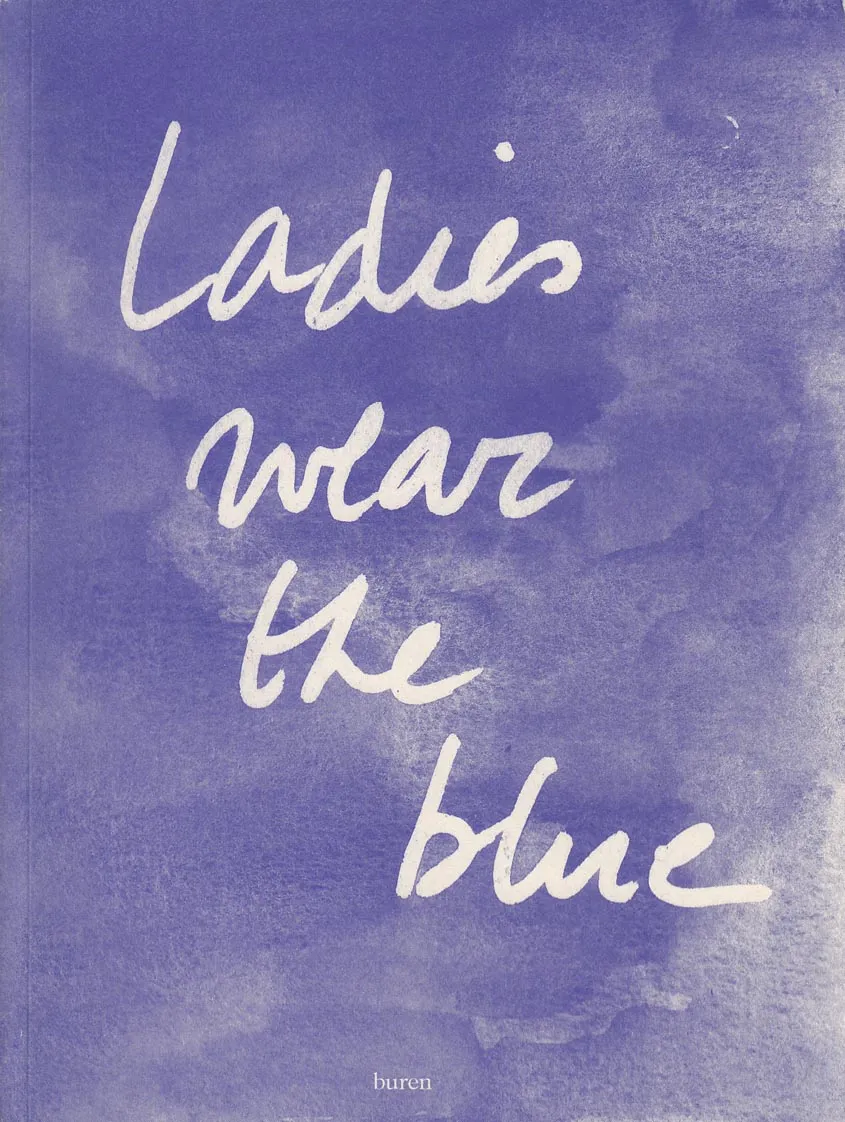
Cover of Ladies Wear the Blue

Self-Published

Ladies Wear the Blue

buren

€22.00

Ladies wear the blue is a collection of watercolour drawings by the hand of Melissa Mabesoone and Oshin Albrecht. The blue watercolours portray women from different moments in time. The adjacent texts describe these women's existence, roles, desires or ideosyncrasies deriving from the 'blue' in their lives. From the first female police officers and Alices all around, to Courtney Love's blue baby dolls and the girl with the blue tattoo Olive Oatman, this publication is an ode to women venturing into the world, and a way to continue telling their herstories.
Language: English

recommendations

Cover of sex and place vol 2

Self-Published

sex and place vol 2

Adriano Wilfert Jensen, Andrea Zavala Folache

sex and place is a series of workshops and publications exploring score-based and semi-anonymous writing as a tool for articulating shared concerns.

Vol 2 ‘discores’ is written by Kexin Hao, Luca Soudant, HaYoung, Andrea Zavala Folache & Adriano Wilfert Jensen. Five strangers are stuck in changing boots next to each other and decide to embark on an intimate conversation starting from the question: “What is troubling your sexuality at the moment?”.

The ‘sex and place’ series is part Domestic Anarchism, a project devoted to coalition-building beyond biological, chosen, or national conceptions of family. Dance serves as a set of tools and knowledge that can be applied beyond “the spectacle” to collectively study, write, and move. 

Andrea Zavala Folache and Adriano Wilfert Jensen are choreographers and they co-parent three-year-old Penélope Cleo. Andrea and Adriano use dance and choreography to think about the distribution of care and solidarity beyond ‘the family’, and in turn consider how such a distribution could inform their dance practice. Inevitably themes like sex, economy, gender, and class get activated. But also notions such as prefiguration, anarchism, clitoridian* thinking, zones of non-domination and coalition building. They see dance as a knowledge that can be applied to different practices. Some of these include: co-habitations, score based writing and dancing, self-organised study groups and publications, workshops and dance performances. 

Cover of Heatwave #2

Self-Published

Heatwave #2

Periodicals €17.00

 In an era when many “radical” theorists were seeking out the peaceable expression of politics in “everyday utopias,” Joshua Clover stressed that politics was always, at root, a fiery confrontation with the powers that be. To these ends, he not only helped bring together a new generation of young communists but also pushed them to engage directly with the rising tide of class conflict, understanding full well that the street and the shopfloor are the true classrooms of the partisan.

Heatwave is, in a sense, an attempt to embody this spirit at a larger scale. Like Joshua, we hope to serve as an engine of engagement, linking our readers to their own history and to one another. Like Joshua, we adopt a principle of ecumenicism, refusing the false dividing lines inherited from the long dissolution of the last global communist movement. At the same time, like Joshua, we also insist on a theoretically rigorous approach that invokes the real complexity of revolutionary theory and history, actively seeks evidence for its claims, and engages in good faith with opposing positions. And, like Joshua, we maintain that the partisan project is inherently incendiary, requiring confrontation with the rulers of the world, rather than gradualist compromise or secessionist retreat. Finally, communism requires an unambiguous commitment to internationalism. Although our project is currently anglophone, we recognize that elaborating a partisan politics requires learning from the self-activity of the dispossessed at the global scale.

The name "Heatwave" echoes that of an old Situationist magazine ("Britain's most incandescent journal" of 1966), but with added urgency in an era where every summer is the hottest on record. While the statistical certainty of catastrophe is inescapable, "revolt" names many species of conflagration, including that peculiar variety we call communism. We must sift through the ashes to find it.

Cover of Sick issue 6

Self-Published

Sick issue 6

Olivia Spring

Poetry €16.00

Writing on the fragmentation of chronic illness, why ‘full access’ isn’t something arts venues should aim for, the complexities of receiving gender-affirming care while living with chronic illness, the realities of constantly having to ration your energy, an interview with musical artist Dead Gowns, abortion access and bodily autonomy, poetry, artwork, book recommendations, and much more.

Essays, features, poetry, art, interviews & more from Vida Adamczewski, A/Bel Andrade, Amy Berkowitz, Khairani Barokka, Jax Bulstrode, Sarah Courville, Jen Deerinwater , Amy Dickinson, Mizy Judah Clifton, Alton Melvar M Dapanas, Dead Gowns, Sergey Isakov, Theo LeGro, Elias Lowe, Cathleen Luo, Jameisha Prescod, Olivia Spring, Leigh Sugar, Oriele Steiner, Emerson Whitney, Chantal Wnuk, Caroline Wolff, and Emma Yearwood

SICK is an independent, thoughtful magazine exploring illness and disability, founded & edited by Olivia Spring and designed by Kaiya Waerea. Founded in Norwich, UK in 2019, we are currently based in Maine, USA and London, UK. We typically publish one issue per year.

Cover of Fanta For The Ghosts

Self-Published

Fanta For The Ghosts

Elisabeth Molin

Zines €10.00

fanta for the ghosts by Elisabeth Molin

120mm x 210mm
edition of 500

Co-published with OneThousandBooks and Elisabeth Molin

Cover of TYPP (The YellowPress Periodical)

Self-Published

TYPP (The YellowPress Periodical)

Ward Heirwegh

TYPP is the community journal of Sint Lucas School of Arts in Antwerp. TYPP is partly a generator for the shared research of our advanced master students, and partly a platform for carefully selected contributions by tutors, students, alumni, guest lecturers and friends of SLA. TYPP is a stage where art and research from this community is shared with you, to enjoy, read, look, learn and get inspired. 

Each edition is carefully and freely designed by Ward Heirwegh. 

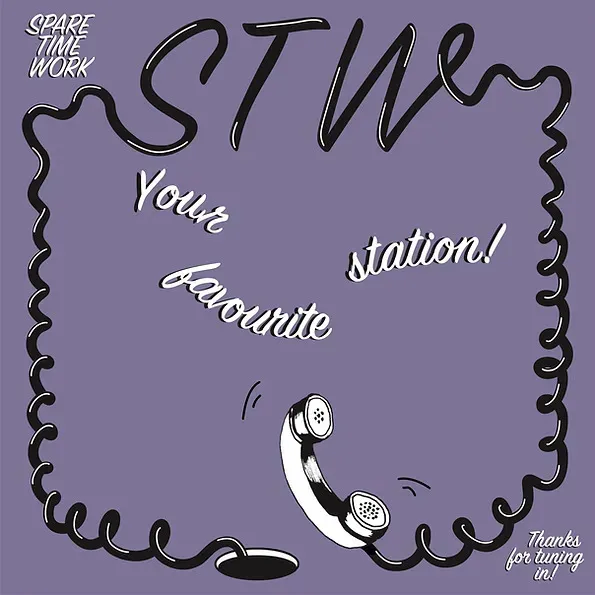
Cover of STW, your favourite station!

het balanseer

STW, your favourite station!

buren

STW, your favourite station! functioneert als een radioprogramma. Een boek dat lyrisch proza uitzendt van We make stuff up for a living (een CV medley) tot COMPUTER_SONG, een ceremoniële quiz met Adult Hood & Young als protagonisten, een grillige anekdote van iemand die zich ergert aan een Call Service, en meer! Thanks for tuning in!

Cover of Carmelina: Figures

Wendy's Subway

Carmelina: Figures

Ronaldo V. Wilson

Ronaldo V. Wilson’s Carmelina: Figures excavates the territory between memory, nation, and embodiment, exploring place as a discipline of the body and an extension of the hand. Through poems, photographs, drawings, records of performance, and home movies recorded in Guam, Tennessee, and the Subic Bay between 1962 and 1979, Wilson reckons with familial heritage, diaspora, and legacies of militarism.

The book pays homage to Wilson’s mother, Carmelina, who served for most of her working life as a certified nursing assistant at Florin Convalescent, an assisted living facility in South Sacramento, California. A glut of signals and media recovers Carmelina’s vivid and urgent experience of exile from the Philippines to marry Wilson’s father—a Black American soldier—being disowned, and before that, of her parents’ assassinations during the Japanese Occupation. Through a visual logic of repetition and reenactment that works to unmoor sensory expectation and narrative logic, Wilson renders her figure as trace, melody against paper, drawing within song, mixed media, dance, and through improvised, masked, and recorded performances in the Berkshires, MA; Long Island, NY; Emeryville, CA; and Boulder, CO. Carmelina: Figures is a book of the Psoas, ice, smudge, and light. 

Cover of Een dag in 't jaar door Herman Gorter

Time has fallen asleep in the afternoon sunshine

Een dag in 't jaar door Herman Gorter

Johan Sonnenschein

For the project Time has fallen asleep in the afternoon sunshine a group of people/ performers memorize a book of their choice. Together they form a library collection consisting of living books. After years of learning by heart and reciting for readers, some of the books have now been written down from memory to create new editions, versions resulting from this process. This book is one of those books, chosen by one person, learned by heart and recited many times, and now written down again from memory. This edition is not a re-edition of the original text. It is a re-writing of the text after the process of reading, memorizing and reciting, with all the alterations that might have occured in the course of this process.

Cover of Writing Out Loud

If I Can't Dance

Writing Out Loud

Jon Mikel Euba

Writing Out Loud is a publication that brings together the transcriptions of eight lectures by the artist Jon Mikel Euba that were live translated from Spanish to English during the course Action unites, words divide (On praxis, an unstated theory) at the DAI. The lectures were delivered across the academic year 2014 – 2015 at the invitation of If I Can’t Dance. They sit within a larger writing-centred project by the artist that he has pursued for almost a decade, through which he aims to define a form of praxis that could evolve into a technical theory.

Cover of Elizabeth in the Woolds

Self-Published

Elizabeth in the Woolds

Jennifer Brewer

Fiction €22.00

Elizabeth in the Woolds is the product of two superimposed compositional strategies; a thematic aggregate based on notes dating back to 2008 and an epic prose narrative. Elizabeth is the device through which this simultaneous register moves. Screen writing provides a model for multiple voices. In a film script, the narrator can be the camera; there’s a machine at the centre of the story structure which figures a demand for resolution of plot; a contrario, the thematic approach (S, U, N, as electric light) obliterates chronology, and enumerates an atemporal topological figure, or the way the world is built.

(730pp., self-published first edition of 50, Kortrijk, 2021) 

Cover of PRESCRIPTIONS: A Collection for Many Evils of the Body and the Mind, Also for Witchcraft

Hildegard Press

PRESCRIPTIONS: A Collection for Many Evils of the Body and the Mind, Also for Witchcraft

Lyndl Hall

PRESCRIPTIONS is a transcription of a handwritten manuscript, dated to approximately 1650, containing a wide range of medicinal and magical remedies. Currently housed in the Cornell University Witchcraft Collection, it is assumed this practical handbook was a reference for healing, midwifery, and other medical/magical advice. Recipes and instruction cover various methods of purging, ointments for swellings, fevers, and pain reduction, lotions for venereal disease, advice for childbirth, and dilemmas such as “worms in the ear.” Accompanying these medicinal prescriptions are a series of magical prescriptions: charms, rituals, and spells recorded to fortify the ailing body, induce amorous desire, or seek revenge.

With its mix of Latin words, Early Modern English parlance, colloquial plant names, apothecary weights, and archaic medical terms, the recipes can at first appear opaque, but with sustained engagement one can begin to decipher the logics and structures within the writer(s)' shorthand. The original manuscript, in having its own detailed glossary, index, and citations, exhibits a meticulous cataloging of knowledge and resources, and reveals an earnest desire to hold onto the integrity and sanctity of the body in the face of 'many evils.'

The transcription is accompanied by a glossary of terms, an explanation of the various apothecary measurements used, and expanded citations of the medicinal/magical treatises that were abbreviated within the original text.