rile*books

Search books

Search books by title, author, publisher, keywords...

Cover of Try Saying You're Alive!

Blank Forms

Try Saying You're Alive!

Kazuki Tomokawa

€20.00

A memoir by Kawasaki-based writer and musician Kazuki Tomokawa, Try Saying You're Alive! offers a semi-fictionalized account of the vibrant Tokyo underground that he has been at the center of since the 1970s.

Recounting sixty years in the life of this "screaming philosopher." Try Saying You're Alive! traces Tomokawa's beginnings in the Akita Prefecture as a "runaway toddler," his adolescent basketball career, and his wanderings as a day laborer, gambler, painter, actor, drinker, and avant-garde folk guitarist. Anecdotes of figures such as novelist Kenji Nakagami, poet Shuji Terayama, actor Tôru Yuri, directors Takashi Miike and Nagisa Ōshima, and musicians Ryudo Uzaki and Kan Mikami animate this impassioned memoir by a legendary musician. This is the first English translation of Tomokawa's writing.

Kazuki Tomokawa (born Tenji Nozoki in 1950 in the Akita Prefecture area of northern Japan) is a prolific Japanese musician, singer-songwriter, artist and poet, one of the pioneers of acid-folk, active on the Japanese music scene since the beginning of the 1970s, companion of musicians such as Kan Mikami, Keiji Haino or Motoharu Yoshizawa. He has recorded more than thirty albums.

Published in 2022 ┊ 256 pages ┊ Language: English

recommendations

Cover of Black Case Volume I and II – Return From Exile

Blank Forms

Black Case Volume I and II – Return From Exile

Joseph Jarman

Poetry €20.00

The republication in print form of the poems of Art Ensemble of Chicago's founding member breathes new life into a forgotten document of the Black Arts Movement.

In 1977, Art Ensemble of Chicago Publishing Co. published Jarman's Black Case Volume I and II: Return From Exile, a collection of writing conceived across America and Europe between 1960 and 1975. Comprised largely of Jarman's flowing, fiery free verse—influenced by Amus Mor, Henry Dumas, Thulani Davis, and Amiri Baraka—the book also features a manifesto for “GREAT BLACK MUSIC,” notated songs, concert program notes, Jarman's photos, and impressions of a play by Muhal Richard Abrams, the founder of the Association for the Advancement of Creative Musicians of which Jarman was also an original member.

Jarman writes poetry of personal revolutionary intent, aimed at routing his audience's consciousness towards growth and communication. He speaks with compassionate urgency of the struggles of growing up on Chicago's South Side, of racist police brutality and profound urban alienation, and of the responsibility he feels as a creative artist to nurture beauty and community through the heliocentric music that he considers the healing force of the universe. A practicing Buddhist and proponent of Aikido since a 1958 awakening saved him from the traumatic mental isolation of his time dropped by the US army into southeast Asia, Jarman sings praise for the self-awareness realization possible through the martial arts.

With cosmic breath as its leitmotif, his poetry both encourages and embodies a complete relinquishing of ego. While some of the poems contained within Black Case have already been immortalized via performances on classic records by Jarman and Art Ensemble of Chicago, its republication in print form breathes new life into a forgotten document of the Black Arts Movement.

Cover of Better Do It Now before You Die Later: Sonny Simmons with Marc Chaloin

Blank Forms

Better Do It Now before You Die Later: Sonny Simmons with Marc Chaloin

Sonny Simmons, Marc Chaloin

Though his years in the New York free-jazz scene of the sixties cemented his reputation as "one of the most forceful and convincing composers and soloists in his field," saxophonist Sonny Simmons (1933–2021) was nearly forgotten by the '80s, which found him broke, heavily dependent on drugs and alcohol, and separated from his wife and kids. "I played on the streets from 1980 to 1994, 365 days a year," Simmons tells jazz historian and biographer Marc Chaloin. "I would go to North Beach, and I'd sleep in the park. The word got around town that Sonny is a junkie, really strung out."

The resurrection of Simmons' career―upon the release of his critically acclaimed Ancient Ritual (Qwest Records) in 1994―has become a modern legend of the genre. In the last two decades of his musical career, Simmons broke through to a new echelon of recognition, joining the pantheon of great innovators and masters of the music. But to this day he remains an undersung figure. Here, in the first ever book dedicated to his life, Simmons recounts his childhood in the backwoods of Louisiana, his adolescence in the burgeoning Bay Area jazz scene and his star-studded life in New York playing alongside the greats.

Cover of Ticking Stripe

Blank Forms

Ticking Stripe

Spencer Gerhardt

A new collection of writings by the composer and mathematician Spencer Gerhardt, considering among other topics the rich points of contact between minimalist musical aesthetics and intuitionistic mathematics.

Noted composer and mathematician Spencer Gerhardt presents Ticking Stripe, a groundbreaking collection of essays linking notions of continuity and construction across the boundaries of math, art, music and philosophy. Gerhardt offers new, and deeply informed interpretations of the 1960s New York avant-garde, viewed through the lens of trailblazing artists such as La Monte Young, Marian Zazeela, Catherine Christer Hennix, Henry Flynt and Tony Conrad.

Ticking Stripe pairs the spirit of L. E. J. Brouwer—a mathematician who brilliantly, and controversially, sought to reconstruct the continuum in his own philosophical terms called intuitionism—with the ambitions of pioneering minimalists who combined continued constructions, idealized processes of introspection, and conceptual world-building with a host of philosophical, scientific, and spiritual concerns. Informed by his own work as a professional mathematician and composer, Gerhardt explores the depths of these disparate traditions, finding unlikely areas of commonality. Spanning over two decades, these essays feature rich historical explorations of minimalist music, writing on contemporary art, and work in logic and algebraic groups, all approached with rare clarity and technical aplomb.

Spencer Gerhardt is a composer and mathematician. His music engages constructive, introspective and romantic traditions. Gerhardt has written solo piano music, piano based songs, and works of minimalism. He studied raga with La Monte Young and Marian Zazeela, piano performance with Sung-Hwa Park, and has collaborated with artists such as Thomas Ankersmit and Charles Curtis.

Cover of Blank Forms #07 – The Cowboy's Dreams of Home

Blank Forms

Blank Forms #07 – The Cowboy's Dreams of Home

Joe Bucciero, Lawrence Kumpf

The seventh entry in an ongoing series of anthologies, this book features rare poems alongside new essays and interviews that engage the artists and themes explored elsewhere in Blank Forms' public programming.

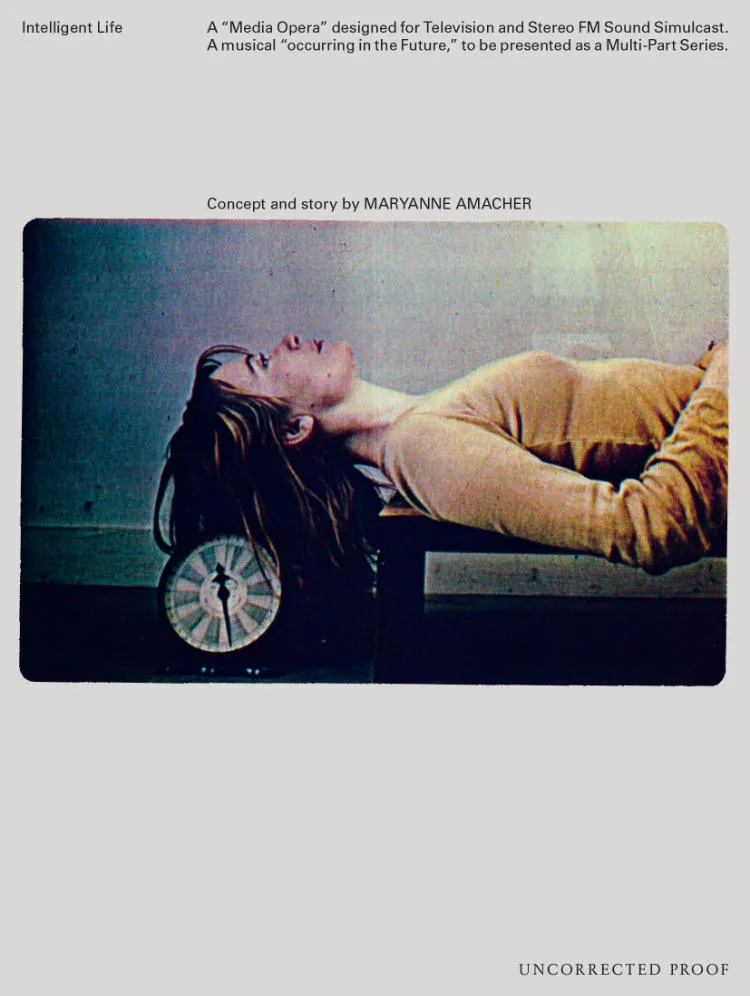
Where most of prior entries, including Aspirations of Madness (2020), Intelligent Life (2019), and Music From The World Tomorrow (2018), have foregrounded little-seen or newly translated archival materials, this iteration privileges new texts produced specifically for the publication. These include an in-depth retrospective interview with the idiosyncratic Texan singer-songwriter and visual artist Terry Allen conducted by ICA Philadelphia chief curator Anthony Elms; a conversation between multidisciplinary writers—and longtime friends—Thulani Davis and Jessica Hagedorn on the occasion of Davis's latest poetry collection, Nothing but the Music, recently published by Blank Forms Editions; a recent discussion between composer Sarah Hennies and cellist Judith Hamann about their recent collaboration, which is included on Hamann's Music for Cello and Humming; and a conversation with composer-performers Tashi Wada and Charles Curtis, on the heels of a recent compilation of Curtis's work, Performances & Recordings 1998– 2018, produced by Wada. Each of these interviews shed light on the particularities of the artists' careers and methods in terms both formal and casual, practical and theoretical. 

In addition to these dialogues, this book features new critical reflections on three artists whose work Blank Forms has presented: the legendary jazz percussionist and healer Milford Graves, by Ciarán Finlayson; English multimedia artist Graham Lambkin and his beguiling 2011 album Amateur Doubles, by Alan Licht; and the UK-based experimental music trio Still House Plants, by Joe Bucciero. These articles mine historical, social, and theoretical contexts, filling gaps in the existing literature on the given artist-subjects. New and archival poems and writing about poetry complement these interviews and essays, including rare texts by Davis, Hagedorn, and René Daumal—the latter translated by Louise Landes Levi—and a suite of Auto-Mythological writings commissioned from Chicago-based composer and musician Angel Bat Dawid.

Cover of A Journal of Militant Sound Inquiry – Vol. 1 – Naming the Moment

Rab-Rab Press

A Journal of Militant Sound Inquiry – Vol. 1 – Naming the Moment

Ultra-red

For their thirtieth anniversary, Ulta-red, the international sound art and popular education collective is releasing the first volume of Ulta-red: A Journal of Militant Sound Inquiry, investigating movement-based listening practices that take the forms of militant inquiry and political education.

In the words of Ultra-red, "No movement without listening!"
The initial issue of Ulta-red examines "conjunctural analysis," or "naming the moment," as a practice of collective inquiry. The issue begins with conversations with three popular educators in North America who, in the 1990s, developed a body of literature meant to guide radical groups through an inquiry into what Stuart Hall once called, the history of the present.

It includes a discussion with Toronto-based activist Chris Cavanaugh who participated in numerous conjunctural analysis efforts in political movements across Canada. In 2000, Cavanaugh helped start the Catalyst Project as a center for working-class and leftist education.

The next interview features Mary Zerkel, a Chicago-based organizer and artist who produced the seminal text, Coyuntural Analysis: Critical Thinking for Meaningful Action in 1997. Zerkel talks about the relationship between her organizing work in local anti-racist and anti-imperialist struggles as well as her involvement in numerous political art collectives in Chicago.

The journal also features an extended conversation with Gustavo Castro Soto in San Cristobal de las Casas, Chiapas, Mexico. Castro Soto is known internationally as the last person to have been with Honduran indigenous activist Berta Cáceres when she was assassinated by paramilitaries in 2016. Recently known for his anti-extractivist efforts in Central America, Castro Soto was part of a team in the late 1990s that produced a ten-volume series of booklets guiding people through the history and political praxis of conjunctural analysis, Metodología de Análisis de Coyuntura.

The Ulta-red journal connects local struggles across contexts, publishing dispatches from ongoing militant investigations in London, Los Angeles, and in prisons in the U.S. South. The journal also introduces reflections on the problems of militant sound inquiry through poetry, book responses, letters, and visual art.

The journal is edited by Dont Rhine in collaboration with David Albright and Christina Sanchez Juarez. It includes contributions by Tony Carfello, Janna Graham, Museo de la Palabra y la Imagen, Chris Jones, Karla, Elliot Perkins, Daniela Lieja Quintanar, and Robert Sember.

Ultra-red is an international sound art and popular education collective with twelve members based in Los Angeles, New York, Berlin, and multiple locations in the UK.

Activist art has come to signify a particular emphasis on appropriated aesthetic forms whose political content does the work of both cultural analysis and cultural action. The art collaboration Ultra-red propose a political-aesthetic project that reverses this model. If we understand organizing as the formal practices that build relationships out of which people compose an analysis and strategic actions, how might art contribute to and challenge those very processes? How might those processes already constitute aesthetic forms?

In the worlds of sound art and modern electronic music, Ultra-red pursue a fragile but dynamic exchange between art and political organizing. Founded in 1994 by two AIDS activists, Ultra-red have over the years expanded to include artists, researchers and organisers from different social movements including the struggles of migration, anti-racism, participatory community development, and the politics of HIV/AIDS.

Collectively, the group have produced radio broadcasts, performances, recordings, installations, texts and public space actions (ps/o). Exploring acoustic space as enunciative of social relations, Ultra-red take up the acoustic mapping of contested spaces and histories utilising sound-based research (termed Militant Sound Investigations) that directly engage the organizing and analyses of political struggles.

Cover of Two Intersecting Loops of Silence

Futura Resistenza

Two Intersecting Loops of Silence

Katja Mater

Two Intersecting Loops of Silence is a 10-inch experimental vinyl that turns silence into rhythm and time into matter. Side A features two silent grooves that create a mechanical ticking when played, while Side B animates a clock-like etched drawing as the record spins. Numbered edition of 200 with hand-printed, unique etching covers. Each copy a one-of-a-kind artwork.

Cover of Theory of Water

Haymarket Books

Theory of Water

Leanne Betasamosake Simpson

Memoir €20.00

A genre-bending exploration of that most elemental force—water—through Indigenous storytelling, personal memory, and the work of influential artists and writers. 

For many years, Leanne Betasamosake Simpson took solace in skiing—in all kinds of weather, on all kinds of snow across all kinds of terrain, often following the trail beside a beloved creek near her home. Recently, as she skied on this path against the backdrop of uncertainty, environmental devastation, rising authoritarianism and ongoing social injustice, her mind turned to the water in the creek and an elemental question: What might it mean to truly listen to water? To know water? To exist with and alongside water?

So began a quest to understand her people's historical, cultural, and ongoing interactions with water in all its forms (ice, snow, rain, perspiration, breath). Pulling together these threads, Leanne began to see how a "Theory of Water" might suggest a radical rethinking of relationships between beings and forces in the world today. In this inventive work, Simpson draws on Nishnaabeg origin stories while artfully weaving the work of influential writers and artists alongside her personal memories and experience—and in doing so, reimagines water as a catalyst for radical transformation, capable of birthing a new world.

Theory of Water is a resonant exploration of an intricate, multi-layered relationship with the most abundant element on our planet—one that, as Simpson eloquently shows, is shaping our present even as it demands a radical rethinking of how we might achieve a just future.

Cover of Curious Affinities

Hajar Press

Curious Affinities

Sophie Chauhan

Poetry €18.00

How much distance and difference can intimacy hold? How much proximity and likeness does it require? What can we learn from its capacities? And what could we salvage from its limits?

Curious Affinities unravels the risks and possibilities brought forth by unconventional styles of intimacy. Across kinship, friendship, romance and community, the threads of social relation are entangled by race, class and queerness in unexpected and generative ways, as we find ourselves rent to shreds and stitched back together in the name of common feelings.

In rousing poetry and incisive prose, Sophie Chauhan reflects on the bonds and boundaries that govern our collective ways of life and wonders how they might be reimagined.

Sophie Chauhan is a London-based writer and researcher, born in the UK and raised in Naarm (Melbourne). She is completing a PhD in Race, Ethnicity and Postcolonial Studies at University College London. Her academic, creative and organising work converge around her interest in anti-capitalist, queer and decolonial approaches to radical coalition-building.