rile*books

Search books

Search books by title, author, publisher, keywords...

Cover of Better Do It Now before You Die Later: Sonny Simmons with Marc Chaloin

Blank Forms

Better Do It Now before You Die Later: Sonny Simmons with Marc Chaloin

Sonny Simmons, Marc Chaloin

€45.00

Though his years in the New York free-jazz scene of the sixties cemented his reputation as "one of the most forceful and convincing composers and soloists in his field," saxophonist Sonny Simmons (1933–2021) was nearly forgotten by the '80s, which found him broke, heavily dependent on drugs and alcohol, and separated from his wife and kids. "I played on the streets from 1980 to 1994, 365 days a year," Simmons tells jazz historian and biographer Marc Chaloin. "I would go to North Beach, and I'd sleep in the park. The word got around town that Sonny is a junkie, really strung out."

The resurrection of Simmons' career―upon the release of his critically acclaimed Ancient Ritual (Qwest Records) in 1994―has become a modern legend of the genre. In the last two decades of his musical career, Simmons broke through to a new echelon of recognition, joining the pantheon of great innovators and masters of the music. But to this day he remains an undersung figure. Here, in the first ever book dedicated to his life, Simmons recounts his childhood in the backwoods of Louisiana, his adolescence in the burgeoning Bay Area jazz scene and his star-studded life in New York playing alongside the greats.

Published in 2025 ┊ 588 pages ┊ Language: English

recommendations

Cover of Blank Forms #07 – The Cowboy's Dreams of Home

Blank Forms

Blank Forms #07 – The Cowboy's Dreams of Home

Joe Bucciero, Lawrence Kumpf

The seventh entry in an ongoing series of anthologies, this book features rare poems alongside new essays and interviews that engage the artists and themes explored elsewhere in Blank Forms' public programming.

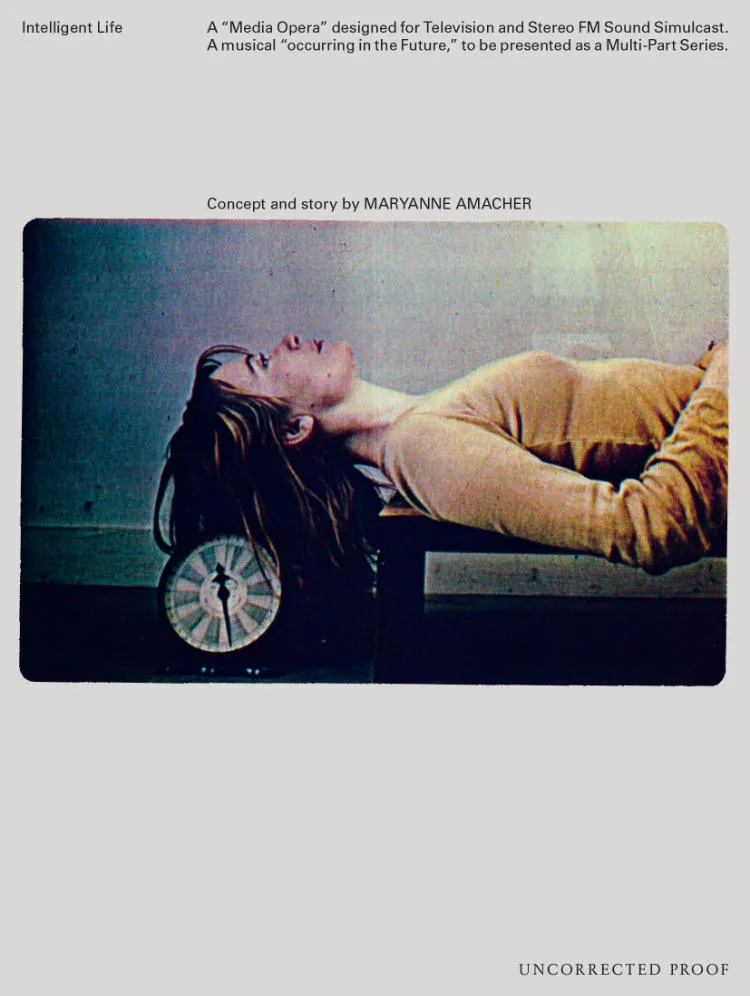
Where most of prior entries, including Aspirations of Madness (2020), Intelligent Life (2019), and Music From The World Tomorrow (2018), have foregrounded little-seen or newly translated archival materials, this iteration privileges new texts produced specifically for the publication. These include an in-depth retrospective interview with the idiosyncratic Texan singer-songwriter and visual artist Terry Allen conducted by ICA Philadelphia chief curator Anthony Elms; a conversation between multidisciplinary writers—and longtime friends—Thulani Davis and Jessica Hagedorn on the occasion of Davis's latest poetry collection, Nothing but the Music, recently published by Blank Forms Editions; a recent discussion between composer Sarah Hennies and cellist Judith Hamann about their recent collaboration, which is included on Hamann's Music for Cello and Humming; and a conversation with composer-performers Tashi Wada and Charles Curtis, on the heels of a recent compilation of Curtis's work, Performances & Recordings 1998– 2018, produced by Wada. Each of these interviews shed light on the particularities of the artists' careers and methods in terms both formal and casual, practical and theoretical. 

In addition to these dialogues, this book features new critical reflections on three artists whose work Blank Forms has presented: the legendary jazz percussionist and healer Milford Graves, by Ciarán Finlayson; English multimedia artist Graham Lambkin and his beguiling 2011 album Amateur Doubles, by Alan Licht; and the UK-based experimental music trio Still House Plants, by Joe Bucciero. These articles mine historical, social, and theoretical contexts, filling gaps in the existing literature on the given artist-subjects. New and archival poems and writing about poetry complement these interviews and essays, including rare texts by Davis, Hagedorn, and René Daumal—the latter translated by Louise Landes Levi—and a suite of Auto-Mythological writings commissioned from Chicago-based composer and musician Angel Bat Dawid.

Cover of Black Case Volume I and II – Return From Exile

Blank Forms

Black Case Volume I and II – Return From Exile

Joseph Jarman

The republication in print form of the poems of Art Ensemble of Chicago's founding member breathes new life into a forgotten document of the Black Arts Movement.

In 1977, Art Ensemble of Chicago Publishing Co. published Jarman's Black Case Volume I and II: Return From Exile, a collection of writing conceived across America and Europe between 1960 and 1975. Comprised largely of Jarman's flowing, fiery free verse—influenced by Amus Mor, Henry Dumas, Thulani Davis, and Amiri Baraka—the book also features a manifesto for “GREAT BLACK MUSIC,” notated songs, concert program notes, Jarman's photos, and impressions of a play by Muhal Richard Abrams, the founder of the Association for the Advancement of Creative Musicians of which Jarman was also an original member.

Jarman writes poetry of personal revolutionary intent, aimed at routing his audience's consciousness towards growth and communication. He speaks with compassionate urgency of the struggles of growing up on Chicago's South Side, of racist police brutality and profound urban alienation, and of the responsibility he feels as a creative artist to nurture beauty and community through the heliocentric music that he considers the healing force of the universe. A practicing Buddhist and proponent of Aikido since a 1958 awakening saved him from the traumatic mental isolation of his time dropped by the US army into southeast Asia, Jarman sings praise for the self-awareness realization possible through the martial arts.

With cosmic breath as its leitmotif, his poetry both encourages and embodies a complete relinquishing of ego. While some of the poems contained within Black Case have already been immortalized via performances on classic records by Jarman and Art Ensemble of Chicago, its republication in print form breathes new life into a forgotten document of the Black Arts Movement.

Cover of Ticking Stripe

Blank Forms

Ticking Stripe

Spencer Gerhardt

A new collection of writings by the composer and mathematician Spencer Gerhardt, considering among other topics the rich points of contact between minimalist musical aesthetics and intuitionistic mathematics.

Noted composer and mathematician Spencer Gerhardt presents Ticking Stripe, a groundbreaking collection of essays linking notions of continuity and construction across the boundaries of math, art, music and philosophy. Gerhardt offers new, and deeply informed interpretations of the 1960s New York avant-garde, viewed through the lens of trailblazing artists such as La Monte Young, Marian Zazeela, Catherine Christer Hennix, Henry Flynt and Tony Conrad.

Ticking Stripe pairs the spirit of L. E. J. Brouwer—a mathematician who brilliantly, and controversially, sought to reconstruct the continuum in his own philosophical terms called intuitionism—with the ambitions of pioneering minimalists who combined continued constructions, idealized processes of introspection, and conceptual world-building with a host of philosophical, scientific, and spiritual concerns. Informed by his own work as a professional mathematician and composer, Gerhardt explores the depths of these disparate traditions, finding unlikely areas of commonality. Spanning over two decades, these essays feature rich historical explorations of minimalist music, writing on contemporary art, and work in logic and algebraic groups, all approached with rare clarity and technical aplomb.

Spencer Gerhardt is a composer and mathematician. His music engages constructive, introspective and romantic traditions. Gerhardt has written solo piano music, piano based songs, and works of minimalism. He studied raga with La Monte Young and Marian Zazeela, piano performance with Sung-Hwa Park, and has collaborated with artists such as Thomas Ankersmit and Charles Curtis.

Cover of Black Revelry: In Honor of ‘The Sugar Shack’

If I Can't Dance

Black Revelry: In Honor of ‘The Sugar Shack’

Derrais Carter

An experiment in book making, which takes up the form of the LP record as a starting point for re-configuring the haptics of the printed book. Presented as a collection of unbound pages inside a gatefold record sleeve, the publication includes a pressed record, as well as written, visual and sonic contributions from scholars, poets, artists, choreographers and DJs.

Through the logic of the detail, each contributor imaginatively (re)produces Ernie Barnes’s iconic painting The Sugar Shack as an archive of personal histories and a universe of intergenerational connections. Held together as an album, it is a performance to be made at home, which invites readers/listeners to feel art’s histories and to be in them with their bodies.

d.a. carter with contributions by Taylor Renée Aldridge; Samiya Bashir; La Marr Jurelle Bruce; DJ Lynnée Denise, Jennifer Harge, Duane Lee Holland, Jr., William H. Mosley, III, Zoé Samudzi, S*an D. Henry-Smith, Melanie Stevens and Phillip B. Williams.

Cover of Sudden Wealth with Roy Claire Potter

Slimvolume Synthesis

Sudden Wealth with Roy Claire Potter

Chris Evans, Roy Claire Potter

Poetry €30.00

Proposed by Chris Evans, Sudden Wealth is a collaboration with Morten Norbye Halvorsen, Graham Kelly and invited poets and artists who use spoken word as their medium. 

Sudden Wealth looks to how the flux of subjectivity in language can be shaped, agitated and re-imagined through a triangulation between written composition, intonation, and extrinsic sound composition. The latter spans analogue and digital instrumentation, foley recordings and algorithmically derived musical patterns. Divergent methods of composition work on and into a voice, modelling intonation, and affecting its sense and intent. 

This first iteration has been made with Roy Claire Potter, an artist who tells stories from fragmented, intense images that depict moving bodies or domestic scenes and architectural settings. A rapid vocal delivery, a sense of restricted or partial views of space, complex social and group dynamics and the aftermath of violent events are recurrent strands of Potter’s writing, which are often delivered with a dark and sometimes wilful humour. 

Chris Evans was the bassist with the now defunct Life Without Buildings and has previously produced musical compositions with Morten Norbye Halvorsen together with farmers and accountants for his ongoing series ‘Jingle’. Graham Kelly joins Evans and Halvorsen for this present series, Sudden Wealth.

Vocals: Roy Claire Potter.
Electronics: Morten Norbye Halvorsen.
Bass: Chris Evans.
Guitar: Graham Kelly.
Arranged and mixed by Morten Norbye Halvorsen.

Cover of Two Intersecting Loops of Silence

Futura Resistenza

Two Intersecting Loops of Silence

Katja Mater

Two Intersecting Loops of Silence is a 10-inch experimental vinyl that turns silence into rhythm and time into matter. Side A features two silent grooves that create a mechanical ticking when played, while Side B animates a clock-like etched drawing as the record spins. Numbered edition of 200 with hand-printed, unique etching covers. Each copy a one-of-a-kind artwork.

Cover of  Là

Futura Resistenza

Laszlo Umbreit, Sirah Foighel Brutmann and 1 more

Là is an immersive, politically charged sound journey – a lament for the Al Naqab desert in Palestine. It is the result of a collaboration between Sirah Foighel Brutmann, Eitan Efrat, Laszlo Umbreit, and Ot Lemmens. The album combines acoustic instruments like flute and cymbals with processed electronics and mechanical sounds. 

The track Ensemble is made from sound recordings of eleven 16mm film projectors, playing simultaneously and in intervals, creating a texture centered around a single pitch – La/A. 

The tracks For Her, There, and No are recordings of live sessions played by Laszlo Umbreit and Eitan Efrat.  

The album also features an extended text by Rose Higham-Stainton titled Strategies for Survival, spread across a 12-page booklet.