rile*books

Search books

Search books by title, author, publisher, keywords...

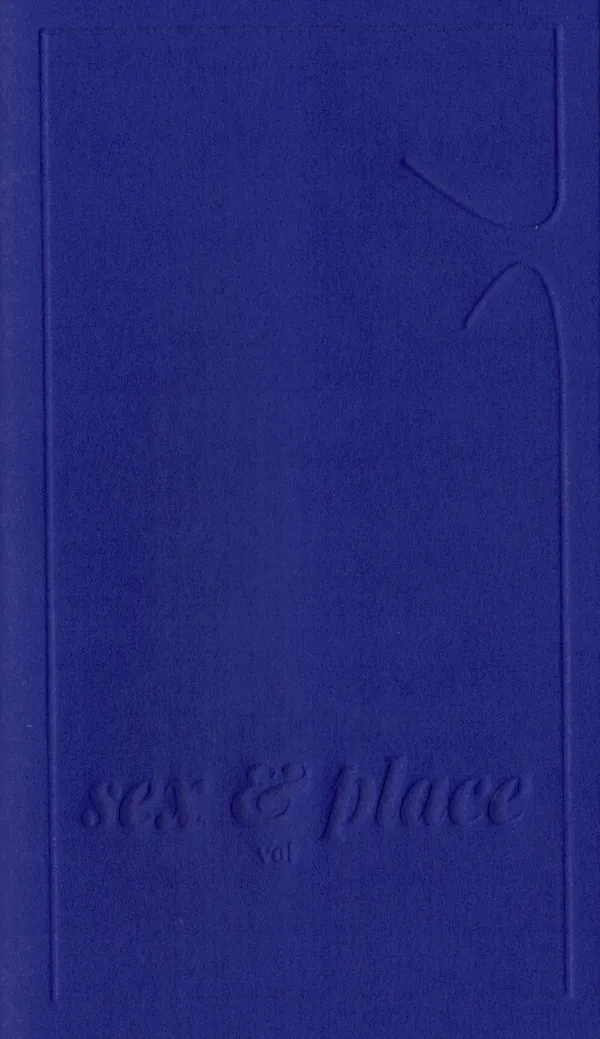
Cover of Tinted Window #2 : Verbivocovisual

Tinted Window

Tinted Window #2 : Verbivocovisual

Oscar Gaynor ed., Alex Bennett ed.

€15.00

This issue is dedicated to 'Materializzazione del Linguaggio', a 1978 Venice Biennale exhibition curated by Mirella Bentivoglio. The exhibition comprised of work by over eighty women artists working in a huge range of media, but united in their interrogation of text, voice and language. After the smashing hit of their Hervé Guibert No.1 issue, Tinted Window continues its focus on a single subject with issue No.2: Verbivocovisual. In No.2, Tinted Window brings much of this work back to the fore where many artists have slipped into the footnotes of an exciting period in art history. But much beyond our focus on this iconic exhibition, the issue features new essays and art projects by some of the best artists working with text, voice and poetry today.

No.2 features new commissions, translations and reprints from: Holly Antrum, Jeremy Atherton Lin, Mirella Bentivoglio, Angela Bianchini, Daniela Cascella, Anne Carson, Paula Claire, Paul Clinton, William Cobbing, Constance DeJong, Karen Di Franco, Sholto Dobie, Gustavo Grandal Montero, Katalin Ladik, Daisy Lafarge, Rosanna Mclaughlin, Silvia Mejía, Hannah Regal, Giovanna Sandri and Sue Tompkins.

Language: English

recommendations

Cover of Autobiography of Red

Vintage Contemporaries

Autobiography of Red

Anne Carson

Poetry €20.00

Geryon, a young boy who is also a winged red monster, reveals the volcanic terrain of his fragile, tormented soul in an autobiography he begins at the age of five. As he grows older, Geryon escapes his abusive brother and affectionate but ineffectual mother, finding solace behind the lens of his camera and in the arms of a young man named Herakles, a cavalier drifter who leaves him at the peak of infatuation. When Herakles reappears years later, Geryon confronts again the pain of his desire and embarks on a journey that will unleash his creative imagination to its fullest extent.

By turns whimsical and haunting, erudite and accessible, richly layered and deceptively simple, Autobiography of Red is a profoundly moving portrait of an artist coming to terms with the fantastic accident of who he is.

Cover of Mousse #92

Mousse Publishing

Mousse #92

Various

Periodicals €16.00

Regions surface often in this issue—across arts, tales, and gatherings of individuals and meanings—as a possibility to bypass the borders of nation-states and the meta-geographies of colonial modernity.

Slavs and Tatars; Hera Chan on Stephanie Comilang; Stephanie Bailey on Ho Tzu Nyen; Drifting into the Atmospheric by Sohrab Mohebbi; Lauren Cook contributes nine newly commissioned note-like fiction pieces; Asad Raza on Édouard Glissant; Mira Dayal in conversation with Shanzhai Lyric, TJ Shin, and jina valentine; Temporary Communities, Four Points on Radically Public Institutions by Elvira Dyangani Ose; A Signature Truer Than the Name by Dani Blanga Gubbay; tidbits: Ruoru Mou by Amy Jones; Virginia Ariu by Brit Barton; Bagus Pandega by Harry Burke; Ceidra Moon Murphy by Alex Bennett; Oshay Green by Ikechúkwú Onyewuenyi; Shafei Xia in conversation with Danielle Shang; books by Christian Rattemeyer; Guest Design: Lamm & Kirch.

This issue comes with different covers, randomly distributed.

Mousse is a bimonthly contemporary art magazine. Established in 2006, Mousse contains interviews, conversations, and essays by some of the most important figures in international criticism, visual arts, and curating today, alternated with a series of distinctive articles in a unique tabloid format.

Cover of Eros the Bittersweet: An Essay

Princeton University Press

Eros the Bittersweet: An Essay

Anne Carson

Essays €17.00

Anne Carson's remarkable first book about the paradoxical nature of romantic love. Since it was first published, Eros the Bittersweet, Anne Carson's lyrical meditation on love in ancient Greek literature and philosophy, has established itself as a favorite among an unusually broad audience, including classicists, essayists, poets, and general readers.

Beginning with the poet Sappho's invention of the word "bittersweet" to describe Eros, Carson's original and beautifully written book is a wide-ranging reflection on the conflicted nature of romantic love, which is both "miserable" and "one of the greatest pleasures we have."

Cover of Ezio Gribaudo - The Weight of the Concrete

Grazer Kunstverein

Ezio Gribaudo - The Weight of the Concrete

Lilou Vidal, Tom Engels and 1 more

Monograph €36.00

The Weight of the Concrete explores the legacy of the Turinese artist and publisher Ezio Gribaudo (1929–2022), examining his multifaceted oeuvre at the confluence of image and language. This publication, named after Il Peso del Concreto (1968)—a seminal work that featured Gribaudo’s early graphic creations alongside an anthology of concrete poetry edited by the poet Adriano Spatola (1941–88)—places Gribaudo’s work in conversation with approximately forty artists and poets from different generations, all of whom similarly engage with explorations of text, form, and visual expression.

Reflecting the editorial premise of Il Peso del Concreto, The Weight of the Concrete revisits the influential anthology, including archive material that documents its production, and reimagines it, pairing Gribaudo’s graphic work with a new selection of historical and contemporary concrete and experimental poetry.

At the heart of the volume is Gribaudo’s emblematic Logogrifi series, developed from the 1960s onward. The Logogrifi reveal his deep engagement with the art of bookmaking and fascination with industrial printing processes, relief matrices, typefaces, and language games.

In this new edition, the editors take the opportunity to revisit Gribaudo’s pioneering work, examining previously overlooked dimensions—gendered, geographical, and technological—and exploring contemporary associations beyond the original context. The book also includes essays that elucidate the poetic and political interplay between image, language, and materiality.

This publication is released following Ezio Gribaudo – The Weight of the Concrete, an exhibition held at the Grazer Kunstverein in Graz, Austria (2023–24), and at the Museion—Museum of Modern and Contemporary Art in Bolzano-Bozen, Italy (2024).

Edited by Tom Engels and Lilou Vidal
Published by Axis Axis and Grazer Kunstverein

Contributions by Anni Albers, Mirella Bentivoglio, Tomaso Binga, Irma Blank, Al Cartio, Paula Claire, CAConrad, Natalie Czech, Betty Danon, Constance DeJong, Mirtha Dermisache, Johanna Drucker, Bryana Fritz, Ilse Garnier, Liliane Giraudon, Susan Howe, Alison Knowles, Katalin Ladik, Liliane Lijn, Hanne Lippard, Sara Magenheimer, Françoise Mairey, Nadia Marcus, Giulia Niccolai, Alice Notley, Ewa Partum, sadé powell, N. H. Pritchard, Cia Rinne, Neide Dias de Sá, Giovanna Sandri, Mary Ellen Solt, Alice Theobald, Colleen Thibaudeau, Patrizia Vicinelli, Pascal Vonlanthen, Hannah Weiner, and Ruth Wolf-Rehfeldt

Essays by Alex Balgiu, Tom Engels, Nadia Marcus, Luca Lo Pinto, Mónica de la Torre, and Lilou Vidal

Cover of Mousse #93

Mousse Publishing

Mousse #93

Periodicals €16.00

Andrew Berardini on Artificial Intelligence; Pepón Osorio; Arash Nassiri; Gloria E. Anzaldúa; Marcela Guerrero speaks with C. Ondine Chavoya; Daisy Lafarge; Dani Blanga Gubbay; Davide Stucchi speaks with Alex Bennett; Luca Lo Pinto on Hanuman Editions; Reynaldo Rivera & Abdellah Taïa; Jungle Books...

This issue comes with different covers, randomly distributed.

Cover of The Prime Times Vol.1

cry mimi cry

The Prime Times Vol.1

Sophie T. Lvoff

Dans « The Prime Times, Volume 1 », Sophie T. Lvoff met en scène sa pratique quotidienne d’atelier. Au travers de poèmes en haïku, de gros titres et de photographies de son atelier traversé par la lumière du jour au milieu de l’après-midi, le journal chronique la torpeur des longues journées de travail mêlées d’attente, de glimpses et de glances

En attendant the prime time, Sophie lit les nouvelles sur son téléphone, parcourt paresseusement sa bibliothèque, écrit des emails à des amix éloigné·es et parfois à elle-même. Elle note des blagues et des poèmes dans son cahier, mange des snacks, doute d’elle-même, fume, jette des regards autour d’elle, jusqu’au moment précis où la photo doit être prise.

In « The Prime Times, Volume 1 », Sophie T. Lvoff dramatizes her daily studio practice. Through haiku poems, headlines, doodles and photographs of her studio pierced by mid-afternoon daylight, the journal chronicles the torpor of long workdays mixed with waiting, glimpses, and glances.

While waiting for the prime time, Sophie reads the news on her phone and lazily reads her collection of books, writes emails to far-away friends and sometimes to herself. She notes things in notebooks and writes jokes and poems, stretches, eats snacks, doubts herself, smokes, glances around, until the precise moment when the picture has to be taken.

Cover of Kamer I - Oesters

Self-Published

Kamer I - Oesters

Katinka van Gorkum

‘Kamer I - Oesters’ is een kort verhaal geschreven in het kader van het kunstproject Beste Anna,. Hierin fungeert de figuur van de openlijk lesbische Rotterdamse schrijfster Anna Blaman als motor voor vragen, gesprekken en correspondenties rondom feminisme, schrijvende vrouwen en de canon, anders zijn, eenzaamheid en vriendschap.

Ook verkent Katinka met dit onderzoek Anna Blaman als personage voor een toekomstige roman. In ‘Kamer I - Oesters’ betreedt de hoofdpersoon Anna’s met een rolkoffer vol boeken van andere schrijvers, fluistert ze hun woorden in de kieren in Anna’s muren en verleidt ze Anna met een pauwendans.

Anna Blaman (1905-1960) was openlijk lesbisch, in die tijd een groot taboe, maar zag zichzelf niet als voorvechter van een beweging. Een belangrijk thema in haar werk is de vraag of we een ander werkelijk kunnen kennen. De personages in haar romans zijn vaak alleen en verlangen naar een ander, die altijd onbereikbaar blijft. In 1948 publiceerde Blaman de roman Eenzaam Avontuur, die erg veel stof op deed waaien vanwege enkele (homo-)erotische personages die in het boek voorkomen. 

Cover of HOOT nr. 3 — Kamilé Krasauskaité

GUFO

HOOT nr. 3 — Kamilé Krasauskaité

Gufo, Clément Faydit and 1 more

Last year, on a summer night in Marseille, someone, within all the hungry people I am meeting during my dinners, specifically set her attention on my projects. Later during the fall I received a call from Austė ZDANČIŪTĖ, the cultural attache at the Lithuanian embassy in France, who introduced me to Kamilè Krasauskaitè. Since that fall, we kept on exchanging and making future plans in France where she would have a residency. The more we chatted, the closest we began. Kamilè is a almost-thirty-years-old Lithuanian artist that has been including sourdough bread in her work and builds a poetic and mesmerising world around that dimension of food, fermentation, senses, environment, rituals...Through our communication I decided to share that encounter that we managed to welcome in Marseille. We kneaded some bread together, shared it in a forest of Marseillais sunflowers, walked the streets, met people, questioned and compared artists' lives in Europe. This issue might be an excerpt of all the long conversations we had, it was hot and sunny in Marseille, it was in June.