rile*books

Search books

Search books by title, author, publisher, keywords...

Cover of The Apothecary

Book*hug Press

The Apothecary

Lisa Robertson

€13.00

THE APOTHECARY stems from the author's desire to remake the sentence—to let it be capacious, preposterous, convivial, and hang it from a pronoun worn like a phantom limb. Robertson wants that ghostly pronoun to reinvent itself afresh in each sentence. Looking towards the eighteenth century, sometimes through a lens occasionally borrowed from contemporary sources, the text of THE APOTHECARY is precise, intoxicating materia medica dispensed by one of Canada's most important contemporary posts at the beginning of her career with the use of florid instruments.

Language: English

recommendations

Cover of Nilling

Book*hug Press

Nilling

Lisa Robertson

Poetry €18.00

NILLING: PROSE is a sequence of five loosely linked prose essays about noise, pornography, the codex, melancholy, Lucretius, folds, cities and related aporias: in short, these are essays on reading.

"I have tried to make a sketch or a model in several dimensions of the potency of Arendt's idea of invisibility, the necessary inconspicuousness of thinking and reading, and the ambivalently joyous and knotted agency to be found there. Just beneath the surface of the phonemes, a gendered name rhythmically explodes into a founding variousness. And then the strictures of the text assert again themselves. I want to claim for this inconspicuousness a transformational agency that runs counter to the teleology of readerly intention. Syllables might call to gods who do and don't exist. That is, they appear in the text's absences and densities as a motile graphic and phonemic force that abnegates its own necessity. Overwhelmingly in my submission to reading's supple snare, I feel love."

Cover of The Men

Book*hug Press

The Men

Lisa Robertson

Poetry €16.00

The Men explores a territory between the poet and a lyric lineage among men. Following a tradition that includes Petrarch's Sonnets, Dante's work on the vernacular, Montaigne, and even Kant, Robertson is compelled towards the construction of the textual subjectivity these authors convey-a subjectivity that honors all the ambivalence, doubt and tenderness of the human. Yet she remains angered by the structure of gender these works advance, and it is this troubled texture of identity that she examines in The Men.

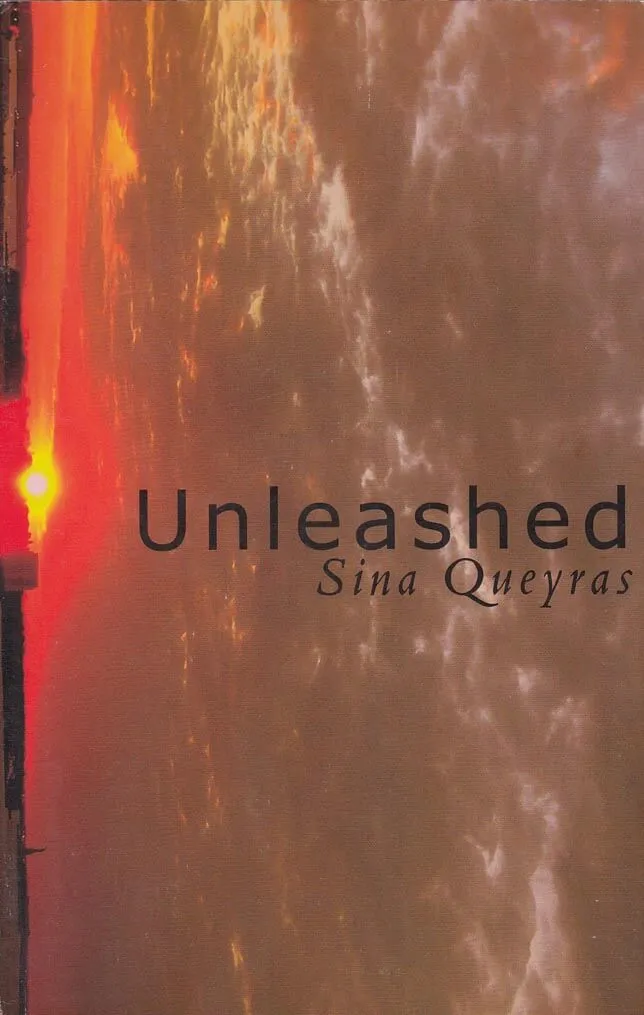
Cover of Unleashed

Book*hug Press

Unleashed

Sina Queyras

Poetry €20.00

05/09/04 Now she is blogging. Now she is sitting on the black couch listening to the sirens wail and the rain fall. Now she is thinking of oysters. Now she is wondering why this is worth sharing. Now she is thinking, how decipher what is worth reading? Who is to say? Sifters. She thinks we have become a nation of sifters. So began a three-year experiment in blogging. An experiment begun for many reasons—a way for an expat to keep in touch with fellow Canadian writers and artists, a way to come to terms with the increasing relevance of the internet in literary lives, and a way to figure out why, after decades of gains, women writers are still grossly underrepresented in critical dialogues.

With an afterword by Vanessa Place.

Cover of Le Chauffage — Issue #2

Le Chauffage

Le Chauffage — Issue #2

Francesca Percival, Felix Rapp and 1 more

Le Chauffage (french for “The Heater”) is an artist-run publication based in Brussels and Vancouver. It is conceived as a cross-continental, community oriented platform. Le Chauffage brings together the work and writing of artists / friends from different cities with the  intent to spark discussion and fuel casual forms of critical discourse.

The second issue of Le Chauffage contains photographs and texts, photographs of text, photographs as text and vice versa. Loosely thinking through the format of The Photo Essay celebrated by John Szarkowski in an eponymously titled exhibition at MoMA in 1965, this issue considers some of the artistic possibilities that can be found in such an archaic and historically male-dominated form. 

Many of the contributions that make up this second issue are not photo essays per se. But each one of them considers the printed page as a space in its own right. The magazine becomes an interior where words and images entertain a malleable and distinctly porous relationship. At times, it is also a space where artists and writers from different cities were invited to meet and collaborate. And since interest in other people is also an interest in yourself, it is always unclear who is really transforming who?

Contributions by: Bob Cain & Linda Miller, Moyra Davey, Laurie Kang, Niklas Taleb, Madeleine Paré & Diane Severin Nguyen, Josephine Pryde, Slow Reading Club, Ken Lum, Isaac Thomas, Vijai Maia Patchineelam, Artun Alaska Arasli & Graeme Wahn, Stephen Waddell, Maya Beaudry & Chloe Chignell, Lisa Robertson, groana melendez, Victoria Antoinette Megens and Will Holder.

Editors: Emile Rubino and Felix Rapp
Co-Editor: Francesca Percival
Design: Francesca Percival and Felix Rapp
Cover Design: Francesca Percival
Printed by: Cassochrome, Belgium
Edition of 350

Cover of == #2 (edition)

Capricious

== #2 (edition)

Matt Keegan

First launched in 2012, and published by mfc michèle didier (micheledidier.com), == is a small-run arts publication, edited by Matt Keegan. ==#2, 2015, is designed by Su Barber and published in an edition of 500 by Capricious Publishing. Barber and Keegan worked together on North Drive Press (northdrivepress.com) between 2005-2010, and this publication shares a variety of traits with NDP.

==#2 is a non-thematic arts publication contained in a box with a 96-page bound volume featuring artist-to-artist interviews, texts, and transcriptions. Six loose multiples are also included.

Contributors include: Sam Anderson, Uri Aran, Fia Backström, Darren Bader, Judith Barry, Stefania Bortolami, Daniel Bozhkov, Milano Chow, Anna Craycroft, Lucky DeBellevue, Cristina Delgado, Haytham El-Wardany, Jake Ewert, Vincent Fecteau, Corrine Fitzpatrick, Harrell Fletcher, Rachel Foullon, Aurélien Froment, Kenny Greenberg, Calla Henkel, Leslie Hewitt, Jaya Howey, Adelita Husni-Bey, Iman Issa, Ruba Katrib, Jill Magid, Jo Nigoghossian, Aaron Peck, Max Pitegoff, David Placek, Olivia Plender, Lisa Robertson, Andrew Russeth, Amy Sillman, Diane Simpson, Greg Parma Smith, Jessica Stockholder, Martine Syms, and Anicka Yi.

Cover of Festival

Belladonna* Collaborative

Festival

Mia You

Poetry €18.00

The festival is a space of communion and celebration, a romanticized collision of bodies, music and magic. The revolution will look like a festival, we’ve been told by philosophers, writers, artists, and marketers. But the festival is also, of course, the space of formalizing ideology, ritualizing the consumption and violence that propels existing structures of power. 

This poetry collection views the migrant, female body as both the glorified and martyred totem of the festival-of-all-festivals we call globalization. Drawing from sources such as Sigmund Freud, James George Frazer, H.D., the Situationist International, seventeenth century narratives of Dutch sailors shipwrecked on the Korean peninsula, the rise of K-pop and the “Korean Wave,” and a zoo-breaking gorilla named Bokito, Festival features kaleidoscopic poetic sequences aiming to show that if anything universal is to be found in lyric poetry’s “I,” it is the result of centuries-long entanglements and contaminations, and of the bodies made to bear these exchanges, to give birth to this century’s globalized subject.

“FESTIVAL is an ode to both beauty and misery. Mia You’s ingenious poetry will have you laughing through your tears. Do NOT miss out!”
— Yael van der Wouden

"She reanimates the form-of-life which is a poem with a feminist skepticism, without foreclosing her robustly idealist commitment to poetry’s continuance"
Lisa Robertson

Cover of Pivot

HELA Press

Pivot

Imani Mason Jordan

Poetry €14.00

Pivot is an experimental, book-length poem exploring the profound act of "turning", with the Haitian Revolution as its cornerstone.

Pivot moves beyond historical narrative, scrutinizing this epochal event through its pivotal moments—critical junctures of rupture and radical reorientation. Mason Jordan masterfully employs repetition, metaphor, and other minimalist abstractions of language to delve into the visceral and conceptual mechanics of turning: a turning away from colonial subjugation, a turning towards new vocabularies of freedom, and the cyclical turning of memory. Through linguistic architectures and etymology, akin to the likes of Fred Moten, N. H. Pritchard, and M. NourbeSe Philip, Pivot examines international revolt, revolutionary fervor, and the development of Black Marxism(s) through a critical reflection on Haitian revolutionary history.

Cover of The Mirror of Simple Souls

Winter Editions

The Mirror of Simple Souls

Leah Flax Barber

Poetry €20.00

In her first book of poems, Leah Flax Barber revives an actress figure of the commedia dell'arte to consider her own destiny as a soon-to-be historical subject. Taking its title from Marguerite Porete's fourteenth-century Beguine classic, The Mirror of Simple Souls embodies the metaphysical thorniness of the book-as-object through sources as wide-ranging as Renaissance theater, Low German and Old French mystical texts, Kate Bush lyrics, and the melancholy dialectics of Walter Benjamin. In Flax Barber's stark, brutally compressed poems, the performance of writing is charged with the eros and anxiety of coming after: "Will it all be destroyed? / Definitely / I will hear it on my radio / In the 22nd century."

The Mirror of Simple Souls, a series of repeated beginnings and endings, is a form of speech act which, through a Freudian Durcharbeiten, or working through, brings about a new beginning. And, in its movement from this Freudian "working through" to a Hegelian Aufhebung, lets us begin, again, at the beginning, at the end. —CYNTHIA CRUZ

The spare poems of The Mirror of Simple Souls evoke and then draw back into shimmer. Herein, a performance that suffuses the horizon with beautiful absurdity: a shirt sewn with mirrors that reflect a strange and evanescing world-at-large, “an I where the nay was.” Drawing from film, mystical texts, commedia dell'arte, the reader finds that there “is paraphernalia of life / all over.” This paraphernalia is a kind of “segue music” for the endlessly indeterminate. The old adage claims that we can’t step into the same river twice, but Leah Flax Barber creates an evocative, provocative current through which each step is at once past, present, and future. —ELIZABETH ROBINSON

Leah Flax Barber is a daring and brilliant new poet. Her voice is restless and coiled and sprung as we discover "The demonic finalist / Of material culture / Is love / There is paraphernalia of life / All over / A woman.” There is also a take-no-prisoners attitude throughout this startling and powerful book. These poems are vital and necessary and perform “The wounded chance / To think in public.” This book will move you, scare you, and blow you away. —PETER GIZZI

Leah Flax Barber's first book reads like a journey, a kind of anabasis, passing back through the myth and history which are its own antecedents. It manifests, in the encounter, a saturnalian world: ludic, dark and sensuous, strange and vibrant with thought. I was delighted to travel with it. —CLAIRE DeVOOGD

Cover of The Poeticians

Self-Published

The Poeticians

Pontus Pettersson

Poetry €5.00
The Poeticians is a publication of the performance of the collection of clothes and poetry called Writing Wounds To Heal by Swedish choreographer Pontus Pettersson. Made in velvet silk with the poetry burned out in the fabric exposing the texts, the poetry exposes both itself and the skin of the performer. Throughout the durational piece the performers are doing Pontus Petterssons cat practice and is one of the main ingredients of the project as well as the clothes/poems. The Poeticans is also a choreo-curational event that hosts different choreographic proposals inside of it. It is seen as module or installation where pieces, objects, performers can be inserted rather than a performance that executes and performs the same over and over. It was created as an extension of Pontus interest in poetry and choreography where hospitality and proximity is seen as key concepts in the development and execution of the event.
Cover of Elegies of the Earth

World Poetry Books

Elegies of the Earth

Ahmad Shamlou, Niloufar Talebi

Poetry €24.00

A sweeping centennial edition of Iran’s iconic twentieth-century poet of liberty, whose work shaped modern Persian poetry. Known for his political engagement and deep humanism, and his pivotal role in Persian poetry’s modernist turn toward free verse, Ahmad Shamlou (1925–2000) crafted poems that carried both lyrical intimacy and cultural force. A central, defiant voice in Iran’s modern literary history, Shamlou championed the power of poetry as an instrument of liberation. His work, long suppressed in his homeland, remains urgent for readers everywhere confronting censorship, exile, and erasure. This bilingual edition honors Shamlou’s centennial with the most expansive selection of his poetry to date in English, encompassing his wide thematic range: from fierce protest to intimate love, mythic storytelling to existential reflection. Niloufar Talebi’s vibrant translations and deeply researched commentary shine new light on Shamlou’s legacy and his relevance today.

Cover of Pyre

Spiral Editions

Pyre

Michael Cavuto, Astrid Terrazas

Poetry €20.00

"From this moment / and hence backwards / a visitation / echoes thru the apparent opening / to the tomb / the narrow passage is the mind's reasoning / in clarity / as she moves like a shadow / having lived her life before " — Joanne Kyger, from Places to Go (Black Sparrow, 1970)

"All processes measured as form are traceable in curved decay. Seemingly unmeasurable, unquenchable, the heart stone harbors its own native entropy. The evolution of organs is not ours to decipher. We’re drawn slanting toward the stone in helices of approaching circles. Our movements throw shadows, our bodies ring haloes." — Michael Cavuto, "Isis Theses"

"In the dual work of Isis Theses & Pyre I-V, living, death, language’s work of remembrance, place & poetic lineage all take part in shifting throughlines of recombinant forms, as a spiral spirals back on itself, changed over time. Early on, here, Cavuto writes “There is not enough wood for coffins. There is wood enough for a boat.” a Pyre then is a boat, a burning that is going somewhere, not death-as-end but as an upward & outward movement into collectively shared air, an archeology of connection. “Kyger wrote that memory is a weird dimension carried around invisibly in the ‘mind’’ Cavuto writes, in one of those moments that feels like a key, “Writing, she said, gives history back to you.” But it is not only history that Cavuto is carrying forward in these poems, it is something more spatially complex, enlivened & embodied in the dance of the words, & in the vital breakdown of the words themselves. The poems in Pyre I-V enact their answer to the question ‘what essence is left us when no words are left,’ & leave us, after the ritual process, dazzled with the true sense that something is left, something important of resonance & remembrance, in the atomized language-space; the air around the dis-integrating morphemes shimmering on the page as dissipative, potentiate sparks. —Cody-Rose Clevidence

Michael Cavuto is a poet based in Brooklyn, New York. His books include Country Poems (Knife Fork Book, 2020) and Pyre (Spiral Editions, 2025). With the poets Dale Smith and Hoa Nguyen, he publishes the Slow Poetry in America Newsletter. Along with Tessa Bolsover, he publishes hand-bound poetry books through auric press.

Pyre, Michael Cavuto. Illustrations by Astrid Terrazas. 52p, 8.5" x 6.75", hand sewn with red linen thread. Covers letterpressed on a 1963 Vandercook proof press with Strathmore Premium Grandee paper. Copy text and illustrations printed both offset and digitally on Mohawk felt paper in a first edition of 275. Printed, assembled, and bound in “Kingston, New York,” the unceded and currently occupied lands of the Haudenosaunee, Mohican, Munsee Lenape, and Schaghticoke. With thanks to Vladimir Nahitchevansky and the various friends who helped assemble.