rile*books

Search books

Search books by title, author, publisher, keywords...

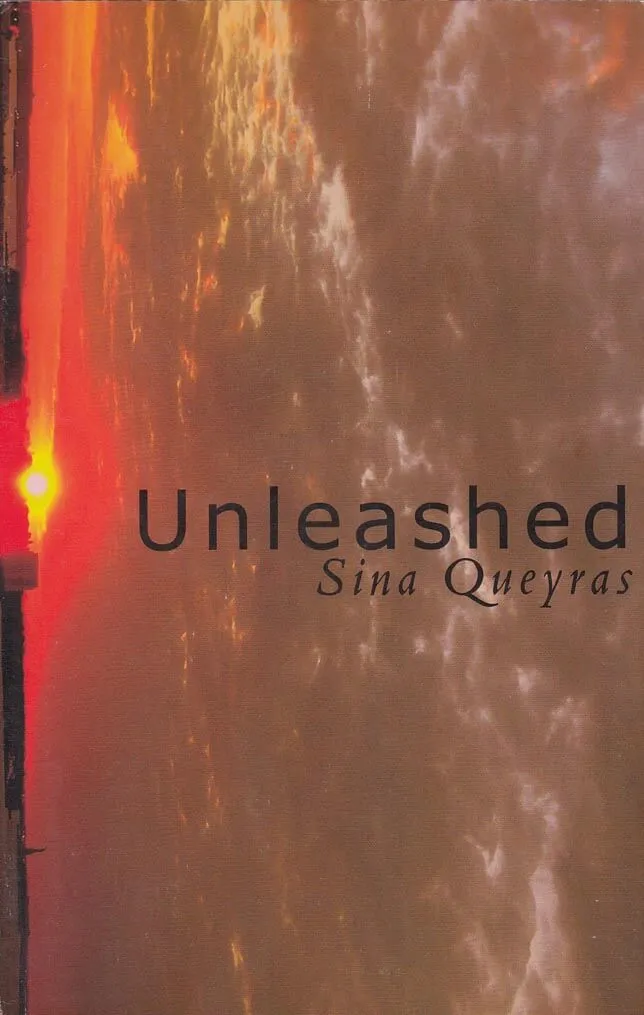
Cover of Unleashed

Book*hug Press

Unleashed

Sina Queyras

€20.00

05/09/04 Now she is blogging. Now she is sitting on the black couch listening to the sirens wail and the rain fall. Now she is thinking of oysters. Now she is wondering why this is worth sharing. Now she is thinking, how decipher what is worth reading? Who is to say? Sifters. She thinks we have become a nation of sifters. So began a three-year experiment in blogging. An experiment begun for many reasons—a way for an expat to keep in touch with fellow Canadian writers and artists, a way to come to terms with the increasing relevance of the internet in literary lives, and a way to figure out why, after decades of gains, women writers are still grossly underrepresented in critical dialogues.

With an afterword by Vanessa Place.

Language: English

recommendations

Cover of The Men

Book*hug Press

The Men

Lisa Robertson

Poetry €16.00

The Men explores a territory between the poet and a lyric lineage among men. Following a tradition that includes Petrarch's Sonnets, Dante's work on the vernacular, Montaigne, and even Kant, Robertson is compelled towards the construction of the textual subjectivity these authors convey-a subjectivity that honors all the ambivalence, doubt and tenderness of the human. Yet she remains angered by the structure of gender these works advance, and it is this troubled texture of identity that she examines in The Men.

Cover of Nilling

Book*hug Press

Nilling

Lisa Robertson

Poetry €18.00

NILLING: PROSE is a sequence of five loosely linked prose essays about noise, pornography, the codex, melancholy, Lucretius, folds, cities and related aporias: in short, these are essays on reading.

"I have tried to make a sketch or a model in several dimensions of the potency of Arendt's idea of invisibility, the necessary inconspicuousness of thinking and reading, and the ambivalently joyous and knotted agency to be found there. Just beneath the surface of the phonemes, a gendered name rhythmically explodes into a founding variousness. And then the strictures of the text assert again themselves. I want to claim for this inconspicuousness a transformational agency that runs counter to the teleology of readerly intention. Syllables might call to gods who do and don't exist. That is, they appear in the text's absences and densities as a motile graphic and phonemic force that abnegates its own necessity. Overwhelmingly in my submission to reading's supple snare, I feel love."

Cover of Notes on Conceptualisms

Ugly Duckling Presse

Notes on Conceptualisms

Vanessa Place, Robert Fitterman

What is conceptual writing, how does it differ from Conceptual Art, what are some of the dominant forms of conceptualism,where does an impure or hybrid conceptualism fit in, what about the baroque, what about the prosody of procedure, what are the links between appropriation and conceptual writing, how does conceptual writing rely on a new way of reading, a “thinkership” that can shift the focus away from the text and onto the concept, what is the relationship between conceptual writing and technology or information culture, and why has this tendency taken hold in the poetry community now? What follows, then, is a collection of notes, aphorisms, quotes and inquiries on conceptual writing. We have co-authored this text through correspondence, shared reading interests, and similar explorations. Notes on Conceptualisms is far from a definitive text, and much closer to a primer, a purposefully incomplete starting place, where readers, hopefully, can enter so as to participate.

Cover of Faux Ice

Materials

Faux Ice

James Goodwin

Poetry €13.00

James Goodwin’s Faux Ice contains six poems: ‘Roman Street Sweeper’, ‘Technomarine’, ‘Meridian Walk’, ‘Astroturf’, ‘Star Bright Ice’, and ‘Faux Ice, or The Same as Fantasy?’ Goodwin writes:

“A constrained economy of expression is the formative approach I’ve taken with these poems. I was motivated, in my early attempts, to reproduce, as a crystallised element of black lyric expressivity, the condensed form of the grime lyric, and its invocations of blackness as a poetic description of being immersed in and by indistinction. Or aspects of the black life of poetry which do not derive their origins, causes, or relations from communicative modes of clarification in language. And so the poems in Faux Ice are oblique expressions and articulations of the ways reality is refracted by [the] questions of what is real, informing, say, the experience of seeing without being seen on the one hand and having no others on the other.”

Inheriting from eskibeat and drill and from other sources of experimental Black sociopoetics, these poems, with their dispersed and insistently plural voices, aren’t interested in building up, but in dismantling a stable subject, their icy conditions always displaced and subject to change.

“shot of this glean of jewel with the

force of a technomarine to

connect the more looks around the

pressure-encrusted, iced out skip and

lack of any protection”

JAMES GOODWIN is the author of Fleshed out For All the Corners of the Slip (the87press, 2021), and Aspects Caught in The Headspace We’re In: Composition for Friends (Face Press, 2020). He is currently completing a PhD at Birkbeck College, University of London.

Cover of Algeria: Capital Algiers

CUNY Center for the Humanities

Algeria: Capital Algiers

Anna Gréki, Marine Cornuet

Poetry €22.00

Algeria, Capital: Algiers by Anna Gréki is co-published by Pinsapo Press and CUNY Lost & Found, translated by Marine Cornuet, and introduced by Ammiel Alcalay.

Anna Gréki (1931-1966) was an Algerian poet of French descent. A member of the Algerian Communist Party, she was arrested and imprisoned for her participation in the Algerian liberation struggle in Algiers, in 1957. Algérie, capitale Alger, a collection of poems written during Gréki's imprisonment, was published in 1963 in a French and Arabic bilingual edition. Algeria, Capital: Algiers makes this work available to English readers for the first time.

"Anna Gréki was a particularly inconvenient pied noir—not loyal enough for the French colonists and too compromised for the Algerian nationalists—and so she was shunted to the margins of Algerian literary history. Nevertheless, it’s time she takes her place at the center of that narrative, and these accomplished translations constitute a necessary English-language introduction to this secret garden of Maghrebi poetry. Gréki’s poetry is electrified by the heady heights of the war of liberation, but arguably it finds its truest expression in her paeans to the wild hills and impregnable peaks of the Aurès mountains, where she was born and where she found a sense of peace which otherwise eluded her in her brief life." —André Naffis-Sahely

“Nothing happens here but everything burns.” From the prison where she was tortured by French authorities in 1950s Algeria, Anna Greki stays in touch, feverishly, with “this world of vulnerable flesh.” Addressed to her friends and comrades in struggle, to the land and the leaves and the birds, these poems defy “the war, this male ax,” invoking the future with “a trust so total / I can almost touch it.” Marine Cornuet’s translation deftly conveys Greki’s intimate language of the senses, to “transcribe with words what is done without them.” —Omar Berrada

"How fitting that a bilingual edition of Anna Gréki’s poems should be published now: a French poet born in Algeria, anti-colonialist (imprisoned for that) as Algeria battled for independence, writing in French, like Kateb Yacine, to show her freedom from French hegemony, but also her freedom as a woman writer to forge a transcendent and engaged poetics." —Marilyn Hacker

Cover of Coeur de Lion

Fence Books

Coeur de Lion

Ariana Reines

Poetry €16.00

A reissue of the instant cult-classic love poem, an investigation of poetic address.

Now that I am not addressing you
But the "you" of poetry
I am probably doing something horrible and destructive.
But this "I" is the I of poetry
And it should be able to do more than I can do.

Cover of Mandible Wishbone Solvent

University of Chicago Press

Mandible Wishbone Solvent

Asiya Wadud

Poetry €18.00

Brooklyn-based poet Asiya Wadud's fifth collection of poetry, Mandible, Wishbone, Solvent, engages migration, climate change, race, sexuality, and art-though not necessarily in that order-with a dynamic urgency and graceful restraint held in balance by a deep literary investment in the historical aesthetics of abstraction.

Punctuated by images of Wadud's own original art, the poems and prose of Mandible, Wishbone, Solvent offer an indirect meditation of the concepts of the drift ("Embedded in the act of drift can be the prior commitment or desire against drifting") and the isthmus ("An isthmus is a passageway, a threshold, underbrush, thicket, and deliverance"). Wadud constructs a latticework through which language circulates and creates new patterns that probe the natural world's edges, fissures, gaps, and seams. Further, the lyric poems suggest a relationship between speaker and environment that yearns to invert or dissolve the subject-object divide, creating instead an isthmus that joins and allows a drifting between them.

Cover of I Am Abandoned

Primary Information

I Am Abandoned

Barbara T. Smith

Poetry €20.00

I Am Abandoned documents a little-known, but visionary performance by Barbara T. Smith. Taking place in 1976, it featured a conversation in real time between two psychoanalytic computer programs (known today as two of the earliest chatbots) alongside a staging of Francisco Goya’s The Naked Maja (1795–1800) and The Clothed Maja (1800–1807), in which the artist projected an image of the famous painting on top of a female model. The publication includes a full transcript of the “conversation” between the two programs; documentation and ephemera from the performance; Smith’s reflections on the night; and an afterword by scholar and artist Mashinka Firunts Hakopian.

I Am Abandoned was part of the exhibition The Many Arts and Sciences at the California Institute of Technology (Caltech) and rather than simply celebrate new technology, Smith also sought to challenge what she saw as a “built-in problem” that “computers were only a new example of the male hypnosis.” In collaboration with computer scientist Dick Rubinstein, she enlisted the computer science teams at Caltech and the Massachusetts Institute of Technology to mount a conversation between a program named DOCTOR, which was designed to be a surrogate therapist, and another named PARRY, which was trained to mimic a paranoid schizophrenic patient.

While the computer operator worked in the next room, each new page of the conversation was projected on the wall where a model dressed as The Clothed Maja reclined beneath the text, with a slide of the nude version of the same painting, The Naked Maja, projected onto her. The audience was rapt with attention for the livestreamed conversation. The performance went on for nearly two hours, before the model eventually grew furious from being ignored (abandoned) by the computer operator, stormed over, and attempted to seduce him. Shortly after, the gallery director pulled the plug on the entire event, claiming it distracted the audience for too long from the other works on view.

To revisit I Am Abandoned today is to see the artistic and truly liberatory potential that art can have when it intervenes in new technologies. Much like the original performance, in which the model grew alienated from the proceedings, what gradually emerges are the stakes these new technologies present. Against today’s backdrop of AI and a still male-dominated tech field, Smith’s early work with emerging technologies, and in this case chatbots, is prophetic and hints at the contemporary conversation around the gendered and racialized machinic biases of our current computational landscape. Though Smith, like many women of her generation, was overlooked by the landmark surveys of art and technology during the 1960s and 70s, her career incisively probed new technologies, using them to question gender dynamics, community, and self. Her projects from the Coffin books (1966–67), created with a 914 Xerox copier in her dining room, to performances like Outside Chance (1975), which created a small snow squall in Las Vegas out of 3,000 unique, computer-generated snowflakes, and the interactive Field Piece (1971), where participants’ movements altered the soundscape of a fiberglass forest, all exemplify her open-ended approach to art and tech. “Each person lit their own way,” Smith remembers, “And produced their own soundtrack.”

Barbara T. Smith is an important figure in the history of feminist and performance art in Southern California. Her work—which spans media and often involves her own body—explores themes of sexuality, traditional gender roles, physical and spiritual sustenance, technology, communication, love, and death. Smith received a BA from Pomona College in 1953, and an MFA in 1971 from the University of California, Irvine. There she met fellow artists Chris Burden and Nancy Buchanan, with whom she co-founded F-Space in Santa Ana, the experimental art space where many of her performances were staged. Smith’s work has been exhibited since the 1960s in solo exhibitions, at the Institute of Contemporary Art, Los Angeles (2024), the Getty Research Institute, Los Angeles (2023), and Pomona College Museum of Art (2005), and featured in group exhibitions, including how we are in time and space: Nancy Buchanan, Marcia Hafif, Barbara T. Smith, Armory Center for the Arts, Pasadena (2022), State of Mind: New California Art Circa 1970, Orange County Museum of Art, Santa Ana (2012); WACK! Art and the Feminist Revolution, Museum of Contemporary Art, Los Angeles (2007); and Out of Actions: Between Performance and the Object, 1949–1979, Museum of Contemporary Art, Los Angeles (1998). Smith is the recipient of the Nelbert Chouinard Award (2020), Civitella Ranieri Visual Arts Fellowship, Umbria, Italy (2014); Durfee Foundation’s Artists’ Resource for Completion (2005, 2009); Women’s Caucus for Art, Lifetime Achievement Award (1999); and several National Endowment for the Arts Grants (1973, 1974, 1979, 1985). The Getty Research Institute acquired Smith’s archive in 2014 and published her memoir, The Way to Be, in 2023. Her survey catalog, Proof: Barbara T. Smith was published by the Institute of Contemporary Art, Los Angeles in 2024.