rile*books

Search books

Search books by title, author, publisher, keywords...

Cover of Rave

het balanseer

Rave

Reinald Goetz

€24.50

‘Rave vertelt verhalen uit het leven in het diepst van de nacht.’ Er wordt gefeest, gedronken, drugs genomen. Er wordt gepraat over wil de ideeën en banaliteiten. Dansvloeren, nachtclub krochten, wc’s, parkings en achterafjes worden aangedaan in München, Berlijn, Ibiza. Er wordt gevreeën, op de dealer gewacht en bij ochtend krieken overlegd waar de afterparty voor de preparty voor de volgende party zal doorgaan. ‘Ieder uur sleept een van zo’n weekend in exces fataal verwoeste zich ergens over de heel normale dagdagelijkse mensenstraten f inaal afgemaakt voort.’ Daartussen samplet en mixt Goetz af en toe stemmen van bepaalde producers, tv en krantenredacteurs en andere mediaspelers die ook de realiteit van rave, een gesofisticeerd gecodeerd soort outsider kunst van allemaal insiders, denken te kunnen vatten. Voor lange scheldtirades is er, anders dan in Gestoord, geen plaats. Er moet immers gefeest worden. Rave: de zich steeds herhalende extase van het basale, rave als esthetische theorie en sociale praktijk, als radicale utopie, in de absoluut tegenwoordige tijd. ‘Kom hier, vallende ster.’

De Duitse cultauteur Rainald Goetz (1954) maakte naam als scherp zinnig waarnemer van media en popcultuur, in teksten waarin hij neo-expressionisme en sociaal realisme vermengt met de nerveuze schrijfsels van beat en popauteurs. Goetz is een van de belangrijkste en interessantste stemmen van de hedendaagse Duitse literatuur en ontving meerdere literaire prijzen, waaronder de Georg Büchner Preis 2015. Eerder verscheen bij het balanseer Gestoord, Sebastian Roths vertaling van Irre (1983).

Sebastian Roth (°1991) behaalde een bachelor Taal- en Letterkunde (Engels – Duits), een master Westerse Literatuur en een master Journalistiek. Hij schreef voor Knack Focus, vertaalde nieuwsartikels en reportages voor Knack en werkte mee aan Helblauw (2018), een vertaling van Hellblau (2001) van de Duitse auteur, dj en muzikant Thomas Meinecke door een vijftigkoppig vertaalcollectief.

Language: Dutch
recommendations

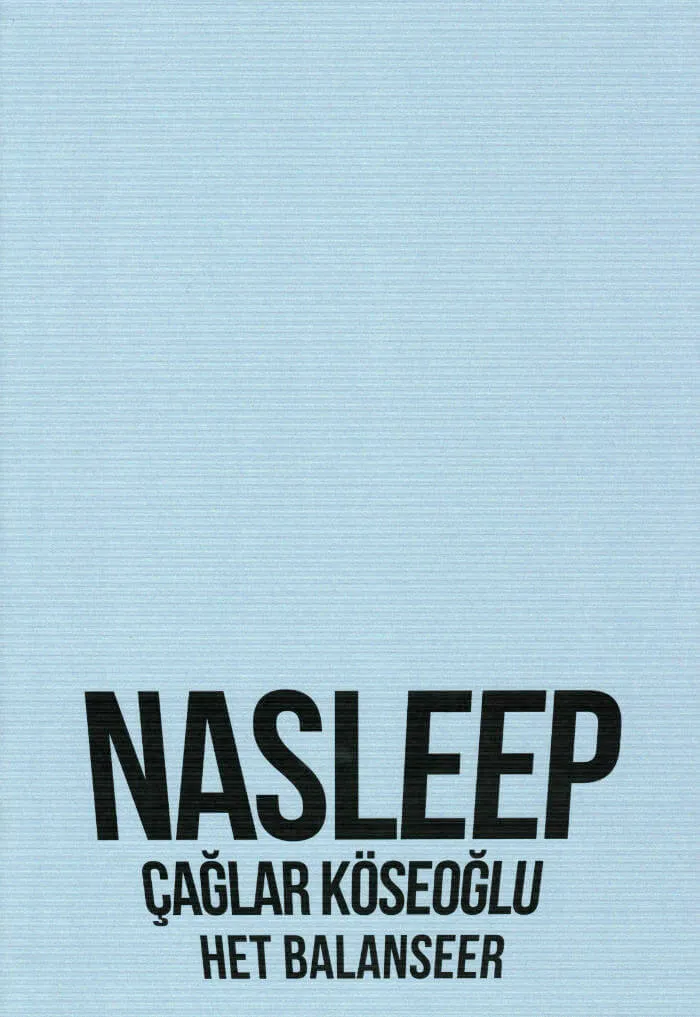
Cover of Nasleep

het balanseer

Nasleep

Çağlar Köseoğlu

Poetry €19.00

Nasleep neemt de protesten rondom het Gezi Park in 2013 als vertrekpunt en verkent gaandeweg wat er is overgebleven van dit historische moment waarin een andere wereld voor het grijpen leek. Het zijn gedichten die laveren tussen ritmische, conceptuele en kritische noise enerzijds en postrevolutionaire affecten anderzijds, tussen politise­ring enerzijds en onmacht en radeloosheid anderzijds.

Cover of EN

het balanseer

EN

Guy Rombouts

Poetry €25.00

In het begin van de jaren 1970, hield Guy Rombouts een notaboekje bij waarin hij alle woorden, bijvoeglijk naamwoorden en werkwoorden bijhield die hij tegenkwam tijdens het lezen en die met elkaar verbonden waren door het voegwoord ‘en‘.

Ongeveer 50 jaar later en met de hulp van de grafische vormgever Jeroen Wille, is de transcriptie van zijn aantekeningen gepubliceerd als een boek dat gelezen kan worden in twee richtingen (en als enige boek coronaproof met twee tegelijkertijd).

Het boek bevat 2158 verzen met in totaal 4316 EN-combinaties.

De kortste verzen met evenveel letters:

A EN Z

4 EN 6

De langste verzen met evenveel letters:

ONUITSPREKELIJKHEDEN EN IMPONDERABILIA

ONEVENWICHTIGHEID EN ZELFOVERSCHATTING

Cover of STW, your favourite station!

het balanseer

STW, your favourite station!

buren

Poetry €25.00

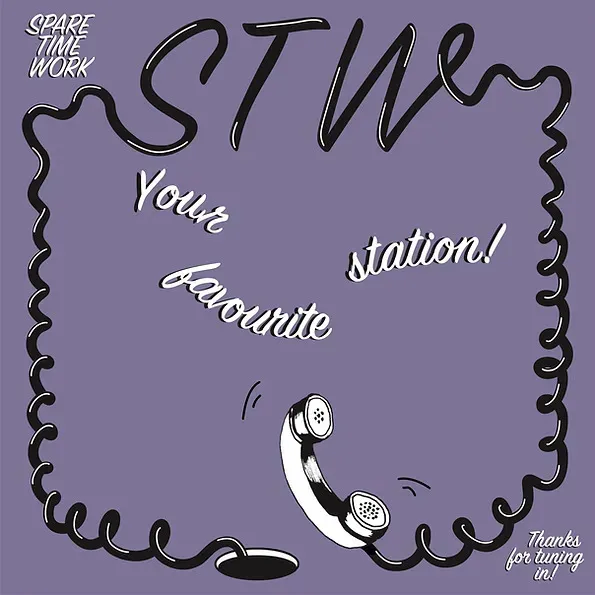
STW, your favourite station! functioneert als een radioprogramma. Een boek dat lyrisch proza uitzendt van We make stuff up for a living (een CV medley) tot COMPUTER_SONG, een ceremoniële quiz met Adult Hood & Young als protagonisten, een grillige anekdote van iemand die zich ergert aan een Call Service, en meer! Thanks for tuning in!

Cover of Slangen

het balanseer

Slangen

Dominique De Groen

Poetry €19.50

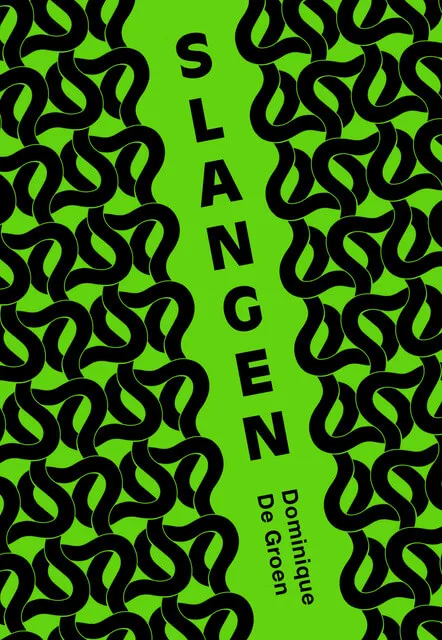
Slangen krioelen in de sarcofaag van het heden, in de krochten van de popcultuur, in de mummie van de natuur, in wondes en rot vlees, in artificiële woestijnen en op geoliede dad bods. Ze wentelen zich rond beursgrafieken, raken verstrengeld met wurgende algoritmes, orkestreren een trage ondergrondse revolutie. Een meisje snijdt zich aan een nepdiamanten piramide en werpt haar slangenvel van zich af.

Dominique De Groen is schrijver en beeldend kunstenaar. Ze publiceerde de dichtbundels Shop Girl (2017), Sticky Drama (2019) en offerlam (2020). Ze werd genomineerd voor de Poëziedebuutprijs Aan Zee 2018, de Herman de Coninckprijs 2020 en de Fintroliteratuurprijs 2021 en won de Frans Vogel Poëzieprijs 2019 en de Fintropublieksprijs 2021.

Cover of Bewogen selfies

het balanseer

Bewogen selfies

Obe Alkema

Poetry €24.50

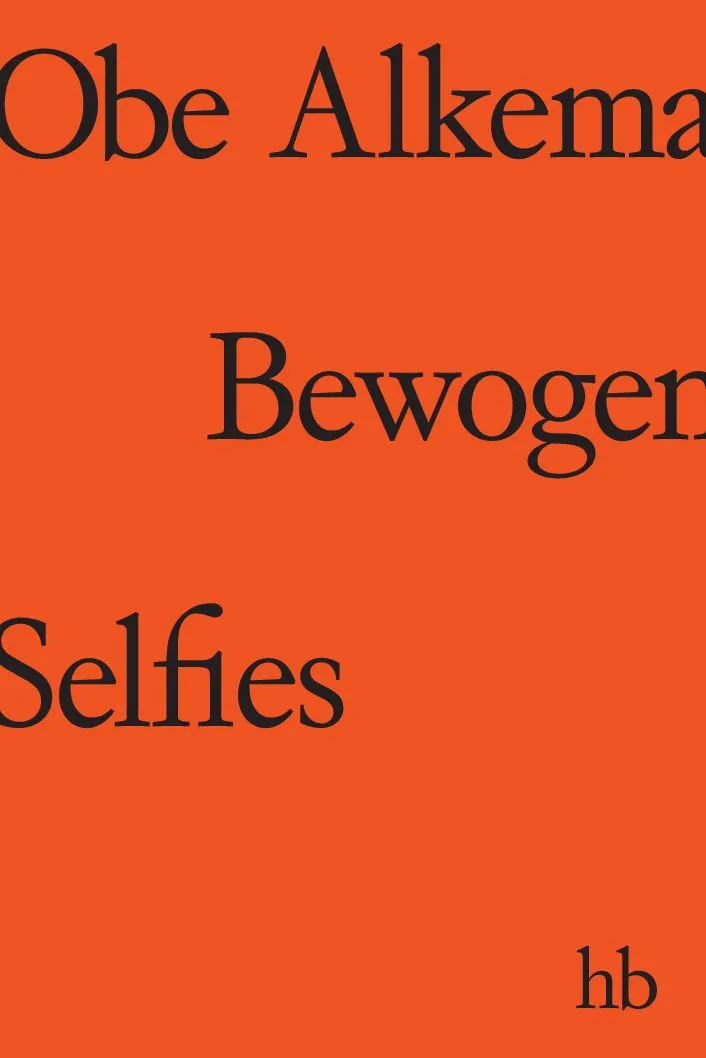
In Bewogen selfies onderzoekt Obe Alkema de verhouding tussen landschap en herinnering. Wat treft hij aan bij terugkeer naar belangrijke plaatsen uit zijn geheugen? Wat herinnert hij zich niet, maar Google wel? Is er een gedenkschrift te puren uit zijn metadata?

Memoires, rechtstreeks verteld en met omwegen, uit eerste hand en van horen zeggen. Archieven en herinneringen eisen spreektijd, houden het niet meer droog of worden tot spreken gebracht. Wat hebben ze eigenlijk te melden? Ze lopen helemaal leeg, net als Alkema zelf. Een leven zoals zovele, poedelnaakt en geretoucheerd, vol zin en onzin.

Cover of Katrin – The Tale of a Young Writer

Crackers

Katrin – The Tale of a Young Writer

Unica Zürn, Louis Bazalgette Zanetti

Fiction €15.00

A partly autobiographical novel that the German surrealist artist and author Unica Zürn (1916-1970) wrote for her ten-year-old daughter in 1953, although it would never be published in her lifetime. This is the first translation of the tale from German into English.

Unica Zürn tells the story of fifteen-year-old motherless Katrin, an aspiring writer, who lives with her father, also a writer. The novel is set in an imaginary world, a metropolis called Linit, split into three levels: Oberstadt (Hightown), Mittelstadt (Middletown) and Unterstadt (Lowtown), overlooked by a Volcano where the artists live and crossed by the river Emil. Presented as a book for children, apparently written for her own daughter (named Katrin), Katrin also draws on the personal biography of Zürn herself, in terms of her relationship with her father and the city of Berlin after WWII, and her experience with people on the margins of a society characterised by great tensions.

About Unica Zürn 
Nora Berta "Unika" Ruth Zürn, originally known as Ruth, was born on 6 July 1916 in Berlin. Raised in Berlin, Zürn had a contentious relationship with her mother, while she idolized her absent father. While at school she published her first short stories in magazines for young people, and in 1933 she began to work at the UFA film studios in Berlin (acronym for Universum-Film Aktiengesellschaft, a major German film company producing and distributing motion pictures from 1917 until the end of the Nazi era). In 1942 she married and had two children, Katrin and Christian. Shortly after, she lost the custody of her children. For the next few years she survived by writing short stories for newspapers and radio plays. After the war, she became part of the Bohemian group of Berlin and began to call herself Unika (after her aunt Unika Pudor). She frequented the artistic milieu revolving around the DADA-surrealist cabaret Die Badewanne ("The Bathtub"). In 1953, Zürn met the artist Hans Bellmer, best known for his disassembled dolls in unconventional poses directed at the cult of the perfect body then prominent in Germany, and became his muse. They lived together in Paris for many years, albeit in a conflictual relationship. Zürn concentrated on producing poetic anagrams supplemented by drawings, thus developing her own multidimensional surreal style. From the late 1950s, she suffered from forms of anxiety, later diagnosed as schizophrenia, and produced a wealth of remarkable textual and visual material while in psychiatric institutions across Germany and France. From 1956 to 1964, Zürn had four solo exhibitions of her drawings, and her work was included in the Exposition Internationale du Surréalisme. The exploration of the unconscious dimension would increasingly lose its liberating, positive aspect and turn into a fixation on a narrow space, one in which the self is tormented by distressing visions. Her psychological difficulties inspired much of her writing, especially Der Mann im Jasmin (The Man of Jasmine, published in English in 1971). Other published texts by Zürn include Hexentexte (1954) and Dunkler Frühling (Dark Spring, 1967). Zürn died on 19 October 1970 in Paris, throwing herself from the sixth floor.

Cover of Amanda

Maria Editions

Amanda

Olga Micińska

Fiction €15.00

The artist book Amanda is greatly inspired by “Tradeswomen” quarterly magazine for women in blue-collar work, published in the 1980’s and 1990’s in the United States. Amanda is similarly thought as a periodical dealing with the subjects of technology and industry from a feminist (not solely female) angle. The first issue contains fiction stories of an emancipatory character, citing trade associations, oil industry in Iran and ghosts of the printer feeders.

The publication is made in the framework of The Building Institute, an experimental organisation aiming to strengthen the position of femmes builders in the domain of technical construction work. Amanda brings together literary texts by Maria Toumazou, Samantha McCulloch, Sepideh Karami and Madeleine Morley, combining fiction stories with visual artwork. 

Olga Micińska is a visual artist currently living in Amsterdam. Graduated from the MA Art Praxis program at the Dutch Art Institute and holds an MFA in Sculpture from the Academy of Fine Arts in Warsaw. Also trained as a woodworker, collaborates with craft studios of various domains. Recently she has initiated The Building Institute.

The Building Institute (TBI) is an experimental platform aiming to emancipate the undermined knowledges dwelling in the craft domains, and to unpack diverse questions related to technology and the means of production. TBI combines art’s speculative competences with the grounded practice of manual labor, manifesting its objectives through educational activities, exhibitions, and publications.

Cover of Echoes of a Natural World: Tales of the Strange & Estranged

First To Knock

Echoes of a Natural World: Tales of the Strange & Estranged

Michael P. Daley

Fiction €18.00

Strange Tales by 
Jean Lorrain / Michael P. Daley / Lou Perliss / Marcel Schwob / Dan A. Stitzer / Jeremy Kitchen / Janice Law / Joris-Karl Huysmans / Julia Bembenek / Mark Iosifescu / Villiers de l’Isle-Adam

“This is the missing link between Baudelaire and the Area X Trilogy, strange, beautiful, and bizarre as any denizen of a romantic ruin, nuclear test site, or poisonous overgrown garden could ever want.” — CrimeReads

“Obscure, hilarious, profane, and human, Echoes of a Natural World brilliantly juxtaposes fresh oddities with classic gems of French literature. Speaking from the margins of fiction, but never marginal, each piece in this collection affirms that great, weird writing never goes out of style.” — Maryse Meijer, Heartbreaker

“Echoes of a Natural World submerges you in the high strangeness of the world around us. The eleven tales herein—both new works and rediscovered gems—form an uncanny menagerie. Its monstrous toads, murmuring fungi, and ghostly boars will haunt your imagination.” — Gabriel Mckee, Pink Beams of Light from the God in the Gutter: The Science-Fictional Religion of Philip K. Dick

Echoes of a Natural World presents a continuum of discomforting reactions to a world perpetually out of whack. Nature—so oft considered the epitome of “order” and “tranquility” in the human mind—is herein explored at its most aberrant, absurd, and nightmarish. Through eleven weird tales, Echoes of a Natural World raises questions about Nature’s influence on the mind and the mind’s unnatural influence on Nature.

Contributions include new translations of fin de siècle Decadent masters—sensual accounts of amphibian horrors and secret caverns below country inns. These sparkling 19th century pieces sit against contemporary American fiction that delivers haunting scenarios and darkly comic ontological routines. Behold accounts of whispering mold and Midwestern strip-mall desolation; occult hypnosis and regenerated limbs; void-bound train rides with a hallucinatory hustler king; ghost boars in German battlefields; spiraling anxiety that only peach trees and country cottages could produce. Parse through questionable documents that detail the aftershocks of a once idyllic world no longer salvageable.

This kaleidoscopic collection wades in those nebulous waters where the inner world and outer landscape mesh. For as we barrel into a reality where technology has seemingly penetrated even the most remote corners of the earth, one must ask: Is it even possible to have a genuine interaction with Nature anymore? Has it ever been? Or have these longings always been the romantic delusions of a species obsessed with itself? Echoes of a Natural World defies easy categorization and easy answers.

“What’s interesting about the project here—and I think that it succeeds beautifully—is that these tales represent American voices and symbolist, fin de siècle, French decadent voices with a century between them and they’re all interlocked perfectly.”—Chris Via, Leaf by Leaf

Edited by Michael P. Daley. Introduction and translations from the French by Sam Kunkel.