rile*books

Search books

Search books by title, author, publisher, keywords...

Cover of New and Selected Poems of Cecilia Vicuña

Kelsey Street Press

New and Selected Poems of Cecilia Vicuña

Cecilia Vicuña

€40.00

New and Selected Poems of Cecilia Vicuña is a telling of old cultures, modern nation states and lives in exile. Rodrigo Toscano calls Vicuña's poetry the outer out, beyond nation states, passed 'inter state' affairs, in other words, close in, as close as we get to our fair planet's sources, and to each other. In this bilingual collection, Vicuña and her translator, Rosa Alcalá, are artist witnesses to a natural world that is a storehouse of sacred words, seeds, threads and songs. Present everywhere, they are sources for a rebalancing in human relationships and for new forms of grace and healing. In Vicuña's vision, art is life and intimacy with it is transformative.

Cecilia Vicuña is a Chilean poet, artist and filmmaker. The author of twenty poetry books published in Europe, Latin America and the U.S., she performs and exhibits her work widely. A precursor of conceptual, impermanent art and the improvisatory oral performance, her work deals with the interactions between language, earth and textiles. Her recent books are NEW AND SELECTED POEMS OF CECILIA VICUÑA (Kelsey Street Press, 2018), SPIT TEMPLE: THE SELECTED PERFORMANCES OF CECILIA VICUÑA (Ugly Duckling Presse, 2012), Chanccani Quipu, a new artist book by Granary Books, and SABORAMI (ChainLinks, 2011). She co-edited The Oxford Book of Latin American Poetry (2009). Since 1980 she divides her time between Chile and New York.

Language: English

recommendations

Cover of A Grammar Built with Rocks

Wendy's Subway

A Grammar Built with Rocks

Shoghig Halajian, Suzy Halajian

Ecology €30.00

Featuring writing and artistic practices that trace the racialized and gendered relationship between bodies and land, A Grammar Built with Rocks explores artists’ engagement with sites of physical dispossession and socio-ecological crisis, highlighting how creative research methodologies can serve as radically new place-making practices. The publication brings together a range of feminist-decolonial texts and visual contributions that explore how movement, transience, and improvisation offer alternative ways of being-together while being-in-place.  

Contributions by: Basel Abbas and Ruanne Abou-Rahme with Fawz Kabra, Jheanelle Brown and Julien Creuzet, Carolina Caycedo, Ryan C. Clarke and Cauleen Smith, DAAR—Decolonizing Architecture Art Research with Nicola Perugini, Sandra de la Loza, Demian DinéYazhi’, rafa esparza, Mashinka Firunts Hakopian, Tia-Simone Gardner, Raquel Gutiérrez, Suzanne Kite with Mahpíy̌a Nážinn, Candice Lin, Jumana Manna, K-Sue Park, Christine Rebet, Susan Silton, and Asiya Wadud.

The book also includes a reader, with grounding texts, sources of inspiration, and research references, by Jason Allen-Paisant, Dionne Brand, Suzanne Césaire, Lisa Lowe, Camila Marambio and Cecilia Vicuña, Robyn Maynard and Leanne Betasamosake Simpson, M. NourbeSe Philip, and K. Wayne Yang.

About the editors

Shoghig Halajian is a curator, writer, and artist whose work explores queer and diasporic imaginaries, place-based practices, and experiments in collectivity and collaboration. She is co-editor of the online journal, Georgia, which is supported by a Creative Capital | Andy Warhol Foundation Arts Writers Grant. Select curatorial projects include: A grammar built with rocks (Human Resources LA, One Archives at the USC Libraries, and REDCAT, 2018); At night the states (Hammer Museum, 2017); DISSENT: what they fear is the light (LACE, 2016); and rafa esparza: I have never been here before (LACE, 2015). She was a TBA21 Ocean Space Fellow in Venice (2021) and a curatorial fellow at École du Magasin in Grenoble (2011), where she co-curated the exhibition, The Whole World is Watching, on the the collective Vidéogazette (1973–76), which organized a public access television program in the city. She received her PhD in Art History, Theory, and Criticism with a specialization in Critical Gender Studies from the University of California, San Diego in 2024. 

Suzy Halajian is a curator and writer based in Los Angeles, where she serves as the Executive Director and Curator at JOAN. Her practice is invested in long-term collaborations with artists, critically engaging with the intersections of art, politics, and social histories. She explores strategies of image-making through the lens of colonial histories and contemporary surveillance states. Halajian has curated exhibitions and public programs at institutions such as Los Angeles Contemporary Exhibitions (LACE), ONE Archives at the USC Libraries, the Hammer Museum, and Human Resources Los Angeles, as well as Tanya Bonakdar Gallery (New York), Oregon Contemporary (Portland), Kunstverein (Amsterdam), UKS (Oslo), Galerie Hubert Winter (Vienna), and the Sursock Museum (Beirut). She also serves on the Programming Committee at Human Resources and has worked with nonprofit organizations including the MAK Center for Art and Architecture (Los Angeles) and Ashkal Alwan (Beirut). Her curatorial work and writing have been supported by the Graham Foundation, the Andy Warhol Foundation Arts Writers Grant—for Georgia, a journal she co-founded and co-edits with Anthony Carfello and Shoghig Halajian—and a Curatorial Research Fellowship from the Andy Warhol Foundation for the Visual Arts. Halajian’s writing has appeared in ArteEast, BOMB, X-TRA, Ibraaz, and other publications. She holds an MA from the Center for Curatorial Studies at Bard College and is currently a PhD candidate in the Film and Digital Media program at the University of California, Santa Cruz.

Cover of Jungle

studio saudari

Jungle

Gabriella Achadinha

Periodicals €25.00

Jungle, (the latest 2025 self-published zine offering from studio saudari), delves into The Socio-Political, The Pitfalls of Neoliberalism, Circus State, Environmental Collapse, Heterotopias & Growth ~ Decay. 
Referencing Upton Sinclair’s novel The Jungle (1905), this print issue aims to combine various interpretations of The Jungle as a site of critique, of contention, of potential growth.

Contributors:
y3000w, Video Club, Fred Horton, Jordan Ossermann, Tristac Gac, Tom Hegen, Santiago Barragán, Anu Jakobson, Camille Theodet, George Nebieridze, Mu Pan, Robert Zhao Renhui, Thérèse Rafter, Cecilia Vicuña, Dani Santander Villarroel, Adam Call Roberts, Dr. Sönke Johnsen, Elena Zaghis, Miguel Garchitorena, Amanda Nell Eu, Mishka Mahomed, Dani Kyengo O'Neill / BŪJIN, Erin Jane Nelson, Mariana E. Rivas Salazar, Kim Rosario, Rachel Lamot, Marion Post Wolcott, Madina Mahomedova.

Designed by Felicia Usinto & Sera van de Water

Cover of Beau Geste Press

Bom Dia Books

Beau Geste Press

Alice Motard

The “catalogue dé-raisonné” of all the printed matter produced by the independent publishing house Beau Geste Press, that federated visual poets, neo-Dadaists and international artists affiliated with the Fluxus movement from 1971 to 1976.

The independent publishing house Beau Geste Press (BGP) was founded in 1971 by the Mexican artists' couple Martha Hellion and Felipe Ehrenberg. Together with their two children, they moved into a farmhouse in Devon, in the English countryside, where, joined by a group of friends including the artist and art historian David Mayor, the graphic designer Chris Welch and his partner Madeleine Gallard, they formed 'a community of duplicators, printers, and artisans'.

Beau Geste Press was active until 1976, printing publications by visual poets, neo-Dadaists and international artists affiliated with the Fluxus movement. Specialising in limited-edition artists' books, it published the work of its own members, but also that of many of their colleagues worldwide. In the spirit of cottage industry, Beau Geste Press adapted its methods and scale of production to its needs, keeping all stages, from design and printing to distribution, under the same—bucolic—roof.

Although it operated from the periphery of the main artistic centres of its time, Beau Geste Press was undoubtedly one of the most productive and influential publishing ventures of its generation.

Published by the CAPC musée d'art contemporain de Bordeaux in collaboration with Bom Dia Boa Tarde Boa Noite, this reference book surveys the history of the independent publishing house Beau Geste Press (BGP) through the publications of its founding members Felipe Ehrenberg, Martha Hellion, David Mayor and Chris Welch, and of the numerous visitors to its rural outpost from 1971 to 1976. A “catalogue dé-raisonné” of all the printed matter produced by BGP, it is complemented by critical essays and first-hand texts that explore the working methods (economy and autonomy of production, distribution of books via post) and document the international influence of this short-lived “community of duplicators, printers, and artisans”.

Essays by Karen Di Franco, Zanna Gilbert, Polly Gregson, Carmen Juliá, Alice Motard, Mila Waldeck ; original texts by Allen Fisher, Mike Leggett, Clive Phillpot, Cecilia Vicuña.

Editions by Claudio Bertoni, Ulises Carrión, Helen Chadwick, GJ de Rook, Felipe Ehrenberg, Matthias Ehrenberg, Yaël Ehrenberg, Allen Fisher, Ken Friedman, Mick Gibbs, Klaus Groh, Kristján Guðmundsson, Mary Harding, Woody Haut, Jan Hendrix, Jarosław Kozłowski, Myra Landau, Michael Leggett, Rafael López, Raúl Marroquin, Pepe Maya, David Mayor, Anthony McCall, Victor Musgrave, Opal L. Nations, Colin Naylor, Michael Nyman, Ryo & Hiroko Koike, Takako Saito, Carolee Schneemann, Sitting Dog & Co, Endre Tót, Yukio Tsuchiya, Ben Vautier, Cecilia Vicuña, Chris Welch, Hideki Yoshida...

Each book is accompanied by five unprecedented bookmarks.

Cover of Essays

Essay Press

Essays

Dorothea Lasky

Poetry €18.00

Poetry as both a form and genre has many possibilities to exist within; however, poetry too often is burdened by the imperative to have an argument and a set of imagery and meanings that are preconceived and placed within the poem. In this way, poetry gets conflated with writing a thesis or project, and the poet simply the presenter of perfectly argued language. When poets attempt to bridge the gap between genres and write within the contemporary essay form, they are tasked to construct perfect arguments there as well and avoid the associative and aesthetic logic that makes poems important. The term essay itself was coined by Michel de Montaigne in the 1500s — it comes from the French word essai, which means to test or experiment with what one knows as a learning tool, and is in partial opposition to the terms we use to discuss the essay now

ESSAYS calls on thinkers and writers to move beyond this linear thinking into the realm of what an essay by someone like Montaigne might do. His essays do as they say they will—they test out ideas, they are unafraid to get messy in their execution, they are brave enough to go forward into the uncharted waters. In them, it’s completely beside the point to get back to where they started, let alone where they’d say they would go. They are simply beside the point. It’s true.

ESSAYS, edited by Dorothea Lasky, is a book of essays on the essay, which enact and query these directives. The volume collects essays by poets Ariel Goldberg, Ken Chen, Wayne Koestenbaum, Tracie Morris, Anaïs Duplan, Raquel Salas Rivera, Brandon Shimoda, Cecilia Vicuña, Fred Moten, and Mónica de la Torre.

Cover of Deer Book/Libro Venado

Radius Books

Deer Book/Libro Venado

Cecilia Vicuña

Inspired initially by Jerome Rothenberg’s translation Flower World Variations, which Cecilia Vicuña first encountered in 1985, Deer Book brings together nearly forty years of the artist’s poetry, “poethical” translations, and drawings related to cosmologies and mythologies surrounding the deer, and sacrificial dance in cultures around the world.

Woven like one of her quipu installations, Vicuña’s texts—which include original compositions in Spanish as well as English translations by Daniel Borzutzky—become meditations on translation, not just of the sacred nature of this animal but on how our understandings of ceremony and ritual are transformed, by this ongoing process. Taken as inspiration rather than conundrum, the impossibility of translation opens up poetic possibilities for Vicuña as she continues her lifelong exploration into the nature of communication across eras and distant lands, languages and shared symbols within Indigenous spiritualities.

Cover of The Nightmare Sequence

Nightboat Books

The Nightmare Sequence

Omar Sakr, Safdar Ahmed

Poetry €20.00

An extraordinary collaboration by an award-winning duo—poet Omar Sakr and visual artist Safdar Ahmed–that bears witness to the genocide in Gaza.

The Nightmare Sequence is a searing response to the atrocities in Gaza and beyond since October 2023. Heartbreaking and humane, it is a necessary portrait of the violence committed by Israel and its Western allies. Through poetry and visual art, Omar Sakr and Safdar Ahmed capture these historic injustices, while also critiquing the role of art and media—including their own—in this time. Born of collective suffering and despair, their collaboration interrogates the position of witness: the terrible and helpless distance of vision, the impact of being exposed to violence of this scale on a daily basis, and what it means to live in a society that is actively participating in the catastrophic destruction of Arabs and Muslims overseas. With a foreword by Palestinian American poet George Abraham, this book will serve as a vital record in decades to come.

Cover of When My Body Was A Clinched Fist

Black Lawrence Press

When My Body Was A Clinched Fist

Enzo Silon Surin

Poetry €17.00

"Back in the day when KRS-One intoned —The Bridge is over!— he did not prefigure a poet from Queens of the fierce attitude and intellectual magnitude of Enzo Silon Surin. WHEN MY BODY WAS A CLINCHED FIST gives the Heisman to such a refrain with lyrical power-packing poetics that settles the score with a succinct— Not! No the Bridge is not over, for Surin's Queens is alive and well and under the gaze of a master observer who eulogizes lives that though at times are battered have always mattered.

Enzo Silon Surin's poems get you caught up in the deeply personal experiences of growing and visceral all-encompassing knowing from an acute witness of every breath and follicle of Black life from palm trees, sand and sea to street corner projects, suburban houses and fistfuls of black water. Surin writes about the confused and disconnected, trigger happy wannabes trapped by outdated notions of masculinity, the cracked head crackheads all held in the clutch of society's clinched fist through which the trauma that comes with being of color, addicted, broke, lost and tossed, is itself a clinched fist of black bodies caught in the Russian nesting doll America's clinched fists make.

WHEN MY BODY WAS A CLINCHED FIST is an elegy for 'the premature exits.' It is a blues for the black-on-black black and blue. Surin yields his pen like a microscopic scalpel whereby an autopsy of possibility is performed to un-clinch the remarkable bone gristle poetry in these unflinching heart-wrenching pages."—Tony Medina

Enzo Silon Surin, Haitian-born poet, educator, speaker, publisher and social advocate, is the author of two chapbooks, A Letter of Resignation: An American Libretto (2017) and Higher Ground. He is the recipient of a Brother Thomas Fellowship from The Boston Foundation and is a PEN New England Celebrated New Voice in Poetry. Surin's work gives voice to experiences that take place in what he calls "broken spaces" and his poems have appeared in numerous publications including Crab Orchard Review, Origins, Transition Magazine/Jalada, Interviewing the Caribbean, jubilat, Soundings East, The BreakBeat Poets: New American Poetry in the Age of Hip-Hop, and sx salon. Surin holds an MFA in Creative Writing from Lesley University and is currently Professor of English at Bunker Hill Community College and founding editor and publisher at Central Square Press. His debut full-length poetry collection is WHEN MY BODY WAS A CLINCHED FIST (Black Lawrence Press, 2020).

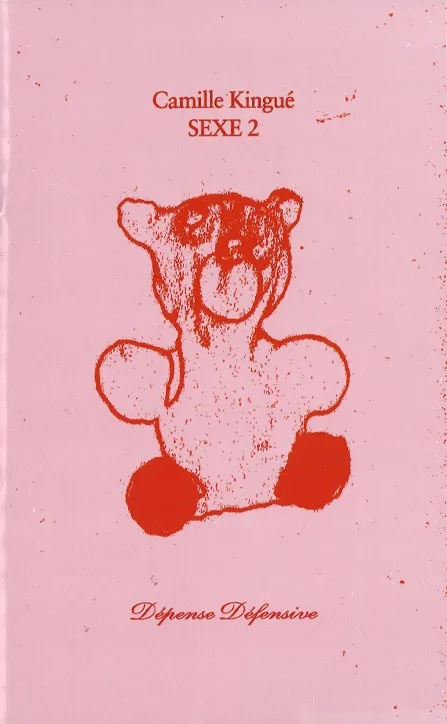
Cover of Sexe 2

Dépense Défensive

Sexe 2

Camille Kingué

Poetry €12.00

Confession sur le désir (l’action et l’objet du), les liens de mutualité et de résistance, Sexe 2 alterne prose et versification en 27 fragments numérotés à l’adresse plus ou moins dure, plus ou moins sincère, plus ou moins formulée car plus ou moins éloignée du Toi et du Je. Camille Kingué s’attache à révéler, à voir quelque chose à travers son image réelle et virtuelle, agrandie et rétrécie, droite et renversée, déployant une recherche des principes de l’amour (l’amour comme amour, pourquoi est ce qu’il y a de l’amour) où la métaphysique et la compréhension de soi – donc de l’autre – n’ont jamais été aussi sexy.

Claire Star Finch, dans la magnifique préface qu’iel signe au début de l’ouvrage, écrit : « Après avoir lu tous les livres de Kingué, je ne sais pas si je crois en “l’amour”, que ce soit en tant que substantif absolu ou en tant que proto-résidu de tout ce que “le sexe” peut signifier. Mais je crois définitivement qu’il faut l’écrire. » Définitivement.