rile*books

Search books

Search books by title, author, publisher, keywords...

Cover of If Our Wealth Is Criminal Then Let's Live with the Criminal Joy of Pirates

Book*hug Press

If Our Wealth Is Criminal Then Let's Live with the Criminal Joy of Pirates

Jacob Wren

€10.00

If Our Wealth Is Criminal Then Let's Live with the Criminal Joy of Pirates collects two short stories and an essay by Jacob Wren. In the first story, 'The Infiltrator, ' certain ongoing, rarely mentioned, difficulties for the activist Left are explored with unlikely candour. In 'Four Letters from an Ongoing Series, ' the postal service becomes an unwitting accomplice to the gatekeepers of potential culture. Finally, in the essay 'Like a Priest Who Has Lost Faith, ' questions of art and emptiness shift focus in relation to the agency that at all times surrounds us.

Language: English

recommendations

Cover of The Men

Book*hug Press

The Men

Lisa Robertson

Poetry €16.00

The Men explores a territory between the poet and a lyric lineage among men. Following a tradition that includes Petrarch's Sonnets, Dante's work on the vernacular, Montaigne, and even Kant, Robertson is compelled towards the construction of the textual subjectivity these authors convey-a subjectivity that honors all the ambivalence, doubt and tenderness of the human. Yet she remains angered by the structure of gender these works advance, and it is this troubled texture of identity that she examines in The Men.

Cover of Nilling

Book*hug Press

Nilling

Lisa Robertson

Poetry €18.00

NILLING: PROSE is a sequence of five loosely linked prose essays about noise, pornography, the codex, melancholy, Lucretius, folds, cities and related aporias: in short, these are essays on reading.

"I have tried to make a sketch or a model in several dimensions of the potency of Arendt's idea of invisibility, the necessary inconspicuousness of thinking and reading, and the ambivalently joyous and knotted agency to be found there. Just beneath the surface of the phonemes, a gendered name rhythmically explodes into a founding variousness. And then the strictures of the text assert again themselves. I want to claim for this inconspicuousness a transformational agency that runs counter to the teleology of readerly intention. Syllables might call to gods who do and don't exist. That is, they appear in the text's absences and densities as a motile graphic and phonemic force that abnegates its own necessity. Overwhelmingly in my submission to reading's supple snare, I feel love."

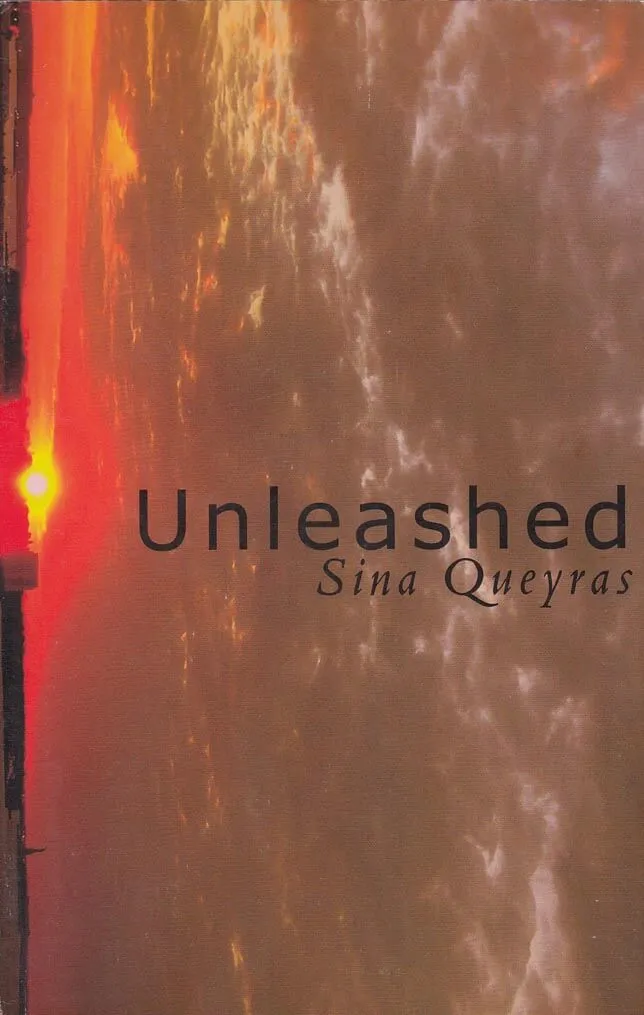
Cover of Unleashed

Book*hug Press

Unleashed

Sina Queyras

Poetry €20.00

05/09/04 Now she is blogging. Now she is sitting on the black couch listening to the sirens wail and the rain fall. Now she is thinking of oysters. Now she is wondering why this is worth sharing. Now she is thinking, how decipher what is worth reading? Who is to say? Sifters. She thinks we have become a nation of sifters. So began a three-year experiment in blogging. An experiment begun for many reasons—a way for an expat to keep in touch with fellow Canadian writers and artists, a way to come to terms with the increasing relevance of the internet in literary lives, and a way to figure out why, after decades of gains, women writers are still grossly underrepresented in critical dialogues.

With an afterword by Vanessa Place.

Cover of The Interjection Calendar 005

Montez Press

The Interjection Calendar 005

Emily Pope, Christiane Blattmann

For the Interjection Calendar each month Montez Press invites an artist, a writer, a poet or a doer of some sorts to say things. All 12 pieces have introspection and reflection in common. They are a subjective overview of writing in the expanded field of contemporary art and writing in the year 2019. This is the Interjection Calendar 2019, the fifth collection in this series. 

With contributions by sabrina soyer, Lisa Robertson, Hatty Nestor, Adrianna Whittingham, Sondria, Claudia Pagès, Laetitia Paviani, Bella Milroy, Georgina Tyson, Son Kit, Alix Jean Vollum, Rene Matic and bleubaglife. 

Find the last 12 PDF's on montezpress.com.

Cover of Silence: Lectures and Writings

Wesleyan

Silence: Lectures and Writings

John Cage

Essays €27.00

Silence: Lectures and Writings is a book by American experimental composer John Cage (1912–1992), first published in 1961 by Wesleyan University Press. Silence is a collection of essays and lectures Cage wrote during the period from 1939 to 1961.

Most of the works are preceded by a short commentary on their origins, some have an afterword provided. Several works feature unorthodox methods of presentation and/or composition. "The Future of Music: Credo" juxtaposes paragraphs of two different texts. The text of the first part of "Composition as Process" is presented in four columns, the text of "Erik Satie" in two. "45' for a Speaker" is similar to Cage's "time length" compositions: it provides detailed instructions for the speaker as to exactly when a particular sentence or a phrase should be said. "Where Are We Going? and What Are We Doing?" is presented in several types of typeface to better reflect the concept of the lecture, which was originally presented as four tapes running simultaneously. "Indeterminacy" is a collection of various anecdotes and short stories taken from life or books Cage read: the concept is to tell one story per minute, and to achieve the speaker has to either speed up or slow down, depending on the length of the story.

Cover of Arthur’s Whims

Spurl Editions

Arthur’s Whims

Hervé Guibert

Fiction €20.00

Arthur’s Whims is the tale of “a modern saint,” a love story born of a childhood dream of being “alone on a boat with a boy, a friend.” Arthur and his beloved Bichon—a young man who, after drinking Arthur’s tears, becomes pregnant with his child—drift through a stream of identities and circumstances: birdcatchers for a French taxidermist; sailors shipwrecked in an ice fortress; explorers of the Isles of Traitors, Babies, and Sadness; famous magicians in Oklahoma; religious and medical marvels. It is an anarchic, outrageous novel, in the tradition of Edgar Allan Poe and Comte de Lautréamont, now available in English for the first time in translation by Dana Lupo. This edition includes Hervé Guibert’s essay “The Bear,” in which he compares his books to rooms in a house, writing: “Arthur’s Whims would be the library of the house, and the bedroom of a child who will never be.” It is “a true adventure novel in the tradition of the genre, or what I believed to be its tradition, with great journeys, disasters, shipwrecks, cataclysms.”

“This short novel, offered here along with an essay by Guibert, reads like a madcap picaresque—one in which bodies can transform, the pace is constantly accelerating, and geography proves to be malleable. A gloriously surreal account of an unexpected voyage.” — Tobias Carroll, Words Without Borders

Hervé Guibert was a French photographer, critic, and author. Born in 1955, he published works of autofiction, novels, short stories, and essays, including many on photography. His writing was often deeply personal, ironic, and centered on illness and the body. Guibert died from complications of AIDS in 1991, at the age of thirty-six.

Dana Lupo is a writer and translator based in New York. Their work has appeared in Entropy, Bone & Ink Press, Arcturus (Chicago Review of Books), Apricity Press, and elsewhere. Arthur’s Whims is their first published translation.

Cover of The Seers

Prototype Publishing

The Seers

Sulaiman Addonia

Fiction €16.00

The Seers follows the first weeks of a homeless Eritrean refugee in London. Set around a foster home in Kilburn and in the squares of Bloomsbury, where its protagonist Hannah sleeps, the novel grapples with how agency is given to the sexual lives of refugees, insisting that the erotic and intimate side of life is as much a part of someone’s story as ‘land and nations’ are.

Hannah arrives in London with her mother’s diary, containing a disturbing sexual story taking place in Keren, Eritrea, where the Allies defeated the Italians in the Second World War. In a gripping, continuous paragraph, The Seers moves between the present day and the past to explore intergenerational histories and colonial trauma alongside the psychological and erotic lives of its characters as their identities are shaped, but refused to be suppressed, by the bureaucratic processes of the UK asylum system. 

Sulaiman Addonia is an Eritrean-Ethiopian-British novelist. He spent his early life in a refugee camp in Sudan, and his early teens in Jeddah, Saudi Arabia. He arrived in London as an underage unaccompanied refugee without a word of English and went on to earn an MA in Development Studies from SOAS and a BSc in Economics from UCL. His first novel, The Consequences of Love (Chatto & Windus, 2008), was shortlisted for the Commonwealth Writers’ Prize and was translated into more than 20 languages. His second novel, Silence is My Mother Tongue (Indigo Press, 2019; Graywolf, 2020), was a Finalist for the Lambda Literary Awards 2021, the Firecracker (CLMP) Awards, the inaugural African Literary Award from The Museum of the African Diaspora (MoAD) in San Francisco, and longlisted for the 2019 Orwell Prize for Fiction. Addonia’s essays appear in LitHub, Granta, Freeman’s, The New York Times, De Standaard and Passa Porta. He is a contributor to Tales of Two Planets (Penguin, 2020) and Addis Ababa Noir (Akashic Books, 2020). 

Cover of Lote

Duke University Press

Lote

Shola von Reinhold

Fiction €20.00

Shola von Reinhold's decadent queer literary debut immerses readers in the pursuit of aesthetics and beauty, while interrogating the removal and obscuring of Black figures from history.

Solitary Mathilda has long harbored a conflicted enchantment bordering on rapture with the "Bright Young Things," the Bloomsbury Group, and their contemporaries of the '20s and '30s, and throughout her life her attempts at reinvention have mirrored their extravagance and artfulness. After discovering a photograph of the forgotten Black modernist poet Hermia Druitt, who ran in the same circles as the Bright Young Things, Mathilda becomes transfixed and resolves to learn as much as she can about the mysterious figure. Her search brings her to a peculiar artists' residency in Dun, a small European town in which Hermia was known to have lived during the '30s. The artists' residency throws her deeper into a lattice of secrets and secret societies that takes hold of her aesthetic imagination. From champagne theft and Black Modernisms to art sabotage, alchemy, and a lotus-eating proto-luxury communist cult, Mathilda's "Escapes" through modes of aesthetic expression lead her to question the convoluted ways truth is made and obscured.

Shola von Reinhold is a Scottish socialite and writer. Shola has been published in the Cambridge Literary Review, The Stockholm Review, was Cove Park's Scottish Emerging Writer 2018 and recently won a Dewar Award for Literature. Shola is a recent graduate from the Creative Writing MLitt at Glasgow which was completed through the Jessica Yorke Writing Scholarship and has previously studied Fine Art at Central Saint Martins. Shola has also written for publications including i-D, AnOther Magazine.