Art
Art
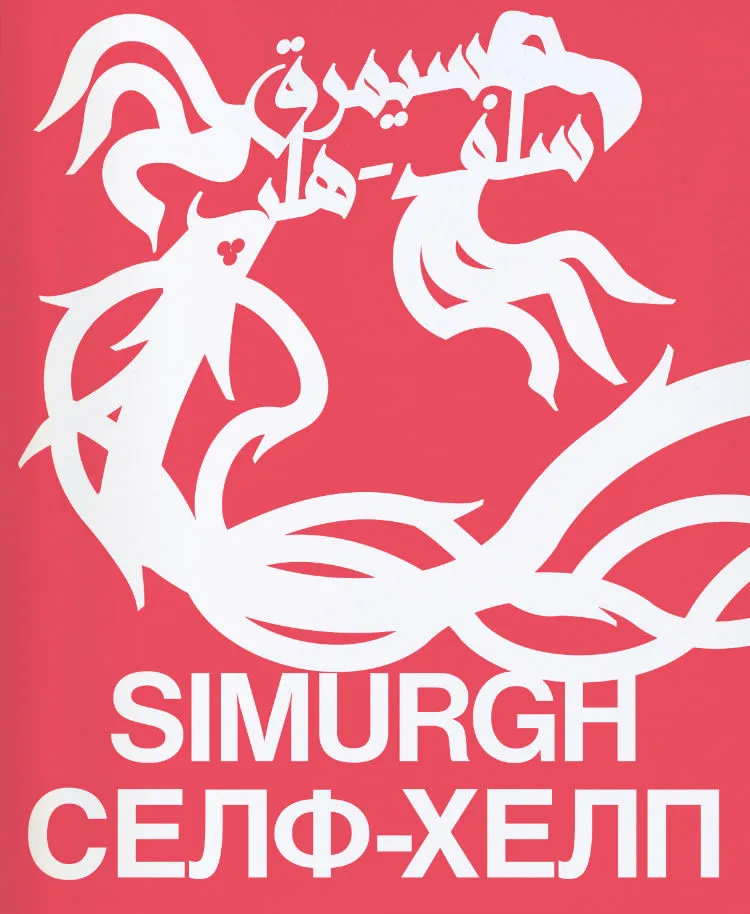
Simurgh Self-Help
The 2025 Ringier annual report (artist's book).
Since 1998, Ringier, the Swiss-based global media company, has traditionally commissioned an artist to design its annual report. Publisher Michael Ringier and curator Beatrix Ruf initiated this series as a means of reinforcing the links between art and the activities of the company.
For the 2025 edition, Slavs and Tatars' Simurgh Self-Help revisits Marcel Broodthaers' seminal work Musée d'Art Moderne: Département des Aigles (1968–1972), replacing or "translating" the eagle—a symbol of power and empire that is used to challenge our understanding of authority and value—with the Simurgh, a mythical bird found across the Turkic-Persianate world. Whilst the eagle is often associated with nation-states and masculinity, the Simurgh is decidedly transnational, metaphysical, and flamboyant, if not gender-fluid.
Much like the collective's geographic remit—between the former Berlin Wall and the Great Wall of China—this publication attempts to shift our focus elsewhere, eastwards, to regions which too often fall through the cracks of historiography and art history. If modern and contemporary art institutions in Broodthaers' time were largely situated between the Rhineland and Northeast United States, the multipolarity of today's art world is a fait accompli: with biennials in Uzbekistan and museums in Kazakhstan, amongst others, rivalling the traditional centers of power.
Once too a sacred bird—accompanying Zeus, for example—the eagle has, over the past two millennia, undergone a thorough profanation: a brawny, secular flex of nationalism. It would be remiss not to see the parallels in the world of media: print itself and the act of reading, once an activity for the few and anointed, has undergone a similar dynamic of democratization over the past several centuries and, especially in recent years with the internet, a vulgarization which would make medieval Church elders wag their shriveled fingers at us in an I-told-you-so meme meant for the ages. This profanation has challenged the very institution of media and the narratives it disseminates, much as important works of institutional critique challenged contemporary art in the 1970s and beyond—akin to Slavs and Tatars' genre-bending mix of high and low, East and West, sacred and profane does today.
Slavs and Tatars' (founded 2006) extensive publishing activity—some 15 books in 20 years—has treated subjects as diverse as alphabet politics, Uighur literary culture, political satire in the Muslim world, and German anti-Enlightenment thinkers. Alongside sculptures, textile works, installations, sound pieces, and even a brick-and-mortar Pickle Bar in Berlin, the collective's books have cleared new paths for contemporary discourse via a wholly idiosyncratic form of knowledge production that draws on popular culture, spiritual and esoteric traditions, oral histories, modern myths, as well as scholarly research.
Slavs and Tatars is a faction of polemics and intimacies devoted to an area east of the former Berlin Wall and west of the Great Wall of China known as Eurasia. The collective's work spans several media, disciplines, and a broad spectrum of cultural registers (high and low) focusing on an oft-forgotten sphere of influence between Slavs, Caucasians and Central Asians.
Slavs and Tatars has published Kidnapping Mountains (Book Works, 2009), a celebration of complexity in the Caucasus, Love Me, Love Me Not: Changed Names (onestar press, 2010) and are currently preparing solo engagements at Vienna's Secession, Museum of Modern Art, New York and Künstlerhaus Stuttgart.
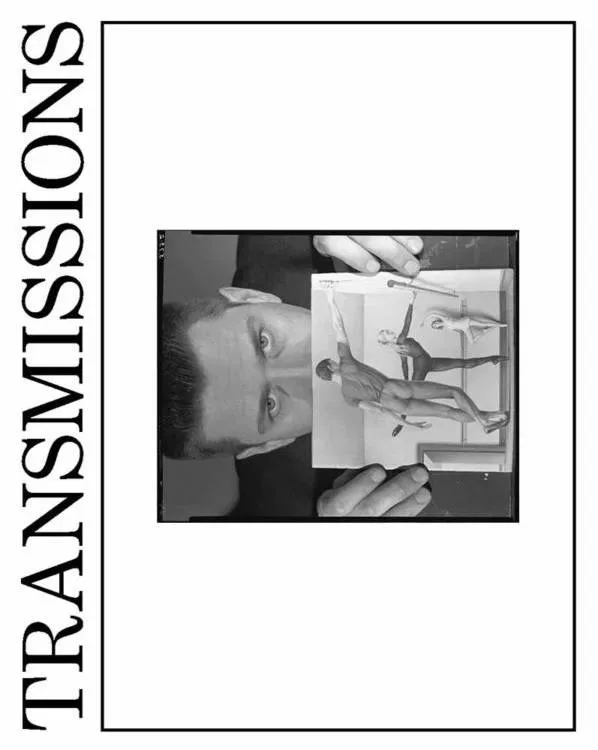
Transmissions
An aesthetic and social history of art and dance in mid-20th-century New York interpreted by contemporary artist Nick Mauss.
Over the past decade, Nick Mauss (b. 1980) has pursued a hybrid mode of working that melds the roles of curator, artist, and scholar. This catalogue leans heavily into the scholarship side of his practice, building on his 2018 Whitney Museum exhibition with a closer look at the relationship between modernist ballet and the New York avant-garde. In the 1930s through 1950s, ballet was introduced to a popular audience in New York and was simultaneously influenced by developments in Europe in painting, photography, fashion, music, and poetry. Mauss reflects on this period of rich cross-media production and synergy, ultimately arguing for the inseparability of dance and art history.

Eselsohren Dog Ears
"The impossible takes a little longer. [pen scribbling]"
Presented at Kransen in Borgerhout, 1—3 March 2024, with an exhibition titled Dog Ears and a remote reading by fellow-Stockholmian artist Dave Allen.

Postmortem issue 1
Marina Mardas, François Peyroux and 1 more
How can we define and document our present?
Postmortem is a sensitive yet critical metaphor for a world suspended between collapse and reinvention—a diary of the now. Drawing together writers and artists from Europe and the SWANA region, this issue locates areas of tension that define our era. Far from a mere dialogue between regions, it exposes the inner and outer fractures of Western hegemony, unearthing shared emotions.
From reclaiming histories and narratives in the Arab world to deconstructing digital spaces as arenas of control and resistance—even exposing systemic exclusions embedded in blood donation policies—contributors reveal these tensions as a fertile terrain for dialogue and reflection.
Through critical essays, narrative writing, poetry, interviews, and contemporary art, the concept of Postmortem unfolds an in-between state where death and rebirth occur simultaneously. Across three interwoven chapters—Metaconnexion, Dissociation, and Fragmentation—the issue engages radically with body politics, othering, post-orientalism, surveillance, decoloniality, freedom, and resistance.
Both a chronicle and a hybrid object where text, design, and image interact, Postmortem archives a world in flux. Rather than prognosticate, it dissects the present as the essential site for reimagining our future.
Contributors : Sara El-Jazara, François Peyroux, Nadine Makarem, Soukaina Melhaoui, Louise Mervelet, Manon Schaefle, Marina Mardas, Irina Breitenstein, Amer Al-Dakar

Marlie Mul
Marlie Mul (b. 1980 in Utrecht, the Netherlands; lives and works in Brussels) is characterized by a strong material awareness, spatial thinking, and an ongoing engagement with conditions of labor, systems of value, and forms of collectivity. Her practice foregrounds a sustained interest in sculptural concerns, direct engagement with materials, and processes of layering, transformation, meaning and re-meaning across multiple levels of articulation. Central to this is a continuous process of familiarizing herself and working with new materials and practices, which are repeatedly extracted from their conventional contexts and expanded into new bodies of work. These are, in turn, accompanied and reframed by other materials as well as by more social formats of production and presentation.
The first comprehensive monograph on Marlie Mul’s work is published on the occasion of her solo exhibition Das Budget (2025) at Kunsthaus Glarus. It offers a comprehensive chronological overview of key bodies of work from the early 2000s to the present and, through a richly illustrated index, unfolds a complex structure of contexts, collaborations, and modes of production. The publication includes new contributions by Annie Goodner, Lili Reynaud-Dewar and Frank Wasser, a dialogue between the artist and the editor, as well as numerous reprints of texts that have accompanied Mul’s work over the years, including writings by the artist herself.

Wanderlust
Soufiane Ababri's sketchbooks.
Soufiane Ababri (b. 1985, Rabat) is a Moroccan artist based in France. His protean work (drawings, installations, performances) explores questions of gender, homosexuality, racism and colonialism.

Carroll Dunham: Drawing Sculpture
Drawing has long been foundational to American painter Carroll Dunham's (born 1949) practice. In this collection of recent, never-before-shown works, we witness Dunham thinking about sculpture through a series of drawings produced over the course of a year. A sampling of his drawings across time offers a chart of his artistic evolution; the 80 drawings presented here are distinctive to a new page within that history. Spurred by a desire to explore the saggy, open-frame cubic boxes that he found himself doodling along the edges of a new series of paintings, Dunham began drawing fantasies of sculpture as a respite whenever he needed a break from working on the paintings. This turned into an ongoing practice that lasted until it unexpectedly segued into a material investigation with the making of sculpture in real space. Offering intimate access to Dunham's process, this book is the first to document his thinking about spatial relationships, presentation and materials for sculptures that don't exist.
Carroll Dunham has developed an extensive oeuvre since the late 1970s in painting, drawing, and printmaking. His work has been the subject of numerous solo exhibitions, most recently a drawing retrospective at the Art Institute of Chicago (2026), and presented in group exhibitions at institutions in the United States and abroad. He lives and works in Connecticut.

Terminal Boundaries and A natural water course diverted reduced or displaced
Made in 1969 but never published, Terminal Boundaries is an artist book by Lawrence Weiner, a sculptor whose medium was language. The manuscript for the publication, which was recently brought to light, contains two related bodies of work represented as typewritten statements on paper that Weiner pasted to the pages of a small composition notebook. The book’s absence from Weiner’s oeuvre plagued him as it marked a terminus of his relationship to the physical construction of his artworks, and illustrated the principle of “specific” and “general” which he applied to his art.
Created from a standard notebook purchased in a stationery store, the manuscript is two books in one: Terminal Boundaries and A natural watercourse diverted reduced or displaced. A tête-bêche with two front covers, the book can begin from either cover by turning it upside down.
Weiner was a traveler by nature and the materials he refers to in these works are those that one can encounter on a road trip. The artist was traveling across Europe when this manuscript was composed. Struck by the tumultuous times and the critical illuminations about the climate from the Club of Rome discussions, the works in this book are in Weiner’s words, “concerned with the relationship of natural resources in relation to human beings.” Distinct from his contemporaries associated with the Land Art movement, in Terminal Boundaries and A natural water course diverted reduced or displaced, Weiner constructs his landscape interventions in language—the specific and/or general act and the location are stated—offering the reader/viewer the opportunity to consider each work’s existence, to build it in their mind’s eye. One can only wonder what Weiner did to divert, reduce, or displace a natural water course in Saltsrumen, Norway, the location of the world’s strongest maelstrom, or in nearby Bodø at the site of Svartisen glacier. A work in Terminal Boundaries titled The joining of France Germany and Switzerland by rope demonstrates the geopolitical perspective of Weiner’s land art. Requiring physical and mental borders to be transgressed in performing this work; how and where could this happen?
Terminal Boundaries finds Weiner just off the cusp of his decision to make art that lived centered in language, emphasizing the viewer’s responsibility to engage with it to make it whole. The book marks a crucial inflection point in the artist’s practice, defining his direction to make work that “attempts to present something to people that is not just about me,” but about materials and the world we find ourselves in here and now.

fierce pussy
This eponymously titled publication by fierce pussy brings together thirty-nine of the legendary art collective’s posters, from works made in the urgent early days of the AIDS crisis to present-day advocacy for Queer and Trans rights. In keeping with fierce pussy’s activism in public spaces, the publication is designed to allow readers to tear out any of the posters to share, wheatpaste, scan, photocopy, and distribute or to easily open the book to any page to hang it on a wall. Combining calls for political and social action, proud reclamations of derogatory language, and pointed questions, the posters in fierce pussy address pressing sociopolitical issues in the group’s distinctive voice.
Emerging during a decade steeped in the AIDS crisis and LGBTQ+ activism, fierce pussy brought Queer identity directly into the streets in a manner characterized by the urgency of those years. In recent years they have expanded to also present their work in galleries and museums, while continuing to intervene in the public space, always working with an economy of means and a collective ethos of inclusion and solidarity.
This publication was originally published by Printed Matter in 2008 to coincide with a retrospective exhibition of the collective’s work. This new expanded edition includes twenty-five additional posters.
fierce pussy is an art collective formed in New York City in 1991. Originally composed of a fluid and often-shifting cadre of dykes, the collective was active through 1994. In 2008, the four core founding members Nancy Brooks Brody (1962–2023), Joy Episalla, Zoe Leonard, and Carrie Yamaoka began working together again. Adamantly low-tech and low-budget, fierce pussy has always relied on modest resources: old typewriters, found photographs, and their own baby pictures. In the early days, much of the work was produced using materials and resources they had on hand and the equipment at their day jobs. This publication exemplifies the ethos of the group—to share their work and messaging with the masses.
Managing Editor: Jules Spector
Designers: Garrick Gott and Bryce Wilner

Andrea Geyer: Dance in a Future with All Present
This most substantive monograph yet published on the work of German-born, New York–based multimedia artist Andrea Geyer focuses on her recent explorations of the marginalized yet pivotal role that women have played in the formulation of American modernism, tracing and honoring the ephemeral acts, initiatives, and stories that shaped it. Featuring full-color images of Geyer’s artworks and research materials, including documents, found photographs, and previously unpublished photographs by the artist, Dance in a Future with All Present offers insight into Geyer’s art and the multiple histories of modernism.
Includes texts by Matthew Jeffrey Abrams, Andrianna Campbell, Juli Carson, Barbara Clausen, Lynne Cooke, Dean Daderko, Saisha Grayson, Sharon Hayes, Megan Heuer, Danielle A. Jackson, Alhena Katsof, Kristan Kennedy, Thomas J. Lax, Ralph Lemon, André Lepecki, Renate Lorenz, Josiah McElheny, Fred Moten, Kristin Poor, Yvonne Rainer, Gabriela Rangel, Jeannine Tang, and Soyoung Yoon.
Copublished with Portland Institute of Contemporary Art in 2019.
Edited by Alhena Katsof, Karen Kelly, and Barbara Schroeder.
Design by Dante Carlos.

Hosted by Red Dust
Partie sur les sites de la dernière briqueterie artisanale de Riemst et de la recyclerie de briques d'Alexander van Mosselaer, Juliet Mérie en ramène un récit poétique qui explore notre rapport à la matière vivante et questonne le cours de la vie.
Loin d'être un documentaire, ses photographies créent un rapport ambigu entre la perception des espaces visités et l'allégorie qui s'installe. La possière se soulève pour dévoiler les lieux de vie et de mort des briques qui dessinent le paysage belge.

Sustaining the Otherwise
Sustaining the Otherwise is a collaborative research and artistic project about restitution, reparation and transformation taking place in multiple locations over several years. Initiated and conceptualized by researchers and curators Amal Alhaag & Selene Wendt, it offers a space for artists, activists, scholars and writers to be in dialogue and to explore the topic of restitution in relation to both material and immaterial culture, through a program that frames restitution within the context of contemporary art practice.
Edited by Amal Alhaag & Selene Wendt
Featuring an introduction by Amal Alhaag & Selene Wendt as well as provocations, reflections, and essays by Barby Asante, Michael Barrett, Quinsy Gario, Sana Ginwalla, Aude Christel Mgba, Lennon Mhsishi, Ogutu Muraya, in addition to a sonic contribution by Robert Machiri.

CARA Center for Art, Research and Alliances
The Earth, the Fire, the Water, and the Winds
The first publication dedicated to Glissant's art collection and project for a museum of memory-in-transit.
Titled after Édouard Glissant's (1928–2011) anthology, La Terre, le feu, l'eau et les vents (2010), this publication offers a polyphonic extension of the writer's foundational thinking on art to museology, philosophy and poetry. The Museum of Errantry reflects Glissant's conception of the museum itself as an archipelago—a space open to ruptures, disappearances, and reinventions without forced synthesis. The Earth, the Fire, the Water, and the Winds features detailed artist entries, archival fragments and visual documents to illuminate the many relational, diasporic, migratory trajectories that inform Glissant's personal art collection and meditations. The volume also features never-before-published excerpts from L'Abécédaire d'Édouard Glissant (2008), a long-form recorded dialogue between the author and acclaimed Martinican writer Patrick Chamoiseau, as well as a facsimile of Notebook of a Journey on the Nile (1988), a poetic-philosophical travelog composed during a felucca trip through Egypt.
Edited with text by Ana Roman, Paulo Miyada. Foreword by Sylvie Séma Glissant, Mathieu Glissant, Isabelle Vestris, Manuela Moscoso, Anne Louyot. Text by Catalina Bergues, Patrick Chamoiseau, Sabrina Fontenele, Édouard Glissant, Cecília Vilela.

Centrefold 1974. A Memoir
Following the publication of Centrefold in Artforum, November 1974, Benglis says that Penthouse wanted to use the image, but instead she proposed ‘a take-off on a traditional pieta, depicting a beautiful girl as the Madonna with a nude man on her lap’. They refused, ‘we cannot do that, we cannot allow artists to make a centrefold.’
Published to coincide with the fiftieth anniversary of that Centrefold, and shifting between 1970s New York and Los Angeles and the Corbyn years in Tower Hamlets, London, this Centrefold enacts an ambivalent ‘full accounting’ of Lynda Benglis’s Artforum spread, as well as her gender ‘mockeries’ and Secrets series. Taking in nursery privatisation, artworld silencing and censorship, maintenance art, muddled Marxism, performances of motherhood, and masturbation, Louise O’Hare weighs up the various impacts and forms of disciplining at play in both column and dildo inches.

Paying Attention: Essays on Art and Culture
From award-winning novelist and cultural critic Lynne Tillman, Paying Attention is the first collection of essays devoted to her incisive, provocative, and singular reflections on art and culture.
Paying Attention gathers more than fifty of the best and varied examples of Lynne Tillman’s writings in reference to art and culture published over the course of forty years. In essays that operate outside typical categories or genres, Tillman reflects on forms including film, painting, photography, poetry, and fiction, as well as notions of fame, originality, embodied viewing and thinking, collective activity, aging, illness, American identity, cultural politics, modernity, strangeness, and time. Such is the stuff that relates art to life, and life to art.
Collected mainly from museum and gallery catalogues, artists’ books and monographs, her column in Frieze, and magazines including Aperture and Artforum, these meditations on artists and writers, in the broadest sense of these labels, collide as a portrait of our cultural moment. Tillman’s inventive use of language and lateral thought, her ability to evoke conditions of the larger world in often just two thousand words on a specific artwork or individual, make her one of the most significant critics of our time. As she acknowledges, in a piece on the artist Robert Gober, “In writing on art, words reach for other words, phrases, idioms, and through them more images and ideas leap out.” In her introduction, Elizabeth Schambelan notes that a hallmark of Tillman’s writing alongside artists is an “elegant rendering of complexity,” and in approaching Tillman’s body of work and thought, Schambelan herself imbricates the art, voice, and language of criticism.

Tina Girouard: Sign-In
From the 1970s until her death, Louisiana-born artist Tina Girouard (1946–2020) was a dedicated experimental artist, collaborator and art worker. Alongside her individual creative endeavors, she nurtured and was a part of numerous influential artist communities and organizations in New York, Louisiana and Haiti, including the Anarchitecture Group, the interdisciplinary cohort of 112 Greene Street, the restaurant Food, the Kitchen, P.S. 1 and the Festival International de la Louisiane. Her acts of upkeep, including domestic labor traditionally associated with “women’s work,” blurred the boundaries between artmaking and what she called life-making. Sign-In is the first comprehensive monograph on her interdisciplinary oeuvre. It gathers documentation of her work in video, performance, drawing, textile, wall works and installation, tracing Girouard’s practice and legacy across genres and geographies.
Edited by Andrea Andersson with Jordan Amirkhani
With new essays by Andrea Andersson, Jordan Amirkhani, Anaïs Duplan, Pamela M. Lee, Aruna D’Souza, and Lumi Tan

Earth, Fire, Water
Born in Beirut, Ali Cherri lives and works between Beirut and Paris. He belongs to this generation of Lebanese artists born during the civil war whose work has been strongly affected by this context of instability.
Through an introduction by the artist, 4 essays and an interview, this first monograph reveals the political, aesthetic and dreamlike dimensions of a work that the artist has been developing for over fifteen years. Ali Cherri's interdisciplinary work explores the myths and classifications of ancient worlds and contemporary societies

KW Institute for Contemporary Art
Germaine Kruip: Works 1999-2017
Over the past two decades, artist Germaine Kruip has steadily developed a practice, which merges time, space and perception. Like an anthropological stage director, she investigates, simplifies and presents her observations in a subtle manner often through architectural interventions. In each of these interventions, she changes a location into a stage, with the audience as actors in a play of substantive absence. By doing so, she activates both physical and mental awareness.
This publication presents an overview of the Kruip’s practice since 1999, two years prior to her engagement with the art context. Presenting over 40 works, the publication reflects on three periods in the artist’s practice, each accompanied by an essay contributed by Anna Gritz, Eva Wittocx and Stephanie Bailey. The idea of a catalogue raisonné came out of a conversation that followed Kruip’s ambitious project Geometry of the Scattering, which was presented at de Oude Kerk in Amsterdam in 2015 – 2016.

KW Institute for Contemporary Art
Pia Arke
Pia Arke, Ros Carter and 1 more
Pia Arke (1958–2007) was a Greenlandic Inuk and Danish artist, writer and photographer. She is known for her self-portraits and landscape photographs of Kalaallit Nunaat (Greenland), as well as for her paintings, collages, performative film works and writing. Arke strove to make visible the silence that surrounded the colonial history and complex political and cultural relationship between Greenland and Denmark.
This publication accompanies the first international exhibitions of Arke’s work outside of Greenland and the Nordic countries, happening over the course of 2024 at John Hansard Gallery in Southampton (UK) and at KW Institute for Contemporary Art in Berlin (DE). It reflects on Arke’s ideas and legacy in a wider international context and aims to demonstrate how the work she made and the ideas she expressed connect with current discourse and contemporary thinking.
Texts by Krist Gruijthuijsen, Woodrow Kernohan, Ros Carter, Alice Maude-Roxby, Mette Sandbye, Tiara Roxanne, Sofie Krogh Christensen, Nivi Christensen, Siri Paulsen, Trinh T. Minh-ha

Verlag der Buchhandlung Walther König
Ian Burn: Collected Writings 1966–1993
Ian Burn has been described as many things: an activist, a trade-unionist, a journalist, an art critic, a curator and an art historian—or, as he once described himself in a moment of self-deprecating alienation, ‘an ex-conceptual artist’. Born in Geelong in 1939, Burn studied painting in Melbourne and went on to live and work in London and New York. Burn moved back to Australia in 1977 and passed away in 1993 at the age of 53. Burn sought to grapple with how art history intersects and engages with contemporary art and political debate, arguing for a decentred view of the world.
His legacy is international and can be seen in retrospective exhibitions as recent as 2022, and his work remains a key touchstone in art history. Edited by Burn’s friend, frequent collaborator and eminent art historian, Dr Ann Stephen, this volume brings together 49 pieces of Burn’s own agile and expansive writings alongside a vast collection of his artworks. The collection concludes with reflections on Burn’s life and work from prominent figures and past collaborators in the form of memorial lectures.
Ian Burn: COLLECTED WRITINGS 1966–1993 is edited by Ann Stephen and designed by Robert Milne, with contributions by Art & Language, Adrian Piper, Paul Wood, Allan Sekula, and Mel Ramsden.

Midnight Mass Press & Heretic House
WITCHES
A collection of portraits by original riot grrrl, filmmaker, and zine queen, G.B. Jones. All of them witches – from the silverscreen, woodlands, and the streets.
Featuring provocative essays by Caroline Azar, Paul P., Leafshimmer, Jenna Danchuk, Blake Baron Ray, and Scott Treleaven – each exploring how witches have been perceived, presented, and portrayed in popular culture. “Realer than real, stranger than fiction.”
PRAISE FOR G.B. JONES WITCHES
Witches by G.B. Jones is a summoning spell posing as a book, a paper potion like the potion Nicky gives Gillian in Bell, Book and Candle. It draws me to it and to what’s in it, Jones’ divine drawings of the witches we both worship, the witches of TV and film and true life. I go to it gladly. I go to it gayly. I pore over it and prize it and purr like Pyewacket.
— Derek McCormack, author of Castle Faggot
G.B. Jones is the original Foxy Genius. Her zines, drawings, music, and Super 8 films inspired both the Queer zine explosion and the Riot Grrrl movement of the 90s. Witches sees G.B. once again crafting her magic.
— Kathleen Hanna, singer, writer, artist, and front-woman of the bands Bikini Kill and Le Tigre
With her illustrated procession of witches, post-punk icon G.B. Jones acts as medium to a dazzling diversity of disrupters from across screen history, as well as a pantheon of real-life hellraisers, from Sybil Leek and Rosaleen Norton to Vali Myers and beyond – all woven through with astute commentary by a host of countercultural collaborators. A captivating book; I was certainly under its spell.
— Kier-La Janisse, author of House of Psychotic Women

Could It Be Love
Greer Lankton’s iconic and startling doll sculptures as we have never seen them before: through her own eyes.
Magic Hour Press is proud to present the first monograph on the trans visionary artist Greer Lankton (1958–96), whose lifelike doll sculptures shocked 1980s New York. Lankton’s dolls, which she began making as a child and produced obsessively until her death at age 38, were a means to explore her fraught relationship with the human body. In the book’s 100 photographs, all shot by Lankton herself, these figures take on a life of their own, kvetching at a party, strolling along a beach, or lounging on a stoop in the East Village. Among this extraordinary cast of oddballs—usually femme, often freakish, always radiating a glamorous confidence—we find characters of Lankton’s own invention alongside well-known icons such as Divine, Coco Chanel, Andy Warhol and even Lankton herself.
Born in 1958 to a Presbyterian minister in Michigan, Greer Lankton moved to New York in 1978 and became a rising star of the downtown scene. There, her deviant elegance was immortalized in photographs by Peter Hujar, David Armstrong, and Lankton’s close friend Nan Goldin, who described her as “one of the luminaries of the East Village renaissance: beautiful, glamorous, wild and hysterically funny.”
Edited by Francis Schichtel, Jordan Weitzman and Nan Goldin
Text by Hilton Als

Recto verso – An Anthology of Works and Writings by Asier Mendizabal
A comprehensive retrospective of the Spanish artist's work, covering his major exhibitions (Manifesta, Reina Sofia, MACBA, Raven Row, etc.) and including all of his texts published as fanzines over a period of twenty years, a new critical essay by Kim West, and a wide-ranging conversation.
Conceived as a compilation of works and writings of the last two decades, this book is structured as an alternating succession of four different registers: four recurrent modes. A long-form interview, a series of questions from different collaborators, documentation of a selection of projects, and a compilation of the facsimilia of the brochures published by the author since 2008. The aim of this concatenation of recurring sections is to delay the linear progression suggested by the narrative of a compilation, by the apparent causal string of decisions, ideas, references and works displayed as an accumulative "biography" of the artist's practice. However, this being a bound book, the suggestion of an interwoven relation between all the works, regardless of when, where or how they were made, must submit to the order locked by the sewn spine of its signatures, the folder of bound pages that forms each section of a book.
Designed by Filiep Tacq, the book includes an essay by Kim West and a long-form interview by Beatriz Herráez, punctuated by questions from Filiep Tacq, Lisa Tan, Jon Mikel Euba, Antonio Menchen, Alex Valijani, Johanna Gustafsson Fürst, Itziar Okariz, Olatz Otalora, Antonia Majaca, Pablo Lafuente and Koenraad Dedobbeleer.

A Certain Amount of Clarity
Emmanuel Van der Auwera, Harlan Levey and 1 more
Eponymously titled with his award winning 2014 film, “A Certain Amount of Clarity” is the first monograph dedicated to the artistic practice of Emmanuel Van der Auwera, whose work describes our experience of digitized life operating at intersections of documentary, reconstruction and fiction.
His practice is one that demonstrates the impact of emerging technologies on perception and civic dialogue, building platforms for marginalized actors and engaging with technicians and scientists to explore the balance of ethics and aesthetics in new media. Through filmmaking, video sculpture, theatre, printmaking, and other media, Van der Auwera sets up encounters with found images that provoke a questioning of our visual literacy: How do images of contemporary mass media operate on various publics, and to what end?
With the formal rigor of a logician, Van der Auwera dissects how images are engineered, mastering specialized industry techniques and intervening on their protocol. In so doing, Van der Auwera brings us no closer to a monolithic truth, but constructs new paradigms for reading images and understanding our relationships with them.