Books
Books
in random order

First Drafts #2: Canonically Speaking
Canonically Speaking is the second title to appear on the First Drafts imprint, a zigzag in Kunstverein Publishing’s output that’s dedicated to publishing completed manuscripts that would otherwise, for an array of reasons, not see the light of day in this rough early form.
Central to Canonically Speaking is the idea that (female) life is an inherently surrealist experience. In this spirit, the ‘absurd’ is embraced as a means to speak out on themes such as self-image, spirituality, mental health and work. While slipping between poetry, comprehensive list-making, knock knock jokes and intertextual references, forms of recital and misinterpretation often take place, whereby characters quote and repeat sentences and words from a large variety of sources, jumping from the health benefits of whale blubber to court transcripts of Bill Clinton's impeachment to the plasma that is released when microwaving two grapes side by side.

Inner Tube
Inner Tube is a darkly comic, hallucinatory novel about one man’s descent through grief, cultural detritus, and the electromagnetic haze of late 20th century America. After his mother kills herself by ramming her head through the family television, the narrator quits his job cataloging old TV shows and embarks on a surreal, unmoored journey westward. Through a landscape of rundown motels, desert isolation, and fleeting encounters, he strips away the trappings of civilization, regressing into a feral, posthuman state. The book is both a savage critique of media-saturated culture and a philosophical meditation on alienation and survival, written with poetic precision and biting wit.
Inner Tube was completed under extraordinary circumstances. After undergoing spinal surgery that left him paralyzed from the neck down, Hob Broun wrote the novel using a breath-activated computer system—a device that converted puffs of air into keystrokes. He finished the book just before his untimely death in 1987 at the age of 37.
First published by Alfred A. Knopf in 1985, and reprinted in 1987 by McGraw-Hill, Inner Tube has been out of print ever since.

In Commemoration of the Visit
About her collaboration with Robert Glück, Kathleen Fraser writes:
"In Commemoration of the Visit of Foreign Commercial Representatives to Japan, 1947 is a small picture book assembled as a memento of Japan’s finest tourist sites, to be given to their new allies (and recent adversaries). I discovered the book when my friend Bob Glück sent me to an Asian antique store, where he thought I might find 'little things' for Christmas gifts. Seeing this book in the $1 box, I bought a copy and began to write a poem sequence based on each of the photos and their captions, not knowing that Bob had also bought this book and was writing his own version from the same collection of pictures."
Featuring color reproductions of the entire postcard book, In Commemoration of the Visit is an accidental collaboration–and we couldn’t be happier for the accident.

Pourquoi les chats sont dans la rue?
Manuel d’actions et réactions adaptées aux différentes situations, dessiné à partir de l’expérience d’Edwige Ehlinger.

La rabbia / Anger
Pier Paolo Pasolini, Cristina Viti
In a first-time English language translation by Cristina Viti to mark the poet’s centenary, Tenement Press will publish Pier Paolo Pasolini’s groundbreaking, filmic work of prose and verse, La rabbia / Anger.
Why is our life dominated by discontent, by anguish, by the fear of war, by war? In order to answer this question I have written La rabbia, not following a chronological or perhaps even a logical thread, but only my political reasons and my poetic sense. - Pier Paolo Pasolini
Written in response to producer Gastone Ferranti’s request for his comments on a set of newsreel items, the poet would respond with a montage of his own. Via the unfolding of a chrysalis of images, in La rabbia (1963), Pasolini’s lens pans over Soviet repression in Hungary; the Cuban revolution; (the utopian object of) space exploration; political imprisonment in Algeria; the liberation of the former European colonies; the election of Pope John XXIII; the prospect of revolution in Africa and the Middle East; in Europe and in Latin America... Here, we’ve a panoply of photorealist intimations of Pasolini’s ‘poetic sense.’ The death of Marilyn Monroe crests as an idea in this tidal pooling of reflections, and as the poet’s line lights out for conceptual rhymes and counterpoints.
In Viti’s translation, the weave of prose and poetry that forms La rabbia portrays the vitality of Pasolini’s work in its capacity to speak to both the specifics of his contexts, the character of our own present tense, and the ironic fact of a life lived against the gulf of discontent in its myriad forms. Here, we’ve a startling confrontation of a revolutionary struggle in stasis set in lines that crystallise a rallying call against blindness. ‘I’ll not have peace, not ever,’ he writes. A lucid acceptance of the poet’s restlessness, and a marker for Pasolini’s commitment to a solidarity with the oppressed that we find reaffirmed on every page, in La rabbia the poet charts how ‘the powerful world of capital takes an abstract painting as its brash banner’ in this unravelling of ‘crisis in the world.’
![Cover of Visit [country]](https://rile.space/storage/4263/conversions/01KNPFVPPA9VBM18HD24YCC4XJ-webp.webp)
Visit [country]
Visit [country] is an artist’s book that brings together texts taken word for word from official government tourism websites and state-produced promotional videos from every UN-recognized country in the world. Stripped of the usual accompanying imagery and inspirational music, what becomes clear is how tourism feeds on — and is fuelled by — nationalism, chauvinism, and the invention of identity.
Much like a “choose your own adventure” book, the reader is guided by a series of questions that connect one country to another through recurring ideas and clichés, and must decide whether to visit the destination with “the best food”, “the most beautiful women”, “the friendliest people”, or “the most authentic history”. The book also includes an extensive concept index that maps the thematic and linguistic patterns linking the nations’ self-descriptions. It is a journey where every country is the best.
The project grows out of The Complete National Anthems of the World, a durational performance first presented in 2023, and stands as a parallel, autonomous, yet complementary work.

Schizo-Culture: The Event, The Book
Sylvère Lotringer, David Morris
The legendary 1975 "Schizo-Culture" conference, conceived by the early Semiotext(e) collective, began as an attempt to introduce the then-unknown radical philosophies of post-'68 France to the American avant-garde. The event featured a series of seminal papers, from Deleuze's first presentation of the concept of the "rhizome" to Foucault's introduction of his History of Sexuality project. The conference was equally important on a political level, and brought together a diverse group of activists, thinkers, patients, and ex-cons in order to address the challenge of penal and psychiatric institutions. The combination proved to be explosive, but amid the fighting and confusion "Schizo-Culture" revealed deep ruptures in left politics, French thought, and American culture.
The "Schizo-Culture" issue of the Semiotext(e) journal came three years later. Designed by a group of artists and filmmakers including Kathryn Bigelow and Denise Green, it documented the chaotic creativity of an emerging downtown New York scene, and offered interviews with artists, theorists, writers, and No Wave and pre-punk musicians together with new texts from Deleuze, Foucault, R. D. Laing, and other conference participants.
This slip-cased edition includes The Book: 1978, a facsimile reproduction of the original Schizo-Culture publication; and The Event: 1975, a previously unpublished and comprehensive record of the conference that set it all off. It assembles many previously unpublished texts, including a detailed selection of interviews reconstructing the events, and features Félix Guattari, William Burroughs, Kathy Acker, Michel Foucault, Sylvère Lotringer, Guy Hocquenghem, Gilles Deleuze, John Rajchman, Robert Wilson, Joel Kovel, Jack Smith, Jean-François Lyotard, Ti-Grace Atkinson, François Peraldi, and John Cage.
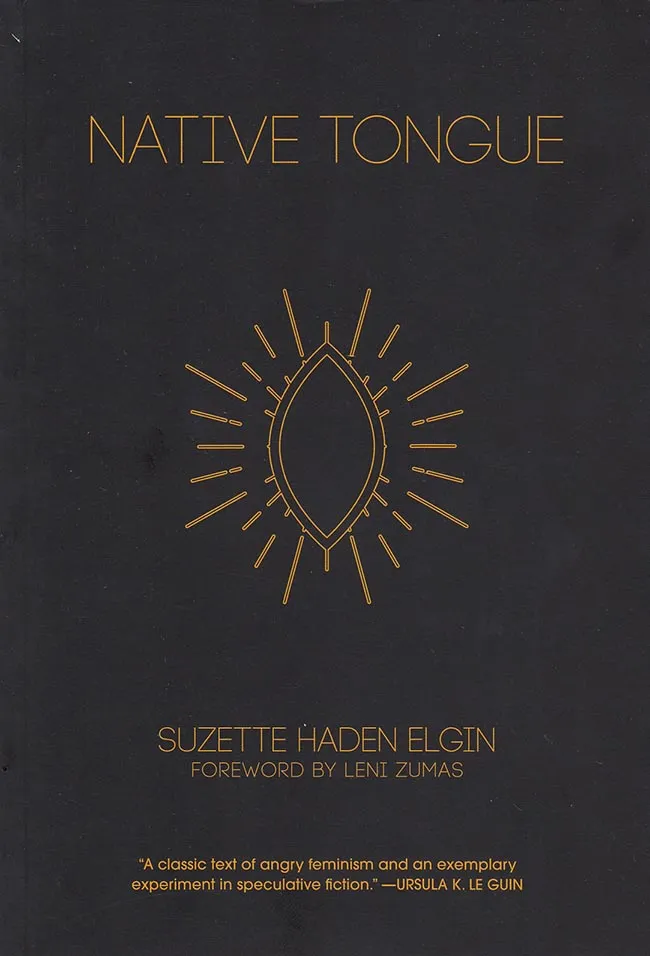
Native Tongue
Originally published in 1984, this classic dystopian trilogy is a testament to the power of language and women's collective action.
In 2205, the Nineteenth Amendment has long been repealed and women are only valued for their utility. The Earth's economy depends on an insular group of linguists who "breed" women to be perfect interstellar translators until they are sent to the Barren House to await death. But instead, these women are slowly creating a language of their own to make resistance possible. Ignorant to this brewing revolution, Nazareth, a brilliant linguist, and Michaela, a servant, both seek emancipation in their own ways. But their personal rebellions risk exposing the secret language, and threaten the possibility of freedom for all.

The Obscene Madame D
Nathanaël, Hilda Hilst and 1 more
A wickedly funny work of depraved genius by one of Brazil’s most radical twentieth-century writers; imagine the Marquis de Sade as written by Clarice Lispecter.
An electrifying masterpiece by one of modern Brazilian literature’s most significant and controversial writers, Hilda Hilst takes us into the disorder and beauty of a mind restlessly testing its own limits.
Every month I ingested the body of God, not in the way one swallows green peas or agrostis, or swallows swords, I ingested the body of God the way people do when they know they are swallowing the More, the All, the Incommensurable, for not believing in finitude I would lose myself in absolute infinity…
The Obscene Madame D tells the story of Hillé, a sixty-year-old woman who has decided to abandon conventional life and spend the rest of her days in contemplation in a recess under the stairs. There, she is haunted by the perplexity of her recently deceased lover, Ehud, who cannot understand her rejection of common sense, sex and a simple life in favour of metaphysical speculations that he considers delusional and vain.
In a stream-of-consciousness monologue that’s part James Joyce, part Clarice Lispector, and part de Sade, Hillé speaks of her search for spiritual fulfilment from a space of dereliction, as she searches for answers to great questions of life, death and the relationship between body and soul.
Translated by Nathanaël and Rachel Gontijo Araujo

Mother Tongue Magazine
In celebration of February 21st, International Mother Language Day, we’re happy to present our new yearly magazine: μητρική γλώσσα (Mitrikí Glóssa) / Lingua Maternal / (Leşono Emhoyo) ܠܫܢܐ ܐܡܗܝܐ / Anadil / Mother Tongue.
Our first issue gathers three mother languages within Turkey and their dialects : Anatolian Greek, Ladino and Syriac. With an interest in everyday life, personal memories and cultural production, Mother Tongue Magazine brings together people who work and produce in these languages along with contributors who speak them, are learning them or never had the chance to learn them, embracing plurality over standardisation. Given the discourse surrounding the survival of these mother tongues, we are especially delighted to have received contributions by so many young people that are striving to keep them alive!
With contributions by: Lukas Aktaş, Nesi Altaras, Nektaria Αnastasiadou, Syrian Cassette Archives, Dilara Lüle Baklacıoğlu, Onur Çimen, Alp Etensel, Atra Givarkes, Fayrouz Library, The Pontian Library, Sara Jajou, Isla Hanna Karademir-Khoury, Iokasti Kyriaki Zografou Mantzakidou, Melisa Yağmur Saydı, Münir Tireli, Lîs Yayınevi, Beni Yorohan
Design / Illustration: Bilge Emir

Antilogy
Drawing from notions of "bad poetry" as the critical undoing of normative taste, Antilogy brings together works by the Brazilian artist and poet Alex Hamburger.
Central to Hamburger's practice and engagement with poetry is a focus on writing as the expression of a performative disruption and playful reworking of semiotic systems. With references to Fluxus intermediality, Brazilian concretism, experimental music, and sound poetry, Hamburger's work dynamically collapses the distinctions between fact and fiction, theory and performance, system and noise. From visual poems to abstract narrative to personal fantasy, Antilogy reminds us about the potent sense of refusal and experimentation that all art should carry.
Alex Hamburger was born in Belgrade, Serbia, in 1948. From the 80s onward his researches and proposals turned to the possibilities of fusion and intertwining of languages, developing works in Verbal, Visual and Sound Poetry, Object-Poem, Artist's books, Installation, Performance art, etc. He has published seven books in various poetical genres, three CDs of Sound Poetry and has performed several performance pieces, some in partnership with the visual artist Marcia X, with whom he established a fruitful relationship throughout the 80s, contributing decisively for a better understanding and acceptance of the above practices in the local art circuit of Rio de Janeiro. His work is held in the collections of contemporary art institutions, in Brazil and abroad, including The Museum of Modern Art, RJ, The Museum of Modern Art, SP, Printed Matter Bookstore, New York, Compendium of Contemporary Fine Prints, Hamburg, ICA, London among others. Alex Hamburger continues to live and work in Rio de Janeiro, Brazil.

That Figures. Selected Writings
Gathering 13 amazing essays by artist and writer Dena Yago, co-founder of K-HOLE, That Figures retraces more than a decade of reflections on the creative industry—digging into topics such as Sporespace, Billie Eilish, LARPing, corporate cafeterias, ketamine, precarity, poetry, and the internet’s lures and failures. Yago exposes the contradictions of living amidst the sugarcoated deals of the attention economy, and further proposes a new lexicon to address the numbing and disorienting effects of late stage capitalism. Absorbing but refusing to metabolize the language of commercial culture, she opens a space where critical thinking can still happen.
That Figures also features a selection of artworks by Yago, in which the combination of conceptual legacies with pop cultural elements creates new poetical arrangements.

Diversity of Aesthetics
Jose Rosales, Andreas Petrossiants
Critical conversations and reflections about lessons learned at the intersection of social movements and artist production.
Diversity of Aesthetics collects powerful and timely conversations among leading cultural critics, artists, and organizers to connect the threads between some of the most pressing social struggles and conflicts of our time: policing, war, borders and migration, economic crisis.
Across three themes—infrastructure, migration, and riots—militant thinkers, artists, educators, and others discuss aesthetic production, forms of social organization, modes of struggle against gendered and racialized capitalism, and revolutionary theory. Common to all three conversations is a commitment to rethinking the relationship between forms of critique and forms of struggle undertaken by collective social practices, offering lessons for tactics, strategies, and practices.
With contributions by Claire Fontaine, Iman Ganji, Saidiya Hartman, Vicky Osterweil, Andreas Petrossiants, Christina Sharpe, Stevphen Shukaitis, Michael Rakowtiz, Shellyne Rodriguez, Jose Rosales, Rinaldo Walcott, Andreas Petrossiants, Jose Rosales
Andreas Petrossiants is a writer and associate editor of e-flux journal. His work has appeared in Historical Materialism, Social Text, New Inquiry, AJ+ Subtext, Frieze, Bookforum.com, Roar Magazine, the Verso blog, the Brooklyn Rail, Hyperallergic. He is a PhD candidate in performance studies at NYU where he is researching anti-eviction, squatting, and tenants’ movements as they relate to the production of social space.
Jose Rosales is an independent researcher and journalist based in Lisbon, Portugal. His work has appeared in e-flux notes, Lumpen: A Journal of Poor and Working Class Writers, and has contributed a chapter called “Communism As the Riddle Posed to History” in Double Binds of Neoliberalism (2022).

Zami: A New Spelling of My Name: A Biomythography
Zami: A New Spelling of My Name is a 1982 autobiography by African-American poet Audre Lorde. It started a new genre that the author calls biomythography, which combines history, biography, and myth. In the text, Lorde writes that "Zami" is "a Carriacou name for women who work together as friends and lovers," Carriacou being the Caribbean island from which her mother immigrated.

Tripwire 16 - Performance/Writing
A special issue focused on performance writing, with work by Tanya Lukin Linklater (with Michael Nardone), Jibade-Khalil Huffman & Simone White, Jean-Thomas Tremblay, Claudina Domingo (trans. Ryan Greene), Kim Rosenfield, Nathan Walker, Liz Knox, Rona Lorimer, Léo Richard, & Hector Uniacke, Mohamed A. Gawad & Dalia Neis, Mei-mei Berssenbrugge & Teddy Yoshikami, interviewed by Michelle N. Huang, Kyoo Lee and Jocelyn Saidenberg, Adriana Garriga-López, Gabrielle Civil, plus a Kevin Killian Tribute, with Eileen Myles * Scott Hewicker * Cliff Hengst * Karla Milosevich * Craig Goodman * Michelle Rollman * Anne McGuire * Wayne Smith * Tanya Hollis * Steve Orth * Lindsey Boldt * Maxe Crandall * Arnold J. Kemp * Carla Harryman, Lee Ann Brown & Tony Torn * Susan Gevirtz * Laynie Browne * Patrick Durgin * Norma Cole * Jo Giardini. & reviews: Jessica Lopez Lyman & Jocelyn E. Marshall on Gabrielle Civil, alex cruse on Merce Cunningham, Rob Stanton on Anne Boyer, Jack Chelgren on Miyó Vestrini, David Grundy on Stephen Jonas, Virginia Konchan on Sarah Vap.

Lilacs
In Lilacs, syringa vulgaris gives its name to a form of long poem that promotes sense memory. Here, we have one lilac for each of the senses, and a sixth for love, which synthesizes them all.
Rainer Diana Hamilton is the author of God Was Right and The Awful Truth. They write, broadly, about the forms that dreams and art have taken.
“I wanna ____ all my friends at once”: how would you complete the lyric Arthur Russell wrote for “Go Bang”? In Rainer Diana Hamilton’s hands, “smell” or “touch”—or “talk to,” for Hamilton a near-synonym for “love”—might be more appropriate than Russell’s “see.” Or maybe they’ll have argued us into believing that yet a different faculty counts among the senses, in these poem-essays that swerve from memory to love letter to argument. A narrative of lost and developed capacities, a felt history of class antagonism, a treatise masquerading as a flower, a flower in every organ—Lilacs is rude with ambition, underneath its abundant charm.” —Kay Gabriel
“Every new poem by Rainer Diana Hamilton is a gift in which poetry is made new again.” —Andrew Durbin

Minibieb
Infrastructural systems define our ways of seeing and responding to the world around us. Today, our everyday lives and visual cultures have become saturated by digital communications systems whose physical footprint has been rendered largely invisible from the public sphere.
In an age of ever-expanding computation and a foolish believe in AI’s utopian potential, resistance can seem futile. But if we detach our gaze from increasingly narrow realm of digital imaginaries, a new world of radically different infrastructural opportunities opens up in front of our eyes.
Street libraries, or Minibiebs, as they are called in Dutch, are an under-appreciated piece of urban technology. Part manifesto, part research note, this mini publication dives into the radical potential of public book sharing structures and what they might tell us about our broken information ecosystem.
Printing: Risograph, Grafische Werkplaats Den Haag; Research and Photography: Livio Liechti; Design: Apsara Flury.
First print run – May 2025: 35 copies.

Sore 3
Mathilde Heuliez, Lisa Lagova and 1 more
Sore is a serial anthology that brings together authors whose writing practices oscillate between the genres of diary keeping and fiction. For the second issue of Sore, ten contributors – both authors and visual artists – were invited to collectively develop their work through a series of informal critiques over the course of five months.
With contributions by Adriana Lasheras Mabanta, Billy Morgan, Damien Troadec, Kate Tyndall, Kea Bolenz, Inka Hilsenbek, Milo Christie, Louis Mason

ODD / GARİP
"[…] this new poetry will not serve the taste of the prosperous class. which only represents a minority. The people who populate this earth find the right to live at the end of a constant struggle. Like everything else, they also have a right to poetry, and it will appeal to their taste."
Three friends —Orhan Veli Kanik, Melih Cevdet Anday and Oktay Rifat— followed this principle as they were composing their "odd" poems. Their aim was to write poetry for everyone, about everyone.
This books gathers the poems Orhan Veli published with his friends in Odd (1941), the manifesto he wrote for this new poetry, and the foreword he wrote for the 1945 re-edition.

Ethical Portraits: In Search Of Representational Justice
Ethical Portraits investigates the representation of the incarcerated in the U.S. criminal justice system. Through interviews, creative non-fiction, and cultural theory, Hatty Nestor deconstructs a range of different prison portraiture.
Prisons systematically dehumanise the imprisoned. Visualised through mugshots and surveillance recordings, the incarcerated lose control of their own image and identity. The criminal justice system in the United States does not only carry out so-called justice in ways that compound inequality, it also minimises the possibility for empathetic encounters with those who are most marginalised. It is therefore urgent to understand how prisoners are portrayed by the carceral state and how this might be countered or recuperated. How can understanding the visual representation of prisoners help us confront the invisible forms of power in the American prison system? Ethical Portraits investigates the representation of the incarcerated in the United States criminal justice system, and the state's failure to represent those incarcerated humanely.
Through wide-ranging interviews and creative nonfiction, Hatty Nestor deconstructs the different roles of prison portraiture, such as in courtroom sketches, DNA profiling, and the incarceration of Chelsea Manning. Includes a foreword by Jackie Wang.
Hatty Nestor is a cultural critic and writer, published in Frieze, The Times Literary Supplement, The White Review and many other publications. She is currently completing a PhD at Birkbeck, University of London.

Practicing Dying
Practicing Dying is a literary anti-memoir documenting life in a Zen Buddhist monastery in rural France where the protagonist, a woman in her late twenties, attempts to overcome chronic drug addiction and mental illness.
Broken and severely unwell, our protagonist arrives at the monastery from London: starving, drug-addicted and disillusioned, having exhausted every conventional treatment route available to her. The book examines how, habituated to a life of benefits assessments, petty-crime and sex work, she struggles to adjust to the rules, discipline and religious life of the monastery—at times to devastating and comedic effect.
As the story unfolds, she reflects on her addictions and past experiences, raising critical questions about what it means to be "an addict" and why there may be vested corporate and societal interests in maintaining a narrow, individualistic understanding of addiction.
Anarchic and provocative, tender and self-deprecating, Practicing Dying differs from other contemporary memoirs in the genre of addiction-recovery by simultaneously challenging the dominant narratives surrounding mental health while proposing an alternative approach to treating the “sickness of self” from which we all increasingly suffer.
‘Practicing Dying is brilliant, rewarding and difficult. Northall offers the most brazen and shocking account of addiction I’ve ever read. Committing herself to the practice of Mahayana Buddhism, she eventually finds a way out, but only on the most rambling, circuitious path. Her account of addiction and loss, displacement and grief is profound and it proves that nothing is ever one thing.’ — Chris Kraus, author of The Four Spent The Day Together
Charlotte Northall is a London-based writer. Her debut, Practicing Dying, blends autobiography and cultural criticism to explore addiction, capitalism, and spiritual practice. She works with rough sleepers, supporting those living with addiction and complex mental health needs.

My Life and My Life in the Nineties
New edition of one of the founding works of Language writing.
Lyn Hejinian is among the most prominent of contemporary American poets. Her poem My Life has garnered accolades and fans inside and outside academia. First published in 1980, and revised in 1987 and 2002, My Life is now firmly established in the postmodern canon. This Wesleyan edition includes the 45-part prose poem sequence along with a closely related ten-part work titled My Life in the Nineties. An experimental intervention into the autobiographical genre, My Life explores the many ways in which language — — the things people say and the ways they say them — shapes not only their identity, but also the very world around them.

Recto verso – An Anthology of Works and Writings by Asier Mendizabal
A comprehensive retrospective of the Spanish artist's work, covering his major exhibitions (Manifesta, Reina Sofia, MACBA, Raven Row, etc.) and including all of his texts published as fanzines over a period of twenty years, a new critical essay by Kim West, and a wide-ranging conversation.
Conceived as a compilation of works and writings of the last two decades, this book is structured as an alternating succession of four different registers: four recurrent modes. A long-form interview, a series of questions from different collaborators, documentation of a selection of projects, and a compilation of the facsimilia of the brochures published by the author since 2008. The aim of this concatenation of recurring sections is to delay the linear progression suggested by the narrative of a compilation, by the apparent causal string of decisions, ideas, references and works displayed as an accumulative "biography" of the artist's practice. However, this being a bound book, the suggestion of an interwoven relation between all the works, regardless of when, where or how they were made, must submit to the order locked by the sewn spine of its signatures, the folder of bound pages that forms each section of a book.
Designed by Filiep Tacq, the book includes an essay by Kim West and a long-form interview by Beatriz Herráez, punctuated by questions from Filiep Tacq, Lisa Tan, Jon Mikel Euba, Antonio Menchen, Alex Valijani, Johanna Gustafsson Fürst, Itziar Okariz, Olatz Otalora, Antonia Majaca, Pablo Lafuente and Koenraad Dedobbeleer.
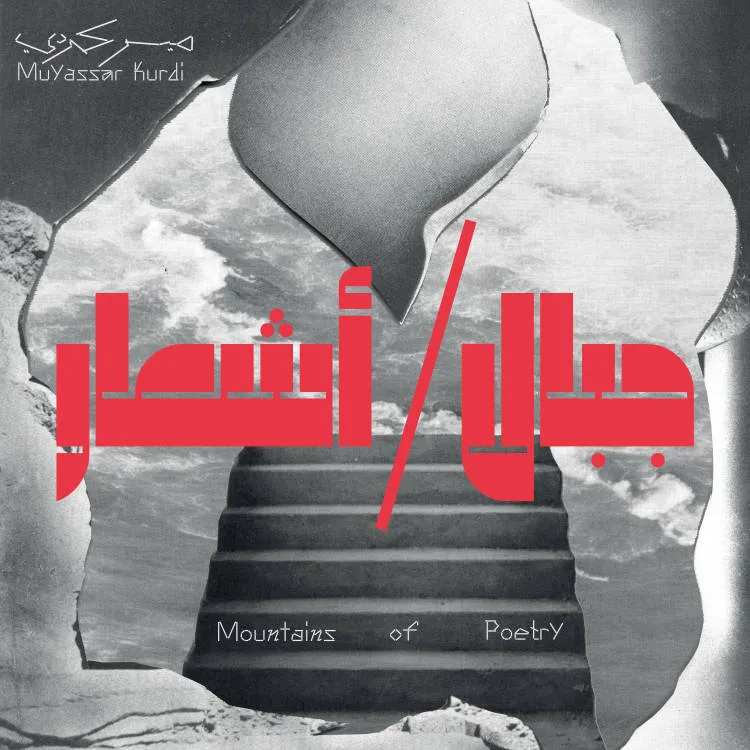
Mountains of Poetry (Limited Edition 12" Coloured)
Mountains of Poetry is a new 8-track studio album produced and developed by interdisciplinary artist Muyassar Kurdi. The album traces the entwined relations between one’s body and land, driven by a sense of urgency. Embedded in the earth, Kurdi imagines her body as a site for sonic excavation of memory and longing. The artist’s voice paired with electronic sound honors the ancient and the futuristic that together form a ritualistic reflection to navigate the tender space of remembering, forgetting and mourning. Departing from her usual emphasis on vocal abstraction, Kurdi turns to concrete words that punctuate the sonic landscape, gathering them into mountains of poetry.