rile*books

Search books

Search books by title, author, publisher, keywords...

Cover of Poësy Matters and Other Matters (2 vol.)

Blank Forms

Poësy Matters and Other Matters (2 vol.)

Catherine Christer Hennix

€50.00

The first comprehensive publication of the Swedish polymath Catherine Christer Hennix's written work in a two-volume set.

Volume one, Poësy Matters, is divided into two sections: poetry and drama, with each section also containing pieces of commentary by Hennix or her longtime collaborator Henry Flynt. Volume two, Other Matters, is divided into two sections: first, program notes and essays about a wide range of topics (including music, psychoanalysis, and mathematics), and second, a reproduction of Hennix's 1989 work The Yellow Book. The first comprehensive publication of Hennix's written work, Poësy Matters and Other Matters illustrates the singular depth and variety of her contributions to contemporary music, art, literature, and mathematics.

The texts in Poësy Matters and Other Matters reflect Hennix's diverse training as well as her long-standing personal interests in Lacanian psychoanalysis and Japanese and Middle Eastern poetic forms, resulting in a rich, diffuse collection of writings that reveal one of the avant-garde's most implacable, not to mention overlooked, creative minds.

Best known as a composer, Catherine Christer Hennix (1948, Stockholm – 2023, Istanbul) has, throughout her fifty-plus-year career, produced innovative work in the fields of not just minimal and computer music, but psychoanalytic theory, intuitionist mathematics, poetry, and prose as well. 

Edited and introduced by Lawrence Kumpf.

English edition
17 x 24 cm (2 individual books, packaged together)
311 + 448 pages (ill.)

Published in 2019 ┊ Language: English

recommendations

Cover of Ticking Stripe

Blank Forms

Ticking Stripe

Spencer Gerhardt

A new collection of writings by the composer and mathematician Spencer Gerhardt, considering among other topics the rich points of contact between minimalist musical aesthetics and intuitionistic mathematics.

Noted composer and mathematician Spencer Gerhardt presents Ticking Stripe, a groundbreaking collection of essays linking notions of continuity and construction across the boundaries of math, art, music and philosophy. Gerhardt offers new, and deeply informed interpretations of the 1960s New York avant-garde, viewed through the lens of trailblazing artists such as La Monte Young, Marian Zazeela, Catherine Christer Hennix, Henry Flynt and Tony Conrad.

Ticking Stripe pairs the spirit of L. E. J. Brouwer—a mathematician who brilliantly, and controversially, sought to reconstruct the continuum in his own philosophical terms called intuitionism—with the ambitions of pioneering minimalists who combined continued constructions, idealized processes of introspection, and conceptual world-building with a host of philosophical, scientific, and spiritual concerns. Informed by his own work as a professional mathematician and composer, Gerhardt explores the depths of these disparate traditions, finding unlikely areas of commonality. Spanning over two decades, these essays feature rich historical explorations of minimalist music, writing on contemporary art, and work in logic and algebraic groups, all approached with rare clarity and technical aplomb.

Spencer Gerhardt is a composer and mathematician. His music engages constructive, introspective and romantic traditions. Gerhardt has written solo piano music, piano based songs, and works of minimalism. He studied raga with La Monte Young and Marian Zazeela, piano performance with Sung-Hwa Park, and has collaborated with artists such as Thomas Ankersmit and Charles Curtis.

Cover of Better Do It Now before You Die Later: Sonny Simmons with Marc Chaloin

Blank Forms

Better Do It Now before You Die Later: Sonny Simmons with Marc Chaloin

Sonny Simmons, Marc Chaloin

Though his years in the New York free-jazz scene of the sixties cemented his reputation as "one of the most forceful and convincing composers and soloists in his field," saxophonist Sonny Simmons (1933–2021) was nearly forgotten by the '80s, which found him broke, heavily dependent on drugs and alcohol, and separated from his wife and kids. "I played on the streets from 1980 to 1994, 365 days a year," Simmons tells jazz historian and biographer Marc Chaloin. "I would go to North Beach, and I'd sleep in the park. The word got around town that Sonny is a junkie, really strung out."

The resurrection of Simmons' career―upon the release of his critically acclaimed Ancient Ritual (Qwest Records) in 1994―has become a modern legend of the genre. In the last two decades of his musical career, Simmons broke through to a new echelon of recognition, joining the pantheon of great innovators and masters of the music. But to this day he remains an undersung figure. Here, in the first ever book dedicated to his life, Simmons recounts his childhood in the backwoods of Louisiana, his adolescence in the burgeoning Bay Area jazz scene and his star-studded life in New York playing alongside the greats.

Cover of Black Case Volume I and II – Return From Exile

Blank Forms

Black Case Volume I and II – Return From Exile

Joseph Jarman

Poetry €20.00

The republication in print form of the poems of Art Ensemble of Chicago's founding member breathes new life into a forgotten document of the Black Arts Movement.

In 1977, Art Ensemble of Chicago Publishing Co. published Jarman's Black Case Volume I and II: Return From Exile, a collection of writing conceived across America and Europe between 1960 and 1975. Comprised largely of Jarman's flowing, fiery free verse—influenced by Amus Mor, Henry Dumas, Thulani Davis, and Amiri Baraka—the book also features a manifesto for “GREAT BLACK MUSIC,” notated songs, concert program notes, Jarman's photos, and impressions of a play by Muhal Richard Abrams, the founder of the Association for the Advancement of Creative Musicians of which Jarman was also an original member.

Jarman writes poetry of personal revolutionary intent, aimed at routing his audience's consciousness towards growth and communication. He speaks with compassionate urgency of the struggles of growing up on Chicago's South Side, of racist police brutality and profound urban alienation, and of the responsibility he feels as a creative artist to nurture beauty and community through the heliocentric music that he considers the healing force of the universe. A practicing Buddhist and proponent of Aikido since a 1958 awakening saved him from the traumatic mental isolation of his time dropped by the US army into southeast Asia, Jarman sings praise for the self-awareness realization possible through the martial arts.

With cosmic breath as its leitmotif, his poetry both encourages and embodies a complete relinquishing of ego. While some of the poems contained within Black Case have already been immortalized via performances on classic records by Jarman and Art Ensemble of Chicago, its republication in print form breathes new life into a forgotten document of the Black Arts Movement.

Cover of Blank Forms #07 – The Cowboy's Dreams of Home

Blank Forms

Blank Forms #07 – The Cowboy's Dreams of Home

Joe Bucciero, Lawrence Kumpf

The seventh entry in an ongoing series of anthologies, this book features rare poems alongside new essays and interviews that engage the artists and themes explored elsewhere in Blank Forms' public programming.

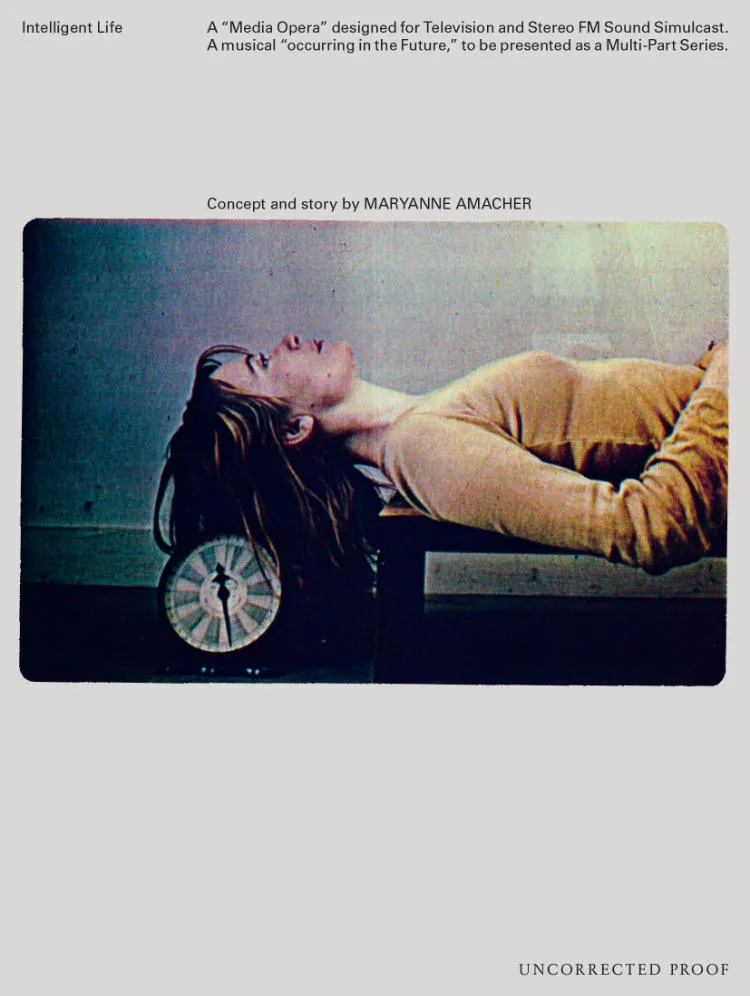
Where most of prior entries, including Aspirations of Madness (2020), Intelligent Life (2019), and Music From The World Tomorrow (2018), have foregrounded little-seen or newly translated archival materials, this iteration privileges new texts produced specifically for the publication. These include an in-depth retrospective interview with the idiosyncratic Texan singer-songwriter and visual artist Terry Allen conducted by ICA Philadelphia chief curator Anthony Elms; a conversation between multidisciplinary writers—and longtime friends—Thulani Davis and Jessica Hagedorn on the occasion of Davis's latest poetry collection, Nothing but the Music, recently published by Blank Forms Editions; a recent discussion between composer Sarah Hennies and cellist Judith Hamann about their recent collaboration, which is included on Hamann's Music for Cello and Humming; and a conversation with composer-performers Tashi Wada and Charles Curtis, on the heels of a recent compilation of Curtis's work, Performances & Recordings 1998– 2018, produced by Wada. Each of these interviews shed light on the particularities of the artists' careers and methods in terms both formal and casual, practical and theoretical. 

In addition to these dialogues, this book features new critical reflections on three artists whose work Blank Forms has presented: the legendary jazz percussionist and healer Milford Graves, by Ciarán Finlayson; English multimedia artist Graham Lambkin and his beguiling 2011 album Amateur Doubles, by Alan Licht; and the UK-based experimental music trio Still House Plants, by Joe Bucciero. These articles mine historical, social, and theoretical contexts, filling gaps in the existing literature on the given artist-subjects. New and archival poems and writing about poetry complement these interviews and essays, including rare texts by Davis, Hagedorn, and René Daumal—the latter translated by Louise Landes Levi—and a suite of Auto-Mythological writings commissioned from Chicago-based composer and musician Angel Bat Dawid.

Cover of Blank Forms #10 – Alien Roots

Blank Forms

Blank Forms #10 – Alien Roots

Éliane Radigue

The tenth and final anthology from Blank Forms offers an exceptional insight into the work, working methods and thinking of the French pioneer of musique concrète and electroacoustic composition Éliane Radigue, through key texts, a wealth of archival documents (including correspondence, notes and sketches for works, concert flyers, photographs, drawings, reviews, etc.), in-depth interviews and commissioned essays.

This volume explores the early electronic work of French composer Éliane Radigue, whose radical approach to feedback, analog synthesis, and composition on tape has long evaded historical and technical interpretation. Combining key texts, newly translated primary documents, in-depth interviews, and commissioned essays, this compendium interrogates the composer's idiosyncratic compositional practice, which both embraces and confounds the iterative nature of magnetic tape, the subtleties of amplification, and the very experience of listening.

Among these entries is an in-depth overview by cellist Charles Curtis, a close collaborator of Radigue's, examining the composer's earliest experiments with feedback techniques and analog synthesis, her eventual shift to composing for unamplified instruments and live performers, and her unique aesthetic configurations of time and presence. A number of detailed conversations between the composer and researchers Georges Haessig, Patrick de Haas, Ian Nagoski, and Bernard Girard provide crucial insights into her working methods at different points throughout her career. Religious studies scholar Dagmar Schwerk reflects upon Radigue's profound 1988 synthesizer work, Kyema, in the context of Tibetan Buddhist thought and its history, while texts by musicians Daniel Silliman and Madison Greenstone examine, in notably different ways, the technical characteristics of Radigue's sound practice. Sketches for unrealized work, contemporary reviews, concert programs, and other ephemera mapping the performance history of Radigue's early work are presented together for the first time. The anthology concludes with a roundtable discussion between Curtis, Greenstone and Anthony Vine, untangling the knot of paradoxes at the center of Radigue's artistic practice to trace the thread of her continued "ethos of resistance."

Edited by Lawrence Kumpf and Charles Curtis.
Texts by Éliane Radigue, Charles Curtis, Georges Haessig, Patrick de Haas, Ian Nagoski, Bernard Girard, Dagmar Schwerk, Daniel Sillman, Madison Greenstone, Anthony Vine.

Blank Forms' journal brings together a combination of never-before published, lost, and new materials that supplement Blank Forms' live programs. It is envisioned as a platform for critical reflection and extended dialogue between scholars, artists, and other figures working within the world of experimental music and art.

Éliane Radigue (born 1932 in Paris) is considered one of the most innovative and influential contemporary composers, from her early electronic music through to her acoustic work of the last fifteen years. Influenced by musique concrète and shaped by regular sojourns in the United States, where she discovered analogue synthesisers, her work unfolds an intensity which is at once subtle and monumental. Through her deep reflections on sound and listening, not only her music but also her working methods have come to shape a widely resonating set of new parameters for working with sound as musical material.

Cover of After Institutions

Floating Opera Press

After Institutions

Karen Archey

Essays €17.00

The current crisis of museums and the future of Institutional Critique.

Faced with waning state support, declining revenue, and forced entrepreneurialism, museums have become a threatened public space. Simultaneously, they have assumed the role of institutional arbiter in issues of social justice and accountability. The canon of Institutional Critique has responded to the social embeddedness of art institutions by looking at the inner workings of such organizations. In After Institutions, Karen Archey expands the definition of Institutional Critique to develop a broader understanding of contemporary art's sociopolitical entanglements, looking beyond what cultural institutions were to what they are and what they might become.

Karen Archey is curator of contemporary art at the Stedelijk Museum Amsterdam. She is a 2015 Creative Capital | Warhol Foundation Arts Writers Grant recipient for short-form writing. Since joining the Stedelijk Museum in April 2017, Archey has organized solo exhibitions by artists Rineke Dijkstra, Stefan Tcherepnin, Catherine Christer Hennix, Steffani Jemison, Metahaven, Jeff Preiss, Charlie Prodger, and Hito Steyerl. She has written numerous catalogue essays and is a contributor to several art publications, including Artforum and Frieze.

Cover of La rabbia / Anger

Tenement Press

La rabbia / Anger

Pier Paolo Pasolini

Poetry €24.00

In a first-time English language translation by Cristina Viti to mark the poet’s centenary, Tenement Press will publish Pier Paolo Pasolini’s groundbreaking, filmic work of prose and verse, La rabbia / Anger.

Why is our life dominated by discontent, by anguish, by the fear of war, by war? In order to answer this question I have written La rabbia, not following a chronological or perhaps even a logical thread, but only my political reasons and my poetic sense. - Pier Paolo Pasolini

Written in response to producer Gastone Ferranti’s request for his comments on a set of newsreel items, the poet would respond with a montage of his own. Via the unfolding of a chrysalis of images, in La rabbia (1963), Pasolini’s lens pans over Soviet repression in Hungary; the Cuban revolution; (the utopian object of) space exploration; political imprisonment in Algeria; the liberation of the former European colonies; the election of Pope John XXIII; the prospect of revolution in Africa and the Middle East; in Europe and in Latin America... Here, we’ve a panoply of photorealist intimations of Pasolini’s ‘poetic sense.’ The death of Marilyn Monroe crests as an idea in this tidal pooling of reflections, and as the poet’s line lights out for conceptual rhymes and counterpoints.

In Viti’s translation, the weave of prose and poetry that forms La rabbia portrays the vitality of Pasolini’s work in its capacity to speak to both the specifics of his contexts, the character of our own present tense, and the ironic fact of a life lived against the gulf of discontent in its myriad forms. Here, we’ve a startling confrontation of a revolutionary struggle in stasis set in lines that crystallise a rallying call against blindness. ‘I’ll not have peace, not ever,’ he writes. A lucid acceptance of the poet’s restlessness, and a marker for Pasolini’s commitment to a solidarity with the oppressed that we find reaffirmed on every page, in La rabbia the poet charts how ‘the powerful world of capital takes an abstract painting as its brash banner’ in this unravelling of ‘crisis in the world.’

Cover of Piero Heliczer. Poems & Documents / Poèmes & Documents

After 8 Books

Piero Heliczer. Poems & Documents / Poèmes & Documents

Sophie Vinet, Benjamin Thorel and 1 more

Poetry €25.00

Poet, editor, filmmaker, actor, child star in Mussolini’s Italy, founder of The Dead Language Press and of the Paris Filmmakers Cooperative, Piero Heliczer (1937–1993) was an essential yet secret agent of the 1960s and ’70s counterculture. In the course of his nomadic existence in Rome, New York, London, Amsterdam, Paris, and Préaux-du-Perche, where he spent the last few years of his life, he met and worked with a constellation of avant-garde writers, forged friendships with figures from the Beat Generation and the British Poetry Revival as well as the New York art scene. At the crossroads of many underground experiences, Heliczer’s name appears in books dedicated to the artists and poets he collaborated with during his lifetime—names by the likes of Gregory Corso, Barbara Rubin, Andy Warhol, Jack Smith, Ira Cohen, or The Velvet Underground, a band he participated in creating with his friend Angus MacLise.

This myth obscures the fact that Piero Heliczer was first and foremost a poet. Today, this part of his work is overlooked; it is all the more difficult to encounter because Heliczer himself never collected it. So it was scattered, or lost, in the course of his wanderings. Heliczer favored the circulation of his works rather than their archiving: he was committed to the production of mobile forms—flyers, broadsides, and other ephemera—disseminated his verses in magazines, and preferred public readings and performances to the finished form of the book.

The present volume gathers a significant number of Heliczer’s poetic works through facsimile reproduction of his contributions to more than thirty periodicals—mostly stemming from poets’ presses or universities—published between 1958 and 1979. This collection isn’t “complete”—but it makes available again poems that, in some cases, never circulated after their initial publication. 

Un recueil de poèmes de Piero Heliczer (1937–1993), auteur, éditeur et cinéaste, figure de l’underground et de la contre-culture, proche de Andy Warhol, Gerard Malanga, et Jack Smith. Sa poésie, héritière de la Beat Generation, restitue en métaphores et images saisissantes des expériences et des visions personnelles, tout en s’appuyant sur des formes héritées de la tradition anglaise et des partis-pris typographiques originaux. Ce recueil rassemble des facsimilés des publications originales de poèmes de Heliczer – périodiques d’artistes, revues miméographiées, petits magazines… – accompagnées de leurs traductions en français, ainsi que de plusieurs documents, parmi lesquels une reproduction intégrale d’une publication rare de 1961, Wednesday Paper, et, en insert, un facsimilé d’un placard de 1975, The Handsome Policeman.

Traduction des poèmes: Rachel Valinsky
Publié avec l’aide du CNAP