rile*books

Search books

Search books by title, author, publisher, keywords...

Cover of Lentil Space – Recipes from Artists' Homes

Mophradat

Lentil Space – Recipes from Artists' Homes

Reem Shilleh ed., Mai Abu ElDahab ed.

€18.00

A compilation of recipes from the Arab world that were presented by artists for Mophradat's online cooking show Lentil Space.

Adapted from its namesake online program produced by Mophradat, co-curated by Mai Abu ElDahab and Reem Shilleh, from 2021 to 2023, this book is a celebration of the varied cuisine of the Arab world and its relationship with inherited food practices and the cultures of cooking and talking about food.

With contributions by Adam HajYahia and Haitham Haddad, Deena Abdelwahed, Laila Hida with Amine Lahrach, Mohamed Abdelkarim with Abla elBahrawy, Nadah El Shazly, amongst many others, this cookbook includes recipes chosen and prepared by the artists in an intimate setting coupled with stories both personal and about their art practice. 

Published in 2025 ┊ 288 pages ┊ Language: English, Arabic

recommendations

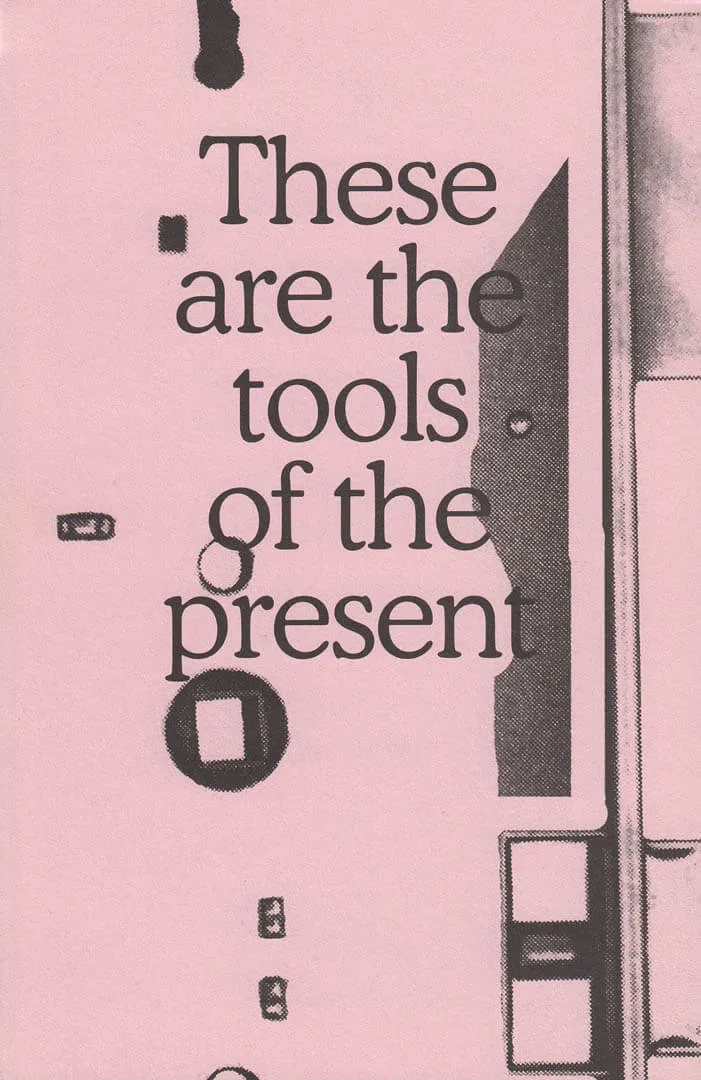
Cover of These are the tools of the present

Mophradat

These are the tools of the present

Mai Abu ElDahab, November Paynter and 1 more

This publication comprises a series of interviews with contemporary artists, musicians, and writers who are in dialogue with Beirut and Cairo. While not purporting to be an overview of the art scenes in these cities, this book begins to draw a picture of how artists think about what it means to be active in the contexts of these cities. It offers insight into the circumstances that structured these artists’ stories, and the often accidental influences that have shaped how their practices have developed.

Cover of The Queer Arab Glossary

Saqi Books

The Queer Arab Glossary

Marwan Kaabour

When conventional language does not equip us with the tools to speak about ourselves, we create our own. Slang expresses words and feelings that break down boundaries. It is a form of protest and fills in the gaps.

The Queer Arab Glossary is the first published collection of Arabic LGBTQ+ slang. This bold guide captures the lexicon of the queer Arab community in all its differences, quirks and felicities. Featuring fascinating facts and anecdotes, it contains more than 300 terms in both English and Arabic, ranging from the humorous to the harrowing, serious to tongue-in-cheek, pejorative to endearing. Here, leading queer Arab artists, academics, activists and writers offer insightful essays situating this groundbreaking glossary in a modern social and political context.

With beautiful, witty illustrations, The Queer Arab Glossary is a powerful response to pervasive myths and stereotypes around sexuality and an invitation to take a journey into queerness throughout the Arab world.

Contributors include Saqer Almarri, Nisrine Chaer, Sophie Chamas, Rana Issa, Adam HajYahia, Suneela Mubayi, Mejdulene Bernard Shomali, Hamed Sinno and Abdellah Taïa.

The Queer Arab Glossary was made possible with the generous support of the Arab Fund for Arts and Culture – AFAC, Mophradat, Bashar Assaf and Mohammed Fakhro.

Foreword by Rabih Alameddine

Cover of This Death is Not One

Bilna'es

This Death is Not One

Jasbir K. Puar, Nasser Abourahme and 1 more

Essays €20.00

The publication of The Right to Maim by Jasbir K. Puar in 2017 was critical to advancing studies on disability and to further articulating how the body figures in the nexus of capacity and debility across racializing and extractive neoliberal lines. It offered a complex and rigorous anti-capitalist account of disability that is useful to both scholarly work and political and social organizing. However, despite its paramount contribution to scholarship on Palestine, delivered by its scathing analysis of the Israeli biopolitical policy—its right to maim—in how the injured Palestinian body is produced and reproduced, its reception was difficult, and hard to stomach. It cohered a political logic in writing before it was visibly evident on the ground. In the moment and aftermath of the Great March of Return (2018-19), Puar’s offerings became much harder to ignore, as the event crystallized a mass maiming campaign of Palestinian protesters inside the edges of the militarized borders of Gaza.

The occasion of this publication by Bilna’es marks the first translation into Arabic of the chapter “Will Not Let Die”: Debilitation and Inhuman Biopolitics in Palestine, alongside the postscript of The Right to Maim. Not simply a reissue of previously published work or a translation, This Death is Not One includes a new preface from Jasbir K. Puar revisiting the right to maim from within this moment of genocide in Gaza that interrogates the new vectors of living and dying under settler-colonialism, and how maiming, in fact, speaks of extermination; an introduction by Nasser Abourahme reflecting on the book’s stakes in the present and its reception in the past, alongside searing analysis of genocide in excess of the law, and what this reveals and forecloses in how we understand the juridical body and militancy in the wake of Zionism; and original drawings by Xaytun Ennasr that inscribe a relation between land and body mapped through cosmological patterns tracing the relation between martyrs, who are referred to as moons, and the moon, a symbol for martyrdom in Palestine.

Jasbir K. Puar is Distinguished Faculty of Arts Professor in the Social Justice Institute at the University of British Columbia, Extraordinary Professor in the Women’s and Gender Studies Department at the University of the Western Cape in Cape Town, South Africa, and Professor Emerita at Rutgers University where she was faculty in the Women’s, Gender, and Sexuality Studies Department for 23 years. Puar is the author of the award-winning books: The Right to Maim: Debility, Capacity, Disability (2017), and Terrorist Assemblages: Homonationalism in Queer Times (2007).

Nasser Abourahme is a writer and teacher, and is currently assistant professor at Bowdoin College. He’s the author of The Time beneath the Concrete: Palestine between Camp and Colony (Duke University Press, 2025), which was awarded the 2025 Palestine Book Award.

Xaytun Ennasr is an artist and designer. She works across experimental video games, paintings, prints, ceramics, installations, and text. She often uses science fiction, folklore, and radical softness as affective tools for revolutionary cultural production, specifically Palestinian liberation and sovereignty. Her work often deals with questions of land, cartography, transness, gender, and the living environment.

Drawings by Xaytun Ennasr

Translation to Arabic:

“Living in Genocide” by Jasbir K. Puar, translated by The Archilogue

“Our names, our remains” by Nasser Abourahme, translated by The Archilogue

The Right to Maim, Chapter 4: “Will not let die: Debilitation and Inhuman Biopolitics in Palestine ” and the The Right to Maim Postscript by Jasbir K. Puar, translated by Bekriah Mawasi

Cover of Elad Lassry: On Onions

Primary Information

Elad Lassry: On Onions

Elad Lassry

Photography €30.00

An artist's book presenting a photographic study of onions.

On Onions is a photographic study of onions by artist Elad Lassry (born 1977). Characteristically highlighting the spectrum of hues and shapes for the vegetable, Lassry's selected taxonomy includes sections on red, yellow and white onions, each of which possesses its own distinct taste and benefits. On Onions is Lassry's first artist's book, and the work will exist only in book form; it is at once wry, refreshing and disorienting in its biology workbook style, which makes fruitful use of "the confusion that results when there is something just slightly wrong in a photograph" (as the artist has described his practice in general).

Composed by the artist and arranged by Stuart Bailey, the book includes an essay written by Angie Keefer about the effects of sliced onions on human tear ducts.

Cover of Not A Cookbook

TBW Books

Not A Cookbook

Robby Reis

Cooking €35.00

TBW Books is proud to announce the release of Not a Cookbook, the debut book by Canadian filmmaker and artist Robby Reis.

At first glance, Not a Cookbook appears to be just what its title implies—but beneath the surface lies a layered, collage-style portrait of a restaurant and the family that holds it together. Centered on Resto Palme, a Caribbean restaurant in Montreal run by married duo Lee-Anne Millaire Lafleur and Ralph Alerte, the book offers a deeply personal and provocative exploration of kitchen culture, where food becomes a lens through which to examine family, friendship, labor, and resistance. 

A longtime friend of the family, Reis takes an embedded, nonlinear approach to storytelling. Through photographs, texts, and contributions from customers and staff, Not a Cookbook captures not just the daily challenges of running a family business, but also the peripheral stories—of racism, activism, and the emotional labor required to build and protect something shared and sacred.

Despite its name, Not a Cookbook does offer some treasured family recipes—however, when it comes to a few key ingredients that make a certain sauce so special, Alerte leaves us simply with, “sorry blood, I can’t give it away.” The result is a new model for the cookbook: a radical kitchen guide rooted in community, resilience, and love. Less about what’s on the plate, and more about everything that makes the plate possible.

Cover of More Than Chilli

Self-Published

More Than Chilli

Rossy Liu

Cooking €21.50

Chilli is one of the most popular food ingredients in contemporary China, and symbolic of modernisation. More Than Chilli goes beyond its trendy façade to explore Chongqing, known for its tradition of spicy food. From the perspective as a local, Rossy Liu reflects on her own personal memories associated with chilli. A combination of fragmented scenes, objects, dialogues, movements and sounds are drawn on to unravel the locality of culinary identity. While chilli has become a ubiquitous flavour in today's global society, the book emphasises the hidden intimacy that still exists between Chongqing locals and their unfiltered connection to chilli.