rile*books

Search books

Search books by title, author, publisher, keywords...

Cover of Girls Like Us #8 - Family

Girls Like Us

Girls Like Us #8 - Family

Jessica Geysel ed., Sara Kaaman ed., Katja Mater ed., Marnie Slater ed.

€8.00

Dear Lovers, Sisters, Brothers, Mothers, Adopted Aunts, Long Lost Fathers, Half-cousins, Wives, Black Sheep and Partners In Crime

As you know, we have a soft spot for collectives, collaborations, friendships and support structures. People doing things with other people: loving, working, organizing, living. These strategies for surviving together form an underlying thread throughout all our issues. This time we wanted to look more closely at one way of naming these friendly constellations: FAMILY.

Language: English

recommendations

Cover of Girls Like Us #6 - Secrets

Girls Like Us

Girls Like Us #6 - Secrets

Jessica Geysel, Sara Kaaman and 2 more

A secret can be a private space for self-creation – or a shared site of pleasure.

We explore secrets in a plethora of forms and contexts. From layered accounts of mediaeval ecstasy to the unexplored sensory experience of smell. From camouflaged play to queer readings of astrological charts and the hidden history of house music. From a very analog point of view to the outskirts of the internet.

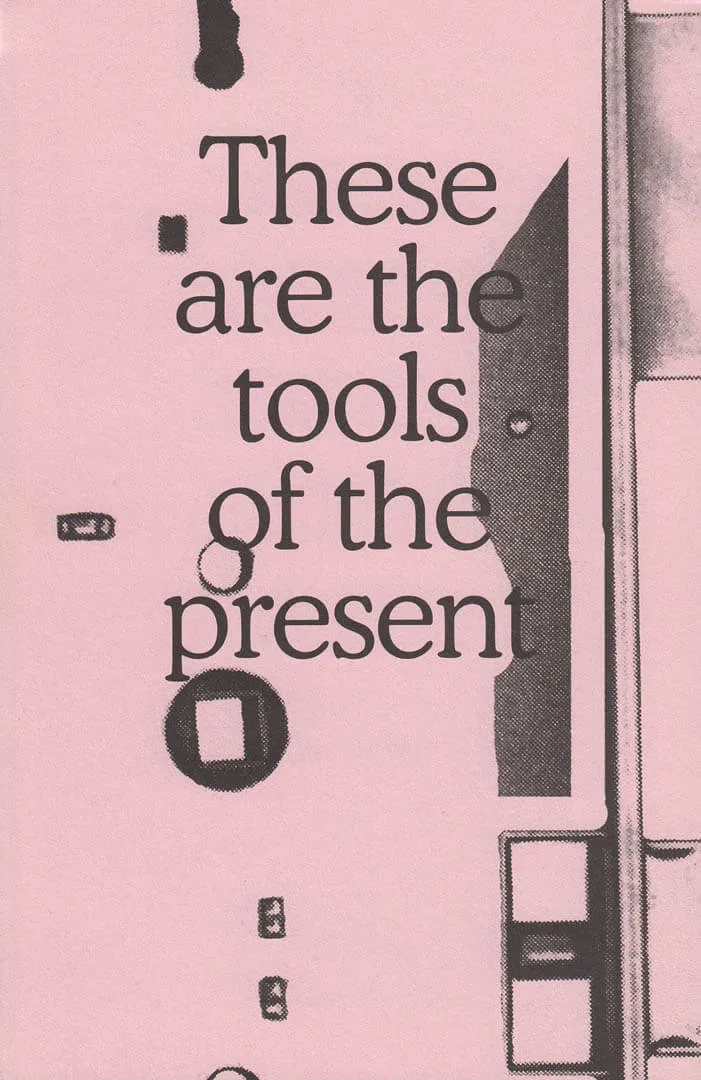
Cover of These are the tools of the present

Mophradat

These are the tools of the present

Mai Abu ElDahab, November Paynter and 1 more

This publication comprises a series of interviews with contemporary artists, musicians, and writers who are in dialogue with Beirut and Cairo. While not purporting to be an overview of the art scenes in these cities, this book begins to draw a picture of how artists think about what it means to be active in the contexts of these cities. It offers insight into the circumstances that structured these artists’ stories, and the often accidental influences that have shaped how their practices have developed.

Cover of A Book Knot Book

Body Text

A Book Knot Book

Sara Kaaman

Performance €20.00

A Book Knot Book is a 208 pages long performance, the first from the research and publishing initiative Body Text. In this study of language in action systems of meaning-making crash, sparkle and swoon. In a playful voice over A Book Knot Book self-reflects on the materialities and choreographies of publishing, reading and writing. With guest stars in fragments; Monique Wittig, Yvonne Rainer, Cristina Rivera Garza, Amiri Baraka, Will Rawls, David Abram, Thich Nhat Hanh and more. 

Edited and designed by Sara Kaaman. Published with the support of Stockholm University of the Arts.

Cover of Stalled Death Train

Spunk Editions

Stalled Death Train

Evan Kennedy

Fiction €20.00

A dark-humored poet’s novel of cruising, contempt, and database crawling, Stalled Death Train rumbles through the death of David Bowie in 2016 to shake apart its narrator’s sense of self. Nick, a burned out office worker and late-Bowie fanatic, spends his days mourning his fallen star, left to decipher the legacy and lyrics of a singular pop icon whose excesses did not cease, even after his greatest moments had passed. Meanwhile, Nick must solve the mystery of why his boyfriend has begun to self-amputate as a form of autonomously upgrading his dimensions—or at least call tech support before he uploads himself to the cloud.

Cover of Issue № 6 - Winter–Spring 2026 / SENSING BODIES

DEARS

Issue № 6 - Winter–Spring 2026 / SENSING BODIES

Coming back to the body is rarely tranquil. Often it is turbulent, interrupting dominant narratives and entrenched meanings. It is the upset of being alive, and awake to it.

The fourteen texts in this new issue do not shy away from that turbulence. There is joy and there is pleasure, there is shame, pain, and liberation... Each text addresses this dense experience from a singular perspective, yet together they explore what emerges and becomes possible when sense-making and making sense(s) are re-anchored in the sensing practices of the body.

With texts by Valérie Hug, Marco Antonini, cassiane c. pfund, Elodie Olson-Coons, Ines Marita Schärer, Bernadette Kolonko, Jo Bahdo, Lotta Beckers, Melanie Jame Wolf, Samuel Brzeski, Madeleine Kaye, Nora Longatti, Rosanna Puyol Boralevi, Larissa Clement-Belhacel

editorial team: Delphine Chapuis Schmitz, Nicole Bachmann, Robert Steinberger, and Shelby Lee Stuart as invited editor

Cover of DAISYWORLD MAGAZINE #4

Daisyworld Magazine

DAISYWORLD MAGAZINE #4

Zazie Stevens

Periodicals €22.50

CONTRIBUTORS Anna Bierler, India Boxall, Craig P Burrows, Alex Hampshire, Kayla Adara Lee, Marijn van der Leeuw, Melanie Matthieu, Gabriella T Moreno, Amira Prescott, Harrison Pickering, Astarte Posch, Ananda Serné, Zazie Stevens, Gedvile Tamosiunaite, Mia You.

cover image Ananda Serné & Poyen Wang

DAISYWORLD MAGAZINE is a seasonal art publication on perception, the sensory, the non-human, ecology & erotica with an emphasis on interconnectedness. The artist's intimate knowledge based on observation, questioning anthropocentrism through beauty & language. Reflecting on the past season while softly moving into the next, each issue launches in-between seasons; appreciating experience, transition, and metamorphosis instead of anticipating the next big thing.

Cover of The Queer Arab Glossary

Saqi Books

The Queer Arab Glossary

Marwan Kaabour

LGBTQI+ €23.00

When conventional language does not equip us with the tools to speak about ourselves, we create our own. Slang expresses words and feelings that break down boundaries. It is a form of protest and fills in the gaps.

The Queer Arab Glossary is the first published collection of Arabic LGBTQ+ slang. This bold guide captures the lexicon of the queer Arab community in all its differences, quirks and felicities. Featuring fascinating facts and anecdotes, it contains more than 300 terms in both English and Arabic, ranging from the humorous to the harrowing, serious to tongue-in-cheek, pejorative to endearing. Here, leading queer Arab artists, academics, activists and writers offer insightful essays situating this groundbreaking glossary in a modern social and political context.

With beautiful, witty illustrations, The Queer Arab Glossary is a powerful response to pervasive myths and stereotypes around sexuality and an invitation to take a journey into queerness throughout the Arab world.

Contributors include Saqer Almarri, Nisrine Chaer, Sophie Chamas, Rana Issa, Adam HajYahia, Suneela Mubayi, Mejdulene Bernard Shomali, Hamed Sinno and Abdellah Taïa.

The Queer Arab Glossary was made possible with the generous support of the Arab Fund for Arts and Culture – AFAC, Mophradat, Bashar Assaf and Mohammed Fakhro.

Foreword by Rabih Alameddine

Cover of Can the Monster Speak?: Report to an Academy of Psychoanalysts

Semiotext(e)

Can the Monster Speak?: Report to an Academy of Psychoanalysts

Paul B. Preciado

LGBTQI+ €16.00

Paul Preciado's controversial 2019 lecture at the École de la Cause Freudienne annual conference, published in a definitive translation for the first time. 

In November 2019, Paul Preciado was invited to speak in front of 3,500 psychoanalysts at the École de la Cause Freudienne's annual conference in Paris. Standing in front of the profession for whom he is a mentally ill person suffering from gender dysphoria, Preciado draws inspiration in his lecture from Kafka's Report to an Academy, in which a monkey tells an assembly of scientists that human subjectivity is a cage comparable to one made of metal bars.  

Speaking from his own mutant cage, Preciado does not so much criticize the homophobia and transphobia of the founders of psychoanalysis as demonstrate the discipline's complicity with the ideology of sexual difference dating back to the colonial era, an ideology which is today rendered obsolete by technological advances allowing us to alter our bodies and procreate differently. Preciado calls for a radical transformation of psychological and psychoanalytic discourse and practices, arguing for a new epistemology capable of allowing for a multiplicity of living bodies without reducing the body to its sole heterosexual reproductive capability, and without legitimizing hetero-patriarchal and colonial violence.  

Causing a veritable outcry among the assembly, Preciado was heckled and booed and unable to finish. The lecture, filmed on smartphones, was published online, where fragments were transcribed, translated, and published with no regard for exactitude. With this volume, Can the Monster Speak? is published in a definitive translation for the first time.