rile*books

Search books

Search books by title, author, publisher, keywords...

Cover of Drive It All Over Me

S*I*G

Drive It All Over Me

Paige K. Bradley

€12.00

Paige Bradley’s Drive It All Over Me was commissioned by the artists Jay Chung and Q Takeki Maeda and concerns their work Bad Driver, 2023, Jack Goldstein’s Selected Writings, and Vanessa Place’s Gone with the Wind and concerns broad themes of subtextual narrative, authorship, and identity in text-based visual artworks while also touching upon allegory, elaborately subtle jokes, and writing as a sculptural material.

Published in 2023 ┊ Language: English

recommendations

Cover of Hey Maus!

S*I*G

Hey Maus!

Kamilla Bischof

€8.00

Essay #16

Editor: M. Sullivan
Design in collaboration with S. De Bondt

Cover of Although

S*I*G

Although

Bernadette Van-Huy

CSV Edition + CSV Edition (Extended Version)

Cover of Family Picture

S*I*G

Family Picture

Tom Humphreys

Painting €6.00

An essay in the form of painting studies - including persons, dogs, a frog, a hoofed animal, fish, hare, trees and plants.

Cover of Notes on Conceptualisms

Ugly Duckling Presse

Notes on Conceptualisms

Vanessa Place, Robert Fitterman

Poetry €16.00

What is conceptual writing, how does it differ from Conceptual Art, what are some of the dominant forms of conceptualism,where does an impure or hybrid conceptualism fit in, what about the baroque, what about the prosody of procedure, what are the links between appropriation and conceptual writing, how does conceptual writing rely on a new way of reading, a “thinkership” that can shift the focus away from the text and onto the concept, what is the relationship between conceptual writing and technology or information culture, and why has this tendency taken hold in the poetry community now? What follows, then, is a collection of notes, aphorisms, quotes and inquiries on conceptual writing. We have co-authored this text through correspondence, shared reading interests, and similar explorations. Notes on Conceptualisms is far from a definitive text, and much closer to a primer, a purposefully incomplete starting place, where readers, hopefully, can enter so as to participate.

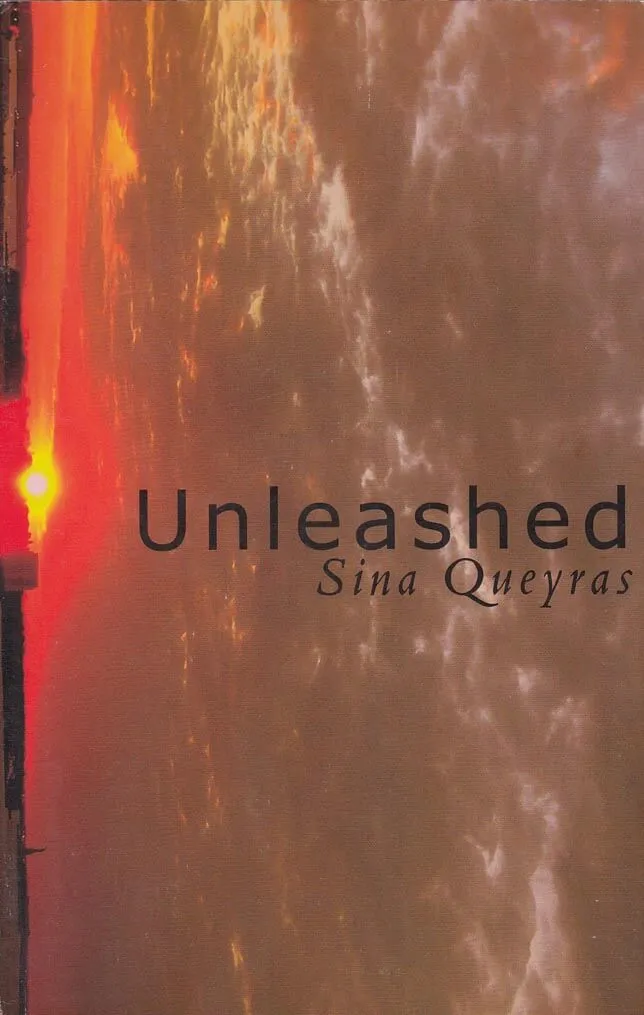
Cover of Unleashed

Book*hug Press

Unleashed

Sina Queyras

Poetry €20.00

05/09/04 Now she is blogging. Now she is sitting on the black couch listening to the sirens wail and the rain fall. Now she is thinking of oysters. Now she is wondering why this is worth sharing. Now she is thinking, how decipher what is worth reading? Who is to say? Sifters. She thinks we have become a nation of sifters. So began a three-year experiment in blogging. An experiment begun for many reasons—a way for an expat to keep in touch with fellow Canadian writers and artists, a way to come to terms with the increasing relevance of the internet in literary lives, and a way to figure out why, after decades of gains, women writers are still grossly underrepresented in critical dialogues.

With an afterword by Vanessa Place.

Cover of Weaving Language I

Essay Press

Weaving Language I

Francesca Capone

Anthology €18.00

Weaving Language I: Lexicon is the first book in the Weaving Language series, which examines the poetics of weaving traditions through historical research as well as contemporary practices. Attempting to dismantle and rebuild commonplace understandings of the history of writing, Weaving Language focuses on fiber-based forms as a longstanding but often overlooked medium for record-keeping, storytelling, and poetry.

In Weaving Language I: Lexicon, weaving processes are mapped onto English grammar to suggest a method for reading woven works. Offering visual vocabularies as both discrete concrete poems as well as a collection of translatable terms, this book invites readers, writers, and weavers to participate by considering weaving as a system that can be decoded. Textile forms are broken into the basic building blocks of language, presented as a visual/textual lexicon.

Weaving Language I: Lexicon was initially self-published by Capone in 2012 and in 2015 re-issued in an edition of five as an artists’ book, which was awarded the Frances Mason Harris ’26 Prize from Brown University.

Essay Press’s edition makes this important work available for the first time in a trade edition. The edition has also been newly edited and significantly expanded into a multivocal work that represents the contributions of a small collective of artists including Martha Tuttle, Allison Parrish, Sarah Zapata, Adjua Gargi Nzinga Greaves, Amaranth Borsuk, and Imani Elizabeth Jackson, thanks to funding from the Oregon Arts Commission and the Ford Family Foundation. The book also includes an afterword by Kit Schluter and diagrams by Anni Albers (with permissions from the Josef and Anni Albers Foundation).

Plans are underway to similarly expand and reissue the two additional books in the series both previously published in limited editions currently out of print: Weaving Language II: Language is Image, Paper, Code, & Cloth (information as material, York, UK, 2018) and Weaving Language III: Writing in Threads (Center of Craft, Asheville, NC, 2017). The Weaving Language project has been accompanied by numerous gallery shows, including “Material Memory,” a show running from October 7 through November 9, 2022, at Nationale in Portland, Oregon, to accompany the release of the Essay Press edition of Weaving Language I.

Artists’ books from the Weaving Language series are held by the collections of the Museum of Modern Art Library in New York, NY; the Thomas J. Watson Library at the Metropolitan Museum of Art in New York, NY; the Harris Collection of American Poetry and Plays at the John Hay Library at Brown University in Providence, RI; and at the Joan Flasch Artists’ Book Collection at the School of the Art Institute of Chicago in Chicago, IL.

Cover of The Imaginary Republic

Errant Bodies Press

The Imaginary Republic

Brandon LaBelle

The Imaginary Republic is an artistic research project focusing on questions of social practice. In particular, it considers the creative and restless imaginaries underpinning our political selves and argues for a deeper engagement with what Elena Loizidou terms “dream-action”: the figurative and poetic staging of world making activity.

The publication brings together participating artists Tatiana Fiodorova, Octavio Camargo / Brandon LaBelle, the Sala-Manca Group, and Joulia Strauss, whose practices engage situations of struggle and autonomous cultures through a range of methods and approaches. From social fictioning to camouflaged interventions, collaborative pedagogies to gestures of care, their works propose unlikely paths of mutuality. The publication includes documentation of an exhibition held at Kunsthall 3,14 in Bergen, as well as key essays and works by theorists and artists Rhiannon Firth, Hélène Frichot, Marysia Lewandowska, Gerald Raunig, Raimar Stange with Oliver Ressler, and Manuela Zechner.

Cover of Moral Abdication: How the World Failed to Stop the Destruction of Gaza

Verso Books

Moral Abdication: How the World Failed to Stop the Destruction of Gaza

Didier Fassin

Essays €15.00

How most Western governments and elites have supported the destruction of Gaza and silenced voices calling for the rights of Palestinians. 

Providing a record of the first six months of the war waged by the Israeli army after the 7 October attacks and drawing on a rich range of international sources, Didier Fassin examines how most Western governments have acquiesced in and often contributed to the destruction, by the Israeli army, of Gaza, its homes, infrastructures, hospitals, institutions of education, and civilian population. To justify their support and prevent criticism, they have provided an official version of the events, adopting the Israeli narrative. It was largely taken up by mainstream media, which ignored the experiences and perspectives of Palestinians. Dissenting voices were silenced. A policing of language and thought was imposed. Censorship and self-censorship became normalized. 

To call for a ceasefire or to demand the respect of humanitarian law was enough to prompt the ever-ready accusation of antisemitism. Exploring the multiple dimensions of the extreme inequality of lives between the two sides of the conflict and analyzing the complex geopolitical, economic and ideological stakes that underlie it, Fassin intends to constitute an archive of this moral abdication. In his view, the abandonment of the values and principles proclaimed by Western elites to be foundational will leave a deep scar in the history of the world.