rile*books

Search books

Search books by title, author, publisher, keywords...

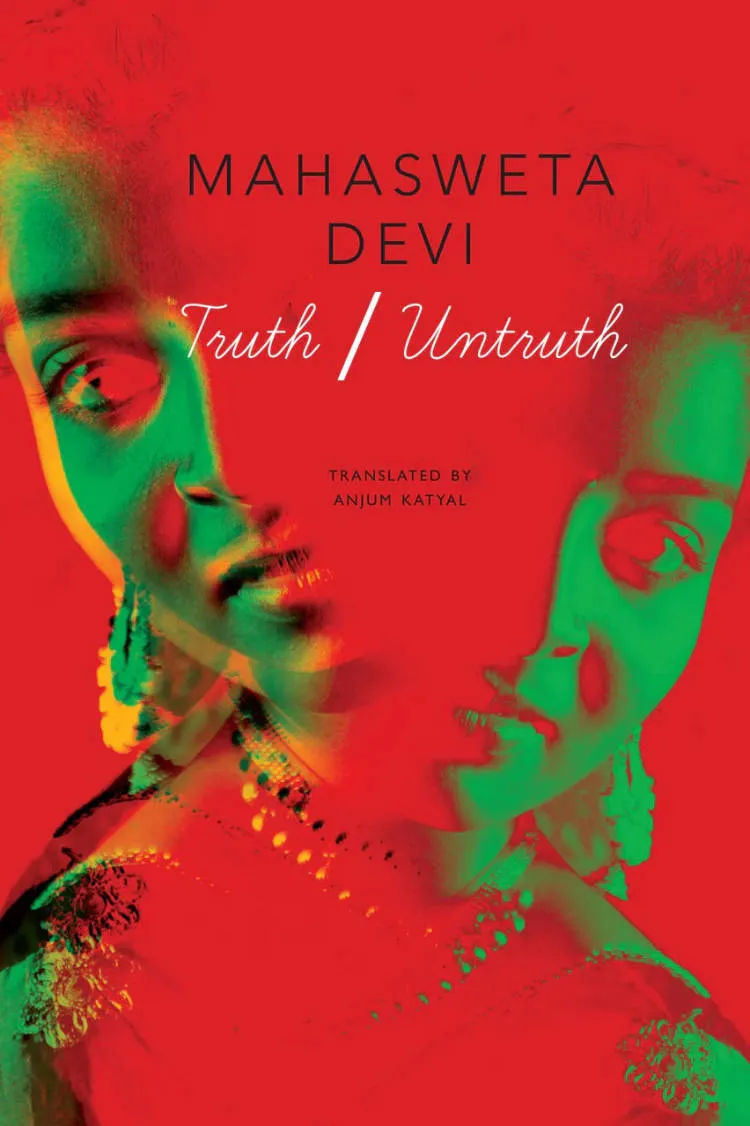
Cover of Breast Stories (Revised)

Seagull Books

Breast Stories (Revised)

mahasweta devi

€16.00

Mahasweta Devi is one of India's foremost literary figures, a prolific and best-selling author in Bengali of short fiction and novels, and a deeply political social activist who has been working in marginalized communities for decades.

Breast Stories is a collection of short fiction that focuses on the breast as more than a symbol of beauty, eroticism, or motherhood. Instead, it is seen as a harsh indictment of an exploitative social system and a weapon of resistance. At a time when violence towards women in India has escalated exponentially, Devi's acerbic writing exposes the inherently vicious systems in Indian society.
Language: English

recommendations

Cover of Passage to the Plaza

Seagull Books

Passage to the Plaza

Sahar Khalifeh

Fiction €24.50

In Bab Al-Saha, a quarter of Nablus, Palestine, sits a house of ill repute. In it lives Nuzha, a young woman ostracized from and shamed by her community. When the Intifada breaks out, Nuzha’s abode unexpectedly becomes a sanctuary for those in the quarter: Hussam, an injured resistance fighter; Samar, a university researcher exploring the impact of the Intifada on women’s lives; and Sitt Zakia, the pious midwife.

In the furnace of conflict at the heart of the 1987 Intifada, notions of freedom, love, respectability, nationhood, the rights of women, and Palestinian identity—both among the reluctant residents of the house and the inhabitants of the quarter at large—will be melted and re-forged. Vividly recounted through the eyes of its female protagonists, Passage to the Plaza is a groundbreaking story that shatters the myth of a uniform gendered experience of conflict.

Cover of Orlando

Mariner Books

Orlando

Virginia Woolf

Fiction €19.00

"Come, come! I'm sick to death of this particular self. I want another."

Virginia Woolf described "Orlando" as "an escapade, half-laughing, half-serious; with great splashes of exaggeration, " but many think Woolf's escapade is one of the most wickedly imaginative and sharply observed considerations of androgyny that this century will see.

Orlando is, in fact, a character liberated from the restraints of time and sex. Born in the Elizabethan Age to wealth and position, he is a young male aristocrat at the beginning of the story - and a modern woman four centuries later. The hero-heroine sees monarchs come and go, hobnobs with great literary figures, and slips in and out of each new fashion. Woolf presents a brilliant pageant of history, society, and literature as well as subtle appreciation of the interplay between endings and beginnings, past and present, male and female.

Virginia Woolf(1882-1941) was one of the major literary figures of the twentieth century. An admired literary critic, she authored many essays, letters, journals, and short stories in addition to her groundbreaking novels, including Mrs. Dalloway, To The Lighthouse, and Orlando.

Cover of Sacred Spells: Collected Works

Nightboat Books

Sacred Spells: Collected Works

Assotto Saint

LGBTQI+ €23.00

The collected life-work of an interdisciplinary writer, performer, and central figure in the Black Gay cultural arts and AIDS movements.

In this timely collection of poetry, plays, fiction, and performance texts, Assotto Saint draws upon music and incantation, his Haitian heritage, and a politics of liberation to weaves together a tapestry of literature that celebrates life in the face of death. Influential to contemporary writers such as Essex Hemphill, Marlon Riggs, and Melvin Dixon, Sacred Spells is Saint’s crucial legacy–five hundred incandescent pages of painful, lyric writing that exemplifies the visceral, spiritual dimensions of an artistic practice that’s integral to Black and LGBTQ activist movements worldwide, both historic and present.

Cover of 4 Tales

Istasyon

4 Tales

Sabahattin Ali

Fiction €7.50

The power of Sabahattin Ali comes from beyond his words. It is his sense of observation, insight and commitment to fight for a fairer society that have carried his voice into the modern day.

The four tales in this book - Death of the Giants, A Tale of Love, A Tale of Sheep and The Glass Pavilion - were compiled and published in Sırça Köşk [The Glass Pavilion] in 1947. At the time Sabahattin Ali penned these tales, the young Turkish Republic was still struggling to establish a proper democracy with one sole party in parliament. In 1948 the Turkish Council of Ministers decided to ban Sırça Köşk, and all remaining copies were swiftly confiscated. Even after his death, the words of Sabahattin Ali were deemed as a governmental threat and for decades publishers were reluctant to print his work.

Almost eighty years later, these political and social tales remain just as poignant. Does this showcase Sabahattin Ali’s visionary spirit or a general lack of vision within our societies?

Cover of How to live from fire to fire

Kayfa ta

How to live from fire to fire

Olivier Marboeuf

Fiction €10.00

Olivier Marboeuf takes us on a journey through myths, archives, and fables, where fire symbolizes Caribbean culture, colonial oppression, and ecological disasters, and where the echo of past revolts becomes the spark for future insurrections.

How to Live from Fire to Fire brings together two closely linked texts by Olivier Marboeuf. The volume opens with Marboeuf's latest work, How to Live from Fire to Fire, written as a new commission, and is followed by the first English translation of his earlier text The Night Just Before the Fire, originally published in French in 2025 by Atlantiques déchaînés.

Written as if in the same breath, the two texts follow one another in a fevered, relentless movement. In The Night Just Before the Fire, Marboeuf reworks Bernard-Marie Koltès's play La Nuit juste avant les forêts (Éditions de Minuit, 1977), transforming it into the delirious, unbroken monologue of a man with dark blue skin calling out to another man in the streets of a major European city. Through this act of rewriting, the echo of past revolts becomes the spark for future insurrections. Next time, a riot.

"The French believed that burning the king of the carnival would suffice to erase these old stories and impose a modicum of order in the beautiful Caribbean colony. They thought that everyone would return home and that the streets would take on their usual amnesiac calm after this necessary moment of release. At the end of the celebration, on Ash Wednesday, King Vaval would be burned and along with him, corruption, excess, and bad lives would burn too. But nothing was said about monopolies. Because even when residents returned home, exhausted by the festivities, even when the dark of night cloaked this whole little world and emptied its public squares, water continued to flow dark from taps and poison snaked a path into the land and its gardens. Somewhere, forests and cities continued to burn."
—Olivier Marboeuf

Olivier Marboeuf (born 1971) is an author-storyteller, artist, independent curator, cultural theorist and film producer from Guadeloupe. In the early 1990s, he co-founded éditions Amok (now Frémok) publishing and launched the Parisian literary café Autarcic Comix. He was artistic director of Espace Khiasma (2004–2018) which contributed to introducing postcolonial theories to the French art scene through numerous exhibitions and encounters

Translated from the French by Liz Duff Young.

Cover of How to Mend: Motherhood and Its Ghosts

Kayfa ta

How to Mend: Motherhood and Its Ghosts

Iman Mersal

Fiction €10.00

In How to Mend: On Motherhood and its Ghosts, Kayfa ta’s 4th monograph, Iman Mersal navigates a long and winding road, from the only surviving picture of the author has with her mother, to a deep search through what memory, photography, dreams and writing, a search of what is lost between the mainstream and more personal representations of motherhood and its struggles. How to mend the gap between the representation and the real, the photograph and its subject, the self and the other, the mother and her child. 

Iman Mersal is an Egyptian poet and associate professor of Arabic Literature and Middle Eastern Studies in the University of Alberta, Canada.

Text: Iman Mersal
Editors: Maha Maamoun and Ala Younis
Translated from Arabic by Robin Moger
Co-publishers: Kayfa ta and Sternberg Press
Design: Julie Peeters
Size: 9.6 x 14.8 cm
Pages: 168 pages, Soft cover