rile*books

Search books

Search books by title, author, publisher, keywords...

Explore

Categories
Visit
Collections
Publishers
Back in stock
Any books
Cover of Appendix #1: The gesture of writing

Time has fallen asleep in the afternoon sunshine

Appendix #1: The gesture of writing

Victoria Pérez Royo ed., Léa Poiré ed., Mette Edvardsen ed.

€15.00

The Appendixes #1-4 is an editorial series by Mette Edvardsen, Léa Poiré and Victoria Pérez Royo that came out of the project Time has fallen asleep in the afternoon sunshine. For a two-year residency at Les Laboratoires d'Aubervilliers (2022-23), they came together as a small work group, shaping the work process, hosting presentation formats and making the publication series on paper as four cahiers.

The cahiers comprise a collection of commissioned texts and contributions created for this context, selected documents and traces from work sessions and encounters organized during the residency, texts read together and republished for this occasion, a collection of references, notes in progress, unfinished thoughts and loose fragments - on paper, between pages.

p 5-7 Almost on my way to you
p 8-10 Presque en route vers toi
Laía Argüelles Folch

p 12-13 Exercise in translation of Breve ensayo sobre la carta (Brief essay on the letter) by Laía Argüelles Folch
p 14-15 Exercice de traduction de Breve ensayo sobre la carta (Bref essai sur la lettre) de Laía Argüelles Folch
Quim Pujol, Paula Caspão, Simon Asencio, Pascal Poyet, Mette Edvardsen, Léa Poiré, Victoria Pérez Royo & Laía Argüelles Folch

p 16-17 Like a dinosaur upon awakening
p 18-19 Comme un dinosaure au réveil
Pascal Poyet

p 20-23 Is she a translator?
p 24-27 Est-elle traductrice?
Olivia Fairweather

p 28-29 New edition revised by my author
p 30-31 Nouvelle édition revue par mon auteur
Léa Poiré

p 32 Notes from a translation in progress
p 33 Notes d'une traduction en cours
Kate Briggs

p 34-37 Mothers & tongues
p 38-41 Langues (maternelles)
Mette Edvardsen

p 42-43 Collective reading of Finnegans Wake by James Joyce
p 44-45 Lecture collective de Finnegans Wake de James Joyce
Dora García and readers, et les lecteur·rices

p 46-49 Notes for a talk that did not happen
p 50-53 Notes pour une conférence qui n'a pas eu lieu
Olivia Fairweather

p 54-65 Meticulous comparison of two books with their versions rewritten from memory, excerpts from a work document
Comparaison méticuleuse de deux livres avec leurs versions réécrites de mémoire, extraits d'un document de travail
Julián Pacomio & Ángela Millano

Language: English

recommendations

Cover of Rêveries du promeneur solitaire

Time has fallen asleep in the afternoon sunshine

Rêveries du promeneur solitaire

Sarah Ludi

For the project Time has fallen asleep in the afternoon sunshine a group of people/ performers memorize a book of their choice. Together they form a library collection consisting of living books. After years of learning by heart and reciting for readers, some of the books have now been written down from memory to create new editions, versions resulting from this process. This book is one of those books, chosen by one person, learned by heart and recited many times, and now written down again from memory. This edition is not a re-edition of the original text. It is a re-writing of the text after the process of reading, memorizing and reciting, with all the alterations that might have occured in the course of this process.

Cover of Een dag in 't jaar door Herman Gorter

Time has fallen asleep in the afternoon sunshine

Een dag in 't jaar door Herman Gorter

Johan Sonnenschein

For the project Time has fallen asleep in the afternoon sunshine a group of people/ performers memorize a book of their choice. Together they form a library collection consisting of living books. After years of learning by heart and reciting for readers, some of the books have now been written down from memory to create new editions, versions resulting from this process. This book is one of those books, chosen by one person, learned by heart and recited many times, and now written down again from memory. This edition is not a re-edition of the original text. It is a re-writing of the text after the process of reading, memorizing and reciting, with all the alterations that might have occured in the course of this process.

Cover of Verzamelde gedichten - Against the Forgetting

Time has fallen asleep in the afternoon sunshine

Verzamelde gedichten - Against the Forgetting

Bruno De Wachter

For the project Time has fallen asleep in the afternoon sunshine a group of people/ performers memorize a book of their choice. Together they form a library collection consisting of living books. After years of learning by heart and reciting for readers, some of the books have now been written down from memory to create new editions, versions resulting from this process. This book is one of those books, chosen by one person, learned by heart and recited many times, and now written down again from memory. This edition is not a re-edition of the original text. It is a re-writing of the text after the process of reading, memorizing and reciting, with all the alterations that might have occured in the course of this process.

www.timehasfallenasleepintheafternoonsunshine.be

Cover of Appendix #3: Orality

Time has fallen asleep in the afternoon sunshine

Appendix #3: Orality

Victoria Pérez Royo, Léa Poiré and 1 more

Time has fallen asleep in the afternoon sunshine Appendix #3 Orality includes contributions by Simon Asencio, Bruno De Wachter, Peter Szendy, Clara Amaral, Itziar Okariz, Jude Joseph, Léa Poiré and Mette Edvardsen.

Time has The Appendixes #1–4 is an editorial series by Mette Edvardsen, Léa Poiré and Victoria Pérez Royo that developed out of the project Time has fallen asleep in the afternoon sunshine. For a two-year residency at Les Laboratoires d’Aubervilliers* (2022–23), they came together as a small work group, shaping the work process, hosting presentation formats and making this publication series on paper as four cahiers.

The cahiers comprise a collection of commissioned texts and contributions created for this context, selected documents and traces from work sessions and encounters organized during their residency, texts read together and republished for this occasion, a collection of references, notes in progress, unfinished thoughts and loose fragments – on paper, between pages.

The Appendixes are organized around four themes: (1) The gesture of writing, (2) How to organize a library, (3) Orality and (4) Translation. In addition to being published on paper, the editorial series also consisted of other formats of presentations, exchanges and meetings organized as workshops, fieldwork, performances, conferences, collective readings and oral publications, taking place during their residency at Les Laboratoires d’Aubervilliers and in the vicinity.

The Appendixes is the work that continues, material that adds on, some of it perhaps too long or too detailed, unfit or unfinished. The four themes that their research is formulated around originate in specific experiences and questions from the practices of Time has fallen asleep in the afternoon sunshine (2010 – ongoing), and also the large publication on the project ‘A book on reading, writing, memory and forgetting in a library of living books’ (2019). The research was both a means of exploring these themes in greater depth and also of bringing them into contact with other artists and researchers working on similar or related subjects. The Appendixes offered them both the contexts and the pretexts for things to happen (in time, in space, on paper).

The Appendixes #1–4, published in these cahiers, do not present an overview or a summary of all of the activities and presentations that took place during the two years at Les Laboratoires d’Aubervilliers. What these cahiers offer is a space in which to hold some thoughts together and to share them in this form. It is one more step along the way, extending the research and work already begun and that will now continue.

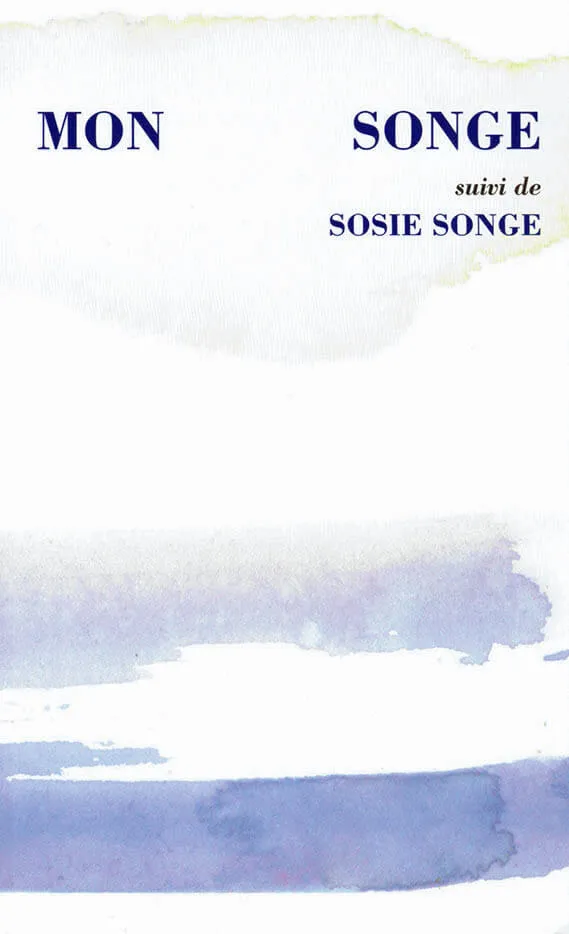
Cover of Mon Songe

Time has fallen asleep in the afternoon sunshine

Mon Songe

Vincent Dunoyer

For the project Time has fallen asleep in the afternoon sunshine a group of people/ performers memorize a book of their choice. Together they form a library collection consisting of living books. After years of learning by heart and reciting for readers, some of the books have now been written down from memory to create new editions, versions resulting from this process. This book is one of those books, chosen by one person, learned by heart and recited many times, and now written down again from memory. This edition is not a re-edition of the original text. It is a re-writing of the text after the process of reading, memorizing and reciting, with all the alterations that might have occured in the course of this process.

Cover of Noa & Snow – Poem #9

Bom Dia Books

Noa & Snow – Poem #9

Alix Eynaudi

This book/catalogue is published on the occasion of the final event of Noa & Snow, a gentle experiment between the everyday and the event, at the Volkskundemuseum, Vienna.

Publication Concept Alix Eynaudi, Goda Budvytytė
Design Goda Budvytytė
Printing Robstolk, Amsterdam
Edition 600 copies
Proofreading Bella Marrin

ENVELOPE Pattern design based on the Lila Dress and its signature cording by An Breugelmans

LE VESTIAIRE
Costumes & objects An Breugelmans Tapestries & trompe-l’oeil Cécile Tonizzo Weaves Lydia McGlinchey Photos taken inside of Jason Dodge’ show Cut a Door in the Wolf at Macro Museum by Carlotta Pierleoni Photos in Vienna Samuel Feldhandler

THEM, PROTEXTIONS
Han-Gyeol Lie, Mette Edvartsen, Lydia McGlinchey, Clara Amaral, Ujjwal Kanishka Utkarsh, Jennifer Lacey, Cécile Tonizzo, Sabina Holzer, Alice Chauchat, Jason Dodge, Joachim Hamou, Quim Pujol, Litó Walkey, Serena Lee, Mihret Kebede

PUBLIC MEDITATIONS
Anne Faucheret, Elizabeth Ward, Kirsty Bell, Tony Just, Sabina Holzer, Samuel Feldhandler, Frida Robles

TEXTURAGES Paula Caspão VIGNETTES Alix Eynaudi

Poster picture of Claire Lefèvre’s Grimoire/Giant Notebook/Bison Book Rasa Juškevičiūtė

INSTITUTE OF REST(S)
Alix Eynaudi, Paula Caspão, Quim Pujol
Back side A thread for Alix Eynaudi, woven as a table placement by Genė Janušauskaitė in 1936, out of the flax she had sawn and harvested herself. Photographed by Kristien Daem in 2022, after Aldona Malašauskienė revealed the placement to her son Raimundas.

Cover of one long continuous line or a thought that dissolves into the distance

Varamo Press

one long continuous line or a thought that dissolves into the distance

Mette Edvardsen

A short text or a long line written by Mette Edvardsen for Etcetera magazine (June 2018) on an invitation to elaborate on her approach to text, writing and speech from a choreographic point of view. Held by a cardboard cover, the text is here published on its own as a very slim book.

Cover of BFTK — Issue 4: On Translation, Transmission & Transposition

Bricks from the Kiln

BFTK — Issue 4: On Translation, Transmission & Transposition

Andrew Walsh‐Lister, Matthew Stuart and 2 more

Bricks from the Kiln is an irregular journal edited by Andrew Lister and Matthew Stuart, sometimes with guest editors, that presents graphic design and typography as disciplines activated by and through other disciplines and lenses such as language, archives, collage, and more. It borrows its title from the glossary notes of Ret Marut’s "Der Ziegelbrenner," which was the ‘size, shape and colour of a brick’, and ran for 13 issues between 1917 and 1921.

The latest installment, "#4: On Translation, Transmission & Transposition," was published as an event (and now) a publication, with events at London College of Communication, Burley Fisher Books & Pig Rock bothy, Socttish National Gallery of Modern Art, and Inga (in November, 2019).

GREENING
Helen Marten
(front / back flaps)

JOY & HAPPINESS, FIDELITY
& INTIMACY IN TRANSLATION
Sophie Collins
(pp.4–13)

PLANETARY TRANSLATION
Don Mee Choi
(pp.15–19)

TRANSLATION AND A LIPOGRAM:
OR, ON FORMS OF AGAIN-WRITING
AND NO- (OR NOT THAT-) WRITING
Kate Briggs
(pp.23–33)

UNHOMING (1 of 4):
FOLLOWING HÖLDERLIN’S ‘HEIMAT’
Phil Baber
(pp.35–47)

SNOW WHITE AND THE WHITE
OF THE HUMAN EYEBALLS
Joyce Dixon
(pp.51–62)

ALTAMIRALTAMIRALTAMIRA
Florian Roithmayr
(pp.65–116)

LEVEL UP, LEVEL DOWN
Jen Calleja
(pp.119–124)

TRANS.MISSION [A.DIALOGUE]:
A JAVASCRIPT FOR THREE VOICES
J.R. Carpenter
(pp.127–134)

THE MECHANISATION OF ART
Edgar Wind
(glosses / annotations / insertions by
Natalie Ferris & Bryony Quinn)
(pp.137–144)

UNHOMING (2 of 4)
Phil Baber
(p.147)

COMMISSION FOR A NOIR MOVIE
B IN THE BAY OF BISCAY
Rebecca Collins
(pp.151–157)

UNHOMING (3 of 4)
Phil Baber
(pp.150–162)

EVERY CONTACT LEAVES A TRACE;
TRANSCRIBING OSTEON
Naomi Pearce
(pp.165–170)

HOW DOES A WORK END?
Karen Di Franco
(pp.173–193)

METONYMY Op.1 & Op.2
James Bulley
(pp.197–201)

AFRIKAN ALPHABETS EXTENDED
Saki Mafundikwa
(pp.204–207)

SUSAN HILLER: 1983
Natalie Ferris
(pp.209–217)

EVERY TELLING HAS A TALING /
EVERY STORY HAS AN ENDING
Matthew Stuart
(pp.220–233)

GRAPHIC PROPRIOCEPTION
James Langdon
(pp.235–254)

UNHOMING (4 of 4)
Phil Baber
(pp.257–263)

TUNNELLING AND AGGREGATING
FOR DESIGN RESEARCH
Bryony Quinn (text) &
Peter Nencini (images)
(pp.265–272)

LET IT PERCOLATE:
A MANIFESTO FOR READING
Sophie Seita
(pp.275–280)

288 pgs, 22.4 × 17 cm, Softcover, 2020

Cover of Lives Shaping Works Making Life

Bruno

Lives Shaping Works Making Life

Xavier Le Roy, Giulia Casartelli and 2 more

24 transcribed public conversations led by Xavier Le Roy with artists and cultural workers, creating a space where Le Roy's work meets the experiences of his guests.

Lives Shaping Works Making Life is a collection of 24 transcribed public conversations titled Practices: Strategies and Tactics, led by Xavier Le Roy and hosted by the Institute for Applied Theater Studies in Giessen between November 2022 and November 2024. These dialogues bring together artists and cultural workers creating a space where Xavier Le Roy's work engages in conversation with the experiences of each guest. Each encounter follows the same set of 14 questions—printed on the book's cover—which serve as a flexible framework guiding the conversations. Through the careful editing of Giulia Casartelli, Daniel Cordova, and Livia Andrea Piazza, these conversations have been transformed into vivid, polyphonic texts that invite further reflection and offer a point of departure for expanding the dialogue beyond the original live encounters.

Conversations with Antonia Baehr, Matthias Mohr, João Fiadeiro, Herbordt / Mohren, Carolina Mendonça, Rolf Michenfelder, Ana Vujanović, Bojana Cvejić, Joana Tischkau, Giulia Casartelli, Susanne Zaun & Judith Altmeyer, Florence Lam, Olivia Hyunsin Kim, Jorge Alencar & Neto Machado, Rabih Mroué, Ruth Geiersberger, Swoosh Lieu, Arkadi Zaides, Valeria Graziano, Mette Edvardsen, Mala Kline, Sarah Parolin, Andros Zins-Browne, Rose Beermann.

Cover of Not Not Nothing

Varamo Press

Not Not Nothing

Mette Edvardsen

Performance €18.00

This publication brings together the texts from the pieces Black (2011), No Title (2014), We to be (2015) and oslo (2017) created and performed by Mette Edvardsen. These pieces have been developed using language as material, looking into the relationship between writing and speaking, between language and voice. Mette Edvardsen is working on the verge of the visible, considering choreography as writing.

Cover of Some Monologues

Wendy's Subway

Some Monologues

Tyler Coburn

Fiction €25.00

Working at the nexus of performance, art writing, and fiction, Tyler Coburn creates monologues that explore how the “I” is marked in speech. His myriad topics—alternate history, legal personhood, digital labor, and resonant frequency, to name a few—defy straightforward modes of presentation, often insisting on site-specificity and social intimacy at the expense of conventional documentation. 

Some Monologues collects, for the first time, the scripts of Coburn’s work from the past fifteen years, many of which have not previously been published. Accompanying them are texts by eleven artists, writers, curators, and scholars who experienced these performances firsthand, collaborated in their making, conversed with the artist about them, or share an interest in the subjects they engage. Written in theoretical, poetic, and autobiographical registers, these contributions offer new perspectives on the monologue as an expansive and relational form.

Introduction by Elvia Wilk. Contributions by Yu Araki, A.E. Benenson, Mashinka Firunts Hakopian, Sven Lütticken, Kameelah Janan Rasheed, Spyros Papapetros, Camille Richert, Théo Robine-Langlois, Ian Wallace, and Michelle Wun Ting Wong.

Tyler’s scripts refuse to fix an authorial voice; instead, they make the conditions of authorship itself their subject. Blurring the boundaries between fiction and document, the human and the bureaucratic, the self and its doubles, his work thinks through systems from the inside, often using language as both architecture and trap. In their precision and porousness, I recognize a shared pursuit: how to locate agency within constraint, and how to turn the administrative or the technological into a site of intimacy. — Jill Magid

In Tyler Coburn’s Some Monologues, a binary that remains constitutive for the ideological continuity of modern life, in all its colonial and capital forms, is undone: digital vs. physical. In troubling that chasm, Coburn plays out the repercussions of these ideologies of anthropomorphic naturalism, guiding us through their resonances, doubles, codings, and relays. But he also renders himself as the relay of these transferences, in the process expanding art’s premodern calling: to exist as an invocation. Reification suddenly appears as what is situated between embodiment and disembodiment, with both potentially destabilized. Some Monologues, the book, is this destabilization’s ideal format: as much documentation, an echo, of Coburn’s works through their scripts, as it is an instruction manual for denaturalizing our sense/s. — Kerstin Stakemeier

Tyler Coburn is an artist, writer, and professor based in New York. He received a 2024 Andy Warhol Foundation Arts Writers Grant, and his writing has appeared in ArtReview, BOMB, C Magazine, Dis, e-flux journal, frieze, LEAP, Metropolis M, Mousse, and Rhizome. Coburn is the author of four books: I’m that angel (self-published, 2012), Robots Building Robots (CCA Glasgow, 2013), Richard Roe (Sternberg, 2019), and Solitary (Sternberg and Art Sonje Center, 2022). He has presented artwork at such venues as Centre Pompidou, Paris; Bergen Kunsthall; Hayward Gallery, London; Para Site, Hong Kong; and Kunstverein Munich. 

Cover of Issue #52/53 - Sovereign Movements

Movement Research Performance Journal

Issue #52/53 - Sovereign Movements

Moriah Evans

Periodicals €10.00

Movement Research announces Issue 52/53 of its print publication, the Movement Research Performance Journal. For this issue, Sovereign Movements: Native Dance and Performance, guest editor, choreographer Rosy Simas invited writer, Ahimsa Timoteo Bodhrán, to work with her. Together they assembled contributors from Native and Indigenous communities to reflect upon their practices, the historical conditions out of which they operate as well as movement, performance, and choreography as a socio-political project. Just as it is important for physical institutions to acknowledge that they sit upon occupied land of Native and Indigenous people, so too must institutions of history, practice, and epistemology acknowledge their occupation of knowledge and memory.

Throughout this issue, dance and movement is posited as a powerful strategy against settler-colonial mindsets and as an effective tool against erasure of Native and Indigenous cultural traditions. These pages discuss the importance of Native sovereignty and analyze various histories of resistance to settler-colonialism. Artists in the issue propose alternative artistic models to probe the roles of art and artists in society towards a more expansive constellation that fundamentally critiques the Western reward system in culture as well as the often celebrated cult of authorship.