rile*books

Search books

Search books by title, author, publisher, keywords...

Cover of Vloekschrift

het balanseer

Vloekschrift

Arno Van Vlierberghe

€17.50

‘Arno Van Vlierberghe makes an impressive entrée into the poetry scene in the Low Countries with his first collection Vloekschrift, nominated for the C. Buddingh’-prize for the best debut volume of verse.’ (Patrick Peeters on Poetry International Web)

Arno Van Vlierberghe (1990) is dichter. Hij leeft, woont en werkt in Gent. Zijn werk verscheen her en der, offline en online. Vloekschrift is zijn debuutbundel.

Published in 2020 ┊ 48 pages ┊ Language: Dutch

recommendations

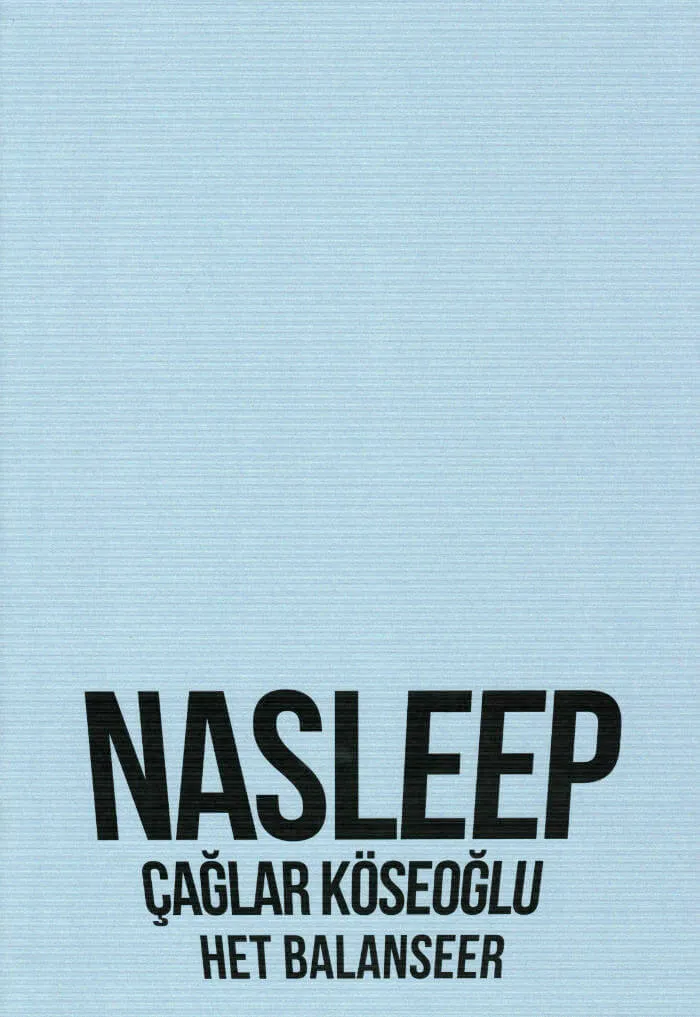
Cover of Nasleep

het balanseer

Nasleep

Çağlar Köseoğlu

Poetry €19.00

Nasleep neemt de protesten rondom het Gezi Park in 2013 als vertrekpunt en verkent gaandeweg wat er is overgebleven van dit historische moment waarin een andere wereld voor het grijpen leek. Het zijn gedichten die laveren tussen ritmische, conceptuele en kritische noise enerzijds en postrevolutionaire affecten anderzijds, tussen politise­ring enerzijds en onmacht en radeloosheid anderzijds.

Cover of EN

het balanseer

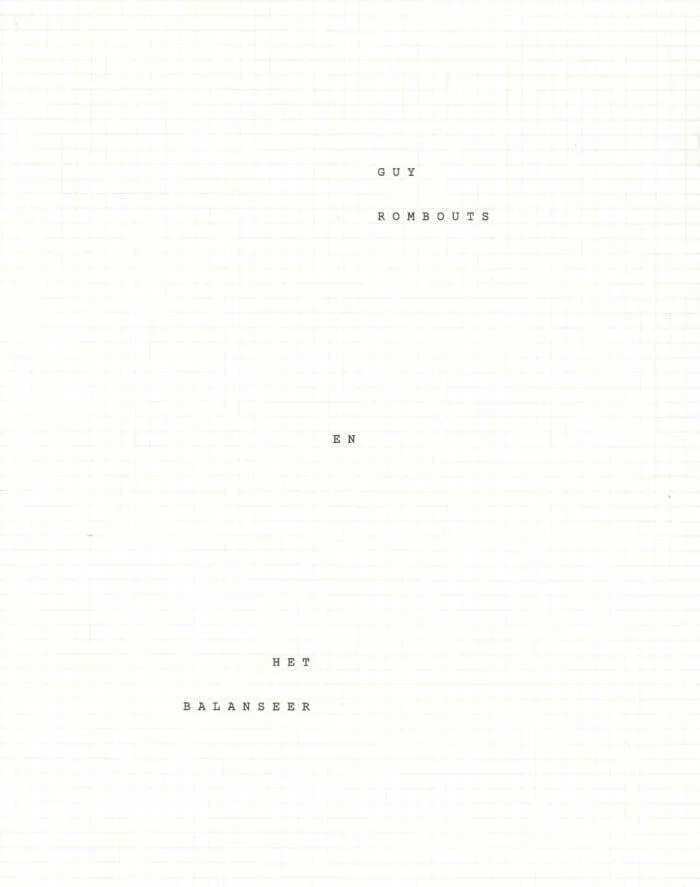
EN

Guy Rombouts

Poetry €25.00

In het begin van de jaren 1970, hield Guy Rombouts een notaboekje bij waarin hij alle woorden, bijvoeglijk naamwoorden en werkwoorden bijhield die hij tegenkwam tijdens het lezen en die met elkaar verbonden waren door het voegwoord ‘en‘.

Ongeveer 50 jaar later en met de hulp van de grafische vormgever Jeroen Wille, is de transcriptie van zijn aantekeningen gepubliceerd als een boek dat gelezen kan worden in twee richtingen (en als enige boek coronaproof met twee tegelijkertijd).

Het boek bevat 2158 verzen met in totaal 4316 EN-combinaties.

De kortste verzen met evenveel letters:

A EN Z

4 EN 6

De langste verzen met evenveel letters:

ONUITSPREKELIJKHEDEN EN IMPONDERABILIA

ONEVENWICHTIGHEID EN ZELFOVERSCHATTING

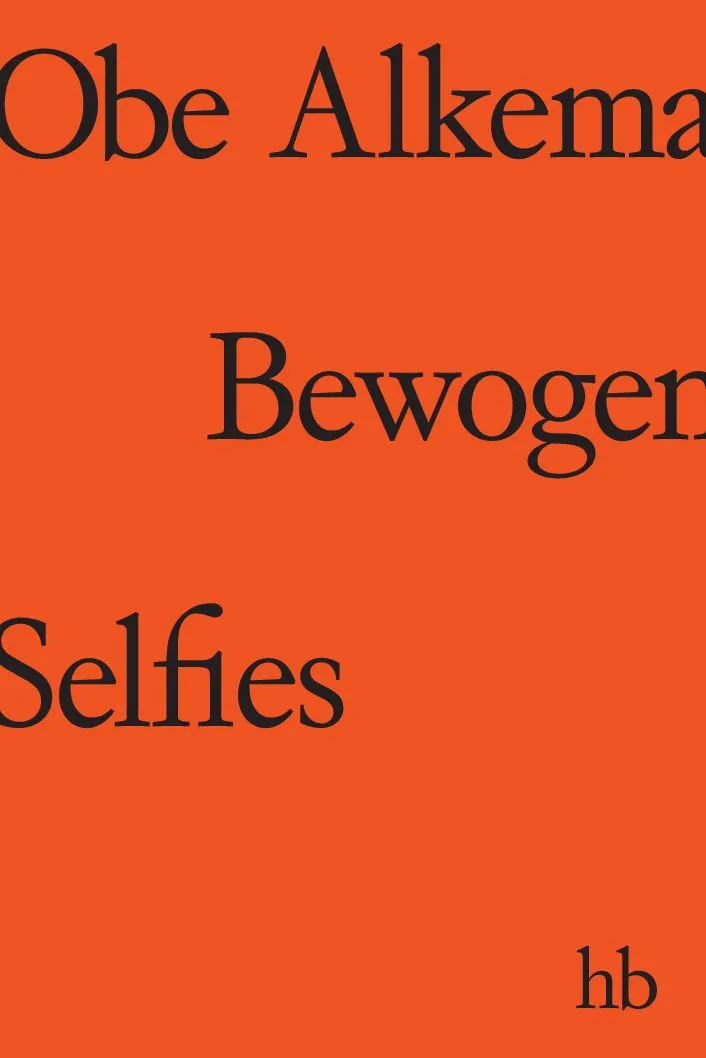
Cover of Bewogen selfies

het balanseer

Bewogen selfies

Obe Alkema

Poetry €24.50

In Bewogen selfies onderzoekt Obe Alkema de verhouding tussen landschap en herinnering. Wat treft hij aan bij terugkeer naar belangrijke plaatsen uit zijn geheugen? Wat herinnert hij zich niet, maar Google wel? Is er een gedenkschrift te puren uit zijn metadata?

Memoires, rechtstreeks verteld en met omwegen, uit eerste hand en van horen zeggen. Archieven en herinneringen eisen spreektijd, houden het niet meer droog of worden tot spreken gebracht. Wat hebben ze eigenlijk te melden? Ze lopen helemaal leeg, net als Alkema zelf. Een leven zoals zovele, poedelnaakt en geretoucheerd, vol zin en onzin.

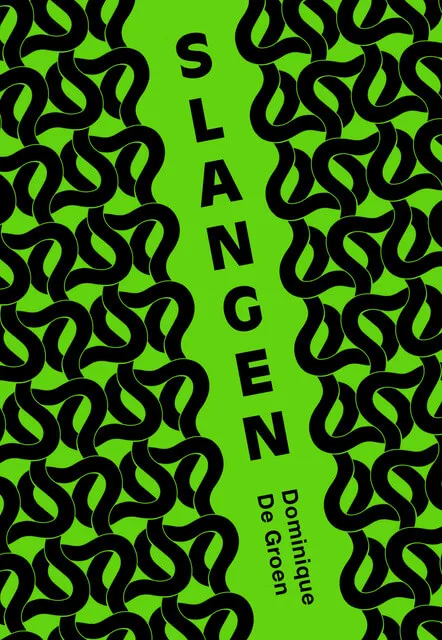
Cover of Slangen

het balanseer

Slangen

Dominique De Groen

Poetry €19.50

Slangen krioelen in de sarcofaag van het heden, in de krochten van de popcultuur, in de mummie van de natuur, in wondes en rot vlees, in artificiële woestijnen en op geoliede dad bods. Ze wentelen zich rond beursgrafieken, raken verstrengeld met wurgende algoritmes, orkestreren een trage ondergrondse revolutie. Een meisje snijdt zich aan een nepdiamanten piramide en werpt haar slangenvel van zich af.

Dominique De Groen is schrijver en beeldend kunstenaar. Ze publiceerde de dichtbundels Shop Girl (2017), Sticky Drama (2019) en offerlam (2020). Ze werd genomineerd voor de Poëziedebuutprijs Aan Zee 2018, de Herman de Coninckprijs 2020 en de Fintroliteratuurprijs 2021 en won de Frans Vogel Poëzieprijs 2019 en de Fintropublieksprijs 2021.

Cover of OEI #86/87 Publishing Practices, Publishing Poetics

OEI editör

OEI #86/87 Publishing Practices, Publishing Poetics

Tobi Maier, Cecilia Grönberg and 1 more

Once more, an astonishing issue of OEI – a thrilling, compelling, stimulating feast of ideas regarding publishing and the book: the perfect big companion to read and hug in bed while the virus spreads outside.

Bringing together contributions from circa 130 publishing structures, publishing communities, magazines, small press endeavors, artists, poets, writers, editors, theoreticians, curators, scholars, and art bookstores, OEI # 86–87 reflects upon the challenges, pressures and possibilities of publishing and creating publics in different contexts and places in a time of far-reaching – economical, medial, political, social, technological – transformations.

The potential and the versatility of publishing open it to a diversity of practices and approaches in the arts, but as an eminently social form of art, a collective or micro-collective work with shared responsibilities, it is also a never-ending process of “crafting a variegated approach to how you create, publish, distribute, and build a social ecosystem around your efforts”, of trying to “build up and strengthen the community around these printed forms” (Temporary Services).

It is the conviction of OEI #86–87 that print has the power to play an important part in the construction of social spaces, of a social world. As Benjamin Thorel puts it in one of the essays in the issue, “conceiving of the dynamics of publishing as making publics as well as making things public is not a pun – insofar as the artists/publishers encompass, beyond the book itself, its possible ‘lives’, imagining the different spaces, and the different people, amongst whom a publication will circulate.” This is what Michael Warner has called “a public [as] poetic worldmaking”, implying “that all discourse or performance addressed to a public must characterize the world in which it attempts to circulate, projecting for that world a concrete and livable shape, and attempting to realize that world through address.”

This is also, as stressed by Annette Gilbert and others, what can make publishing such an active force, a force co-constituting texts and publications and publics. Indeed, with Michalis Pichler, it is tempting to say that in publishing as practice – perhaps more than in any other art field – “artists have been able to assert the aesthetic value of their own socio-politically informed concerns and to engage, often under precarious conditions, in cultural activities fully aligned with their political values.”

OEI #86–87 also includes sections on and with contemporary poetry from Canada; Fluxus publishing; Krister Brandt/Astrid Gogglesworth; Kalas på BORD (Öyvind Fahlström); Lars Fredrikson; Claude Royet-Journoud’s poetry magazines; Carl Einstein; Gail Scott; Ållebergshändelser; OEI #79: edit/publish/distribute!; “det offentligas försvinnande” and many many other things. [publisher’s note]

Design by Konst & Teknik

Cover of Nilling

Book*hug Press

Nilling

Lisa Robertson

Poetry €18.00

NILLING: PROSE is a sequence of five loosely linked prose essays about noise, pornography, the codex, melancholy, Lucretius, folds, cities and related aporias: in short, these are essays on reading.

"I have tried to make a sketch or a model in several dimensions of the potency of Arendt's idea of invisibility, the necessary inconspicuousness of thinking and reading, and the ambivalently joyous and knotted agency to be found there. Just beneath the surface of the phonemes, a gendered name rhythmically explodes into a founding variousness. And then the strictures of the text assert again themselves. I want to claim for this inconspicuousness a transformational agency that runs counter to the teleology of readerly intention. Syllables might call to gods who do and don't exist. That is, they appear in the text's absences and densities as a motile graphic and phonemic force that abnegates its own necessity. Overwhelmingly in my submission to reading's supple snare, I feel love."

Cover of A4 review N°3

Littérature Supersport

A4 review N°3

Marjolein Guldentops, Ahmed Saleh and 2 more

Poetry €4.00

Founded in 2023, A4 is a poetry review which showcases and explores contemporary writings practices. Run by Littérature Supersport collective, the object is seen as the extension of their events. The review takes the form of 4 postcards which, when placed side-by-side, form an A4-sheet. A light (even precarious) format for literature that slips into the back pocket of pants and hangs on fridge doors. Each issue features unpublished texts by 4 authors. Wrapped in colors, A4 is distributed by post and available in good bookshops, in Brussels, Liège, Paris and Marseille. 

This third issue presents texts by : Lila Maria de Coninck, Gabriel Gauthier, Marjolein Guldentops & Ahmed Saleh.

Ahmed Saleh (born 1998) is a Palestinian writer and poet from Gaza. He studied business administration and political science and is currently living  in Brussels. Ahmed writes articles in Arabic and English, several of which have been published on various platforms. 

Marjolein Guldentops (Belgium, 1994) is a visual artist, author, and performer. Her artistic practice spans various mediums, including text, video and performance. Rooted in the concept of worlding, her work explores the urban rhythms, flows, and semantics that shape perceptions of space and language in both physical and metaphysical senses.

Gabriel Gauthier is a graduate of the Beaux-arts in Paris. He writes books, performs and makes music. He has published Simurgh & Simorgh and Contra at Théâtre Typographique (2016, 2024) and Speed at Vies Parallèles (2020). He has designed pieces at the border of dance and visual arts (Cover, Rien que pour vos yeux). Space, his first novel, was published by Corti.

Lila Maria de Coninck (2004) is a Belgian creator living in The Hague. She makes music, theatre and writes poetry. The guiding principle in her works is the use of multilingualism and miscommunication to promote creativity in her mother tongue, Dutch.

Cover of The Sunflower

Nightboat Books

The Sunflower

Jackie Wang

Poetry €17.00

Jackie Wang's magnetic and spellbinding debut collection of poetry that attempts to speak in the language of dreams.

The poems in The Sunflower Cast A Spell To Save Us From The Void read like dispatches from the dream world, with Jackie Wang acting as our trusted comrade reporting across time and space. By sharing her personal index of dreams with its scenes of solidarity and resilience, interpersonal conflict and outlaw jouissance, Wang embodies historical trauma and communal memory. Here, the all-too-familiar interplay between crisis and resistance becomes first distorted, then clarified and refreshed. With a light touch and invigorating sense of humor, Wang illustrates the social dimension of dreams and their ability to inform and reshape the dreamer's waking world with renewed energy and insight.

Jackie Wang is a student of the dream state, black studies scholar, prison abolitionist, poet, performer, library rat, trauma monster and PhD candidate in the Department of African and African American Studies at Harvard University, specializing in race and the political economy of prisons and police in the United States. She is the author of a number of punk zines including On Being Hard Femme, as well as a collection of dream poems titled Tiny Spelunker of the Oneiro-Womb. In 2018 she published a book, titled Carceral Capitalism on the racial, economic, political, legal, and technological dimensions of the US carceral state. She is currently an Arleen Carlson and Edna Nelson Graduate Fellow at the Radcliffe Institute for Advanced Study.