rile*books

Search books

Search books by title, author, publisher, keywords...

Cover of Telephone

Wonder

Telephone

Ariana Reines

€18.00

"There are phone lines to the living and others for calling the dead. TELEPHONE by Ariana Reines is a network for riveting acts of speech, and silence, and listening. I saw the play and never forgot it. The audience was lit like a switchboard by its storms of courage and mystical love."—Rachel Kushner

"TELEPHONE is an uncanny parcel of theater in which the wishes of humans to speak with the dead meet the limits or the aspirations of technology. A woman wrapped in language is deemed insane and the lonely pastness of our present walks around calling for itself. TELEPHONE is a whild and visionary piece of art that announced to me a poet who is always tearing the future open like a trapped animal—their eyes reflect us. Don't look! We mus. Bless you and love you Ariana for this great work."—Eileen Myles

"I have been WAITING FOR THIS BOOK! When I saw it in the theater every word motion fell into magic stride utterly taxing the soul with its accuracy and mystery. The next night I was at the box office with a different friend and needed to return to my job is the only thing that kept me from the theater a third night. Examine for yourself the bewitching and sometimes misshapen communicative powers of life with the poetry goddess of the stage, Ariana Reines!— CA Conrad

"TELEPHONE, the inspired and utterly original new tone poem of a play, probes feelings with the sensitivity and detachment of a heart surgeon."—Ben Brantley, The New York Times

Published in 2018 ┊ 122 pages ┊ Language: English

recommendations

Cover of Cunt Norton

Tender Buttons Press

Cunt Norton

Dodie Bellamy

Poetry €18.00

In CUNT NORTON, the sequel to her unforgettable CUNT UPS, Dodie Bellamy "cunts" The Norton Anthology of Poetry (1975 edition), setting her text-ravenous cut-ups loose to devour the canonical voices of English literature. The texts that emerge from this sexual-linguistic encounter are monstrous, beautiful, unashamed: 33 erotic love poems ("the greatest fuck poem in the English language," according to Ariana Reines) that lust after the very aesthetic they resist. "These patriarchal voices that threatened to erase me—of course I love them as well," Bellamy writes. Even as CUNT NORTON dismembers the history of English poetry, "cunting" Chaucer and Shakespeare, Emerson and Lowell, it simultaneously allows new sexual members to arise and fill in the gaps, transforming the secret into the explicit, the classically beautiful into the wonderfully grotesque. Bellamy's cunted texts breathe life into literary "masters" with joy, honesty, hilarity, and insatiable passion.

Cover of Tongue Ring: Issue 01

Tongue Ring

Tongue Ring: Issue 01

Aodhan Madden, Claire Star Finch

Poetry €13.12

Oh oh this is the first issue of Tongue Ring, a journal of experimental writing in English & French, with original contributions and translations of texts* by Ariana Reines*, CAConrad*, Camille Kingué, Kaur Alia Ahmed*, Rafael Moreno, Taos Bertrand, and Théo Robine-Langlois*. 

Vous voyez, c’est ça mon genre. Je ne sais pas ce que c’est. 
Mais c’est mon genre. J’ai cet esprit en moi—qui est très ému
par la féminité. Je pourrais me mettre à pleurer. Je veux poser
mon manteau par terre pour la laisser marcher dessus
—Ariana Reines

Premier numéro de la nouvelle revue fantastique et bilingue (FR + EN) d’écriture expérimentale Tongue Ring, avec des contributions originales ainsi que des traductions* de textes de Ariana Reines*, CAConrad*, Camille Kingué, Kaur Alia Ahmed*, Rafael Moreno, Taos Bertrand, and Théo Robine-Langlois*. 

Cover of The Rose

Graywolf Press

The Rose

Ariana Reines

Poetry €17.00

Drawing on the history of “romance” as the troubadours knew it and the titular flower’s ancient allegories for sexuality and mystery, Reines plunges into feminine archetypes to explore masculine pain: “I have always liked helpless / & terrible men because they break my mind.” In these poems, inherited ideologies of gender performance are replaced with bold vulnerability: paradoxes of power and surrender transmute the speaker’s understanding of suffering, desire, and the soul.

The voice in The Rose is wry and bare, approaching the connection between erotic love and spirituality with humor. Investigating war, maternity, violent sensuality, and the role of language in magical acts, Reines is unafraid to uncover the “secret / & terrible shovelings / Of love,” and the result is a bloody and pulsing, sexy and unabashed bloom.

Cover of Coeur de Lion

Fence Books

Coeur de Lion

Ariana Reines

Poetry €16.00

A reissue of the instant cult-classic love poem, an investigation of poetic address.

Now that I am not addressing you
But the "you" of poetry
I am probably doing something horrible and destructive.
But this "I" is the I of poetry
And it should be able to do more than I can do.

Cover of Wave of Blood

Divided Publishing

Wave of Blood

Ariana Reines

Essays €16.00

Is it the computerization of the planet
Or a loosening of my fidelity to suffering
I don’t understand the intensity
I’ve hidden here but I know I despaired
Of finding a physical place to keep
My tears. Now what. Seas that go turquoise
When you stop looking at them . . .
 
Wrestling with the mind of war, at times shocking in its self-analysis, Wave of Blood is a furious and sincere essay, an eclipse notebook, a family chronicle, all told in the poetry of witness.

Praise for Ariana Reines:

Ariana Reines is a go-for-broke artist who honors her traditions by being like no one else. Some of us have made a fetish of our stupidity, pretending to forget history, and some of us have made a fetish of despair, congratulating ourselves on melancholia, but Ariana is too brilliant and too alive for either of those sad luxuries... I am convinced of the authenticity of the summonses she receives and the summonses she issues and when I read her I am reminded that all of this is a calling before it's an identity or career. Her voice-which is always more than hers alone is a dialectic between the very ancient and the bleeding edge. - Ben Lerner

Reines's books are works of intellectual commitment and structural sophistication; at the same time, they allow the raw stuff of being, in all its messiness, to enter the page. -The White Review

Mind-blowing. - Kim Gordon

Her writing is queer and raunchy, raw and occult, seemingly never pulling away from her deepest vulnerabilities. Yet Reines simultaneously maintains a feeling of epic poetry, of ancient intention. She moves between worlds in search of the divine and the self. - The New York Times

These are the kinds of poems that reorient you in the world, make you understand how little you know, but how much is inside you. - NYLON

Cover of Comeback Death

Krupskaya Books

Comeback Death

Jennifer Soong

Poetry €21.00

Comeback Death, Jennifer Soong's third book, weaves its registers of what Soong names as "dread, gender, sarcasm, sublimation of pain, fruit, ambition, and fecundity" through an English which is not only polyvocal but uncannily porous. Its languages (English, Russian, German, ancient Greek) underscore a perverse pastoral range that somehow bridges Oxford, New Jersey, and Lesbos. With a ferocity both musical and analytic, Soong's third book offers an unprecedented set of tonalities for immense architectures of feeling.

"In Comeback Death, Jennifer Soong dramatizes one of the key problems of our time, and indeed any time, which is how to reorganize the (negative) affects structuring intersubjectivity and thus conditioning our capacity to act in a common interest among others."—Thom Donovan

Cover of Gay Pompeii 79 A.D.

GenderFail

Gay Pompeii 79 A.D.

Legacy Russell

Poetry €20.00

With her debut chapbook, award-winning author and curator Legacy Russell returns to poetry with her GAY POMPEII, a collection of lyric poems that begin at the end of the world.

Rising out of Russell's 2022-2023 Digital Fellowship for Pompeii Commitment. Archaeological Matters, the first long-term, contemporary art programme established by the Archaeological Park of Pompeii, the author and curator explores ash, filth, dirt, and decay, intersectional with the fetishistic mythos of Pompeii and its destruction in 79 CE by the eruption of Mount Vesuvius. Pompeii today is a UNESCO World Heritage Site that receives over two million visitors per year to view its archeological excavation. Russell puts the mass voyeurism, sensation, extraction, and loss of Pompeii—a devastating moment frozen in time—to work. In GAY POMPEII, the site becomes a device with which Russell unspools birth, death, genocide, visual culture, and space-time. The title of this compilation underscores the essence and demand of capitalism: to be carefree in the face of looming extinction. Russell's GAY POMPEII is a selfie taken at the edge of catastrophe and a polyphonic elegy.

Legacy Russell (born 1986 in New York City) is a curator and writer. She is the Executive Director & Chief Curator of the experimental arts institution The Kitchen. Formerly she was the Associate Curator of Exhibitions at The Studio Museum in Harlem. Russell holds an MRes with Distinction in Art History from Goldsmiths, University of London with a focus in Visual Culture. Her academic, curatorial, and creative work focuses on gender, performance, digital selfdom, internet idolatry, and new media ritual. Russell's written work, interviews, and essays have been published internationally.

Cover of The Letters of Douglas Oliver and J. H. Prynne

The Last Books

The Letters of Douglas Oliver and J. H. Prynne

Joe Luna

Poetry €25.00

Douglas Oliver (1937–2000) and J. H. Prynne (b. 1936) are two of the most original and ambitious poets of the contemporary era. Eschewing the conservativism of mainstream postwar British verse and embracing influences from America and Europe, each developed their craft through continuous correspondence and exchange as part of the febrile scene of poetical community and contestation that emerged in Cambridge in the 1960s. Their works over the following decades exhibit frequent shifts in form and style, from Prynne’s radical transformation and dispersal of the lyric tradition to Oliver’s adaptation of dream visions and medieval-inspired verse satires.

Their letters are a record of both the high stakes and playful experiments that constitute the writing lives of two singular poets determined not just to engage with modern political and social life during decades of crisis and upheaval, but to contribute through the circulation and publication of poetry to what Oliver calls “a community of political ethic.” Over the course of more than thirty years of friendship and mutual appreciation, the motivations for, and consequences of, their poems are constantly worked through, tested out, evaluated, and contradicted, always with a view to what the poetry means for the other, for the poetical communities they inhabit, and for the life of poetry itself.

This volume collects for the first time the majority of Oliver and Prynne’s correspondence, allowing new insights into the literary, political, and historical contexts of their lives and writing. An introduction, notes, and appendices provide a scholarly apparatus to situate Oliver and Prynne among the poets and publishers with whom they worked and socialized, and to identify and expand upon their frequent references to an enormous range of source material and reading matter.

“The correspondence between J. H. Prynne and Douglas Oliver is gripping and illuminating, brilliantly edited and completely absorbing. Two great poetic intelligences respond to each other’s work and to the society around them, thinking through the issues at stake in their poetic practice, their differences in approach, the different worlds they inhabit, their shared commitment to writing poetry and their admiration of each other’s work. The letters, complex as their matter can be, repay repeated reading; taken together, over a period of 33 years, they chart the context and creation of some of the most significant work in late twentieth-century poetry. This is an utterly engaging volume, and should be read by anybody interested in poetry and its place in the contemporary world.”—Ian Patterson

“For writers who welcome each other as peers, the exchange of letters is the spontaneous moment of exposure, the drawing out of selves. It is thinking in mutuality. In this thoughtfully edited and carefully, even beautifully, presented correspondence between Douglas Oliver and J. H. Prynne, two of the preeminent poets of the ‘British Poetry Revival’ of the post-World War II generations, we witness two writers of immense gifts thinking with each other, coming alive to thought and, ultimately, a shared world or community of wish. There is life, there is death; there is grief, there is anger – and love – but always there is a seeking, an attempt to arrive at a language for our worlds. Henceforth, one cannot imagine reading the work of either Oliver or Prynne without this correspondence and all that it offers in openings onto what Oliver himself saw as ‘the poet’s full performance [which] is the whole life’s work.’ It is a glimpse into an athanor of poetic creation.”—Michael Stone-Richards

Cover of I have brought you a severed hand

Divided Publishing

I have brought you a severed hand

Ghayath Almadhoun, Catherine Cobham

Poetry €15.00

Fluid and unselfconscious, Ghayath Almadhoun writes love poems in the shape of nightmares: I have brought you a severed hand is a surreal mix of absurd humour, heteroerotic lust and dead seriousness. Caught between two exiles, the one inherited from his Palestinian father and the one he chose and lives, Almadhoun attempts to explain water and tame hope.

This book never misses the defiant beat of an exile’s haunted footing across wars, seas and memory. Almadhoun turns the genocidal logic of colonialism upside down, emptying out the crumbs of humanity and civilisation. —Don Mee Choi

Almadhoun uses every possible means of silence to make the total devastation palpable. —Alfred Schaffer

Many poets attempt to traverse the gulf between the experience of tragedy and the ability to relay its magnitude to anyone else. But few living have done it with such flourish, such sustained passion and formal precision as Ghayath Almadhoun. —Kaveh Akbar

Ghayath Almadhoun (born 1979, Damascus) is a Syrian-Palestinian poet who moved to Sweden in 2008. He has published five collections of poetry in Arabic, the latest being Adrenalin (Almutawassit, 2017) and I have brought you a severed hand (Almutawassit, 2024). In 2017, Adrenalin was translated into English by Catherine Cobham and published by Action Books. In 2023, Almadhoun curated, edited and translated the poetry anthology Kontinentaldrift: Das Arabische Europa (Verlag Das Wunderhorn and Haus für Poesie), which includes thirty-one Arabic poets living in Europe. The English translation of I have brought you a severed hand is published simultaneously by Divided in the UK and Europe and by Action Books in the USA. Almadhoun currently lives between Berlin and Stockholm. His work has been translated into nearly thirty languages.

Catherine Cobham taught Arabic language and literature at the University of St Andrews, Scotland, for many years and was head of the department of Arabic and Persian from 2011 until 2021. She has translated the work of a number of Arab writers, including poetry by Adonis, Mahmoud Darwish, Ghayath Almadhoun, Tammam Hunaidy and Nouri al-Jarrah, and novels and short stories by Yusuf Idris, Naguib Mahfouz, Hanan al-Shaykh, Fuad al-Takarli and Jamal Saeed. She has written articles in academic journals and co-written with Fabio Caiani The Iraqi Novel: Key Writers, Key Texts (Edinburgh University Press, 2013).

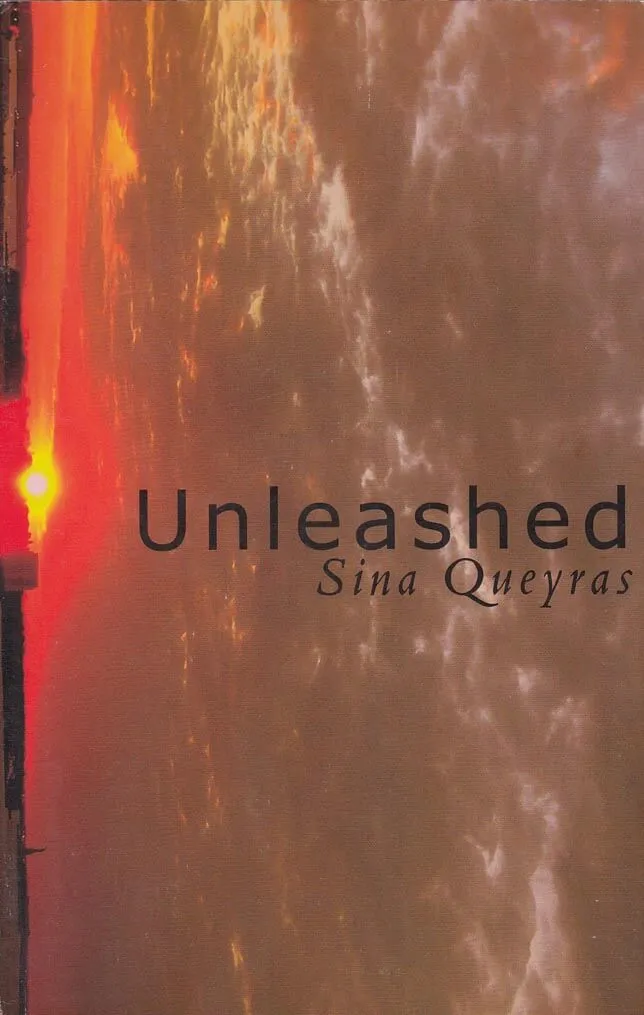
Cover of Unleashed

Book*hug Press

Unleashed

Sina Queyras

Poetry €20.00

05/09/04 Now she is blogging. Now she is sitting on the black couch listening to the sirens wail and the rain fall. Now she is thinking of oysters. Now she is wondering why this is worth sharing. Now she is thinking, how decipher what is worth reading? Who is to say? Sifters. She thinks we have become a nation of sifters. So began a three-year experiment in blogging. An experiment begun for many reasons—a way for an expat to keep in touch with fellow Canadian writers and artists, a way to come to terms with the increasing relevance of the internet in literary lives, and a way to figure out why, after decades of gains, women writers are still grossly underrepresented in critical dialogues.

With an afterword by Vanessa Place.