rile*books

Search books

Search books by title, author, publisher, keywords...

Cover of Polyamorous Love Song

Book*hug Press

Polyamorous Love Song

Jacob Wren

€23.00

From interdisciplinary writer and performer Jacob Wren comes Polyamorous Love Song, a novel of intertwined narratives concerning the relationship between artists and the world. Shot through with unexpected moments of sex and violence, readers will become acquainted with a world that is at once the same and opposite from the one in which they live. With a diverse palette of vivid characters - from people who wear furry mascot costumes at all times, to a group of New Filmmakers that devises increasingly unexpected sexual scenarios with complete strangers, to a secret society that concocts a virus that only infects those on the political right - Wren's avant-garde Polyamorous Love Song (finalist for the 2013 Fence Modern Prize in Prose) is great.

Language: English

recommendations

Cover of Nilling

Book*hug Press

Nilling

Lisa Robertson

Poetry €18.00

NILLING: PROSE is a sequence of five loosely linked prose essays about noise, pornography, the codex, melancholy, Lucretius, folds, cities and related aporias: in short, these are essays on reading.

"I have tried to make a sketch or a model in several dimensions of the potency of Arendt's idea of invisibility, the necessary inconspicuousness of thinking and reading, and the ambivalently joyous and knotted agency to be found there. Just beneath the surface of the phonemes, a gendered name rhythmically explodes into a founding variousness. And then the strictures of the text assert again themselves. I want to claim for this inconspicuousness a transformational agency that runs counter to the teleology of readerly intention. Syllables might call to gods who do and don't exist. That is, they appear in the text's absences and densities as a motile graphic and phonemic force that abnegates its own necessity. Overwhelmingly in my submission to reading's supple snare, I feel love."

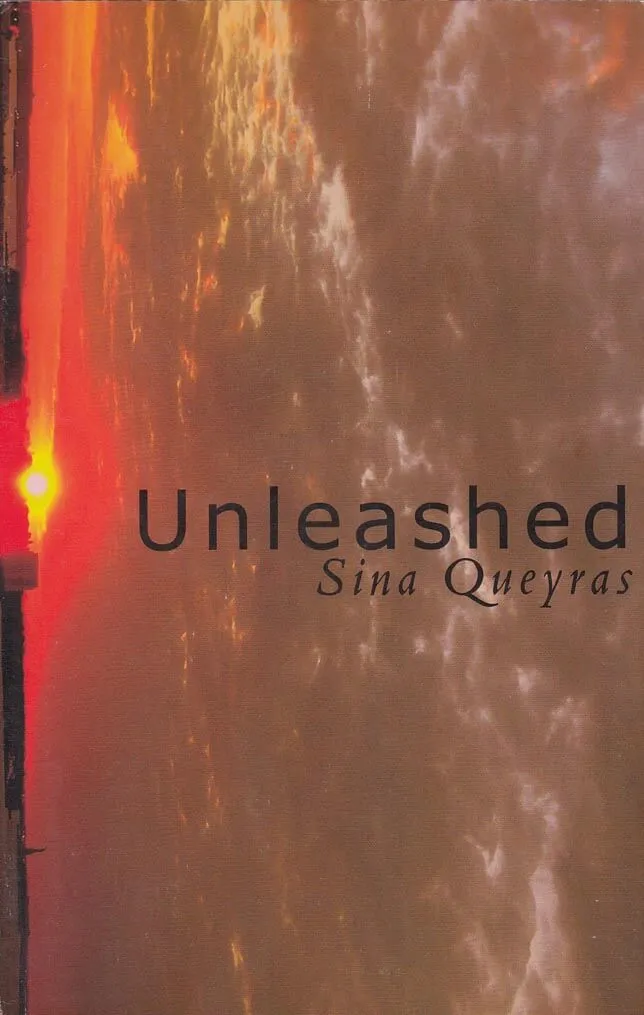
Cover of Unleashed

Book*hug Press

Unleashed

Sina Queyras

Poetry €20.00

05/09/04 Now she is blogging. Now she is sitting on the black couch listening to the sirens wail and the rain fall. Now she is thinking of oysters. Now she is wondering why this is worth sharing. Now she is thinking, how decipher what is worth reading? Who is to say? Sifters. She thinks we have become a nation of sifters. So began a three-year experiment in blogging. An experiment begun for many reasons—a way for an expat to keep in touch with fellow Canadian writers and artists, a way to come to terms with the increasing relevance of the internet in literary lives, and a way to figure out why, after decades of gains, women writers are still grossly underrepresented in critical dialogues.

With an afterword by Vanessa Place.

Cover of The Men

Book*hug Press

The Men

Lisa Robertson

Poetry €16.00

The Men explores a territory between the poet and a lyric lineage among men. Following a tradition that includes Petrarch's Sonnets, Dante's work on the vernacular, Montaigne, and even Kant, Robertson is compelled towards the construction of the textual subjectivity these authors convey-a subjectivity that honors all the ambivalence, doubt and tenderness of the human. Yet she remains angered by the structure of gender these works advance, and it is this troubled texture of identity that she examines in The Men.

Cover of Charismatic Spirals

Isollari

Charismatic Spirals

Will Alexander

Fiction €20.00

Charismatic Spirals is for an America circa 2024, where poetry—the art of developing new means of speaking—has never been of such artistic, technological and political consequences.

An archetypal outsider, Will Alexander released his first poetry collection aged forty-four while working at the Los Angeles Lakers' ticket office. Three decades on, he has ascended to the legendary status of the city's great living surrealist, existing, as Eliot Weinberger wrote, in a state of "imaginal hyperdrive," with forty such collections to his name.

Operating at the edge of language, Alexander deploys words in a way that feels prophetic—human psyches synthesize with technological artifacts; atoms and archetypes collide; bodies are vacated, voices are newly incarnated. His America—like Glissant's—is multinational and—like Coover and Spiegelman's—multivalent and symbolically unstable. That is to say, he belongs to an America circa 2024, where poetry—the art of developing new means of speaking—has never been of such artistic, technological, and political consequence.

In doing so, Alexander draws from a vast array of influences, from luminaries like Aimé Césaire, Bob Kaufman, Andre Breton, Antonin Artaud, and Philip Lamantia, to holistic visions such as Sri Aurobindo's Integral Yoga, the Mayan numerical system, and Cheikh Anta Diop's perspectives on ancient Egypt. In a preview of Charismatic Spirals in the New York Times, Anne Boyer captured the essence of his work: "visionary poetry [that] achieves its effect through sound, not image...Cadence [that] can shatter us, set the world ablaze."
Read it syllabically, surf it quickly—there is no single way to approach this work.

Will Alexander (born 1948 in Los Angeles) is an African-American artist, philosopher, poet, novelist, essayist and pianist.

Cover of Across the Acheron

Winter Editions

Across the Acheron

Monique Wittig

LGBTQI+ €20.00

In her darkly funny 1985 take on Dante’s Divine Comedy, acclaimed French writer and activist Monique Wittig restages the journey through the circles of hell, limbo, paradise from a lesbian feminist perspective. 

Never-before published in the US, Across the Acheron follows the adventures of “Wittig” and her anti-Virgilian guide through laundromats, billiard parlors, dyke bars, and picnic grounds of a 1980s San Francisco populated by hunters and their prey, lost souls, and fantastical beasts, including a robotic eagle and angelic bikers. Wittig reimagines Dante’s epic poem through a feminist and queer lens, subverting his cosmological order and upending gender identities and literary traditions. This edition brings the English translation of Wittig’s final novel back into print for the first time since the early-1990s, revised according to the author's notes, and with a new introduction by Sophie Lewis.

Across the Acheron is a work of lesbian struggle and triumph across two kinds of hell. The hell of the classic western literary canon—and the hell of San Francisco. Monique Wittig brings all of her writerly powers and political experience to bear here, as witness to the horrors of heterosexual patriarchy and also to the possibility of another world for another life. Her work is a rare combination of deeply felt materialism and radical linguistic freedom. If we're to have another world, we'll need to create another language. She knew that, and she lived it.” McKenzie Wark

“Even in fiction Monique Wittig’s writing is critical, prescient, brilliant, satirical, searing, and way ahead of its time. I’m so glad this work is back in circulation to revisit and revel in.” Pamela Sneed

“In this unendurable yet compelling journey through the circles of patriarchal hell, Wittig encounters hordes of tortured women who do not struggle against their oppressors. Their brainwashing is as difficult to witness as their bloodied flesh. Only through communal activism does the seeker’s soul becomes tough enough to enter Paradise, where bare-breasted angels dismount motorcycles and offer baskets of 'cherries, strawberries, raspberries, apricots, peaches, plums, tomatoes, avocados, green melons, cantaloupes, watermelons, lemons, pawpaws, pineapples and coconuts.’ The bounties of Across the Acheron are lush and many.” Dodie Bellamy

“A Guernica of the human (feminist) condition, a blacker, bleaker, more vengeful Alice’s tea party, this is a novel as graphic as a painting, whose brilliance its translators have creditably preserved.” Publishers Weekly

Introduction by Sophie Lewis
Translated by David Le Vay with Margaret Crosland

Cover of OEI #86/87 Publishing Practices, Publishing Poetics

OEI editör

OEI #86/87 Publishing Practices, Publishing Poetics

Tobi Maier, Cecilia Grönberg and 1 more

Once more, an astonishing issue of OEI – a thrilling, compelling, stimulating feast of ideas regarding publishing and the book: the perfect big companion to read and hug in bed while the virus spreads outside.

Bringing together contributions from circa 130 publishing structures, publishing communities, magazines, small press endeavors, artists, poets, writers, editors, theoreticians, curators, scholars, and art bookstores, OEI # 86–87 reflects upon the challenges, pressures and possibilities of publishing and creating publics in different contexts and places in a time of far-reaching – economical, medial, political, social, technological – transformations.

The potential and the versatility of publishing open it to a diversity of practices and approaches in the arts, but as an eminently social form of art, a collective or micro-collective work with shared responsibilities, it is also a never-ending process of “crafting a variegated approach to how you create, publish, distribute, and build a social ecosystem around your efforts”, of trying to “build up and strengthen the community around these printed forms” (Temporary Services).

It is the conviction of OEI #86–87 that print has the power to play an important part in the construction of social spaces, of a social world. As Benjamin Thorel puts it in one of the essays in the issue, “conceiving of the dynamics of publishing as making publics as well as making things public is not a pun – insofar as the artists/publishers encompass, beyond the book itself, its possible ‘lives’, imagining the different spaces, and the different people, amongst whom a publication will circulate.” This is what Michael Warner has called “a public [as] poetic worldmaking”, implying “that all discourse or performance addressed to a public must characterize the world in which it attempts to circulate, projecting for that world a concrete and livable shape, and attempting to realize that world through address.”

This is also, as stressed by Annette Gilbert and others, what can make publishing such an active force, a force co-constituting texts and publications and publics. Indeed, with Michalis Pichler, it is tempting to say that in publishing as practice – perhaps more than in any other art field – “artists have been able to assert the aesthetic value of their own socio-politically informed concerns and to engage, often under precarious conditions, in cultural activities fully aligned with their political values.”

OEI #86–87 also includes sections on and with contemporary poetry from Canada; Fluxus publishing; Krister Brandt/Astrid Gogglesworth; Kalas på BORD (Öyvind Fahlström); Lars Fredrikson; Claude Royet-Journoud’s poetry magazines; Carl Einstein; Gail Scott; Ållebergshändelser; OEI #79: edit/publish/distribute!; “det offentligas försvinnande” and many many other things. [publisher’s note]

Design by Konst & Teknik

Cover of How to Leave the World

Divided Publishing

How to Leave the World

Marouane Bakhti

Fiction €15.00

Everyone is asking about his identity. Gay? Muslim? French? Moroccan? Instead of choosing a side, he writes a book. A book about the forest and the city, Paris and Tangiers, shame and forgiveness, dating apps and spiritual discovery. A book about growing up as a diaspora kid in rural France, with desires that want to emerge at any cost. Told in mesmerising prose, How to Leave the World is a beautiful non-answer.

A rare book that depicts the isolation and poetry of rural life. — Annie Ernaux

What it takes to imagine social and physical freedom is what it meant to keep reading this incredible book. — Bhanu Kapil

Marouane Bakhti is a writer and arts journalist. Born in Nantes, France to a Moroccan father and a French mother, he studied history and journalism at the Sorbonne. He writes criticism for Mouvement magazine and lives in Paris. How to Leave the World is his first novel.

Lara Vergnaud is a literary translator of French and has translated over a dozen novels, including works by Zahia Rahmani, Fatima Daas, Mohamed Leftah and Mohamed Mbougar Sarr. Lara was born in Tunisia, grew up in the United States and currently lives in southern France.

978-1-7395161-3-0
21.6 x 13.9 cm
112 pp, paperback
September 2024

Cover of Everything for Everyone: An Oral History of the New York Commune, 2052-2072

Common Notions

Everything for Everyone: An Oral History of the New York Commune, 2052-2072

M.E. O'Brien, Eman Abdelhadi

Fiction €18.00

By the middle of the twenty-first century, war, famine, economic collapse, and climate catastrophe had toppled the world's governments. In the 2050s, the insurrections reached the nerve center of global capitalism—New York City. This book, a collection of interviews with the people who made the revolution, was published to mark the twentieth anniversary of the New York Commune, a radically new social order forged in the ashes of capitalist collapse.

Here is the insurrection in the words of the people who made it, a cast as diverse as the city itself. Nurses, sex workers, antifascist militants, and survivors of all stripes recall the collapse of life as they knew it and the emergence of a collective alternative. Their stories, delivered in deeply human fashion, together outline how ordinary people's efforts to survive in the face of crisis contain the seeds of a new world.