rile*books

Search books

Search books by title, author, publisher, keywords...

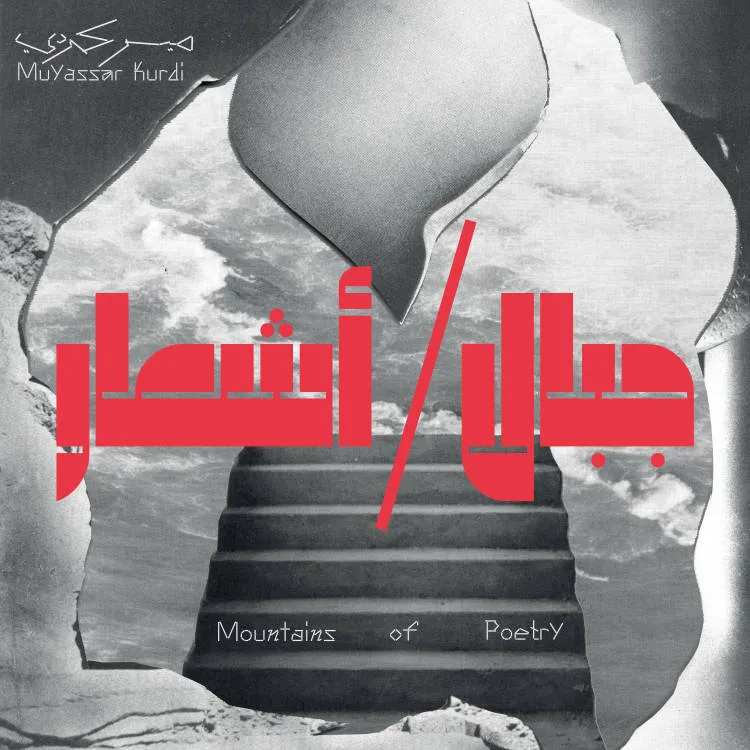
Cover of Mountains of Poetry (Limited Edition 12" Coloured)

Bilna'es

Mountains of Poetry (Limited Edition 12" Coloured)

Muyassar Kurdi

€35.00

Mountains of Poetry is a new 8-track studio album produced and developed by interdisciplinary artist Muyassar Kurdi. The album traces the entwined relations between one’s body and land, driven by a sense of urgency. Embedded in the earth, Kurdi imagines her body as a site for sonic excavation of memory and longing. The artist’s voice paired with electronic sound honors the ancient and the futuristic that together form a ritualistic reflection to navigate the tender space of remembering, forgetting and mourning. Departing from her usual emphasis on vocal abstraction, Kurdi turns to concrete words that punctuate the sonic landscape, gathering them into mountains of poetry.

Published in 2026 ┊ Language: English

recommendations

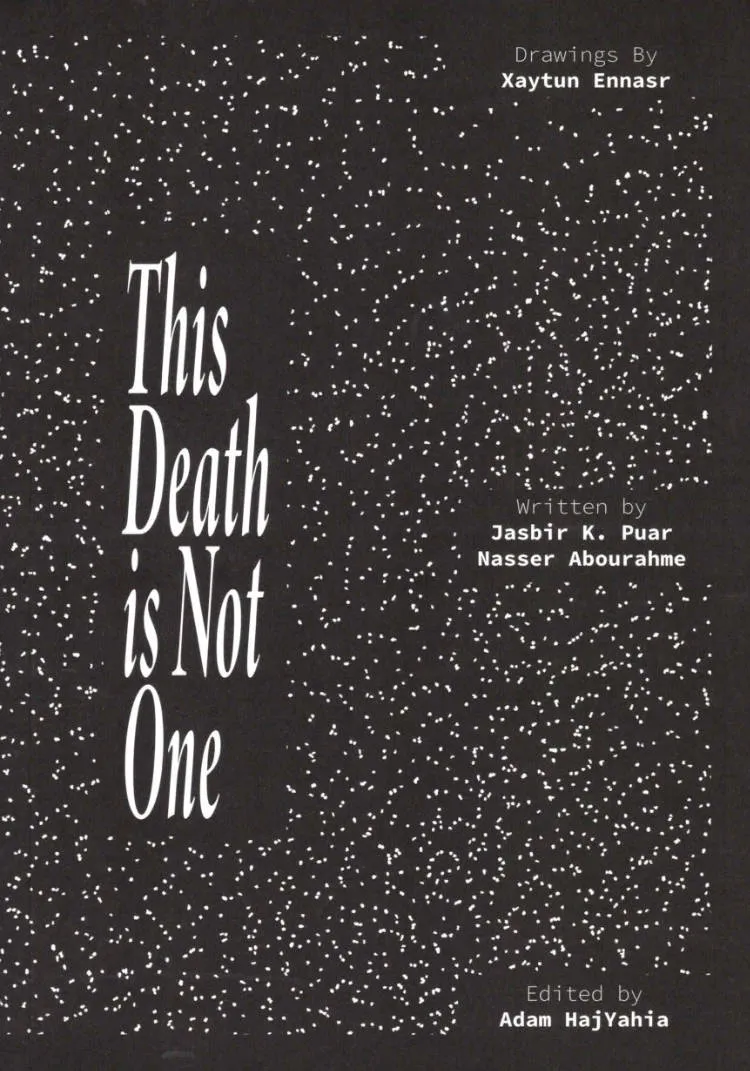
Cover of This Death is Not One

Bilna'es

This Death is Not One

Jasbir K. Puar, Nasser Abourahme and 1 more

Essays €20.00

The publication of The Right to Maim by Jasbir K. Puar in 2017 was critical to advancing studies on disability and to further articulating how the body figures in the nexus of capacity and debility across racializing and extractive neoliberal lines. It offered a complex and rigorous anti-capitalist account of disability that is useful to both scholarly work and political and social organizing. However, despite its paramount contribution to scholarship on Palestine, delivered by its scathing analysis of the Israeli biopolitical policy—its right to maim—in how the injured Palestinian body is produced and reproduced, its reception was difficult, and hard to stomach. It cohered a political logic in writing before it was visibly evident on the ground. In the moment and aftermath of the Great March of Return (2018-19), Puar’s offerings became much harder to ignore, as the event crystallized a mass maiming campaign of Palestinian protesters inside the edges of the militarized borders of Gaza.

The occasion of this publication by Bilna’es marks the first translation into Arabic of the chapter “Will Not Let Die”: Debilitation and Inhuman Biopolitics in Palestine, alongside the postscript of The Right to Maim. Not simply a reissue of previously published work or a translation, This Death is Not One includes a new preface from Jasbir K. Puar revisiting the right to maim from within this moment of genocide in Gaza that interrogates the new vectors of living and dying under settler-colonialism, and how maiming, in fact, speaks of extermination; an introduction by Nasser Abourahme reflecting on the book’s stakes in the present and its reception in the past, alongside searing analysis of genocide in excess of the law, and what this reveals and forecloses in how we understand the juridical body and militancy in the wake of Zionism; and original drawings by Xaytun Ennasr that inscribe a relation between land and body mapped through cosmological patterns tracing the relation between martyrs, who are referred to as moons, and the moon, a symbol for martyrdom in Palestine.

Jasbir K. Puar is Distinguished Faculty of Arts Professor in the Social Justice Institute at the University of British Columbia, Extraordinary Professor in the Women’s and Gender Studies Department at the University of the Western Cape in Cape Town, South Africa, and Professor Emerita at Rutgers University where she was faculty in the Women’s, Gender, and Sexuality Studies Department for 23 years. Puar is the author of the award-winning books: The Right to Maim: Debility, Capacity, Disability (2017), and Terrorist Assemblages: Homonationalism in Queer Times (2007).

Nasser Abourahme is a writer and teacher, and is currently assistant professor at Bowdoin College. He’s the author of The Time beneath the Concrete: Palestine between Camp and Colony (Duke University Press, 2025), which was awarded the 2025 Palestine Book Award.

Xaytun Ennasr is an artist and designer. She works across experimental video games, paintings, prints, ceramics, installations, and text. She often uses science fiction, folklore, and radical softness as affective tools for revolutionary cultural production, specifically Palestinian liberation and sovereignty. Her work often deals with questions of land, cartography, transness, gender, and the living environment.

Drawings by Xaytun Ennasr

Translation to Arabic:

“Living in Genocide” by Jasbir K. Puar, translated by The Archilogue

“Our names, our remains” by Nasser Abourahme, translated by The Archilogue

The Right to Maim, Chapter 4: “Will not let die: Debilitation and Inhuman Biopolitics in Palestine ” and the The Right to Maim Postscript by Jasbir K. Puar, translated by Bekriah Mawasi

Cover of YouYou Group – A li'nuage

newpolyphonies

YouYou Group – A li'nuage

Justine Maxelon, Will Holder

Performance €15.00

Handmade artist's book combining drawings, photographs, and archival materials. This publication reflects on the YouYou Group's ten-year journey and its evolving relationship with space. It marks a transitional moment from the group's long-term engagement with public space toward a growing understanding of spatiality and collective presence.

YouYou Group is a Belgian choir that specializes in what is known in Arabic as zaghareed. This trilling cry is used by women at weddings and festive occasions, but also at funerals. Youyou is the French name for zaghareed. Depending on the regional origin, it is also called kululu, tsahalulim, or irrintzi. It is a long, shrill tone that is modulated (by the throat, glottis, or rapid tongue movements) and can be heard from far away. Brussels artist Myriam Van Imschoot was one of the founders of this singing group.

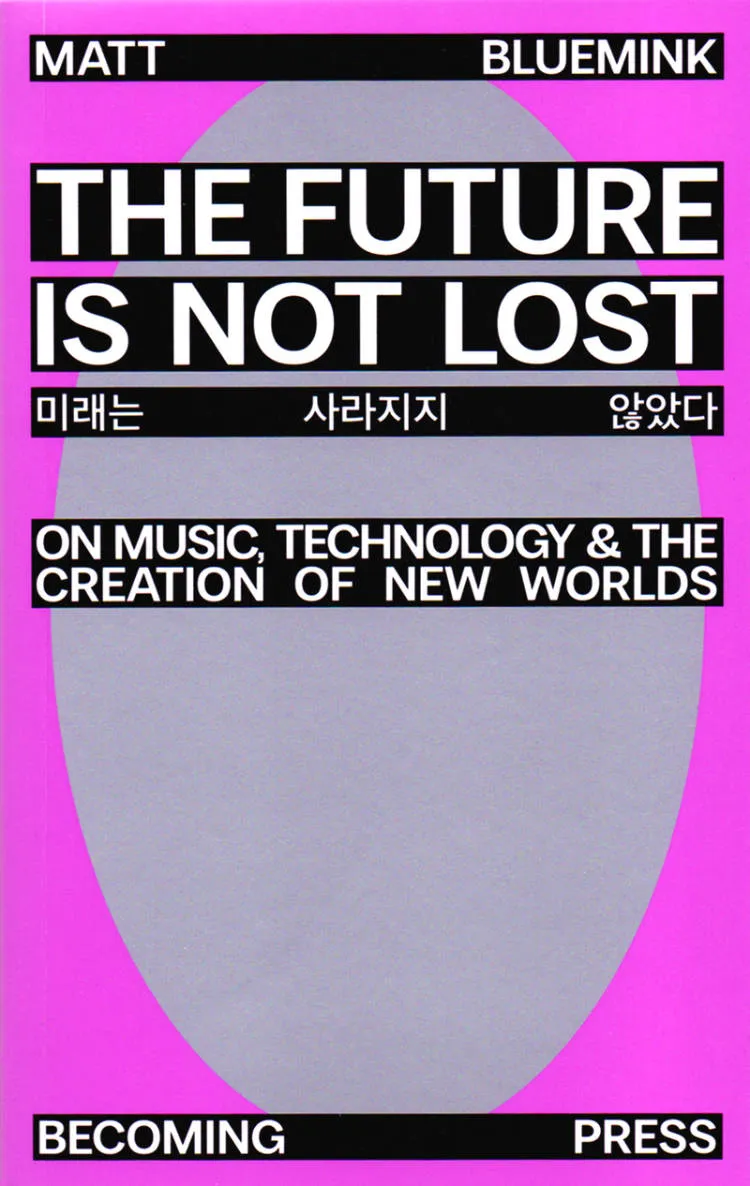
Cover of The Future is not Lost: On Music, Technology, and the Creation of New Worlds

becoming press

The Future is not Lost: On Music, Technology, and the Creation of New Worlds

Matt Bluemink, Alessandro Sbordoni

Mark Fisher taught a generation to hear the future's disappearance in contemporary music, as if the rhythm of the world was synchronised to the periodic flowering of new creative forms. His diagnosis was devastating: stagnation in music was akin to a venous insufficiency, or worse, some kind of nuclear winter that would ward off the spring for endless generations to come. 

Drawing on musicians like SOPHIE, Arca and Iglooghost, Matt Bluemink declares that the future is not lost; it still speaks to us through music. If Fisher’s Hauntology — dwelling on ghosts of the past — is the logic of depression, then Bluemink’s Anti-Hauntology posits a logic of hope where voices from the future continue to guide the development of the present. 

Island-hopping through Stiegler's philosophy of technics, Simondon's theory of individuation, and the spatial imaginaries of cyberpunk and solarpunk, Bluemink builds a theoretical framework equal to the times — one that takes seriously our capacity to, not only diagnose the world, but remake it. In order to create a new future we must re-imagine our relationship with music, with technology, and with culture. The world of tomorrow is a blank canvas; an open book. New beginnings are always possible. 

Matt Bluemink is the founder and editor-in-chief of Blue Labyrinths online magazine. His research is focused on the relationship between the philosophy of technology, media theory and urbanism. He also writes on contemporary music, literature, and digital culture. 

Cover of Sudden Wealth with Roy Claire Potter

Slimvolume Synthesis

Sudden Wealth with Roy Claire Potter

Chris Evans, Roy Claire Potter

Poetry €30.00

Proposed by Chris Evans, Sudden Wealth is a collaboration with Morten Norbye Halvorsen, Graham Kelly and invited poets and artists who use spoken word as their medium. 

Sudden Wealth looks to how the flux of subjectivity in language can be shaped, agitated and re-imagined through a triangulation between written composition, intonation, and extrinsic sound composition. The latter spans analogue and digital instrumentation, foley recordings and algorithmically derived musical patterns. Divergent methods of composition work on and into a voice, modelling intonation, and affecting its sense and intent. 

This first iteration has been made with Roy Claire Potter, an artist who tells stories from fragmented, intense images that depict moving bodies or domestic scenes and architectural settings. A rapid vocal delivery, a sense of restricted or partial views of space, complex social and group dynamics and the aftermath of violent events are recurrent strands of Potter’s writing, which are often delivered with a dark and sometimes wilful humour. 

Chris Evans was the bassist with the now defunct Life Without Buildings and has previously produced musical compositions with Morten Norbye Halvorsen together with farmers and accountants for his ongoing series ‘Jingle’. Graham Kelly joins Evans and Halvorsen for this present series, Sudden Wealth.

Vocals: Roy Claire Potter.
Electronics: Morten Norbye Halvorsen.
Bass: Chris Evans.
Guitar: Graham Kelly.
Arranged and mixed by Morten Norbye Halvorsen.

Cover of The Gender of Sound

Silver Press

The Gender of Sound

Anne Carson

Human history is filled with unacceptable sounds: high-pitched voices, gossip, talkativeness, hysteria, wailing and ritual shouts. Who makes them? Those deviant from or deficient in the masculine ideal of self-control: women, catamites, eunuchs and androgynes all fall into this category. 

From the myths of antiquity to Margaret Thatcher via Sigmund Freud and Gertrude Stein, The Gender of Sound charts the gendering of sound in Western culture. Carson invites us to listen again, and in doing so to reimagine our conceptions of human order, virtue and selfhood.

Putting a door on the female mouth has been an important project of patriarchal culture from antiquity to the present day. Its chief tactic is an ideological association of female sound with monstrosity, disorder and death.

Cover of Spectres #05 – Diffusion

Shelter Press

Spectres #05 – Diffusion

François J. Bonnet, Bartolomé Sanson

Essays €16.00

The fifth issue of the annual publication dedicated to sound and music experimentation, co-published by Shelter Press and Ina GRM – Groupe de Recherches Musicales, on the theme of diffusion and dissemination.

In a 1955 pamphlet entitled Seven Years of Musique Concrète, Jacques Poullin wrote:
"[...] sound projection in a concert hall is a logical extension of the concerns of the Groupe de Recherches de Musique Concrète and requires its technicians to properly study multiple aspects of the problems of sonorisation that are often neglected and to date have been almost exclusively the preserve of 'public address' technicians".

From the very beginning, fixed media electroacoustic music in its various guises faced a significant challenge: that of how it could be shared with the public. Even before it was distributed in the form of records, musique concrète, having first been transmitted on radio, soon turned to the concert stage. From the time of its birth, a twofold question was posed: What strategy of diffusion could be used for this music which involves no live performers? But also, how could it make use of existing systems of sound amplification without losing its singular nature, making sure to preserve its own particularities? Identified very early on, these questions have lost none of their pertinence some seventy years later.

Under pressure from the cultural industries and faced with a largely commercially-driven standardisation of formats, it is important today to reaffirm both the singular nature of experimental electroacoustic practices, and the possibilities these practices open up beyond standards and rules.

This calls for an exploration of the vast domain of sound creation in which, here and there, ideas, concepts, and sometimes new works appear that fully embrace the question of the deployment of sound, its dissemination and its expansion. An exploration focussed on the listening experience—a fundamentally musical experience—but adopting a critical approach which may sometimes call into question traditional ways of sharing and listening to sound, the status of listener and creator, and which may even challenge the acoustic integrity of venues and the legitimacy of diffusion systems.

Such are the questions to be addressed here. Sketching out the contours of what is quite obviously a huge subject, this volume, drawing upon a wide variety of points of view, experiences, and ideas, hints at an entire critical apparatus that remains to be developed and consolidated, but is crucial given the primordial importance of the theme of dissemination. For dissemination is the transitional stage par excellence, the uncertain stage that sits between creation and reception while at the same time determining both. It is a critical stage, yet one that is often neglected or, as Poullin says, left to a technical intermediary who may impose conditions entirely exogenous to questions of music and listening.

For these reasons, it seems more necessary than ever to return to the experience of sounds, to once again listen attentively to their trajectories, their diffraction in space, their emergence and their disappearance. To get to grips with the mysteries of their deployment so as to reaffirm that this deployment is essential to them.

Edited by François J. Bonnet and Bartolomé Sanson.
Contributions by Marja Ahti, Scott Arford, Nicolas Debade, Michael Gatt, Tim Ingold, Rolf Julius, Jules Négrier, John Richards, Marina Rosenfeld, Hildegard Westerkamp, Randy Yau.

Spectres is an annual publication dedicated to sound and music experimentation, co-published by Shelter Press and Ina GRM – Groupe de Recherches Musicales.