rile*books

Search books

Search books by title, author, publisher, keywords...

Cover of Can We Rule It Out? Collective Ideas for keeping sexual abuse out of art spaces

Mophradat

Can We Rule It Out? Collective Ideas for keeping sexual abuse out of art spaces

Habiba Effat, Naira Antoun, Mai Abu ElDahab

€10.00

“With this collection of texts, reflections, questions, documents, we invite our readers, colleagues, and peer organizations to engage in difficult, often fraught, discussions about sexual abuse in art spaces. We do not want these conversations to always start at zero, as if a lot of work around sexual abuse hasn’t been done already. There is copious activism, scholarship, and creativity on this topic, if one wants to find it. What this publication would like to do is contribute to the work that has already been done and to be a waypost toward what remains to be done.”

Commissioned and edited by: Karim Kattan and Mai Abu ElDahab
Contributors are Adam HajYahia, Habiba Effat, Karim Kattan, Mai Abu ElDahab, Marnie Slater, Naira Antoun, and Salma El Tarzi

Notes compiled and written by Ahmed Medhat, Marina Samir, Nana Abuelsoud, and Salma El Tarzi, with edits and comments by Sahar Mandour
Translation from Egyptian Arabic of “Notes on Justice” by Yasmine Haj
Copyedited and proofread by Jenifer Evans
Designed by Loraine Furter and Naïma Ben Ayed
Language: English, Arabic

recommendations

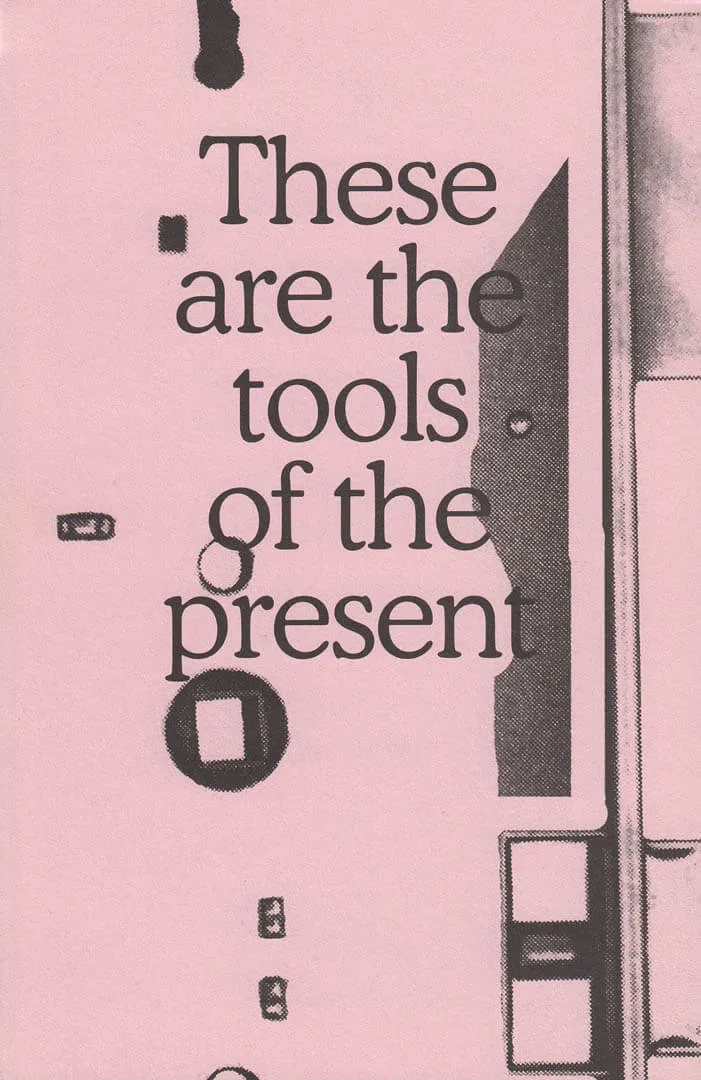
Cover of These are the tools of the present

Mophradat

These are the tools of the present

Mai Abu ElDahab, November Paynter and 1 more

This publication comprises a series of interviews with contemporary artists, musicians, and writers who are in dialogue with Beirut and Cairo. While not purporting to be an overview of the art scenes in these cities, this book begins to draw a picture of how artists think about what it means to be active in the contexts of these cities. It offers insight into the circumstances that structured these artists’ stories, and the often accidental influences that have shaped how their practices have developed.

Cover of Girls Like Us #6 - Secrets

Girls Like Us

Girls Like Us #6 - Secrets

Jessica Geysel, Sara Kaaman and 2 more

A secret can be a private space for self-creation – or a shared site of pleasure.

We explore secrets in a plethora of forms and contexts. From layered accounts of mediaeval ecstasy to the unexplored sensory experience of smell. From camouflaged play to queer readings of astrological charts and the hidden history of house music. From a very analog point of view to the outskirts of the internet.

Cover of The Lip Anthology: An Australian Feminist Arts Journal 1976–1984

Kunstverein Amsterdam

The Lip Anthology: An Australian Feminist Arts Journal 1976–1984

Vivian Ziherl

Lip Magazine was self-published by women in Melbourne from 1976 to 1984 and stood as a lightning rod for Australian feminist artistic practice throughout the Women’s Liberation era. The art and ideas expressed over Lip’s lifetime track groundbreaking moves in performance, ecology, social-engagement and labour politics—all at an intersection with local realities. Collecting and presenting the materials of Lip for the first time since their original appearance, The Lip Anthology, edited by Vivian Ziherl, privileges the range and dynamism of contesting feminisms that comprised the Lip project.

Designed by: Marc Hollenstein

Cover of The Autobiography of H. LAN Thao Lam

Dorothy, a publishing project

The Autobiography of H. LAN Thao Lam

Lana Lin

Biography €19.00

Situated between memoir, social criticism, and conceptual art, The Autobiography of H. Lan Thao Lam is an incisive response to a modernist classic and an affecting exploration of the poetics and politics of our times. "We are supposed to know where we are with biography and autobiography, they are the literary equivalents of the portrait and the self-portrait," writes Jeanette Winterson about Gertrude Stein's 1932 classic, The Autobiography of Alice B. Toklas. By narrating her own story from the perspective of her partner, Stein invented a literary form that was both intimate and uncanny, blurring lines of authority and identity as it winds through a story of two women living and loving together through a tumultuous moment in history. Almost a century later, experimental filmmaker and artist Lana Lin has resurrected Stein's project to tell another story of queer love, life, and artistic collaboration in a differently discordant age. At heart a candid chronicle of her partner Lan Thao's life journey from Vietnam during the war and her own troubled history as a gender-queer Taiwanese American, Lin's Autobiography draws in subjects as varied as photography, tropical fruit, New York real estate, and queer theorist Eve Sedgewick's eyeglasses, weaving a landscape of living that is also a critical investigation of race and gender in our time. 

Lana Lin is a writer, artist, and filmmaker based in New York and Connecticut. She is the author of the book Freud's Jaw and Other Lost Objects: Fractured Subjectivity in the Face of Cancer and film and video works including The Cancer Journals Revisited. Her various works and collaborative projects (with Lan Thao Lam as "Lin + Lam") have exhibited at festivals and art and educational spaces throughout the world, including the Museum of Modern Art, Whitney Museum, and New Museum, New York; The National Gallery of Art, Washington, D.C.; Gasworks, London; the Taiwan International Documentary Festival and Taiwan Film and Audiovisual Institute, New Taipei City; Arko Art Center, Korean Arts Council, Seoul; and the 2018 Busan Biennale. Having had three years of psychoanalytic training before dropping out, she sometimes still dreams of becoming a psychoanalyst one day.

Cover of Cassell's Encyclopedia of Queer Myth, Symbol and Spirit

Cutt Press

Cassell's Encyclopedia of Queer Myth, Symbol and Spirit

Randy P. Conner, David Hatfield Sparks and 1 more

Bootleg edition by Cutt Press. 

Foreword by Gloria Anzaldua.

Drawing on religion, mythology, folklore, anthropology, history and the arts, this encyclopoedia is a collection of queer spirit. It contains articles on the world's spiritual traditions; entries on deities, symbols, spiritual teachers, spiritually focused artists; and related subjects.

Did you know that in medieval French folklore a person might change sex by passing under a rainbow? Or that same-sex unions have been celebrated by peoples of the ancient Mediterranean, Africa, China, and indigenous America? Or that Sappho, da Vinci, Emily Dickinson, Nijinsky, Benjamin Britten, Mishima, Adrienne Rich, Audre Lorde, Keith Haring, Boy George, and Derek Jarman number among those who have explored the spiritual dimension of gender and sexuality in their works? While the terms many of us employ today to identify ourselves – ‘queer’, ‘lesbian’, ‘gay’, ‘bisexual’, ‘transgendered’ – differ markedly from those of peoples of other times and places, we are nevertheless the bearers of a rich spiritual history that has been ignored or suppressed, a history encoded in sacred texts as well as in works of art, music, dance and other media. Drawing upon religion, mythology, folklore, anthropology, history and the arts, the Encyclopedia is a cornucopia of queer spirituality, containing over 1,500 alphabetically arranged entries from Aakulujjuusi to Zeus.

Cover of Celebrating the Michigan Womyn's Music Festival

Sinister Wisdom

Celebrating the Michigan Womyn's Music Festival

Sinister Wisdom

Sinister Wisdom 103: Celebrating the Michigan Womyn's Music Festival honors the forty-year legacy of the Michigan Womyn’s Music Festival (1976–2015). Sinister Wisdom 103: Celebrating the Michigan Womyn's Music Festival celebrates this embodiment of radical feminist separatist collaboration, transformational self-defined autonomous spaces, a commitment to sisterhood and matriarchal culture, and a musical city sprung from the earth for one week in the woods.

A collective of five womyn each with a deep connection to Fest operated by consensus to create this issue. Striving to represent a range of womyn’s voices, values, traditions, and experiences of Fest, the collective highlighted what Fest has meant to generations of womyn, documented its chronology, and bore witness to the power of this community. Sinister Wisdom 103: Celebrating the Michigan Womyn's Music Festival includes womyn from multiple races, geographies, sexualities, generations, and gender and other social identities. Just as Fest brought together womyn from various backgrounds, our collection includes a range of artistic experience, from seasoned authors and photographers to those womyn new to publishing.
Sinister Wisdom 103: Celebrating the Michigan Womyn's Music Festival remembers the transformations, possibilities, and hopes for spaces cultivating the ongoing empowerment of womyn.

Cover of MsHeresies 4 — Daffodils

Rietlanden Women's Office

MsHeresies 4 — Daffodils

Elisabeth Rafstedt, Johanna Ehde

This fourth issue of MsHeresies republishes the chapter *Daffodils* — a warped monologue about a domestic poisoning — from Rosalind Belben’s book Is Beauty Good (1989).

It is typeset alongside a collage of material from two medieval manuscripts: Isidore of Seville’s Etymologiae and De natura rerum (circa 1130–74), which was illuminated and transcribed by a group of eight nuns at the Benedictine abbey of Munsterbilzen in Maastricht; and the so called Claricia Psalter (late 12th–early 13th century) from the abbey of saints Ulrich and Afra in Augsberg, also made by a group of nuns and named after the novice Claricia who is believed to have drawn herself hanging like the tail of a drop-cap Q in the psalter section of the book.