rile*books

Search books

Search books by title, author, publisher, keywords...

Cover of A Psalm for the Third Wind

Self-Published

A Psalm for the Third Wind

Damien Troadec

€25.00

Book: 11.7 × 18 cm
Book and Glove: 13.5 × 31.5 cm

Presented in a monster glove

Three broken halves of one god walk a city that wants them dead
Their bodies speak in static hunger and rust
Something follows breathing through their mouths
Read it Bleed from it


In A Psalm for the Third Wind, a film script written from 3 perspectives, Damien Troadec is aiming to address in parallel narrative the struggle of having multiples inner voices and the danger of following their distinct desires. One question is raised without any light at the end of the tunnel, confronting the reader to a conflict : THE COMFORT OF MISERY OR THE PAIN OF CHANGE ?

Published in 2026 ┊ 132 pages ┊ Language: English

recommendations

Cover of I am Welton Santos.

Self-Published

I am Welton Santos.

Sofia Caesar

Performance €40.00

I am Welton Santos reenacts a dialogue between the Brazilian geo-bio-architect Welton Santos and an Interviewer. The book, which is always read collectively, is used in reading performances by groups of at least 3 people.

Printed on the occasion of an artist residency at PAV, Parco d’Arte Vivente, Turin, July 2016. Texts based on transcripts of interviews with Welton Santos.

Cover of Child's Replay

Self-Published

Child's Replay

Adrian Bridget

Child’s Replay is a hallucinatory homecoming. As we follow THE CHILD in a series of private re-enactments, the present self is revealed as the past’s fragile construction. Pursuing the banality of trauma, a first-person character juxtaposes childhood events with internal misrepresentations, reflections on the emotional toll of migration, psychoanalytic theory, Brazilian history, and literary criticism. An exploration of the impact that language and fiction have on real bodies, Child’s Replay assembles a hybrid portrait of memory and anti-memory. 

This publication is limited to 100 copies, which are signed and numbered by the author. 

Cover of In Perpetuity

Self-Published

In Perpetuity

Ivey Wawn

In Perpetuity is part of Ivey Wawn’s project of the same name. With contributions from those involved in the making of what would have been the live performance, it is an accumulation of thoughts, reflections and associated pieces of work that give some idea of what the work could, would, or may in the future come to be. 

In Perpetuity is an ongoing project that has taken a variety of forms, from publication, through video and into live performance.

Cover of chop: a collection of kwansabas for fannie lou hamer

Self-Published

chop: a collection of kwansabas for fannie lou hamer

treasure shields redmond

Poetry €12.00

chop is a collection of poems that center on the life and work of proto-feminist and civil rights activist, Fannie Lou Hamer.

A Mississippi native, Treasure Shields Redmond is a poet, speaker, diversity and inclusion coach, and social justice educator. In 2016 she founded her company, Feminine Pronoun Consultants, LLC. Even though Treasure is completing a PhD in English Literature and Criticism, is a published writer, gifted veteran educator, and has spoken on stages all over the U.S. and in Europe, she uses her humble beginnings in the federal housing projects in Meridian, Mississippi to fuel her passion for helping college-bound families navigate college admissions painlessly and pro tably, and o ering perceptive leaders creative diversity and inclusion facilitation. Additional information on her poetry, writing, and multidimensional practice are available at: www.FemininePronoun.com.

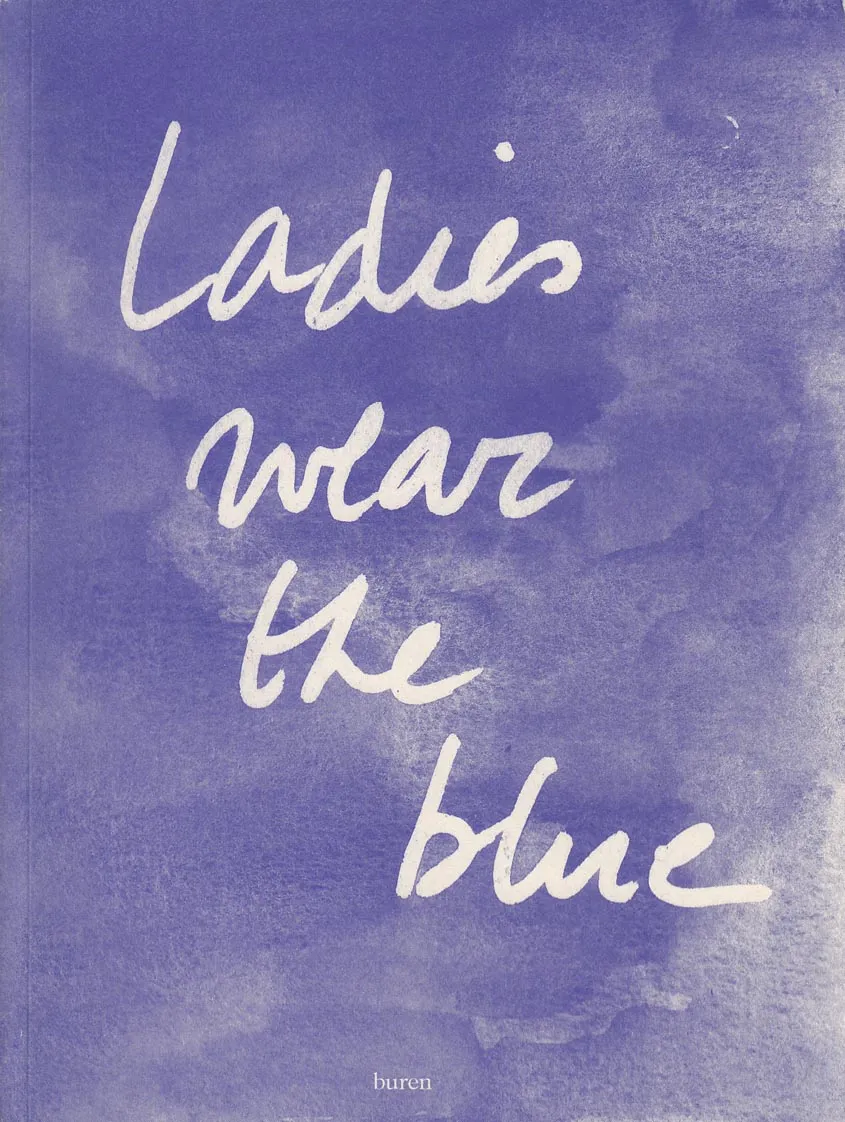
Cover of Ladies Wear the Blue

Self-Published

Ladies Wear the Blue

buren

Ladies wear the blue is a collection of watercolour drawings by the hand of Melissa Mabesoone and Oshin Albrecht. The blue watercolours portray women from different moments in time. The adjacent texts describe these women's existence, roles, desires or ideosyncrasies deriving from the 'blue' in their lives. From the first female police officers and Alices all around, to Courtney Love's blue baby dolls and the girl with the blue tattoo Olive Oatman, this publication is an ode to women venturing into the world, and a way to continue telling their herstories.

Cover of Sore 3

cover crop

Sore 3

Mathilde Heuliez, Lisa Lagova and 1 more

Zines €15.00

Sore is a serial anthology that brings together authors whose writing practices oscillate between the genres of diary keeping and fiction. For the second issue of Sore, ten contributors – both authors and visual artists – were invited to collectively develop their work through a series of informal critiques over the course of five months.

With contributions by Adriana Lasheras Mabanta, Billy Morgan, Damien Troadec, Kate Tyndall, Kea Bolenz, Inka Hilsenbek, Milo Christie, Louis Mason

Cover of Forms Of Life Of Forms

a.pass

Forms Of Life Of Forms

Rob Ritzen

FORMS OF LIFE OF FORMS brings artistic research into form – not merely as an aesthetic question but as a social and political one. Indeed, there are no politics without form! With Forms of Life, Rob Ritzen curated several “Moments” that assembled works, collective readings, and other references into a single installation. This publication reshuffles documentation of these “Moments” as a visual reflection of the trajectory of this research.

Rob Ritzen works as a curator with a background in philosophy. His curatorial practice is focusing on self-organized and cooperative formats. Consciously positioned at the margins of established institutions and outside of market-oriented spaces, his practice is placed in close association with communities of cultural practitioners. His initiatives are attempts to reconfigure the politics of making art and alternative forms of production and presentation.

Cover of The Rose

Graywolf Press

The Rose

Ariana Reines

Poetry €17.00

Drawing on the history of “romance” as the troubadours knew it and the titular flower’s ancient allegories for sexuality and mystery, Reines plunges into feminine archetypes to explore masculine pain: “I have always liked helpless / & terrible men because they break my mind.” In these poems, inherited ideologies of gender performance are replaced with bold vulnerability: paradoxes of power and surrender transmute the speaker’s understanding of suffering, desire, and the soul.

The voice in The Rose is wry and bare, approaching the connection between erotic love and spirituality with humor. Investigating war, maternity, violent sensuality, and the role of language in magical acts, Reines is unafraid to uncover the “secret / & terrible shovelings / Of love,” and the result is a bloody and pulsing, sexy and unabashed bloom.

Cover of From static oblivion

Avarie Publishing

From static oblivion

Ion Grigorescu

A reflection about the status of the image as a balance of forces in tension and a paradoxical act of cancellation of the body through its own representation.

In Ion Grigorescu’s work, as in the book, the body is continually shown in different ways - from photography to film, from performance to drawing - and yet it remains absent, obscuring its own identity in an attempt to question the collective one. As it is impossible to show his art during the regime, it ends up hiding, disappearing inside the image. Instead of showing, the image conceals, because it is non-documentary and non-transmittable; it is an act of birth, a prove of the artist’s resistance, especially as a human being inside (or against) any geographical or historical background. In the rituals of his gestures and in the symbolism of his performances, Grigorescu finds a way to stay alive, preserving his own intellectual status while also defending the dignity of everyday life.

The book traces the progression, both expansive and inclusive, of his work, which inscribes itself into the space of the body and of the world. Grigorescu absorbs elements of the surrounding reality, showing us a continuity between art and life: his act of dissidence is not an outcry of provocation, nor is it extreme; it is an anti-aesthetic operation which uses experimentation and rough techniques to uncover the fiction of art, to denounce the artifice of representation and to affirm images as an instrument of subversive power.

Ion Grigorescu (Bucharest, 1945) is one of the most significant Romanian contemporary artists of the Post-War period and an iconic figure of the conceptual and performative art since the early 70s. He represented Romania at Venice Biennial in 1997 and 2011; his works are in the main public collections, such as MoMA, New York; mumok and Erste Foundation, Vienna; Tate Modern and Deutsche Bank AG, London; Centre Pompidou, Paris.

Cover of OEI #86/87 Publishing Practices, Publishing Poetics

OEI editör

OEI #86/87 Publishing Practices, Publishing Poetics

Tobi Maier, Cecilia Grönberg and 1 more

Essays €40.00

Once more, an astonishing issue of OEI – a thrilling, compelling, stimulating feast of ideas regarding publishing and the book: the perfect big companion to read and hug in bed while the virus spreads outside.

Bringing together contributions from circa 130 publishing structures, publishing communities, magazines, small press endeavors, artists, poets, writers, editors, theoreticians, curators, scholars, and art bookstores, OEI # 86–87 reflects upon the challenges, pressures and possibilities of publishing and creating publics in different contexts and places in a time of far-reaching – economical, medial, political, social, technological – transformations.

The potential and the versatility of publishing open it to a diversity of practices and approaches in the arts, but as an eminently social form of art, a collective or micro-collective work with shared responsibilities, it is also a never-ending process of “crafting a variegated approach to how you create, publish, distribute, and build a social ecosystem around your efforts”, of trying to “build up and strengthen the community around these printed forms” (Temporary Services).

It is the conviction of OEI #86–87 that print has the power to play an important part in the construction of social spaces, of a social world. As Benjamin Thorel puts it in one of the essays in the issue, “conceiving of the dynamics of publishing as making publics as well as making things public is not a pun – insofar as the artists/publishers encompass, beyond the book itself, its possible ‘lives’, imagining the different spaces, and the different people, amongst whom a publication will circulate.” This is what Michael Warner has called “a public [as] poetic worldmaking”, implying “that all discourse or performance addressed to a public must characterize the world in which it attempts to circulate, projecting for that world a concrete and livable shape, and attempting to realize that world through address.”

This is also, as stressed by Annette Gilbert and others, what can make publishing such an active force, a force co-constituting texts and publications and publics. Indeed, with Michalis Pichler, it is tempting to say that in publishing as practice – perhaps more than in any other art field – “artists have been able to assert the aesthetic value of their own socio-politically informed concerns and to engage, often under precarious conditions, in cultural activities fully aligned with their political values.”

OEI #86–87 also includes sections on and with contemporary poetry from Canada; Fluxus publishing; Krister Brandt/Astrid Gogglesworth; Kalas på BORD (Öyvind Fahlström); Lars Fredrikson; Claude Royet-Journoud’s poetry magazines; Carl Einstein; Gail Scott; Ållebergshändelser; OEI #79: edit/publish/distribute!; “det offentligas försvinnande” and many many other things. [publisher’s note]

Design by Konst & Teknik

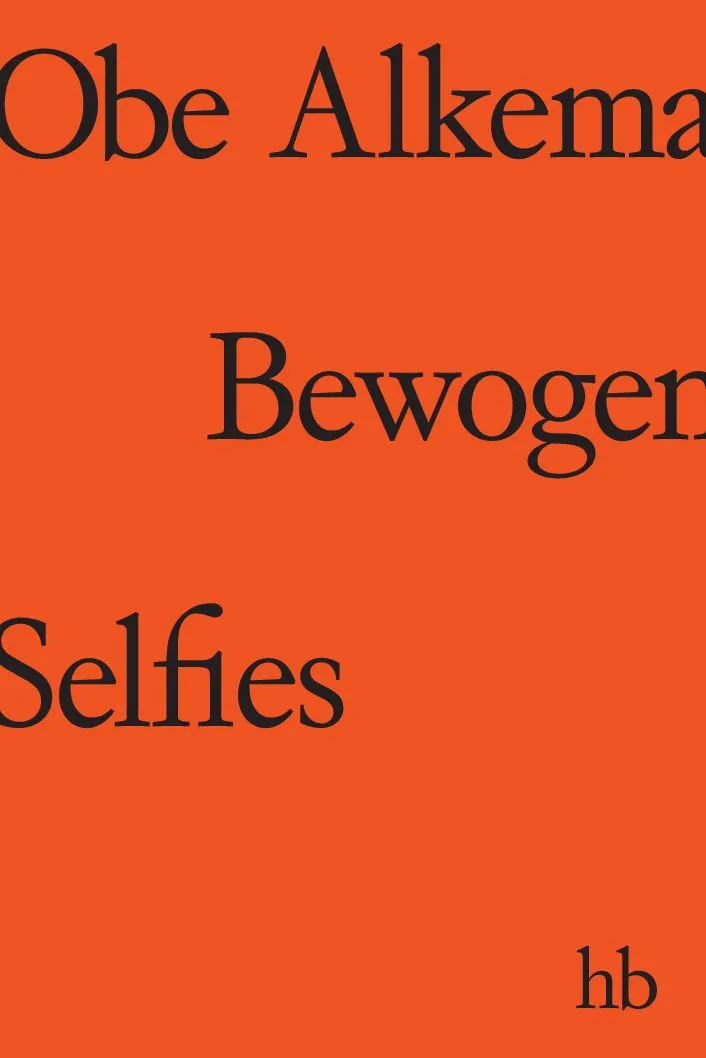
Cover of Bewogen selfies

het balanseer

Bewogen selfies

Obe Alkema

Poetry €24.50

In Bewogen selfies onderzoekt Obe Alkema de verhouding tussen landschap en herinnering. Wat treft hij aan bij terugkeer naar belangrijke plaatsen uit zijn geheugen? Wat herinnert hij zich niet, maar Google wel? Is er een gedenkschrift te puren uit zijn metadata?

Memoires, rechtstreeks verteld en met omwegen, uit eerste hand en van horen zeggen. Archieven en herinneringen eisen spreektijd, houden het niet meer droog of worden tot spreken gebracht. Wat hebben ze eigenlijk te melden? Ze lopen helemaal leeg, net als Alkema zelf. Een leven zoals zovele, poedelnaakt en geretoucheerd, vol zin en onzin.