rile*books

Search books

Search books by title, author, publisher, keywords...

Cover of 48Kg.

Tenement Press

48Kg.

Batool Abu Akleen

€25.00

One of the most viscerally affecting collections of poems I have ever read. Devastatingly precise and unforgettable images emerge from every line. The Arabic and the English sit side by side on the pages of this book but the effect is deeper than language, it meets the reader in the heart. I wept reading this brilliant, natural, gifted young poet and wished her subject was something other than this atrocity visited upon her and her people. 

What is happening in Gaza is a genocide not a war, but not since Akhmatova have I read poetry that so potently reckons with the relationship between war and the body. They create a new category of literary grace out of the cataclysm. These are poems of fire and agony, bombing and starvation, but they are also poems of grace, cleverness, tenderness and yearning. A great international poet arrives with this collection, but it is also a landmark work of resistance. No human should have to write their poetry from inside death's dominion, but Batool Abu Akleen has done it and the result is truly astonishing. 
— Max Porter

A debut collection from the Palestinian poet—Modern Poetry in Translation’s ‘Poet in Residence,’ 2024—a bilingual assembly of forty-eight poems in which each work accounts for a single kilogram; a body’s mass; a testament to a sieged city; a vivid and visceral voicing of the personal and the public in the midsts of unspeakable violence.

Translated from the Arabic by the poet with Graham Liddell, Wiam El-Tamami, Cristina Viti & Yasmin Zaher

Published in 2025 ┊ 135 pages ┊ Language: English, Arabic

recommendations

Cover of Agitated Air: Poems After Ibn Arabi

Tenement Press

Agitated Air: Poems After Ibn Arabi

Robin Moger, Yasmine Seale

Poetry €24.00

Born in Murcia in 1165, Ibn Arabi was a prolific Muslim philosopher and poet. He travelled extensively before settling in Damascus, where he died in 1240. Tarjuman al-Ashwaq, or The Interpreter of Desires, is a cycle of sixty-one Arabic poems. They speak of loss and bewilderment, a spiritual and sensual yearning for the divine, and a hunger for communion in which near and far collapse.

Agitated Air is a correspondence in poems between Istanbul and Cape Town, following the wake of The Interpreter of Desires. Collaborating at a distance, Yasmine Seale and Robin Moger work in close counterpoint, making separate translations of each poem, exchanging them, then writing new poems in response to what they receive. The process continues until they are exhausted, and then a new chain begins.

Translated and re-translated, these poems fray and eddy and, their themes of intimacy across distance made various, sing back and forth, circling and never landing. Absence and approach, knowing and unknowing, failure and repetition: Ibn Arabi’s cycle of ecstatic love shimmers with turbulence. Seale and Moger move into and against these contending drifts, finding in the play of dissatisfaction and endurance a prompt for new poetry. 

Cover of All My Dead Jesters

Tenement Press

All My Dead Jesters

Nadia de Vries

Poetry €22.00

All My Dead Jesters is an assembly of select poems previously published in de Vries’ first two English language collections—Dark Hour and I Failed to Swoon (Dostoyevsky Wannabe, 2018 and 2021 respectively). These old works have been lightly revised for republication, and are paired with poems drawn from a manuscript-in-process to institute an autotelic kaleidoscope of some ten years worth of work in verse. 

De Vries’ poems are spare, terse and epigrammatical—a barroom Bashō—dedicated to the glimmer of a compact glance; the chance, glamour and negative capability of a passing thought; and the slow drip of liquid crystal as colours our present. All My Dead Jesters is a torch song for our ‘poor subjectivity,’  a slow dance with sour times, a ‘[steering] away from [the] gratuitous provocation’ that litters our contemporary outlook. ‘Her competence as a poet lies in her ability to translate visceral vulnerability’ for the page (The Kelvingrove Review / University of Glasgow), as she patchworks a heroic ‘poetry without [a] hero, a blanket leaving you colder somehow, [...] the map of a world we like to think we know’ [CA Conrad].

Cover of Cyclamen

Tenement Press

Cyclamen

Alix Chauvet

Poetry €25.00

A debut collection from the poet, artist and designer, a suite of unfaithful translations/transversions of works drawn from Baudelaire’s Les Fleurs du mal / Flowers of Evil, a bunch of flowers in decay, pressed and frayed, ‘a flock of pockmarked words.’

Through these creative ‘translations’ of Charles Baudelaire, Alix Chauvet—artist, designer, poet—refuses fidelity in favour of flirtation: her ‘flowers of evil’ line Amsterdam’s canals, drink from the same rainclouds as Rachel Ruysch’s bewitching bouquets, sprout through peat, and are tended by a distinctly feminist and nomadic sensibility. Chauvet—akin to Olive Moore, Sean Bonney and Lisa Robertson—takes the nineteenth-century French decadent as a contemporary accomplice for aesthetic and linguistic misbehaviour. Walter Benjamin once wrote of Baudelaire that he is ‘der geheime Architekt der Moderne,’ and in Chauvet’s hands, those foundations are made porous, unbuilt into cast shadows, into ribbons, into veins streaming across the page. Accompanied by scans of the French poems and Chauvet’s shadow photography, what Cyclamen ultimately offers us is a regenerative rewilding of the English language: a wondrous terrain ringed by vines of unruly syntax and dotted with the fruit of words refusing domestication by any single tongue. Mia You

Alix Chauvet is a Swiss-French poet and graphic designer based in Amsterdam, taking pleasure in the possibilities of translation. She received her BA in Graphic Design from the Gerrit Rietveld Academie (Amsterdam, 2020), and has since been working independently and in collaboration with contemporary artists. Investigating the relationships between language and body, intimacy and collectivity, past and contemporary, her hybrid practice covers a wide range of visual and linguistic experiments from artist’s book design to experimental translation. Her method is rooted in decelerating the creative process through the use of analogue and unprofitable techniques such as cut-outs, letterpress, linocut, handwriting and painting. Chauvet’s poetic approach follows the same logic, prioritising English over her mother tongue as a way to revise language with both critical detachment and a degree of identification. Her poems have appeared in literary magazines such as Blackbox Manifold, and Cyclamen is her debut collection.

Cover of Terra Cosmica / Traces of Georealism

Tenement Press

Terra Cosmica / Traces of Georealism

Giovanbattista Tusa

Philosophy €24.00

An ‘end-times’ philosophical enquiry in which the author argues with stones and geological time to compose a suite of interlinked fragments. An act of lapidary; a five-part antagonisation of the elements; an essay on representation, visualisation and prediction; an ecologue on ecology.

Our age is characterised by the increasing humanisation of a planet that is more and more subject to metaphoric representation and visualisation. 

The memorialisation, anthropomorphism, and narratological charge of time has birthed an intellectual industry in which the summation of history plays out like a hand of cards. A game in which retrospect and hindsight informs our present and sits us ever at the mercy of prediction and chance in a time increasingly defined by catastrophe, and as emergent crises affect every stratum of life and lived experience. We are currently witnessing a mutation of our thinking that disrupts the mythical imaginary that had hitherto confined viruses, climate change and atmospheric turbulence to an unalterable background in the all-too-human narrative of the struggle against nature.

Tusa’s Terra Cosmica / Traces of Georealism is the result of a series of lectures and essays—a quintet of pieces published over the course of a four-year period—that, woven together into a new collation of interlinked fragments, calls time on time to consider the new form of planetary realism resultant of this restructuring of the imagination. Tusa presents a cosmic remapping of our modes of thinking that assumes that our contemporary moment is absented from its representability, its history of representations, and all means of explanation, thus remaining open to a sense of its own infinity… Open to an encounter with that which remains absent and unknowable, with neither horizon nor memory available as any weathervane for comprehension and action. Tusa’s work is a scrutiny of our exosystemic condition; a suite of exploratory antagonisms on the need for a new philosophical perspectivism of time, of earth, and a new charter for the foundations of thought and thinking.

Cover of An Anarchist Playbook. Radical Translation Workshop

Tenement Press

An Anarchist Playbook. Radical Translation Workshop

Cristina Viti, Jacob McGuinn and 2 more

Essays €25.00

The Conspiracy of Equals (1796) is often hailed as the first revolution against a revolutionary state. Even if the conspirators were soon found out and put on trial, their ideas of radical equality and liberty shaped future generations of revolutionaries worldwide. An Anarchist Playbook—the first publication in Tenement’s new imprint, No University Press—gathers together many of the key documents from their trial across a myriad forms, with a number of these texts appearing herein in their first English-language translation.

Assembled in the Playbook are the last words of Gracchus Babeuf, the leader of the conspiracy and a radical proponent of the abolition of private property, and of his fellow conspirator Augustin Darthé, as they faced the guillotine. We’ve a letter, written in the popular idiom of the sans-culottes, that urges the common soldier to rebel; the score and lyrics of a street song that names the new class enemy: the wealthy bourgeoisie who have profited from the revolution; a first-time English translation of ‘The Last Judgement of All Kings’—an extraordinary one-act play by Sylvain Maréchal, the unofficial poet of the Conspiracy, that was performed to considerable acclaim in Year II of the Revolution (and that the Workshop is in the process of adapting for contemporary audiences). 

Many of these texts were never published in their own time, and form a part of the testament left behind by Philippe Buonarroti, a leading conspirator who inspired new generations of revolutionaries across Europe over the course of the nineteenth and early twentieth centuries. Among the best known works included is the Manifesto of Equals, long considered a founding text of social, communist and anarchist revolutions. The Playbook presents a translation of the Manifesto alongside other key texts by the conspirators, reconstructing the richness and variety of revolutionary communication that informs the editorship, shape, and scope of this volume.

Cover of La rabbia / Anger

Tenement Press

La rabbia / Anger

Pier Paolo Pasolini

Poetry €24.00

In a first-time English language translation by Cristina Viti to mark the poet’s centenary, Tenement Press will publish Pier Paolo Pasolini’s groundbreaking, filmic work of prose and verse, La rabbia / Anger.

Why is our life dominated by discontent, by anguish, by the fear of war, by war? In order to answer this question I have written La rabbia, not following a chronological or perhaps even a logical thread, but only my political reasons and my poetic sense. - Pier Paolo Pasolini

Written in response to producer Gastone Ferranti’s request for his comments on a set of newsreel items, the poet would respond with a montage of his own. Via the unfolding of a chrysalis of images, in La rabbia (1963), Pasolini’s lens pans over Soviet repression in Hungary; the Cuban revolution; (the utopian object of) space exploration; political imprisonment in Algeria; the liberation of the former European colonies; the election of Pope John XXIII; the prospect of revolution in Africa and the Middle East; in Europe and in Latin America... Here, we’ve a panoply of photorealist intimations of Pasolini’s ‘poetic sense.’ The death of Marilyn Monroe crests as an idea in this tidal pooling of reflections, and as the poet’s line lights out for conceptual rhymes and counterpoints.

In Viti’s translation, the weave of prose and poetry that forms La rabbia portrays the vitality of Pasolini’s work in its capacity to speak to both the specifics of his contexts, the character of our own present tense, and the ironic fact of a life lived against the gulf of discontent in its myriad forms. Here, we’ve a startling confrontation of a revolutionary struggle in stasis set in lines that crystallise a rallying call against blindness. ‘I’ll not have peace, not ever,’ he writes. A lucid acceptance of the poet’s restlessness, and a marker for Pasolini’s commitment to a solidarity with the oppressed that we find reaffirmed on every page, in La rabbia the poet charts how ‘the powerful world of capital takes an abstract painting as its brash banner’ in this unravelling of ‘crisis in the world.’

Cover of Issue № 6 - Winter–Spring 2026 / SENSING BODIES

DEARS

Issue № 6 - Winter–Spring 2026 / SENSING BODIES

Poetry €15.00

Coming back to the body is rarely tranquil. Often it is turbulent, interrupting dominant narratives and entrenched meanings. It is the upset of being alive, and awake to it.

The fourteen texts in this new issue do not shy away from that turbulence. There is joy and there is pleasure, there is shame, pain, and liberation... Each text addresses this dense experience from a singular perspective, yet together they explore what emerges and becomes possible when sense-making and making sense(s) are re-anchored in the sensing practices of the body.

With texts by Valérie Hug, Marco Antonini, cassiane c. pfund, Elodie Olson-Coons, Ines Marita Schärer, Bernadette Kolonko, Jo Bahdo, Lotta Beckers, Melanie Jame Wolf, Samuel Brzeski, Madeleine Kaye, Nora Longatti, Rosanna Puyol Boralevi, Larissa Clement-Belhacel

editorial team: Delphine Chapuis Schmitz, Nicole Bachmann, Robert Steinberger, and Shelby Lee Stuart as invited editor

Cover of Early Works

Fonograf Editions

Early Works

Alice Notley

Poetry €26.00

Early Works collects Alice Notley’s first four out of print poetry collections, along with 80 pages of previously uncollected material. A must have for any Notley fan. Includes original collection cover artwork by Philip Guston, Philip Whalen and George Schneeman, among others.

From editor Nick Sturm’s “Introduction” to Early Works:

In the author’s note that begins Grave of Light: New and Selected Poems 1970-2005, Alice Notley writes, “My publishing history is awkward and untidy, though colorful and even beautiful.” I have always been enamored of this sentence, which reminds us that an array of dispersed and varying publishing contexts are the original sites that give shape to such a book’s form. It is also something of an invitation into that color and untidiness, a prompt to become more curious about the awkwardness and beauty of Notley’s publishing history. This book, Early Works, accounts for a significant portion of that history by bringing back into print the complete versions of her first four books, a little-known 22-poem sonnet sequence, and a large selection of early uncollected poems gathered from little magazines. In doing so, Early Works joins an important set of recent volumes that put Notley’s earlier poetry back into circulation, including Manhattan Luck (Hearts Desire, 2014), which collects four long poems written between 1978 and 1984, and Songs for the Unborn Second Baby, originally published by United Artists in 1979 and reissued in a facsimile edition by London-based Distance No Object in 2021. Each in their own way, and especially taken together, these books continue to confirm that, as Ted Berrigan writes in The Poetry Project Newsletter in 1981, “Alice Notley is even better than anyone has yet said she is.”

Cover of The Undying (paperback)

Picador

The Undying (paperback)

Anne Boyer

Poetry €20.00

Blending memoir with critique, an award-winning poet and essayist's devastating exploration of sickness and health, cancer and the cancer industry, in the modern world

A week after her 41st birthday, Anne Boyer was diagnosed with highly aggressive triple-negative breast cancer. For a single mother living payslip to payslip, the condition was both a crisis and an initiation into new ideas about mortality and the gendered politics of illness.

In The Undying - at once her harrowing memoir of survival, and a 21st-century Illness as Metaphor - Boyer draws on sources from ancient Roman dream diarists to cancer vloggers to explore the experience of illness. She investigates the quackeries, casualties and ecological costs of cancer under capitalism, and dives into the long line of women writing about their own illnesses and deaths, among them Audre Lorde, Kathy Acker and Susan Sontag.

Genre-bending, devastating and profoundly humane, The Undying is an unmissably insightful meditation on cancer, the cancer industry and the sicknesses and glories of contemporary life.

Winner of The Pulitzer Prize for Nonfiction 2020; Windham Campbell Prize for Nonfiction 2020

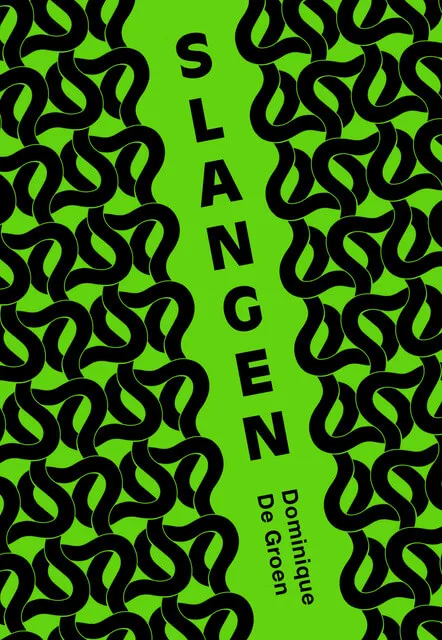
Cover of Slangen

het balanseer

Slangen

Dominique De Groen

Poetry €19.50

Slangen krioelen in de sarcofaag van het heden, in de krochten van de popcultuur, in de mummie van de natuur, in wondes en rot vlees, in artificiële woestijnen en op geoliede dad bods. Ze wentelen zich rond beursgrafieken, raken verstrengeld met wurgende algoritmes, orkestreren een trage ondergrondse revolutie. Een meisje snijdt zich aan een nepdiamanten piramide en werpt haar slangenvel van zich af.

Dominique De Groen is schrijver en beeldend kunstenaar. Ze publiceerde de dichtbundels Shop Girl (2017), Sticky Drama (2019) en offerlam (2020). Ze werd genomineerd voor de Poëziedebuutprijs Aan Zee 2018, de Herman de Coninckprijs 2020 en de Fintroliteratuurprijs 2021 en won de Frans Vogel Poëzieprijs 2019 en de Fintropublieksprijs 2021.

Cover of Gay Pompeii 79 A.D.

GenderFail

Gay Pompeii 79 A.D.

Legacy Russell

Poetry €20.00

With her debut chapbook, award-winning author and curator Legacy Russell returns to poetry with her GAY POMPEII, a collection of lyric poems that begin at the end of the world.

Rising out of Russell's 2022-2023 Digital Fellowship for Pompeii Commitment. Archaeological Matters, the first long-term, contemporary art programme established by the Archaeological Park of Pompeii, the author and curator explores ash, filth, dirt, and decay, intersectional with the fetishistic mythos of Pompeii and its destruction in 79 CE by the eruption of Mount Vesuvius. Pompeii today is a UNESCO World Heritage Site that receives over two million visitors per year to view its archeological excavation. Russell puts the mass voyeurism, sensation, extraction, and loss of Pompeii—a devastating moment frozen in time—to work. In GAY POMPEII, the site becomes a device with which Russell unspools birth, death, genocide, visual culture, and space-time. The title of this compilation underscores the essence and demand of capitalism: to be carefree in the face of looming extinction. Russell's GAY POMPEII is a selfie taken at the edge of catastrophe and a polyphonic elegy.

Legacy Russell (born 1986 in New York City) is a curator and writer. She is the Executive Director & Chief Curator of the experimental arts institution The Kitchen. Formerly she was the Associate Curator of Exhibitions at The Studio Museum in Harlem. Russell holds an MRes with Distinction in Art History from Goldsmiths, University of London with a focus in Visual Culture. Her academic, curatorial, and creative work focuses on gender, performance, digital selfdom, internet idolatry, and new media ritual. Russell's written work, interviews, and essays have been published internationally.