rile*books

Search books

Search books by title, author, publisher, keywords...

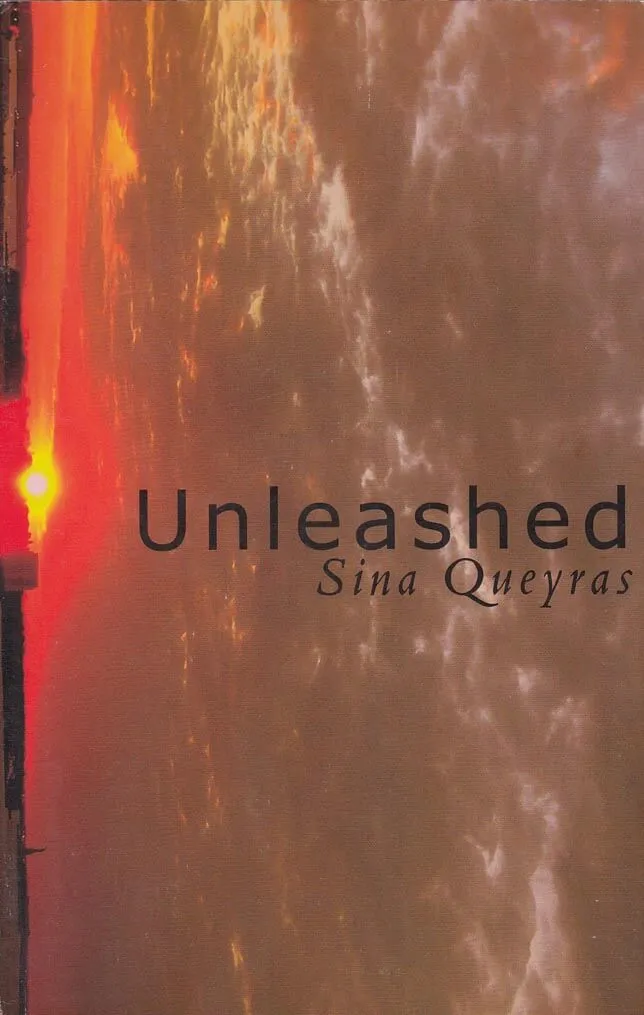
Cover of Unleashed

Book*hug Press

Unleashed

Sina Queyras

€20.00

05/09/04 Now she is blogging. Now she is sitting on the black couch listening to the sirens wail and the rain fall. Now she is thinking of oysters. Now she is wondering why this is worth sharing. Now she is thinking, how decipher what is worth reading? Who is to say? Sifters. She thinks we have become a nation of sifters. So began a three-year experiment in blogging. An experiment begun for many reasons—a way for an expat to keep in touch with fellow Canadian writers and artists, a way to come to terms with the increasing relevance of the internet in literary lives, and a way to figure out why, after decades of gains, women writers are still grossly underrepresented in critical dialogues.

With an afterword by Vanessa Place.

Language: English

recommendations

Cover of The Men

Book*hug Press

The Men

Lisa Robertson

Poetry €16.00

The Men explores a territory between the poet and a lyric lineage among men. Following a tradition that includes Petrarch's Sonnets, Dante's work on the vernacular, Montaigne, and even Kant, Robertson is compelled towards the construction of the textual subjectivity these authors convey-a subjectivity that honors all the ambivalence, doubt and tenderness of the human. Yet she remains angered by the structure of gender these works advance, and it is this troubled texture of identity that she examines in The Men.

Cover of Notes on Conceptualisms

Ugly Duckling Presse

Notes on Conceptualisms

Vanessa Place, Robert Fitterman

What is conceptual writing, how does it differ from Conceptual Art, what are some of the dominant forms of conceptualism,where does an impure or hybrid conceptualism fit in, what about the baroque, what about the prosody of procedure, what are the links between appropriation and conceptual writing, how does conceptual writing rely on a new way of reading, a “thinkership” that can shift the focus away from the text and onto the concept, what is the relationship between conceptual writing and technology or information culture, and why has this tendency taken hold in the poetry community now? What follows, then, is a collection of notes, aphorisms, quotes and inquiries on conceptual writing. We have co-authored this text through correspondence, shared reading interests, and similar explorations. Notes on Conceptualisms is far from a definitive text, and much closer to a primer, a purposefully incomplete starting place, where readers, hopefully, can enter so as to participate.

Cover of The Close Chaplet

Ugly Duckling Presse

The Close Chaplet

Laura Riding

Poetry €23.00

Long out of print, The Close Chaplet is Laura Riding's first book, originally published in 1926. Riding deliberately ceased writing poems after 1940, when she came to see poetry as irrevocably flawed as a means of expression. These poems demonstrate Riding's early desire to depart from the close and well-tilled ground of traditional lyric poetry. According to her biographer, Elizabeth Friedman, many of the poems for THE CLOSE CHAPLET were brought in typescript from New York, a few were added in Egypt, and the entire text was carefully edited by Robert Graves.

In his introduction, Mark Jacobs writes that Riding was identifying herself with the pre-moment, the 'what-was-there' before Creation. How did the world, the universe, come to exist, why does it exist, why does it die, why do we? From these questions, Riding begins to develop a theory about the role of women as the origin of all human beings, the only animals with written language. This edition also includes Riding's essay A Prophecy or a Plea, a statement of her poetics initially published in 1926.

Laura Riding was a poet, novelist, short-story writer, essayist, and publisher. While primarily known for the critical works that she co-authored with Robert Graves — A Pamphlet Against Anthologies and A Survey of Modernist Poetry — Riding also left behind an incredibly powerful body of poetry and prose works that, regrettably, remain little read today. These include THE CLOSE CHAPLET (Ugly Duckling Press, 2020), EXPERTS ARE PUZZLED (Ugly Duckling Presse, 2018), CONVALESCENT CONVERSATIONS (Ugly Duckling Presse, 2018), The Lives of Wives, and The Progress of Stories. Famously rejecting poetry early in her career, she spent the last decades of her life co-writing a theoretical work on linguistics, Rational Meaning, with her husband Schuyler Jackson. She was awarded the Bollingen Prize in 1991, the very same year she died.

Cover of A Very Large Array: Selected Poems

DABA

A Very Large Array: Selected Poems

Jena Osman

Poetry €35.00

Osman's writing reinvents poetry as an instrument for dissecting vision, language and power

This extensive collection of poet Jena Osman's acclaimed work spans more than 30 years, gathering poems from journals and books long out of print. Her poetry traces overlooked visual and linguistic incidents across centuries of American history, transforming "official" language—from Supreme Court opinions to the chatter of Predator drone pilots—into writing that is comic, chilling and relentlessly inventive.

Jena Osman's (born 1963) books include Motion Studies (Ugly Duckling Presse, 2019), Public Figures (Wesleyan University Press, 2012), The Network (Fence Books, 2010, selected for the National Poetry Series in 2009), An Essay in Asterisks (Roof Books, 2004) and The Character (Beacon Press, winner of the 1998 Barnard New Women Poets Prize). She lives in Philadelphia.

Cover of Fuel

Nightboat Books

Fuel

Rosie Stockton

Poetry €18.00

Traversing multivalent intimacies from the underworld of California’s Central Valley oil fields to the quotidian domestic and love’s painful retraction, Stockton’s poems articulate the blurry modes of extraction, fantasy, loss, gender, and labor as they interact and overlap in the shadow of environmental and personal collapse. Between gas station gifts, Venmo requests, and nocturnal love letters, Fuel unravels the self and violent systems of domination, longing for a togetherness that transcends its own ending.

In these poems, Stockton plunges into petrologic, long drives, the beginnings of ends—whatever enters into love between people and makes it so abstract, or common. In other words, its great subject is the edge, and Fuel is a book of horizons. - Benjamin Krusling

Rosie Stockton is the author of Permanent Volta (Nightboat Books 2021) which was the recipient of the Sawtooth Prize as well as being a finalist for the California Book Awards in Poetry and the Publishing Triangle’s Audre Lorde Award for Lesbian Poetry. Their poems have been published by Social Text Journal, VOLT, Jubilat, Apogee, Mask Magazine, Tripwire and WONDER PRESS. They hold an M.A. in Creative Writing from Eastern Michigan University and are currently a Ph.D. Candidate in the Gender Studies Department at UCLA. Rosie lives and works in Los Angeles.

Cover of Meditations

The Last Books

Meditations

keston sutherland

Poetry €17.50

A manual of meditations on grief blocked by trauma, pliers, goats, remedies, meaning, conduits, suicide, eggs, times, tutting, God, lifts, treasury tags, wrecking yards, Douglas Barrowman, involuntary spasms, front desks, manganese deficiency, weevil shit, Mr Sheen, coal potential, the bison, The Final Cut, tone of voice, trillions of cicadas, Elisabeth Koolaart-Hoofman, bogus antler cannibalism, the Preces Gertrudianae, parodies of communication, “Cary Grant’s Wedding,” the corruption of youth, a tripod or cable, Culverwell on the Vacuola, geese, Hemans’s line on Mary Tighe, annihilation, the proletariat, plastic bags, La Compiuta Donzella di Firenze, poetry, rooms, beheadings, S106 obligations, and planks. Containing single, double, triple, and sextuple sestinas, in the old mode of retrogradatio cruciata, and other canzoni, crushed to prose.

Cover of Flower Engine

no more poetry

Flower Engine

Natalie Briggs

Poetry €25.00

the second poetry collection from Natalie Briggs titled ‘FLOWER ENGINE’. This collection of cinched, bright free-verse explores the passing locations of love and the slow, private operations of pain’s knocking counterweight. The book extends Briggs’ relay of concise universal suggestions, translating them through brief, intimate utility.