rile*books

Search books

Search books by title, author, publisher, keywords...

Cover of Time has fallen asleep in the afternoon sunshine

Mousse Publishing

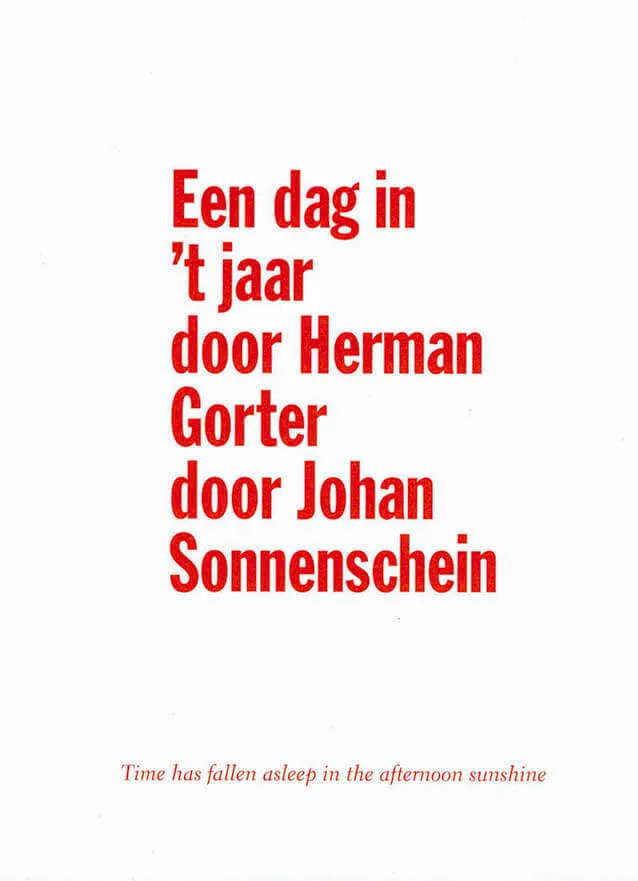
Time has fallen asleep in the afternoon sunshine

Runa Borch Skolseg, Victoria Pérez Royo, Kristien Van den Brande, Mette Edvardsen

€24.00

A book on reading, writing, memory and forgetting in a library of living books.

This publication documents a project inspired by Bradbury's Fahrenheit 451, in which performers memorize a book to form a collection of living books to be read in libraries by visitors. The publication brings together eighteen text contributions from artists and theoreticians, and a visual essay.

The project Time has fallen asleep in the afternoon sunshine starts as a group of people who dedicate themselves to memorizing a book of their choice. Together they form a library collection consisting of living books. The “books” pass their time in libraries reading, memorizing, talking to each other, going for walks outside, prepared to be read by a visitor. The readings take place as intimate one-to-one encounters where the “book” recites its content to the reader. Over time the project grew into a library collection of more than eighty living books in twelve different languages across Europe and beyond. The project developed into a bookshop, a publishing house and an exhibition format, and hosted workshops, lectures and talks and, eventually, a book.

The publication brings together eighteen text contributions from artists and theoreticians with a varying degree of proximity to the project. Their reflections touch on memory and forgetting; on the practice of learning by heart and its corporeality; on reading, re-reading, reading aloud, reading for oneself and for others; on writing, re-writing and translating; on invisible and impossible literatures; on alternative temporalities and their respective economies; on archives, libraries, bodies and other sites for conservation; on the problems of authorship and originality; on immateriality and its discontents; on the equivocal borders between reality and fiction; and on the strange and unforeseeable dynamics of people and stories coming together, disseminating and unexpectedly crossing paths again. The second part of the book is a visual essay that documents the processes of memorizing, reading and re-writing.

Contributions by: Mette Edvardsen, Kristien Van Den Brande, Johan Sonnenschein, Bruno De Wachter, Lizzie Thompson, Sébastien Hendrickx, Victoria Pérez Royo, Jon Refsdal Moe, Bojana Cvejić, Melanie Fieldseth, Jeroen Peeters, Lara Khalidi, Emiliano Battista, Thomaz Bîrzan, Susanne Christensen, Olivia Fairweather and Laurence Rassel.

Published in 2019 ┊ 536 pages ┊ Language: English

recommendations

Cover of Islands of Kinship – A Collective Manual for Sustainable and Inclusive Art Institutions

Mousse Publishing

Islands of Kinship – A Collective Manual for Sustainable and Inclusive Art Institutions

Nikola Ludlová, Karina Kottová and 2 more

Non-fiction €38.00

This comprehensive publication is the result of a two-year collaboration within the platform Islands of Kinship, which interconnects six mid-scale visual art institutions across diverse regions in Europe (Prague, Bratislava, Bitola/Skopje, Cologne, Helsinki, Riga). The project represents an innovative model of collaboration addressing issues of inclusion, kinship and togetherness, democratic exchange, and the ethics, emotions, and practical solutions needed for fair and sustainable institutional operations.

In this publication a unique group of curators, artists, and experts involved in their respective organizations as inclusion and sustainability coordinators reflect on social and environmental responsibility in artistic and institutional practice from theoretical, political, and practical perspectives. Through essays, mind maps, codes of conduct, and lists of principles and recommendations, they address issues such as accessibility, just representation, and participation. Apart from these contributions, the publication also features artistic projects that were presented in exhibitions and public programs in the framework of Islands of Kinship.

Texts by Ieva Astahovska, Jana Brsakoska, Veronika Čechová, Kris Dittel, Daniel Grúň, Michal Klodner, Eloïse Bonneviot & Anne de Boer, Jussi Koitela, Karina Kottová, Diana Lelonek, Nikola Ludlová, Aneta Rostkowska, Paulina Seyfried, Katarína Slezáková, Taka Taka, James Taylor-Foster, Fran Trento, Ivana Vaseva.

Cover of The Trial

Mousse Publishing

The Trial

Rossella Biscotti

The Trial is an extensive publication chronicling the decade-plus-long evolution of one of Rossella Biscotti's seminal works, focusing on the trials of members of the revolutionary left-wing movement Autonomia Operaia in the early 1980s, an emblematic judicial drama of Italy's Years of Lead.

The core of the book is the English transcription of a six-hour audio piece, originally composed from hundreds of hours of the trial's archival recordings broadcast by Radio Radicale. Edited like a theatrical script, The Trial becomes a polyphonic narrative that foregrounds the political voices of defendants in opposition to the structure and language of the legal machine: prosecutors, judges, lawyers. The transcript is accompanied by critical texts by Michael Hardt, Daniel Blanga Gubbay, and Giovanna Zapperi, as well as a conversation between the artist and philosopher Antonio Negri, one of the trial's key defendants. It investigates how political memory is carried, translated, and embodied across time.

Featuring visual documentation and multilingual excerpts from performances staged across various institutions and countries, this publication traces the work's ongoing reactivation through translation, collaboration, and context-specific interventions.

Cover of A breeze over the Mediterranean

Mousse Publishing

A breeze over the Mediterranean

Simone Fattal

Monograph €25.00

The catalogue of the Lebanese-American artist's first exhibition in Italy.

Over fifty years, Simone Fattal's multifaceted work has explored the impact of displacement as well as the episteme of archeology and mythology, drawing from a range of sources including war narratives, landscape painting, ancient history, and poetry. The artist imagery blends history with memory, grappling with the losses of time while revealing its repetitions. 

This book documents Fattal's first solo show in Italy titled A breeze over the Mediterranean at the Fondazione ICA, Milan, in collaboration with Pompeii Commitment. Archaeological Matters.

Texts by Alberto Salvadori, Andrea Viliani, Etel Adnan, Simone Fattal.

Simone Fattal (born 1942 in Damascus) is a Lebanese-American painter, sculptor and ceramist. After studying philosophy, first in Beirut and then Paris, Fattal returned to Beirut in 1969 and began life as a painter—creating sensuous abstract works that diverged from the predominantly figurative paintings commonly exhibited in Lebanon at the time. In 1980, after a decade spent in Lebanon as a painter, Fattal fled the civil war, abandoned her painting practice, and settled in Sausalito, California, where she founded the revolutionary publishing house Post-Apollo Press. In 1988, after studying sculpture in San Francisco, Fattal was consumed by another wave of creativity that led her to pursue ceramic sculptures—a medium in which she continues to work to this day from her studio in Paris.

Cover of Un-Break My Walls

Mousse Publishing

Un-Break My Walls

Christianne Blattmann

The first monograph on Christiane Blattmann takes its title from her solo show Un-Break My Walls at Kunsthalle Münster in 2019. Blattmann intricately interweaves, intermeshes, combines, compounds, merges, and processes in her work not only materials but also structures, things, stories, characters. The volume includes extensive illustrations of exhibitions, projects, and works, and a great number of black-and-white images capture the artist’s studio practice. The interactions of materials, along with theoretical and literary references, serve as important points of departure, and the emblematic outcomes involve text and texture as material structure and patterned surface; vivid condensation and entanglement; and invitations to exploration and reflection. The book compiles different elements designed on a series of shifting layers. Texts by Merle Radtke and Chloe Stead and a conversation between Christiane Blattmann and Than Hussein Clark provide insight into Blattmann’s art, complemented by a piece of fiction by Huw Lemmey.

Texts by Merle Radtke, Huw Lemmey, and Chloe Stead, and a conversation between Christiane Blattmann and Than Hussein Clark

Cover of This Is Not My Signature

Mousse Publishing

This Is Not My Signature

William Anastasi

Monograph €40.00

A journey through the artist's work and life.

William Anastasi is the author of a prolific body of work. A major figure in conceptualism and in many respects one of its initiators, his trajectory cannot be solely confined to this chapter in the history of contemporary art. The book revisits, through the prism of multiple voices, the various aspects of an approach that unfolded with the use of complementary mediums. Drawing coexists with photography and "new" technologies, alongside objects, paintings, and installations. Within this corpus to be (re)discovered, sounds, images, and language, as well as artifacts, protocols, and processes, convey inquiries related to space and time, representation, and perception. With contributions from Dove Bradshaw, Chiara Costa, Béatrice Gross, Valérie Mavridorakis, Hélène Meisel, Sébastien Pluot, Julia Robinson, Robert Storr, and Erik Verhagen.

Edited by Erik Verhagen.
Texts by Dove Bradshaw, Chiara Costa, Béatrice Gross, Valérie Mavridorakis, Hélène Meisel, Sébastien Pluot, Julia Robinson, Robert Storr, Erik Verhagen.

Cover of Language is a map of failures: Messy thoughts on reading, writing and dressing up

Afternoon Editions

Language is a map of failures: Messy thoughts on reading, writing and dressing up

Runa Borch Skolseg

Afternoon Editions no. 3: Language is a map of failures. Messy thoughts on reading, writing and dressing up by Runa Borch Skolseg.

In May 2019, Time has fallen asleep in the afternoon sunshine relocated its base to the Oslo Biennale headquarters in Myntgata, with a room of its own and ongoing activities. Runa Borch Skolseg visited the space at several occasions before its final closure, in 2021. Her invitation to write for the Afternoon Editions bridges the move from one room to another, and is a reflection on how fashion can be a world of fantasy, and drama, a language we all communicate through. With a personal narrative she makes readings of clothes, literature and writing, and how they merge and enrich each other.

Cover of Appendix #3: Orality

Time has fallen asleep in the afternoon sunshine

Appendix #3: Orality

Victoria Pérez Royo, Léa Poiré and 1 more

Time has fallen asleep in the afternoon sunshine Appendix #3 Orality includes contributions by Simon Asencio, Bruno De Wachter, Peter Szendy, Clara Amaral, Itziar Okariz, Jude Joseph, Léa Poiré and Mette Edvardsen.

Time has The Appendixes #1–4 is an editorial series by Mette Edvardsen, Léa Poiré and Victoria Pérez Royo that developed out of the project Time has fallen asleep in the afternoon sunshine. For a two-year residency at Les Laboratoires d’Aubervilliers* (2022–23), they came together as a small work group, shaping the work process, hosting presentation formats and making this publication series on paper as four cahiers.

The cahiers comprise a collection of commissioned texts and contributions created for this context, selected documents and traces from work sessions and encounters organized during their residency, texts read together and republished for this occasion, a collection of references, notes in progress, unfinished thoughts and loose fragments – on paper, between pages.

The Appendixes are organized around four themes: (1) The gesture of writing, (2) How to organize a library, (3) Orality and (4) Translation. In addition to being published on paper, the editorial series also consisted of other formats of presentations, exchanges and meetings organized as workshops, fieldwork, performances, conferences, collective readings and oral publications, taking place during their residency at Les Laboratoires d’Aubervilliers and in the vicinity.

The Appendixes is the work that continues, material that adds on, some of it perhaps too long or too detailed, unfit or unfinished. The four themes that their research is formulated around originate in specific experiences and questions from the practices of Time has fallen asleep in the afternoon sunshine (2010 – ongoing), and also the large publication on the project ‘A book on reading, writing, memory and forgetting in a library of living books’ (2019). The research was both a means of exploring these themes in greater depth and also of bringing them into contact with other artists and researchers working on similar or related subjects. The Appendixes offered them both the contexts and the pretexts for things to happen (in time, in space, on paper).

The Appendixes #1–4, published in these cahiers, do not present an overview or a summary of all of the activities and presentations that took place during the two years at Les Laboratoires d’Aubervilliers. What these cahiers offer is a space in which to hold some thoughts together and to share them in this form. It is one more step along the way, extending the research and work already begun and that will now continue.

Cover of Livre d'images sans images (LP)

Varamo Press

Livre d'images sans images (LP)

Mette Edvardsen, Iben Edvardsen

Livre d’images sans images by Mette Edvardsen & Iben Edvardsen borrows its title from a book by H.C. Andersen, also referred to as The Moon Chronicler. The book follows a conversation between a painter and the Moon, where the Moon describes to the painter what she sees on her journey around the world every evening, telling the painter to paint what she describes. “This conversation, as in the now obsolete meaning of the word (‘a place where one lives or dwells’), was the starting point for our work. Using the weather report as dramaturgy, (‘the moon did not show up every evening, sometimes a cloud came in between’), we have created and collected materials from our conversations in the form of recordings, text, voice, drawings, references, found images, loose connections, inspirations and imaginations, in the order they came to us. They are at the same time sources and traces, material and support for new imaginations or events to come.” The work consists of three different media: vinyl, paper and live performance. 

Mette Edvardsen is a choreographer and performer eager to explore the performing arts as a practice and situation, also in relation to other media such as books and writing. This work is in collaboration with her daughter, Iben Edvardsen.

Published by Xing & Varamo Press
XONG collection – artist records XX10 (2023)
First edition, September 2023
Recorded and edited by Mette Edvardsen & Iben Edvardsen
Format white 12’ vinyl LP in cardboard sleeve
Released in a numbered edition of 300 copies, including collector’s edition of 25 copies, each accompanied by a unique poster hand drawn with black marker by Mette Edvardsen & Iben Edvardsen, 59,4 x 84 cm, folded, signed by the artists